Month: December 2018

  • Book Stacking

    Book Stacking

    My nightstand has a stack of seven books that I’ve been meaning to get to.  The table next to my favorite reading chair has two more.  The bookshelves have dozens more.  And the Kindle app on my iPad has several more.  The cue of books to read is long, and time is short.

    Making time for reading has become a bigger priority for me.  That starts with weaning myself off of the damn iPhone; the ultimate time sucking device.  And I’m doing the same with television and browsing on the computer.  Time is all we have, and way too much of it has been consumed by electronic media.  Being present in the world is a great start to finding more time.

    Reading page-turning fiction is one thing.  I can blow through a spy novel or mystery in no time at all.  The same can be said of masterful non-fiction page-turners like The Boys in the Boat or Unbroken.  Heavier reading like Ulysses or Cultural Amnesia are a different story.  And powerlifting reads like Antifragile are harder still.  I find that I start a lot of books and set them aside when they stop inspiring me to press on.  Frankly not every book you start should be finished anyway.

    Perhaps speed-reading will solve the book stack for me.  Or more audio books to “read” as I drive around the northeast.  Moving to a cabin in the woods with all of my unread books for a sabbatical is out of the question for the time being.  There’s too many things I’d be trading off.  Best to use my time more wisely in day-to-day, moment-to-moment activities.  We all have the same amount of time.  The question is how we use it.  With 2019 around the corner, I’m thinking more about exercise and disciplined work and home improvement and travel…  and reducing the stack of unread books in my life.

  • Christmas Decorations & Dirty Laundry

    Christmas Decorations & Dirty Laundry

    Christmas can be a lovely time of family time, lights and magic.  It can also be a time of shopping chaos, stress on the budget and waistline, and questionable decorative choices.  On the latter point, call me a conservative.

    For a case study in decorative style, one only need drive towards one of the shopping areas strategically places within minutes of home.  You’d see a serious commitment to keeping Unitil shareholders happy with tens of thousands of Christmas lights on display in some yards.  There’s a warm glow that emanates off these homes as endless white lights outline the architectural details of the house and blanket the shrubbery.  Some of these home owners opt for moving fake reindeer or blinking lights to animate the scene and driving up the electric bill.  I honor the massive construction effort and CapEx that these homeowners invested in the holidays.

    Other homes opt for the easy way out, simply sticking a projector out in the yard that shines lasers in green and red at the house, making it appear to be wrapped in an envelop of dazzling electronic bliss. Others double down on this projector trend by introducing floating light displays of snow and God knows what.  The Baby Jesus would be truly… humbled to see this celebration in His honor.  The projector homeowner wants to celebrate Christmas, but without the hassle of doing too much.

    A natural ally to the projector crowd is the inflatables.  Indeed, often you’ll see them coexist together in the wild cu-du-sacs of suburbia.  The inflatables are like holiday chameleons, rapidly popping up Halloween, Thanksgiving and Christmas-themed characters in rapid succession.  No longer are the inflatables limited to Santa Claus and Rudolph.  No, today you can blow up just about any character in popular culture, and just put a Santa hat on their head or a Christmas present in their claws and you have the perfect addition to your front yard holiday celebration!

    Tragically, this holiday fantasy only comes alive at night.  During the daylight, when everyone is actually looking at your yard, these inflatables appear flaccid sacks of dirty laundry scattered across frozen lawns and restrained from escaping with extension cords and tent stakes.  Inflatables yards are like the morning after a big boozy party staring back at you in the mirror day after hung over day.

    The neighbor of the inflatable is inevitably the dignified wreathes on the windows and doors decorator.  This champion of restraint meticulously sets ribbons and bows amongst the greenery and sets white spotlights to illuminate the house to highlight just how lovely their holidays are going to be.  The wreath and garland homeowner never uses blinking lights, and the music is classic Bing Crosby era, thank you.

    My house is an exercise in simplicity.  Neighbors put white lights on the trees and shrubs out front?  I string colored lights through the trees out front.  And thats where I stop.  Nothing on the shrubs lining the front of the house, no spotlight on the wreath on the front door.  Sure there are candles in the windows and the white lights on the Christmas tree peak through one of the living room windows.  I’m doing my part without trying too hard.  The neighbors must shake their heads as they drive by.

    In New England, we inevitably have a snowstorm and a deep freeze right around the holidays that will cement this display to our lawns until the spring thaw.  So even if you are sad to see the lights turned off, you can take comfort in the fact that they’ll still be attached to the house and shrubs for months to come.  That’s the kind of holiday cheer that stays with you long after your New Year’s Resolutions are broken.
  • There’s Something About Connecticut

    There’s Something About Connecticut

    For the life of me I haven’t fully figured out Connecticut.  It’s a part of New England, but it’s also a big part of New York as well.  Nothing illustrates that more than the Red Sox-Yankees Mason-Dixon line that runs through the state.

    Connecticut exhibits some of the characteristics of New England – Beautiful old towns mixed with postcard views and a rich colonial history.  Litchfield County is to most people the most beautiful part of the state, but you can make a case for Windham or New London County too.  What turns most people off with Connecticut are the highways and associated traffic, and the cities, which have some lovely parts to them but some really run down parts too.

    Connecticut has that Yankee frugality co-mingling with that New York hustle.  It’s a place that’s hard to describe.  Look no further than that Connecticut accent.  It’s a mix of Boston and New York.  You know it when you hear it.  Or if you like, we can talk about the drivers.  Boston gets a bad rap, and deservedly so.  But Connecticut drivers are the worst.  They refuse to move out of the left lane on the highway no matter what their speed, unless of course they’re the other type of driver in Connecticut; the zig zaggers.  These drivers are bouncing between lanes at extremely high rates of speed relative to those around them.  Perhaps they’d stay in the passing lane if the former drivers would ever move over, but perhaps they just love the adventure of putting lives in danger.

    I lived in Litchfield County 24 years ago, and while the memories aren’t great, I do remember loving the 200 acre farm that I lived on.  We had a small apartment in an old farmhouse on a working farm.  Most everything associated with that time in my life is gone, and good riddance to it.  That experience, combined with some epic traffic over the years, may have jaded me.  I like the people, I like the scenery when you get out of the cities, and I’ve had some great moments there.  And yet there’s something about Connecticut…

  • Fog on Buzzards Bay

    Fog on Buzzards Bay

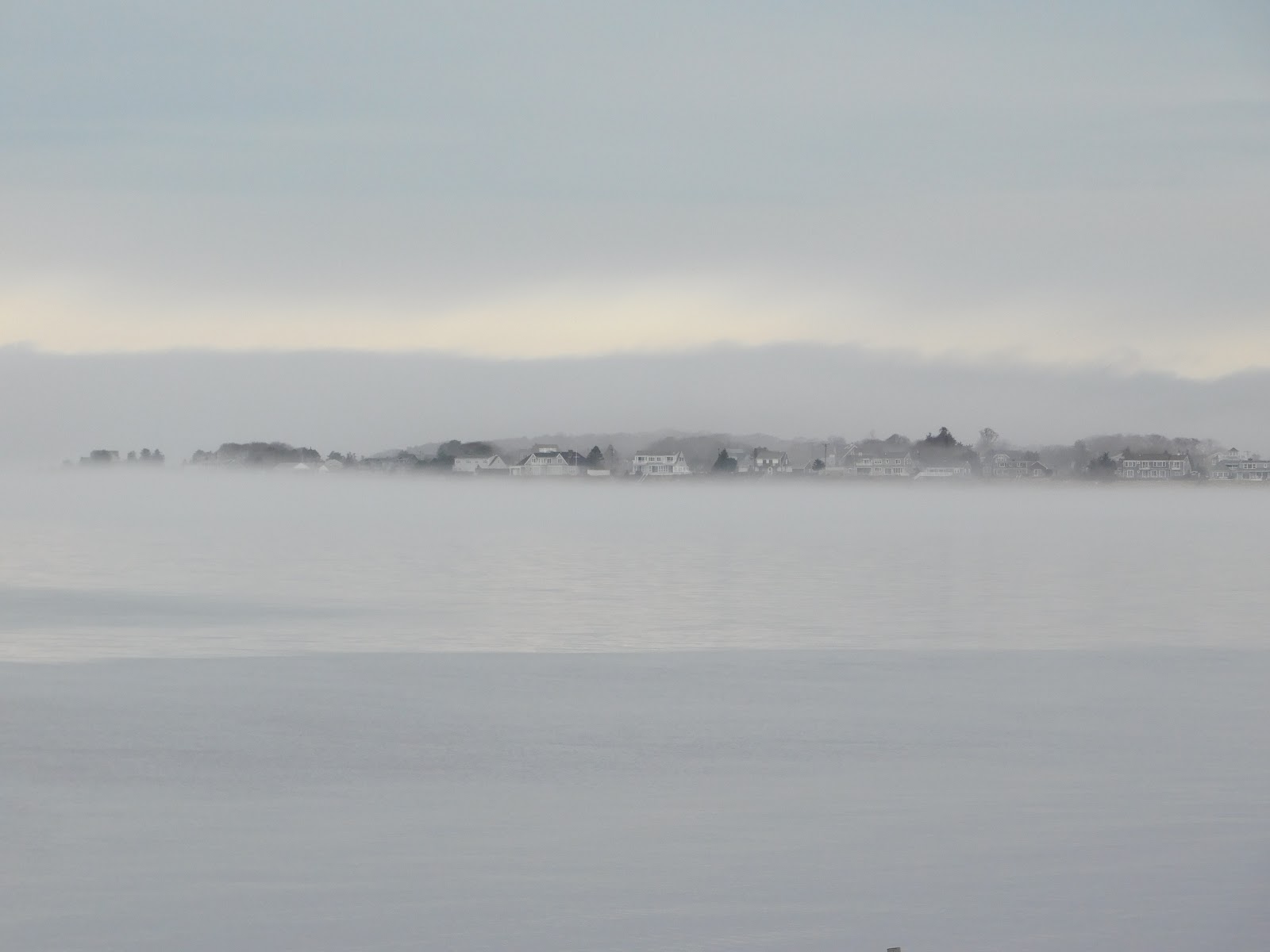
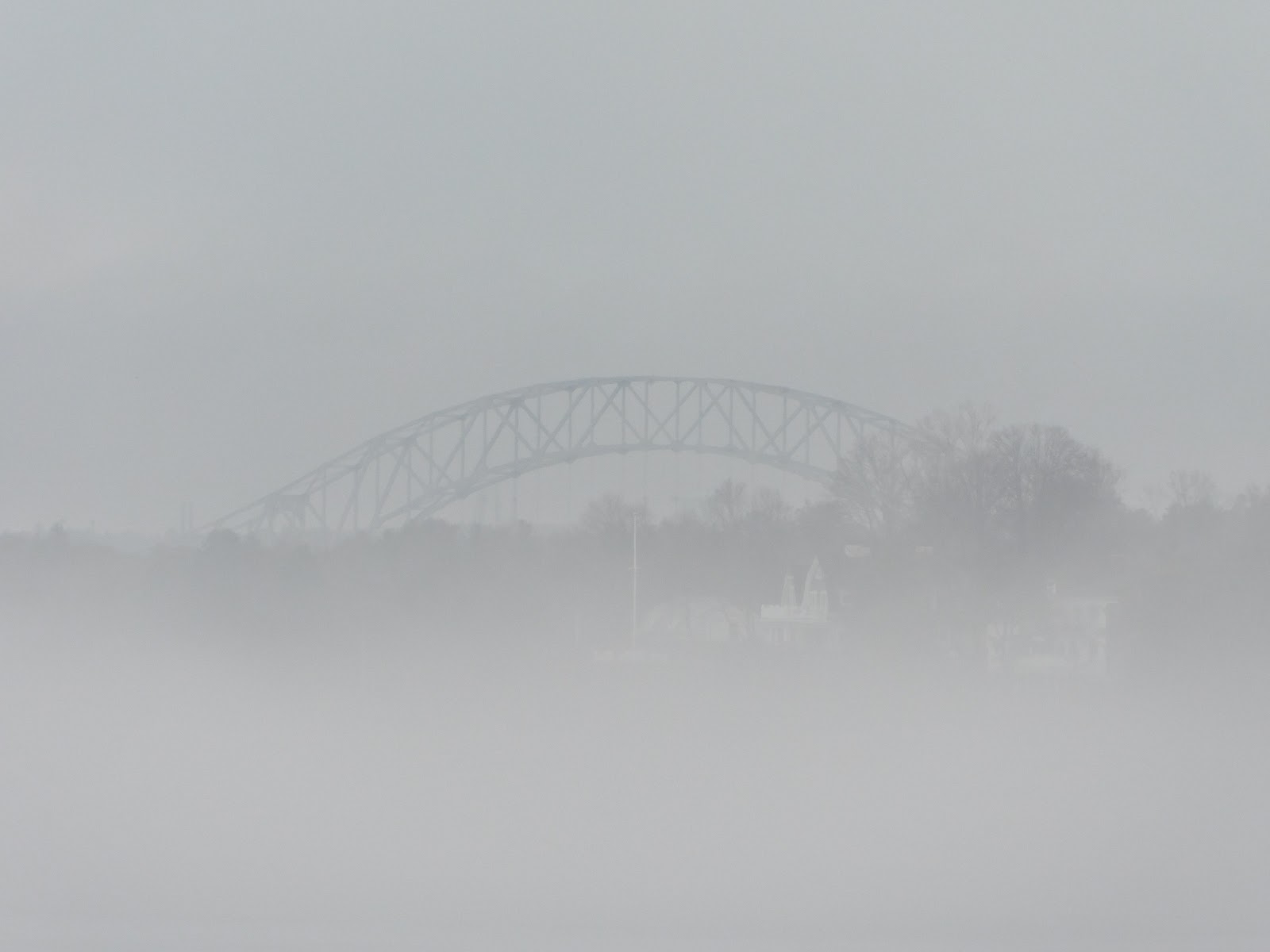
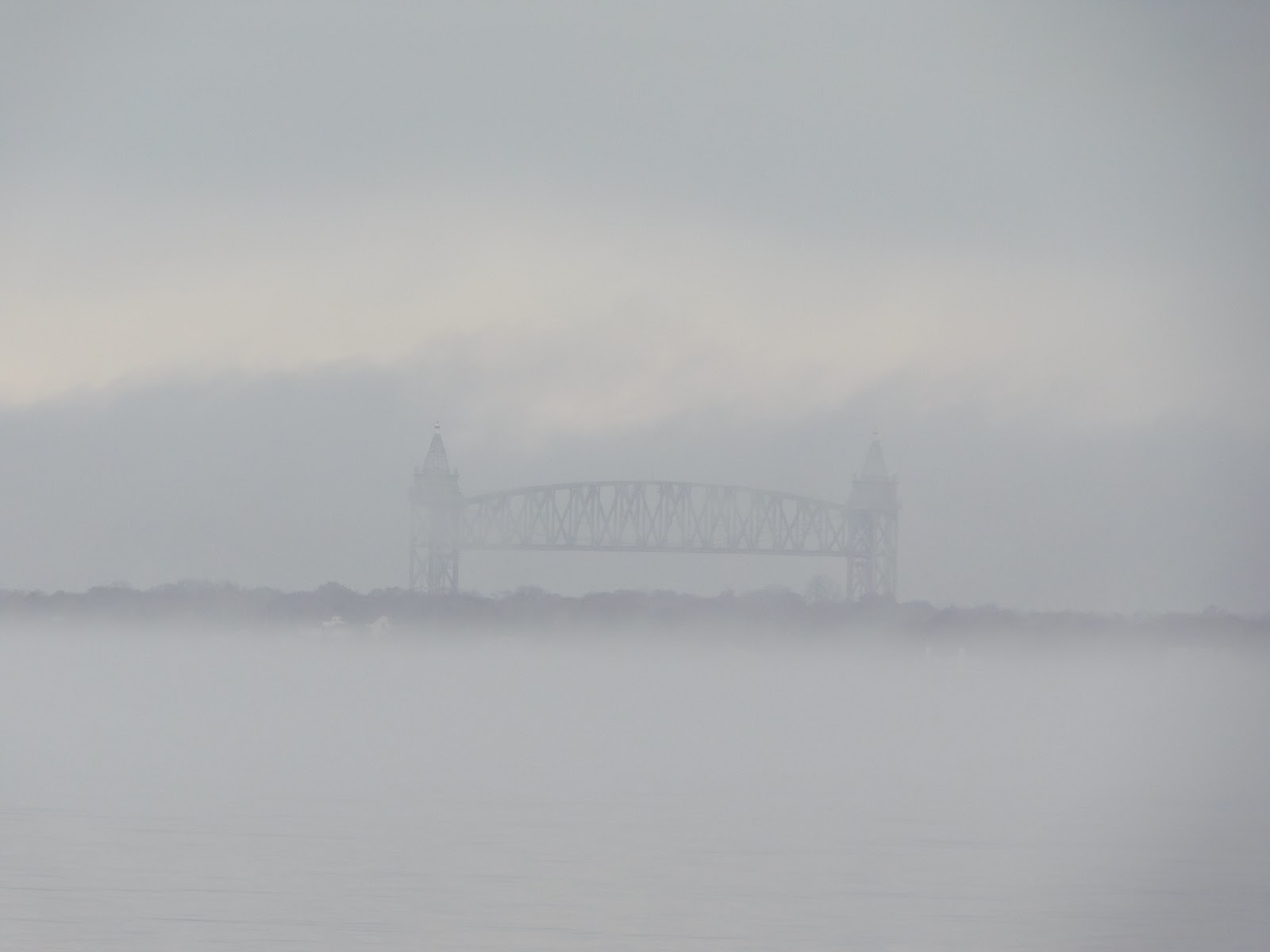
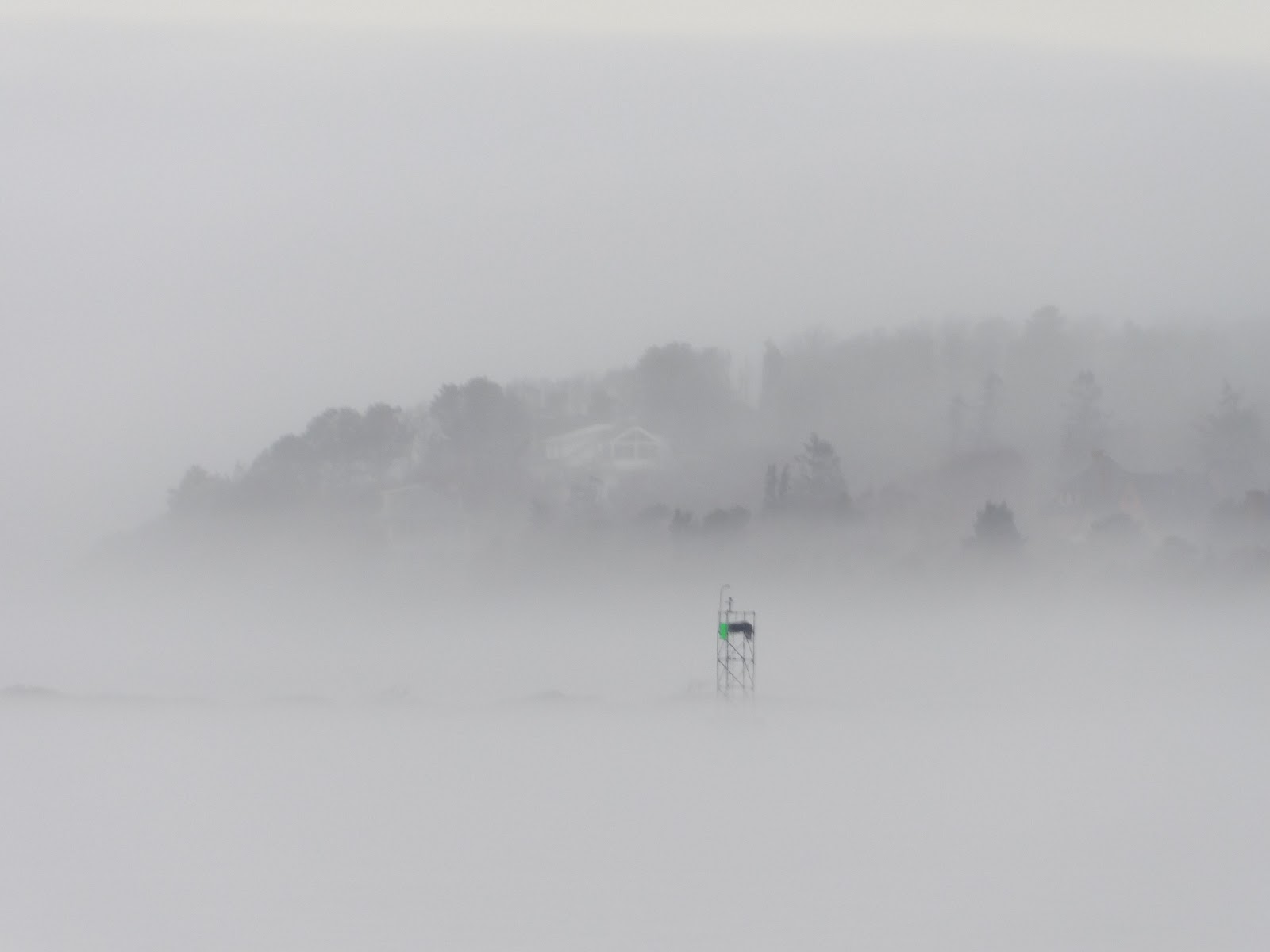
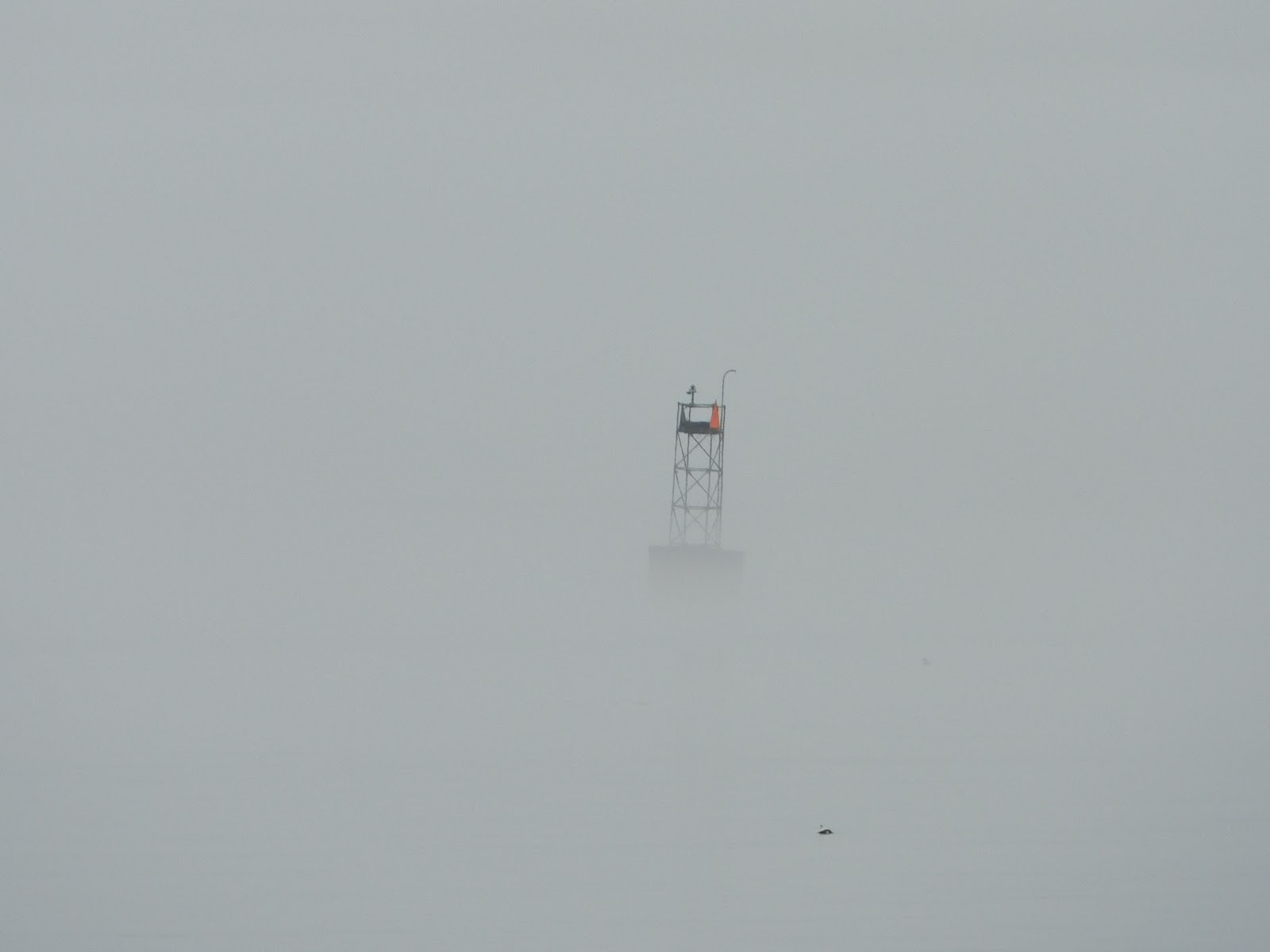
    Saturday we were treated to a beautiful sight as the sun slowly warmed the air above the cold waters of Buzzards Bay and the temperature variations triggered a thick, swirling fog.  This wasn’t some boring whiteout fog, this was a constantly changing feast for the eyes.  The fog highlighted rises in the land I’d never really noticed in the years I’d been coming here.  It amplified the bells on the navigational buoys in the channel approaching the Cape Cod Canal and the sharp honk! honk! honk! blare of the foghorn on some unseen barge making its way up the channel telling whoever will listen that “I am operating astern propulsion”.  Saturday morning was a day for radar if you dared to be out there at all.

    I find fog to be fascinating.  I once walked Bodhi in a fog so thick I couldn’t see five feet in front of me.  I once launched a couple of eights full of rowers, realized that the fog was too thick for them to safely be out there, and couldn’t find them on the river.  Thankfully they’d decided it wasn’t safe and had just gone back to the dock, but I spent 45 minutes slowly running up and down the river in my launch trying to find them.  As I wrote in one of my first posts, when I was in St. Johns, Newfoundland I watched a fog roll in so quickly that I quickly that I wasn’t able to cover 200 hundred yards before everything was obscured.

    Fog can be both dangerous and beautiful.  It completely changes your perception of the world, and when it lifts it stays with you as a haunting memory.  Some view it as sinister or terrifying, but I think it’s fascinating.  I just don’t want to be stopped in the high speed lane of a highway with the people behind me seeing nothing but gray clouds in front of them.
    I generally take weather as it comes.  Really, what choice do we have living in the northeast?  I try to enjoy the rain, snow or fog as much as I do those perfect sunny days or starry nights.  Stoic philosophy dictates that we accept our fate in life.  It is what it is.  For me a cold, foggy morning on the bay was more interesting than a warm, sunny day might have been.  Either way, the pictures speak more eloquently than I can, even if they don’t tell the full story.

  • That’s Puzzling

    That’s Puzzling

    Before everyone stared at their phones or television all day, people read books and played board games, cards or other activities that occupied and expanded their minds in leisure time.  And jigsaw puzzles were a notable preoccupation for people with a little time on their hands as well.  Originally created in 1767 in England from maps glued to wood and then cut into pieces, jigsaw puzzles exploded in popularity about 110 years ago when Parker Brothers of Salem and later Beverly, Massachusetts created something close to the modern puzzles we do today.

    Puzzles usually aren’t made of wood on a jigsaw anymore, though you can still find them that way.  Today’s puzzles are cardboard with a printed picture broken into a thousand or more laser cut pieces.  Puzzles aren’t something you do when you have a few minutes on a lunch break or while you’re on a plane traveling to a business meeting.  Jigsaw puzzles are a time commitment and a zen-like exercise in focus.  You can wile away hours on a puzzle, but it’s time well-spent.  Building a puzzle takes your mind off everyday stressors, lowers your heart rate and sharpens your mind as you work to accomplish the specific task of finding that needle in a haystack.

    Puzzles are best done in a group, making it a team-building exercise and social experience.  To complete a puzzle is akin to finishing a great book – you feel the sense of accomplishment while mourning the end of the ride.  During the Depression in the 1930’s puzzles became a very popular way to spend your time as it gave the participants a much needed sense of accomplishment in otherwise difficult times.  I tend to do puzzles in one place only – on the coffee table on the Cape when I’m having some down time.  It’s become a tradition to finish at least one puzzle during a vacation there, and hopefully a couple more than that.

    While puzzles seem daunting and endless at the beginning when you’re forming the border, completing it accelerates as you get closer to the end, with fewer and fewer pieces to sift through to find the one you need.  It’s an exciting time in the cycle of the jigsaw puzzle, and keeps you coming back for more, even as you stretch out the kinks from bending over a table for hours on end.  The end of the puzzle is always on your mind, but you enjoy the ride while you’re on it.

    The worst thing that can happen with a puzzle is that you get to the end and there’s one piece missing.  That seems to happen more often than it should.  The second worst thing that can happen is that you walk away from the puzzle and someone else finishes it while you’re gone.  All that build-up without the finale.  Which is another reason to keep pressing ahead with the puzzle, piece-by-piece to finish what you invested so much time in.  And when you finally reach the last piece, there’s a celebration and sometimes a picture of the finished product.  Depending on the affection developed for the puzzle over the time building it you may leave it assembled for a period of time, but inevitably the call of another puzzle overtakes you and your hours of work are swept off the table back into the box.  Just a memory, but one you’ll think of fondly.

  • Opting Out of Outrage

    Opting Out of Outrage

    On Monday night I was reading Hemingway’s The Sun Also Rises with a soundtrack of Stan Getz’s Samba De Uma Nota So paired with a glass of red wine and I had almost forgotten that it was still Monday and the Patriots epically coughed up that game the day before and lieutenants of “Individual 1” are pushing coal at a UN climate change summit.  I’m 52 years old and still figuring things out as I go along, but one thing I’m sure about is that no good comes from outrage addiction, and the world is full of things to be outraged about.  Worse, there are more and more media choices available, all wanting you to click on their site, read their blog, watch their program, turn on their sports talk show, etc.

    Nope.  I’m doing my best to self-select out of that stuff.  I still get sucked in, but damnit I’m doing all I can to avoid it.  Eventually I finished that book, which was another check mark for me in a year when I’m trying to read more books that I’ve put off for too long.  Hemingway qualifies.

    Does that mean I don’t care about climate change or mass shootings or homeless families during the holidays or the Patriots losing to the Dolphins on the last play of the game?  Not at all.  I’m still invested in all those things, but I’m choosing not to let it all distract me to the point where I’m ineffective.  It’s a bottomless pit of despair that I don’t want to swim in.

  • Anticipatory Anxiety

    Anticipatory Anxiety

    Some people get stressed on Sunday afternoon thinking about the work week ahead.  “Sunday scaries” is one term I’ve heard.  I’ve felt that way before in jobs I didn’t like all that much, or when I had a particularly tough week ahead of me, or when I was about to travel for work and was processing what I had to do and making sure I triple-checked the alarm.

    But for me, anticipatory anxiety comes in knowing I’m about to sit in traffic to get somewhere.  That somewhere is usually Boston, but sometimes it’s the thought of getting through Hartford or New Haven, Connecticut to get to New York or New Jersey.  I’m a rational human being, but I hate the thought of being late for a meeting or a game because I got stuck in traffic.  I haven’t succumbed to the fate of so many commuters who just shut down and take whatever the road gives them.  Which is funny because I drive all the time.  But I can drive seven hours across New York State and Massachusetts without giving it a second thought.  Unless…  I’m anticipating traffic on Route 495 in the last hour of my commute.

  • Bootstrapping and Double Dipping

    Bootstrapping and Double Dipping

    “Life really is generous to those who pursue their destiny.” – Paulo Coelho

    There are several ways to start a business.  Raising capital and going big seems to get all the attention.  But bootstrapping a business while you’re doing the 9 to 5 is a more attractive option.  Largely because going big is an easy out.  Big means putting things on hold and focusing on the big prize.  While this option gets the most attention, it’s not reality when you have kids in college and a mortgage and car payments and a thousand other financial cuts.  No, it’s far more realistic to opt for the bootstrapping path.

    Coelho, Seth Godin, James Altucher, Tim Ferriss…  and countless others have pointed out the path.  It’s a great time to listen.  So that’s my holiday gift to myself.  Starting today, figure some things out, get moving on a few options, choose the one that makes the most sense for you, and begin.  And in the meantime, keep on chugging away at the day job and making it successful too.  Nothing at all wrong with having two things going well at the same time…  and maybe keep writing, and perhaps you could add a third revenue stream.  And then another bootstrapped business.  And so on.

    It’s all attitude, really.  And while I’ve wanted to start a business, I’ve never really had the burning desire to take the risk.  Screw the risk.  Bootstrap and double dip.

  • A Stake in the Ground

    A Stake in the Ground

    Here in New England, if you own property and you want the keep your lawn intact you have to mark the line where the lawn meets the street.  This is so that tired plow drivers don’t take the shortest path between two points and plow straight across your lawn.  Having both property and a lawn that curves outward towards the street, my yard is a natural for plow drivers wishing to unearth dormant worms.

    The only defense from the snow plow is the stake.  Mark thy property or forever regret the loss of turf.  And so I hammer stakes into the ground in hopes that the plow guys (or ladies?) follow the clearly marked path.  Alas, inevitably at least one plow will choose to ignore the stakes and opt for the straight path.  But you have to try, and in November and early December it’s time to pound the stakes.

    2018 brought early snow, much sooner than I was able to mark the lawn with stakes.  Being in Key West at the time, I had to hope for a plower who knew the curves on our street.  For the most part that bore out, but I knew I was operating on borrowed time and drove in a pair of stakes as soon as I got back.  And just to be sure, I’ve added four more to clearly mark the curve.

    Will it help?  I’m not optimistic, but I can’t give up either.  Such is the dance in the snow belt.  We do what we can with what we have, and hope that the plows are kind.

  • Handshake with History

    Handshake with History

    Whenever I visit a place, I try to understand a little bit about the place.  Who came before me?  What happened here and how has that changed this place and the world we live in?  You stumble on ghosts walking through quiet woods when you come upon a stone wall running straight as an arrow left to right.  Or an old logging road cutting through the forest.  Dimpled rocks betray the hundreds of micro spikes that gripped this granite before you came along.  Statues and monuments tell one story, but so too do the buildings and canals and cobblestone streets.

    I’ve visited Mark Twain’s house in Hartford, Robert Frost’s farmhouse in Derry, New Hampshire and Ernest Hemingway’s house in Key West, Florida.  I ran my hand up the stair railing in each and stood in the doorways they would have been standing in as they looked out on a different world than the one I live in.  Dancing with ghosts.

    I once helped a friend tear down an old shed that had seen better days.  Hammer and pry bar in hand, I stripped layers of plywood and siding off the walls until we were down to the studs of the shed.  This was no Home Depot special.  The studs were old growth wood, hand sawn and straight.  They’d been quietly doing their job for a hundred years or so.  I gave a nod to the craftsman who built it.

    I visited the Duston Garrison in Haverhill, Massachusetts last year, the day after visiting the island that Hannah Duston escaped from between Concord and Franklin, New Hampshire.  In walking around the garrison, built by Hannah’s husband Thomas, a brick layer and farmer, I came across a pair of thumb prints in the brick.  Were they his thumb prints or those of someone who worked with him or re-pointed the brick wall somewhere else in history?  I don’t know, but I do know that whoever it was came before me and I put my thumbs in those compressions in a moment of solidarity across the centuries.

    Thomas and others built this garrison in 1697 for protection from the indians who attacked Haverhill, killing members of his family and his neighbors.  This was the frontier, and I often think about that time in history, so close to where I’m living my own history, and yet so different.  321 years later, this is our time.  That’s not some bullshit motivational slogan.  We’re alive today while the vast majority of people who have lived aren’t.  So many others came before us, and so may more will come after us.  I quietly make my handshake with history when I feel it.  And I feel it a lot in the places that I go.