Month: April 2019

  • General John Stark

    If New Hampshire has a favorite son, it’s John Stark.  The State Motto is a truncated quote from Stark, “Live Free or Die” and of course the people of New Hampshire have a certain Stark independent streak that lives on to this day.  As a transplant from Massachusetts who lives 7 miles from where Stark was born, I’ve come to appreciate the New Hampshire way of thinking more each year.  This is my 25th year in the Granite State and it’s high time I focus on New Hampshire’s Revolutionary War hero.
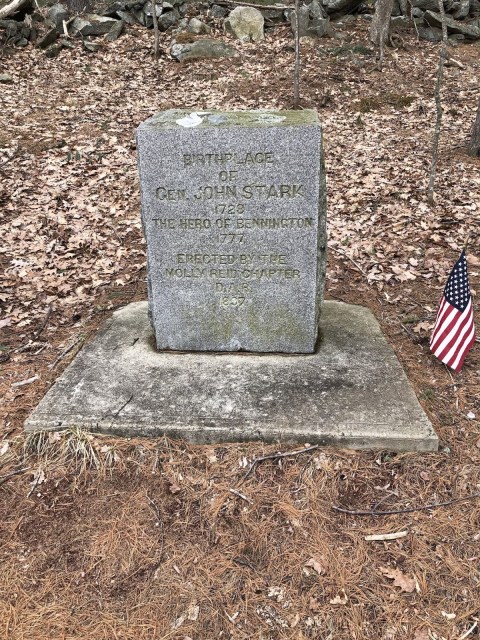
      In each phase of John Starks adult life he had extraordinary moments that would on their own be the highlight of someone else’s story.  As a 24 year-old young man he was captured by the Abenaki while hunting near the Baker River/Mount Moosilauke area.  In captivity he was forced to run the gauntlet but grabbed the stick from the first warrior in the line and attacked him instead!  This endeared him to the Abenaki and they adopted him into the tribe.  He was eventually ransomed back to freedom but this time with the Abenaki would remain a part of him.
    Five years later, with the French and Indian War making New Hampshire a war zone, Stark joined Robert Rogers as a Second Lieutenant and later Captain in Roger’s Rangers.  He participated in many of the legendary battles of the Rangers, including Battle on Snowshoes and other skirmishes around Lake George, New York.  Stark learned a lot from the tactics of Rogers, who in turn had adopted the tactics from the Native American warriors they were fighting against.  This would prove handy in the war to come.
    One event that Stark chose to sit out was the raid on St. Francis, an Abenaki village just over the present-day border of Canada.  Stark opting out was a sign of respect for those who he lived with five years before during his captivity.  It’s a great indicator of his character.
    After the war, Stark returned to his home in Nutfield (Londonderry) to work his farm.  Stark was married to Molly Page Stark, a legend in her own right, and had 11 children.  The Starks were clearly productive on the home front when they weren’t fighting wars.  Molly was a champion for smallpox vaccination, which involved deliberately infecting yourself with a small bit of smallpox, which, if it didn’t kill you, would make you immune to a worse case of it.  Smallpox was a major threat to the Continental Army during the Revolutionary War.
    During the Revolutionary War, John Stark became a legend.  He was one of the first to answer the call to arms, and fought in the Battle of Bunker Hill, where his experience in the Rangers paid dividends.  Stark’s saw immediately what the vulnerabilities were on the northern flank in the defense of Breeds Hill and built a breastwork from old stone walls to defend the Americans from a possible beach landing on the Mystic River.  This proved to be salient as that’s exactly what the British did.
    In a brilliantly orchestrated defense, the first line of New Hampshire militia fired on the attacking British and ducked down to reload.  The British kept advancing with fixed bayonets but were mowed down by a second line.  And then a third line mowed down the advancing British.  By then the first line had reloaded and mowed down the still advancing British and they finally retreated, abandoning the flanking strategy for a full frontal assault elsewhere.
    Stark would later serve George Washington at Princeton and Trenton, but unlike Benedict Arnold, he chose to tell the Continental Congress to take a hike when they passed him over for politically motivated promotions to General.  He returned to New Hampshire but left the door open for further action if needed.  And he was absolutely needed.
    In August 1777, the British Army was moving down from Canada, taking Fort Ticonderoga and working towards Albany.  The goal was to meet with the British forces coming up the Hudson River from the New York and cut off New England from the rest of the colonies.  This would effectively end the war as the British would control the flow of people and supplies.  British General John Burgoyne led an expedition to Bennington to raid supplies stored there.  That’s where he ran into the combined forces of Vermont and New Hampshire, led by 49 year-old John Stark.

    As Stark rallied his troops to attack the British, he shouted the second-most famous sentence he ever produced; “There are your enemies, the Red Coats and the Tories. They are ours, or this night Molly Stark sleeps a widow!”  The first half of that statement is contested.  What seems to have consensus is the “Molly Stark sleeps a widow” part.  Hell of a rallying cry for sure.  During the battle, Stark showed his strategic mind once again by flanking the combined forces of the  British, Loyalists, Indians and Canadians in a double envelopment, creating panic in the ranks of the enemy.  Many of them fled, leaving the British to face a full frontal assault from the majority of Stark’s New Hampshire men, which routed the British and set the stage for victory at Saratoga.

    John Stark, like General Sherman after the Civil War, chose to retire from the spotlight and move back to his farm in New Hampshire.  He lived out his life on his farm in Derryfield (now Manchester).  At the age of 82 he declined an invitation to participate in events commemorating the Battle of Bennington as his health was declining.  Instead, he sent a note with a toast to his old soldiers participating in the events.  It contains his most famous words, familiar to most everyone even if they don’t recall the source; “Live free or die: Death is not the worst of evils.”

  • Live Free or Die

    New Hampshire has a strong bond with Quebec, even if most people who live in the state aren’t always aware of it.  There’s an independent streak in Quebec that strongly mirrors the independent streak in neighboring New Hampshire.  There’s an obviously population blending as many French Canadians moved to the jobs the Industrial Revolution offered in America.  One clue of the bond is the highway signs, which welcome French Canadians in both English and French.  Welcome and Bienvenue are prominently displayed, along with the state motto “Live Free or Die”.  If New Hampshire is famous for anything, it’s Live Free or Die.

    The expression is more meaningful if you reflect on the entire phrase written by General John Stark to commemorate the Revolutionary War’s Battle of Bennington;  “Live free or die: Death is not the worst of evils.”  John Stark is a fascinating, bad-ass kind of guy who I’m going to write about more in a separate post tomorrow, but suffice it to say, he lived the words.
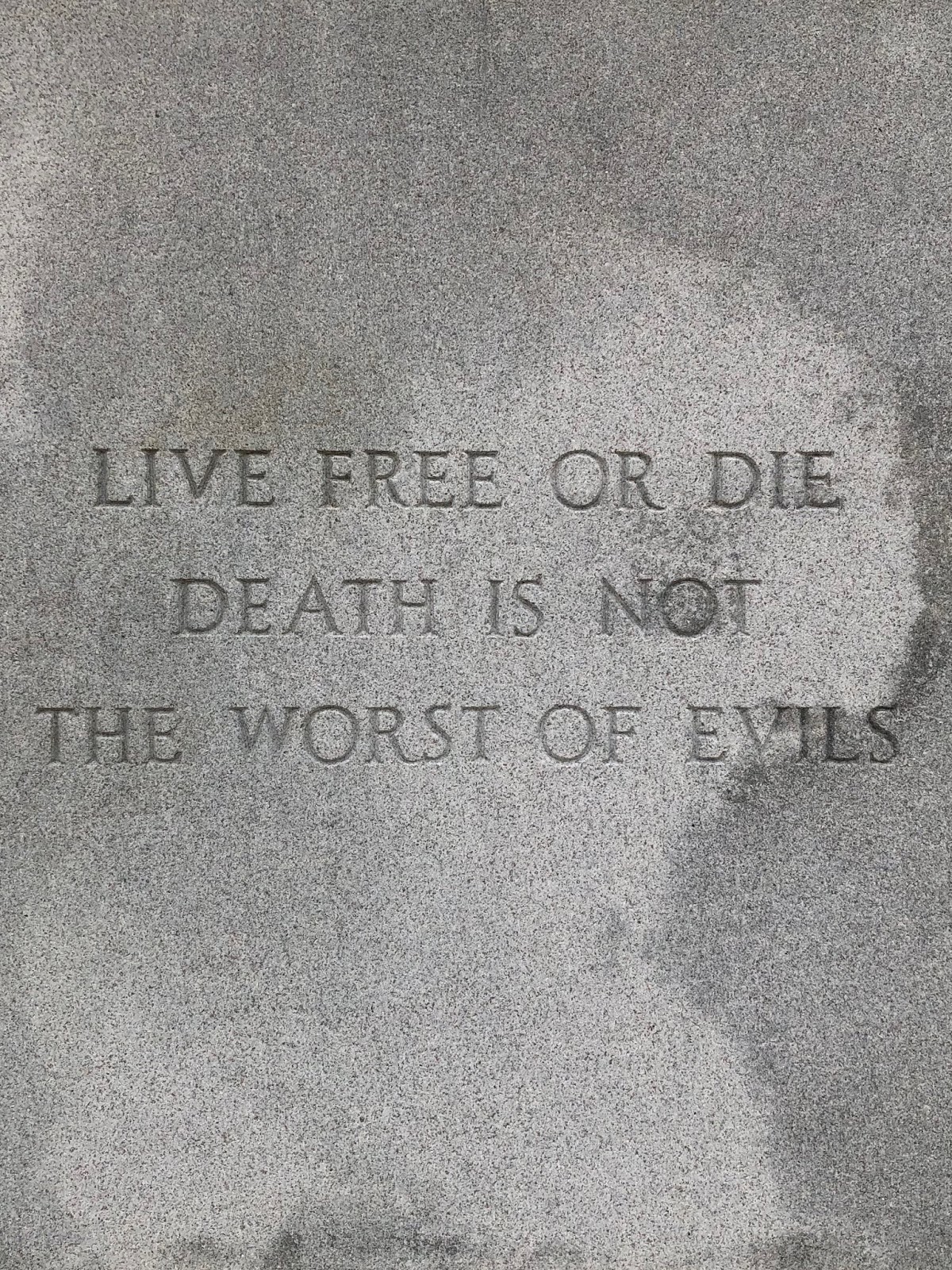
    The expression isn’t entirely an American concept.  Around the time that Stark wrote these words, the French were saying the same thing in the French Revolution; Vivre Libre ou Mourir, which literally means Live Free or Die.  So perhaps changing the highway signs to reflect both the English and French words would be appropriate.  It would be a nice way to bookend the sentiment: Welcome, Live Free or Die/Bienvenue, Vivre Libre ou Mourir.  I think our neighbors in Quebec would appreciate that.

  • The High Ground

    During the beginning stages of the French and Indian War, the British Army led by General Edward Braddock and officers that included Thomas Gage and George Washington marched to modern-day Pittsburgh to drive the French out of Fort Duquesne.  During the march, Gage’s Advance Guard failed to secure the high ground.  As they marched towards Fort Duquesne, they stumbled upon French and Indian forces, who quickly took the high ground and leveraged it to drive Gage’s Advance Guard back towards the main army.  In one became known as the Battle of the Monongahela, Braddock rushed his own army forward right into the retreating Advance Guard soldiers.  Chaos ensued, and the French and Indians routed the British forces and killed Braddock.  If lessons were learned in this battle, taking and holding the high ground seems to have been lost on some of them.

    Almost twenty years later, during the beginning stages of the American Revolution, the City of Boston was under siege immediately following the Battles of Lexington and Concord.  Both sides looked at the hills surrounding Boston and recognized the strategic importance of holding these hills as soon as possible.  The Americans were quicker to get there, and under the direction of General William Prescott, 1200 men built a redoubt on Breeds Hill to defend against the inevitable counterattack by the British.

    Old friend Thomas Gage, by now Military Governor of Massachusetts and perhaps not entirely remembering the lessons of the Battle of the Monongahela, ordered the British forces to attack Breeds Hill on June 17th, 1775.  They were repulsed twice with significant casualties, particularly with their officers.  It was during this battle that General Prescott told his American militia “Do not fire until you see the whites of their eyes” both for accuracy and because they were dangerously low on ammunition.  In fact, the lack of ammunition is what ultimately led the British to take Breeds Hill on the third attempt.    The Americans fled up and over adjacent Bunker Hill, and for some reason the event has forever been called the Battle of Bunker Hill.  Nine months later, the British evacuated Boston when they looked up at Dorchester Heights and saw the cannon from Fort Ticonderoga pointing down at them, proving they recognized the value of the high ground.

    The colonial American army seized Fort Ticonderoga by surprise and then had a year to fortify it before the British could amass an army, wait out winter, sail across the Atlantic and work their way down the St. Lawrence and Lake Champlain to meet them in battle.  When the British arrived they completely bypassed the fort and took the high ground behind it.  When the Americans holding the fort saw the cannon pointed down at them they knew the jig was up and evacuated the fort.  With barely an exchange the British took Fort Ticonderoga in one day because they saw the high ground that the Americans thought was impossible to haul cannon onto and proved them wrong.

    On July 2nd, 1863, the critical importance of holding the high ground was on display at Little Round Top in Gettysburg, Pennsylvania, where the 20th Maine Volunteer Infantry Regiment led by Colonel Joshua Lawrence Chamberlain repulsed repeated attacks by the confederate soldiers led by Lieutenant General James Longstreet.  Like the Americans at Breeds Hill in 1775, the 20th Maine soldiers were running out of ammunition.  Chamberlain, under orders to hold the line at any cost.  If the confederates were to break through they could flank the Union forces and break the back of the entire Union army.  Chamberlain ordered a bayonet charge down the hill, surprising and then routing the confederates.

    The high ground is advantageous, but it doesn’t guarantee those who hold it will win.  What it does guarantee is that there will be a high cost for trying to take it from those who currently hold it.  There’s a lot of talk about taking the moral high ground lately.  Democrats point to Republicans and evangelicals and openly question them taking the moral high ground when they defend the President’s actions and statements.  My BS detector tells me who holds the true high ground, but that could be bias.  What’s apparent though is that continuously attacking those who sit on the high ground, whomever they may be, has a deep cost.

  • Habit Loops and Morning Routines

    I’m in the middle of establishing a new habit loop that is embarrassingly easy at the moment.  I set my alarm for 5:45 AM in case my internal alarm clock doesn’t work.  When I get up I immediately get dressed in workout clothes, go downstairs and turn on the coffee maker.  I pour myself 16 ounces of cold water and finish it, then head down to the basement for a workout.

    My workout is the embarrassing part, at least for someone who’s done a lot more over the years.  I set the erg for 500 meters, slide up and down on the seat a few times to stretch out my calves, take off my wedding ring and row the 500 as a warmup piece.  When I finish it, I slip the by now cold ring back on my finger, feel it warm up as my body heat conducts onto it, and then stand up.  I take a breath and then do 10 burpees with emphasis on full range of motion on the pushup and big air on the jump.  After 10 burpees I sit back down on the erg and repeat the routine I did with the 500 meters and the ring.

    This workout is more of a warmup than a real workout.  I know that.  But I’m establishing a routine following the advice of James Clear in Atomic Habits.  I’m going to eventually built up to 5000 meters, add weights to the workout, pullups and pushups, and all that.  But for now when I wake up and I’m reluctant to get out of bed my mind is wrapped around this quick routine, and I’m not going to rush the process as I build the habit.

    To complete my habit loop, I walk back upstairs after the workout, have another 16 ounces of cold water, make a cup of coffee, grab my ipad and sit down to read a page of The Daily Stoic and several pages of whatever book I’m reading.  At the moment I’m re-reading Walden.  Once the coffee is done and I’ve read several pages, I begin my regular day.

    Habit loops are funny things.  I’ve established, slipped out of, and re-established habits over the years.  But I always default to simple.  And I’m keeping things simple this time around.  I was doing 50 burpees every day last summer and fall, until I injured myself pushing through when my body was telling me to take a break.  That was a good lesson that I hope I’ll remember.  Instead of making myself do 50 burpees I’m doing 10 with the 500 meter warmup before and a 500 meter cool down afterwards.  Adding more to the routine is fine, but this will be my minimum activity when I’m at home.

    When I travel I won’t have access to an erg.  So I’m going to have to change the routine up for those days.  The easiest thing to do is walk, and so I’ll walk for a warmup, do the burpees, and walk some more.  Travel exercise will be the real test for this habit loop.  But for now I’m going to just keep on doing what I’m doing, gradually adding more meters and exercises into the habit loop.  Simple, right?

  • The Bread and Roses Strike

    Lawrence, Massachusetts was the epicenter of two significant events in the history of industrial labor.  The first was the Pemberton Mill collapse, which I wrote about yesterday.  The second was the Bread and Roses Strike in 1912.  The strike began when mill workers realized that the mill owners chose to pay them two hours less in wages in reaction to a law passed in Massachusetts requiring women to work a maximum of 54 hours instead of 56 hours.  The mill owners weren’t exactly looking out for the welfare of the immigrants who worked in their mills, and took the cold calculation that if someone was working 54 hours they should be payed for 54 hours, not more.

    On January 11th the workers at the Everett Mills found that their wages were reduced and walked out, beginning the strike.  The next day the Washington Mill discovered their wages were reduced and followed suit.  Everntually upwards of 25,000 mill workers were on strike.  Police and the Massachusetts National Guard were brought in to “keep the peace” and instead poured gas on the fire as violence escalated.  One young woman named Anna LoPizzo was killed and instead of prosecuting the person that shot her the union organizers were framed for murder.

    As the strike continued for weeks families started sending their children on the train to the homes of sympathizers.  When another group of children were gathered together to be sent to more homes, the mill owners and police tried to prevent it.  This led to national attention on the working conditions that the mill workers were living with.  Eventually the mill owners agreed to a 5% raise to end the strike but tensions remained high.  One immigrant was beaten to death for wearing a pro-union pin.

    Over time the higher wages of workers in the mills prompted a shift in manufacturing of textiles, shoes and other items first to the south and eventually overseas.  The horrific working conditions that the Lawrence mill workers labored in shifted to these other places too.  When I hear about sweat shops in China or other places I can’t help but think about the original sweat shops along the banks of the Merrimack River.  The mills didn’t start this way, but over time the plight of the workers degraded  as the greed of the mill owners increased.  Now and then it’s good to look back on the history of the Industrial Revolution to understand why labor laws have evolved the way they have.

  • The Pemberton Mill Disaster

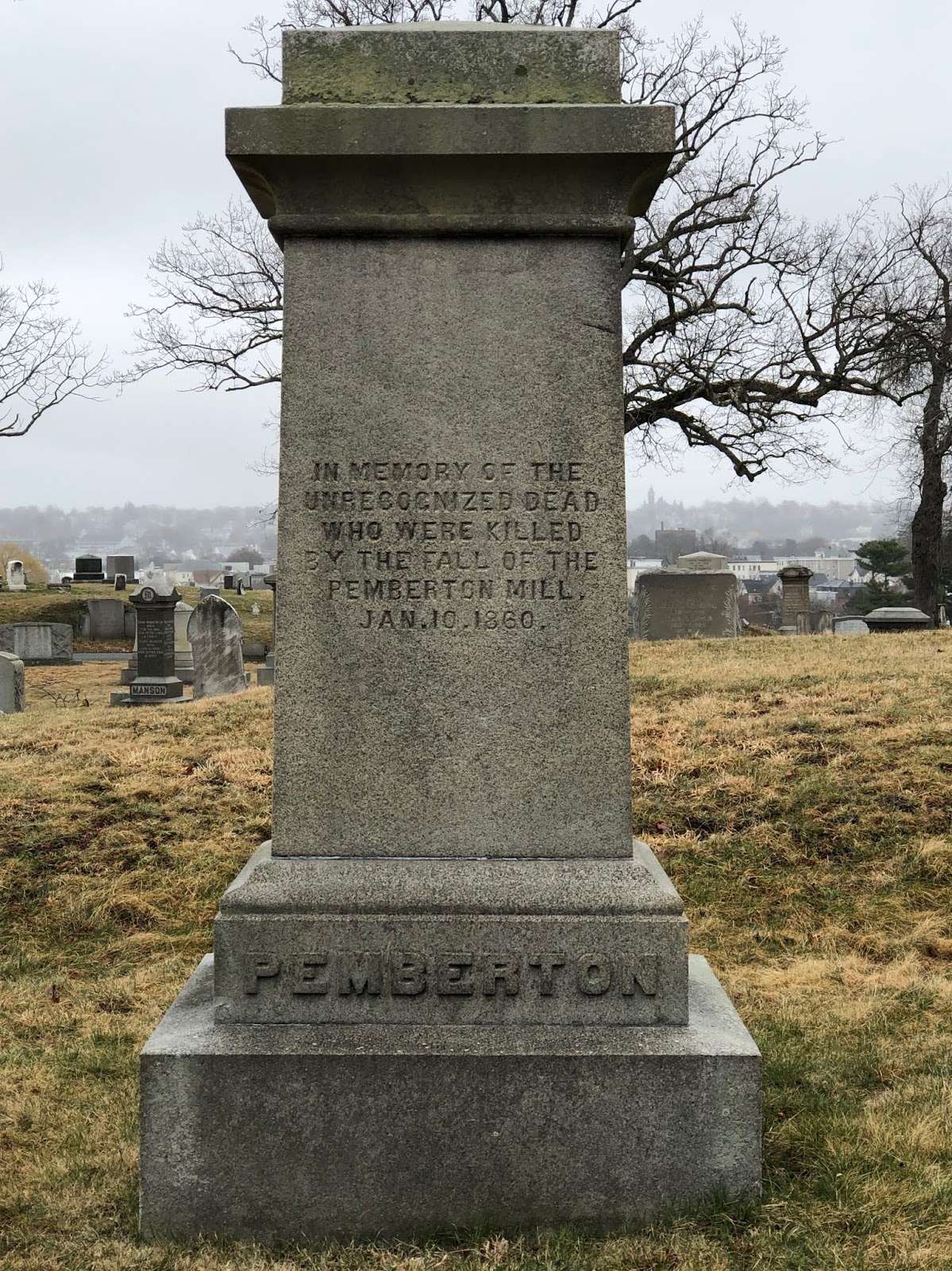
    On a quiet hill overlooking the City of Lawrence, Massachusetts is a monument memorializing the 145 mill workers killed on January 10th, 1860 when the Pemberton Mill collapsed.  Another 166 were injured.  Many victims were women and children.  As recent immigrants to America, the victims were buried at Bellevue Cemetery and this simple monument marks time serving as a reminder of the souls who perished that day.

    The Pemberton Mill disaster remains one of the worst industrial accidents in history.  If it were to happen today the mill owners would be imprisoned for criminal negligence.  The mill was built by the Essex Company in 1853 and was sold at a loss to George Howe and David Nevins, Sr. four years later during an economic downturn.  Howe and Nevins jammed more machinery into the building to make it more profitable.  This proved disastrous as three years later the building collapsed on itself with 800 mill workers inside.

    Immediately after the collapse rescuers converged on the pile of rubble to try to dig victims out.  Sometime during the rescue a lantern caused a fire that quickly grew to an uncontrollable inferno as oil-soaked wooden beams became tinder.  Rescuers could hear dozens of people screaming in terror as the flames raced through the rubble, eventually extinguishing the voices one by one.

    This is one of the most horrific stories I’ve ever read about, and it happened along the banks of the Merrimack River in Lawrence.  I’ve heard about the Pemberton Mill disaster, but I never really knew the extent of the tragedy.  For the young mill workers hoping to earn an honest wage in America, this was a brutally cruel end to their hopes and dreams.

    David Nevins, Sr. lived a long life, becoming a wealthy and generous resident of Methuen, Massachusetts.  The library in town is named after him.  Howe lived a long life too, but seems to have been less generous with his money.  The names of the workers who perished in the mill are long forgotten by history.  But their final moments serve as a stark reminder of what can happen when you stretch the limits of safety in the workplace.


  • How’s the Weather?

    Yesterday it was 67 degrees in New Hampshire.  Today it’s 35 degrees.  I drove to Portland, Maine for meetings and was greeted by sleet and snow.  It’s April in New England.

    This isn’t the only place that has extreme swings in the weather, but I don’t live and work in those places.  When I booked meetings in Maine I had 50 degrees and sunny in mind.  Another lesson from Mother Nature.

    In general I don’t mind the weather.  I’d rather not be brushing the snow off my car after a lunch meeting in April, but since I don’t control the weather and chose to honor my meeting, why complain?  Stoic philosophy has a few core principles, and choosing how you react to things is a big one.  So it snows?  So it goes.

  • The Meeting of Two Eternities

    It is true, I never assisted the sun materially in his rising, but, doubt not, it was of the last importance only to be present at it. – Henry David Thoreau, Walden

    “I have been anxious to improve the nick of time, and notch it on my stick too; to stand on the meeting of two eternities, the past and the future, which is precisely the present moment.” – Henry David Thoreau, Walden

    I’ve come around to Walden once again.  Thoreau to me has always been a distant cousin.  A kindred spirit.  A guy on the short list of people in history I’d have a beer or two with.  Some people just speak more clearly to you than others.  To pluck these two magnificent quotes from the same page of Walden demonstrates this.  Thoreau has spoken to me off and on for years.  The “off” years were solely my own distraction.

    It’s Sunday.  The beginning of the week.  I’ve missed today’s sunrise so I posted a picture from the last sunrise of 2018.  Sunrises infer a new day, and a fresh start.  But it’s also the sharpened edge of the past and the present, of the two eternities.  Isn’t that our lives as well?  We’re all witnesses to the present.  I’m particularly focused on what came before me, and look ahead with optimism to the future, but if I’ve been anything over the years it’s tuned to the now.

    Thoreau was an acute observer of the moment, but also an acute participant in the moment.  I aspire to be the same.  Writing helps with observation, as it forces you to notice things.  I’ve noticed more things since I’ve been writing this blog.  I’ve learned to listen to the voices around me, but also the landscape.  Participation comes with observation.  To see the sunrise you’ve got to get out of bed.  To walk through an old French fort from the 17th century you’ve got to know why it matters, where it is and then go to it.  To be a good father or friend or spouse or son you’ve got to be present in the lives of those who identify you that way.

    Observation doesn’t lead to participation, you’ve got to have the drive to do what must be done.  The floor is dirty?  Clean the floor.  A friend needs a shoulder and an ear?  Offer both freely.  The pipeline needs to be filled?  Make more sales calls and move opportunities forward.  Participation requires action.  Being an observer of life doesn’t equate to living.

    So I’m re-reading Walden.  I know already that I’m going to get more out of it than I did when I read it as an unfocused nineteen year-old.  The words didn’t reflect back to me quite the same way then.  But it meant a lot even then.  And more so now.  Everything has its time.

  • New England Gold

    This morning I was rowing on my erg in the basement.  As I usually do, I took off my gold wedding ring, did my rowing and then slipped the ring back on.  I was struck first by how cold the ring was when I slipped it back on, but then how quickly heat conducted back into the ring and warmed it back to my body temperature.  Gold is one of the best conductors they say, and this was my own little experiment that proved it.  It makes gold an attractive material for PC boards, but also for jewelry.  I carry to bits of gold with me, the ring on my finger and somewhere deep in my finger a small gold splinter from when I inspected PC boards for Hewlett-Packard as a summer job in college.

    People don’t think of New England as a great place for prospecting for gold.  That’s something you hear about our west, where the mountains are higher and younger and the gold veins run fat and deep.  Not so much in New England, where our mountains are much older and veins of gold aren’t prevalent.  But there have been a few gold strikes in this region that have caused minor rushes.

    Lyman, New Hampshire had a minor gold rush in the middle of the 19th century at the old Paddock Mine.  There are still enthusiasts who hike into the woods there and pan the streams looking for granules of the evasive gold.  As with everything there are those who would invest heavily in the process, and instead of panning for gold they bring motorized dredges into the streams that disrupt the integrity of the stream and create a lot of noise.  New Hampshire allows panning for gold in streams on public land but you can’t bring a shovel into the stream with you to dig out the bed.

    Rhode Island had its own minor gold rush in 1738, but it too proved to be short-lived.  The Durfee Gold Mine in Providence County caused a minor stir at the time, and there are still people looking for gold in that area.  Vermont seems to have some minor gold placers in the Ottauquechee River.  Connecticut has some gold placers in the Farmington River and there will probably be people out there panning for gold in that river this year.  Massachusetts has gold placers in the Deerfield and Westfield Rivers, and likely in other Berkshire rivers that feed the Connecticut River.

    The trick is to actually find the stuff if you’re so inclined.  As with most gold prospecting, you have to ask how much is your time worth?  Time is a priceless commodity, and there’s just not much of a return on investment in panning for gold in a New England river.  It’s a bit too needle in a haystack random to be worthwhile.  Then again, I do buy a lottery ticket once in a while.

  • Matthew Thornton

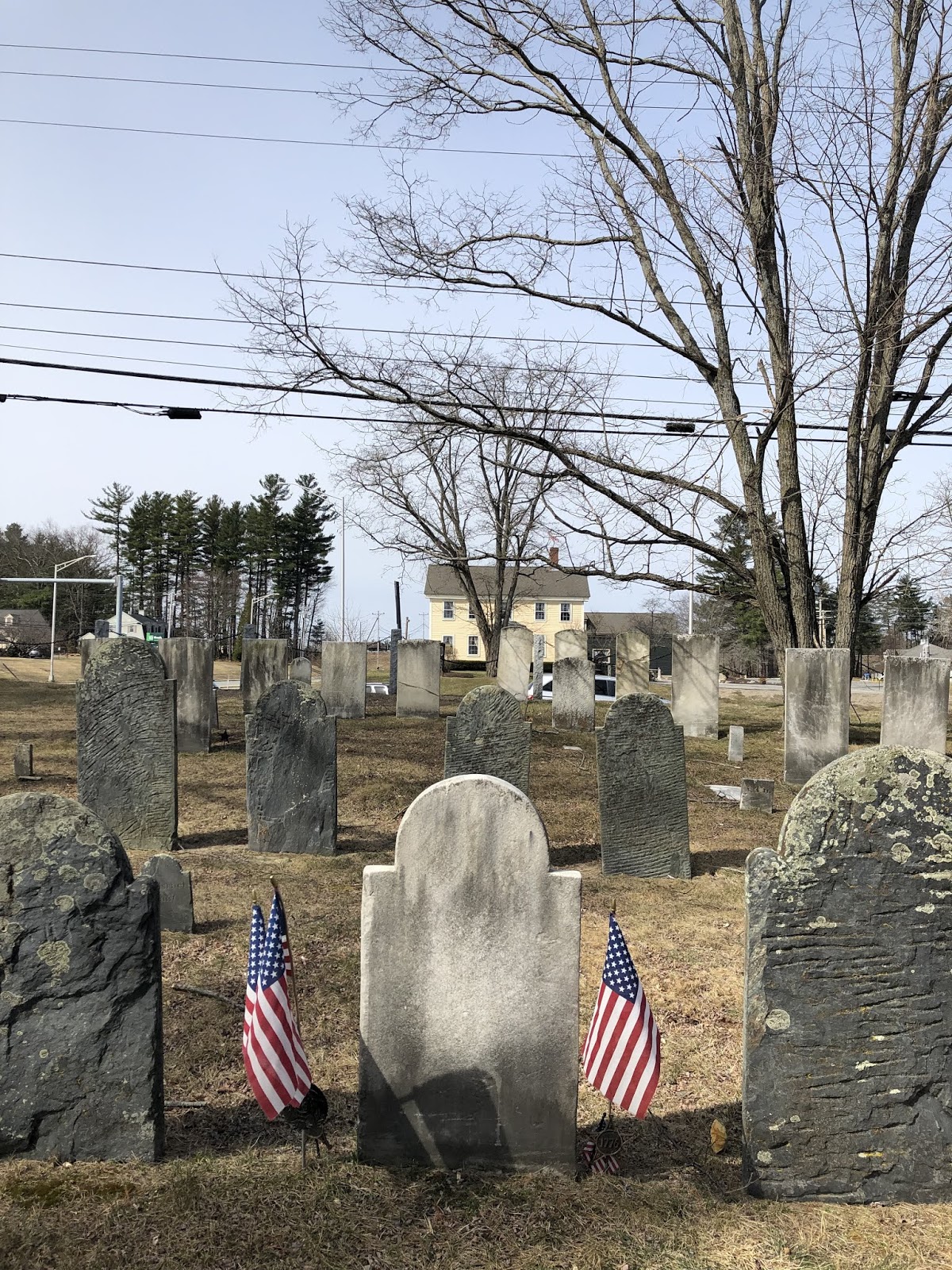
    Yesterday afternoon I was in Merrimack, New Hampshire between meetings and stopped at a coffee shop for a few minutes.  I passed the Common Man Restaurant, which having dined there I’d remembered as one of the oldest houses in the area.  I thought I’d like to go back to the Common Man to re-acquaint myself with the house.  Glancing across the street, I saw an old graveyard dated from 1742 with a tall monument with a red, white and blue wreath on it.  I almost crossed the busy street to look at it but the timing wasn’t good.  These are places I generally gravitate to and I made a mental note to come back to this spot sometime to get to know those who came before us a bit better.

    This morning I was reading my Kindle app on my iPad and decided to clean out some old screenshots I’d accumulated when reading online articles.  I came across an article on the Ulster-Scots that I’d found interesting and re-read it.  One of the people in the article jumped out to me immediately; Matthew Thornton.  Thornton was an Irish-born signer of the Declaration of Independence, representing New Hampshire.  More interesting.

    Thornton’s family arrived in Boston in 1719 with many other Ulster Scots.  They moved to Wiscasset, Maine (another place I’ve come to know) but fled the area when the Abenaki attacked their settlement and burned their home.  The family moved to Worcester, Massachusetts for some time before Matthew ultimately ended up in Nutfield, New Hampshire in what is now Merrimack.  He served as surgeon during the French and Indian War and participated in the attack on Fort Louisbourg in Cape Breton that changed the course of that war.  Thornton became the first President of the New Hampshire House of Representatives and the Associate Justice of the Superior Court of New Hampshire.  In 1776 he was elected to the Continental Congress and made his way to Philadelphia, where he became one of the signers of the Declaration of Independence.

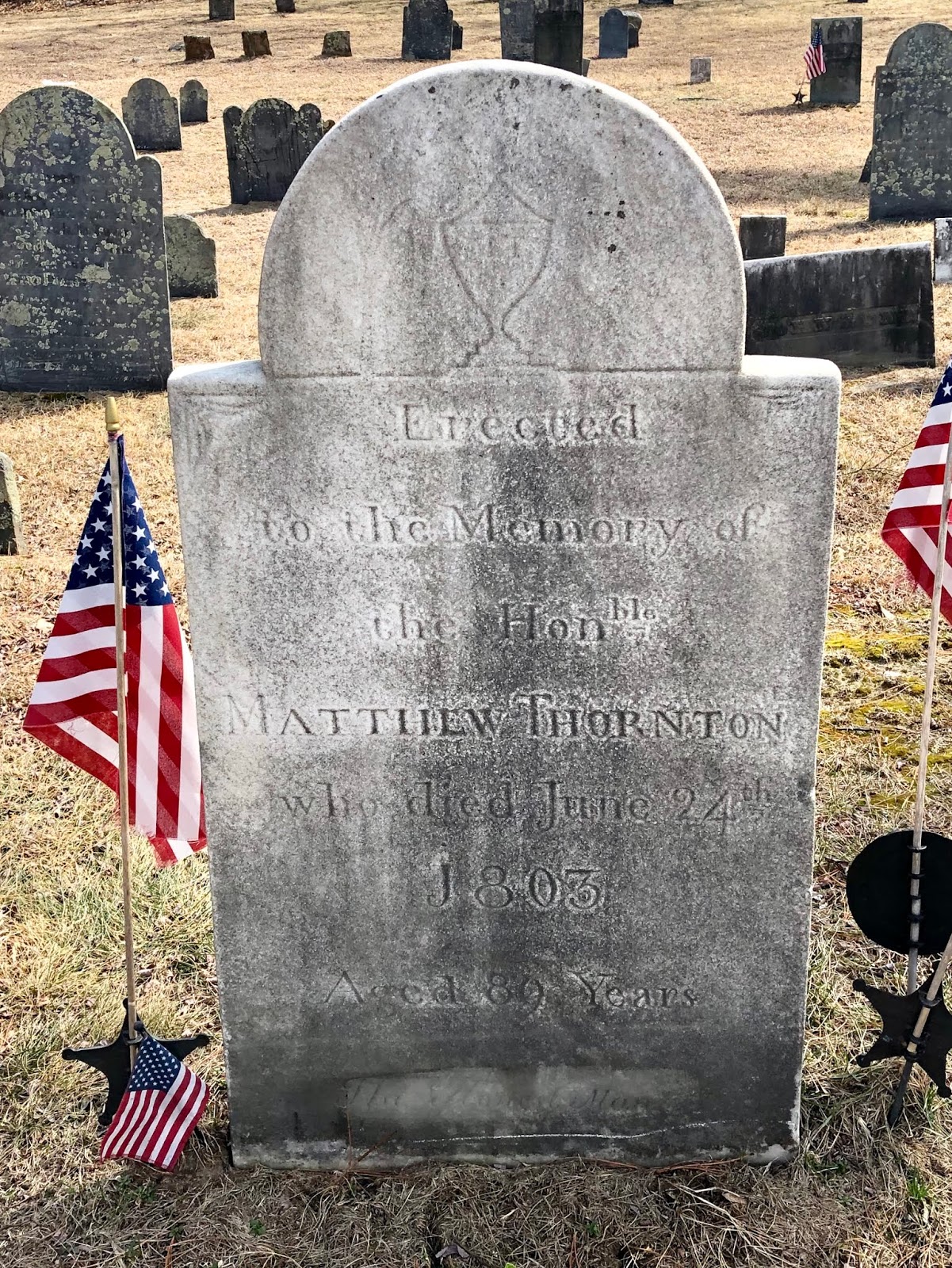
    Thornton lived in the house that is now the Common Man.  It’s called the Signer’s House to honor him.  He died in 1803 in Newburyport, Massachusetts, but was buried across the street from his home in Merrimack, New Hampshire.  That’s the graveyard that was calling out to me yesterday.  So within 15 hours two random events pointed to the same man; Matthew Thornton.

    Yesterday afternoon I met with a friend of mine who is living along the Souhegan River in Merrimack.  I was struck by the rapids right in the backyard and commented on the Abenaki who probably had the same view, and the early settlers who came across this spot.  I didn’t know at the time that Matthew Thornton probably stood roughly in the same spot several times.  Once again, I’ve been dancing with ghosts…

    Postscript:
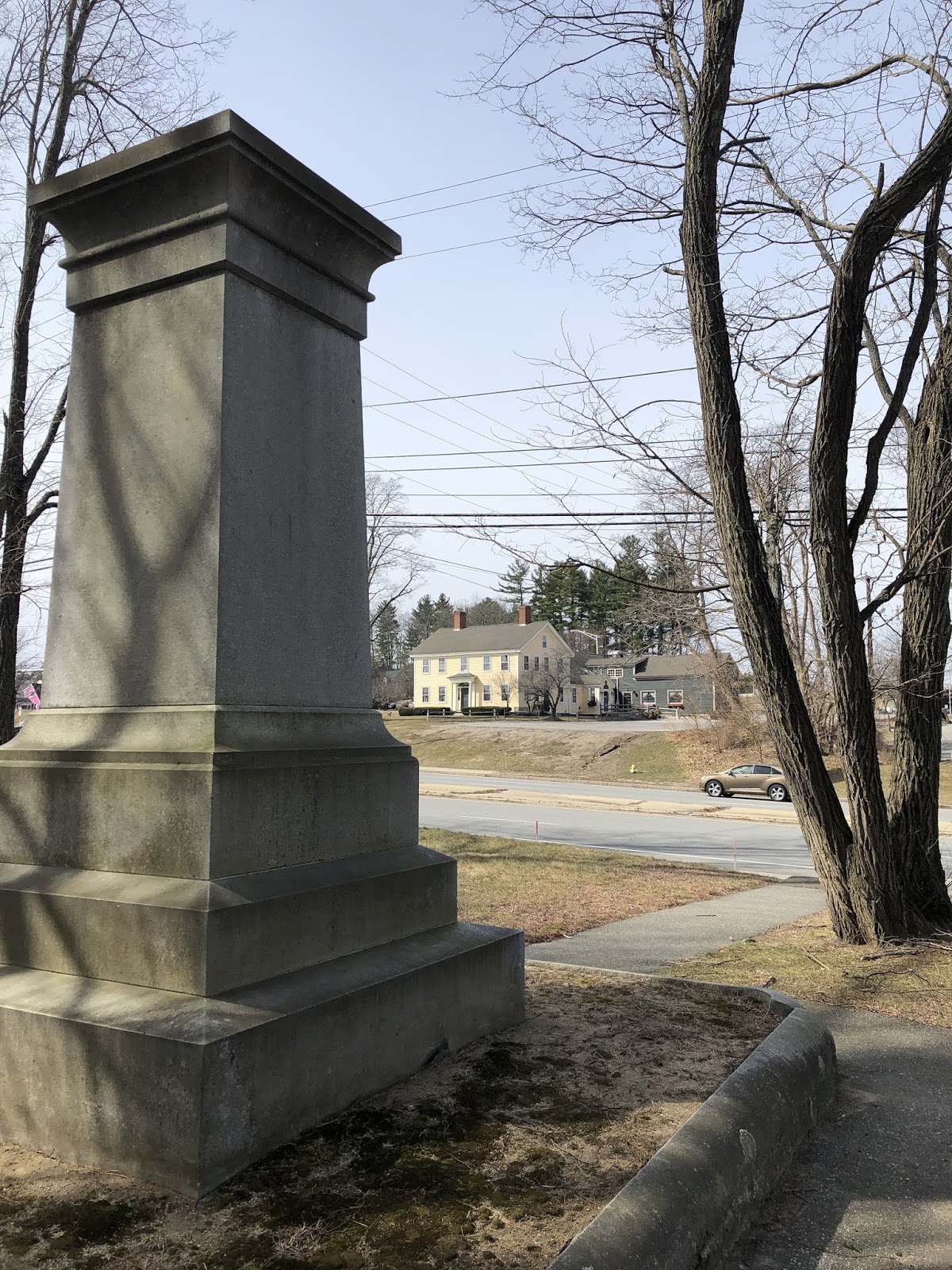
    Coincidently, I was driving through Merrimack again hours after I wrote this blog and decided to pull over to visit Matthew.  The monument was built to honor him by the State of New Hampshire, on a lot and foundation given by the town of Merrimack, to honor Thornton.  His gravestone is located roughly 50 yards away from the monument.  It was carved from white marble and flanked by American flags planted in the soil on either side.  His wife is buried to his left, and his sons to his right.  They all face the house that they once lived in.  I wonder which of them was calling to me when I drove by?