Month: May 2019

  • Where the Narrows Open Out

    Looking at John Sellers 1675 “Mapp of New England” I’m drawn to the place names on Cape Cod. “Yermoth“, Sandwich and Pocasset on the Cape, and the islands of “Martina Vineyard” and “Nantuket“. As with the entire map things are way out of scale, but still a fascinating snapshot of place in 1675 Cape Cod.  The other unique thing about Sellers’ map is that he turns New England on its side, offering a new perspective on the familiar shapes.

    The Pocasset Wampanoag were no strangers to Buzzards Bay, but they lived in the area that is now Tiverton, Rhode Island up to Fall River, Massachusetts and surrounding towns. If a place were going to be named Pocasset wouldn’t it be Tiverton or Fairhaven or some other place on that side of the bay? So how did this little corner of Cape Cod become known as Pocasset?

    The answer might lie in the word itself. “Pocasset” and some similar Algonquin names like “Pochassuck” and “Paugusset” all mean “the place where the narrows open out”. And that certainly applies to this part of Buzzards Bay. For the English settlers choosing Pocasset was likely easier than Pochassuck.  I can imagine the middle school jokes at neighboring towns if they’d gone that route.

    This place was likely visited by the Pocasset often as they traded with the Pilgrims at the Aptucxet Trading Post nearby. In talking about the land and the bay around them it’s probable that’s how the area was described as the bay opens up right after the point of Wings Neck. On the map Pocasset encompasses what is now Falmouth. Given the scale of the map it could be a minor point, or perhaps the entire stretch from Wings Neck to Woods Hole was considered the place where the narrows open out.

    That description fits the mind as well. Looking at old maps, reading books, and traveling to new places opens up my own once narrower mind. I break free of the daily routine and see things in a new way. So having a home away from home in Pocasset is more appropriate than I first thought.

  • The Rose Standish

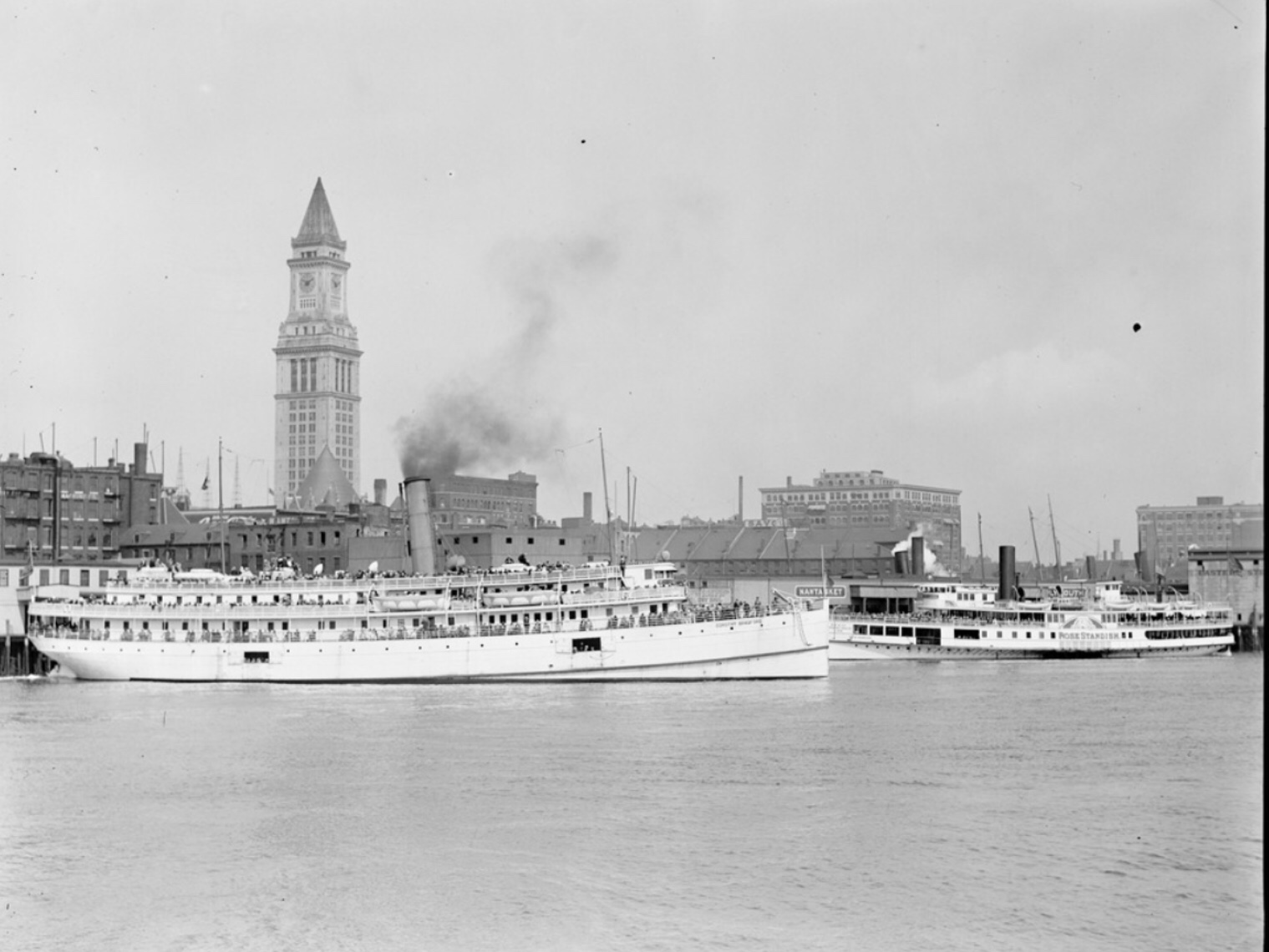
    A little piece of historical trivia is the name of the very first ship to travel through the Cape Cod Canal when it opened on July 29, 1914.  Following the Jeopardy answering with a question format, What is the S.S. Rose Standish?  And the ship was the perfect choice to be first.

    Rose Standish was the first wife of Captain Myles Standish.  She was one of many who died in 1620 during the first winter after the Pilgrims arrived in Plymouth, Massachusetts.  Myles Standish would explore the Manomet and Scusset Rivers three years later considering a canal.  That canal would finally be completed almost three hundred years later with great fanfare, with a future President of the United States, then Assistant Secretary of the Navy Franklin D. Roosevelt, in attendance.

    That first ship, the S.S. Rose Standish, was a coastal passenger vessel built just two years earlier in 1912 and operated by the Nantasket Beach Steamboat Company of Boston.  On that July day in 1914, she led a parade of ships through the canal.  The celebratory mood was likely tempered by news breaking about events the previous day, when Austria-Hungary declared war on Serbia, marking the beginning of World War One.  Almost exactly four years after the canal opened that war would impact the canal itself when a German U-Boat surfaced off of Orleans and fired on a tug towing barges.  That prompted the United States Army Corps of Engineers to take over the struggling private Cape Cod Canal so ships wouldn’t have to take the more dangerous route around the cape.

    The S.S. Rose Standish would be in service into the 1930’s.  There’s a great picture from 1930 of her docked in Boston Harbor, right about when the Cape Cod Canal was being widened to its current 480 feet.  She likely outlived many of the people who witnessed that first trip up the canal 16 years before.  History is full of related twists and turns, and this story offers a good example with Rose Standish, one of the first pilgrims, a young Franklin D Roosevelt and a German U-Boat all playing a part in the same story.

  • Choices & Habits, Hell Yes or No

    Mulling over this Tweet from James Clear today:

    The 2 keys to Elite Results

    1) Make great choices

    2) Build great habits

    Your choices – what you work on, who you work with – create leverage.  A good initial choice can deliver 100x payoff.

    Your habits unleash leverage.  Without great habits, great choices are just potential energy.

    It’s hard to argue with this.  The challenge is in figuring out the great choices in life versus the good or good enough choices.  Which brings me to the Hell Yes or No rule from Derek Sivers.  Yesterday I spoke with a company that’s been trying to recruit me.  I’m not particularly interested in leaving the company I’m at because I feel like I’ve developed some decent momentum.  But a guy I greatly respected worked at this other company and he’s influenced me enough to consider the position instead of saying no right off the bat like I’ve done with other inquiries.  But then I thought of Siver’s Hell Yes or No, and realized that this wasn’t a Hell Yes, so it was indeed a No.  It may or may not prove to be a great choice over time, but it was a useful tool for getting me there.  Ultimately I think it will prove itself accurate the majority of the time.

    I had a business lunch today and the gentlemen I was meeting with mentioned he’d lost 30 pounds by eating right and getting up early to work out.  We both discussed the art of getting up early, and agreed that it begins with going to bed early.  You want 7-8 hours of sleep?  Go to bed earlier.  You want to lose 30 pounds?  Work out consistently when you wake up early.  Without great habits, great choices are just potential energy…

    Another quote that seems to be circulating today:

    “People think focus means saying yes to the thing you’ve got to focus on.  But that’s not what it means at all.  It means saying no to the hundred other good ideas that there are.” – Steve Jobs

    Today I was going to write about a dozen things, and none of them made it past the first sentence.  There are days when the writing doesn’t come as easy to me.  But screw it, I’m still working to write every day and cast another vote for what that identity.  One day its about habits, the next history, the next turkeys.  I write about what inspires me that day.  Sometimes it comes from observation, sometimes from reading, sometimes from reflection.  Always an eclectic mix of whatever comes to mind.  Not exactly how you build 1000 true fans, but then again I’ve never been one to follow all of the rules.

  • Talking Turkey

    This morning I went for a 3 1/2 mile walk and came across a large tom turkey standing on the side of the road. A little later in my walk I saw another turkey, this time a hen, about twenty feet up in a tree. Two turkeys in 3 1/2 miles isn’t exactly extraordinary nowadays in New England, but I was on the Cape and you don’t think of turkeys and Cape Cod. But like everywhere else in New England the turkey population has exploded.

    When I was a kid running around in the woods of various towns in Middlesex County, Massachusetts I never saw a wild turkey. The first wild turkeys I ever saw were in South Kent, Connecticut in 1993. I remember it because it was a unique experience at the time. But Litchfield County is where you might expect to see wild turkey. It’s also where I saw my first coyote in the wild. Now you can see turkey almost anywhere.

    This exponential turkey population growth took place while we (most of us anyway) weren’t paying attention. Back in maybe 2007-2008 I recall seeing a few here and there but it was still a novel experience. Today in Southern New Hampshire it’s novel if I go a day without seeing or hearing one. There are an estimated 40,000+ turkey in New Hampshire today, and an estimated 200,000+ in New England.

    It wasn’t always this way. When Europeans first settled in New England they started clearing the land for farms. This destroyed the habitat of the wild animals that lived there, and those who didn’t die out from lack of habitat were eliminated through hunting. Turkey, deer, pigeons, wolves, bear, and countless other animals suffered the same fate. By 1850 turkey were largely extinct in New England.

    Efforts to re-introduce turkeys began in the 1930’s, first with releasing domesticated turkey into the wild. When that failed wild turkey were caught in Upstate New York and released in New England states. Over time those turkey reproduced and the population growth began to accelerate. One Tom can mate with many hens, which can hatch 6-12 eggs. With few predators it’s easy to see why the population exploded. Today they’re seemingly everywhere, including a little peninsula jutting out into Buzzards Bay.

  • Dents and Ripples

    “Make a dent in the universe.” – Steve Jobs

    I was thinking about this particular quote while I drove to the local hardware store for potting soil and basil plants.  I don’t believe Jobs had this chore in mind when he asked Apple employees to make a dent in the universe.  He surely meant think and do big things.  Create transformative products.  Be bold…  and the like.  And on the face of it I agree with the request.  And yet I’m probably not going to make a dent in the universe.  I’m not really inclined to either.  Dents are a bit…  abrupt for me.  As a water-based creature I’m more inclined to make ripples.

    Ripples offer their own measure of immortality.  Ripples carry across the surface, impacting the entire body of water.  They intersect with other ripples that in turn create other ripples.  Raising children makes a ripple.  Recycling creates a ripple.  Being a either friendly, generous, loving and good person or a horrible, hate-filled, evil person creates a ripple.  Ripples carry across time, impacting generation after generation.  Martin Luther King, Jr and Gandhi create ripples today, and were impacted by the ripples of Thoreau and others before them.

    Being a ripple person doesn’t let you off the hook, but it does seem more realistic for most people.  Make the biggest positive ripple you can.  Wealthy people like Carnegie made extraordinary ripples across time with donations made possible by the accumulation of wealth.  But until you write that transformative book, or build a billion dollar company, maybe start with holding the door open for someone, smiling and saying hello?  A little act can make a huge impact in someone’s life.

    “Do what you can, with what you have, where you are.” – Theodore Roosevelt

    We’re all dancing with fate.  Our time could be up at any moment really.  Why not make a few positive ripples today so that if it all ends tomorrow you’re remembered with fondness, you’ve helped steer someone towards a better future, or you leave the planet a little better in some small way?  And if you somehow make it big doing what you do, maybe make a big splash too.  Those create some serious ripples.

  • Catkins and Helicopters and Life at the Edge of the Woods

    When you live on the edge of the woods you become part of the woods. The plants of the woods want to be a part of your garden. The creatures of the woods want to roam free in the clearing that you’ve made for them, and swim (sometimes unsuccessfully) in the pool you’ve placed as an offering. And the pollen, seeds and nuts make an airborne assault on… everything.

    Living here on the edge of the woods for twenty years now, I’ve learned the habits of the woods; just as I know which neighbors mow on Sunday, I know roughly when the acorns and hickory nuts start raining down in the fall, and roughly when the oak catkins and the maple helicopters will fly in spring. Yesterday was day one of the helicopter assault. Tens of thousands of them whirled down into everything – the pool, the deck, the flower beds, into the potted plants, the gutter… everywhere. And I know they’re not done. Looking up into the maples you see clumps of willing volunteers poised to make their own flight. No, it’s not over yet.

    Meanwhile the catkins quietly prepare for their own assault. Oaks do everything later than the maples. They leaf out later, turn color later, and drop their leaves much later in the fall. Everything has its time, and the oaks don’t rush anything. They’ve made probing missions already, but I know they’re holding out until I’ve cleaned up the yard.

    So the pool skimmers pile up clumps of soggy muck that need to be scooped out every morning, and sometimes during heavy assaults a couple of times a day. The patio has its own artwork going, with seed pods and clumps of catkins glued together with pollen, and moss and weeds popping up as the temperatures pull the trigger on the starting gun. Picasso has nothing on Mother Nature. <sigh> Add weeding to the to-do list. And the cleanup begins again, and then again still, until the woods concede another season to me. But we both know they’ve got time in their side.

  • Lilacs in Bloom

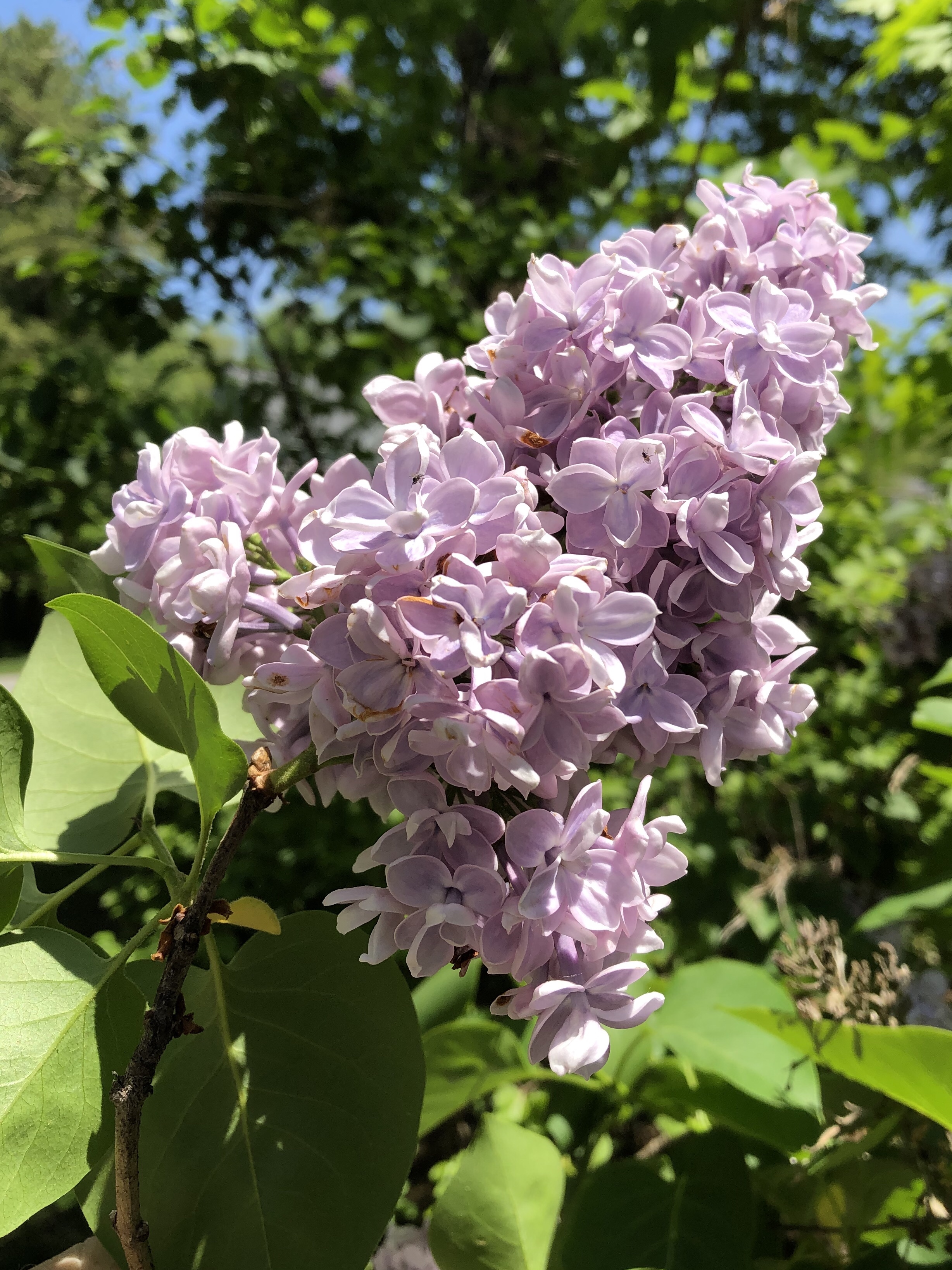
    A garden is a complete sensory experience, and any gardener will tell you that the smells of the garden are as memorable as the sights.  Monarda smells like tea leaves (because they are), tomatoes and marigolds announce the return of summer with a sniff of their leaves and stems.  Basil, mint, rosemary and other herbs have their own delightful fragrance. And of course the flowers offer their own too.  We’re witnessing the long parade of flowers each in turn announcing their time to shine.  For the last couple of weeks that time has belonged to the lilacs.  Their dance isn’t nearly long enough before they recede into the background of the garden like most flowering shrubs.  The magic in lilacs is the fragrance. And they sway in the breeze releasing it to all who come nearby. I make a point of visiting every chance I get, but notice others who love lilacs as much as I do never make the effort to pay them a visit. So I quietly bring them inside to perfume the kitchen. And celebrate spring in New Hampshire.


  • Sauntering

    Sauntering, which word is beautifully derived “from idle people who roved about the country, in the Middle Ages, and asked charity, under pretense of going a la Sainte Terre, to the Holy Land, till the children exclaimed, “There goes a Sainte-Terrer,” a Saunterer, a Holy Lander.  They who never go to the Holy Land in their walks, as they pretend, are indeed mere idlers and vagabonds; but they who do go there are saunterers in the good sense, such as I mean.  Some, however, would derive the word from sans terre without land or a home, which, therefore, in the good sense, will mean, having no particular home, but equally at home everywhere.  For this is the secret of successful sauntering.  He who sits still in a house all the time may be the greatest vagrant of all; but the saunterer, in the good sense, is no more the vagrant than the meandering river, which is all the while sedulously seeking the shortest course to the sea.  But I prefer the first, which, indeed, is the most probably derivation.  For every walk is a sort of crusade, preached by some Peter the Hermit in us, to go forth and reconquer this Holy Land from the hands of the Infidels.” – Henry David Thoreau, Walking

    Well that paragraph was a mess.  I love Thoreau, but my goodness does he go all over the place with his writing.  So while I’ve quoted him here, I’ve used boldface to emphasize a few points that fascinated me enough to include the quote at all.  First and foremost is the origin of the word itself.  Sauntering, from Sainte-Terrer, is a lovely example of how English words are derived.  Pure magic in this word; saunterer, both in origin and in the magic it conveys.  Thoreau’s second observation, that the successful saunterer is at home everywhere hits home for this saunterer at heart.  My own adventures in travel with purpose have confirmed this to be true.

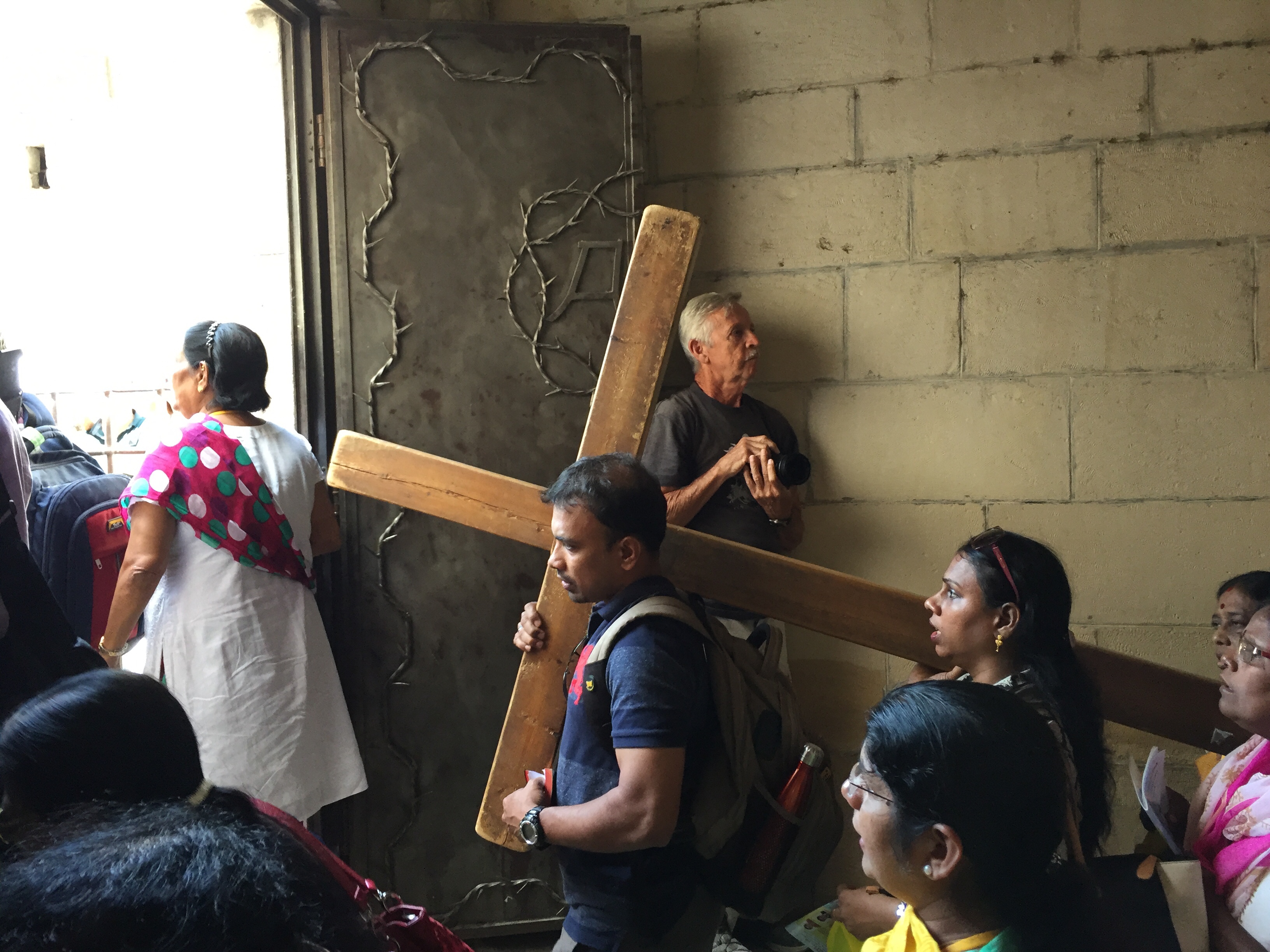
    Three years ago I actually went to the Holy Land, not on a pilgrimage, but as a history buff.  Walking through the Old City was meaningful for me, I can only imagine what its like for the millions of followers of Judaism, Christianity, and Islam.  In some ways I was a vagabond walking through the Old City.  My purpose was history, and I found it to be a successful trip. I got as much out of seeing a cart loaded with bread or an old flight of stairs with two ramps built into them to accommodate carts like the one saw loaded with bread.

    Back to Thoreau for a moment, and something he wrote later in the same book: “I think that I cannot preserve my health and spirits, unless I spend four hours a day at least – and it is commonly more than that – sauntering through the woods and over the hills and fields, absolutely free from all other worldly engagements.” Which brings me to Gunstock…

    Today I went sauntering in a different way, with hikes up to Mount Gunstock and Mount Belknap.  You couldn’t pick two more different walks, between a hike in the Lakes Region of New Hampshire and a walk through the streets, churches and markets of the Old City in Jerusalem.  But to me, they’re both meaningful in their own way. One payoff is the views of the mountains and Lake Winnipesaukee, but so was the forest floor scattered with Trillium, the blueberry bushes in blossom, and criss-crossing a mountain stream several times. If sauntering means traveling on a path towards enlightenment, then both places can get you there.

  • Catalpa

    Sitting at Boston Medical Center for an appointment earlier today I looked up to see a pair of Catalpa trees in full bloom. There’s nothing like a Catalpa tree, whether in bloom or later in the year when giant string bean-like fruits dangle off the branches. It’s a tree that I once promised myself I’d plant, but alas the yard isn’t right for a tree of this size.

    When I was in 8th grade my family moved to Chelmsford, Massachusetts to a beautiful old Victorian house with four acres of land. The house had four apple trees and a giant Catalpa tree right in the center of the yard. In front of the Catalpa was a large lawn that we’d play games on. We watched our dog get run over by a neighbor one day while playing kickball. Behind the Catalpa we rigged up a tire swing on a maple tree and would see how high we could go. One of the neighborhood girls whom I had a crush on passed away this year from cancer. We haven’t lived in that house in 34 years and I haven’t seen her since at least then.  Funny the things that spark your memories.

    Since then those who came after us tore down the old barn and the tack room that were attached to the house. I used to envision converting that barn into a living space. Such are the dreams of a teenager. I had a real connection to that house until I went off to college and our parents divorced. Those who came after us also ripped out the old lilacs that grew along the border with the neighbors. They changed the color of the house back to white.  I’m sure they did a lot more than I can see from a drive-by or a virtual Google street view flyby.  Whatever, it’s their house now – I just lived there once upon a time.  But that time was memorable for a lot of reasons; good and bad.  I miss the house but I don’t spend a lot of time pining for the days in Chelmsford.  I moved in as a 13 year old, moved out as a 19 year old.  So almost my entire teenage years were spent in that house.  A lot has happened in 34 years.  I’m happy to know that that Catalpa tree is still there, blooming year after year. It’s outlasted a lot of things in its time.

  • Cafe Carpe Diem

    Like millions of bloggers, I’m sitting in a local coffee shop writing away with a slight espresso buzz.  I’m old enough to remember when coffee shops were very different animals, but young enough to appreciate the change.  To me signs of progress are increasingly great coffee shops, micro breweries and distilleries, locally-sourced food and the wide availability of avocados and artisan cheese.  Its the little things in life, and life boils down to these daily experiences strung out over however many days we’re given.

    “The secret of life is enjoying the passage of time.” – James Taylor, Secret O’ Life

    Starbucks really accelerated the explosive growth of great coffee shops.  Even the crappy coffee places had to up their game a bit.  Samuel Adams on the east coast and Anchor Steam on the west coast upped the beer game in our darkest hours of beer mediocrity.  Others looked around and said we could do the same with whiskey and vodka and cheese and chocolate….  really almost anything.  Nowadays I can’t drive through any remote crossroads without seeing a sign for a distillery, organic meats and cheeses, vineyard, brewery or local coffee shop with freshly roasted Italian espresso.

    As a child of processed food 1970’s America I love how far we’ve come.  No longer the laughingstock of the world when it comes to food and spirits, America (at least the part I live in) has embraced all things artisan.  And that greatly enhances this daily experience.  Twenty years ago I remember driving to the Starbucks in the center of Andover, Massachusetts to get my dose of the good stuff.  There weren’t a lot of Starbucks on the east coast back then, but Andover had one, betraying the hipster culture of this Philips Andover prep town.  Two doors down from that Starbucks was a chain bagel place.  Today the bagel place is a distant memory – a casualty of low carb diets or changing tastes.  What was amazing in 1990 is average today.  And chain bagels are… average.

    That Starbucks is still going strong, but walking in I stood in the wrong spot and some Andover-attitude babushka jumped in front of me and whipped out her phone app without a thought for the injustice of it all.  The barista was unsympathetic; after all I stood in the wrong spot.  So I took a step back and looked around, realizing that it wasn’t really the vibe I was looking for anyway.  I walked out and walked down the street to a local coffee place called Nero, which has better food, acceptably robust coffee and an independent, cool vibe that met my needs.  And that’s where I wrote this blog, thinking about Wonder Bread, Schlitz Beer, Ring Dings, Howard Johnson’s Chicken Croquettes and how absolutely far we’ve come as a society, and how far I’ve come as a consumer.