Month: September 2019

  • The Land Informs

    In New England in the spring of 2006 it started raining and never stopped. The rivers soon overflowed their banks, creating lakes where there was once roads, parking lots and lawns. The Spicket River closed large sections of Salem, New Hampshire and downstream in Methuen and Lawrence, Massachusetts. Ponds too were overflowing, and dams were reaching a breaking point.

    It was at this point that officials in my town decided it was best to release the floodgates on the dam on a pond not far from me. Releasing the water would immediately relieve the pressure on the earthwork holding back the flood waters, which may have been catastrophic had it burst. I live downstream of this dam. When the flood waters were released the stream quickly became a churning serpent racing downhill, picking up momentum in a race to the Spicket River. It reached its first choke point at a culvert up the hill on my street, filled rapidly at this new dam and flowed sideways across a neighbor’s lawn onto the street, which became a riverbed. The crest on the road soon channeled this river onto the lawns of each neighbor in succession until it reached mine.

    When we built this house in 1999 I planted a rugosa rose at the end of the driveway. In seven years it had filled into a fragrant shrub occupying a challenging spot where not much else would grow. It served as the perfect dam for the raging white water racing to meet it. The water swirled around the shrub creating an eddy, which quickly started working on the driveway before continuing on to the end of the street into Hog Hill Brook, which in turn flowed to the Spicket River, then the Merrimack River and finally to the Atlantic Ocean.

    When the rains stopped and the waters receded, a chunk of the driveway was gone. The street fared worse, with long sections of asphalt peeled away. And the bridges downstream still worse than that. But the houses were spared and nobody died, so all told it could have been much worse. As events go it was memorable for those who witnessed it, a triviality to those who hear the stories of that day.

    Memories fade, people move away. but the land often informs if you pay attention. Today that resilient rugosa rose still stands watch at the end of the driveway. The street was repaired and you can still see those patchwork repairs as you walk up the hill, tracking the path of the water that day. The town put in a larger culvert and dumped a pile of dirt leading to it to channel future floods better. My neighbor plants tomatoes on top of it. He’s moving soon, another memory of that day moving away from the site. There are now three bridges dated 2006 or 2007 spanning the Hogs Hill Brook and the Spicket River that betray what happened that spring. The driveway is patched but has never been quite the same. When I walk on the beach near the mouth of the Merrimack River I wonder sometimes if I’m walking on bits of that driveway mixed in with the sand, reunited once again with my feet.

  • Viewing Hedonism Through a Stoic Lens

    I was making coffee with the AeroPress this morning. I’ve quickly grown to love this coffee press for its ease of use, quick cleanup and the great cup of coffee it produces. It got me thinking about this concept of hedonic adaptation I’d been reading about, where we quickly become accustomed to new things that once excited us. Every iPhone owner has experienced this the day a new iPhone was introduced. The trick is to not to allow stuff to dictate your mood. Easier said than done, but there’s value in trying. Will I eventually take the AeroPress for granted? Probably, but Stoicism offers a path.

    “Regularly reminding yourself that you might lose any of the things you currently enjoy–indeed, that you will definitely lose them all, in the end, when death catches up with you–would reverse the adaptation effect.” – Oliver Burkeman, The Antidote: Happiness for People Who Can’t Stand Positive Thinking

    There you go: Memento mori. Stoicism taps me on the shoulder once again telling me not to worry about all that stuff, you’ll lose it all in the end anyway. Your happiness can’t be dependent on the newest shiny toy you buy. None of that stuff matters. Does that mean I can’t enjoy that AeroPress? Not at all, just don’t depend on an object for happiness. That’s a fools game, and expensive to boot.

    According to Wikipedia, “The hedonic treadmill, also known as hedonic adaptation, is the observed tendency of humans to quickly return to a relatively stable level of happiness despite major positive or negative events or life changes. According to this theory, as a person makes more money, expectations and desires rise in tandem, which results in no permanent gain in happiness.”

    I’m watching Sunday football as I finish writing this, tolerating the endless stream of commercials promising me happiness if I buy this car or that, order pizza from that delivery place, or buy that latest iPhone with the cool-ass camera(s). All designed to trigger desire for what you don’t currently have. And all nonsense when you view it through a stoic lens.

  • Lost in an Autumn Playlist

    Autumn. Smell the pumpkin and ripe apples and decaying leaves and wood smoke. Late September through Thanksgiving in New England offer vibrancy with the fourth sense fully engaged in the game of being alive. I could live in many places in the world, but these crisp nine weeks are when I appreciate living in New Hampshire most.

    Autumn. Blue jeans and long sleeves, the heat radiating through a mug warming your hands, wiping dew off the chair before sitting down in the backyard writing chair. Blankets pressing you down into the mattress like you’re a panini. Socks. The days grow shorter and cooler, and the wardrobe changes with the tilt of the earth. We’ve been here before, and we grow reacquainted once again with fabric on our extremities. The dance with Autumn inevitably means literally feeling her on your skin.

    Autumn. Yellow and red waves sweep first over the highlands and wetlands, moving southward and finally capturing the strongest holdouts in between. Northern vistas so stunning you can’t help but stare, and apologize profusely for being so rude. I confess my productivity decreases when I travel to Vermont or northern New Hampshire. Like stained glass in a church, the leaves demand your attention.

    Autumn. Sweetness of apples and the omnipresent pumpkin spice. Last of the harvest turned to cider and preserves. Lighter summer fare giving way to richer dishes that warm you inside out. If you haven’t lost those few extra pounds by now you face an uphill battle as caloric intake holds the advantage. Baked goods take the place of salads, rum gives way to scotch, soups and stews and casseroles tempt and delight. The scale be damned.

    Autumn. The fading crickets song grows sadder while the crows caw grows bolder. Soon the red-winged blackbirds and other transients fill the trees with a cacophony of excited conversation. The hiss and pop of an outdoor fire. And always, a playlist of standards for Autumn. There’s a soundtrack for every season, and Autumn is when my playlists grow reflective.  In the spirit of the senses, I’ll limit myself to five standards that set the tone for Autumn in New Hampshire:

    Philosophers Stone by Van Morrison (King of Autumn music)

    The Long Day is Over by Nora Jones

    I Was Brought to My Senses by Sting

    You Don’t Have to Say You Love Me by Shelby Lynne (sorry Dusty)

    Deacon Blues by Steely Dan

  • Ghost Dancers in the Wild

    We’re all borrowing time, and the ground we stand on too. How many people passed through the spot you’re occupying now? And what was their story? That’s history, and you either dance with the ghosts or ignore them. I like to dance with the ghosts – bring them back to life for awhile. Perhaps they’ll welcome me warmly when I reach the other side.

    Yesterday I had a business lunch with a couple of consultants in Boston. After the usual talk of feature enhancements and product roadmap one of the consultants mentioned his drive from Lake George to Quebec City, and suddenly we’re all pulling out our phones comparing pictures of various forts we’ve visited. Were we the hippest table at Row 34 that day? No doubt. But it’s nice to run into people who know the lay of the land as well, or better, than you do.

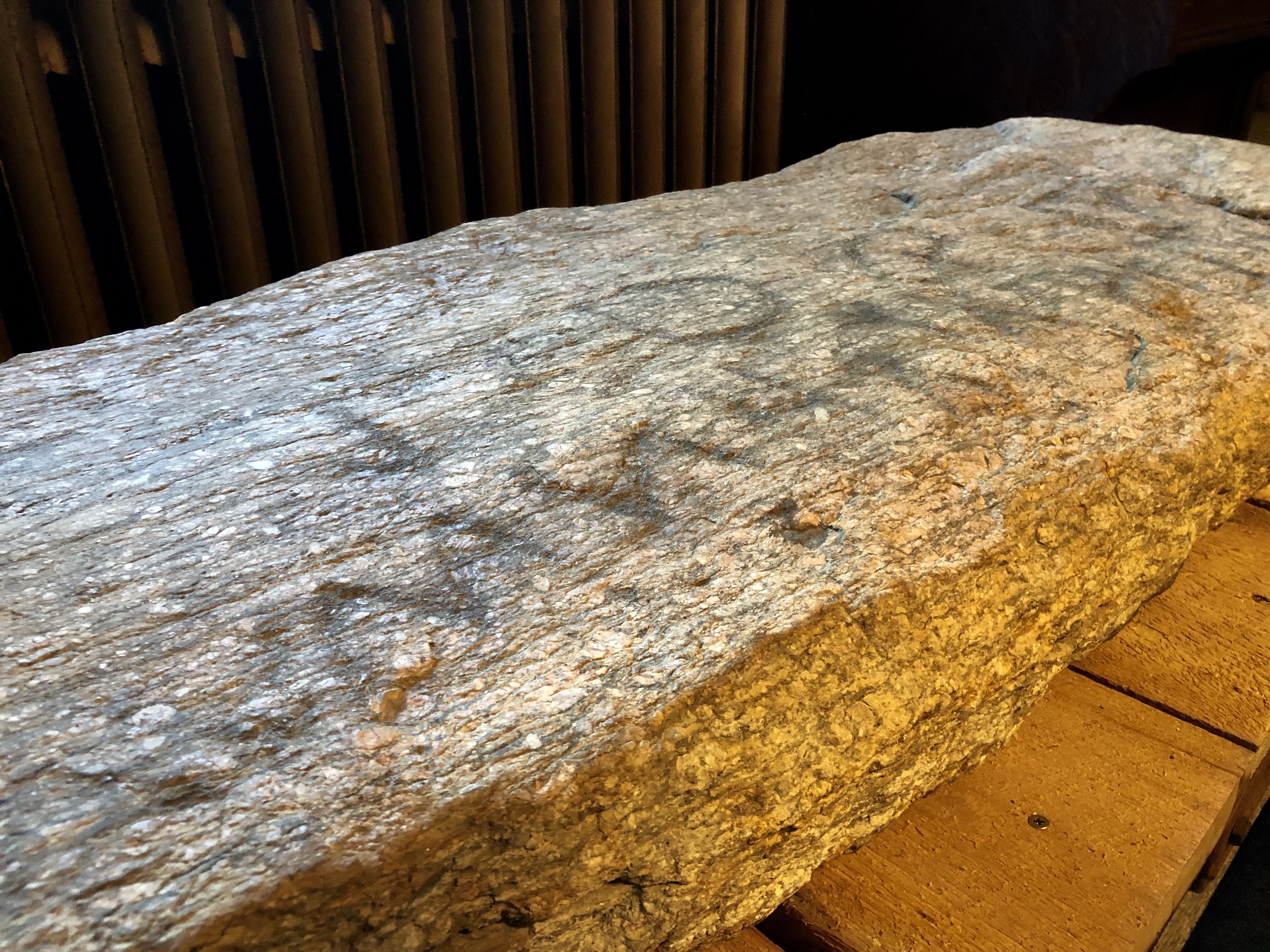
    I stopped by the Bourne Historical Center recently as a follow-up to a visit I made to the Aptucxet Trading Post Museum a few weeks back. Both are places to meet other history geeks, and places where you can talk openly about King Philip’s War without the listener backing away slowly. Ghost dancers aren’t always easy to spot in the wild, but corral us in a museum and we open right up.

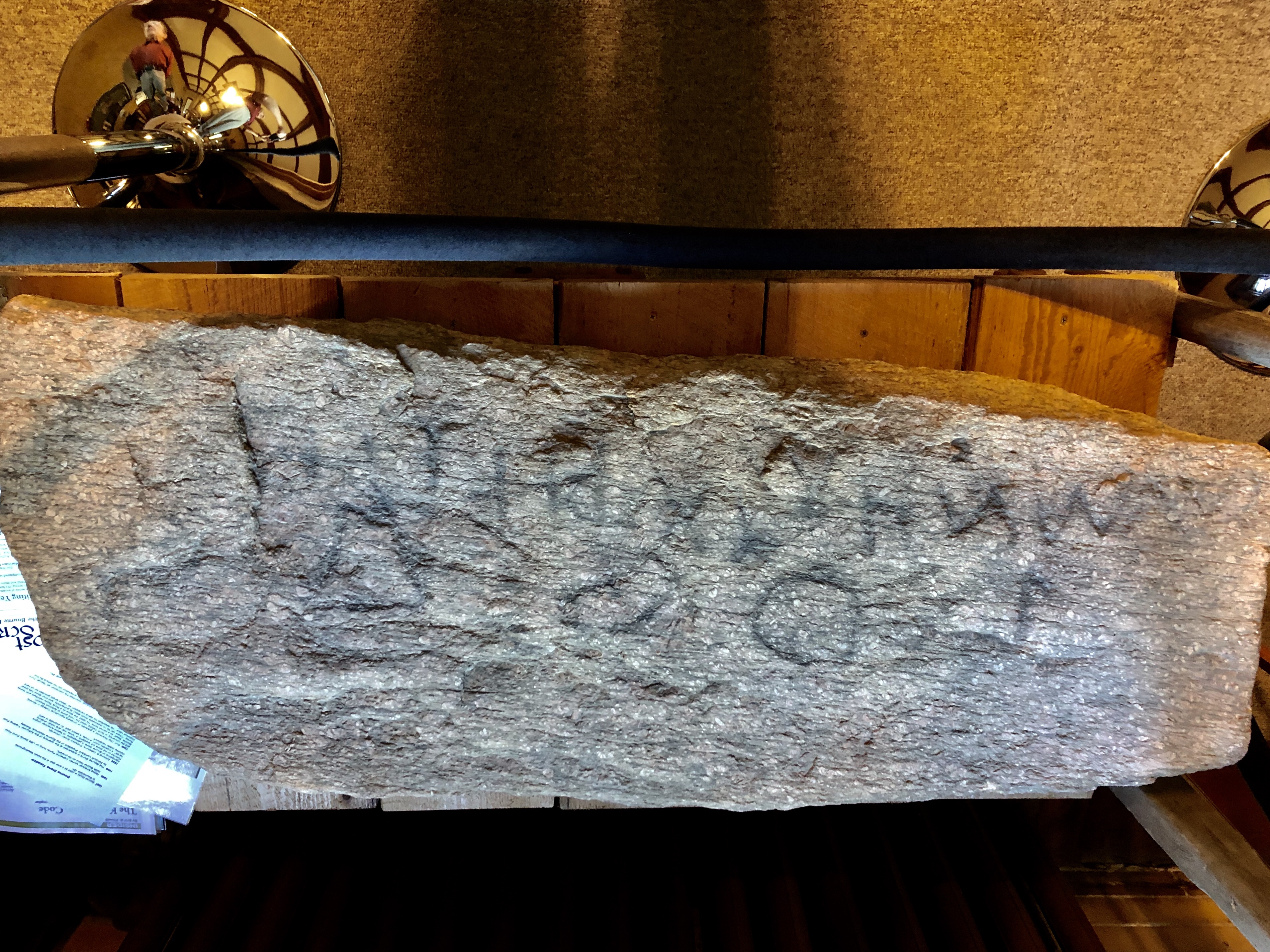
    Aptucxet was missing one artifact that brought me eventually to the Bourne Historical Center. Specifically, a rock. History is all sticks and stones and the occasional cannon, isn’t it? No, it’s the stories behind those things. It’s always the stories, the rest of this stuff just helps you see it better.

    Anyway, that rock. The Bourne Stone. A piece of granite engraved with markings (pictographs) sometime before the 1650’s. Was it some kid with time on their hands scratching pictures on a rock or some ancient wisdom being passed down to us in a language lost to history? Who knows? But there’s a story in that rock, from the person who marked it to the threshold it once occupied at a Native American meetinghouse and the many people who have stepped on it, touched it and speculated on its meaning ever since.

    I’m no archeologist, but I found it interesting enough to stop by for a look. Maybe the sailboat engraved on the stone captured my attention, or maybe I have a thing for questions with no answer. Whatever it is, I’ve checked a box that’s been nagging me a bit. The mystery of the Bourne Stone for me was solved. What is it? What does it look like? The stories behind it I leave for other ghost dancers.

  • Stargazing

    “But let’s not talk about fare-thee-wells now
    The night is a starry dome
    And they’re playin’ that scratchy rock and roll
    Beneath the Matala Moon” – Joni Mitchell, “Carey”

    These particular lyrics jump out at me every time I hear this song.  The spell of a starry dome night on a beach in Mexico with rock and roll music playing.  I’ve done my best to duplicate that portrait many times over the years, sometimes on a beach somewhere, sometimes just in the backyard around a fire pit, and sometimes on an island on a New Hampshire lake with loud music, fire and friends.  Stars over water, stars high on mountain tops, stars in the desert…  always stargazing in the darkest corners I can find.  Epic bonding time with my dog for years before he couldn’t go on our stargazing walks anymore…  and it seems I wouldn’t without him.

    The days grow shorter with the tilt of the earth away from the sun in the northern hemisphere.  Better suited for seeing that starry dome overhead.  A good reason to get back to nighttime walks, head tilted up for constellations, satellites, and the occasional shooting star.  There’s so much going on up there, and we sit in our houses unaware of the dance happening above the roof.

    “You know Orion always comes up sideways,
    Throwing a leg up over our fence of mountains,
    And rising on his hands, he looks in on me
    Busy outdoors by lantern-light with something
    I should have done by daylight, and indeed,
    After the ground is frozen, I should have done
    Before it froze, and a gust flings a handful
    Of waste leaves at my smoky lantern chimney
    To make fun of my way of doing things,
    Or else fun of Orion for having caught me . . .”

     – Robert Frost, “The Star Splitter”

    Orion returns to the dance soon.  I’ve missed this sky dancer most of all these summer months.  I smiled reading Frost’s description of Orion throwing a leg sideways over the mountains.  Were I that clever with a few choice words!  I’ll get there, or at least enjoy the process of trying to get there.  We can’t all be Robert Frost or Joni Mitchell spinning magic in words.  But they weren’t that once either.  Just get out there and do your dance under the stars.  They won’t judge you.

  • It’s Just a Bird

    Perfectionism is a mean, frozen form of idealism, while messes are the artist’s true friend. What people somehow (inadvertently, I’m sure) forgot to mention when we were children was that we need to make messes in order to find out who we are and why we are here – and, by extension, what we are supposed to be writing.” – Anne Lamott, Bird by Bird

    Yesterday afternoon I re-read my blog post from the morning and noticed an ugly spelling error. Things like that used to horrify me, now I just laughed at my mistake and clicked on the edit button to make it go away forever. If every blog post had to be perfect I’d never get anything done. Which is why Lamott’s quote above resonates with me. I’d read Bird by Bird years ago and it didn’t stick. I didn’t write then, I just thought about writing.

    Lamott’s title is derived from a story about her brother and father, who basically told his son to just chip away at a project one part (birds, of course) at a time instead of being overwhelmed by the whole. It reminds me of something my daughter and I say to each other… “It’s just a bird”, or “no big deal”… at any rate the bird analogy stands. Take things one step at a time, chip away at things and don’t worry about making it perfect on the first draft (there’s no such thing anyway). Just do it as Nike would tell you.

    That chipping away at it concept applies to any project. Just stop thinking about applying it and do it already. Isn’t that the root of every motivational mantra ever written? And every kick-starter campaign? And every sales meeting? But knowing the trick and doing the trick aren’t the same thing, are they? Planning to do something feels like you’re doing something. But we know better.

    I’m reading six books at once right now, and for the life of me I don’t know why I picked up Bird by Bird to read again. But a little bird was calling me and here we are. And in reading it again it resonates as it hadn’t before.

    When the student is ready the teacher will appear

    There’s more to do. My day job calls and I know there’s more to say. There’s always more to say. Every great book I’ve ever read left me satisfied but wanting more. This clunky little blog is bouncing between history, gardening, birds, travel, music and a hundred other passing fancies. But the heart of it is the journey towards better writing. The ritual, practiced daily. Bird by bird.

  • Funny that Way

    Few things get the eyes rolling faster on those who Know me best than me mentioning my indignation over ambient light and noise. Both topics play on my greatest hits collection of irritants for only me. Each is a consequence of proximity to… neighbors.

    Don’t get me wrong, I like my neighbors. Until they do things that normal people do that encroach on my world. Things like mowing the lawn, vacuuming, or the worst offense, leaving a light on. Nothing encroaches on an evening outside by the fire pit like a neighbor’s floodlight illuminating your backyard. Nothing illuminates that feeling of waking up with the world like a neighbor’s floodlight shining in your window shouting “Are you up yet??” But there I go again; greatest hits of irritants.

    Ultimately it comes down to living on the edge of solitude but not quite far enough into the deep end. My desire to see the stars runs head-on into their desire to feel safer on a quiet street at night. And so I grumble a bit to myself and a few trusted advisors and move on. I don’t really want to live on an island out in the middle of the ocean, but I do want to visit once in awhile.

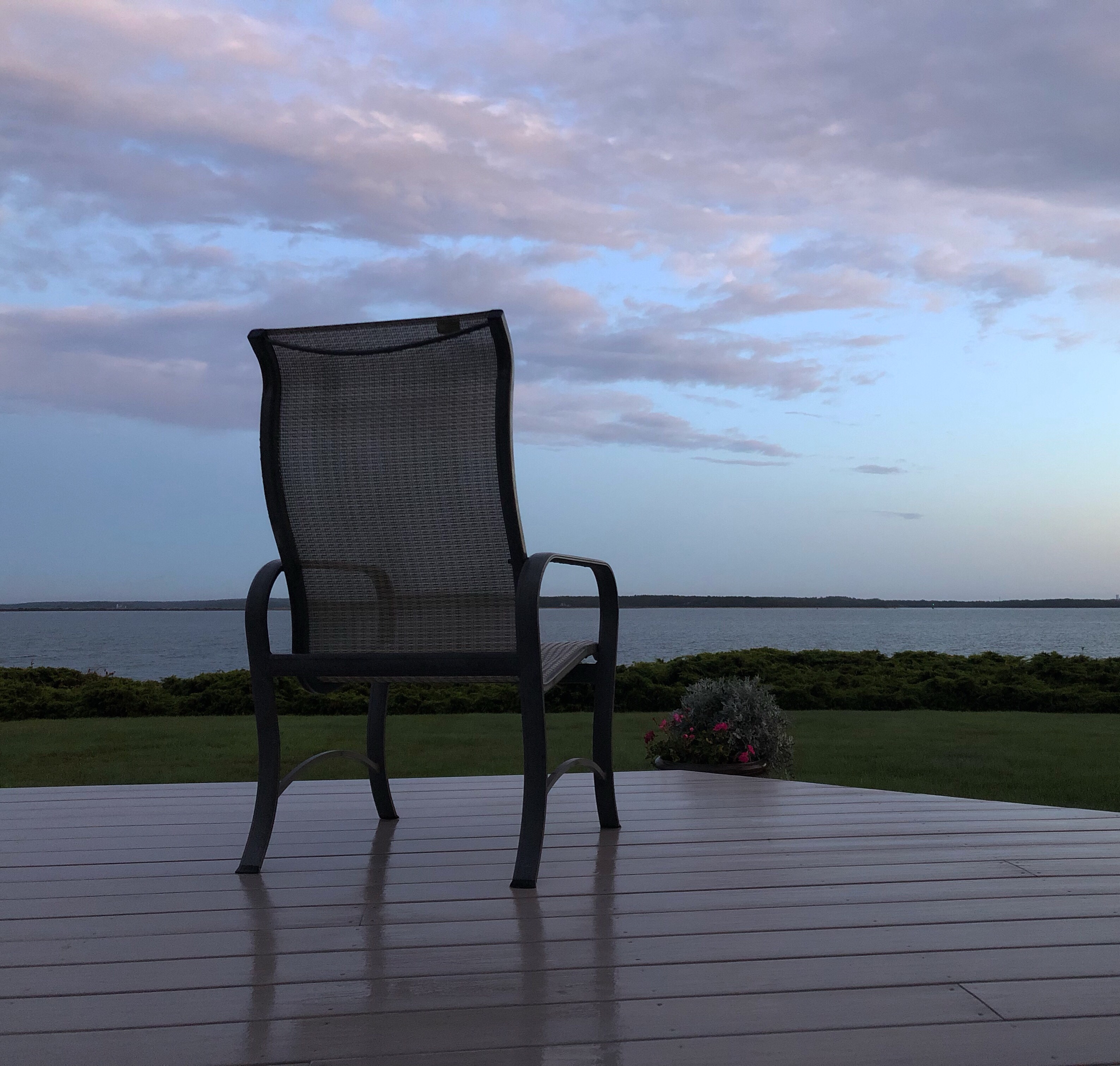
    I spent the night on the Cape last night to visit my parents. I live on the edge of the woods in New Hampshire, this is the edge of Buzzards Bay. Both are blessings. Middle of the night I woke up to the rain pelting the roof and window panes. Got up to slide the windows closed and went back to sleep until the storms passed. Got up as the sky lightened to crows and crickets deep in conversation and the slap of waves on the jetty. Sitting down on the deck to take it all in a mosquito cozied up for a drink before meeting my right hand (her Maker, apparently). This kind of encroachment I can take. So why not a little ambient light? I’m funny that way.

  • Dancing after the Dragons

    “How could we be capable of forgetting the old myths that stand at the threshold of all mankind, myths of dragons transforming themselves at the last moment into princesses?  Perhaps all dragons in our lives are really princesses just waiting to see us just once being beautiful and courageous.  Perhaps everything fearful is basically helplessness that seeks our help.” – Rainer Maria Rilke, Letters to a Young Poet

    The Ninth Wave is a painting by Ivan Aivazovsky on display at the Hermitage in St. Petersburg, Russia.  I stood in front of it 30 years ago and it stays with me still.  There are two paintings from that visit that keep coming back to mind, the other being Henri Matisse’s The Dance.  Both are stunning when you stand in front of them and immerse yourself in them.  Google both and look at the images that come up, and you’ll see a wide range of colors, from vibrant primary to muted mixed colors.  There’s nothing like seeing each in person, where it literally washes right over you and you swim and dance with the subjects in the paintings.

    I’ve got a bucket list of art and architecture that I hope to see in my lifetime.  I only have to reconcile the images I see in a book or online to know that there’s nothing like seeing the real thing.  Travel gives you that gift.  And more than seeing The Ninth Wave or The Dance in my mind, I see the entire picture of that time.  Babushkas sternly looking at college kids to make sure we weren’t taking flash photography or crossing past the ropes.  Black market traders trying to swap blue jeans for assorted USSR military stuff.  Seeing Cuban soldiers for the first time when we visited the Aurora (As a Cold War kid being in the Soviet Union and seeing Cuban soldiers was heady stuff).  Such is the richness of world travel; Seeing the world as it is and not some portrayal on a screen.

    I may never get back to St. Petersburg, but I would surely go to the Hermitage again and re-visit these two masterpieces.  I’ve changed quite a lot in 30 years, and so has St. Petersburg and Russia.  When I visited I was a college kid visiting a city with a different name in a country with a different name at the height of Glasnost, which would inevitably wipe Leningrad and the USSR names off the maps in favor of what once was and is again.  The enormity of the changes we’ve seen in the last 30 years cannot be understated.  And we’re in the middle of massive change still.  What will the next 30 years bring?  I hope I’m around to report on it.

    The image of that dragon in Rilke’s quote above brought to my mind The Ninth Wave.  This is the moment when the subjects in the painting are either driven to their deaths under the sea or they find salvation. Aivazovsky leaves it for us to interpret how it ends.  The optimist in me sees the brightening sky shining light through the wave.    Have the courage to hold on just a bit longer and things will get better.  Rise to the challenges of the moment and turn that dragon into a princess.  30 years ago it was Glasnost and Tiananmen Square.  Today it’s Climate Change, the rise of political extremism and the Hong Kong protests.  Is this the Ninth Wave?

    The optimist in me sees a positive future, and eventually the scarcity mentality that leads to extremism and greed giving way to a better world.  The report that showed the dramatic decrease in child mortality is a good example of how the world is getting better.  I’m well aware of the dragons in this world, and a little light shining through the storm clouds doesn’t mean the wave isn’t going to crash down on you.  But I see the joyful dancers of Mattise waiting for us if we can only have the courage to find the princess and join in.  What will we do to get us there?

  • A Day at the New Hampshire Highland Games

    This weekend the New Hampshire Highland Games take place at Loon Mountain in Lincoln. Want to feel like you’re in the Scottish Highlands in America? Go to Lincoln. The games seem to grow more popular every year, now a 3-day event peaking in popularity on Saturday. Saturdays bring a crush of people soaking up all that is Scottish culture, sampling whiskey, buying kilts and t-shirts, watching the games and the pipers, listening to lectures and traditional music, and of course eating; eating fish and chips, haggis, meat pies and the like.

    Advice for anyone going: Friday and Sunday are less crowded and less expensive. Purchase tickets in advance and bring cash. Both help you avoid long lines for those using plastic to enter. Almost everything is cash only, so come with plenty. The ATM line was as long as the beer line, and three machines were down to one for a time as they struggled to keep with demand. And by all means get there early! The lines to get on a shuttle bus were extremely long. From parking my car Saturday morning (when admittedly I got a late start) to when I finally entered the games was just north of an hour. As with the ATM’s, the shuttle buses struggled to keep up with the hordes of people. Get there as early as possible!

    The New Hampshire Highland Games are spectacular, and no surprise it grows in popularity every year. Blessed with good weather, I soaked as much as possible (lot happening this weekend and I only had the one day). Waiting in lines is a requirement, but simply staking a claim on the ski slope and watching the caber toss and stone press was easy enough, and wildly fun. The crowd roared when Steve Schmidt set a world record in the stone press, and was abuzz when the announcer pointed out a bear passing by further up the slope. The crowd was here for a good time and they found it. And so did I.

    In just over a month I’ll be visiting Scotland for a week. Thats not nearly enough time to see everything, but it just means I’ll have to go back. The Highland Games were a good primer for that trip, but they certainly stand on their own as a must-do event. I’m already planning for a return next year.

  • And Then Came the Crows

    It was the owls that first woke me. Talking to each other in conspiratorial murmurs.

    As the darkness faded to light they moved on and the brown thrasher took over; ever the early bird.

    Soon the sharp honk of geese flying in tight formation and whooshing feathers carving air to advantage.

    And then came the crows.

    Another Sunday morning with the neighbors at the edge of New Hampshire woods.