Month: November 2019

  • That’s Not Me

    With apologies to the rest of the Starks, the best character arc in Game of Thrones is Arya’s. Beginning way back in season one when her father Ned talks about how she’ll grow up to marry a high lord and rule his castle, and she looks at him and replies, “No, that’s not me”. It’s the beginning of an amazing journey for Arya.

    That line stays with me, as it stays with many people.  But will you listen?  Just yesterday I opened a trade magazine and scanned their list of 40 under 40 up and comers, and thought of how this might have driven me at one point in my life, but no longer. Taking nothing away from the accomplishments of those forty, and I know a few of them, I’m happy to reply; “No, it’s not me”. I stepped away from the management track 12 years ago and haven’t looked back. Knowing how way leads on to way, I doubted if I should ever come back.  Don’t live your life based on the expectations of others, choose your own path.

    “Two roads diverged in a yellow wood,
    And sorry I could not travel both
    And be one traveler, long I stood
    And looked down one as far as I could
    To where it bent in the undergrowth;

    Then took the other, as just as fair,
    And having perhaps the better claim,
    Because it was grassy and wanted wear;
    Though as for that the passing there
    Had worn them really about the same,

    And both that morning equally lay
    In leaves no step had trodden black.
    Oh, I kept the first for another day!
    Yet knowing how way leads on to way,
    I doubted if I should ever come back.

    I shall be telling this with a sigh
    Somewhere ages and ages hence:
    Two roads diverged in a wood, and I—
    I took the one less traveled by,
    And that has made all the difference.”  

    – Robert Frost, The Road Not Taken

    It turns out the path I chose was full of twists and turns and hard climbs.  The path itself diverged a few times along the way.  Financially not as lucrative at times as the original, but time is a more valuable currency than income, and I’ve followed a path that gave me a hefty time raise over the previous path.  And interestingly enough, the income hasn’t been all that far off the other path either.  Keeping score of your life using income, position, clicks and likes is a trap.  It’s nothing more than trying to meet the expectations of others.  Be yourself, and grow organically.  The path will get you there eventually, and even if it turns out to be longer and harder than anticipated, the view is better. And that will make all the difference.
  • November Woods

    My favorite walks are November walks in the woods. The leaves stir underfoot, announcing your progress for those who would listen. And I have no doubt they listen. Deer, fox, squirrels and rabbits for sure, and many more I don’t consider. But I’m not here for them today, I’m here for the land, and the productive solitude it offers.

    I don’t take the time to understand people that don’t walk in the woods. There’s nothing to understand, really. You either come alive in the woods or you remain detached and resistant. Some people come alive shopping for bargains, a place where I’m detached and resistant, so I know that we all have our element. Mine is the woods.

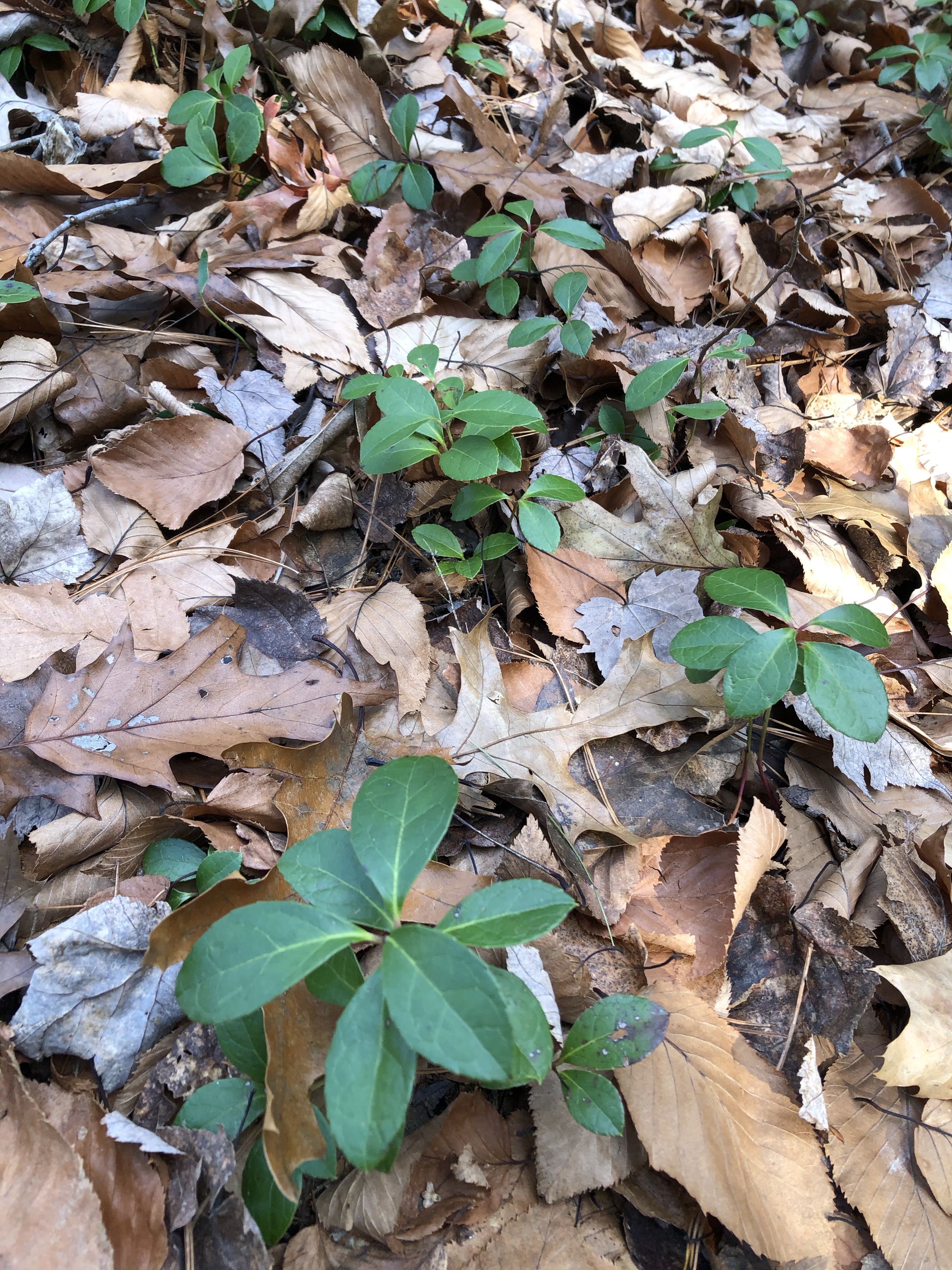
    I walk on and come across wintergreen in a sea of brown oak leaves, which reminds me of Carlisle, Massachusetts and the Great Brook Farm State Park. I pick a leaf, snap it in two and smell the minty freshness. Memories of wintergreen moments from years ago invade my mind for a moment, and I smile and release them with the folded leaf.

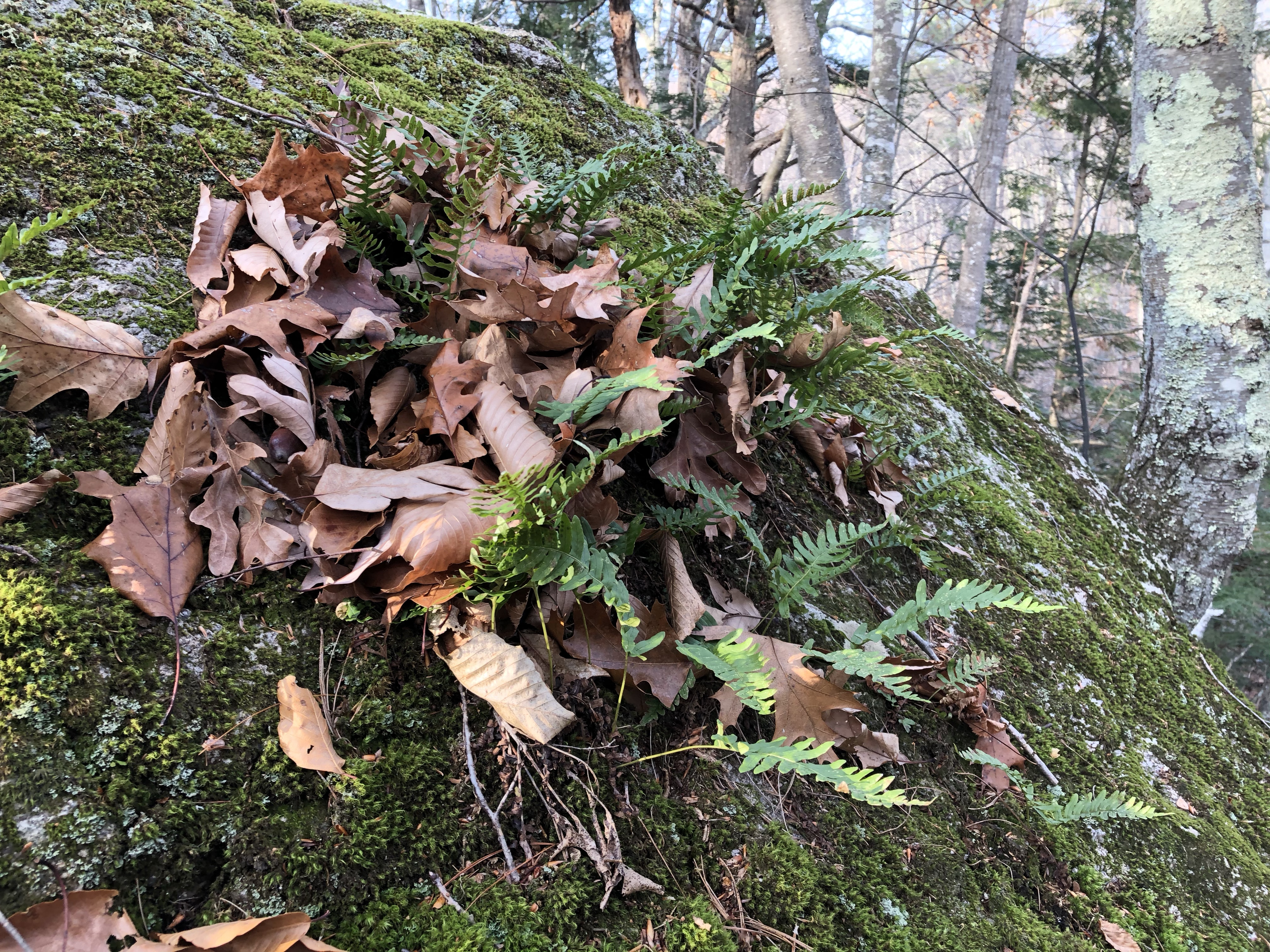
    I walk slowly through the woods; I’ve already reached my destination. I’m here to see not to get somewhere. Climbing a rise I wonder at the moss-covered granite ledge. Ferns cling to the moss, catching oak leaves that only wanted to fly. Will they return to the earth, or feed the ferns right here on the granite? That’s a question for time.

    Conservation land offers familiarity without risk. Risk that this will become yet another housing development. It’s a friend that won’t be betrayed like that friend down the street was. The land has been betrayed before, you see it in the walls and cellar holes. It may be again someday, but in conservation there’s hope for more permanence. At the very least these woods should outlast me in some form. Still, there are no guarantees: Even these woods show signs of recent harvesting.

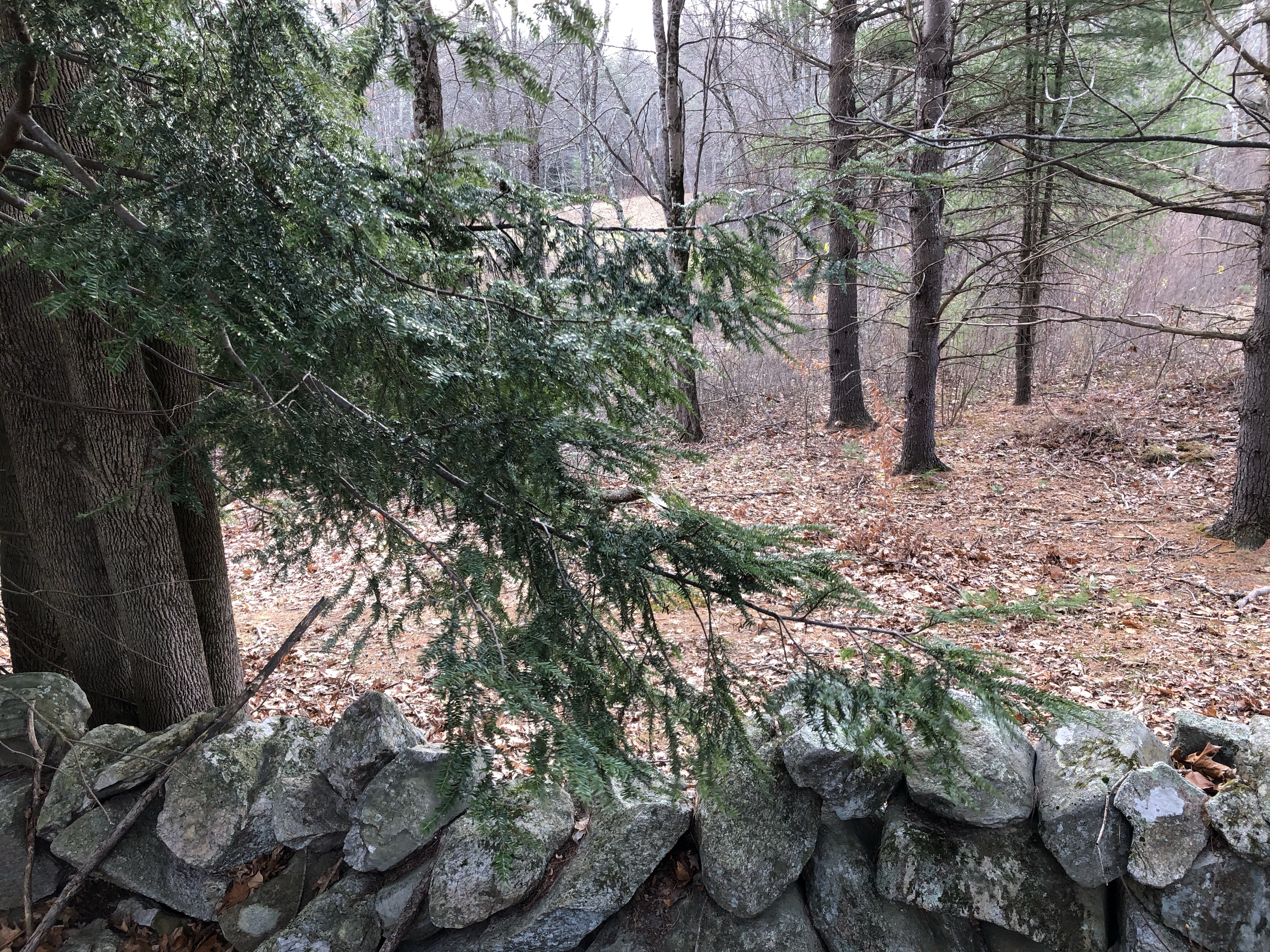
    I turn back towards home. The days are short now and I have things to do. But I pause once again for the hemlocks. For all the bare trees in the November woods, a few remain evergreen. My favorite is the hemlock, with their lacy green limbs riding the breeze. These limbs fold down neatly under snow load, while the oaks stoically resist. This means the oaks stand naked in November while the hemlocks still proudly wear their deep green dress. A case for being flexible under stressful conditions, it seems. So I stay still, watching one limb bouncing above a stone wall that stand tired but proud amongst the clutter of fallen late autumn leaves. It reminds me of an Irish step dance on a carpet of oak leaves in a granite hall. I reluctantly walk on from this performance for an audience of one with a nod to the performer. And I’m awake once again.

  • Poppies… In Flanders Fields

    Poppies are everywhere in London in the weeks leading up to Remembrance Day.  In Canada too, poppies are seemingly everywhere.  In the United States, where we call it Veterans Day, you don’t see many poppies nowadays.  And that’s a shame, because poppies are not just a symbol of support for our veterans and a gesture of remembrance for those who sacrificed for us in World War One and subsequent wars, those poppies raise millions for charity.  When I go to Canada, I make a point of purchasing a poppy for my jacket.  And I did the same when I went to London the last week of October and the first week of November.

    And how did poppies come to symbolize Remembrance Day?  From this poem:

    “In Flanders fields the poppies blow
    Between the crosses, row on row,
    That mark our place; and in the sky
    The larks, still bravely singing, fly
    Scarce heard amid the guns below.

    We are the Dead. Short days ago
    We lived, felt dawn, saw sunset glow,
    Loved and were loved, and now we lie,
    In Flanders fields.

    Take up our quarrel with the foe:
    To you from failing hands we throw
    The torch; be yours to hold it high.
    If ye break faith with us who die
    We shall not sleep, though poppies grow
    In Flanders fields.”

    – John McCrae, In Flanders Fields

    So do take a moment to remember those who sacrificed so much a century ago, and those who have served since then.  May we never break faith and have their sacrifice forgotten.  And may we never have another war where such sacrifices are needed.

  • Walking In Their Footsteps

    There’s a moment 7:24 into the James Corden Carpool Karaoke with Sir Paul McCartney when James remarks, “If my grandad were here right now he’d get an absolute kick out of this” and McCartney replies, “He is.” That moment grabs me by the throat each time I’ve watched it. After a trip to Liverpool a couple of weeks ago, I’ve revisited the episode on YouTube a few more times for the “I was right there” time warp it offers. Which is closely related to the “They were right there” experience of walking in their footsteps on that day.

    We’re all souls marking our time on this planet, eventually our time ends and we’re remembered in moments like Corden’s. Generations later we’re just a small ripple, echoes that show in the traits of future generations, the equivalent in personality to having the same color eyes or the same shape to the earlobes. I can only hope my children carry my better traits to the future, and leave the more annoying stuff behind. But whatever will be will be.

    As I write this my friend the Carolina Wren is singing her morning song outside. We’re well into November and I thought she’d have migrated south by now. But it seems she wanted to stick around a bit longer, brightening up the days with her songs. It’s a sound I wasn’t familiar with until she arrived just this year, but one I won’t ever forget now. It’s funny how little things like that mean so much over time. Which makes me wonder, how will we be remembered?

  • The Farmer and the Poet

    It sits perched atop its fellow stones, neatly laid as a capstone of sorts. Who’s hands laid this stone? A farmer from the earliest days of this nation? Or perhaps their grandchild, the last generation to farm this land before the young turned to the mills or went west? Once the land surrounding the wall was cultivated, bearing harvests of corn, beans and squash. Then the farms faded and the trees regained the land. This wall marks the past, and this stone waits eternally to tell its story, like that poem buried in a musty old book on a library shelf. The farmer and the poet each speak to us through their creations long after they’re gone. If only we’ll listen.

  • Be Alive

    Quiet Sunday mornings are precious things.  This first Sunday morning back from vacation with no travel scheduled for the next week makes it even more so. A good time to contemplate picked-up pieces and solve the puzzle … like this Oscar Wilde quote:

    “Nowadays most people die of a sort of creeping common sense, and discover when it is too late that the only things one never regrets are one’s mistakes.”

    Which seems to pair well with this (recurring) observation from Seth Godin just this morning:

    “A few people somehow avoid these lessons [of following the rules school lays out] and become instigators, impresarios and disruptors instead. They’re not only dancing with infinity but completely unsure what’s going to work, and yet they are hooked on leaping forward.”

    There are some bold concepts to shake the complacency here. Most people try to avoid mistakes, but it turns out those mistakes are leaps forward not achieved if you don’t make them. Ironic, isn’t it? Go out on the floor and dance with infinity, or be a wall flower wishing you’d taken the risk. If I’ve learned anything in my time here, it’s that the risks can be mitigated, and the leaps are worthwhile.

    That “creeping common sense” Wilde talks about is something I’ve struggled with. But I smile at the mistakes I’ve made that have moved me forward, if only a little. Following the rules, waiting your turn, deferring to others and knowing your place each serve to bring order to society. There’s nothing wrong with making the bed, holding the door for someone else, driving safely and showing up on time for an appointment. These courtesies help us leap forward too. If you don’t weed the garden your harvest will suffer. But a little bend of the rules, an occasional left turn, a break from the norm and a few more mistakes along the way offer a bit of Miracle Grow in that dance with infinity.

    “… the only things one never regrets are one’s mistakes.”

    Ultimately Wilde isn’t indicting us for not taking risks (we do enough of that to ourselves), but rather, poking us to stop wringing our hands about whether it’s the right time or the right move and to just do it already. There are only so many days in store for all of us, and who cares if it turns out to be a mistake anyway? And I think of an image of a Polish man during the darkest days of World War II begging for his life, hands raised to his chest, seeking to be understood. Next to him are two other men, resigned to their fate, which is about to be the same as the bodies of other men sprawled on the ground. I felt empathy for that guy, who was caught up in a moment larger than himself, only wanting to be understood and to live another day. And he calls to me still, Memento mori! Go on, take the risks. Live your life today, as I myself cannot. Be alive.

  • Stumbling Upon Buried Treasure

    While waiting for a taxi to the airport I scanned the wonderful old books lining the shelves at the London hotel I’d been staying in. I do this often when I have moments like this, it’s where the buried treasure is after all. I saw two books on a shelf at eye level that drew my attention; Two Years Before the Mast, by Richard Henry Dana Jr. and an old collection of English poems. I’d read Two Years Before The Mast several years ago at the recommendation of a friend who’s doing exactly that at the moment. I flipped through it quickly, saw the old stamps indicating it was a library book and smiled. Libraries were where I found most of my buried treasure before the Google and Amazon changed everything.

    To this day my favorite discovery was an old copy of Typee by Hermin Melville pulled at random from a university library shelf in the fall of 1984. I was a freshman then, figuring out this college thing, and fascinated with the vast rows of books I could walk through. I picked up Typee and brought it to a reading nook and read the first couple of chapters, quickly falling in love with this other world. I’d return the book and come back again and again to it in the same fashion until I finished it, never checking it out (sadly not including my name on the stamp), but finishing it nonetheless. That friend who loaned me Two Years Before The Mast in turn took my recommendation to read Typee and now has a boat named Fayaway, a compelling character in the story.

    That other book, the one on poetry? I opened to a completely random page in a completely random book in an old library book stuck on a hotel shelf in London….. so you know; random. And I read this:

    Care-Charming Sleep, thou easer of all woes,

    Brother to Death, sweetly thyself dispose

    On this afflicted prince; fall, like a cloud,

    In gentle showers; give nothing that is loud

    Or painful to his slumbers; easy, light,

    And as a purling stream, thou son of Night,

    Pass by his troubled senses; sing his pain,

    Like hollow murmuring wind or silver rain;

    Into this prince gently, oh, gently slide,

    And kiss him into slumbers like a bride!John Fletcher

    Fletcher died in 1625. Analogies between sleep and dying are common, and Fletcher dabbling with the concept in this poem/song from 400 years ago illustrates that. We all want to gently fall asleep, and given the choice we’d likely all wish the same for our final sleep. Poetry either grabs you or it doesn’t. I haven’t made up my mind on this one, which means it’s the latter. Not everything you pick up in a book is going to be buried treasure. If it were what would be the value anyway? But there’s something to chew on here anyway.

    Two Years Before The Mast was written by a man named Richard Henry Dana Jr. after he left Harvard to regain his health after contracting measles. It’s a fascinating book that illustrates life onboard a merchant ship on a two year journey as they rounded Cape Horn to pick up cattle hides in California to haul back to Massachusetts. Seeing the book again prompted me to read a bit more about Dana, and I was struck by one part of his legacy. Dana Point, California is named after him. I’ve spent a fair amount of time in Dana Point, but never made the connection to the book until today. It seems I found some buried treasure after all.

  • Hidden Photographers

    I often ask people taking pictures of family or friends if they’d like me to take a photo of them with the rest of their group instead of being the hidden photographer behind the camera. Most gratefully say yes, and usually return the favor if I’m with others myself. As an avid documenter of places, people and events I come across in my life, I know a fellow hidden photographer when I see one.

    I’m not a fan of selfies.  Something in the name seems…  self-serving to me.  It screams “Look at me in this spot!  How great is this?” But a picture taken by another human of you at that same place?  It indicates, if only to me, that another person was in the story saying “Hey, this would be a good picture with you in the foreground“.  Mind games on my part perhaps, but it validates the picture for me anyway.

    Look, I understand, sometimes there’s nobody around to take the group photo so you gather up the group tightly, extend your arm as far as you can (I refuse to get a selfie stick) and snap away.  Instantly recognizable selfie picture.  Use it as you wish, but use discretion. I don’t judge, I just don’t want to do it myself.

    There’s a certain agreement amongst humans in taking photos of each other that connects us.  I took a picture of a gentleman from Asia who didn’t speak English walking across the Abbey Road crosswalk, and he did the same for us.  I almost watched him get run over taking that picture of us, as he was so focused on getting it right that he ignored the cars approaching behind him and walked out into the road with us snapping away as we crossed the walk.  Now that was a connection between two people who will never see each other again.  He almost made the ultimate sacrifice for a tourist picture. I’m certainly grateful it didn’t end up a headline. He did a great job, drama aside. And I’m happy to say his picture came out well too.  Wish I’d sent myself a copy of it.

  • Travel and Writing

    Vacations end. There’s no getting around that. But there’s value in resuming the life you’ve built for yourself at home. This morning I’m dining at a lovely breakfast buffet in London, tonight I’ll assess the empty pantry we left behind. But full instead on recent memories. That’s a fair trade.

    The hard part of writing when you travel is carving out meaningful time to do it well. For me early morning was my salvation. The easy part is having a treasure chest of material to write about. Embarrassment of riches? Most definitely. Doesn’t get much richer than London and Scotland (but I’ll surely test that in the coming years).

    Travel and writing pair well. No revelation there. Not all travel is created equal, and this trip provided a wonderful shock to the apathy of the everyday. I try to stop and smell the roses wherever I am, but sometimes you’ve got to step into a new garden to see how they tend things elsewhere. And as I head back to my own backyard, I’ll tap into these memories again and again.

  • Mind the Gap

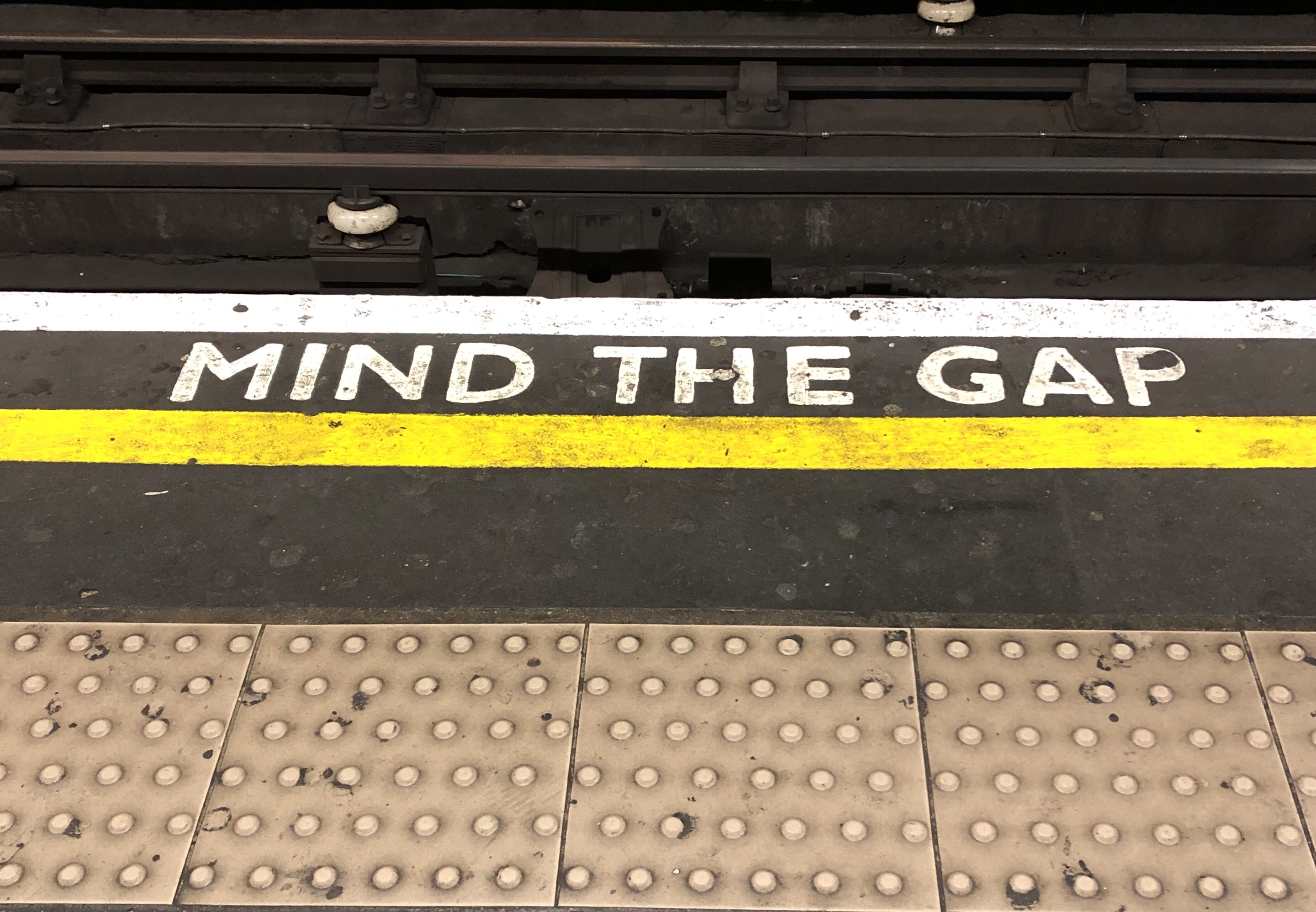
    Hustling people weave between each other like strands in a tapestry. Constant movement and sound; the music of London Underground. Laughter mingles with sounds of conversations in many languages and the grinding metal and roar of trains. Wind gusting through open end windows stir well-kept hair.

    Those in the know march down escalators on the left, dart between lines without a glance at the signs. The rest of us check signs, confirm District vs. Circle, look down and deal with personal boundaries being pushed and clutch handholds with the lurches and leans of the train. Even when you learn it it’s different when you don’t live it. Up this escalator, down that one, keep to the left and on and on.

    The polite offer up seats to the aged and women, I just stand and leave open seats to whatever fanny finds it. This business of bouncing around in a tube underground isn’t my style. I’d favor walking whenever possible, as I do in New York or Boston. But you can’t argue it’s efficiency. Countless thousands of souls pulse below the streets of London every day, re-emerging above ground in places far and wide in an endless dance. A tourist, I do the dance with two left feet compared to the tango veterans on display. But I don’t mind, I just dance on the edges and mind the gap.