Month: October 2020

  • Choosing the Path

    “A lot of people don’t want to pick up the new skills that are necessary, or they don’t want to, for example, physically move, or they don’t want to disappoint the people in the relationships that they already have to make room for new relationships.

    So everybody wants to start where they are. Nobody wants to go back down the mountain to find the path going to the top. Everybody wants to stay on the path that they’re on, maybe make a few tweaks and get to the top. Or like Charlie Munger jokes; ‘You know people always ask me how do I get to be rich like you except quicker. I don’t want to be the old rich guy, I want to be the young rich guy.’

    So I think these are the hard parts. The hard parts aren’t the learning it’s the unlearning. The hard part isn’t the climbing up the mountain its the going back down to the bottom of the mountain and starting over. Its the beginner’s mind that every great artist or every great business person has, which is you have to be willing to start from scratch. You have to be willing to hit reset and go back to zero. Because you have to realize is that what you already know and what you are already doing is actually an impediment to your full potential. And most people just don’t want to acknowledge that.” – Naval Ravikant, on The Tim Ferriss Show Episode #473

    That’s a long quote, but I found it compelling enough to include it in its entirety. Naval has a way of waking you up to yourself. He’s a deep thinker who demands deep thinking from you as well. And he reminds you that you ought to demand it of yourself.

    Sometimes you climb to a certain rise in your career, your relationship or with some other pursuit you’re deeply invested in, you look around and realize that the path you’re on isn’t going to the top of the mountain you were meant to climb. That’s happened to me a few times in my life. It will surely again at some point in the future should I stick around long enough. The question is whether you make the decision to go back and start all over again. Can you teach an old dog a new trick?

    The obvious example of this is in my inner circle is the crew of Fayaway climbing off the mountain in their individual careers and going back to zero (income) with a three year sabbatical to see the world. And with the pandemic they’ve descended back down off of this mountain that they just started climbing and gone back to jobs to reset yet again. I admire their willingness to keep at it, and they challenge and inspire me to climb other mountains myself.

    So the question is, are you climbing, descending or stuck in place? What you’re already doing is an impediment to reaching your full potential. Staying put is the easy part. The hard part is turning back down the mountain and starting all over again. So where are you going anyway?
  • Jump In First

    I called three work friends yesterday to check in. I’m a bit old-school that way; I’d rather speak with someone than text with them. Two were doing well, one not so well with troubles at home and an uncertain job situation. All are surfing the same wave of 2020 crazy that the rest of us are. But we all react to things a bit differently, don’t we? I’m not a surfer, but I know a bumpy wave in choppy conditions is less enjoyable for surfing. I believe bumpy applies equally well in how some are facing this current year.

    I wouldn’t have known about the current situation with my friend if I hadn’t called him. He’s not posting marriage updates on Facebook (and I’m avoiding that platform at the moment anyway), and you don’t just run into people this year, so you haven’t heard about so-and-so from some mutual acquaintance. No, if you don’t reach out you don’t know how someone is really doing. So by all means, reach out. Jump in first. They could probably use the connection right about now.

    I’m not a natural at this, but I make a point of trying to connect with people. If you aren’t calling to check in, you’re waiting for them to reach out to you. They could well be waiting for you to do the same, and months and years go by without a call. I have some relatives who I adore and love speaking with who I haven’t connected with in years. While that’s on both of us, I believe the fault is mine. If the phone works both ways, then there’s no reason for you to not pick up the damned phone first. You might just be the difference in a dark day.

    And that got me thinking, if life is a collection of experiences, shouldn’t we:

    Make the call?

    Jump in first?

    Ask?

    Say it?

    Get out there?

    Try?

    Do the work?

    I suppose I could go on like this, but you get the idea.  Life is a brief collection of experiences, so why not experience life? Be the first couple on the dance floor. Be the first to jump in the cold water. Be first to do it. Be the first to say it. And if you aren’t first be quick to voice appreciation for those who go before you. It took a hell of a lot for them to jump in first.

  • Several Fires Left in the Pile

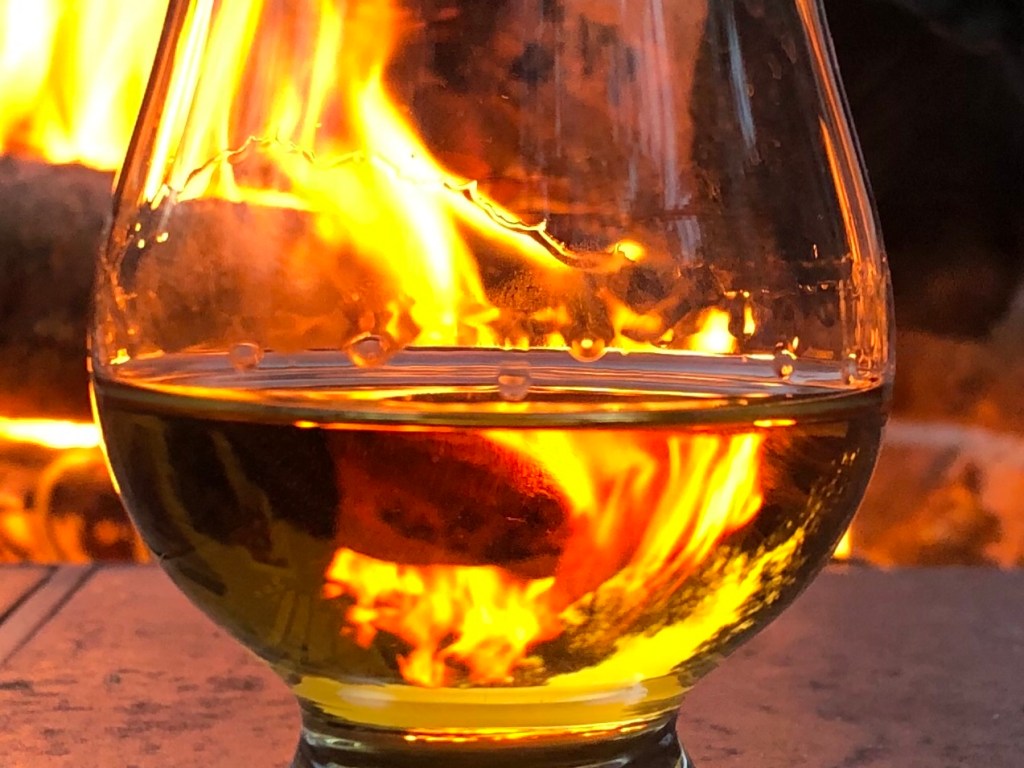
    I lit a Sunday evening fire outside on the brick patio last night. This is two Sundays in a row, almost a trend. Last week was bear in the woods fireside Sunday. This week no such excitement, just the observation that the days are getting shorter and colder. If I were a bear I’d be finding a nice place to hibernate deep in the woods. Hopefully someone else’s woods.

    Last night began with reading outside in the fading twilight. This time of year that’s earlier in the evening than I’d like it to be, but the side benefit is it gave me the inspiration to gather pine cones and fallen branches to start a fire. Living amongst the trees we have little reason to use fire starter blocks or crumpled up newspaper to start a fire, and yet I opt for the simple route too frequently. It was good to get reacquainted with starting a fire without assistance from manmade products. I conceded the lighter instead of flint. I mean, I’m not on Survivor here.

    With pine cones and kindling crackling and erupting into a small fire, I gathered firewood of various sizes, assessing the size of the wood pile and calculating how many more fires I’ve got in it before a refresh is required. My math tells me about 30 Sunday night’s worth. Unless Tom comes over and takes command of the fire stacking, in which case we may have half that number. Tom likes a big fire. And with the cold air creeping behind I see the benefits myself and stack this one a bit taller than normal as a nod to warmer glows and good friendships.

    Stacking firewood is an act of faith. You expect to be given the time to use all that wood and start a new stack. All we can do is prepare for the future, we aren’t guaranteed we’ll arrive at the party. But so far we have. Surely a cause for celebration. Since we’ve been given this opportunity, why not make the most of it? I add logs to the fire and watch it roar in appreciation. And I in turn appreciate the warming glow.

    Fire established, a dram of scotch poured, and playlist rolling, I read I few pages more and put the book aside. There was nothing more to do but contemplate the work accomplished over the weekend and the objectives that lie ahead for the coming week. What will the week bring? Tasks accomplished and boxes checked? Conversations with people of substance and depth? What can I control and what must I let wash over me? Such are the thoughts of a fireside chat with yourself.

    My son came out and joined me. We talked of his own plans for the week ahead. He brought a flashlight out, just in case that bear should crunch through the woods again. No such luck this day. Instead we tracked the planets pirouetting across the sky: Bright Jupiter and Saturn with a faint Pluto to the south, red Mars rising in the east. The cold descended on the backyard and I added two logs to the fire and a wool hat to my head. Soon my bride joined us and we talked until the pile burned down to glowing embers. Another Sunday evening, and several fires left in the pile.

  • The Cumulative Force

    Insist on yourself; never imitate. Your own gift you can present every moment with the cumulative force of a whole life’s cultivation; but of the adopted talent of another, you have only an extemporaneous, half possession. That which each can do best, none but his Maker can teach him. No man yet knows what it is, nor can, till that person has exhibited it.
    – Ralph Waldo Emerson, Self-Reliance

    Re-reading Self-Reliance is always a pep talk with the Master. Sometimes I wonder at (and have written before about) the conversations Emerson and Thoreau must have had taking a walk about Concord, Massachusetts back in the day. Emerson, a dozen years older than Thoreau, might have offered more insight early on, but Thoreau measured up over time, diving deep into Transcendentalism and immersion in Nature (with a capital N). Thoreau was undoubtedly influenced by Emerson, and Emerson by Thoreau, yet each brought their own gift to the world.

    I’ve wondered at the writing lately. The content is a collection of many topics jumbled together, and much of that is by design. The scattered thoughts of one person marching through time. I’ve debated a shift to a once a week newsletter, which inherently would be more refined, more substantial and less clutter in the inbox of those who follow. But changing to a weekly post would change my habit loop in ways I wish to avoid. No, I subscribe to the Seth Godin school of daily blogging.

    So what then? Narrowing the focus to specific topics? Specializing for the pursuit of 1000 true fans? Instead of the trivial many blog posts, focus on the vital few, as Joseph M. Juran would say? If I were to monetize this site, I’d surely do that. But the goal of Alexandersmap is to seek adventure, to understand the place I find myself in (both physically and mentally) and write about it. And so it will continue as it always has been. The rest of the writing necessarily will evolve into a more focused pursuit of those vital few. But there’s something to be said for habit loops and cadence and Malcolm Gladwell’s 10,000 hours theory. Just write, often, on a diversity of topics, and the process will necessarily change you and improve the writing.

    And so here we are, one day at a time, building the cumulative force of a whole life’s cultivation, and seeing where it takes me. Is it a talent to write every day? Or accumulated skill? It would be brash to declare the former, and modest the latter. There’s a mix in there somewhere, but I do believe in sweat equity and making the most of the time we’re given. I’m a writer as long as I’m writing. There are plenty in this world doing the same. Whether the writing is that which I can do best? That will have to sort itself out. But I’m better for cultivating it.

  • Hawks and Squirrels, Bears and Goats

    As the leaves fall the big reveal begins. What exactly have the neighbors across the way been doing all summer with all that building and landscaping? We’ll know soon enough. The golden leaves of fall are quickly conceding to fate and weather, dropping in abundance to coat the ground in a blanket of yellows and reds. And suddenly we see what was screened for months.

    I watched a red-tailed hawk flying rapid spirals up and down a white pine tree, wondering for a moment if it was injured, then recognizing the reality of what was happening. The hawk chased a gray squirrel that was scrambling up, down and around the trunk trying to reach the relative safety of the branches above, but found itself stuck in the long exposed trunk. Its only chance was this spiraling scramble. And this is where the hawk proved to be an expert flyer, keeping pace with the squirrel for what seemed like forever. But suddenly it was over, the hawk flying to a nearby branch, exhausted perhaps, but having the food that would keep it alive to fight another day. I picked my jaw up off the ground and left the hawk to its meal.

    The big reveal brought another surprise. I knew the neighbor’s didn’t have a dog, but caught a glimpse of an animal walking back and forth on their patio. A look over the fence confirmed it was a goat pacing back and forth near the patio door. A text to the neighbor to inform them of the visitor and a visit from Animal Control and the goat’s owner revealed the truth of the matter: this goat was a survivor, having run away from a black bear that’s been breaking into animal pens for a week now killing chickens and goats. Dangerous, unusual behavior for the bear. And the State of New Hampshire has taken notice, setting traps to try to move this dangerous character out of the area.

    And so it is that I finally put a wildlife camera out in the woods, beyond the old stone fence that separates land that I pay taxes on from land that is preserved and funded by all taxpayers. After close encounters with deer, coyotes, fox, opossum, skunks, raccoons, groundhogs, bobcats, fisher cats, snapping turtles, assorted rodents, bear and now a domesticated animal I’ve finally taken the hint. That preservation land is an animal highway between the brook on one side and the larger forest on the other. The land that I pay taxes on was once part of that highway, until I put up a fence to keep the dog from meeting this parade of characters marching by. Having shifted the corridor over to the other side of the wall the least I could do is capture images of the travelers. And I wonder what will we find stored on the memory card? There’s still some time left in 2020, what haven’t we seen yet? Unicorn? Centaurs? Griffons? In this year of years nothing surprises me anymore.

  • Return to the Rail Trail

    For the first time since early in the pandemic I decided to take a walk on the Windham Rail Trail after work. I figured at dusk most people would be wrapping up their time on the trail and heading home. I figured wrong. I nodded a greeting to those who made eye contact, ignored those who didn’t, and held my breath many times for the unmasked swarm of humanity that passed by in close proximity unmasked and unconcerned. I’m not a germaphobe, but at this point in the pandemic I’m informed enough to limit such risks whenever possible.

    You notice a lot of things when you walk a trail often: The change of seasons and how that impacts the trail, the increase in traffic, encroaching development, the casual disregard for others by the relative few who dispose of bagged pet waste on the side of the trail, and the ebb and flow of wildlife. My six mile walk was informative. Comparing it to the fall of 2019 at a similar time of day it was much busier, with many more bicyclists than you’d see a year ago. More walkers too, but not exponentially more. No, it was the swarms of bicycles that were noticeable… and notable. Headlines like “Bicycle sales skyrocket during COVID” come to mind. Here is the proof, relentlessly zipping past me one after the other. While I prefer quiet walks, I can’t complain about the benefits of a healthier society overall. Still, I make a mental note to walk the trail in the rain next time.

    Exactly two months ago I did some damage to my right ankle on the descent of the Old Bridle Path from Mount Lafayette. I’ve largely pretended it wasn’t injured and would cinch up my hiking boots tighter during hikes, but I have tried to nurse it back to health. During this walk I was generally pleased with the progress of the ankle and pushed on past Mitchell Pond in hopes of getting a photo or two of the foliage reflecting on water in the late day sun. But with the drought the water has receded far from the rail trail, with muddy pockets and rotting logs replacing the shimmer of water that used to greet me on this stretch of trail. The heavy rain earlier in the week was a welcome relief for the wildlife that relies on this water. A lot more would be welcome. Like many of us, I expect they’re longing for a return to normal.

    My walk was six miles out and back. I was running out of daylight and didn’t want to deal with bicycles speeding along on dark trails. It was nice to get reacquainted with the trail, but it felt a bit less special than at other times. Instead of an intimate conversation with the trail and the wild spaces that it dissects it was more of a shouted exchange in a busy venue:
    “Hey, good to see you again!”
    “Good to see you too!”
    “Can you believe all this?”
    “I know! What a crazy year!”
    “How have you been?”
    “What?!”
    “How have you been?!”
    “What?!”

    Anyway, stay well, we’ll catch up again when its a little less busy.”

    And so I left the trail thinking about how parched it looked and how many people were using it. But I was grateful for having it there for them and for me when we needed it most. We all need to get outside and get more exercise, and rail trails serve as an entry into a safer world away from automobile traffic. Even if I like the trails more when they’re quiet, I still value having a place to go close to home. More utilization means there will be more investment in similar trails in the future. And that’s a win for all of us.

  • The Work of Exploration

    “Filling the mind with illusions is not the way to carry out with honor the work of exploration.”
    – Samuel Champlain

    Champlain was a stickler for careful preparation and research. He wasn’t one to half-ass anything he did, especially when it came to sailing across an ocean to uncharted places. He learned from the failures of others, noting failures in leadership, failures in preparation, failures in aligning political alliances to have your back when you were away, and failures in the treatment of the Native American population. And he was disciplined in his resolve to be successful in his own exploration.

    When I think about Samuel Champlain, I think about the guy who famously explored the North American coast and more than anyone helped stake a flag of settlement for France. In New England we live in a culture that rightfully celebrates the arrival of the Pilgrims in America 400 years ago, surely a major turning point for the English settlement of North America, but let’s not forget those who came well before the Pilgrims. If the settlement of Plymouth was a comedy of errors and bad preparation, Champlain’s plan for exploration and settlement was meticulous.

    Champlain found a way to be an invited guest of the Spanish on a trip to their own empire, surveying and documenting the atrocities of the Spanish conquerers with the native population and with African slaves for gold, silver and pearls. He resolved to never duplicate the things he saw, and treated men with respect and honor in his own exploration. And he learned from the brutal religious wars of France between Catholics and Protestants as well, resolving to bring religious tolerance to his own settlement. Champlain wasn’t just ahead of his time, he was helping to pave the way to our time.

    I’ll return to Champlain again in future blogs, but for now I’m lingering on the quote that opens this post. A warning to not half-ass our own exploration. To be prepared and do the work necessary to put yourself in a position to not just survive, but thrive. This is true whether you’re starting a business, changing your career, working to finish a project before a deadline or planning that long hike. Filling the mind with illusions is not the way to carry out with honor the work of exploration. Be prepared, as the Marines would tell you. But don’t just prepare and dream of exploration either. Do the work of exploration too.

  • The Hard Bit

    “You write. That’s the hard bit that nobody sees.” – Neil Gaiman

    “I believe that reading and writing are the most nourishing forms of meditation anyone has so far found.” – Kurt Vonnegut

    Travel writing is easy by comparison. Experience a place or an event and then convey that bit of magic to others in words. I enjoy travel writing – consuming it and better, writing it. I think fondly of driving about in Scotland close to a year ago or Portugal the year before that and the many adventures I had, most of which never made it to the blog. Writing about places you go is easy. Like you’re sharing tales of an adventure with friends. And documenting it for yourself to remember someday when you aren’t traveling anymore… like now.

    Writing a daily blog becomes harder when you find yourself in the same room for an entire day, with breaks to get the mail or see what the sun looks like. That’s where the hard bit comes in. Tapping into your brain and finding the stories. Doing the work. Some days it goes well, some days it peters out. But I find it easiest when, as with travel, I have something to share with others. A poem that stirs the imagination. A bit of local history that was particularly fascinating. A bear walking in the woods behind the house. Some stories practically write themselves.

    I was talking to a colleague who is struggling with depression. He has much younger children, is used to being out on the road for business and is struggling in this year of years to keep it all together. I’ve heard from several people this year having similar struggles. And I understand. Everything is different, the very foundation of our being sometimes seems to be crumbling. I don’t believe I suffer from clinical depression, but I’ve had moments of despair when the whole thing seems too much. How do you deal with the hard bits? I suppose it’s different for everyone, but for me getting out of my own head does wonders. Walk more. Read more. Have more meaningful conversations with people of consequence. And write it all down. Writing draws the noise out of your head and onto paper… or whatever data center WordPress utilizes for my ramblings.

    I have a friend who calls the blog my “dear diary”, and I suppose there’s truth in that. But for me the writing solves a lot of mind games I play with myself. Processing information consumed in books or translating a poem into my own experience in writing is a form of conversation with yourself, nudged gently along by the author or poet. Long walks solve a lot of problems for me, but so does immersive reading and writing. I read the Vonnegut quote above and understand immediately where he’s coming from. I’m not the only one.

    Gaiman reminds me, whispers in my ear: I’m behind in my writing. Not blogging, but the other writing. And sure Neil; it gnaws at me. Jabs me in the ribs when I’m not looking. It waits impatiently for me to do the other things, the less important things. The easier things. And I look it squarely in the eyes and see myself dodging the truth. I have more to say. More to contribute. And there I am; back in my own head again. Perhaps a walk is in order. And a bit of writing after that. The hard bit.

  • A Bear in the Night

    Sunday night, while sitting around the fire in conversation, a large wild creature moved through the woods, announcing its presence with the crunch of dried leaves and crack of fallen twigs. Not a deer. Not a raccoon or a skunk. Definitely not a squirrel. I quietly walked into the house for the big flashlight and walked out to the edge of the fence and switched it on. Nothing but leaves glowed back at me, but the crunching and cracking continued on and away from us. The speculation on what had visited stayed with us. But we knew.

    The next day someone up the hill posted that three goats had been killed in her yard, and there was talk of a bear up to 800 pounds being the culprit. Was this our visitor? We wondered at the possibility. I walked deep into the woods in daylight looking for tracks, but quickly realized the folly of my search. I’d guess we had a solid layer of leaves blanketing any possible evidence of bear tracks. I contemplated purchasing a wildlife camera set in the woods to track future visitors. It would be good to know the neighbors a bit better. We’ve seen just about everything in our time at the edge of the woods, but haven’t yet seen a bear. But others in town have. This would be our closest encounter.

    Bear encounters have increased in New Hampshire over the years, and there have been three bear attacks over the last decade, including one this year when a man was attacked from behind while getting an air conditioner out of his car. There are reasons for this. First, the bear population has grown significantly over the years as they outpace efforts to cull them through hunting. Second, some people actively feed bears, making them less fearful of humans. And then we have the drought that New Hampshire is currently in, which forces the bears to wander further into populated areas for food. There’s a fascinating article about the increase in bear encounters in the September issue of NH Magazine.

    Bear populations, like squirrels, apparently increased with the bumper crop of acorns a couple of years ago. Well-fed bears want to stay well-fed. And so they come. I can’t help but compare the increase in bear encounters to the increase in Great White Shark encounters on the beaches of New England. Limit hunting seals and sharks and the population explodes in places we’d gotten used to having the beaches to ourselves. Something similar is happening with bear populations (and every other wild animal for that matter). Fewer hunters, more comfort with humans and drought-fueled hunger means more bears in the suburbs.

    Standing in the woods, looking back towards the house, you get the perspective of the wild things. As much as you could I suppose, given my free access to the comforts of a home just on the other side of the border. I considered my desire to get out in the wild so often, and here I was, standing in bear country, 200 feet from my back door. I looked around one last time for tracks and walked back to the other side, closing the gate behind me. But I’ll be back. I suspect the bear(s) will be too.

  • Between the Earth and the Stars

    “Be humble for you are made of earth. Be noble for you are made of stars.”
    – Serbian proverb

    I sat outside last night on a cold evening in front of a warming fire; my body at the line of the radiating heat competing with the sneaky cold creeping up behind me. I inhaled more wood smoke than I should have cheating the line to get just a little bit closer to the fire. Off in the darkness a rustle of fallen leaves in the woods betrayed a wild thing making its way past, and overhead we were serenaded by owls. It was in this moment on the edge of hot and cold, light and darkness that I sat contemplating this quote and the one that follows. Sending an offering to the universe in the form of sparks rising with the smoke. I looked up, following the rising sparks as they climb to join the stars. For who’s to say they don’t reach them, why must they all extinguish on their ascent and return to earth?

    “For my part I know nothing with any certainty, but the sight of the stars makes me dream.”
    – Vincent Van Gogh

    It seems that I am a dreamer. Surely this must be so. For my mind rises with the smoke and ashes to meet the stars. We’re all derived from this humble earth, and return there soon enough. But the stars seemingly burn forever. The stars have witnessed many a fire ritual in the scattered history of humanity, and continued their dance across the sky unconcerned about my veneration. But then a meteor blazed through the sky with no perceivable tale, disappearing in the western sky, as if to remind me that stars have a timeline as well, well beyond our scope of reference.

    2020 feels big for all of us, filled with moments that remind us of our small part in the larger game. For the stars, for the earth, it remains inconsequential. And so it must be. But in our time between the two we might derive some inspiration from the stars and make our time on earth a bit more meaningful at a human scale. We too will return to earth, but we don’t have to keep our feet planted on it. We are ourselves an offering to the universe. So burn brightly.