Month: October 2020

  • Past Peak

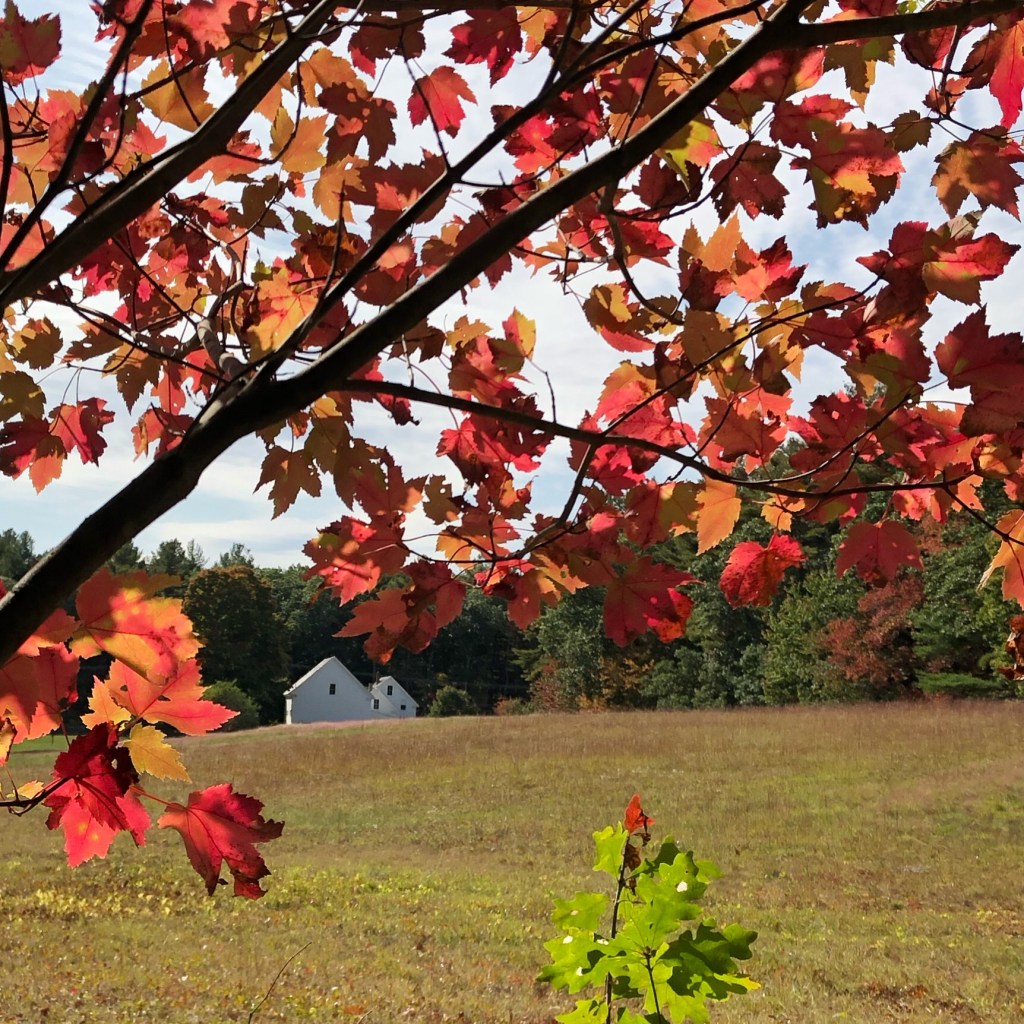
    Normally this weekend in New Hampshire is peak foliage season. But a sustained drought has stressed the trees just enough to pull peak ahead by two weeks. So the thousands of people plugging up the roadways of the Mount Washington National Forest were seeing the forest muted in dynamic impact. And yet they came. And they saw enough. For the mountains offer their own ruggedly stunning backdrop. I considered the tourists on my afternoon commute home from a day of hiking. Clusters taking a photo next to the roadside sign announcing you were in the MWNF, picture-taking all around you. Cars parked in odd assortments along the sides of the road, as if clung together by magnets the way the metal dust would clump together in the old Wooly Willy toy would clump into beards and eyebrows with a magnetic stick. Funny what you think about when you observe tourists in the wild.

    To be amongst the mountains is relatively easy when you live in New Hampshire. Less so, I suppose, if one were to live in Florida. But they have that tropical water hugging them on three sides, and I suppose the amusement parks and fresh oranges to consider too. But you can’t swim in a pond in Florida without risk of being dragged down by an alligator. There are no alligators in the mountains of New Hampshire. Maybe the occasional bear or mountain lion, but they mostly want the food in your pack, not you as food. The bigger threat to your well-being are the damned rocks. New Hampshire is the granite state, and as if to hammer that point home every trail is worn down to ankle-bending, knee-twisting rock. And in October those land mines are covered over in a bed of beautiful leaves. So a descent becomes a shuffle of sorts, as you work to avoid catastrophic injury on remote yet well-traveled trails.

    I have a friend who points out my tendency to pick overindulgent goals for myself. Really though; all my friends point this out. Like rowing a million meters on an erg in three months, or taking my family on a hike up the toughest mile of the Appalachian Trail, or peak-bagging three out-and-back peaks in one day, as I did yesterday with Mounts Willey, Field and Tom. I might have taken a hint from my hiking pro friend who refers to these three as the WTF hike. I chose to experience it on my own, with an extra helping of previous injuries I was nursing. WTF indeed.

    The morning after a hike like the WTF hike, the first step is to get out of bed without incident. Plant your feet and gradually put weight on the ankles and knees that you abused so ruthlessly the day before. Assess how much they resent you, and then shuffle to the bathroom for relief and some Motrin. This isn’t a walk of shame as much as a recognition of all you’d done, in the form of some tender moving parts and sore muscles. And I wonder in those moments of truth, am I past peak myself? Or simply overindulgent? I’d like to think the latter. All I can do is keep moving. Perhaps with a bit of moderation next time. I suppose that’s a perfectly reasonable request.

    Past Peak
  • Hiking Mount Willey, Mount Field and Mount Tom (and Back)

    I didn’t think this one through enough. An out and back using the same trail to hike three 4000 footers necessarily means you’re actually hiking five 4000 footers in a day. Ambitious. A bit reckless. A bit exhausting.

    10 miles round trip, with 4400 feet of elevation gain seems easy on paper. In practice the rock scrambles and ladders bridging impossibly steep sections made it a test of willpower. Some of those rock scrambles were borderline ladder territory as well. As wake-up calls go climbing the Willey Range Trail served as a good one. My heart was racing and my layers were shedding in no time. My mood bounced between exhilaration, despair and frustration with myself for not planning this hike a little better. But it was a quickly drafted plan B, and in hindsight, a good hike. Even if I wasn’t mentally ready for it.

    Mount Willey is 4255 feet tall and named after Samuel Willey and his family, who were killed in a landslide in 1926. Mount Field is 4327 feet and named after Darby Field, who made the first known ascent of Mount Washington in 1642. Mount Tom is 4052 feet tall and named after Thomas Crawford of Crawford Notch fame. The three peaks are relatively tame, other than the hike up the Willey Range Trail to the summit of Mount Willey. Approaching from the south, Willey is a tough ascent. It also makes a challenging descent. Starting and ending my hike with this trail set me up for a tough day. But I finished relatively healthy. And healthy with three more 4K’s checked off is enough for me.

    If you go, consider an approach from Crawford Notch or Mount Hale. The people who I ran into didn’t seem to have the same endurance test of ascending the Willey Range trail. For views, Willey and Field have some good observation spots, Tom not so much. But views are only part of the story. Finishing this hike and summiting these three 4000 footers was its own reward.

  • Reading is Autobiographical

    “The whole secret of life is to be interested in one thing profoundly and a thousand other things well.”

    It happens this way, that I’ll pick up some random quote such as the one above, plucked from a James Clear newsletter, and immediately I feel compelled to hunt down the source. In this case Hugh Walpole’s Reading: An Essay. Short enough to devour in a few quick bites, I blew through his essay in no time at all. I suppose it was inevitable, I’ve heard about this short essay for years, but never got around to it… until I read the quote above.

    Written in 1929, the essay references “The War” frequently, and I shudder to know what he didn’t know about the world to come over the next 12 years. There would soon be another war. Walpole would pass away in 1941, well before the outcome was certain. A discretely gay man in a time when discretion was required, he never had children and turned his energy into a prolific writing career. Reading: An Essay is a love letter to his favorite pastime, and I found myself plucking quote-after-quote from it. I’m sure there are plenty I missed, and perhaps I’ll read it again sometime soon. But who wants to get everything out of an essay on the first go-around anyway? With reading, Walpole is a kindred spirit from a hundred years ago. He capitalizes “Reading” as if it were a person or a sacred subject, because of course it was to him. And in his reverence for the topic, the essay felt like a quiet conversation with a friend. So here are a few gems from this short essay:

    “I believe, with the pleasures of Reading it can be nothing if it is not autobiographical, for the only certain thing about Reading is that it is personal first, personal second, and personal all the time, and Milton’s Paradise Lost and Dante’s Divina Comedia may be the twin dominating peaks of a glorious range, but they are nothing to you whatsoever if you happen to be looking the other way.” – Hugh Walpole, Reading: An Essay

    “For the rest of my days there should be always at my hand a land of escape and enchantment.”

    “Reading must be a personal adventure or the salt goes out of it.”

    “Libraries should be penetrated with the love of books, so that when you enter a room where the books are the air is warm with a kind of delicious humanity, and the books have been always so affectionately treated that, like the right kind of dog, they know no fear and yet have their fitting dignity.”

    “I believe that circumstances have altered very little, and that a novel to be absorbing has to have precisely the two ingredients that it had a hundred years ago, a narrative gift (and it doesn’t matter whether the narrative is about a tea party or a murder trial) and the creation of living characters.”

    “There is a kind of luxury in reading which is perhaps the best thing in the world; it is to be captured only, I think, through the old books, books that you know so well that they step out and meet you, take you by the arm and whisper in your ear: ‘Now lie back and talk to us, and then we will in turn tell you a thing or two. There’s no need to be clever this evening, we don’t want you to shine, we’ll have an hour or two together so pleasant that you’ll scarcely know we’re here.’”

    All of this talk of libraries and Reading makes me want to immerse myself in a good book. The house is still quiet, the sun hasn’t risen yet on this cold morning, and there’s time for another mug of coffee and a few chapters before the frenzied swirl of activity begins. If you’ll excuse me…

  • Double Four Time: Dire Straits in Four Songs

    October makes me gravitate to a certain style of music. I grow more reflective and pensive as we move past harvest time and into a time of frosts and falling leaves, and my playlist tends to reflect this mood. Van Morrison, U2, Steely Dan all start appearing more than they did in the warmer months with longer days. And so too does Dire Straits. Four in particular become standards of Autumn evenings, which grow longer by the day. A good time for roaring fires and a dram of your favorite scotch.

    Sultans of Swing
    “You check out guitar George, he knows-all the chords
    Mind, it’s strictly rhythm he doesn’t want to make it cry or sing
    They said an old guitar is all, he can afford
    When he gets up under the lights to play his thing”


    This one has to be there, of course. Perhaps you might make a case for Money For Nothing as the “hit” to include on the list, but I’m partial to their first big song. Packed with relentless energy, this one is a great driving with fallen leaves scattering about behind you song. Or maybe early in the evening before the coals really start glowing and reflecting the truth right back at you.

    Down To The Waterline
    “Up comes a coaster fast and silent in the night
    Over my shoulder all you can see
    Are the pilot lights
    No money in our jackets and our jeans are torn
    Your hands are cold but your lips are warm”


    One of those songs that starts in a moody, almost sultry place. But you know its going to burst into flames of passion soon enough, and it doesn’t disappoint. You know these guys lived the portrait they’re painting in this song, going down to the waterline to have some quiet intimacy. The song ends way too soon, like those waterline visits probably did.

    Brothers in Arms
    “Through these fields of destruction
    Baptism of fire
    I’ve watched all your suffering
    As a battle raged high
    And though they did hurt me so bad
    In the fear and alarm
    You did not desert me
    My brothers in arms”


    As a student of the violent history of humanity, I get a catch in my throat when I hear this song. I’ve never been to war, never been in the military for that matter, but I pay attention when those who have tell what it was like. I’ve heard this song resonates with veterans, and while I’ll never fully understand what they went through, I think I can understand why.

    On Every Street
    “There’s gotta be a record of you someplace
    You gotta be on somebody’s books
    The lowdown, a picture of your face
    Your injured looks
    The sacred and profane
    The pleasure and the pain
    Somewhere your fingerprints remain concrete
    And it’s your face I’m looking for on every street”

    Haunted by someone you once knew, or wanted to know. If The Police’s Every Breath You Take was a “stalker song”, this is a song of longing unfulfilled. And who hasn’t felt that? As Mark Knopfler guitar songs go, this one is right up there on my list of favorites, along with Sultans of Swing and Wild Theme from his solo catalog.

  • Vigor (and a Smile)

    Eddie Van Halen passed away yesterday. And so it is that another chunk of my childhood drifts away into the otherworld. I was never much of a guitar player, but it isn’t hard to see Eddie Van Halen playing his guitar Frankenstein and see a virtuoso at work. I suppose there are other guitar players I personally love listening to more for their particular style, but there was no better guitar player on the planet than Eddie Van Halen. That he never learned to read music amazes me, but it shows the difference between knowing the music on paper and living the music in practice. You don’t have to be great at everything, just your particular thing.

    My own life is about as far from the life that Van Halen lived as anyone’s. I’m a New Englander, he grew up an immigrant child in Los Angeles. I dabbled in bass guitar and put it aside when I started college, a victim of my overall casual approach to any form of discipline at the time. He latched onto music and went all in. In the ten years from 1978 to 1988 he was about as big a rock god as you could find. I quietly went about my life, stepping stone to stepping stone, from kid watching Star Wars to high school and college. Completely different life tracks. A pity he always had that damned cigarette burning away. Those would kill him eventually, just as he was entering his elder statesman stage of life.

    I suppose the big lesson with Eddie Van Halen is to put in the time necessary to master your craft. Don’t half-ass your work. But the thing that sticks out with him is that huge smile when he played guitar. He was a guy in love with his craft, exuding joyous electricity. And that love of craft was exactly why he put in the insane amount of time necessary to become one of the best guitar players who ever lived. If you don’t love your craft, why the hell would you do it? And that’s the difference between a craft and your job. You work to make money to feed the family and pay for the stuff of life. You perform your craft to extend some of your life force out into the world. That’s true whether you’re knitting a pair of mittens or writing a novel or playing guitar.

    So a fair question to ask as you follow your muse then is will this pursuit make me smile like Eddie Van Halen playing his guitar? If yes, proceed. If no, well, find another way to express yourself in the world. For if Eddie taught us anything yesterday, it would be that life is too damned short to flitter away your life force on other things. Pursue your thing. And do it with vigor (and a smile).

  • Vif d’Esprit et de Corps

    To be quick in mind and body – vif d’esprit et de corps – that is the goal. In this year of years I’ve seen many recede into dark places, or spritzed with wine or spirits or awash in binge-watching Netflix, or worst of all following the every move of the orange narcissist. Or maybe all of the above. I find myself sliding into these darker places, la détresse, when I’m too immersed in Twitter or Facebook. So I took a 30 day hiatus from Facebook beginning Sunday and just deleted Twitter for the next five days to force a reset of the brain. I’m doing the same five days off without alcohol, just to show it who’s boss.

    Where are you most alive? Doing what? To be quick-witted and vibrant requires work, but the work doesn’t have to be tedious or painful. It just requires consistency of effort. Who makes you feel most alive? Why aren’t you spending more time with them being so? What gets you invited to the dance? Raising your own game, of course. Becoming more. Doing more. Seeing more. Learning more. Not for water cooler talk (virtualized for the foreseeable future), but for a hand up on the climb. I view the next 20 years as the climb of my lifetime, and I’d better be mentally and physically fit enough to squeeze as much of the zest out of the experience as possible. And after the next 20? Well, I’ll worry about that when I get there, but it will have to start with a strong base.

    Ultimately, it becomes a matter of how do you live with yourself? What makes you interesting enough to hang around this being for any amount of time? What is the next act? Immersion in a French or Portuguese-speaking culture? Knocking off peaks and waterfalls and old castles? Chasing dark skies? Visiting every fascinating country on the list? Sailing across the pond? Building (or building on) lifetime friendships with choice adults, children, grandchildren (should they come) and dogs? Finally finishing those dusty classics taking up space on the bookshelf? There’s time for all of these things, and yet no time to lose. And no time to waste on the stuff of little consequence.

    To be quick in mind and body, vif d’esprit et de corps, begins with this next step. And the one after that. Let the adventure begin.

  • Walking the Frost Farm

    Sunday restlessness prompted a short road trip up to an apple orchard for some apples and pumpkins. This proved to be too brief, so it seemed a good day to revisit the Robert Frost Farm. Maybe it was his poem October that inspired me, or maybe the beautiful fall day, but either way he whispered to come over and stay awhile.

    The last visit to the Robert Frost Farmhouse was during a different time when you could actually walk about with a group of strangers and not think about the risk associated with doing so. This time we skipped the farmhouse and just walked the property and the adjacent Grinnell Farm conservation land. Walking slowly, reading the poems and biographical information that lined the path on the Robert Frost Farmhouse property, it was still a quick walk even with the extended walk through the conservation land. But still altogether necessary to be outside in the world, and especially in Frost’s former world.

    A lot changes over time. The farm was used after Frost sold it as an auto graveyard for a time, with the top soil scraped away and car parts scattered all through the property. Thankfully all that is gone now, and though the farmland itself isn’t what it once was, it’s grown back into a field that feels largely feel like you’re walking the land that Frost would have known. The land that inspired his writing. The auto parts are gone, but the wildlife, the farmhouse, and especially the stone walls remain largely as they were for Frost during his formative years as a poet. Having visited the farm on several occasions, I manage to draw something new out of the experience each time. I’ve toured the farmhouse and recommend it for a first-time visitor, but for me walking the path is what makes you feel like you’re a part of Robert Frost’s world, if only for a short time.

    Frost lived at the farmhouse from 1900 to 1911, honoring his grandfather’s wish to maintain the farm for at least a decade. It proved formative for him as a writer: “the core of all my writing was probably the free years that I had there.” He would leave this farm and rise to fame and relative fortune (for a poet) in the years that followed. He would read a poem he wrote at John F. Kennedy’s inauguration. And his words would ring in the minds of millions, including mine. And really, it all started here at a little farm in Derry, New Hampshire.

  • October

    “O hushed October morning mild,
    Thy leaves have ripened to the fall;
    Tomorrow’s wind, if it be wild,
    Should waste them all.
    The crows above the forest call;
    Tomorrow they may form and go.
    O hushed October morning mild,
    Begin the hours of this day slow.
    Make the day seem to us less brief.
    Hearts not averse to being beguiled,
    Beguile us in the way you know.
    Release one leaf at break of day;
    At noon release another leaf;
    One from our trees, one far away.
    Retard the sun with gentle mist;
    Enchant the land with amethyst.
    Slow, slow!
    For the grapes’ sake, if they were all,
    Whose leaves already are burnt with frost,
    Whose clustered fruit must else be lost—
    For the grapes’ sake along the wall.”
    – Robert Frost, October

    Robert lived just up the road. And I find his words to be my own as I survey the land this morning. The garden has changed with the longer, frosty nights as the Northern Hemisphere turns a cold shoulder to the sun. A Saturday surprise was the abundance of Dahlia blooms sprinkled through the garden. I waited patiently for the entire summer for some of these blooms and they chose October to make their debut. Still, I’m grateful for their tardy appearance, for like the late roses they persist against the hard reality of Autumn.

    I thought about a long hike on Saturday, but looking around the yard and garden it was clear I needed time here to do the work that must be done between seasons. A survey of the garden revealed my own grape vines were burnt and the last of the fruit was well past. Grapes are funny that way; bursting onto the scene all at once, and you can’t possibly eat them all. Friends politely ignore your offer to take some, and instead the yellow jackets and birds eagerly take the lead in finishing off the ripe fruit. I don’t have the ambition to make preserves and concede the grapes to the wild.

    Autumn is a magical time, and generally I’m deeply immersed in the transition. 2020 feels different in so many ways from previous years, and Autumn is no different. The persistent drought has the foliage sweeping through earlier and dropping faster. The news cycle makes me dizzy as every day something bigger seems to be breaking. Best to be in the garden, I think, than to wrap yourself in a blanket of endless narrative. And the garden reveals the truth of the matter. The world goes on without the news. Its October, that’s no surprise, and the leaves are falling more quickly than you’d like them to. Why not get out amongst them and thank them for their service?

  • Choosing the Mindset

    “Your mindset is the filter through which you see the world. It determines how you spend your time, what decisions you make, and where you invest your resources.

    There’s an old saying in business that you’re the average of the five people you spend the most time with.


    If you want to be fit, hang out with friends who exercise.


    If you want to think big and aspire to change the world, hang out with people who have Moonshots and a massively transformative purpose (MTP)….


    As an entrepreneur, answering these questions is a critical part of your journey to be successful during this era of exponential change.


    The next step on that journey is choosing the mindset(s) that works best for you.”
    – Peter Diamandis
    (from his Twitter thread)

    I found myself lost in PowerPoint for the last two days, creating a presentation well into the evening for a meeting on Monday afternoon. You might think being lost in PowerPoint is a bad thing, and we’ve all suffered through plenty of really bad PowerPoint presentations, compounded by webinars that eliminate the human-to-human interaction that makes them more engaging. But in this case, I was taking a large topic and boiling it down into concise slides. And the time flew by as I researched crime data and regulatory requirements and other such things that make a slide deck come alive. It occurred to me that I actually loved the creative aspect of creating slide decks. And then it occurred to me that it isn’t using the Microsoft product that I love, it’s finding creative ways to tell the story that I love.

    How to best leverage that creative energy remains (always) the question. And I think about Moonshots and massively transformative purpose in the way that Diamandis suggests, and find myself challenged to perform at a higher level still. Blogging every day seems to be a good direction, but I’m not seeing it as the community of writers I thought it would be. I suppose it was never going to be that. Blogging may not be a Nitya Puja, but it is a daily step on the journey that pushes aside the accumulated clutter of life for a time. Writing becomes a meditation of sorts, and brings you closer to the truth… so maybe, in a sense, it is a Nitya Puja after all.

    Jim Rohn said, and Diamandis references in the quote above, that you are the average of the five people you spend the most time with. In a pandemic that generally means being inside your bubble of family and a few close associates. Every other relationship and engagement with others seems to be remote: Zoom, Facebook, InstaGram, Twitter, TikTok and all the rest. Are those people raising your average or dragging you down? Increasingly it feels like the latter. Watch The Social Dilemma on Netflix and see how manipulative the world of social media is, and ask whether it should be a significant part of your life (Netflix has mastered manipulative distraction itself). And yet I pulled the Diamandis quote from Twitter, so there’s value in social media platforms. But little value in distraction.

    All that noise is clogging the mindset filter, and I find myself wanting to cut the cord once more. When you start checking how many likes your last post had or figuring out how many views you got on your last blog post it can drag you into the depths of distraction. How do you get anything meaningful done if you’re always distracted? And getting things done seems to be the real purpose. Not meaningless things, but the purposeful things that make you a better human. To contribute more. To be more. To reach your potential in this maze we call life. And it begins with your mindset.

  • A Moment With Harold Evans

    “I appreciate engineers, I wrote a book about their achievements, but I deprecate what they and other techies do to English words. Hey, these nouns and verbs aren’t bits of silicon you can dope with chemicals (boron, phosphorus, and arsenic), drop into a kiln at 2,000 degrees Fahrenheit, and slice and dice. Words breathe. They need TLC—you know,”
    ― Harold Evans, Do I Make Myself Clear?: Why Writing Well Matters

    When the world seems to be looking too far inward, when everyone around you seems to be spun up into things that shouldn’t matter, when the conversation turns towards the latest scandal in Hollywood or Washington or Buckingham Palace… seek other voices. Because the only way you’ll grow is to rise up towards it. The larger conversations in the world are happening without you until you join the adult table. When you get to the adult table, by all means be ready to join the conversation.

    Sir Harold Evans passed away last week at the age of 92. In a wild case of six degrees of separation I once had Thanksgiving dinner with Harold Evans and his wife Tina Brown, putting me literally at the adult table with two of the most influential and brilliant people in the publishing industry. I was a college student who happened to be in the right place at the right time – they lived next door to the place we were for the long weekend and we invited them over. Simple. The parents were up to the conversation at hand, I wasn’t quite up to the task – a college kid who still thought he knew everything and not bothering to do the work needed to get closer to there. Harold Evans asked me a question about which candidate in the Republican Primary I liked, and without any thought to the matter I blurted out “Bob Dole” without explanation. It seemed like a safe answer at the time. He looked at me patiently and diverted to other topics with someone else, ending our conversation instead of trying to draw any logic out of my answer. He and I both knew I’d punted. I always regretted not being better prepared for a conversation like that.

    “His parents had taught him to make the most of himself, so he had. Though he kept a certain working-class deference and friendliness, did not shout, was “Harry” to everyone and would quite kindly tell reporters their copy was hopeless, he had taken on almost every part of the establishment and made it quake.” – Harold Evans’ Obituary, The Economist

    Reading about Evans’ life, I was struck by how hard he had worked to raise himself up and to demand the best from himself and others. I remember he was a voracious reader, and would often devour several books on the drive from New York City out to Quogue, New York. As the editor of Random House he needed to read quickly because he had an endless stream of books coming at him. I would try speed-reading a few times over the years attempting to get as much from it as people like Evans did. But I’ve found that speed-reading doesn’t work for me. I like to linger on words and sentences a bit too much. If I were to have that one conversation with him again I might ask how he approached reading. I suspect he did it two ways, for work and for pleasure, and the speed varied based on which it was. It would have been a better conversation than the Republican Primary of 1987-1988.

    “Running a newspaper gave him “a glorious opportunity of attacking the devil”. – Harold Evans’ Obituary, The Economist

    Harold Evans was fired from The Times by Rupert Murdoch, setting up his move to New York and his rise to the top of the publishing industry. Had he not been fired I would never have met him. He used it as fuel to rise up even higher, and it was surely a gift not having to cater to the whims and biases of Murdoch. Attacking the devil was a purpose, and I wondered sometimes what he thought of the nastiness of present-day politics. But there it was, an interview from 2017 where he called Boris ‘buoyantly reckless’, Trump dangerous and May ‘terrifically smart’. I believe he was on point with all three. No surprise for a man who did the work necessary to find the truth of the matter with the most evasive of characters. Thinking back, I was no match for him at the time. But he helped inspire me to try harder, as I suspect he did with many others over the years. I wish I’d had another conversation with the man, I was more prepared for the next one.