“You should be a lantern for yourself. Draw close to the light within you and seek no other shelter.”– Buddhist Wisdom (according to Leo Tolstoy)
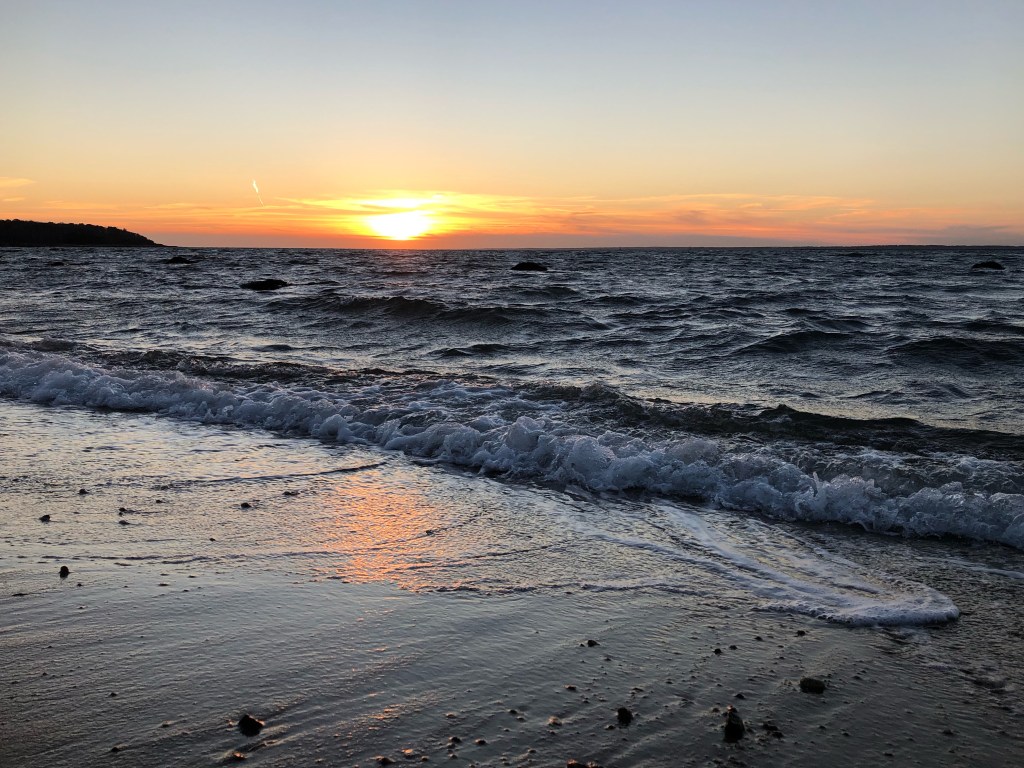
I waited in the darkness for the sunrise. When you wake early that can be a long wait. The sunset last night was way down the bay and just after 4 PM, making this a long wait indeed. Such is winter in New England.
But I walked outside and find it really isn’t all that dark at all. The moon is bright, a few stars shine through, and we’re well into nautical twilight start. Were I to let my eyes adjust I could get about quite well outdoors, even if it looks dark from inside the comfortable house. Perspective, on such things as light and time and relationships with others, offers insight.
For all the darkness in this year of years, there’s still plenty of light even now. It starts from within, and shines outward on the world, reflecting and amplified by others back towards us. But sometimes it feels like the bowl is empty. If your own light is dimmed in the darkest moments, add fuel and oxygen. Seek reflection. And venture out. It’s brighter than you might believe it to be.
If you live in Boston or Halifax you likely know Boston’s Christmas tree is an annual gift from Halifax. Since 1971 Halifax has sent a tree to Boston. Fifty years of tree giving. This isn’t inconsequential. The cost of transporting a tree 700 miles to Boston surely add up. So why make the commitment at all? The story behind that tradition is lesser known.
In 1917, at the height of World War One, a French ship named the SS Mont Blanc was loaded with munitions and set out from Halifax Harbor for Europe. The ship would never leave Halifax. She collided with another ship in the narrows and caught on fire. When the fire reached the munitions there was a massive explosion that wiped out part of Halifax, killing over 2000 people and injuring another 9000. At the time it was the largest manmade explosion in history. And it occurred in a heavily populated area.
When Boston’s Mayor Curley heard about the tragedy, he immediately sent a group of doctors and nurses to aid Halifax with medical supplies. Boston’s response was actually significantly faster that Ottawa’s. The team of doctors and nurses spent Christmas 1917 in Halifax, decorating Christmas trees in the hospitals. The bond between Halifax and Boston was forever fused.
The connection between the two cities goes beyond Christmas trees: Halifax broadcasts Boston’s WCVB and also has a large following of Red Sox and Patriots fans as the games are broadcast there. And then there’s family connections. Since the Port of Halifax was the Ellis Island of Canada, many New Englanders are descendants of immigrants who came through Nova Scotia. The bond is indeed deep.
In 1971, within the lifetimes of many of the people who lived through that tragedy, Halifax began donating a tree every year. I bet there were several survivors of the explosion who shed a few tears the day that first tree was shipped to Boston. Boston remembered as well, and the tree serves as a reminder of the common bond between the two cities. Today is the lighting of the Christmas tree in Boston, and we turn our eyes north to our friends in Halifax.
The pandemic has closed borders, blocking access to people and places we took for granted. With the border closed even the Christmas tree took a unique route to Boston in 2020: It was shipped from Halifax to Portland, Maine and then driven down the rest of the way. Many of us look forward to having the borders open again so that we may once again see our friends and kin up north.
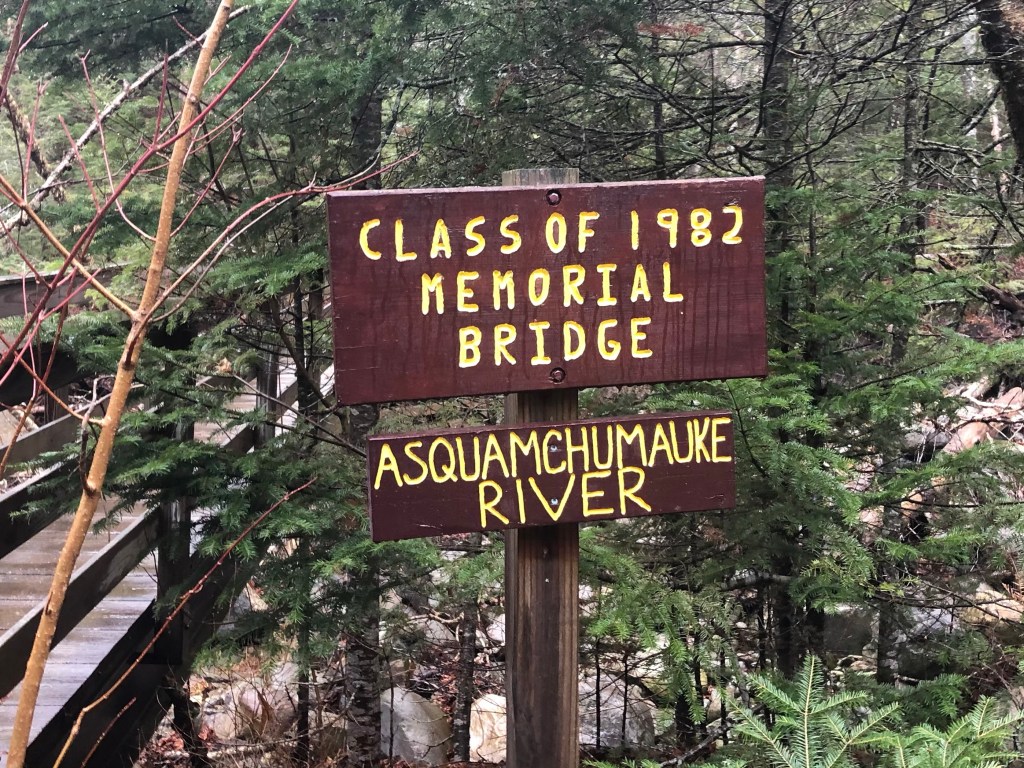
The Baker River flows from Mount Moosilauke to the Pemigewasset River in present day Plymouth, New Hampshire. On the map the name is cut and dried: Baker. But when you cross the river at the Gorge Brook Trailhead another name emerges from the past: Asquamchumauke. History once again whispering for all who might hear.
Dartmouth College honoring the original name
Asquamchumauke means “crooked water from high places” in the language of the Abenaki tribes that once thrived here. It’s a lovely, descriptive name that brings romantic notions of Native Americans living in this place for generations. Yet we’ve called it Baker since well before the American Revolution. The story behind the name change is another fascinating chapter in the violent history of New Hampshire.
Thomas Baker was a soldier in Deerfield, Massachusetts on February 29, 1704 when the Deerfield Raid occurred. Deerfield was a seminal event in Queen Anne’s War and New England history. French and Native American warriors overran the fortified settlement, 47 settlers were killed and 112 captives, including Baker, were marched up to Montreal. The Native American warriors came from around the northeast, including several tribes of the Wabenaki Confederacy. One of them was a Pennacook sachem named Wattanumman.
Whether Baker and Wattanumman met during the fighting or forced march to Montreal is unclear, but events would bring them together again eight years later. Thomas Baker led an expedition north with around 30 men and ambushed Wattanumman, a dozen of his men and their families at the site in present-day Plymouth where the Asquamchumauke River meets the Pemigewasset River. Wattanumman and several others were killed and scalped. The men collected furs and anything of value and brought it all down to Massachusetts where Baker was rewarded for his efforts with £40.
And this is where present-day morality meets the violent frontier morality of New England in the earliest days of our history. Both men participated in violent raids against the other in a time of war. But for fate Baker might have been killed in Deerfield, which may have extended Wattanumman’s life a few more years. Who knows? All of us are subject to the whims of fate.
There was one other reward for Thomas. To honor what Baker and his men did in this place the name of the river was changed from Asquamchumauke to Baker, a name it still has today. With one event the life of Wattanumman was erased, and the legacy of Baker was sealed. We Americans tend to honor people with place names, while the Native Americans honored the spirit of the place itself. Asquamchumauke: crooked water from high places.
“Every time you wake up and ask yourself, “What good things am I going to do today?” remember that, when the sun goes down at sunset, it will take a part of your life with it.” – Indian Proverb
I’m not sure of the source of the quote, but “Indian Proverb” seems as likely a source as any. There’s something timeless in the wisdom, even as it points out the value of a single day. That old cliché about time slipping by like sand slips through your hands comes to mind. The tighter you try to hold onto it the quicker it falls away. Making sense of time is folly; living each day as if it were our last seems a better place to focus.
“People say that time slips through our fingers like sand. What they don’t acknowledge is that some of the sand sticks to the skin. These are memories that will remain, memories of the time when there was still time left.” – David Levithan, Invisibility
The fact is, life is a blur. We aren’t walking down some endless beach here. This patch of sand is all we’ve got, no matter the mad swirl of wind or crash of the waves. What will stick and what will fall away?
The central question from that Indian Proverb is “What good things am I going to do today?”, which is where those memories that remain come from. The grains of sand stuck to our hand are the interactions with others, the laughs and the tears; the memorable. Those are what make up a lifetime.