Month: January 2021

  • The Art of Packing for a Winter Hike

    Contingencies. I pack for contingencies. Most of it stays in the bag, bulging against the sides, weighing the pack down directly onto the hip belt, as designed, and a bit on the shoulders, as is the way. First aid kit, extra warm clothing, extra food, and, it turns out, just enough water for this eleven mile trip. Snow demands micro spikes, but also snowshoes. Mine spent most of the day strapped to my backpack, but I gave them a try for about an hour of hiking before strapping them back on the pack. The compressed snow and narrow trail made wearing them more hassle than salvation. Sometimes you try out your contingencies and realize that you were better off with the original plan. But I do love those heal lifts on steep inclines.

    It was -4 degrees Fahrenheit at the start of my hike this morning. Most layers packed as contingencies went right on the body for the start of the hike. Snow has a way of being crispy and slippery when you dip below zero. And the trail we started hiking wasn’t the same trail we descended when the sun rose and warmed temperatures into the twenties. Having the right footwear and accessories is essential when you see swings in temperatures like that.

    Still, for all the contingencies planned for, most everything stayed in the pack. Sleeping pad, extra layers, way too much food, all of it mocking me on the steepest parts of the incline and for most of the descent. But as soon as you don’t pack it you know what’s going to happen. Yeah, contingencies, especially in winter, must be a part of your kit. You’ve got to have a winter pack that can handle all the extra stuff, provide tie downs for the snowshoes, and remain an afterthought for the duration of the hike. For day hikes I’ve settled on an ULA Photon pack, which offers everything I need and the space for those extras.

    Winter hiking in New Hampshire offers plenty of beautiful moments. Moments that serve as exclamation points on the trip and in your life. But winter can offer up stunning beauty and calamity quite rapidly in the White Mountains. Mother Nature doesn’t care about your feelings. You must be prepared for whatever she throws at you. And that’s what contingency packing is for. Sure it mocks you when it never gets used, but it also assures you that it will be there for you if you need it.

    The next blog post will cover the actual hike. Memorable, incredibly clear, and two more 4000 footers checked off. Stay tuned, there’s a lot to cover.

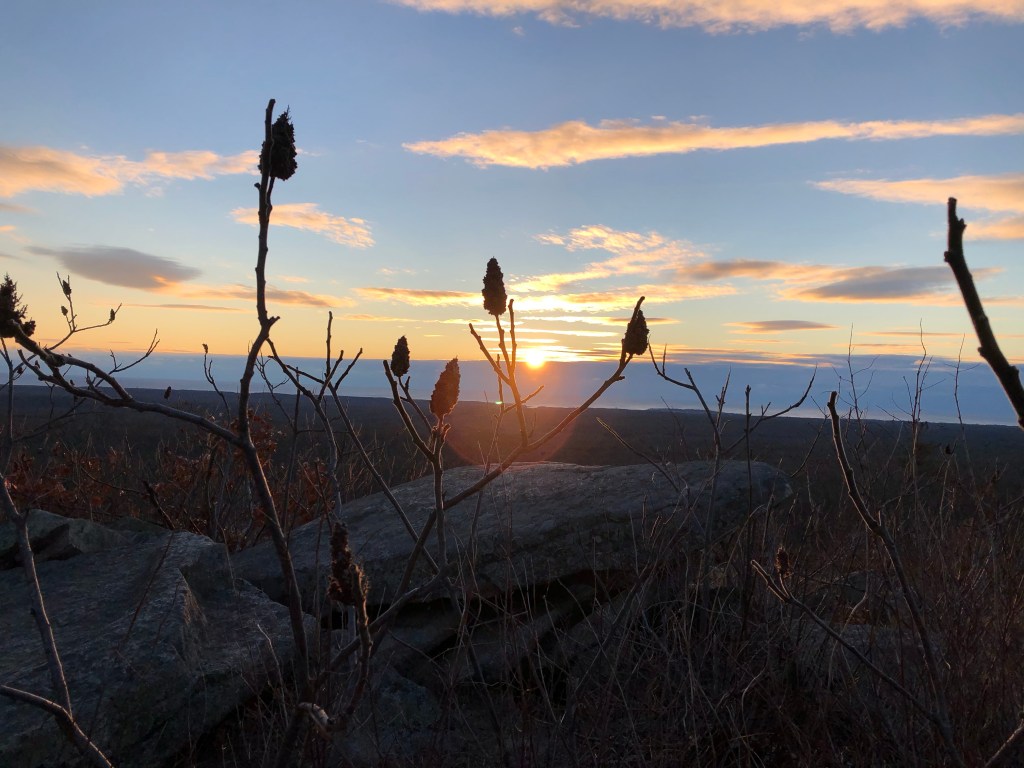
  • Getting Our It Together

    “Do not think that what is hard for you to master is humanly impossible; and if it is humanly possible, consider it to be within your reach.” – Marcus Aurelius

    Some days, when generally tapped out and the mind empty of original thought, I return to stoicism for a reset. I’m generally amazed at how quickly a few pages with Marcus Aurelius or Seneca can make all the difference in a day. Like old friends who know you better than you know yourself.

    I’ve been pondering the heavy lift that this year represents. There’s a lot to do, for me certainly, but for the country and the world. Clearing the COVID hurdle without losing too many more souls to it. Cleaning up the mess left behind by 2020: Mask refusers and conspiracy theorists and venom drinkers and climate deniers and the hoarders of Wall Street profits and Main Street toilet paper. By God, we have work to do.

    I read a quote like the one above and I think that maybe, maybe we’ll get it right. Maybe I’ll get my own “it” together. For if enough of us think it possible, it just might be within our reach. But it all begins with you and me.

    Now do the necessary work.

  • In the Grace of the World

    When despair for the world grows in me
    and I wake in the night at the least sound
    in fear of what my life and my children’s lives may be,
    I go and lie down where the wood drake
    rests in his beauty on the water, and the great heron feeds.
    I come into the peace of wild things
    who do not tax their lives with forethought
    of grief. I come into the presence of still water.
    And I feel above me the day-blind stars
    waiting with their light. For a time
    I rest in the grace of the world, and am free.”
    – Wendell Berry, The Peace of Wild Things

    The iPhone is a blessing and a curse, for all that it brings. Sometimes you want to be away from the made up frenzy of short traders and politicians and debates about which quarterback is best (long since answered).  Great for a picture and for safety in a pinch, but best left stowed away the rest of the time. I used to post pictures while I was still on the summit of a mountain, for that we’re here! moment. But the act of posting takes you out of the moment, and so I leave it be until later in the day locked in as a memory of what was. #saveitforlater

    Walks outside in quiet places serve the body, but mostly the mind. Free from the frenzy we create for ourselves. One notification at a time, relentlessly poking a hole in your soul. What have we done to ourselves with all of these pings and vibrations? Pavlov couldn’t have dreamed up a more diabolical experiment in self-torture.

    “To go out of your mind at least once a day is tremendously important. By going out of your mind, you come to your senses.” – Alan Watts

    The wind shakes the house and reminds me to bundle up. January days are short in New Hampshire, so you’ve got to get creative with your time in the grace of the world. The edges of the day work, and sometimes, dog-less as I am at the moment, late night star-gazing walks with a flashlight or headlamp to fill in the blanks and keep stray cars at bay.

    I’ve learned to pause longer. To fill the void with more silence. To quiet the mind and seek out small pockets of stillness. Time flies by anyway, but it feels like yours once again. Isn’t it, in the end? Step outside. Find the stillness. It’s out there waiting for you.

  • Encounters with the Unfamiliar

    Coming up on a year of taking French lessons using Duolingo, and I recognize I’ve got a long, long way to go. Nothing impresses that on a person like listening to someone sing softly and rapidly in French, as Lous and the Yakuza did in a remarkable Tiny Desk Concert on NPR. It really wasn’t until Marie-Pierra Kakoma started speaking in French that I picked up on some of what she was saying. The rest of the time I was hopelessly grasping for familiar words while enjoying the cool vibe of the music. Sometimes you just need to concede defeat and make the most of the situation.

    To be fair, a second or third language is much easier to understand in a conversation than it is in rapid-fire lyrics in a pop song. Walking around in Montreal most people are just happy that you’re trying to meet them halfway with their own language and help bridge the conversation. Body language and intonation not only help bridge the language barrier, they often serve as the primary way of communicating. People are people anywhere you go. Most want to help others.

    For all my talk of learning French, I know it would take immersion to really make it sink in. At the moment I’m at the dog paddle level of swimming in the French Olympic pool. And that’s okay for now (after all I’m locked away in a pandemic), but at some point I’ll face another test and it ought to push me to get better.

    Take that hopelessly lost feeling of listening to Marie-Pierra Kakoma singing and flip it around. At one point she spoke English, struggled with it, and returned to her native French. That was the moment when two people speaking different languages would have bridged those gaps for each other. But it was just her and a microphone with her band silent behind her. That struggle is one we all feel with a foreign (to us) language. The encounter with the unfamiliar. The unknown.

    Think of the great explorers of history, Giovanni da Verrazzano, Jacques Cartier, Henry Hudson, Samuel de Champlain. The best of them encountered the unfamiliar all the time. Unknown lands, hidden shoals, native people encountering strangers for perhaps the first time, and always, language barriers. Being able to get that encounter with the unfamiliar right the first time was often the difference between life and death for them. Who are we to struggle with a few words and throw our hands up in frustration?

    Encountering the unknown informs. We learn what we don’t know and, if we let it, teaches us to be better. Do you throw your hands up and walk away or press on and figure it out? That teaching moment is casually informative for me, but might be urgent for an immigrant lost in a new city with a sick child. Encounters with the unknown offer a lesson in empathy for those paying attention. Figuring out where the restroom is might just be the most urgent thing we ever struggle with. For some it means a whole lot more to figure things out. Read the bio for Marie-Pierra Kakoma and you see that she was a refugee herself. She gets a pass with her struggles speaking English to an unseen audience.

    I may never master French, but I’m very slowly picking it up. Should the pandemic end and travel restrictions lift, perhaps a trip to Montreal or Paris is in order to celebrate. We’ll all be ready to encounter something unfamiliar by then. In the meantime, should I encounter someone struggling to be understood in my own language, maybe a bit of empathy and generosity would help in the moment.

  • Snowy Morning Bliss

    “In the woods too, a man casts off his years, as the snake his slough, and at what period soever of life, is always a child. In the woods, is perpetual youth…. In the woods, we return to reason and faith. There I feel that nothing can befall me in life,—no disgrace, no calamity, (leaving me my eyes,) which nature cannot repair. Standing on the bare ground,—my head bathed by the blithe air, and uplifted into infinite space,—all mean egotism vanishes. I become a transparent eye-ball; I am nothing; I see all; the currents of the Universal Being circulate through me; I am part or particle of God. – Ralph Waldo Emerson, Nature

    I admit to a bit of excitement. Adrenaline coursing through me as I anticipate the first steps outside into the freshly fallen snow. A few inches of the fluffy stuff fell from early evening and overnight and still drifts downward in lazy accumulation. Not enough to strap on the snowshoes (pity), but enough to make an adventure of the walk. What is winter for if not to be a kid again when it snows?

    My destination is the woods. The woods grow silent in the snow, and I fill with reverence. The days inside are long, for there is much to do in this forever connected march to quarterly numbers and customer engagement and cross-department collaboration. But the early mornings are mine alone. And there is magic in the air. And underfoot.

    I am the lover of uncontained and immortal beauty.” – Ralph Waldo Emerson, Nature

    The world ought to be filled with wonder, I think. But most people slide into survival mode, leaving their inner child far in the rearview mirror to face all the horrors of the world stoically. But the stoics saw the wonder of nature as Emerson saw it, and shouldn’t we too, while we still have both nature and the capacity to marvel at it?

    I always smile when I come across people from places without snow who walk outside in awe, snapping selfies in a frozen wonderland. Living in the snow globe we sometimes forget to shake it up and embrace the swirling magic. Not us, thank you. We’ll walk and swirl in the magic too.

    Morning Snow
  • The Future is Implied

    “It takes time for an acorn to turn into an oak, but the oak is already implied in the acorn.” – Alan Watts

    January is a funny month. Plans for the year generally completed, we look at the climb ahead and take our first steps into the unknown. Where will it take us? What will we accomplish? How will the world change these grand plans we’ve wrestled with in our minds and on spreadsheets? How exactly are things going to play out?

    The future is implied by our actions today. We turn plans into action one step at a time, one toe in the water, one conversation after another, one moment to the next. And in each step, we discover the truth about the world.

    I look back a year and laugh at the plans dashed against the rocks in the COVID storm. We all had to bushwhack when the path washed away last year. Extreme, to be sure, but it demonstrated the nature of plans. They do change.

    Words we used too much in 2020 included adapt and pivot and new normal. What words will we use in 2021? 2022? What is implied by the trends we see in the world? What is implied by our daily habits? We might not see everything in the future but we can surely see the path we’ve set ourselves upon.

    I wonder sometimes at the future, but it isn’t mine to ponder. Plans are made and revised, such that they can be. Focus on the first step, small as it might seem in the moment. And go.

  • A Nation’s Character

    “Our nation will not survive as we know it without an engaged and committed population.” – Dan Rather, What Unites Us

    “Once a belief is successfully dressed up as truth… we feel justified in whatever moral judgement or decision we render. When we detect no problem in our moral machinery, we see no reason to expend energy to rebuild it.” – Dr. Jim Loehr, Leading with Character

    Americans are in a funny place right now. It’s like a family that got in a big fight right before Thanksgiving, with everyone at the table and hurt feelings all around. Except that it isn’t just America. Russia, China, France, Germany, Great Britain… etc. all going through their own version of family drama right now. COVID has something to do with it, of course, but the events unfolding in the world were a long time coming. Change chafes at some segments of the population more than others.

    The two books quoted above are adding context to what I’m seeing, and each offers lessons garnered from individual lifetimes of observation on the part of Rather and Loehr. A nation’s character is defined by its citizens and the leaders who are chosen to represent them. That list of countries facing identity crises has very different ways of choosing leaders. The world is reacting to change, fueled by previously unimaginable levels of communication. Character and truth matter more than ever before in a world where communication can serve or misdirect.

    Political leaders are just people with a higher tolerance of, or hunger for, the public spotlight. The very best of them find common ground, the worst fall in line with cliques and party expectations. Which reminds me of the not-so-ancient words of Stephen Covey to seek first to understand, and then to be understood:

    “The early Greeks had a magnificent philosophy which is embodied in three sequentially arranged words: ethos, pathos and logos. I suggest these three words contain the essence of seeking first to understand… Ethos is your personal credibility, the faith that people have in your integrity and competency. It’s the trust that you inspire, your Emotional Bank Account. Pathos is the empathic side – it’s the feeling. It means that you are in alignment with the emotional thrust of another person’s communication. Logos is the logic, the reasoning part of the presentation.
    Notice the sequence: ethos, pathos, logos – your character, and your relationships, and then the logic of your presentation. Most people… go straight to the logos, the left brain logic, of their ideas. They try to convince other people of the validity of that logic without first taking ethos and pathos into consideration.” – Stephen R. Covey, The 7 Habits of Highly Effective People

    And here we are, with most people leading with their mouths (or Twitter accounts). Most people go straight to logos, without seeking first to understand their constituencies, their peers, the needs of other countries in a small, frail world. Empathy matters. Character matters. The rest is just noise that works 24/7 in sound bites and tweets to erode the foundation of truth and dignity.

    I once had a roommate who would tune in to British Parliament just to watch the room fill with shouts of support or dissent. It all seemed chaotic to me, madness really, with no statesmanship, no decorum on display. I know there’s nuance and behind-the-scenes maneuvering that brings meaning to it all, but it all seemed the opposite of polite discourse towards consensus and progress. Plenty of television programming has adopted this format, for apparently a segment of the population loves shouting and escalation. But what get’s accomplished in the end? Lately it seems largely a stalemate or one party’s slight majority driving policy until the next party takes over and undoes the other’s work. Madness.

    The world is changing, as it always has been. We’re all witnesses to massive change, while also actors in that change. The actions of the individual matter more than ever before, and we must find a way to amplify the truth, to rebuild our moral machinery, and to unite despite our differences. The efforts of the individual, without individualism. Without nationalism. For that is the only way forward. The rest is chaos and conflict. Escalating. Ad infinitum.

    The thing is, I’m an optimist. I think of the slogan that The Washington Post adopted a few years ago; “Democracy dies in darkness”. There’s truth in those words, and the more engaged and committed the population is in finding the truth and progress towards a common good, the better we’ll all be. The pendulum swung sharply towards ugliness and nationalism for a while there, and it will take the collective will of the majority to pull it back to center.

    It’s in our hands. A nation’s character is defined by us. You and me… and them too.

  • Sharing Meaningful

    “Sometimes the best writing gets no recognition in its time or gets censored. This is the price of art.” – Neil Strauss

    I’ve written a few blog posts over the years that keep popping back up. Someone will like a post I’d written a year or two ago about some place I went or thing I did, click the like button and remind me of that moment when I see the notification. It feels like those moments when you’re having a conversation with an old friend who brings up some shared experience or character from your past and instantly you’re flooded with warm memories of it.

    You never know what will resonate with others. That would be a horrible way to write anyway; trying to write something just for the clicks and follows. Writing then becomes a rather cynical job, doesn’t it? I’ve been playing the WordPress game long enough to know immediately what someone is trying to accomplish with their own blogs. Generally I’ll follow people who are trying to capture something meaningful – for themselves first, and shared with the world second.

    This entire experience of writing a blog has been about paying the price of art. Some people paint pictures and stack them up in their garage to gather dust, gradually marking the progress of an artist as the pile grows. Writing a daily blog is taking that stack and displaying it for the neighbors. Some art garners attention, some grows dusty and brittle by neglect. But all of it marks the journey, like breadcrumbs on the forest path or footprints on the beach. And like each, art is fragile in nature. Here but for a moment. Mine currently resides in some data center somewhere in the world.

    Whatever direction this blog goes in, it always starts with sharing something meaningful, if only to me. Whether that’s grilling a pizza or visiting a battle site from 350 years ago or just a pile of words that resonated with me in a particular way, it’s all just sharing meaningful, and locking it in my own mind for another day. Released by a random like at the most unexpected moments.

    Thanks for the like.

  • Packing a Winter Day in Maine

    Some days nothing much happens. That line a day summary looks very long when you sat in your house all day. Other days you jamb ridiculous amount of activities in a relatively short number of hours. Those days you flop down on the chair, exhale and assess. And that’s where I find myself today.

    The morning started with a snow squall and limited visibility that bordered on return home and wait it out intensity. But the radar showed it tracking away from where we were heading, so we pressed on. Sure enough, the snow soon disappeared and we settled into a normal early morning drive. Destination? Mount Agamenticus in York, Maine.

    Sunrise on this mountain top has been covered here before, I know. But we were heading to Maine anyway, so a quick hike up an old mountain for sunrise seemed like a good idea. And really, outside of the biting wind chill at the summit it wasn’t a bad way to subtract an hour of sleep from your morning.

    Next stop was breakfast at a family restaurant called Lucky Loggers in a Saco, Maine strip mall. This is the kind of place that Google searches are made for, and with 4 1/2 stars it was a no-brainer for a half dozen frozen early risers. Mission accomplished: they thawed out the group, filled our tanks full of goodness and bolstered the spirit for the next highlight in a packed morning: waterfalls.

    Hidden away amongst the touristy businesses lining the roads in Saco is a small parking lot in a stand of hemlock trees. This is the parking lot for Cascade Falls, a 20 foot wonder wedged in between granite and forest. There’s a sign that says this particular spot doubled as the Yukon in a 1930’s silent movie. It’s a lovely spot, even with large fallen trees partially obscuring the falls. On a cold January morning, ice lined the edges of the falls and the brook downstream. If you didn’t know you were in Saco you’d think you were deep in the White Mountains.

    After Cascade Falls, we drove up to Portland to see Jewell Falls in the Fore River Sanctuary. As advertised, it sits right in the middle of the city, and is a pretty little waterfall that must be really impressive when the water is running high. I’m grateful for resources like New England Waterfalls for pointing out this little gem I’d never have found on my own. For all the trips I’ve taken to Portland, I’d never known about Jewell Falls. Waterfall number two in the books, we turned westward for our third and final waterfall of the morning.

    Jewell Falls

    Waiting behind door number three this morning was Steep Falls in Standish, Maine. This was the toughest of the three to find, but featured the powerful waters of the Saco River dropping six feet into a churning pool on its way to the sea. This is where a resource like New England Waterfalls really becomes invaluable. Without it I’d never have seen this place in my lifetime. Even with the book it took a few minutes to figure out where the falls actually were. But upon arrival, we were all thrilled with the performance.

    Steep Falls, Saco River

    So there we are, three waterfalls in a small triangle in coastal Maine. We happened to do them in the order they were listed in the book, but that was coincidence. Having visited a number of waterfalls from the book before and since purchasing it, I can confirm the value of the book and recommend picking it up if you want to start your own New England waterfall adventure.

    So how do you cap a morning like that? With a beer with friends followed by a visit with a new puppy in the extended family. Driving back home we saw the sun setting over the Merrimack River and realized it was a very long day indeed. But so full of small adventures and memories. Another day in New England winter, but packed with more than the average.

  • Achieving Something Beyond

    “The meaning of life is just to be alive. It is so plain and so obvious and so simple. And yet, everybody rushes around in a great panic as if it were necessary to achieve something beyond them.” – Alan Watts

    Enjoying being alive is surely a worthy pursuit, but even Watts, in pointing this out, was achieving something beyond himself. For otherwise, what are we contributing beyond a few laughs over drinks? Unsaid, I believe, is contributing joyful pursuits that create those ripples that live on beyond your lifetime.

    I’ve visited the graves of many notable names in history, and generally it’s a chunk of silent stone in a lonely plot. The best graves betray the personality of the person who resides there. A clever line about how they lived, or what they believed. Or maybe it’s the stone itself that signals the character of the person. Ralph Waldo Emerson lies below a chunk of rose quartz, which stands out amongst the weathered gray stones of his family and peers on Author’s Ridge. Whether you ever knew much about Emerson, you’d surely note the personality emanating from his gravestone.

    Of course, Emerson left a big ripple well beyond a rock on a hill through his contribution to the world. Did he enjoy writing and speaking? Certainly. Emerson wasn’t running around in a panic trying to achieve something beyond himself. He just did the work. And so did Watts. And so must we.

    “Men live in their fancy, like drunkards whose hands are too soft and tremulous for successful labor. It is a tempest of fancies, and the only ballast I know is a respect to the present hour.” – Ralph Waldo Emerson, Nature

    There’s a distinction between being alive and achieving something in your life, but they don’t have to be mutually exclusive. And usually the things that make us feel most alive offer more than just a momentary dopamine rush. They’re part of building something beyond ourselves. Family, meaningful work, friendships that transcend convenience, and community. These things aren’t achieved, they’re earned one moment at a time.