Month: June 2022

  • Become a Holy Fire

    “And I have often noticed that even a few minutes of this self-forgetfulness is tremendously invigorating. I wonder if we do not waste most of our energy just by spending every waking minute saying hello to ourselves. Martin Buber quotes an old Hasid master who said, “When you walk across the fields with your mind pure and holy, then from all the stones, and all growing things, and all animals, the sparks of their soul come out and cling to you, and then they are purified and become a holy fire in you.” — Annie Dillard, Pilgrim at Tinker Creek

    Walking about the garden upon a return from two weeks in Europe, seeing the progress of some plants and the decline of others from neglect, it’s easy to become lost in self-forgetfulness. Minor tasks become meditative when we focus on the work. So it is with hiking in solitude, where every step matters and the mind is forced to quiet itself that you may land properly to take the next one.

    If the aim is to become more open to the spirit of the world around us, surely we must quiet the chatter in our own heads. Be still, learn to listen, observe and receive the energy that might otherwise bounce off our closed mind to find a more willing recipient. What do we lose in our closed-minded self-conversation but our chance to be one with the universe?

    The thing is, most of our self-talk is useless at best and detrimental to our progress at worst. Our Lizard Brain, as Seth Godin calls it, is our worst enemy, making us feel like we aren’t measuring up, that we should have done things differently, that we don’t deserve the moment we’re in now. It’s all crap, and not what we’d expect in a close friend. But who is closer to us than ourselves?

    This Hasidic concept of receptiveness is one way to push aside the self. If we are to become a holy fire today—and in our stack of days, we must tune our receiver and accept the positive fuel that stokes our furnace. We must throw aside the wet blanket of self and accept the world as it offers itself to us.

  • Mastery is a Beacon

    “Besides, isn’t it confoundedly easy to think you’re a great man if you aren’t burdened with the slightest idea that Rembrandt, Beethoven, Dante or Napoleon ever lived?“ — Stefan Zweig, Chess Story

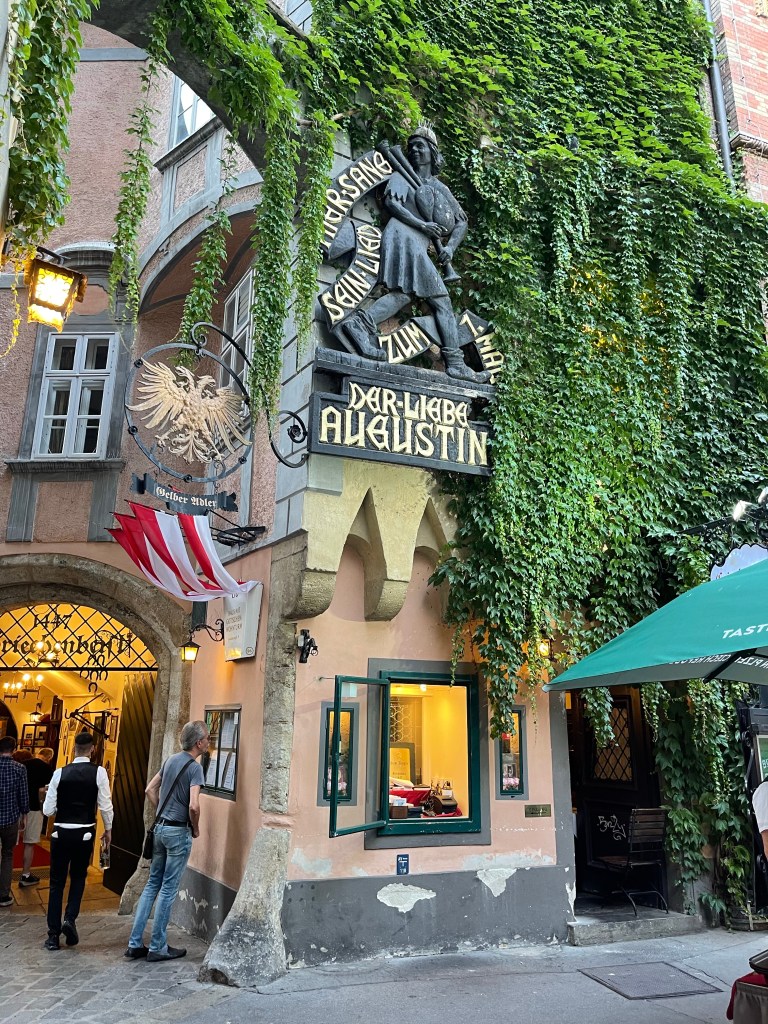
    My mind is still in Vienna as I write this—a city that’s had its fair share of high achievers walk her streets and contribute to humanity’s Great Conversation in their life’s work. Big names roamed those same streets, and you might feel a need to raise your game when you walk with that level of ghosts—I surely did. And shouldn’t we feel this compulsion to close the gap between the masters and where we currently reside?

    The world offers precious few brilliant shining stars. Most of us burn less brilliantly. And yet we burn just the same, and cast our own light on the darkness in the world. We may recognize that we aren’t quite at the level of a master in our field yet still have something to offer anyway. And knowing that there are more brilliant lights in human history, we may choose to stoke our fire—feed it with the fuel necessary to one day burn more brilliantly still.

    What provokes us towards greatness but comparison? We may never reach those levels, few do, but knowing there are heights we haven’t reached yet ought to inspire more. For mastery is a beacon.

  • Vividly Awake

    “Time to leave now, get out of this room, go somewhere, anywhere; sharpen this feeling of happiness and freedom, stretch your limbs, fill your eyes, be awake, wider awake, vividly awake in every sense and every pore.” — Stefan Zweig

    There were so many days during the pandemic when we told ourselves some version of Zweig’s quote. Now that the world is opening up again, we ought to stretch our limbs a bit and see what we’ve been missing while we were sheltering in place. The trick is that when we stir that vitality it’s impossible to revert back to the box we once existed in.

    Travel literally carries us to other places. Figuratively too, naturally, but always with an eye on our previous self and an underlying awareness of what comes next. We become aware of the changes we put ourselves through, as they say, even as we plot the next step.

    Joie de Vivre! We should embrace this freedom to experience the world and make the most our opportunity to squeeze joy out of the marrow of each day. For life is a gift, and so is our chance to fly. If we become what we repeatedly do, shouldn’t we choose to be vividly awake? And save the rest for eternity.

  • Where Our Heart Takes Us

    “I am proud of my heart alone, it is the sole source of everything, all our strength, happiness and misery. All the knowledge I possess everyone else can acquire, but my heart is all my own.” — Johann Wolfgang von Goethe, The Sorrows of Young Werther

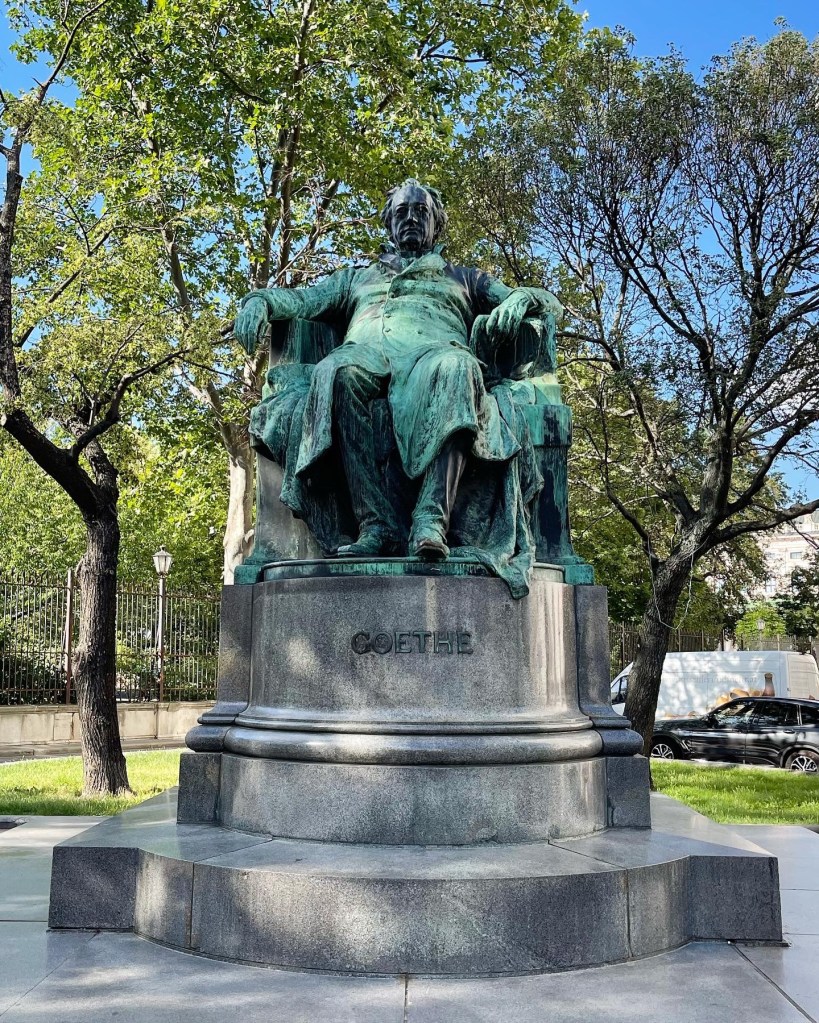
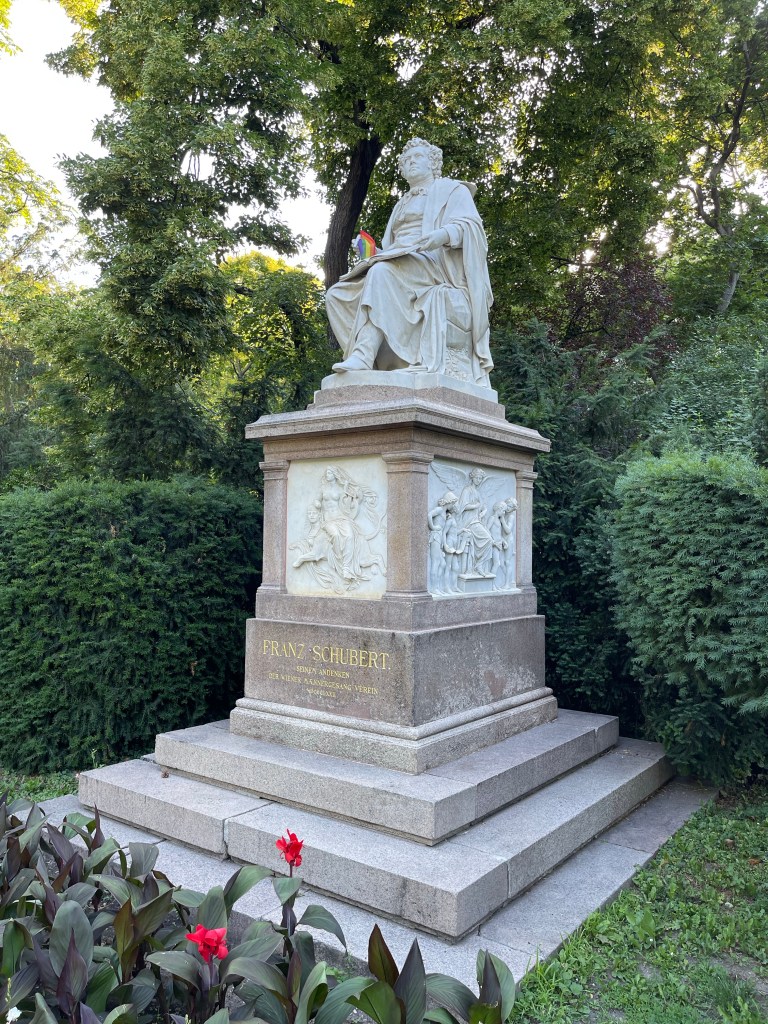
    I was thinking about Goethe after my traveling companion asked me why I was so happy to come across a statue erected in his honor in Vienna. I suppose this quote offers some insight. Goethe distinguished himself as a deep thinker in a city jammed full of them. We all seek knowledge in our quest to become something more, but our heart points the way and determines how far we actually go. Our knowledge quest isn’t unique to us, many of us seek amelioration. The heart ultimately tips the scales for how rich and fulfilling our lives will be.

    Absorbing knowledge is helpful when we do something with it. The homeless man asking me for money in the park easily pivoted from German to English when I responded with my basic skills in his native language. Which of us has more knowledge? Which of us can read Goethe without translation? We are what we either seek or ignore. Knowledge is but a starting point for becoming what we might be.

    Traveling, reading, learning a language, and trying to capture experiences in words are each forms of seeking knowledge. Goethe’s hard stare and his translated words remind me that I have work to do. Do I have the heart to get it done?

  • Vienna, At Last

    Slow down, you crazy child
    And take the phone off the hook and disappear for awhile
    It’s all right, you can afford to lose a day or two
    When will you realize, Vienna waits for you?

    — Billy Joel, Vienna

    A traveler seeks magic in places big and small, and in mountains and cities alike. Two weeks of trains, planes and automobiles carried us to some of the most beautiful places in the region, but we had to come to Vienna before we felt our trip was complete. Maybe it was Billy Joel’s reminder that the city—the world— is out there waiting for us to stop the madness and seek out the magic that inspired a visit, or maybe it was a voice inside. Vienna, like Paris or Budapest or Prague remains a myth until you reach out and meet it.

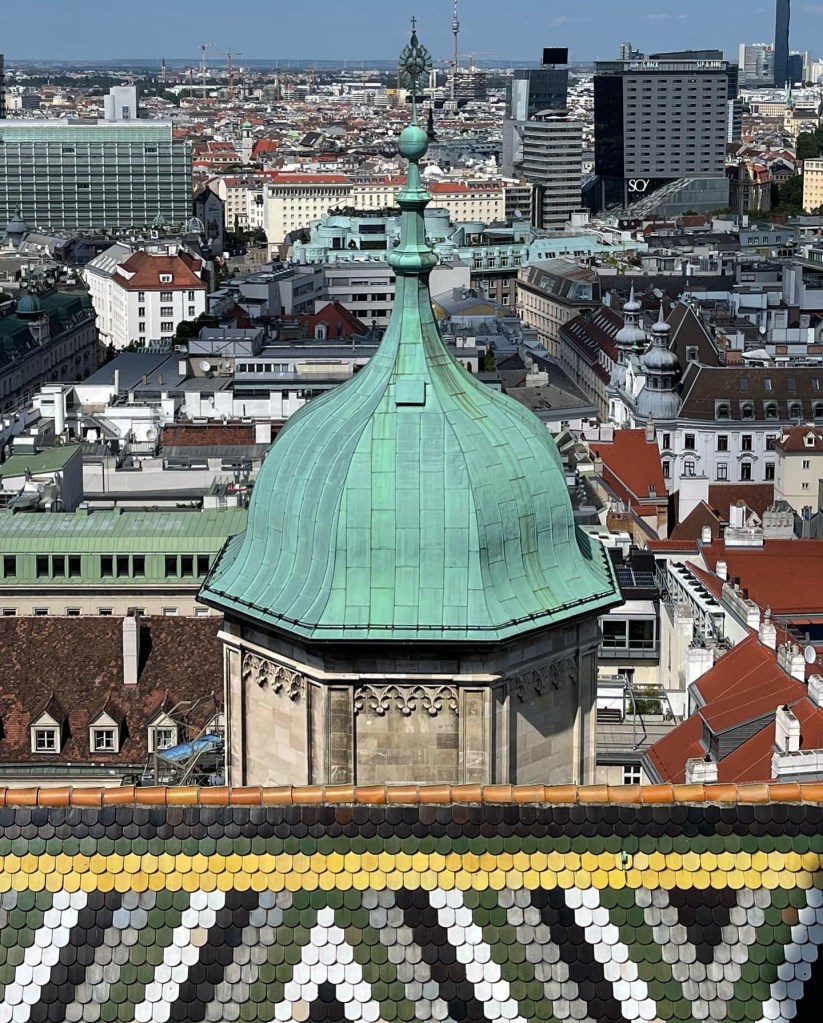
    The first impression a visitor may have of Vienna is that the city is far bigger than one might expect. The larger city looks and feels like the working city it is. Cranes all over the horizon indicate it’s still growing, and quickly. But for all its bigness the Old City itself is very walkable.

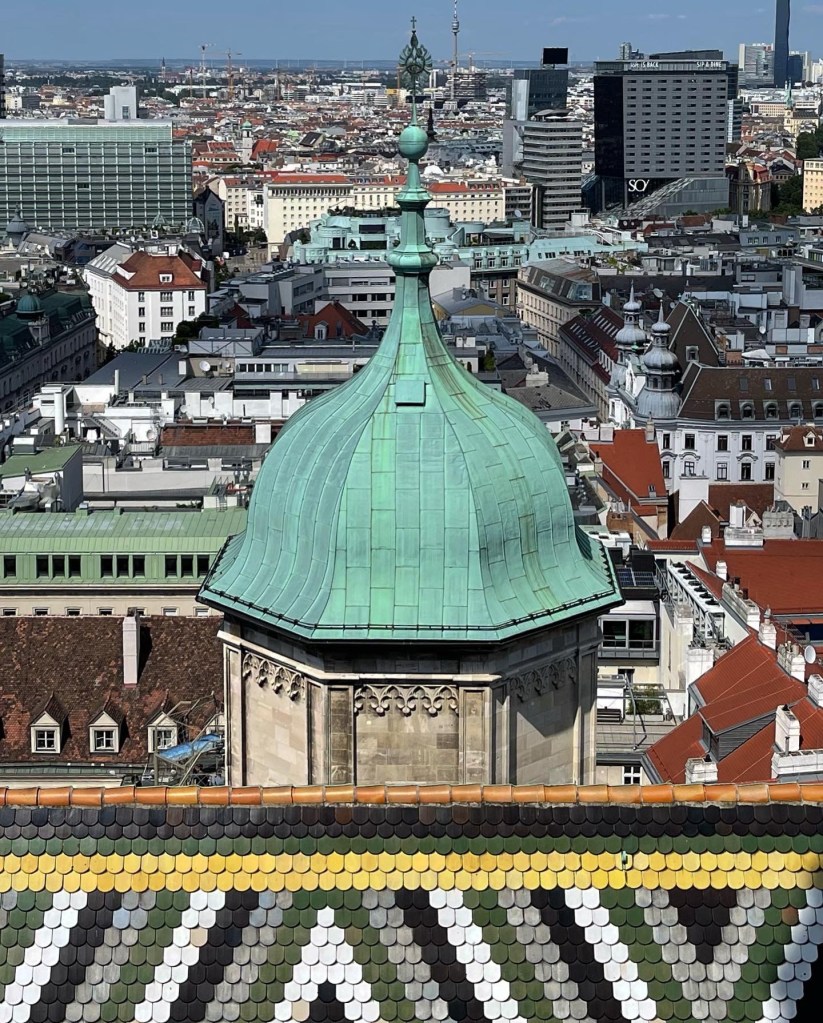
    Where do you go first when you visit Vienna? For me the choice was obvious: St Stephen’s Cathedral. Seeing the massive and ornate structure of the church itself was a goal, but climbing the 343 steps up the South Tower for the incredible views of the city was my underlying goal.

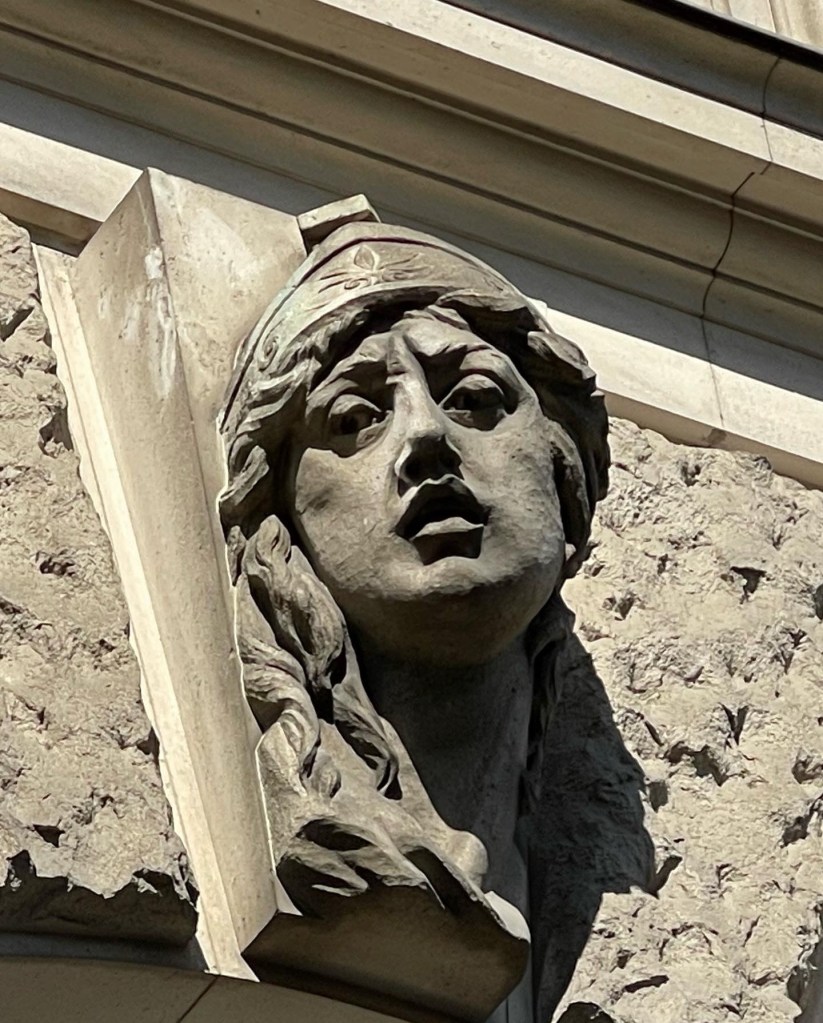
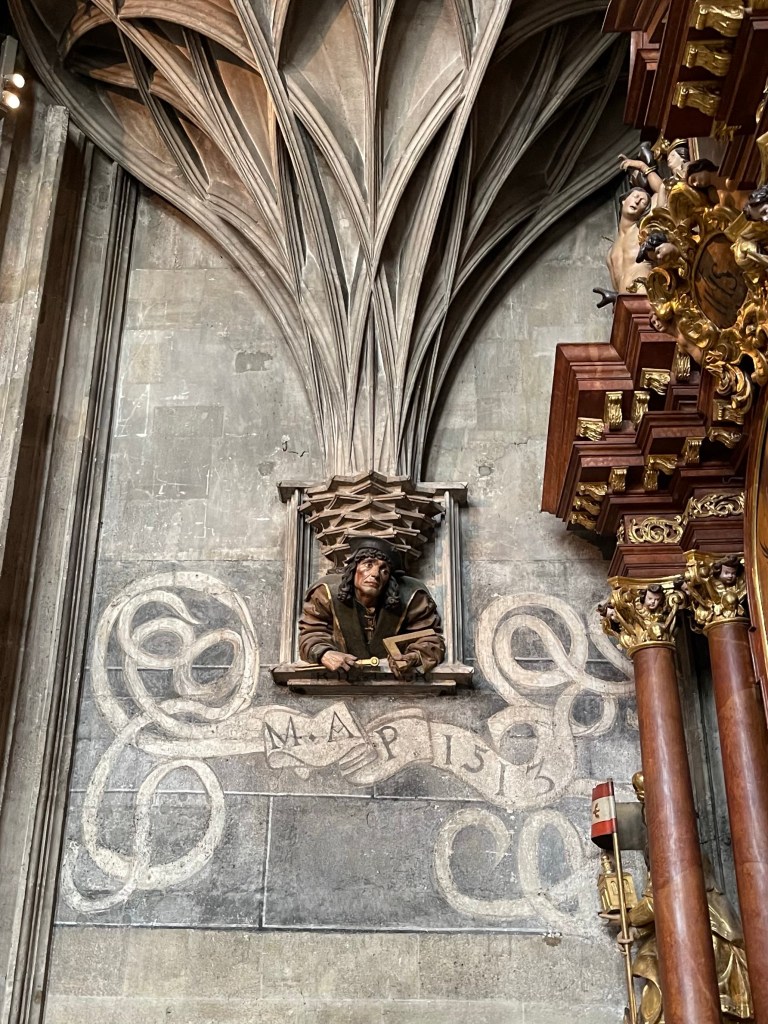
    Having seen the city from a high vantage point, it was time to find the details that make Vienna unique. One must walk an old city and find that which hides from casual visitors. This city offers something around every corner.

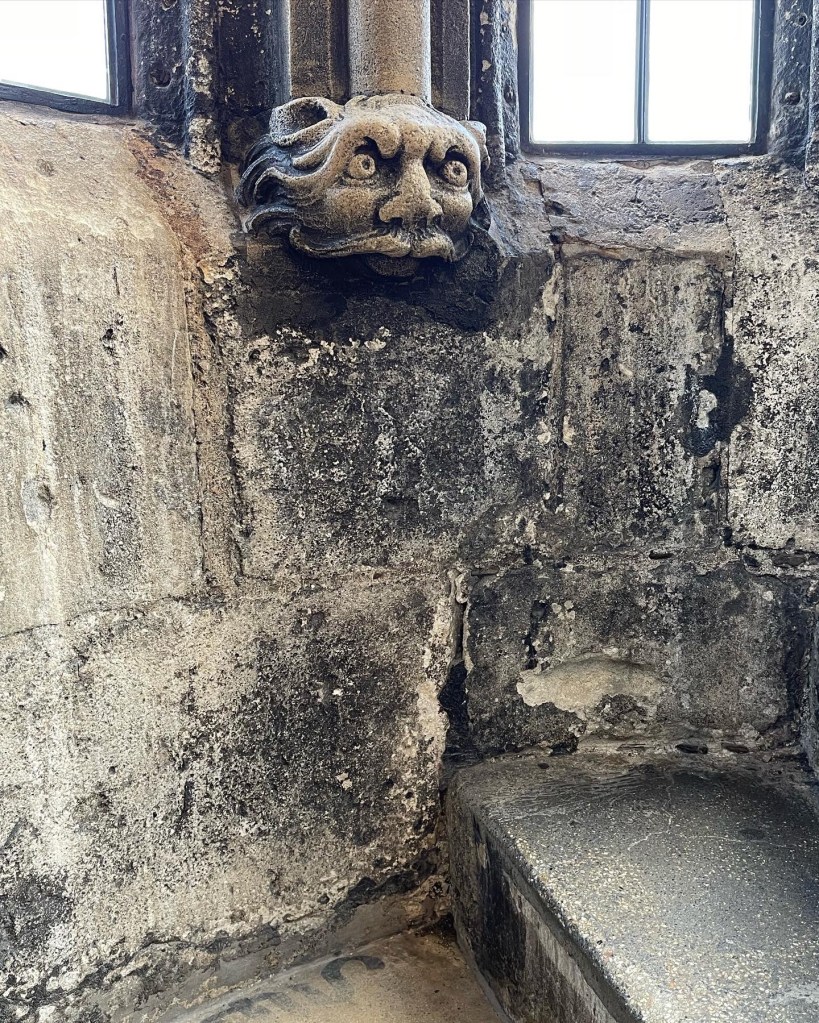
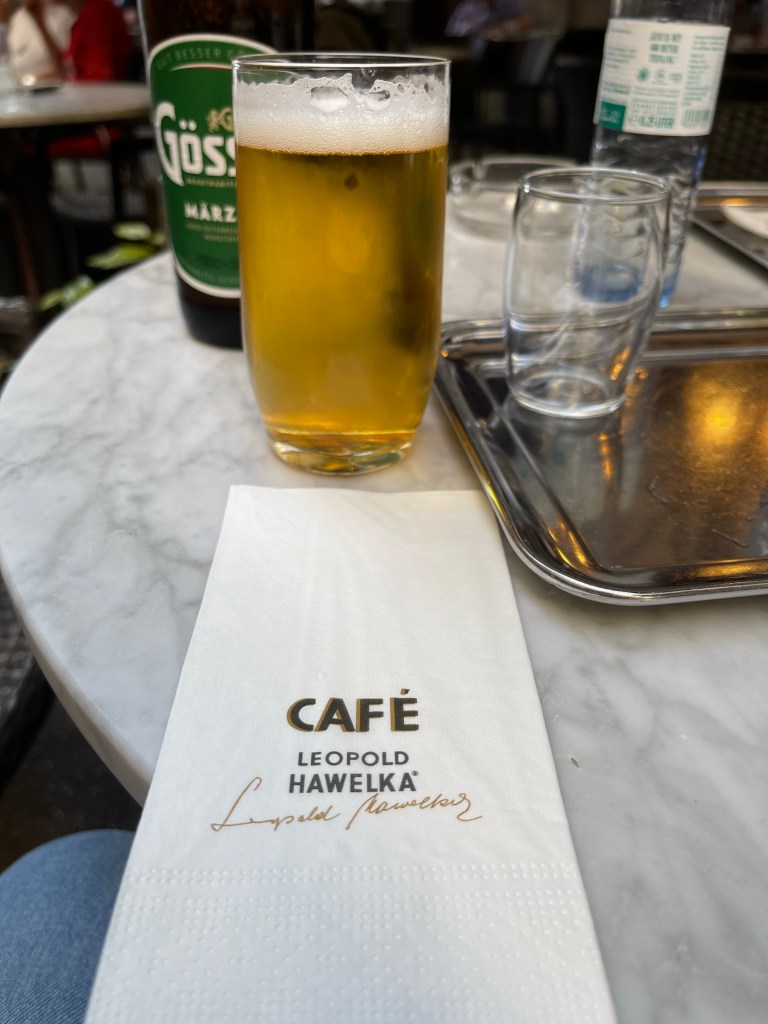
    When you’ve heard about Vienna your whole life don’t just skip across its surface like a stone, sink in! One should visit the palaces and museums and cafés to know Vienna, but you should also seek out the nooks and crannies where the place reveals its magic. Those who built this place leave a bit of themselves for us to discover, should we only look for it.

  • Courageously Memorable

    “All I insist on, and nothing else, is that you should show the whole world that you are not afraid. Be silent, if you choose; but when it is necessary, speak—and speak in such a way that people will remember it.” — Wolfgang Amadeus Mozart

    Taking the train between Salzburg and Vienna I’m reminded of Salzburg’s famous son, Mozart, who made this journey himself. Doing so launched his contribution to music and humanity to a level than it would have had he stayed home—a level of mastery very few attain in their lifetime. Sure, we know that taking this trip on its own doesn’t make us memorable, we’ve got to deliver the goods when we get there. Young Wolfgang delivered.

    Maybe that’s too much pressure for now. Maybe following in the footsteps of Mozart now might stir inspiration for later. We don’t accomplish great things without a rigorous apprenticeship and the courage to raise our hand when our time comes. Knowing when to raise our hand is as essential as knowing when to keep it down. Yet too many never get around to saying it’s our time. That shouldn’t be us.

    We sense when it is necessary for us to raise our game. We know when we can do more. The world may remain indifferent, but no matter. What matters is that we summon up the courage to rise up and do our very best to make our work memorable.

  • A Visit to Hallstatt

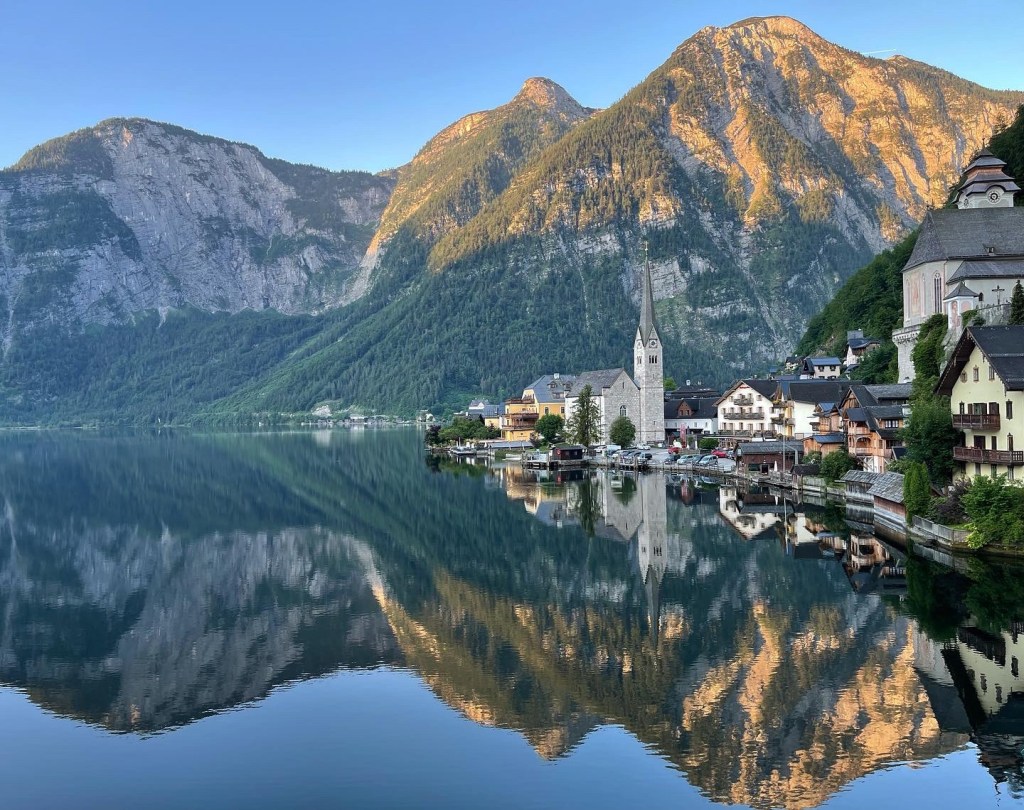
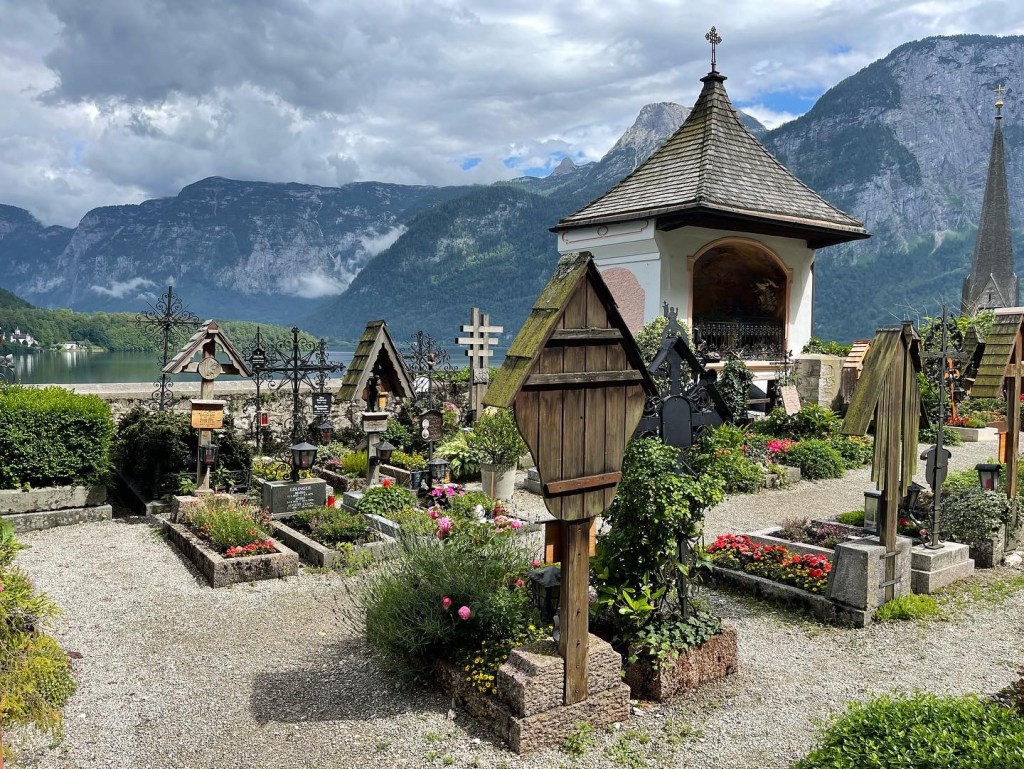
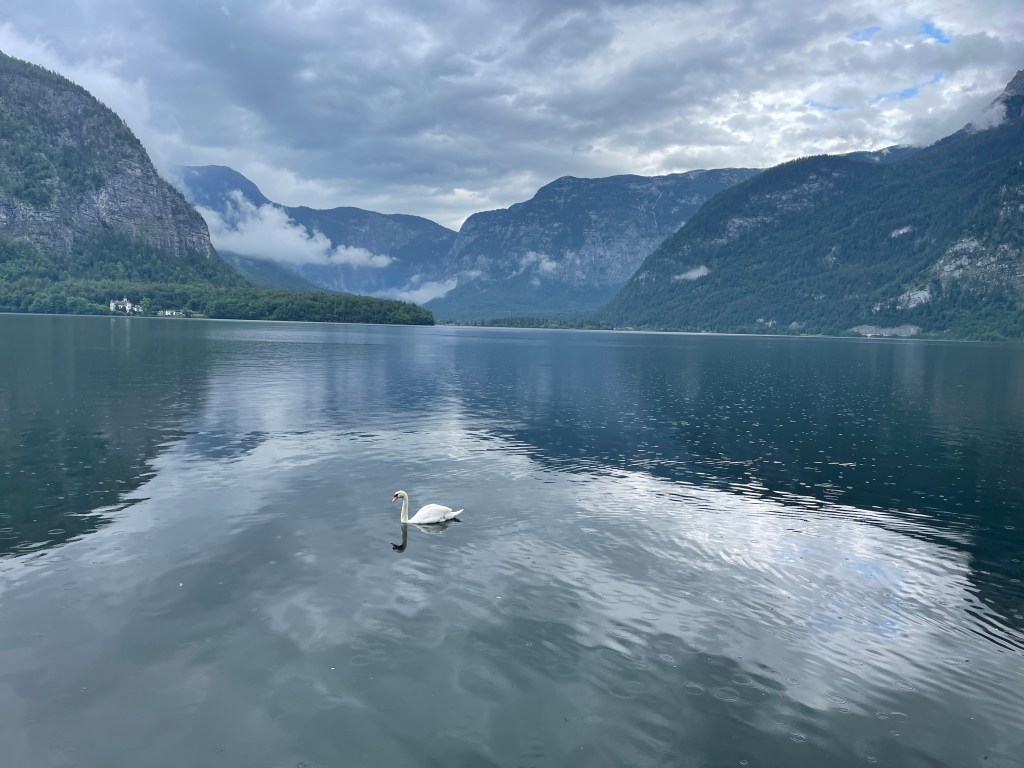
    Let’s get the obvious out of the way: Hallstatt is a tourist town. Thousands visit, take the same photos and leave. The crush of people in the middle of the day is an adjustment if you aren’t expecting it, but really—you should be expecting it. Hallstatt is famous for the iconic vista and the swarms that seek it out. But that doesn’t mean you shouldn’t go, just go prepared.

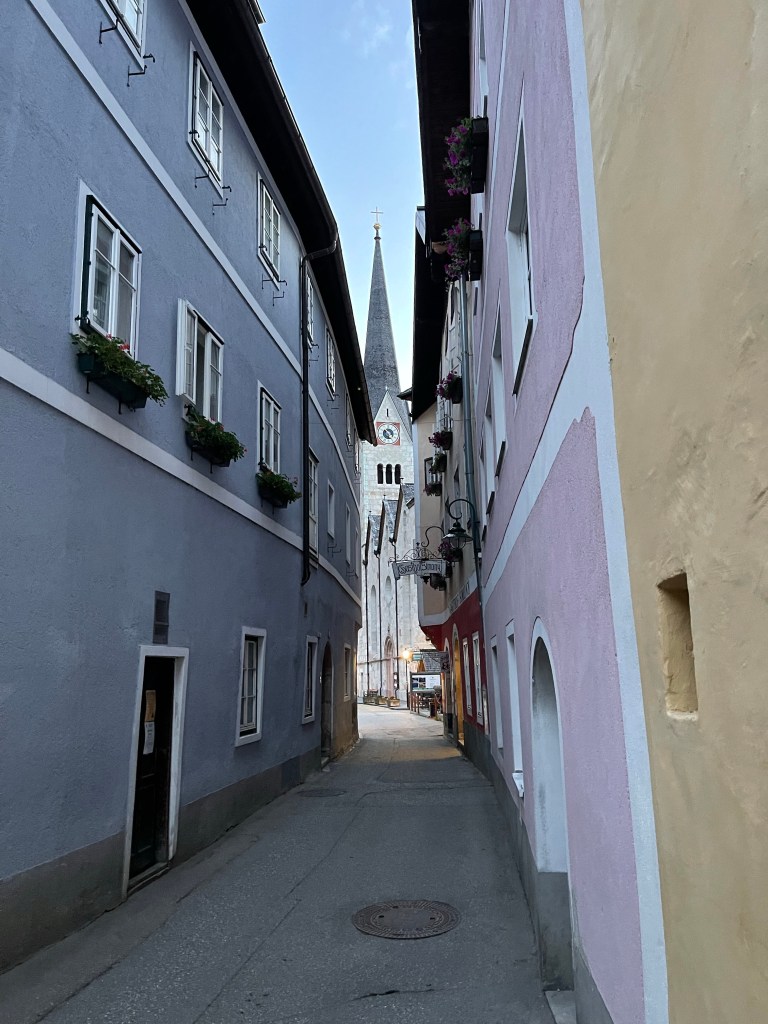
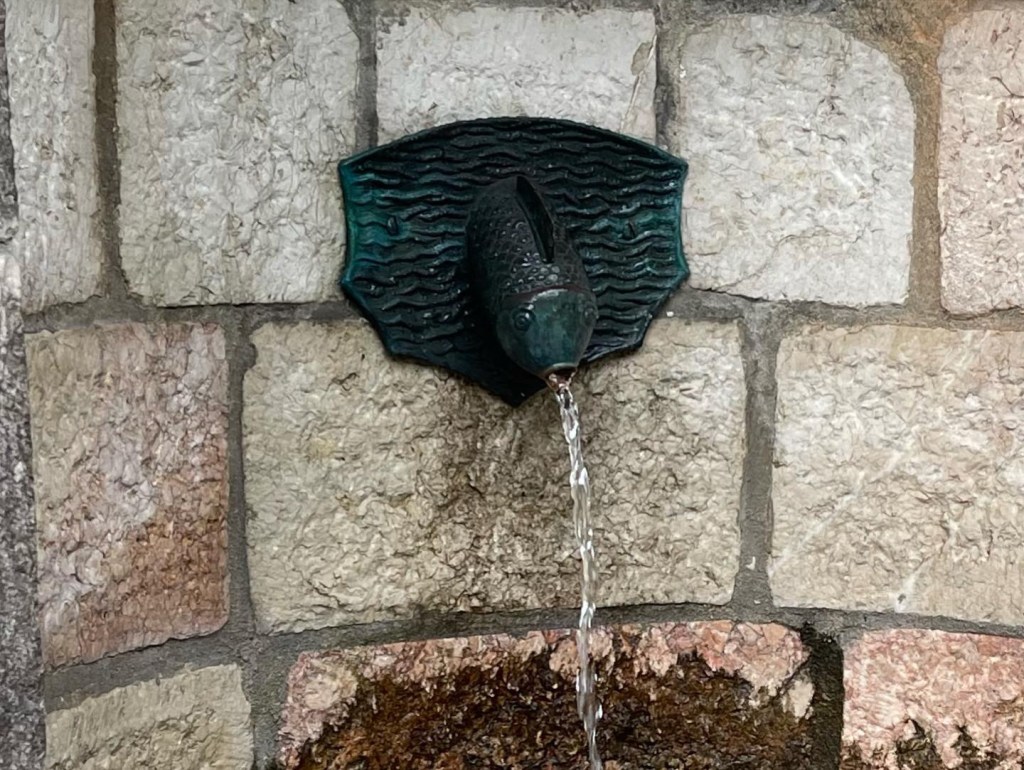
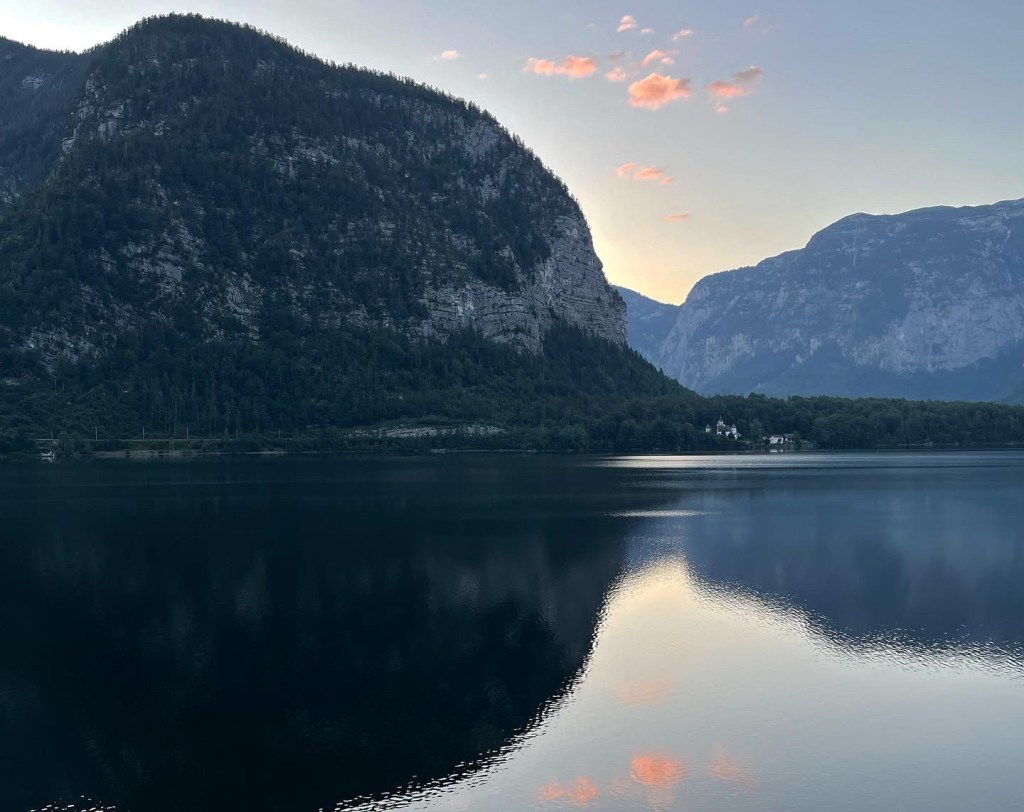
    Hallstatt is popular because it’s incredibly beautiful. like anything beautiful you either see it at surface level or you take the time to understand it at a deeper level. Linger with the little things. Savor the prolific roses that obviously love the climate. Get up really early and walk the town before anyone else is awake. Hike out to where the masses aren’t inclined to go. Don’t just be mesmerized by that pretty face looking back at you, ask for more.

    There’s a camaraderie that develops with early risers. We all seek the same thing, and respect boundaries. After all, mornings are for reverence. In Hallstatt the mission seems clear—get your money shot photo. Before dawn there were two of us waiting for the light, that number soon doubled and then tripled just before the bells rang at 6 AM. It was time to move on. You learn to linger, but never overstay. You must remember to savor this place you’ve imagined going to for so long.

  • A Visit to the Pristine Königssee

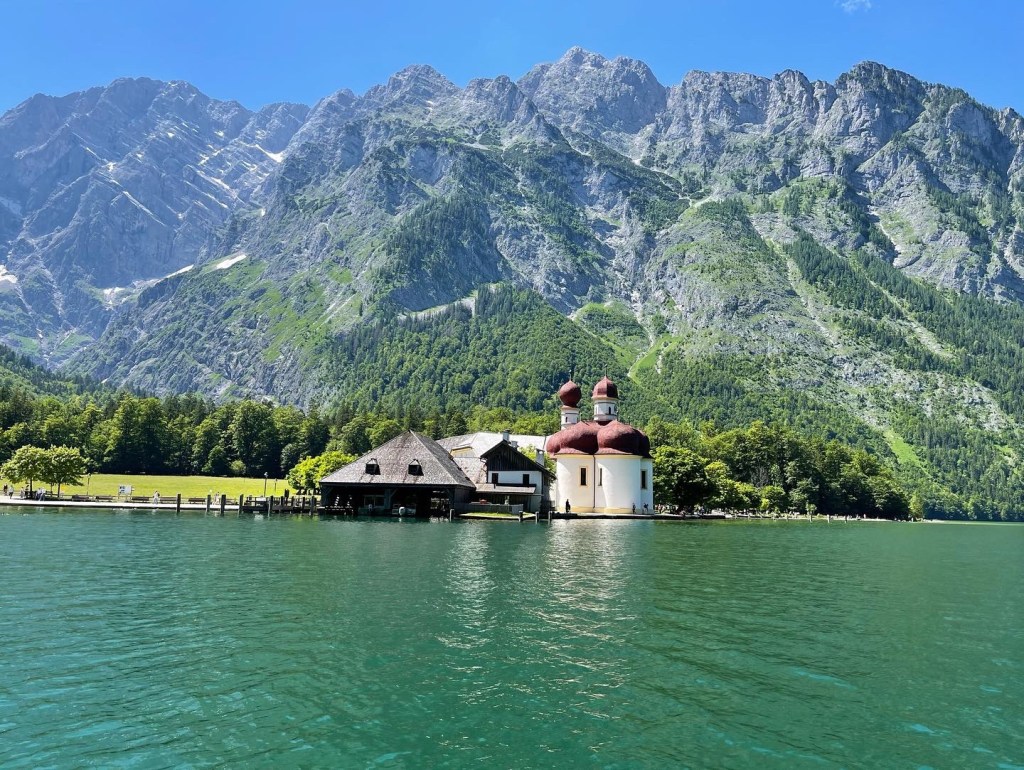
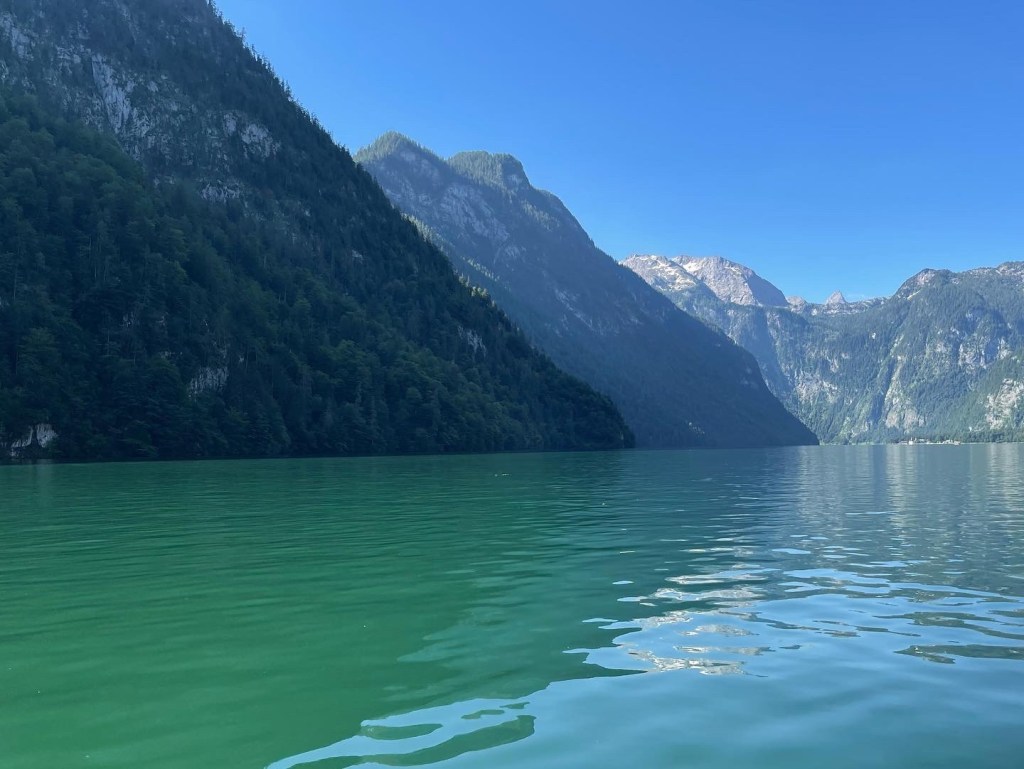
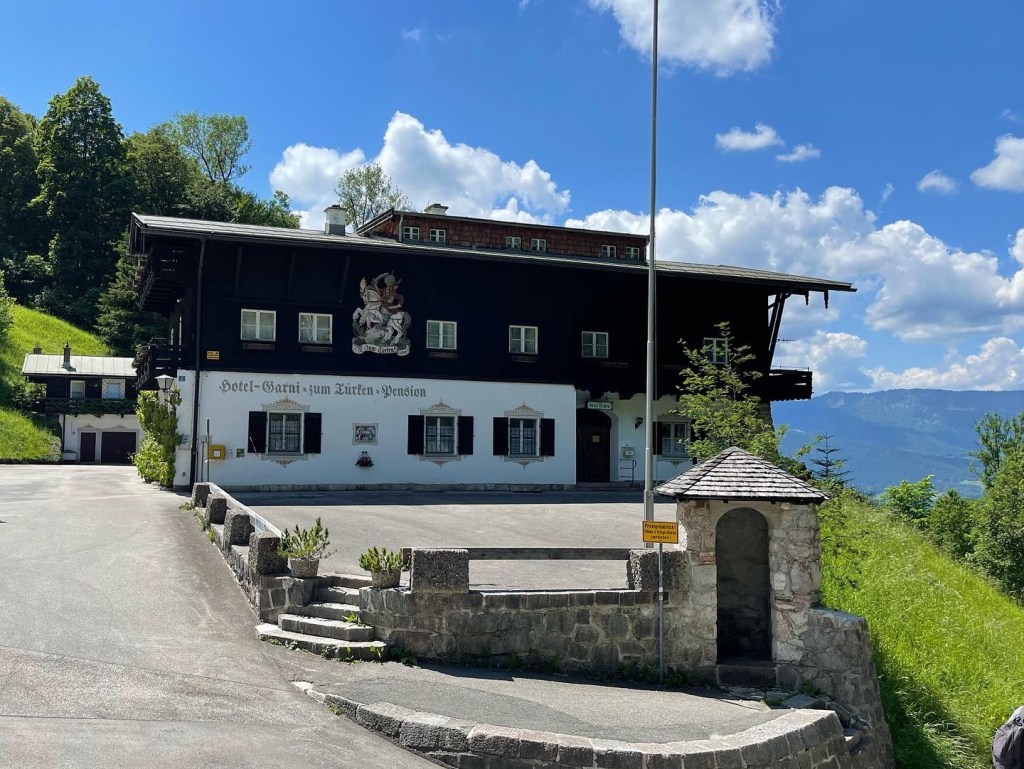
    I’d had this day circled for months, anticipating a spectacular day on the gorgeous Bavarian lake known as Königssee. I’d gotten a peek at the northernmost tip of the lake high atop Eagle’s Nest the day before, and it seemed finally real. And on a warm summer day when seemingly everyone was swimming in the lake and brilliant blue skies contrasted with the mountains, the experience exceeded expectations.

    The logistics of getting there seemed straightforward—it was a short drive from the hotel and the parking lot was plenty big. But that parking lot proved a stumbling block. Most of the pay machines only accept coins, and the change machines weren’t working. There are some credit card readers which also weren’t functional. Signage said to go to the information center for change, but it didn’t open until 09:00. That left several people scrambling for change. Fortunately an acquaintance happened to park nearby and had the app on his phone to pay. Hurdle cleared.

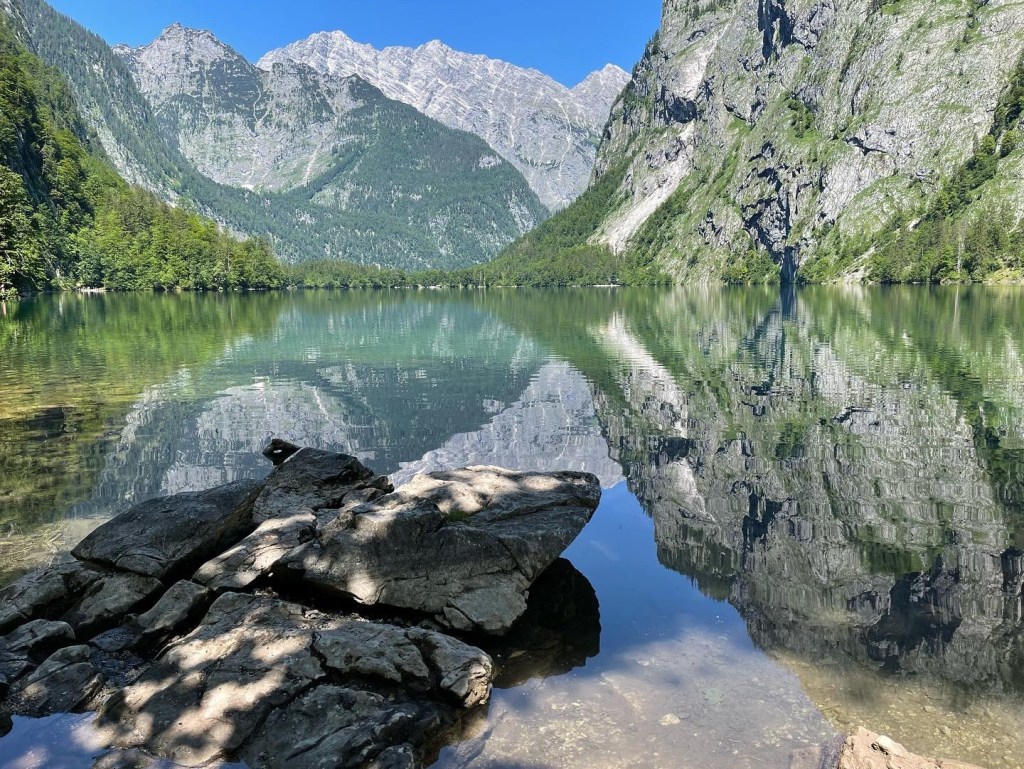
    Königssee, at almost five miles long, and its beautiful little lake sister Obersee, sit within Berchtesgaden National Park. Like Zion National Park in the United States, the towering rock faces seemed a cathedral surrounding you in a hug. You feel inclined to return that affection. There are plenty of options to feel the spirit of the place walking the paths, hiking, sitting in the biergarten or on Königssee itself. Of course, you may feel inclined to do all of those things.

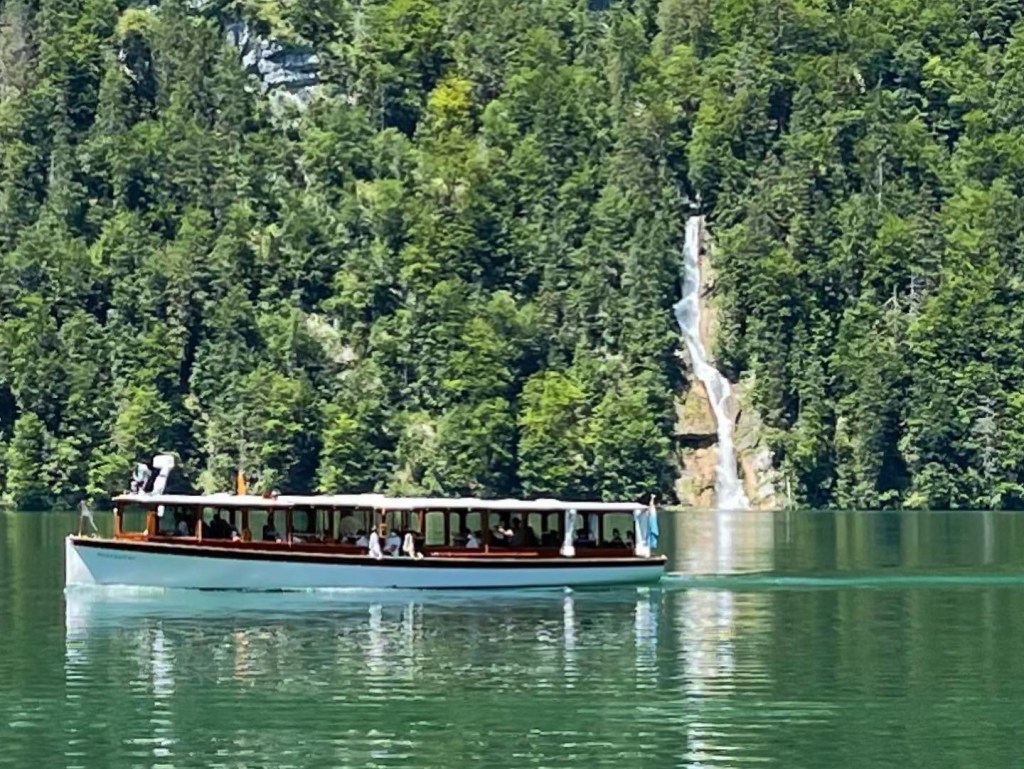
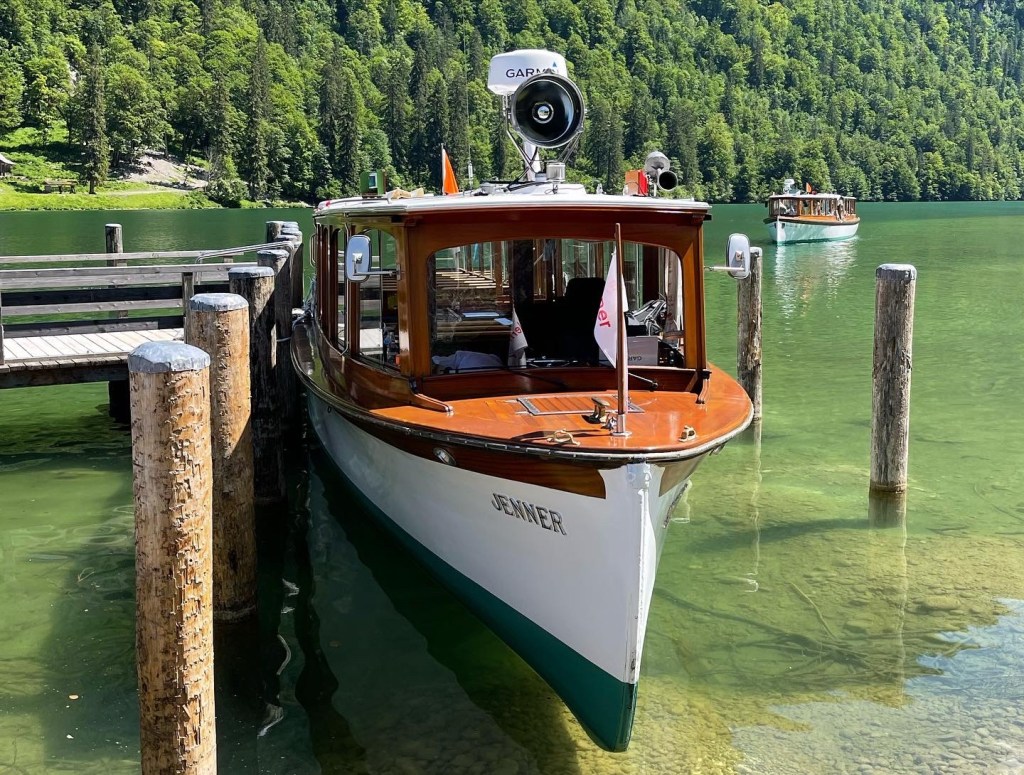
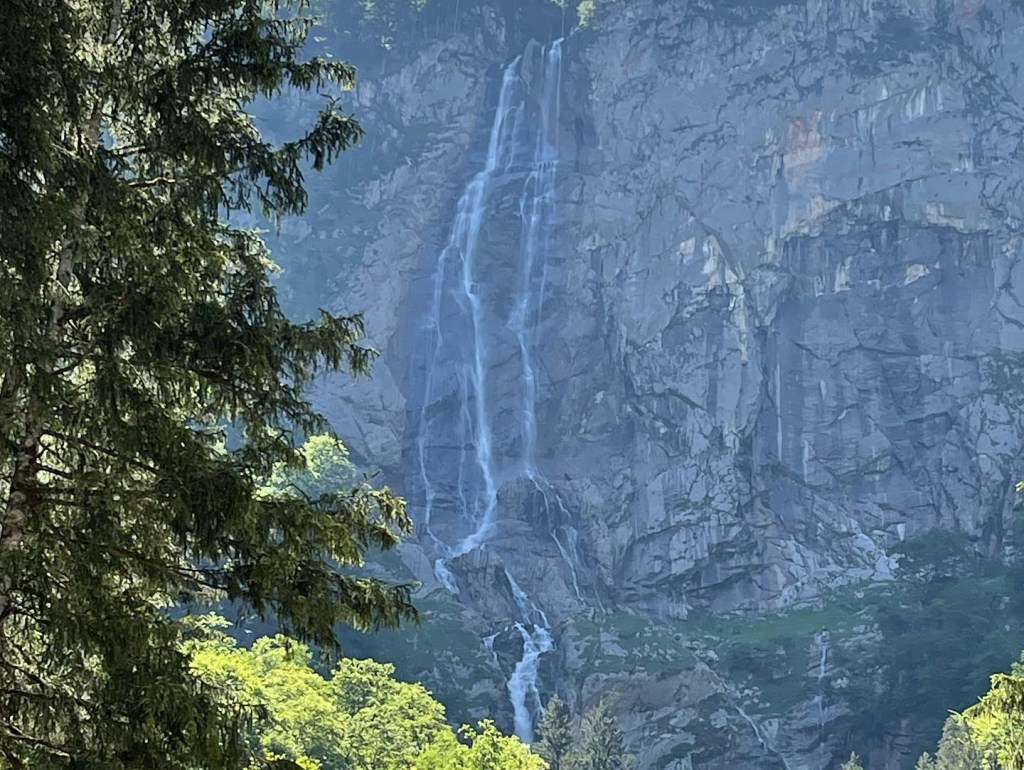
    The famous electric boats leave from Schönau am Königssee, with stops in St. Bartholomä and Salet. To make the most of your visit to Königssee you really should go to Salet. The longer trip brings you past the beautiful Schrainbach Wasserfall as it plunges into the lake. Salet itself offers dining services, but also access to Lake Obersee and the spectacular Röthbachfall as it plunges over 400 meters down a sheer rock cliff. As a bonus there’s another waterfall to the left that likely feels resentful at its bigger sibling getting all the attention. The hike itself is easy and offers some incredible vistas along the way.

    As an American with the tiniest grasp of the German language I was left in the dark when our boat guide rapidly rattled off historical facts and one-liners that had the passengers in stitches, but managed to pick up just enough to follow along. What transcends language barriers is music, and the highlight of the boat ride was our guide playing his trumpet accompanied by its echo on the mountain walls surrounding us. It was magical. So too is Königssee.

  • A Visit to Eagle’s Nest

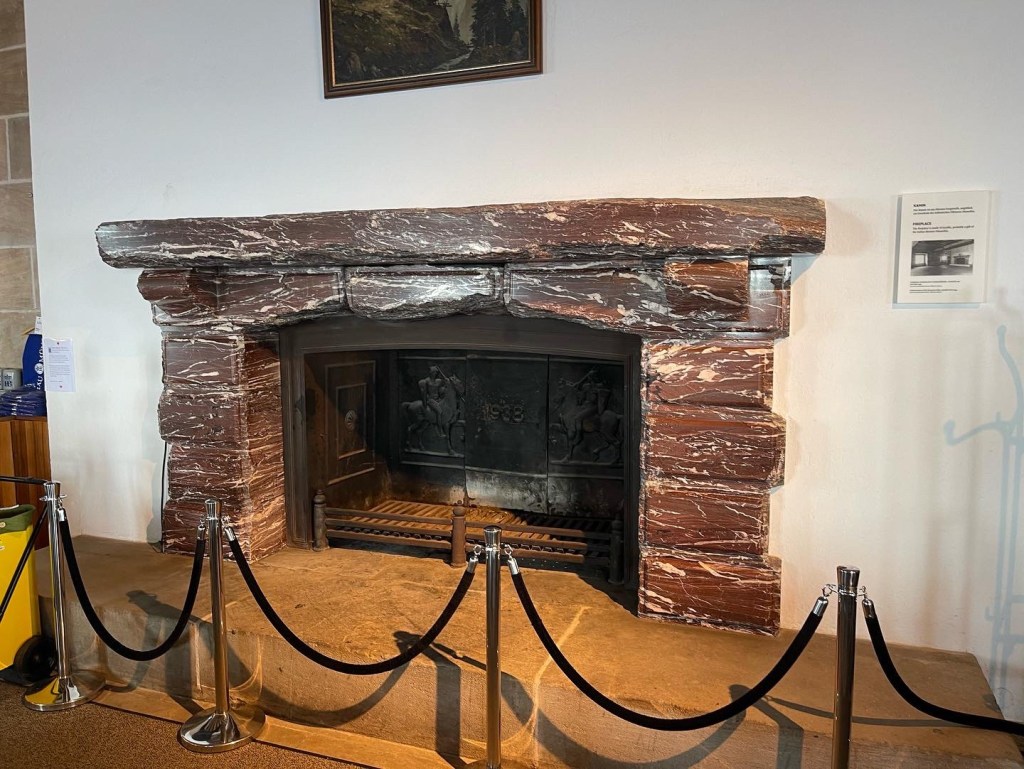
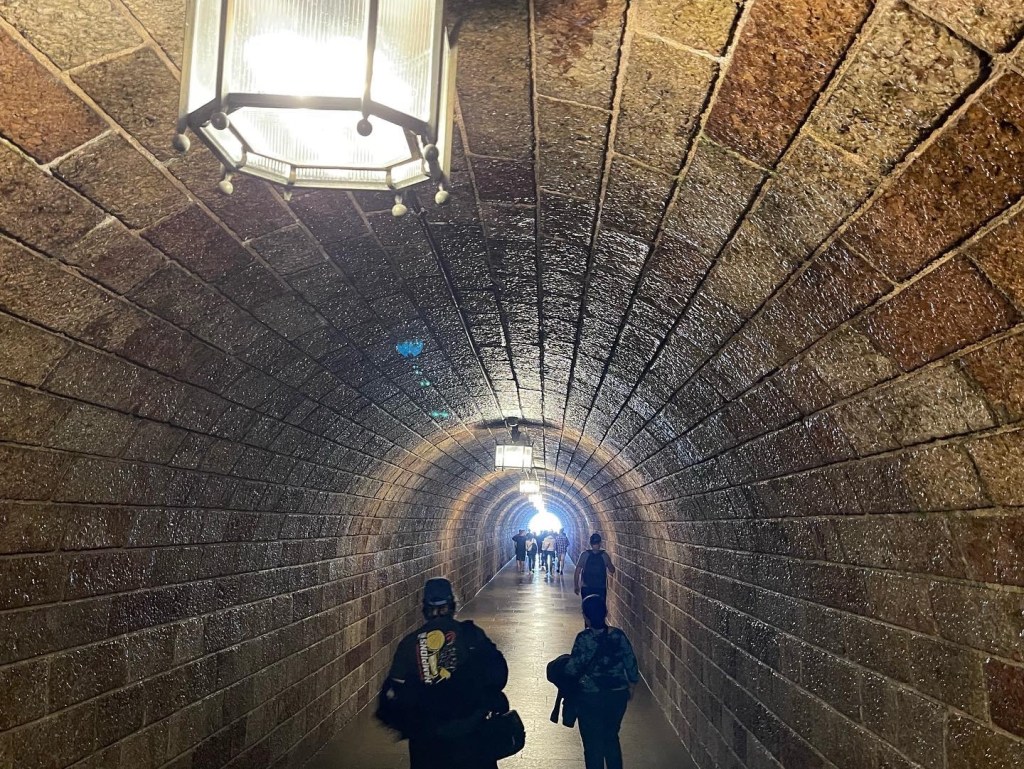
    You feel the history of the place well before you walk through the marble tunnel to the polished brass elevator that carries you more than 400 feet to the Eagle’s Nest. You feel it when you see the broken old bricks that were once the steps leading to the door of the most famous villain in modern history. You feel it when see the old guard hut still standing stoically almost 80 years since Nazis stood in it. Eagle’s Nest reputation precedes a visit you make to it.

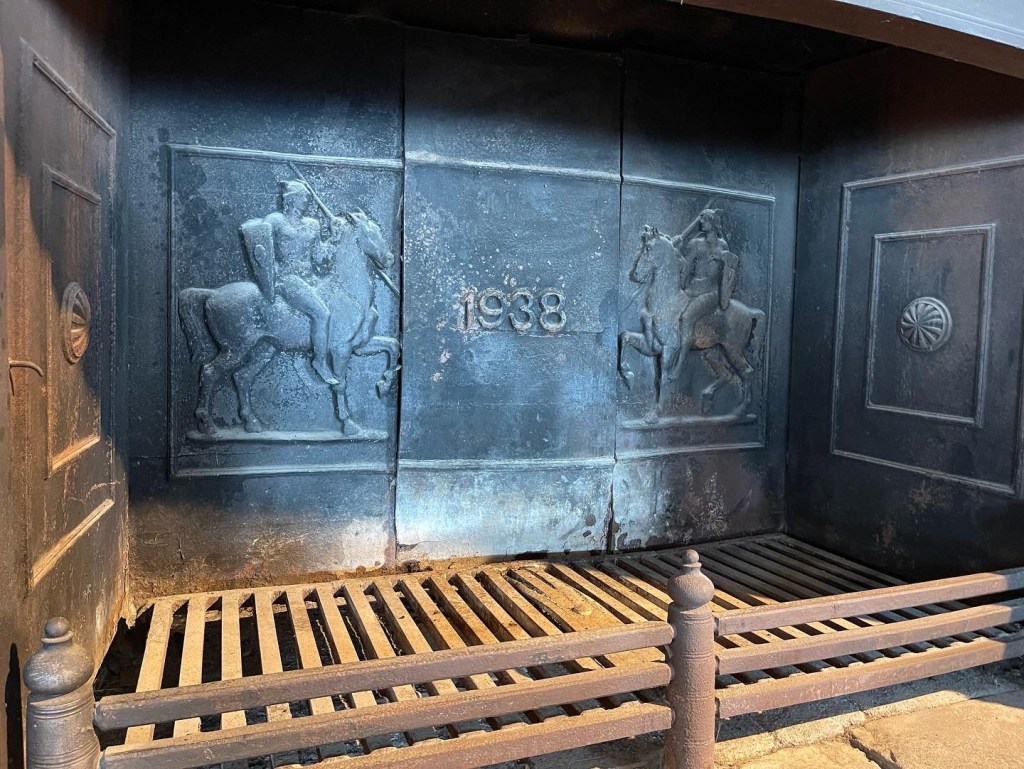
    The German word for Eagle’s Nest is Kehlsteinhaus. It remains largely the same as it was when Hitler and the worst of humanity plotted invasions and mass extermination of large segments of the population within reach of this mountainous enclave. That it was spared during the bombing raids of 1945 or the subsequent destruction of Hitler’s prized home is a lucky break. For all its dark history, Eagle’s Nest today is a beautiful place to spend a day.

    Despite the complexity of building a mountain road with its network of bridges and tunnels, cutting an entry tunnel and elevator shaft out of rock and dropping a building on top of it all, thousands of skilled laborers got it done in just over a year. For Hitler, a guy afraid if heights, that drive up must have been terrifying. Good. Who wants to think of him enjoying it?

    Walking around the mountaintop on a beautiful day, the world opens up around you. The stunning Berchtesgaden Alps surround you and sparkling Lake Königssee shimmers below. This place is a wonder. But don’t plan to stay for long at the top. People are moved in and out with quick efficiency. It may have started as a Nazi lair designed to awe visitors, but today it’s a major tourist attraction. Still in the business of awe, but very much on a tight schedule.

  • Here It Comes! A Visit to Krimml Waterfall

    Live water heals memories. I look up the creek and here it comes, the future, being borne aloft as on a winding succession of laden trays. You may wake and look from the window and breathe the real air, and say, with satisfaction or with longing, “This is it.” But if you look up the creek, if you look up the creek in any weather, your spirit fills, and you are saying, with an exulting rise of the lungs, “Here it comes!” —Annie Dillard, Pilgrim at Tinker Creek

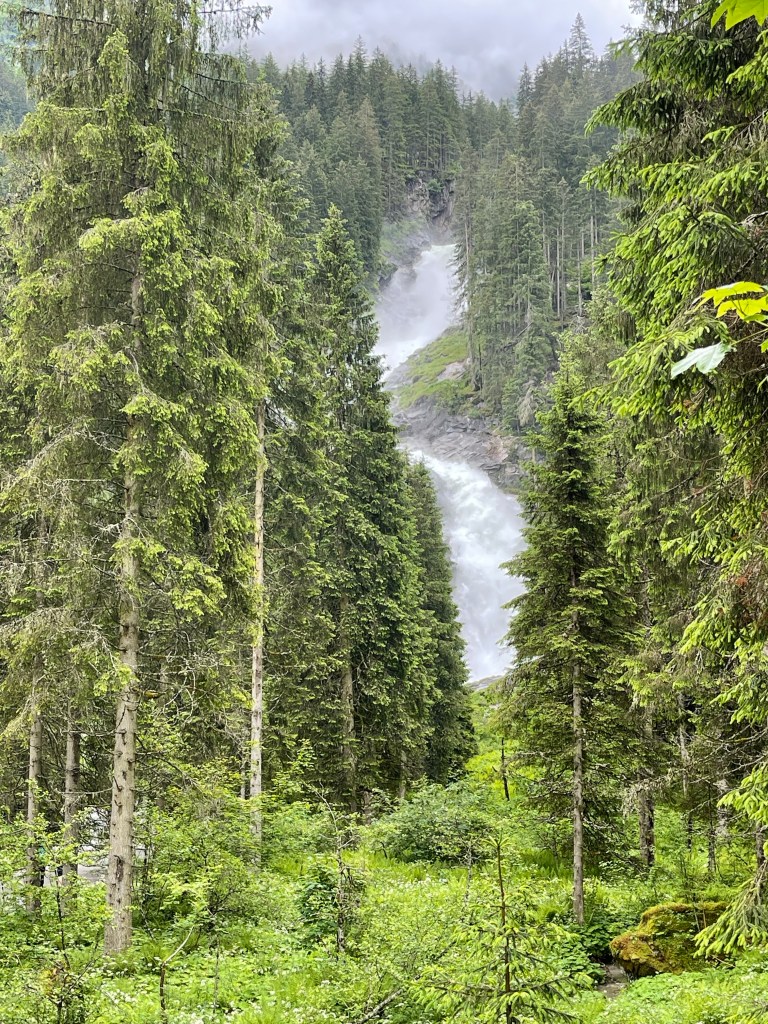
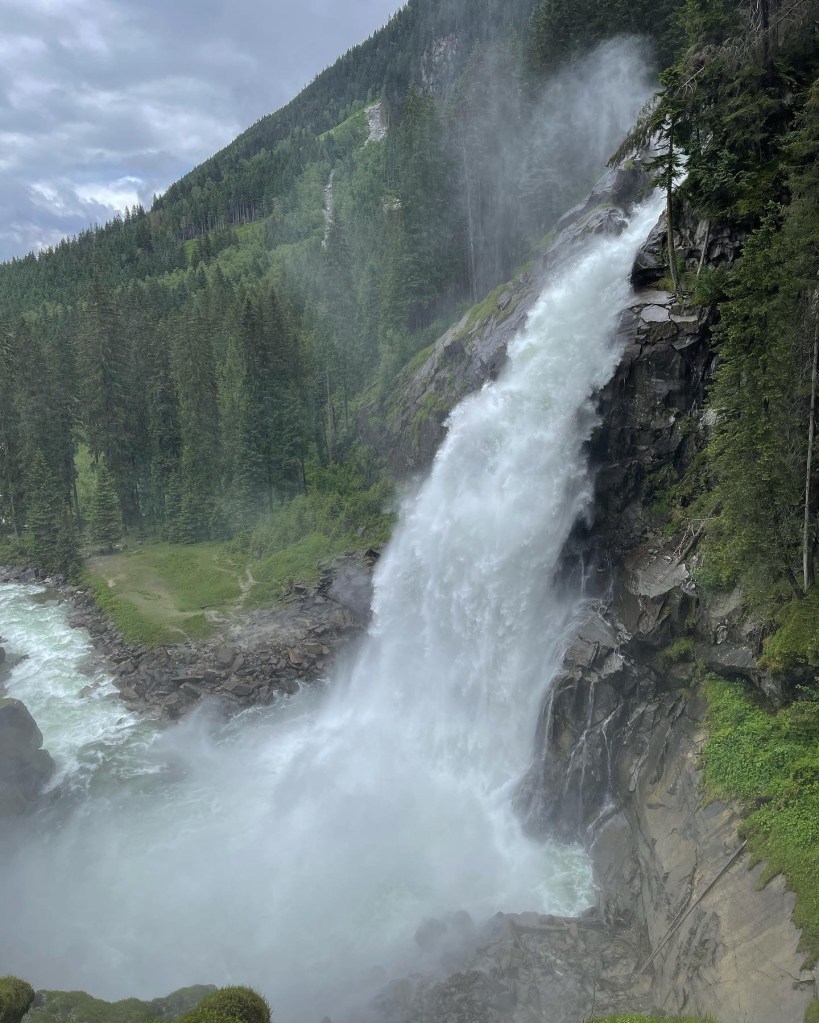
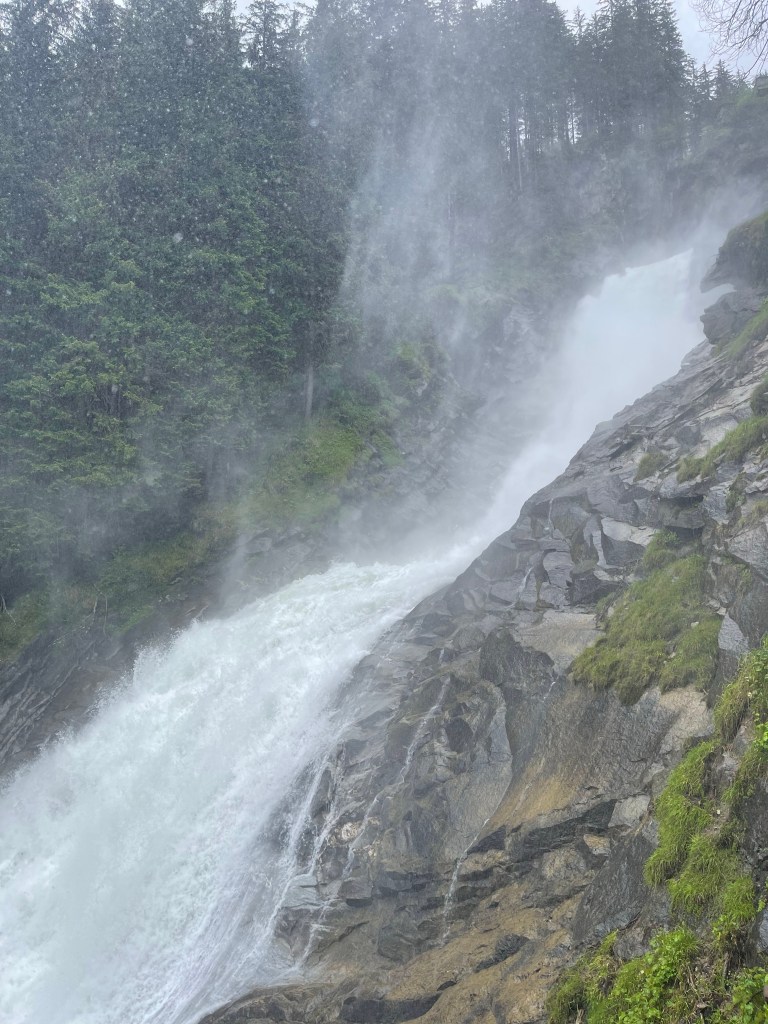
    I’m told that Krimml Wasserfall, or Krimmler Waterfall if you prefer, is the tallest waterfall in Europe. The cascades are broken up into distinct falls and the landscape makes it impossible to see the entire waterfall when you’re standing near it. Instead you hike up and discover the falls a bit at a time. With an hour to see them, this presented a slight problem—we simply couldn’t see the entire waterfall on this trip. But seeing half was quite impressive.

    It’s quite easy for your spirit to fill when you feel the spray swirl around you and hear the roar of frigid whitewater meeting stubborn rock. Maybe this is why we seek out big waterfalls, but small plunges offer their own lift. A giant like Krimml amplifies that spirit lift with awe. A visit locks in new memories.