Month: September 2023

  • Swapping Idols for Vanaprastha

    “The first ashrama is brahmacharya, the period of youth and young adulthood dedicated to learning. The second is grihastha, when a person builds a career, accumulates wealth, and maintains a family. This second stage seems fairly straightforward and uncontroversial, but in this stage the Hindu philosophers find one of life’s most common traps: People become attached to its earthly rewards—money, power, sex, prestige—and thus try to make this stage last a lifetime. Sound familiar? This is another description of being stuck on the fluid intelligence curve, chasing Aquinas’s four idols—money, power, pleasure, and honor—that lead to self-objectification, but that never satisfy.
    To break the attachment to these idols requires movement to a new stage of life, with a new set of skills—spiritual skills. The change can be painful, Acharya said, like becoming an adult for a second time. And it means letting go of things that defined us in the eyes of the world. In other words, we have to move beyond the worldly rewards to experience transition and find wisdom in a new ashrama—and so defeat the scourge of attachments. That ordinarily occurs, if we are diligent, around age fifty.
    And that new stage? It is called vanaprastha, which comes from two Sanskrit words meaning “retiring” and “into the forest.” This is the stage at which we purposively begin to pull back from our old personal and professional duties, becoming more and more devoted to spirituality and deep wisdom, crystallized intelligence, teaching, and faith.” — Arthur C. Brooks, From Strength to Strength

    Arthur C. Brooks seems to be everywhere at the moment, bouncing between podcast interviews like mad as he hits the circuit to discuss his latest book with Oprah Winfrey. I’m a step behind that book, still lingering with the one he published last year quoted from above. But based on the interviews I’ve listened to, it feels like the themes from one book flow right into the next. That I’m lingering so long on the transition from fluid intelligence to crystallized intelligence tells you all you need to know about my own particular stage of life.

    Books are stepping stones. The path I’ve been on in my reading leads me from one book to the next, and one interview with the author to the next, which points out more source material to dive into, and so on. Life is about growth and becoming. How we cross the stream depends very much on the stones we land upon, and where they lead us next. At some point in our lives (if we reach awareness) it feels natural to stop chasing idols and begin finding wisdom.

    So here we are, figuring out this journey to becoming what’s next for us. The ashramas listed above are one clear indicator that nothing we’re sorting through is unique to us, it’s a human condition of growth and change and reconciliation with the entire process. Writing surely helps, but do does reading and seeking out the perspectives of those who have gone there before us. This is the time in my life when diving deeply into spirituality and wisdom feels like the natural next step. Apparently I’m moving into vanaprastha, with the urge to walk out into the forest but still carrying the obligations of that stage of earthly rewards, grihastha. How about you?
  • All the Miracles

    “To be alive, to be able to see, to walk, to have houses, music, paintings—it’s all a miracle. I have adopted the technique of living life from miracle to miracle.” — Artur Rubinstein

    We get tired sometimes, and forget about miracles like being born at all, in this time, relatively healthy and of sound mind. We’re blessed, but still find things to complain about, to compare ourselves against, to make us feel less of a miracle than we are. Isn’t that a shame? We ought to dabble in magic and dance in the miracle of where we are, and instead we dwell on the incremental differences between us.

    I went out in the rain for a walk with the puppy. She’s not so much a puppy now, but still curious and a little fearful of the unknown things around her. But she loves the rain tickling her skin and the feeling of cold, wet grass on her belly. We can learn a few things seeing the world through the eyes of the youngest among us. Puppies and toddlers experience the miracle differently than adults do. We know it’s not practical to dwell on every little thing—we’d never get anything done! But what are we really doing anyway?

    Now and then I get tired of things as they are. Routines are made to keep us in line, but are inherently routine. That we take all the miracles around us and dull them down to average is very adult of us. But is it any way to live?

  • Talkin’ to Myself

    Talkin’ to myself and feelin’ old
    Sometimes I’d like to quit
    Nothin’ ever seems to fit
    Hangin’ around
    Nothin’ to do but frown
    Rainy days and Mondays always get me down
    — The Carpenters/Adam Williams, Rainy Days and Mondays

    Rainy days and Mondays never really drag me down. Sure, we’ve had way more rain than we should this season, while others aren’t getting nearly enough of it. I can fret about climate change but I don’t usually care that it’s raining or sunny on any given day. Likewise, I don’t worry all that much whether it’s a Monday or a Saturday, as each is a gift. The key is whether you feel in control of your days or whether you feel someone else is controlling them. We can’t control the passing of time or the weather, only our reaction to it. The jury is still out on whether we collectively have the fortitude to do anything about climate change.

    I saw a friend the other day who parroted the dangers of “mass murderers swarming crossing the border and descending upon innocents across the country”. I didn’t have the energy to get in a debate with him, having learned during the last two elections in the United States that people are going to believe what they believe and you just can’t force an alternate story line upon a zealot. It made me sad to see another one gone though, reminding me of that closing moment in Invasion of the Body Snatchers when you realize someone you once believed in had switched over to the dark side. Sometimes you just want to scream. But like the weather, this is a reaction we can choose or opt out of. Instead I focused on what we had in common.

    The quality of our lives is always going to be about who is controlling our time and our belief system. When we accept that some things are out of our control, we learn to work with what we can. Amor fati. Our beliefs, on the other hand, can be developed independently of what those around us may believe. We may yet become who we want to be in this life, and we ought to have faith in others to find a way forward too.

    Lately my posts have been all over the place in both content and when they’re published. It’s a sign of a complicated life, perhaps, or maybe it’s just the time bucket I happen to reside in at the moment. Either way, it’s documented and best viewed through the lens of time. What I’m sure of is that I’ve often wanted to quit, but just keep writing anyway. That’s how life works too. Just keep showing up and doing the work and things usually work out in the end. Nothing to be down about at all, really. Just one soul in a wild world, talking to himself.

  • Meeting the Changes

    “A talent for following the ways of yesterday is not sufficient to improve the world of today. — King Wuling of Zhao

    When you habitually surf waves of change as part of your identity, few things really surprise you in the world. But now and then the world throws even the most antifragile person for a loop. Even Superman had kryptonite to knock him down to human now and then.

    The thing is we all need to be willing to change, and meet it head-on, in order to fully optimize our lives. But we all get comfortable with being comfortable too. These two opposite states lend themselves to discomfort in the best of situations and emotional distress when we spiral into deep internal conflict over the changes.

    Part of being a functional adult is developing adaptability and a willingness to pivot when necessary. Think about all the changes we’ve seen in our lifetimes. Think about how much change we’re going to be faced with for the balance of our lives. Change happens. Our role is to change with change.

    When I was a teenager I learned the trade of drafting. To be a draftsman combined a love of architecture and mechanical detail with a love of art and creating something from scratch. The thing is, the trade was dying quickly even as I learned it, moving to CAD and beyond. To have learned such a trade seemed frivolous in hindsight, but I learned much more than how to draw lines on a piece of paper. I find myself still using some of the skills I developed then, like reading a set of blueprints to understand the scope of work needed for a project. Talking with architects and engineers, I find I know their nomenclature and what they need to complete a project. But on the whole, that drafting skillset is dead and gone.

    I could mourn the passing of a career path I once coveted, or embrace change and leap from one to the next until I arrive at a place I can add the most value in. Sure enough, that eventually happened, and I continue to build on new skills until one day they too become less relevant and I’m faced with the need to pivot once again. This is the way of the world. The ways of yesterday are not sufficient for us to become what we will be tomorrow. We can never rest on our strengths, but we can use them as a foundation for who we may become next.

  • Beyond Meaning

    “Life has no meaning; it cannot have meaning because meaning is a formula; meaning is something that makes sense to the mind. Every time you make sense out of reality, you bump into something that destroys the sense you made. Meaning is only found when you go beyond meaning. Life only makes sense when you perceive it as mystery and it makes no sense to the conceptualizing mind.” — Anthony De Mello, Awareness

    How we process things in our lives determines how happy we are with the sum of it. Writing is an essential way to process it for me. Deep reading does wonders for me too. But I don’t use activity for processing. Perhaps you’ve found the secret to multitasking activity and combined it with processing, if so kudos, but for me it’s never really worked. There’s something to be said for long walks in the woods or an empty beach, but such activities help empty my restless mind, these things rarely help me process anything important.

    And so I write, and read, and singularly process what I can. And share it in this blog and other communication threads for those inclined to follow the breadcrumbs. So maybe my someday great-grandchildren can sort out who this character was in his day. And maybe you, dear reader, somewhere in this world and in your time, may find something insightful too. Or maybe it gets trapped forever in the anonymous amber of the Internet. The things we ponder in this world…

    The thing is, if life has no meaning, we waste time trying to find it. We ought to just live, and fill that lifetime with purpose and wonder and love. That’s something beyond “the meaning of life”, yet it’s meaningful to the living. That’s you and me and some imagined reader of ancient blogs “someday, when”. We are here, writing our verse, as best we can. So make it compelling. Make it fun. Make it a story worth reading about. The rest will take care of itself.

  • Nothing Gold Can Stay

    Nature’s first green is gold,
    Her hardest hue to hold.
    Her early leaf’s a flower;
    But only so an hour.
    Then leaf subsides to leaf.
    So Eden sank to grief,
    So dawn goes down to day.
    Nothing gold can stay.
    — Robert Frost, Nothing Gold Can Stay

    Halfway through another month as I publish this, and I shake my head at the magic I’ve missed doing other things. But there are always other things. We do what we can with the time we’re given.

    Memento mori is a statement of freedom. When we understand that we have an expiration date, we go out and live our lives uniquely focused. Carpe diem. There should be nothing more to it than this.

    And yet there are things out of our control that must be addressed as they hit us squarely. Life is an ongoing reality check. The world is not perfect, there are storms brewing, and no matter how well we plan the party sometimes it just rains. Amor fati: Love of fate. As The Police reminded us in a song, “when the world is runnin’ down, you make the best of what’s still around”.

    But this is the deal we made entering this world: We are young and vibrant for just so long. We grow and become what we can in our season and then we hand the reigns in the next season. Nothing gold can stay.

    There is freedom in knowing the truth. It’s a calling that we answer every day. To live with urgency and purpose, gratitude and joyfulness. This is our poem. This is our song. This is our life.

  • Being Alive

    “People say that what we are all seeking is a meaning for life. I don’t think this is what we’re really seeking. I think what we’re seeking is an experience of being alive.”— Joseph Campbell, The Power of Myth

    We are most alive when we are actively engaged with the world. This can mean summiting a mountaintop, or stepping into the unknown in a room full of people you don’t know, or reading the words of someone who passed from this world centuries ago. The point is to put ourselves out there to experience what we would completely miss were we to stay in our shell. So step out of the comfort zone and be alive.

  • Significance Transcends

    “History is, above all else, the creation and recording of that heritage; progress is its increasing abundance, preservation, transmission, and use. To those of us who study history not merely as a warning reminder of man’s follies and crimes, but also as an encouraging remembrance of generative souls, the past ceases to be a depressing chamber of horrors, it becomes a celestial city, a spacious country of the mind, wherein a thousand saints, statesmen, inventors, scientists, poets, artists, musicians, loves, and philosophers still live and speak, teach and carve and sing. The historian will not mourn because he can see no meaning in human existence except that which man puts into it; let it be our pride that we ourselves may put meaning into our lives, and sometimes a significance that transcends death. If a man is fortunate he will, before he dies, gather up as much as he can of his civilized heritage and transmit it to his children. And to his final breath he will be grateful for this inexhaustible legacy, knowing that it is our nourishing mother and lasting life.” — Will and Ariel Durant, The Lessons of History

    We are the sum of all that has come before us, with a mission to process and pass along this wealth of knowledge and contribution to future generations. When we talk about the Great Conversation, we rightly wonder what our own legacy might be. We must feel the urgency to contribute. We must lean into Walt Whitman’s response to this very question: That the powerful play goes on, and you may contribute a verse. Walt wasn’t just writing prose, he was struggling with the same things we struggle with, with fewer notifications and cat videos. We’re simply links in the chain, anchored to the work of those who came before us.

    Lately I’ve seen the momentum that comes from steadily pushing the flywheel for years. The writing is easier, conversations seem more productive and meaningful, and a deeper and richer connection to the world has led to growth and understanding. We simply begin to realize that we’ll never have it all figured out, we cannot live forever and so we’ll run out of time before we grasp everything we hoped we might, and with the startling realization that our significance in the universe isn’t all that big. Yet we may still transcend this lifetime anyway, simply by being actively engaged in our time.

    When we feel the connection to the countless generative souls who made us who we are, we may feel compelled to rise to the occasion of our lifetime as well. There is magic in showing up every day and doing the work. Our verse is ours alone. Just as we thrill at discovering a magical verse from a distant voice, our own verse may one day delight a future treasure hunter. Doesn’t it deserve its moment in the sun?

  • The Best of Our Energies

    “We shall send to the moon 240,000 miles away, a giant rocket, more than 300 feet tall on an untried mission to an unknown celestial body, and then return it safely to Earth. But why some say the moon? Why choose this as our goal? And they may well ask, why climb the highest mountain? Why 35 years ago fly the Atlantic? We choose to go to the moon. We chose to go to the moon. We choose to go to the moon in this decade and do the other things not because they are easy, but because they are hard. Because that goal will serve to organize and measure the best of our energies and skills, because that challenge is one that we’re willing to accept. One we are unwilling to postpone. And therefore, as we set sail, we ask God’s blessing on the most hazardous and dangerous and greatest adventure that man has ever gone.” — John F. Kennedy, Jr.

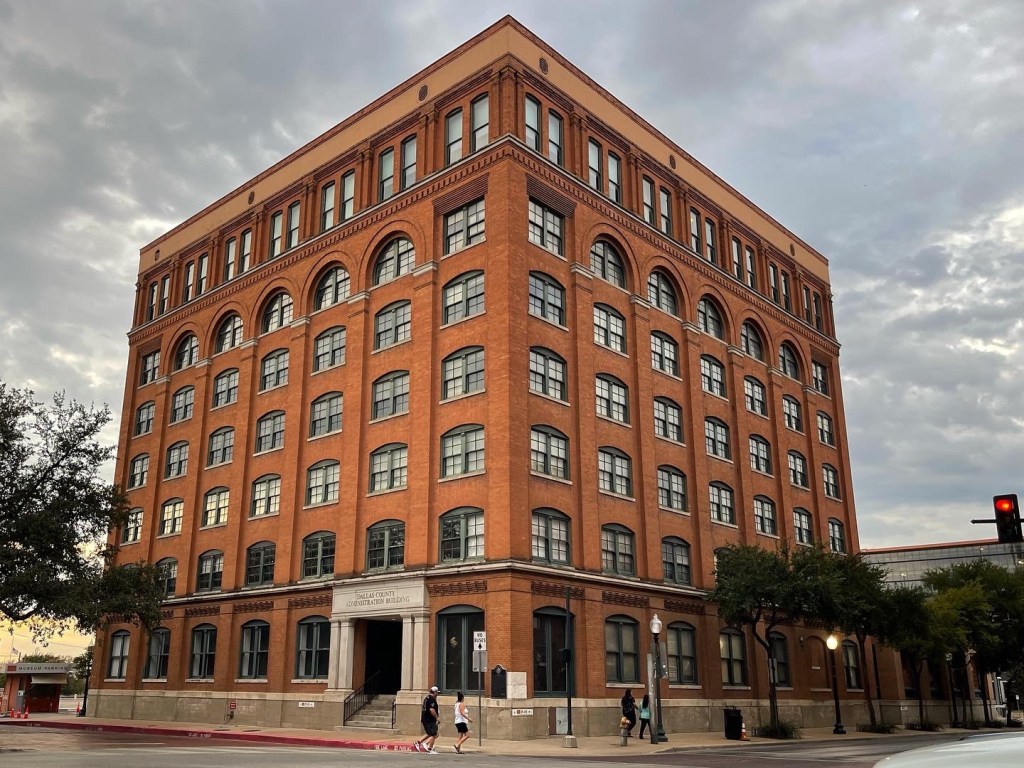
    Walking around Dallas, Texas to stretch the legs a bit, I had one destination in mind the entire time. It had to be Dealey Plaza and the Texas School Book Depository building. This may seem morbid in a way, but it’s similar to me to visiting the 9/11 Memorial in New York City. It’s a place we all know about (though I wasn’t alive at the time of Kennedy’s assassination) and feel compelled to experience to get a feel for what the place is really like.

    The thing about Kennedy that everyone remembers is the sense of hope and youthful energy that he brought to the White House. That it would be taken away so abruptly ripped the heart of the nation, no matter which side of the aisle you sat on politically. There are very few things that seem to unite us today, and we remember the moments when we stand together as one. That I visited on 9/11 wasn’t lost on me. Along with Pearl Harbor, 9/11, the Challenger explosion, Kennedy’s assassination was one of the seminal moments in American history.

    The thing is, Kennedy died but the ripple he made continued to reverberate. It says a lot that I should seek out the final moments of a man who died before I was born. It says a lot that we did go to the moon, and America did grow as a nation after JFK’s death. We show the way in our lifetime, that others may find their way in their lifetime. That we may grow as a society after we’re gone. Kennedy called for a nation to channel the best of their energies towards an audacious mission. That we accomplished it was one of the brightest moments for the nation in some dark days to follow Kennedy’s assassination.

    That phrase, choosing a goal that “will serve to organize and measure the best of our energies and skills” should still provoke us. Are we measuring up to the best we can be? Do we have the right goals in mind for ourselves? That’s what echoes in my mind when I think of Kennedy. We all know where his life ended, but it’s who he challenged us to be that stays with us.

    Texas School Book Depository building
  • The Layer Cake of Happiness and Purpose

    “[There is an] age-old debate over two kinds of happiness that scholars refer to as hedonia and eudaimonia. Hedonia is about feeling good; eudaimonia is about living a purpose-filled life. In truth, we need both. Hedonia without eudaimonia devolves into empty pleasure; eudaimonia without hedonia can become dry…. I think we should seek work that is a balance of enjoyable and meaningful. At the nexus of enjoyable and meaningful is interesting.” — Arthur C. Brooks, From Strength to Strength

    There’s a special kind of joy that comes from marrying purpose with happiness. When we find our engagement with the world has both a why and joyfulness we enter blissful work. If this seems evasive, it’s because it is. Some people never find one or the other, let alone both in their lives. I believe it’s usually tapping us on the shoulder asking us to stop staring straight ahead and take a look at what we’ve been missing all along.

    The secret, always, is the people we surround ourselves with. When we’re constantly lifting up those around us, we can’t help but be dragged down ourselves. When others share the lift, the weight of the world seems lighter. When others lift us up in turn, we reach heights we might not have thought possible previously. We are the average of the people we surround ourselves with, so we ought to raise the average both in whom we spend our time with and the character we bring to the table.

    When we stop trying so damned hard to be happy or to find purpose and simply contribute our verse, we find over time that things like happiness simply happen organically. Building a lifetime of contribution and engagement with the world we find our foundation becomes stronger and we’re able to weather the inevitable storms that wash over us that erode weaker foundations. Life becomes a layer cake of happiness and purpose, repeated. When done in the company of exceptional people, what a wonderful life we might build together.