Month: May 2024

  • A Sequence of Everything Wanted

    “Rivers know this: there is no hurry. We shall get there some day.” ― A.A. Milne, Winnie-the-Pooh

    Slow down you’re doing fine
    You can’t be everything you want to be before your time
    — Billy Joel, Vienna

    In a dizzying turn of events, last night capped a sequence of things wanted for some time delightfully happening one after the other, from Rome to Athens to Sicily to Florence to… New Hampshire. Life is sometimes simply great timing, realized. To visit the Colosseum and the Sistine Chapel and the Acropolis and Mount Etna, to see Michelangelo’s La Pietà and David to bookend an epic trip and then return home to find the elusive Aurora Borealis dancing in my own backyard hours later is a sequence I’ll be processing for some time, thank you. This isn’t meant to be a brag about how lucky the last couple of weeks have been, rather a realization that patiently working towards something combined with a bit of good luck goes a long way in a lifetime. Amor fati.

    The thing is, I wear my impatience on my sleeve (and blog about it more often than I ought to). Some of us simply want to get right to everything as quickly as possible, knowing that time flies and we aren’t getting any younger. Sure, tempus fugit, but slow down—you’re doing fine… Vienna waits for you. Simply plot the steps, do the work, follow through and hope fortune smiles on you.

    Hope is a tricky word, and that’s where impatience comes in. Perhaps the better word is trust. We must trust the process when we build our systems. Work, marriage, fitness level, artistic contribution, social interactions, and yes, bucket list items are all lifestyle choices built on faith that doing this will lead to that. When it doesn’t arrive promptly we restless types get a bit impatient, so a reminder of all that’s come to pass helps now and then. Gratitude goes a long way.

    Life lessons are all around us, if we simply stop rushing about so much and focus on the journey. The biggest lesson is that the journey continues, and each milestone is simply a marker for where we’ve been and what we’ve seen and who we were at the time. What’s next matters too, doesn’t it? Our past is our foundation for the growth to come. We shall get there some day. For haven’t we thus far?

    Aurora Borealis, New Hampshire 10 May 2024
    Aurora Borealis, New Hampshire 10 May 2024
    Aurora Borealis, New Hampshire 10 May 2024
    Michelangelo’s La Madonna della Pietà
    Michelangelo’s David
  • The Traveler Resets

    We shouldn’t simply travel to places to keep up with the Joneses or to gather likes on our Instagram feed, but to reach a more informed and enlightened place, from which we may cross the chasm into the next unknown. It’s readily apparent in going to the bucket list places that there are plenty of tourists already. We must be the traveler instead.

    The traveler is the ambassador, the diplomat, the pilgrim, the student. The traveler is forever curious and wondering what’s around the next corner. It’s in learning the proper inflection to “thank you” in a language that isn’t yours but is most definitely theirs. To travel is to learn to see what we might not have imagined. It’s rare to be surprised by anything in this fully-connected world, but life is more than an Instagram photo or Google street view. The traveler uses all senses and tries to see around the corner from those famous pictures everyone else is taking. I was as impressed with the strikingly sad face of a gypsy beggar working the line to see David as I was with Michelangelo’s masterpiece itself. Both were masterful; the expectations of the encounter set the lasting impression. We know mastery when we see it.

    The challenge with taking a trip full of bucket list experiences is figuring out what to do with ourself when we return. Sure, the laundry and a good sleep in one’s own bed are quite necessary. A general assessment of the home and garden situation upon return reassures. Those work emails must mean something quite essential too (or what are we there for?) if only to see who ignored the out of office message. This is all the reset in action.

    We know we’ve had a great holiday when we face a large reset: time zones, empty refrigerator, thirsty plants and remembering passwords we thought we’d memorized (do get the app for those). When we travel enough we learn to master the reset. It’s not our first rodeo, it’s just the next bend in the road to some higher plain. I’ve experienced far more than I can summarize in a few paragraphs. Silence may be the best measure of an experience.

    Ah, but what of the blog? It’s shockingly obvious that the content the last two weeks has been a bit rushed, a bit unedited, and published at odd times of the day for those used to a certain routine. Travel writing is fun. The trick is to carve out the time to write as you’re maximizing your days. But done well, isn’t that how it’s supposed to be anyway? We aren’t here solely to document our experiences in the world, but to fully live in the time we have, wherever that may be. The best writing isn’t done on the trip itself, it’s after we’ve reflected on all that we’ve experienced in our time. In the end, it’s perspective on the entire journey that resonates.

  • Perfectly Imperfect (That Tower in Pisa)

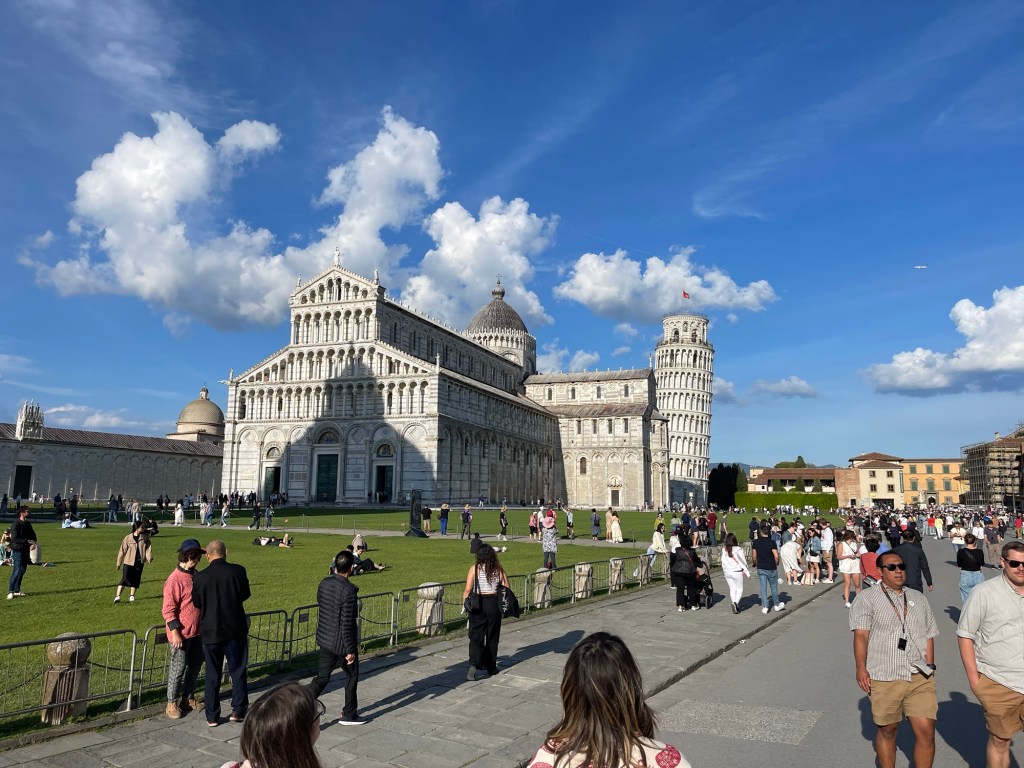
    The thing about the leaning tower of Pisa that we know intuitively is that the whole thing was a big mistake. Weak foundations mean buildings fail over time. But this one has been a massive success for the very fact that it’s still standing, if off-kilter, despite the fatal design flaw. It’s perfectly imperfect and thus appealing—for who among us is perfect?

    Pisa is a one hit wonder on the tourist circuit. Most people swarm in, head straight to the tower and leave shortly afterward. Plenty of kitschy trinkets for sale on the gauntlet between parking and the tower. This is the modern hazard of international travel to popular destinations: aggressive tchotchke vendors.

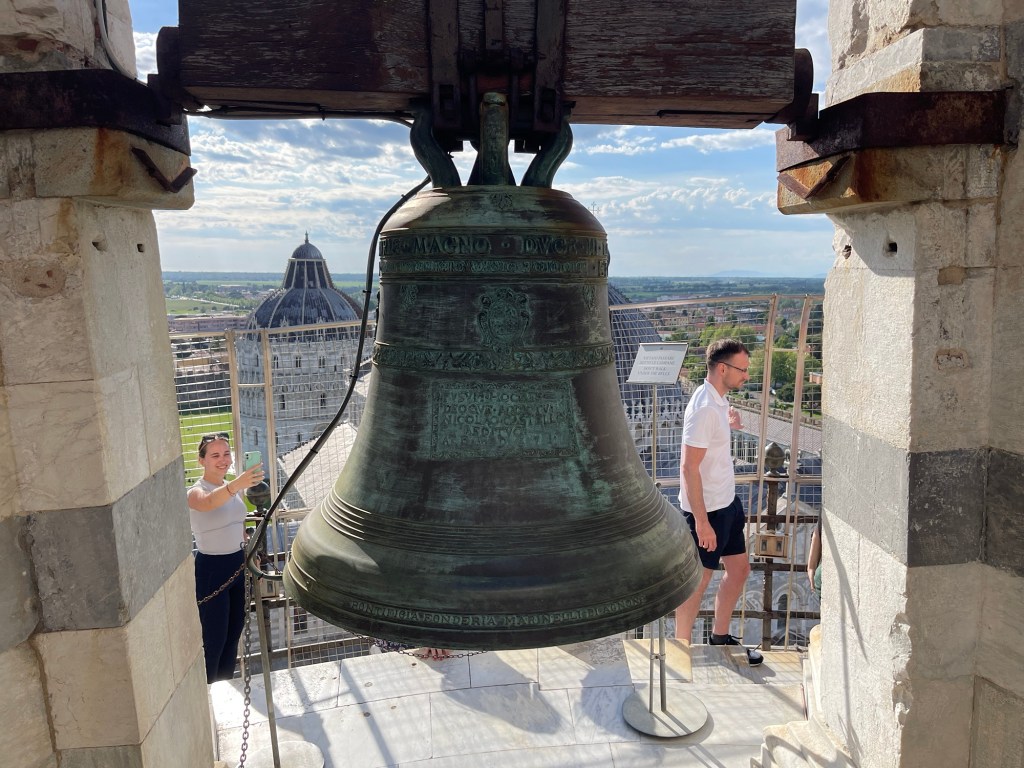
    The tower itself is the destination, and it shocks the senses when you actually see it up close and personal. To climb it, feeling that distinct lean in every step to the top, is quite unusual and a bit thrilling. We’ve climbed stairs before, but never an off-kilter spiral like this one. You know immediately why people come here to see and climb it. Perfection is in the eye of the beholder.

  • The Slopes of Vesuvious

    “For believe me! — the secret for harvesting from existence the greatest fruitfulness and the greatest enjoyment is: to live dangerously! Build your cities on the slopes of Vesuvius! Send your ships into uncharted seas! Live at war with your peers and yourselves! Be robbers and conquerors as long as you cannot be rulers and possessors, you seekers of knowledge! Soon the age will be past when you could be content to live hidden in forests like shy deer! At long last the search for knowledge will reach out for its due: — it will want to rule and possess, and you with it!” — Friedrich Nietzsche, The Gay Science: With a Prelude in Rhymes and an Appendix of Songs

    Living dangerously isn’t so much about reckless acts of defiance against Darwinism. To live dangerously is to risk who we once were for who we might become. Once you’ve experienced the world you can’t put the genie back in the bottle, we expand into something more. Travel opens the mind to new possibilities, just as reading Nietzsche does.

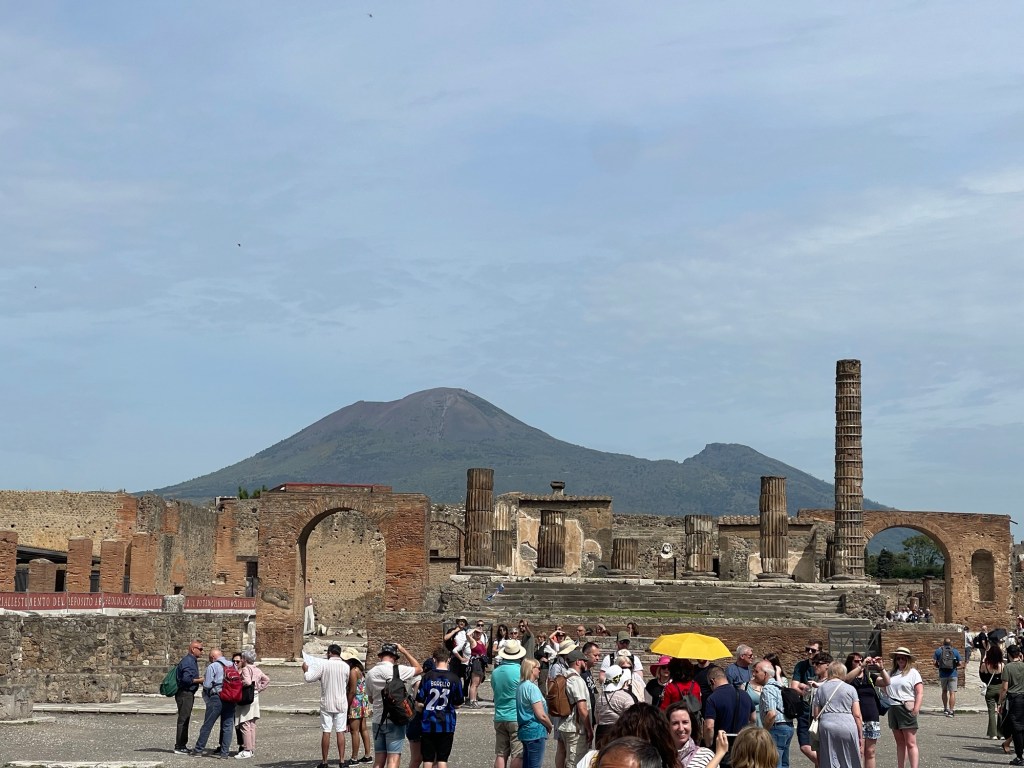
    Visiting places for the first time that you’ve heard about all of your life is an education. The problem with those places is everyone else is joining you there to complete something in themselves too. I’d like to think that we all visit a place with the same objectives, but you know some just want to check a box while the enlightened few try to bring context and meaning to the visit. But let’s face it, we’re all a combination of both, it’s simply the ratio that separates the Instagram model from the student of history.

    The thing is, one person’s fruitfulness is another’s waste of time. We’re all on our own path through this lifetime. The trick is to get more comfortable with risk, for the fruit is often out on a limb awaiting the courageous.

    Pompeii with Mount Vesuvius looming large
  • Mount Etna

    “Mount Etna is renowned for its exceptional level of volcanic activity, and the documentation of its activity over at least 2,700 years. Its notoriety, scientific importance, and cultural and educational value are of global significance.” — UNESCO

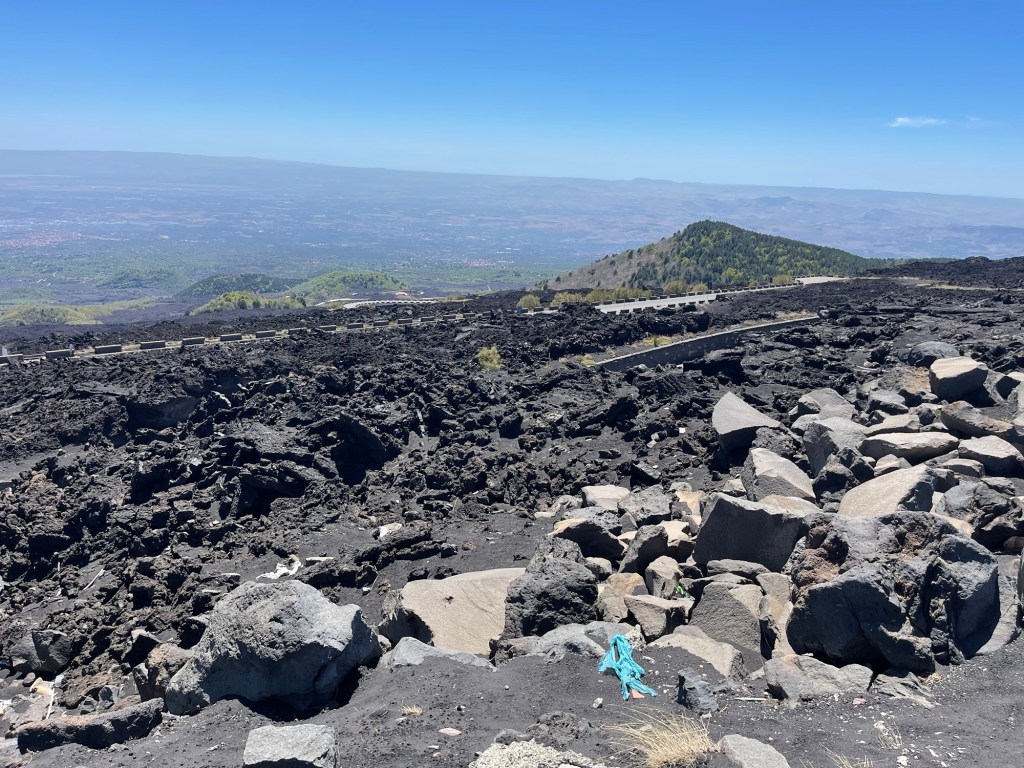
    Visiting Mount Etna is relatively easy. It simply involves driving serpentine narrow roads filled with cars, motorcycles and large tour buses nudging the limits of the suggested speed. Once you arrive at the lower crater, you’re greeted by hundreds of people, souvenir shops and restaurants. Some hike or gondola further up to the higher craters and summit, others linger where the views are good enough, thank you. Personally, I’d have hiked ip given the opportunity. But there’s only so much time.

    The thing about a volcano is it doesn’t particularly care about your feelings, or about time. Volcanoes, like the ocean and stars and timeless principles, are of the eternal universe. so visiting an active volcano informs, not just about the planet, but about our fragile hold on this moment we’re here to witness it. When you’re dancing with eternity, you can’t help but feel awed and agape. Which is exactly why we made the pilgrimage there ourselves. Tourist shops aside.

  • A Visit to Malta

    “With Malta and the Mediterranean secured, the Allies were able to use them as bases to launch amphibious landings in North Africa (November 1942), Sicily (July 1943) and mainland Italy (September 1943).” — Imperial War Museum

    A visit to Malta is a rolling history lesson. A natural island fortress with great harbors and a strategic location in the Mediterranean, Malta has been an attractive stronghold for centuries. Those who controlled it wanted very much to keep it. Those who didn’t wanted very much to capture it. And so it was that Malta’s history is full of military campaigns from the Knights Hospitaller holding back the Ottoman Empire to the Maltese and British holding back the Germans and Italians.

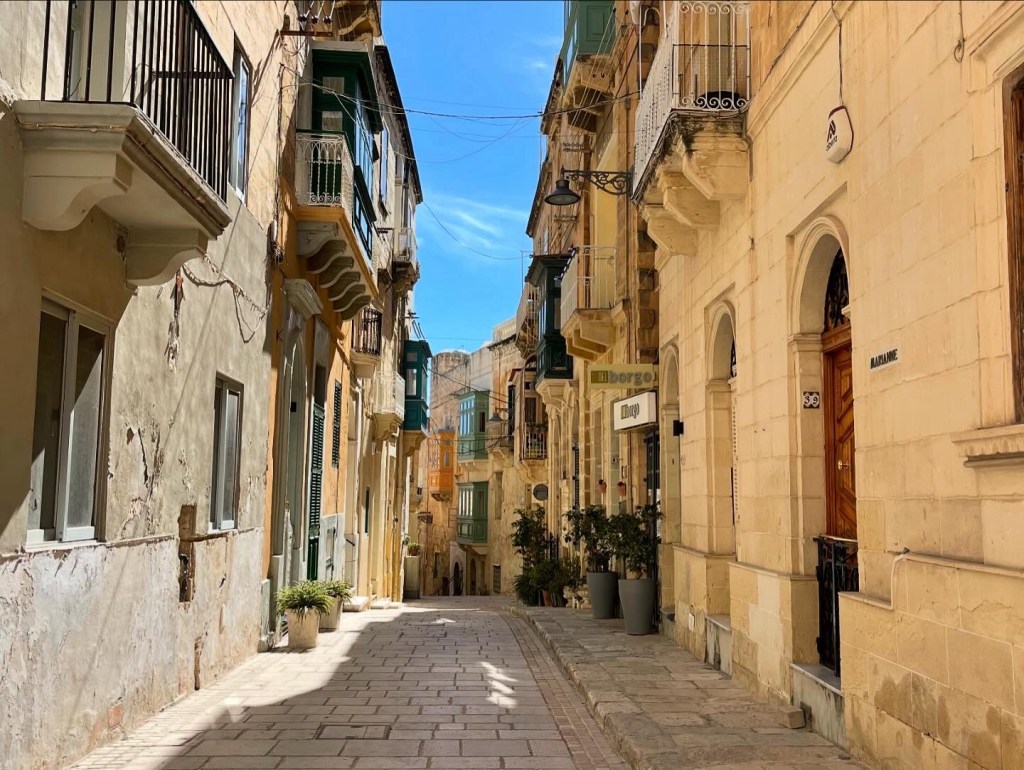
    Winding through streets designed with defense against invading armies in mind, gazing up at the high walls of the fortresses surrounding you while riding in small boats in Grand Harbor, you feel the strength and resolve of the place. This was a place designed to withstand a prolonged siege. It’s tragic that World War II left such scar on this beautiful historical island, but it was also inevitable when war erupted. Malta was simply too important to ignore.

    Today tourism has replaced strategic military positioning, but Malta remains as magnetic as ever. The people are friendly and welcoming, the cities are clean and historically fascinating, and the Mediterranean is a lovely shade of blue. Malta has finally found an established peace. It’s a place worth exploring—with no siege required.

    Shrapnel scars on ancient walls
  • Sensory Miracles

    “Slow down and taste and smell and hear, and let your senses come alive. If you want a royal road to mysticism, sit down quietly and listen to all the sounds around you. You do not focus on any one sound; you try to hear them all. Oh, you’ll see the miracles that happen to you when your senses come unclogged.” — Anthony de Mello, Awareness

    I had the opportunity to walk around Mykonos as a guide for a blind man. His wife was eager to shop with mine, so we set them free to go be. We went for a nice walk through the miracles of sensory experience that are the streets of Mykonos. Doing this on my own surely would have been joyful (if you can’t find joy in Mykonos you are truly lost), but my joy was amplified by awareness of things I take for granted—things like variations in terrain, people walking towards me, and the many curbs, shelves and flowering vines protruding from buildings that make Mykonos such a beautiful place to wander about.

    The first thing you notice as a guide is pace. Everything slows down as you guide another person with their hand on your shoulder and your focus expands beyond yourself to what is coming up that may trip them up or bump at them from above. Once pace is established, next comes heightened awareness, that you may describe all that surrounds you both in ways that are hopefully interesting to your blind counterpart. Flowering vines, the grout between paving stones underfoot, the white painted stucco and narrow streets providing naturally cool places to move about, and the miniature cars and trucks navigating those tight streets, often prompting a retreat to doorways and up steps.

    The thing is, I will always remember Mykonos differently for having guided him through its streets in this way for a couple of hours. Having been the one seeing a place both for the first time and in this way for the first time, I can’t help but have a stronger affinity for Mykonos through that experience than if I’d simply wandered about on my own. Perhaps my senses finally unclogged as I was taught to see for the first time. We should all be blessed with such an opportunity.

  • Greek Character

    “Character is a Greek word, but it did not mean to the Greeks what it means to us. To them it stood first for the mark stamped upon the coin, and then for the impress of this or that quality upon a man, as Euripides speaks of the stamp—character—of valor upon Hercules, man the coin, valor the mark imprinted on him. To us a man’s character is that which is peculiarly his own; it distinguishes each one from the rest. To the Greeks it was a man’s share in qualities all men partake of; it united each one to the rest. We are interested in people’s special characteristics, the things in this or that person which are different from the general. The Greeks, on the contrary, thought what was important in a man were precisely the qualities he shared with all mankind. The distinction is a vital one. Our way is to consider each separate thing alone by itself; the Greeks always saw things as parts of a whole, and this habit of mind is stamped upon everything they did.” — Edith Hamilton, The Greek Way

    Greece is a place of rugged beauty, to be sure, but also of rugged character shaped by a sense of timelessness that we simply don’t have in my own country. To walk around a structure built in 444 B.C. is to taste eternity. We are humans of course, and eternity isn’t ours to embrace just yet. But we may reach for the eternal in the form of development of our character.

    Poseidon was one of the Olympians for the Greeks, presiding over such volatile things as the weather. For a Greek sailing off to fish or fight, Poseidon was a big deal, and someone to cater favor with. He also influenced the temperament of horses, and was known as the “earth shaker” for his power to control earthquakes. So building a temple devoted to Poseidon made a lot of sense, and where better for it than on a prominent cliff overlooking the Aegean Sea on Cape Sounion?

    It’s one thing to read history, quite another to stand on the edge of a cliff between the Aegean Sea and a temple erected 2500 years ago as a tribute to the god who controlled both that sea and the ground we stood on. Best to embrace the spirit of the ancients in such moments, rather than incurring the wrath of Poseidon. And that’s the thing about Greece: you feel that you’re trying to measure up instead of trying to stand out. It’s a subtle difference, but it matters a great deal. It’s not that we aren’t special (our mother’s would insist that we are), it’s that we may be integral to something far beyond our time and place. That’s the Greek character.

    The Temple of Poseidon, 444 BC

  • A Day in Athens

    “A Greek is alive to the fingertips; he oozes vitality, he’s effervescent, he’s ubiquitous in spirit. The Englishman is lymphatic, made for the armchair, the fireside, the dingy taverns, the didactic treadmill.” — Henry Miller, The Colossus of Maroussi

    Athens is named after Athena, the ancient goddess of wisdom, and the Parthenon is dedicated to Athena, so one surely must make a pilgrimage to the Acropolis and the Parthenon when one is in Athens. And so it was that I joined thousands of people climbing the stairs to visit these ancient sites. But a day in Athens ought to include more than a visit to a few touristy places.

    A bit of traffic, a healthy portion of delicious Greek food and wine, a few Olympic sites, and mostly, some time with the lovely Greeks is essential for one to know the place. Athens, and Greece as a whole, is an easy place to fall in love with. So too the people. Highly energetic and passionate, Greeks exude the spirit of carpe diem. One must follow their example and seize the day oneself.

    The history buff in me appreciates the historic sites. The stoic in me appreciates the sense of place. The artist, the beauty. It’s surely overcrowded and a bit crazy, but timelessly lovely just the same. To ooze vitality, to be fully alive, this is the Greek way. To experience it was extraordinary, to return is essential.

  • Santorini—Calliste (the Most Beautiful)

    There’s an ancient myth that Santorini was formed when the frisky son of Poseidon, Euphemus, got the daughter of Triton pregnant. Knowing her father would be angry she told Euphemus to collect a lump of soil from the island Anaphe and to throw it in the sea to make another island that she could hide on to give birth to their child. Euphemus named this island Calliste (“he most beautiful island”), and we now call it Santorini. One could easily stick with the original name, for Calliste surely still fits.

    Today Santorini is a tourist destination known for whitewashed buildings, black sand beaches, blue-domed churches and magnificent sunsets. This naturally brings crowds, traffic and worst of all, Instagram poser types. But the place is worth the effort to get there. If you go, it’s best to linger awhile, so book a stay. The people are lovely and gracious, and incredibly, tolerate the crush of tourists quite well.