Month: November 2025

  • Thanksgiving: Our Day of Days

    “You sanctify whatever you are grateful for.” — Anthony de Mello

    Last night, amidst the clamor and turmoil of Thanksgiving preparations, I took the pup for her evening walk. It’s been bitingly cold this week, but a warm front had moved in, making the evening mild enough that I took off my wool hat to cool off. On our return down the street, the pup noticed something I’d seen on our walk up the street and started growling—the neighbors had placed their collection of plastic reindeer out on the lawn, ready to flip a switch and begin the Christmas season.

    The growl was for the appearance of stoic creatures standing the high ground. The pup doesn’t like changes on the street, and her protective concern was reflected in turning back and growling again and again as we completed our walk back to the house. I may accept the efficiency of the act while noting that my favorite holiday of the American year is forever pushed aside in the rush for Christmas. With respect to retailers everywhere, don’t you dare discount Thanksgiving. Nobody puts Baby in the corner.

    The thing is, we don’t all have families to gather with. Or with whom we wish to gather with. We are the average of the people we surround ourselves with, and for some that average isn’t all that worthy of gratitude. They would just as soon skip over it and focus on the lights and music and gifts of that season that follows Thanksgiving. I would suggest that forever looking ahead for some salvation in the future makes for an unfulfilling present. What makes today worthy of lingering with? That’s where gratitude will be.

    If Thanksgiving were mythically created to celebrate the abundant harvest, or pulled together Native Americans with the settlers who would eventually displace them at one table, then it would be just another conditional holiday dependent on buying in to the story. What makes Thanksgiving special is the tradition of putting aside work and political beliefs and the desperate search for meaning in an indifferent world and gathering in appreciation of that which binds us. For we are here once again this sacred day, together, despite all that would pull us apart. So many have left us already. So few are the days when we may gather as one. Be grateful for this day of days when we may acknowledge that which brings us together. Happy Thanksgiving.

  • Blame It On the Poets

    Man with wooden leg escapes prison. He’s caught.
    They take his wooden leg away from him. Each day
    he must cross a large hill and swim a wide river
    to get to the field where he must work all day on
    one leg. This goes on for a year. At the Christmas
    Party they give him back his leg. Now he doesn’t
    want it. His escape is all planned. It requires
    only one leg.
    — James Tate, Man with Wooden Leg Escapes Prison

    I hope you laughed when you read that poem. I know I did. It reads like a standup routine, like many James Tate poems, I suppose. Maybe that’s why I’ve strayed into his work a little, just because a smile is better than a frown, and certainly better than a scowl. We all scowl too much nowadays.

    I was reading the news just this morning. I make a point of not reading the news before I write (because of that scowl thing), but I found myself awake thinking about to-do list items. Instead of getting up to do these things, instead of rolling over and reaching for some REM, instead of doing a workout or brushing my teeth or attempting to steal the covers back from my bride—instead of anything really, I opened up the BBC app to see what was happening in the world. And of course I scowled.

    When one starts one’s day in such a way, one ought to quickly find a way out of it. Social media is nothing but random clickbait video clips now. I surely could have gone there for hours of screen time. But I sought out the council of a poet to set me straight. And that road less travelled has made all the difference.

    This ritual of writing before any other thing continues to serve me well. The world can go to hell in a mindless spiral of dancing stars, home renovation transformations and fantasy football trades, but I may ignore it all and simply write what comes to me. This clunky, impossible to navigate blog, my running collection of deep thoughts and discoveries, goes on for at least one more day. Blame it on the poets if you like. More likely it was me all along.

  • Acutely Aware

    “Remember, remember,
    this is now,
    and now,
    and now.
    Live it, feel it, cling to it.
    I want to become
    acutely aware
    of all I’ve taken
    for granted.”
    ― Sylvia Plath

    The urgency of now is amplified by the awareness of time going by. We ought to do the things we believe we ought to do now, while time is ripe and dreams are unfaded by the rapid flow of the days to follow. Tempus fugit, friend: Time flies.

    Plath died young, taking her own life after putting her children to bed. Knowing that, read the poem again and feel how it changes. There is more desperation, more immediacy to the words when life hangs in the balance. A few more minutes, a few more years—it’s all the same. Memento mori.

    Now that we’ve got that out of the way, we ought to go out and live with this bonus time we’ve been given. Seneca reminded us to seize what flees. Carpe diem. Why would we dare to waste our time so carelessly? Accept the fragility of the moment and do something with it.

    A cold water plunge shocks the body into immediacy (I wonder sometimes why nobody follows me in). The body is jolted into sudden awareness of the moment. There is no distraction in cold water, it’s sink or swim. So what will do for your soul? But enough of intellectual discourse; what will jolt us into awareness that this is it? That there is only now? Live it, feel it, cling to it.

  • We Are Stirred

    I don’t want to be demure or respectable.
    I was that way for years.
    That way, you forget too many important things.
    How the little stones, even if you can’t hear them,
    are singing.
    How the river can’t wait to get to the ocean and
    the sky, it’s been there before.
    What traveling is that!
    It is a joy to imagine such distances.
    — Mary Oliver, I Don’t Want to be Demure or Respectable

    When this blogger is finally done (perhaps when he begins to refer regularly to himself in the third person), it may be when the collection of Mary Oliver poems have all been quoted. It could just as easily have been Henry David Thoreau or Marcus Aurelius. Truly, I don’t mean to keep returning to each of them here, but then I re-read a poem like this one, in just the kind of mood I find myself in now, and well, here we are.

    We know when we’re ready for the next. To imagine such distances. Oh, the audacity to try to reach them! We all get tired of being demure and respectable. Don’t we? No, maybe not all of us. But some of us. The kindred fire is easy to feel when encountered. We are fellow schemers, some of us. We dream our dreams and chase some of them. We aren’t satiated by travel or poetry or encounters in the wild—we are stirred. Forever wanting just a bit more than this, please and thank you.

    To be demure is to concede that now is not entirely for us. Now is a time to be present and honorable and a sacrificer of time and energy and that special fire within that longs for oxygen and fuel. To do the right thing is honorable. Honor has its price, but truly, it also offers its beautiful dividend that cannot be ignored. A sense of place and connection keeps us alive and thriving too—just look at those Blue Zone folks for affirmation.

    As a friend recently phrased it, we have competing opportunities in our lives. The only wrong answer is to be a slave to someone else’s dream that robs us of our vitality. In time, we learn what is an empty pursuit and what feeds the flame. Having felt the heat within, how will we now feed it, so it doesn’t peter out like the vitality in so many others who have come before? It’s a joy to imagine such distances we may travel as we grow into our possibilities. Go! Do something with it while there is time.

  • Not for Ourselves Alone

    “Non nobis solum nati sumus ortusque nostri partem patria vindicat, partem amici,”
    (Not for us alone are we born; our country, our friends, have a share in us.) — Marcus Tullius Cicero

    We are alone, and yet a part of something far beyond ourselves. To strive to be an individual is to reach for our potential. But what is all that potential for if not for the greater good? We can thus focus on the self and not be selfish or self-centered. The more we grow, the more we can offer. And this in turn offers us more opportunity still.

    The world is full of selfless people, and has far too many selfish people too. We learn as we get burned. But let’s face it; we have our moments of selfishness too. We must learn to look after ourselves if we are to survive in this world, but our nature is to look after others too. We learn whom to trust deeply, whom to steer clear of, and those who are somewhere in between with whom to form strategic alliances for mutual benefit. Every transaction is a lesson in human tendencies. Trust, but verify.

    The world lately is more complicated by the fractious nature of social media and the erosion of trusted sources of information and leadership. We can acknowledge this and still live by a higher standard of personal excellence. To keep growing into the person we aspire to be, that we may be an anchor for those who might founder in the turbulent, selfish sea that this place and time represents for some.

    Remember that it has always been this way, only the method and scale of communication changes. Community is an investment in the future viability of all that we believe to be sacred and true. Seek out connection and engagement with those with whom we may learn and grow. Not for us alone are we born.

  • Begin Something

    “The early bird gets the worm, but the second mouse gets the cheese.” ― Willie Nelson

    As an early bird, it should be easy to get a head start on the day. But the day floods in anyway. Even as I awaken, work to-do minutia floods my brain—a clear sign that I didn’t write it all down to release its hold on me before my day was done. The bullet journal method only works if you keep up with it. Lately, I haven’t kept up with it.

    If we are truly on a quest for personal excellence, why do we clutter up our days with minutia at all? Mastery requires singular focus, if we indeed wish to reach closer to it. Just who do we want to be on this one go at things anyway? The work that matters ought to get done, the rest ought to slip away and not impact our sleep score.

    I used to glory in the hustle of outworking the competition. I have other priorities now. When I wake up, my attention doesn’t go right to work, it goes right to attending to the needs of the pets, and then to writing this blog. Does writing deserve a place of honor ahead of income-generating activity? Doesn’t the answer depend on where we want to go today? The answer has always been there, waiting for us to listen and act upon it.

    Why get up early at all, but to heed the call to begin something? To rise and chase the dreams of others for profit is nothing but a trap from which we will never escape. We must always prioritize ourselves first, and then address the needs of others. They tell us this on every flight. It’s on us to pay attention to the flight attendants as we hustle through life.

    To make something of this day seems a modest objective. Why go through the motions or succumb to distraction? Create something of consequence today and see what might build from it. Joie de vivre is derived from doing something meaningful with our days, not from hustling through it. So what is that something?

  • A Day at The Met

    The first thing you learn when you spend a day at The Metropolitan Museum of Art is that a day is comically not nearly enough time to see everything. A year at The Met might do. And be sure to capitalize that T in “The” because the official name is what it is and details matter. In matters of affectionate familiarity, it’s perfectly fine to simply call it The Met.

    Comic or not, I had one random Thursday for a Met marathon. The only thing to do is to get to it—to meander through the maze of exhibits, to see, to linger on art that whispers for you to be with it for a moment, to eavesdrop on tour guides as they drop insight on what seemed randomness a moment before, to gawk at the famous and smile at the packs of teenagers giggling about the lack of fig leaves, and to move relentlessly through as much of the collection as time and mental capacity allows. As with all things, we hope to return again one day and pick up where we left off. Like that expression about the river, we will have changed in the interim, and everything we see will seem different with that new perspective.

    Claude Monet, "Bouquet of Sunflowers", 1881
    Claude Monet, “Bouquet of Sunflowers”, 1881
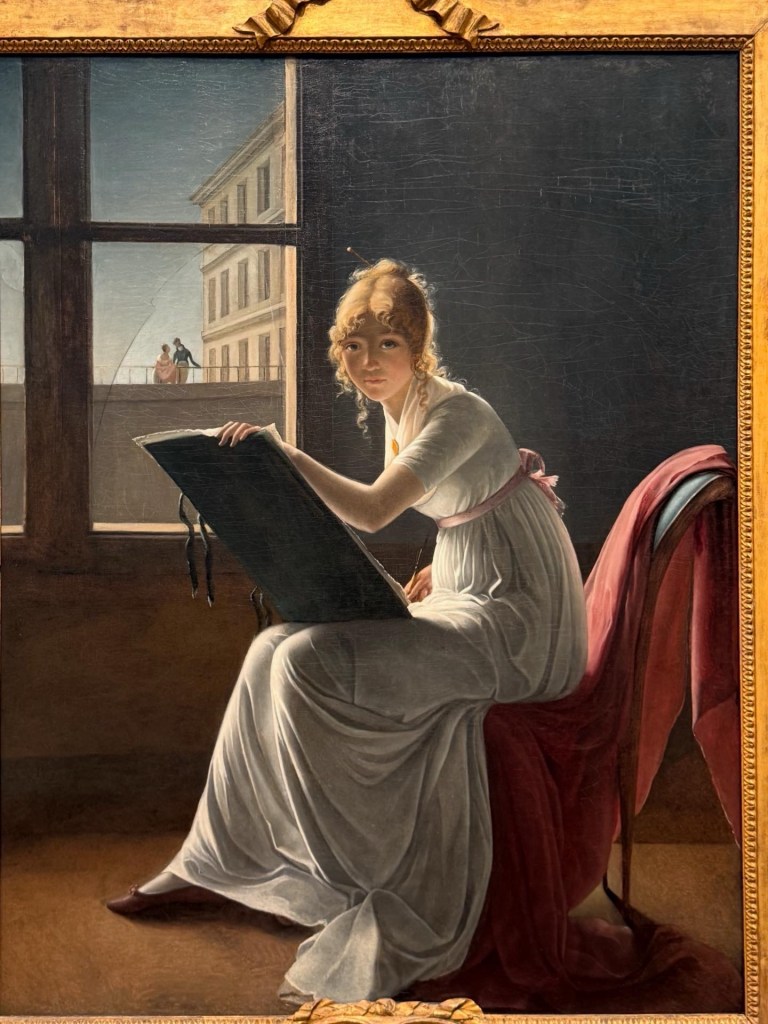
    Marie Denise Villers, Marie Joséphine Charlotte du Val d'Ognes (1786-1868), 1801
    Marie Denise Villers, Marie Joséphine Charlotte du Val d’Ognes (1786-1868), 1801
    Jean-Baptiste Carpeaux, Why Born Enslaved!
    Jean-Baptiste Carpeaux, Why Born Enslaved!
    Claude Monet, "Bridge over a Pond of Water Lilies", 1899
    Claude Monet, “Bridge over a Pond of Water Lilies”, 1899
    August Rodin, "Beside the Sea", 1907
    August Rodin, “Beside the Sea”, 1907
    William Bouguereau, "Breton Brother and Sister", 1871
    William Bouguereau, “Breton Brother and Sister”, 1871
    Vincent van Gogh, "Wheat Field with Cypresses", 1889
    Vincent van Gogh, “Wheat Field with Cypresses”, 1889
    Bronze statuette of a satyr with a torch and wineskin
    Bronze statuette of a satyr with a torch and wineskin
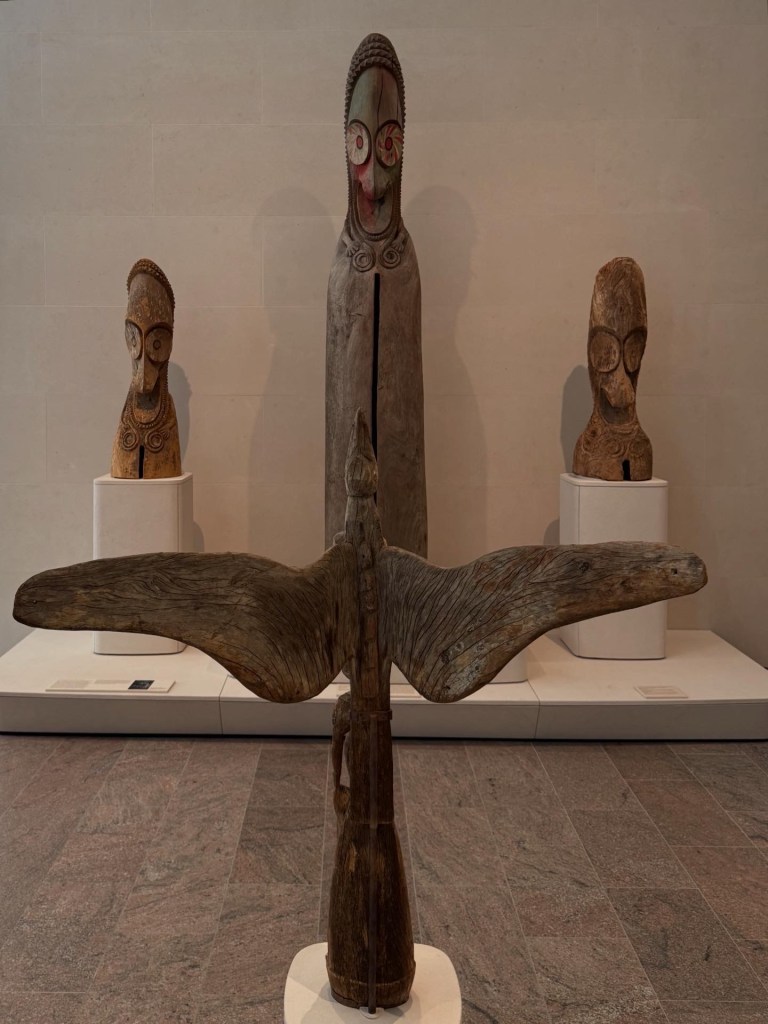
    Foreground: Finial for a ceremonial house, Sawos artist; Kaimbiam village, Middle Sepik River, Papua New Guinea
Background: Finials from Ambrym Island artists; Fanla village, Vanuatu
    Foreground: Finial for a ceremonial house, Sawos artist; Kaimbiam village, Middle Sepik River, Papua New Guinea
    Background: Finials from Ambrym Island artists; Fanla village, Vanuatu
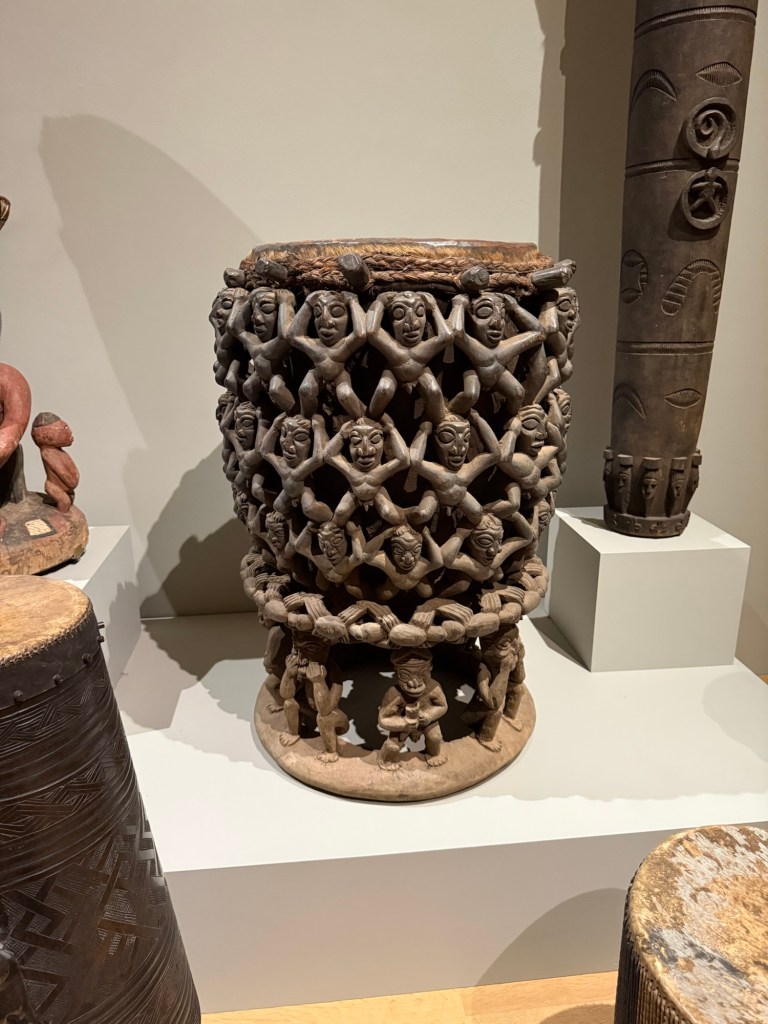
    Drum
Possibly Babungo/Vengo people
Cameroon, ca. 1940
    Drum
    Possibly Babungo/Vengo people
    Cameroon, ca. 1940
    Arms and Armor Room from above
    Arms and Armor Room from above
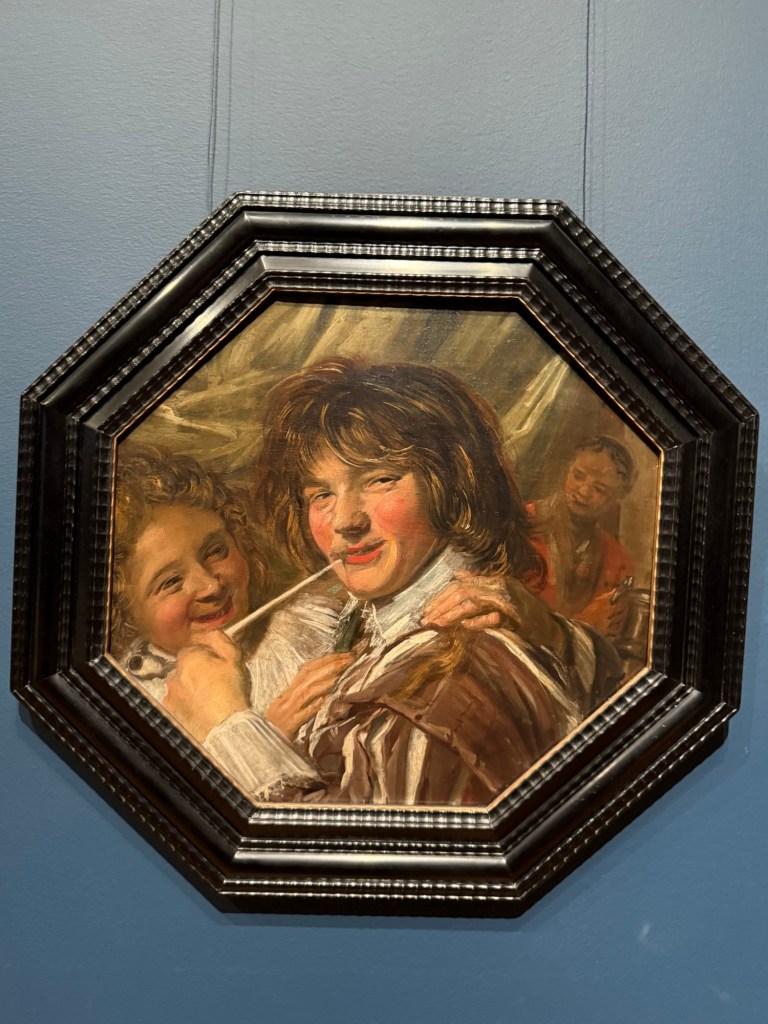
    Frans Hals, "The Smoker", ca. 1623-1625
    Frans Hals, “The Smoker”, ca. 1623-1625
    Pablo Picasso, "The Blind Man's Meal", 1903
    Pablo Picasso, “The Blind Man’s Meal”, 1903
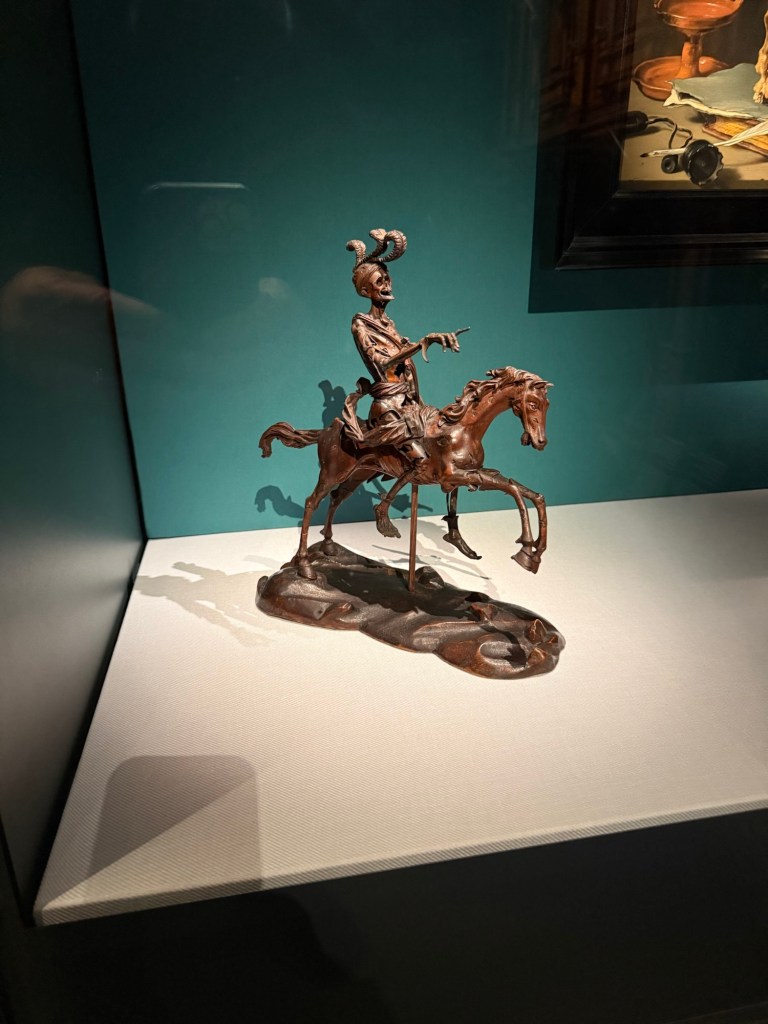
    Death
German, mid-17th century
Lindenwood with traces of pigment, spruce base
    Death
    German, mid-17th century
    Lindenwood with traces of pigment, spruce base
    Auguste Rodin, "The Burghers of Calais"
    Auguste Rodin, “The Burghers of Calais”
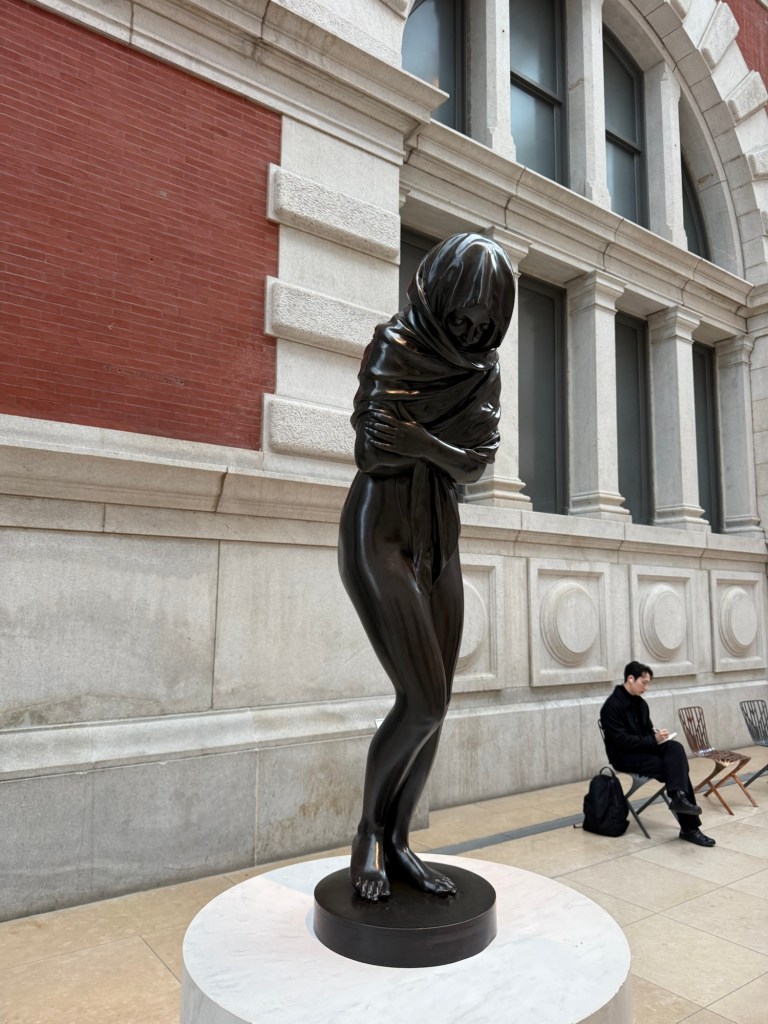
    Jean Antoine Houdon, "Winter", 1787
    Jean Antoine Houdon, “Winter”, 1787
    Fireplace Surround
Attributed to Désiré Muller, ca. 1900
    Fireplace Surround
    Attributed to Désiré Muller, ca. 1900
    Harriet Whitney Frishmuth, "The Vine", 1921 (this cast 1924)
    Harriet Whitney Frishmuth, “The Vine”, 1921 (this cast 1924)
    Antonio Canova, "Perseus with the Head of Medusa", 1804-6
    Antonio Canova, “Perseus with the Head of Medusa”, 1804-6
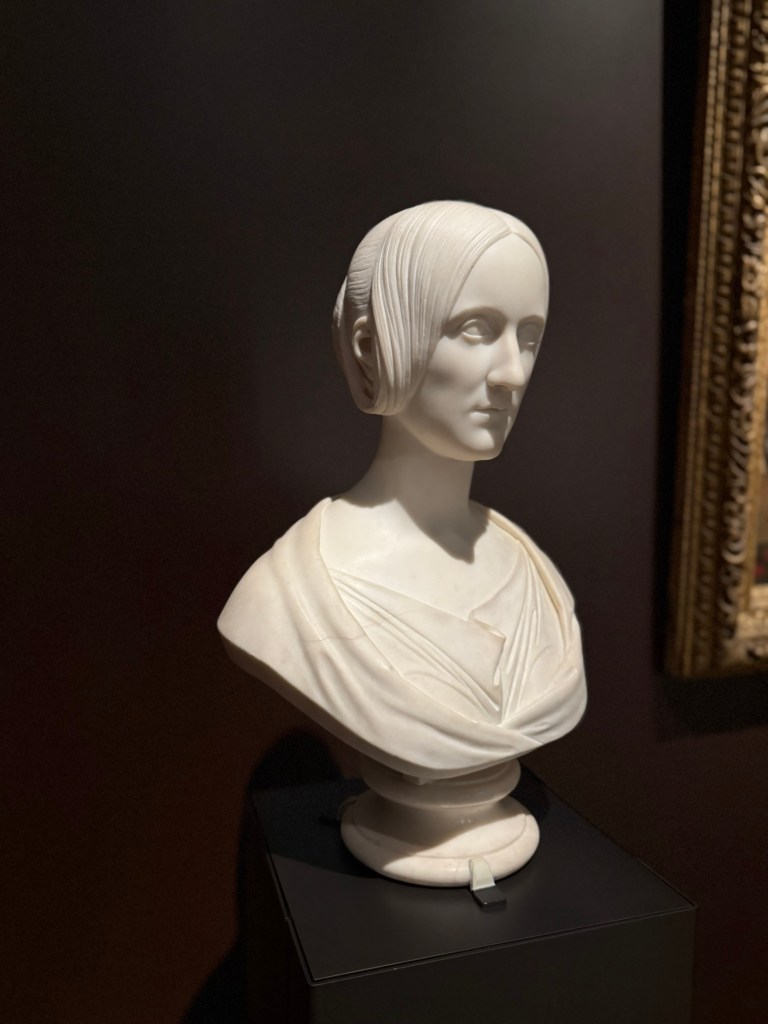
    Camillo Pistrucci, "Mary Shelley", 1843
    Camillo Pistrucci, “Mary Shelley”, 1843
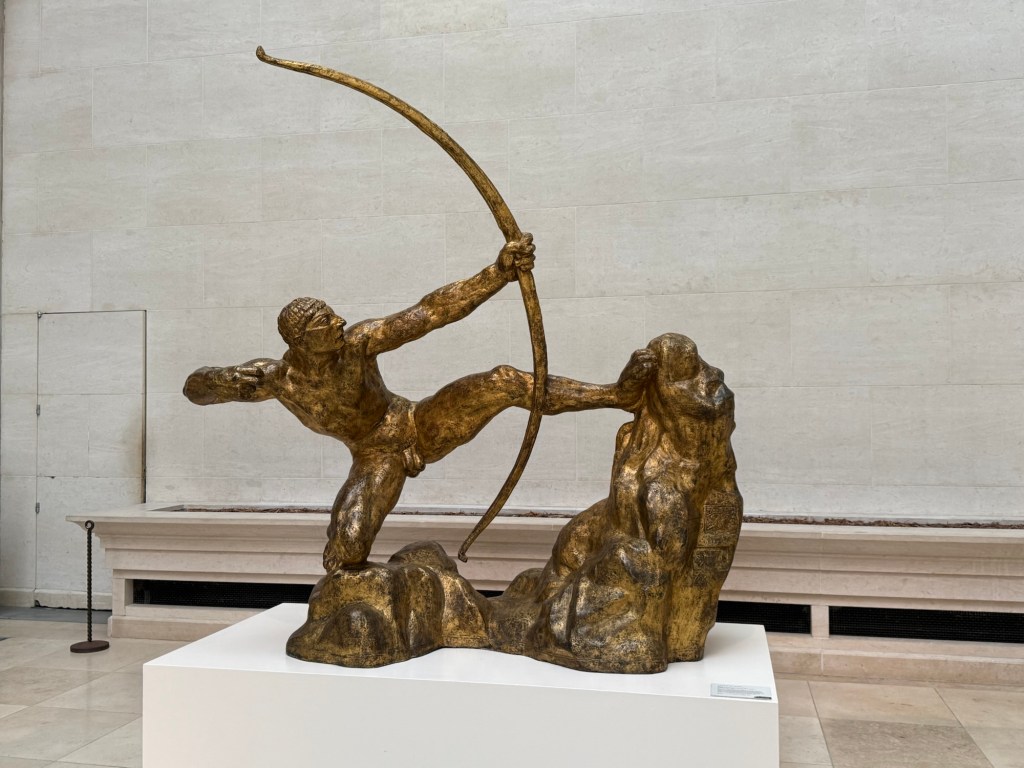
    Émile-Antoine Bourdelle, "Herakles the Archer", 1909
    Émile-Antoine Bourdelle, “Herakles the Archer”, 1909
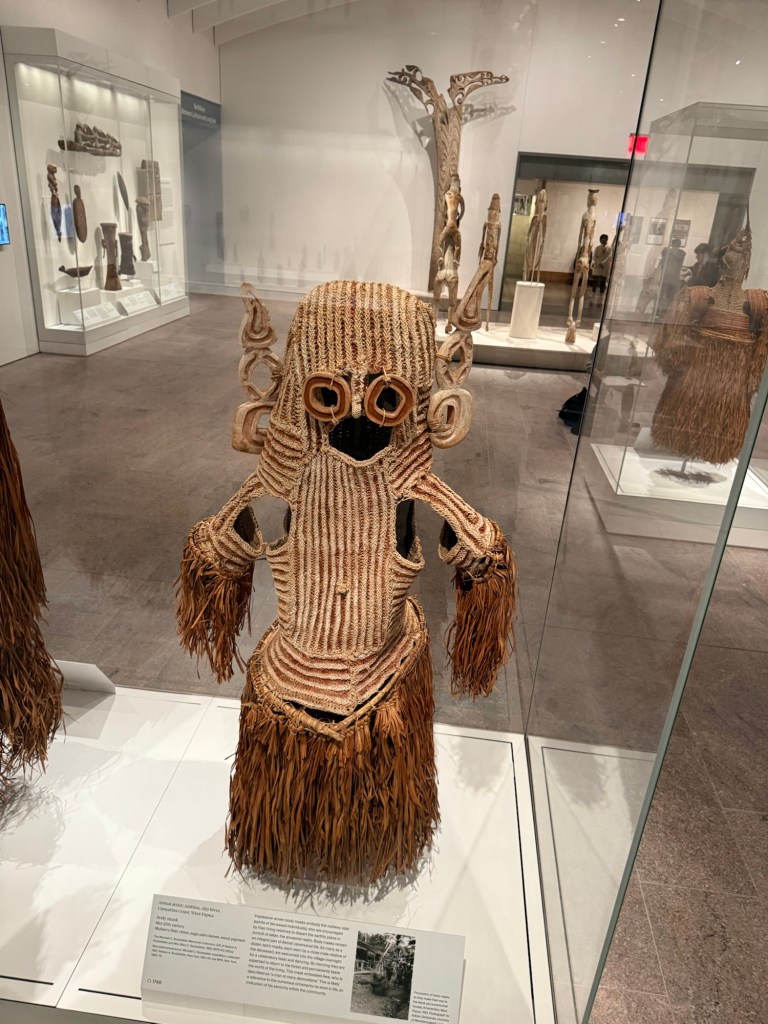
    Body Mask
Asmat artist; Ambisu, Ajip River, Casuarina Coast, West Papua
    Body Mask
    Asmat artist; Ambisu, Ajip River, Casuarina Coast, West Papua
    Bronze helmet of the Illyrian type
Greek, late 6th-early 5th century, B.C.
    Bronze helmet of the Illyrian type
    Greek, late 6th-early 5th century, B.C.
    Mechanical Table
Workshop of David Roentgen, ca. 1780-90
    Mechanical Table
    Workshop of David Roentgen, ca. 1780-90
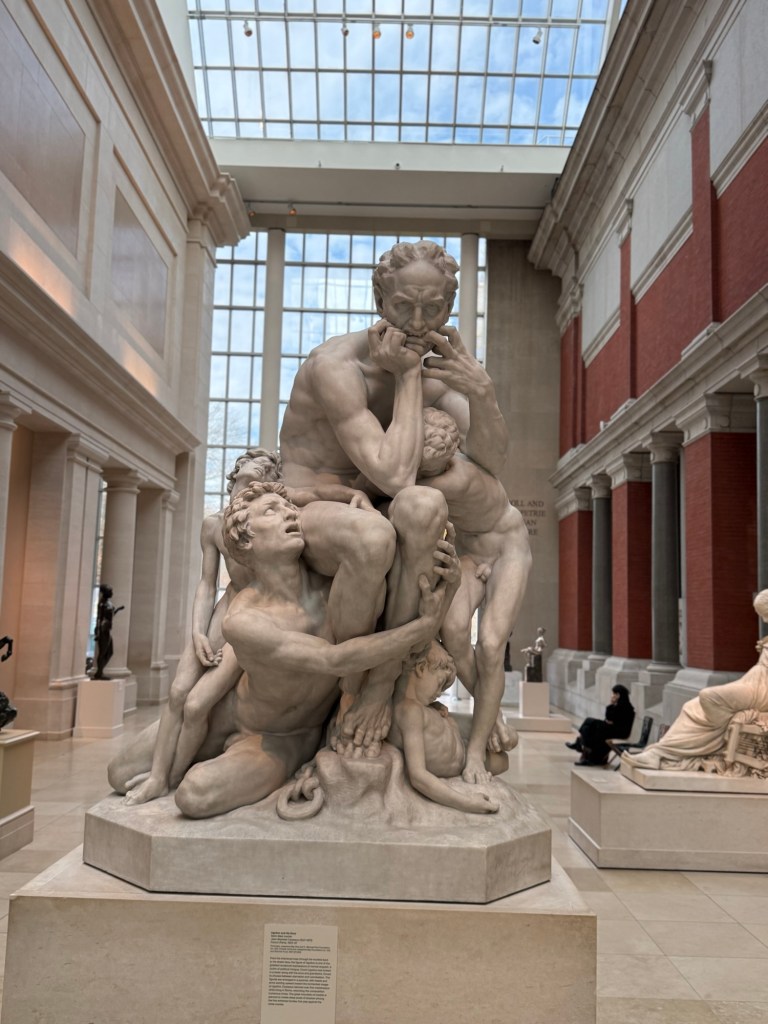
    Jean-Basptiste Carpeaux, "Ugolino and His Sons", 1865-67
    Jean-Basptiste Carpeaux, “Ugolino and His Sons”, 1865-67
    Augustus Saint-Gaudens, "Hiawatha", 1874
    Augustus Saint-Gaudens, “Hiawatha”, 1874
    Asmat artist, Yamas village, West Papua
Wuramon (spirit canoe)
    Asmat artist, Yamas village, West Papua
    Wuramon (spirit canoe)
    Bronze ornament from a chariot pole
Head of Medusa
Roman, 1st-2nd century A.D.
    Bronze ornament from a chariot pole
    Head of Medusa
    Roman, 1st-2nd century A.D.
  • Curious and Interested

    “Very little is needed to make a happy life; it is all within yourself, in your way of thinking.” ― Marcus Aurelius

    I took a cab across Manhattan and found myself in a fascinating conversation with the driver. He was 70, clearly fit and handsome and very bright. He’s locally famous (showed me the newspaper articles) for offering stock market advice to his passengers. He’s done everything from real estate investing to being a Chippendales dancer to owner of two cabs. He reminded me of that most interesting man in the world character, and indeed he was as interesting to speak with as you might imagine.

    I’d spent the previous day running into people I’ve known for years at a trade show. We’d each built a life, formed relationships and grown as people. Tenure is a way to form long-standing professional relationships. Being honest and forthright and genuinely interested in the lives of others is an accelerant to forming deeper bonds that last a lifetime. If there was a lesson in my encounters with old friends, it’s that friendship transcends any single job or project.

    “Be curious, not judgmental.” — Walt Whitman

    Just how are we moving through our years? Surely we’ll have moments of boredom and drudgery along the way. But we ought to sprinkle in more things that fascinate us. When we are curious and interested, people in turn are more curious and interested in us. At least that’s my way of thinking about the matter.

  • Crazy or Old

    She thinks I’m crazy
    But I’m just growing old
    — Steely Dan, Hey Nineteen

    I imagine that I’d heard Hey Nineteen many times prior to when it took root in my lifetime soundtrack, but it was when I was nineteen myself when it finally resonated. The song was already considered “classic rock” by then, but for Gen X, we were used to discovering the music of the generation before ours on our own terms. At nineteen I rounded up all the Steely Dan albums and proceeded to immerse myself in them for a few years before banishing them with all rock deemed “classic rock” for a decade in favor of my generation’s music. Now that too is called classic.

    Drink with good people
    Get high as a kite
    Before they drift away
    Out of mind and out of sight
    Well that’s not to say you lose
    Everything and everyone
    Hear me out, take your time
    And watch the setting sun
    Take your hands out of your pockets
    Feel the water run
    Don’t worry about tomorrow and yesterday
    Is gone
    — Caamp, Of Love and Life

    Caamp is made up of men who graduated high school in 2012. So they’re decidedly not of my generation, but they’re old souls just the same. We learn that it’s not how old someone is, but what they have to offer. We ought to remember this of ourselves too. Keep offering something to the world and we never really grow old.

    Call me crazy, but I believe in the power of a great song to transform our perspective and set us free to be something beyond our current identity. My soundtrack is made up of old and new, but the songs that resonate and repeat have something to say. Crazy, old or maybe both, I collect poetry in song, and will carry it with me to the end of this ride.

  • Page-Turning

    “Listen, are you breathing just a little, and calling it a life?”
    — Mary Oliver, Have You Ever Tried to Enter the Long Black Branches

    When Mary Oliver writes, in the poem quoted above, that there is still time left—fields everywhere invite you into them, I admit that I’ve received the invitation, and I’m stepping into the field. But as bold as I am in some moments, there are times when I breathe just a little. Isn’t it that way for all of us? We talk a good game, but then we do what must be done to keep the lights on and the puppy fed. Life is compromise, we tell ourselves. But sure, there is still time left.

    So if you’re tired of the same old story
    Oh, turn some pages
    — REO Speedwagon, Roll with the Changes

    There’s been some serious page-turning going on this year—enough that a scorecard might be appropriate. Global changes. Personal changes. Every day offers a transformation if we let ourselves step outside of our routine long enough to see it. And we ought to keep track of our lives in such a way, through journals and pictures and retrospect. Just see how far we’ve come! And always the question; just where are we going next?

    And still there is time left. Still it feels sometimes that we are breathing just a little, calling it a life. The thing to do, it seems, is to be bold right now: aware and alive, doing that thing that demands our attention in this small measure of time. The next step will take care of itself, if only we would change our story right now. To breathe deeply—while doing that which leaves us breathless, is where boldness lies awaiting action.