Author: nhcarmichael

  • A Bucket List Road Trip in California

    With a respectful nod to the beautiful interior of California, particularly Yosemite, Lake Tahoe and Death Valley, there are few drives that offer the best of California like the stretch of Highway 1 from the Sonoma Coast to San Diego. My own road trip began in San Francisco, north to Bodega Bay and Jenner, over to the vineyards of the Russian River Valley before turning south to the Pacific Coast Highway through Marin, Monterey, Big Sur, Moonstone Beach, Santa Barbara, Los Angeles, Oceanside and finally San Diego before heading back up to Los Angeles for a finale at the Hollywood sign. That trip was roughly 1000 miles and some loose change worth of driving. That’s a lot of windshield time, but it was broken up by 30 miles of walking and some incredible experiences along the way.

    The trip can be thought of as three distinct segments: San Francisco Bay and Sonoma, The Pacific Coast Highway, and the southern tier. Each segment could be a full vacation on their own, in my case, it was ten very full days of travel and adventure. But life is short, you’ve got to pack as much in to your days as possible while still feeling like you relaxed a bit during your time off. Here was the itinerary by segment:

    Day 1: San Francisco coastal walk from Lands End to the Golden Gate Bridge, Irish coffee at the Buena Vista and dinner in Tiburon. There are some nice ferry options from Tiburon that afford great views in good weather but the schedule is limited.

    Day 2: Alcatraz, Fisherman’s Wharf, cable car rides out and back to top of Lombard Street, walk down the zig-zagging Lombard and then walked to the Palace of Fine Arts.

    Day 3: Muir Woods, Bodega Bay to Fort Ross drive along the spectacular Sonoma Coast.

    Day 4: Vineyard tours and tastings in Healdsburg and the Russian River Valley.

    Day 5: Travel day to Marin, beach walk between the crashing surf and the dunes and a visit to the Monterey Aquarium.

    Day 6: The gorgeous 17-Mile Drive with crashing surf from the offshore storms, then down the Pacific Coast Highway through Big Sur to Moonstone Beach. Multiple stops along the way to take in the coastal views and visit a couple of waterfalls.

    Day 7: Drive-by through central coast vineyards, beachside dining in Santa Barbara, Ventura to Los Angeles through miles of orange trees.

    Day 8: Los Angeles!

    Day 9: Oceanside and San Diego Zoo and friends and family time.

    Day 10: Academy Museum of Motion Pictures and a visit to the Chinese Theater and the gritty and touristy Hollywood Boulevard.

    Day 11: Warner Brothers Studio tour and a visit to see the Hollywood sign up close at Lake Hollywood Park.

    Whew! Drove more than 1000 miles and walked almost 30 miles in 11 action-packed days through ancient redwood trees, coastal dunes, spectacular cliffs, iconic city streets, legendary bridges and highways, past famous cultural attractions with a splash of California’s best wines. If you’re looking for an adventurous drive this is one you should plug into your own GPS. Here are a few favorite places found along the way:
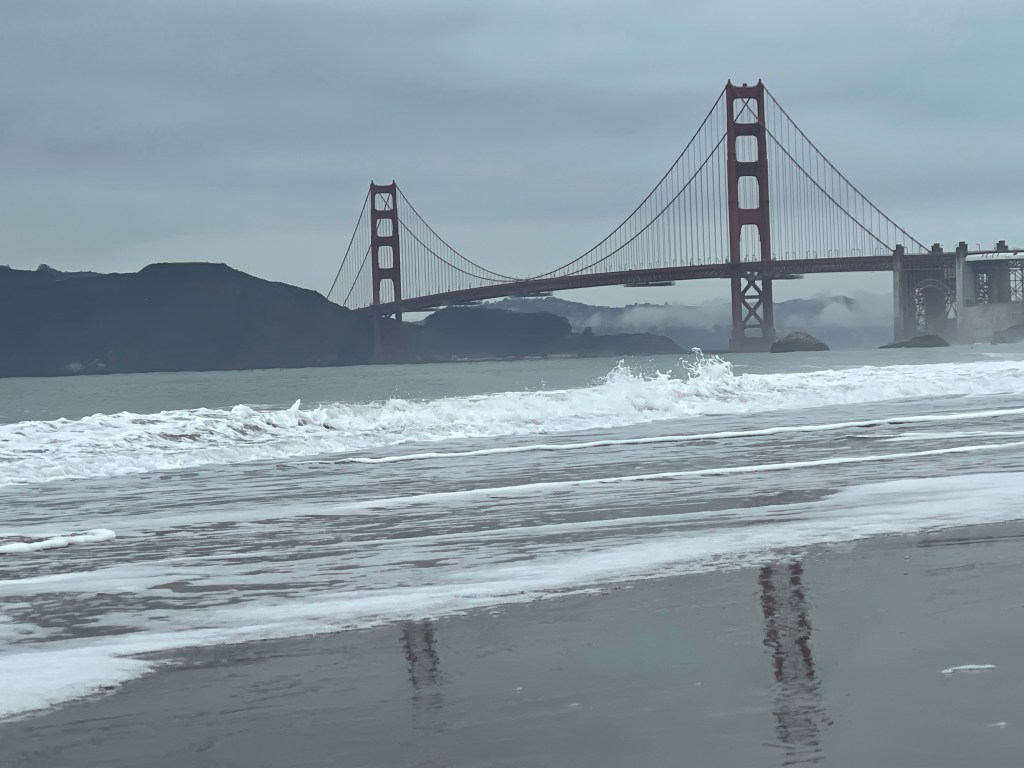
    Golden Gate Bridge
    Bixby Creek Bridge
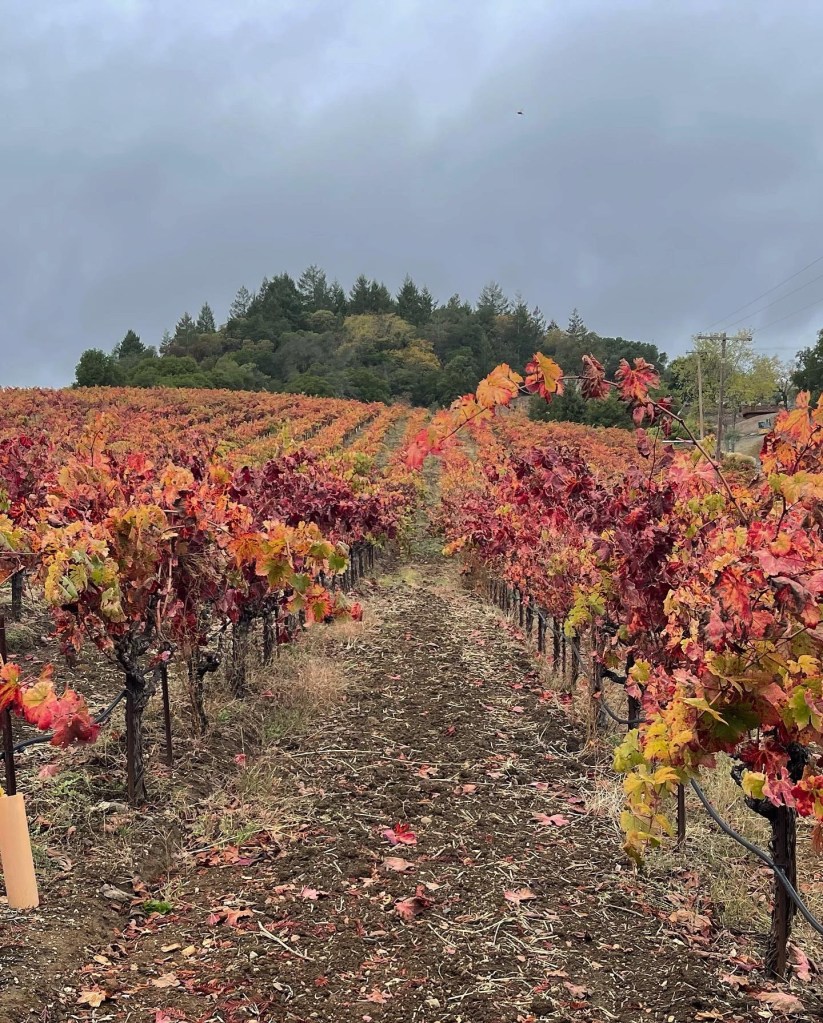
    Russian River Vineyard
    Alcatraz
    Koala at San Diego Zoo
    R2D2 at The Academy Museum of Motion Pictures
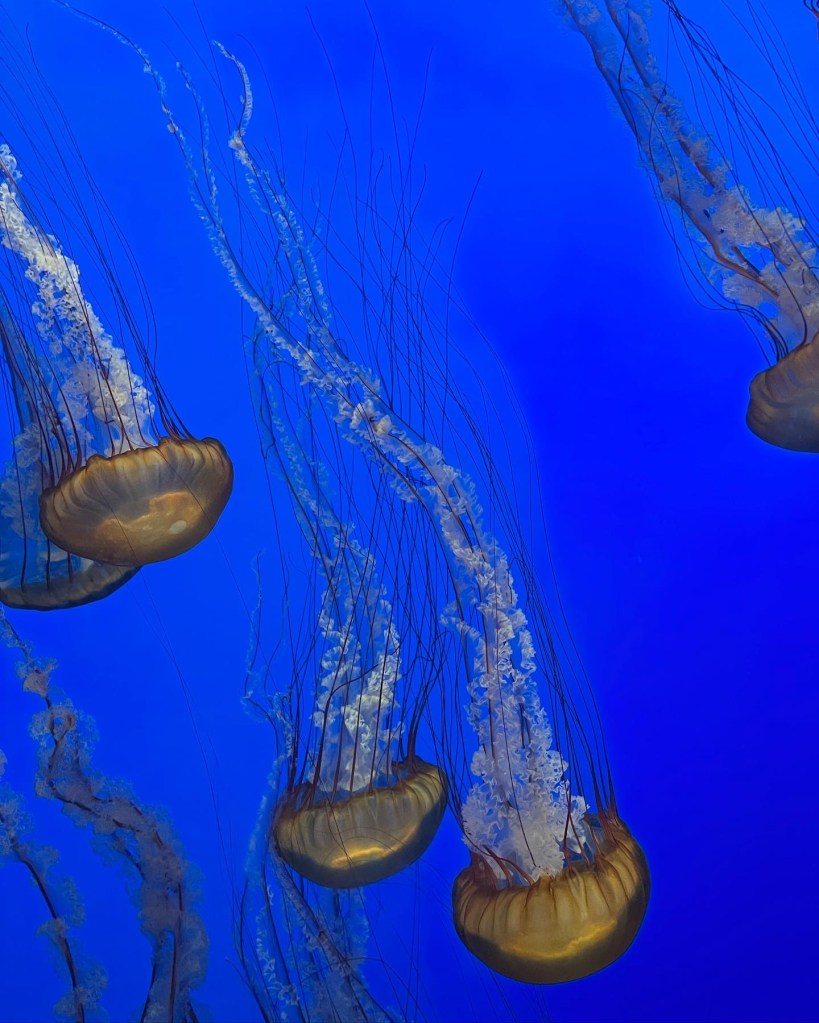
    Sea nettles at Monterey Aquarium
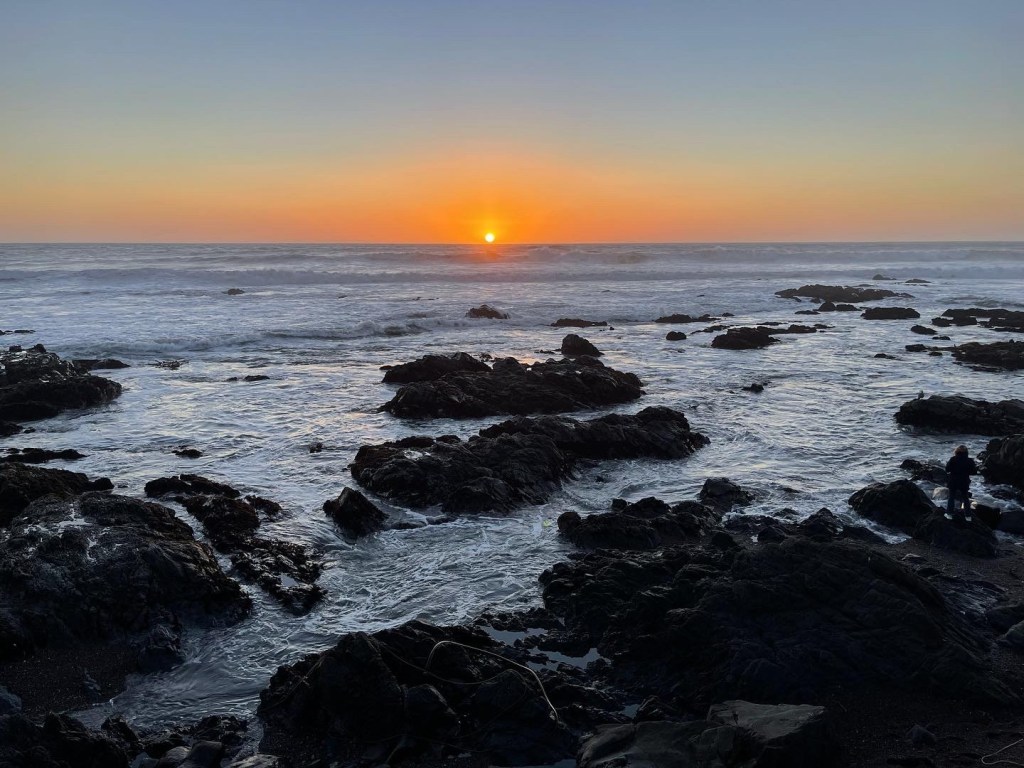
    Sunset at Moonstone Beach
  • The Hollywood Sign

    The Hollywood sign that clings to the southern side of Mount Lee in Los Angeles was first built in 1923, reconstructed in 1949 and again in 1978. It was repainted in 2005. The letters are 45 feet tall and the total length of the sign is 350 feet. Over the years it’s become the iconic symbol of Hollywood, and you can’t really visit the place without seeing the sign from some vantage point. On clear days there are plenty of those, but Griffin Park and the nearby Hollywood Sign Scenic Vista Point seem to be where most people go for close-up photos.

    I confess, I’m not a fan of the celebrity fanaticism undercurrent of this place, but I appreciate the more creative output coming out of Hollywood and the people behind the scenes who do the work. I’d much rather take a studio tour to see how they create a movie than stand near a red carpet trying to catch a glimpse of some famous person. And sure, maybe it’s odd for me to be celebrating a plywood sign at all, but ultimately I seek out the landmarks that make a place unique, and there’s no other place with a hilltop sign as iconic as Hollywood.

    The sign used to say “Hollywoodland”, built to advertise a development going in the early 1920’s. It became iconic with the growth of Hollywood and they dropped the “land” with the 1949 restoration. The first time I saw it, appropriately I suppose, was from the top floor of the Academy Museum of Motion Pictures (itself a place that makes you fall in love with the craft of moviemaking when you visit it). But you need to get closer for that true touristy picture, and the park and vista point are great spots for that purpose. As a side benefit you get to meet some great dogs.

    Had time allowed I’d have hiked to the summit of 1,708 foot Mount Lee to see the sign from behind. That will have to wait for another trip and a clearer city below, for as clear as the sky was above us, smog enveloped the city below. That, sadly, is another thing Los Angeles is known for. And as a visitor from a place with crisp air and clear skies, the other thing you notice. But looking up, at least we had that blue sky.

  • L.A. Gridlock

    Los Angeles is beautiful and ugly all at once. Spectacular weather, beautiful beaches and incredible mountains hovering over you. I can see why people are drawn to these things. But then there’s the other Los Angeles. The homeless population, the grossness of Hollywood Boulevard, and worst of all, the lack of anything resembling an effective transportation system.

    For me, Hell on earth is a place where you’re forever standing in line, waiting for the person in front of you to inch forward. And for an extra measure of pain add a million traffic lights. That, friends, is Los Angeles.

    If there’s a complete opposite to the rolling freedom of the Pacific Coast Highway it’s driving in the heart of Los Angeles, where it takes you an hour to go three miles and people think it acceptable. All those combustible engines spewing fumes into the air make a thick cloud of smog that hovers over the entire mess. Teslas are everywhere here, and they probably have a compelling return on investment when you look at the price of gasoline. All that gridlock hits the wallet hard.

    When you aren’t in your car and you can remove yourself from those who still are, the city shines. If only they had a London Underground- level transportation system to eliminate all the madness of the roads. I suppose earthquakes are a factor but that hasn’t stopped them from building strip malls and high-rises.

    If I’ve learned anything in my visit to this city, it’s that I belong in New England. I’m just not into gridlock and concrete, thank you. But don’t take it personally LA, it also means one less car on your roads.

  • A Visit to Oceanside

    There might not be a more aptly-named city than Oceanside, California. Tightly hugging the Pacific Ocean on it’s western edge, pristine waves roll to shore and create the perfect conditions for surfers. When you walk out onto the 1,942 foot long city pier you feel like you’re out there with the surfers bobbing in the waves. In fact, when you reach the surfers you’re only halfway out to the end.

    Camp Pendleton is right next to Oceanside, and the two are forever associated with each other. The US Marines train at Camp Pendleton and I know several people who came here to train before being deployed elsewhere. As neighbors, Oceanside is a military town and you see it in the stores that cater to the Marines, and especially in the barber shops with their rows of chairs ready for customers on leave. The city is changing as more and more people are attracted to this place, but this will be a military town as long as the Marines stay next door.

    While the military vibe is tangible, Oceanside’s other neighbor is the Pacific, and it dominates the conversation of identity. Health, fitness and outdoor living are also a vibe here. There’s a surfing museum of note here, and surfers dot the water on either side of the pier. Oceanside hosts an Ironman Triathlon and they were set up for it during my visit. Walking around you find a cool vibe, exceptional dining options and friendly, fit people.

    I have a friend who moved to Oceanside, prompting a visit to see him and linger in town for a couple of hours. I can see that the place has transformed him into a happier, healthier person. Walking around in this pristine city I can see exactly how he got there. And sure, it’s easy to imagine living here too. This place where every day is paradise seems pretty tempting indeed.

  • Assembly Required

    IKEA furniture has its place in this world. Like in my young adult daughter’s place. And maybe in my place too, should I downsize someday. And sure, there’s a certain pleasure that comes with building something yourself, but you’d better have the right tools or you’re in for a long day.

    I didn’t have the right tools.

    I had a cheap 4-way screwdriver and a cheap hammer. Standard twenty-something apartment tools. Technically enough to complete the assembly of a television stand and desk. Yet blissfully off the mark in efficiency. Still, it was a labor of love, wrestling with IKEA bits and turning it into furniture for my daughter. Like Christmas Eve years ago. Hours flew by on the floor with puzzles.

    Sure, I wish I’d had the right tools. And reading glasses might have helped my interpretation of hieroglyphic instructions. But it sure was fun helping her even without those conveniences.

    Just to see her light up in delight at her new furniture, as she begins her new life.

  • Morro Rock

    When you’ve driven down the coast of California you’ve seen plenty of rocks in the water, and Morro Rock might be considered one more in a string of them. And yet it’s different from the rest. There’s a presence emanating from this big boulder that attracts you to it. Two Native American tribes, the Chumash and the Salinan, thought of the tock as sacred. Explorers mentioned it as a landmark, and it does jump out at you from miles away.

    Like most of nature, white settlers thought of it differently. When you call something a “natural resource” it somehow gives you license to put it through indignities or use it up entirely. It was quarried for a time, until the community saw it’s value more clearly and protected it. But rather than make it a centerpiece of a larger park someone else had the idea to stick a huge three stack power plant in front of it. I’m sure my timelines are off, but each of these things clearly happened.

    Despite all that, there’s a nice beach and access to the base of Morro Rock. It still has something to say. I think maybe it’s “leave me alone, I’ve had enough of you’.

  • Pacific Coast Highway

    “We do not associate the idea of antiquity with the ocean, nor wonder how it looked a thousand years ago, as we do of the land, for it was equally wild and unfathomable always.” – Henry David Thoreau

    I’m an East Coast guy. California is another world when you live with ice and snow and sunrises as your standards. You imagine what a place might be like when you’ve never been to it but hear of it often. It becomes the stuff of legend. Driving the Pacific Coast Highway and visiting Monterey and Big Sur became such a legend for me. And the experience lived up to its billing.

    When you look out at the Pacific Ocean for a few hours, and the rugged, mountainous terrain this highway snakes through, you feel the truth in Thoreau’s words. But for the highway itself and a few scattered houses and ranches this view hasn’t changed much in millennia. And unless it all tumbles into the sea it ought to look the same for another millennium. We’re just rolling footnotes passing through the eternal. The Pacific Coast Highway sets you straight about such things.

    Starting our drive from the dunes of Marin, we drove Ocean View Boulevard to Sunset Drive, making our way to pay the $10.75 entry fee for access to 17 Mile Drive. It was worth the price of admission, particularly with the big waves rolling in as remnants of a stormy ocean. Officially, 17 Mile Drive has 17 landmarks to view (all mapped for you when you pay to enter). Unofficially, the glimpses of the homes of the ultra-wealthy and a drive by Pebble Beach Golf Links are a big part of the draw.

    A quick visit (checking of the box) in Carmel and we were off to Big Sur. This is where cellular coverage all but disappeared and you put your trust in fate. There are hundreds of turn-offs you can pull over into and several larger scenic vista parking areas. The toughest places to find elbow room were Bixby Bridge and McWay Falls. Each offer that postcard or Instagram worthy image. The trick is to find an image that’s unique without putting yourself in peril. Sometimes the perfect picture is the one everyone else took too.

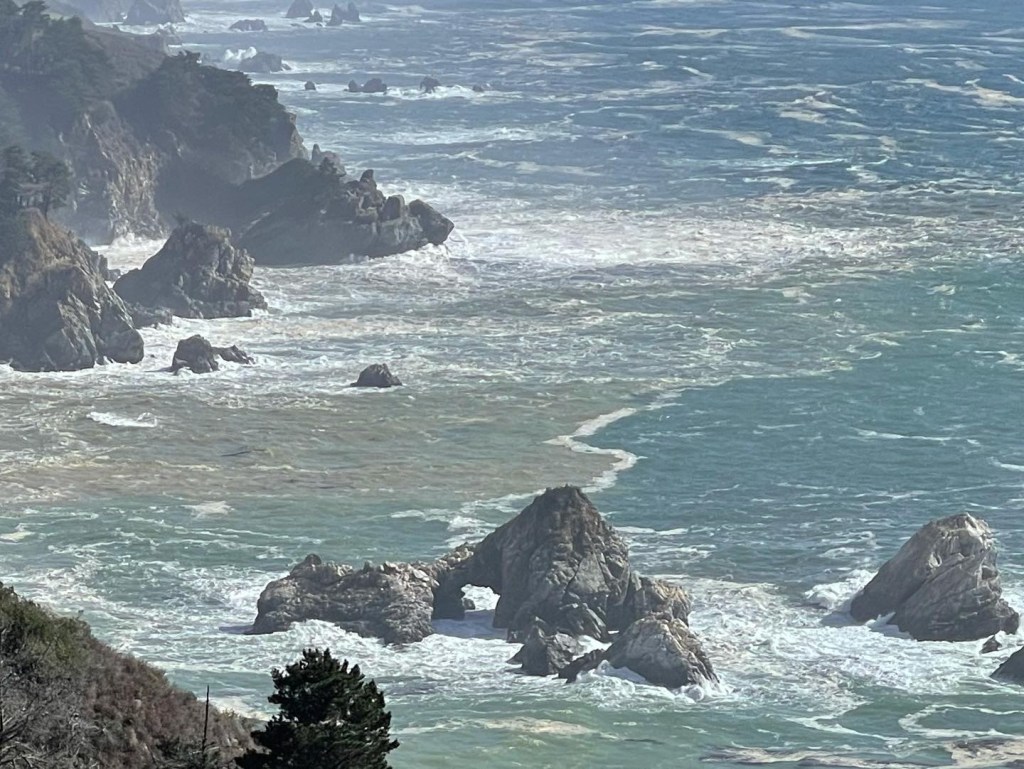
    The rest was simply breathtaking views and an appropriate focus on keeping the car on the road. Every turn brought another stunning view, and at some point you stop taking pictures of waves crashing onto massive boulders and cliffs and simply enjoy the drive. The Pacific Coast Highway is an embarrassment of riches in its beauty and a national treasure. Make sure you have a full tank and the time to enjoy this experience.

  • From Sonoma Wine Cellars to Bouncing 185 Feet Above a Raging Bay

    Autumn in Sonoma is a lovely mix of fall color and a mellower vibe as the hard work and hustle of making the wine gives way to letting time work its magic on it. After a long drought California braced for heavy rains as we wrapped up our time in the region, and talk with locals ranged from gratitude for the coming rains to trepidation at the prospect of mudslides and debris flows where the fire scars were. Northern Californians are stoic about this place they live in, a place that is so generous most of the time yet brutally cruel at other times. Vacationing in a place you’ve wanted to explore as a massive wall of water converges on it mandated stoicism for us too. We must work with whatever fate brings us.

    Fall foliage in the vineyards

    If the Scots utilize previously-used American oak for their liquid gold Scotch, Californians use French oak for their liquid gold, wine. The smell of these barrels of wine biding their time is uniquely wonderful. Scheduling a tour in a vineyard that brings you access to the cellars is a must to better understand the process, and to bring all the senses into your Sonoma experience. Add generous pours of wine to sample and stories of the history of the family who started the vineyard and you’ve securely locked your senses in the amber of the moment. You’ll remember these moments most of all.

    24 hours later, it was time to move on to our next destination, and, it turns out, make another memory. In stormy weather you make calculations about the timing of the worst of it. Do you cut your trip short or hunker down and ride it out where you are a bit longer? Timing makes all the difference, doesn’t it? Leaving Sonoma on our normal schedule but before the worst of the wind and rain we left the region behind.

    As we reached the Richmond Bridge to cross the bay we anticipated extreme wind gusts on the exposed drive across, but didn’t expect a camper trailer to blow over on its side ahead of us, closing a lane and stopping all traffic for 15 minutes as the tow trucks and emergency vehicles positioned themselves for a wrestling match in a wind tunnel 185 feet above the angry waves below. Stopped there for awhile to contemplate the violent wind, we were lifted up and shifted side-to-side with the bridge. It was thrilling or terrifying, depending on your perspective on bridge construction.

    Just a couple of memories on opposite ends of the heart rate spectrum during an all-too-brief visit to Sonoma. Sure, perfectly glorious weather would have left its mark on us too, but there’s something to the unexpected drama of a massive storm that forever imprints itself on your memory. Travel offers up these amber moments. Remember that time we…. moments. And changes us in the process. Isn’t that why we go in the first place?

    Seghesio wine cellars
  • An Epic Drive from Bodega Bay to Fort Ross

    Looking for an adrenaline-filled, twisting and turning cliffside drive with amazing coastal views? Get yourself to Bodega Bay, California on a dry, sunny day and head north on the Pacific Coast Highway. This route is not for those who imagine the worst-case scenario on every turn, but it’s a thrill for the rest of us!

    Hairpin turns and switchbacks are a big part of the menu here. Foggy or rainy days would be pretty scary. Don’t bring your RV for this stretch of road, ideally bring or rent a sports car. Utilize the turnoffs to enjoy the views or to let faster drivers pass.

    One perfect out-and-back drive is Bodega Bay to Fort Ross. Plenty of places to stop and see the rocky coastline and crashing surf, and just long enough that you don’t tighten up from the technical driving that you’ll do on this road. The show continues further north, but Fort Ross offers a quiet place to stretch your legs before a fun drive back to celebrate the day at your hotel or B&B with your favorite Russian River Pinot Noir or Zinfandel.

    Buckle up!

  • Finding Relative Quiet at Muir Woods

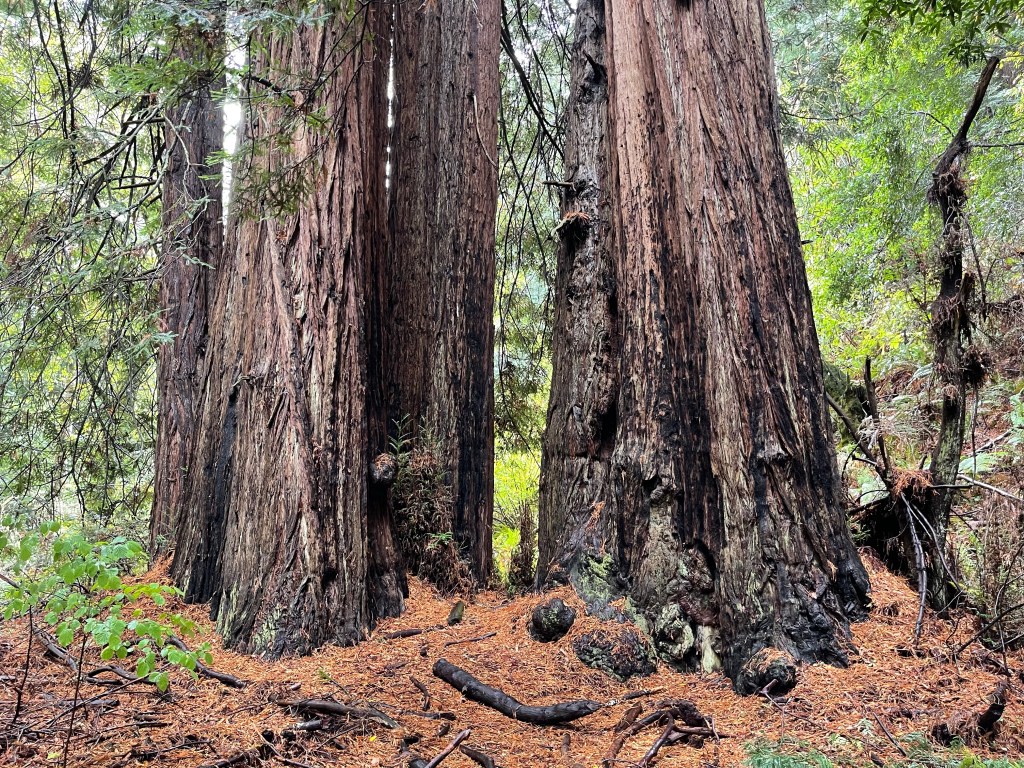
    Taking a long, slow walk amongst the Redwoods in Muir Woods, I deliberately slowed down, lingered, and sometimes stood still to feel the forest. Looking straight up I watched water drops formed in the tree tops from the light mist fall a few hundred feet. There are trees here that have stood here for more than a thousand years, my visit was just one blip in their lifespan. And here I found what I’d been looking for, what I’d hoped I’d find on this twisting drive through the hills. Here were the ancient forests of my imagination.

    Seeking quiet, reverent space amongst the giants is tricky business if you only stay on the main path. No matter how much signage they put up, tourists chat like they’re at the mall, oblivious to the glorious silence. You must go there expecting this careless chatter, but you don’t have to participate in it. The best option for silence is to take the paths less taken, and Muir Woods offers these opportunities. Take any trail that scares the masses – be it mud or the promise of exertion or even a dead end sign and you quickly find yourself in relative quiet.

    There are other old growth redwood forests, not enough of them we might agree, but they’re out there as state and national parks throughout the region. These offer more opportunities for isolation. Muir Woods is both the most famous and the most crowded. The trees won’t ever disappoint you, but your fellow man might.

    If we lost all the money we have and saved these trees, it would be worthwhile, wouldn’t it?” – William Kent

    William Kent purchased this land and fended off those who planned to log the redwoods to rebuild San Francisco after the 1906 earthquake and then flood the valley as a reservoir. He might have named it after himself but chose to honor John Muir. Modest? No doubt, but there’s an element of brand recognition at work here too. Since 1908, the Muir Woods National Monument has stood as protected land, surely thrilling Kent and those who worked so hard to save the trees, and capturing the imagination of reverent pilgrims ever since.

    If you visit, make a parking reservation well in advance. Go as early as possible to avoid the worst of the crowds. Wear appropriate footwear for hiking the side trails. And save the casual conversation for later. For you’ll have plenty to talk about.