Author: nhcarmichael

  • Questions

    “Said the monk, “All these mountains and
    rivers and the earth and stars—where do
    they come from?”
    Said the master, “Where does your
    question come from?”
    – Anthony De Mello, The Question

    One part of the writing process I value is that it fuels better questions. What’s the story behind that monument? How did this mountain I’m hiking get its name? Where do we go from here? What is the author really trying to say here? And of course, spiritual questions about creation and science and the place in the middle where they meet. And this morning, awake much sooner than I ought to be, I dove into another Anthony De Mello book, The Song Of The Bird, in search of better answers… or at least better questions.

    Today I seek a bit of adventure, even as I press on with my business trip in the middle of a pandemic. I found myself silently angrily at a couple of unmasked men getting off an elevator I was waiting for this morning. They’re supposed to be wearing masks as mandated by the Governor, with reminders on signs all over the hotel, but they opted out. My anger wasn’t with them – that was frustration at their disregard for others – but instead at myself for putting myself in a position to be concerned with their unmasked presence in the first place.

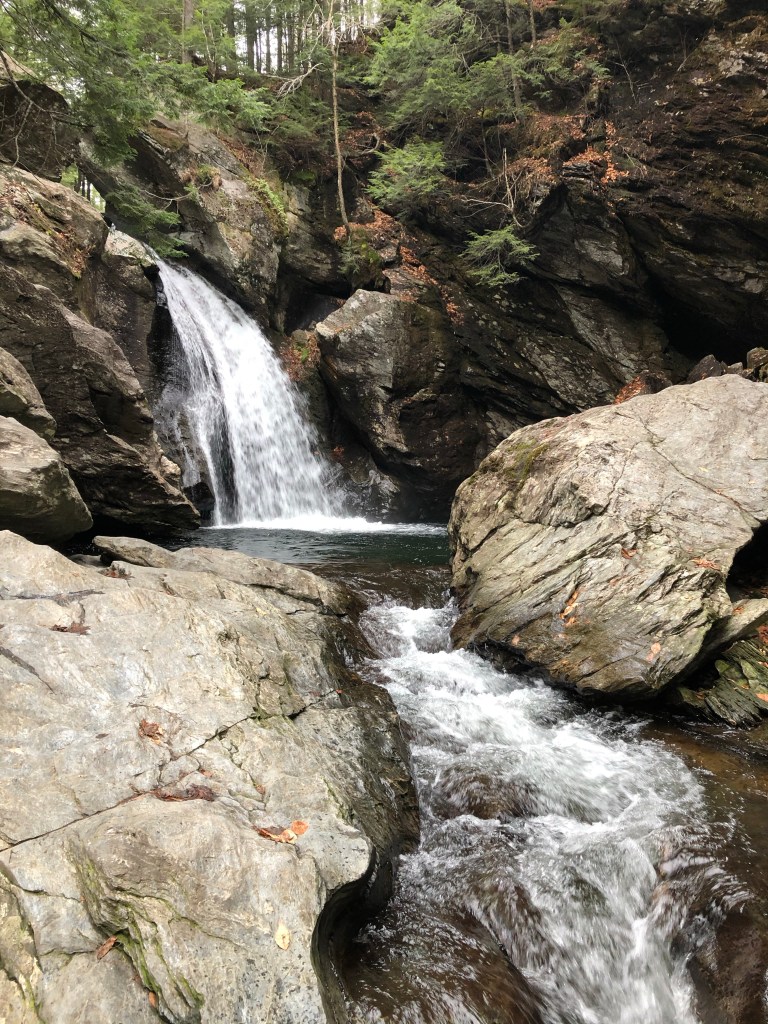
    And so I decided I need to get myself outdoors. It’s raining out there. It’s raw. There’s a short window of time I have between where I am and where I have to be later. And yet I’m getting outdoors anyway. I have a few questions that need answering. There’s truth out there in the cold, wet outdoors.

  • Process and Persistence

    “Process saves us from the poverty of intentions.” – Elizabeth King (via Seth Godin & Tim Ferriss)

    “You begin with a subject, gather material, and work your way to structure from there. You pile up volumes of notes and then figure out what you are going to do with them, not the other way around.” – John McPhee, On The Writing Process

    Blogging is a process that saves me from my poverty of intentions. I’ve intended to write for years, but pushed it aside in pursuit of everything both worthy and irrelevant. Sure the site needs work, the writing has typos now and then and Yoast SEO is fixed in a permanent frown, but so what? If you’re along for the journey, welcome, you’ve apparently overcome a ton of SEO blunders on my part to get here.

    If there’s a common theme throughout life, its the fact that we can never do quite enough to reach perfection. I’m nowhere near it myself. But I walk the path one step at a time, writing, editing, publishing and starting again at the beginning every day. And that’s a victory in itself. Screw perfection – give me process and persistence.

    “Mastery is the process of narrowing your focus to a tiny element of success, repeating it until you have internalized the skill, and then using this new habit as the foundation to advance to the next frontier of your development.” – James Clear, Atomic Habits

    And that’s where I am, focus narrowed and repeating daily towards a level of mastery I may never achieve. But I’ll be closer for the effort. There’s some measure of the Pareto principle in that James Clear quote. Focus on the 20% that achieves the goal. SEO doesn’t necessarily matter. Likes and follows don’t necessarily matter. The work matters. So do more than focus, do the work.

  • Observations While Flying in a Pandemic

    It’s been eight months since I’ve flown anywhere or even been in an airport. A lot has happened in eight months, and the pandemic is relentlessly marching along with no regard for whether we want to flip the switch back to normal again. I’m not sure it ever will be normal again, but whether we get there or not I had obligations that put me on a flight to Cleveland. What was commonplace less than a year ago was now unique, outlier stuff. And I felt compelled to note the changes.

    TSA outnumbers passengers 20:1
    That flight eight months ago coincidently departed from the same gate I was departing from on my flight to Cleveland. But instead of walking into a cue of people trying to bypass the regular TSA line and finding a line of our own, I walked straight to a lonely TSA agent who scanned my passport and asked me to take the mask down to verify my face matched the photo. By my count there were at least twenty TSA agents for every person going through screening.

    Every row, not every seat
    I boarded a plane that was being seated from back to front and found my way to my seat. This plane was small – two seats on either side of the row. Everyone had a window seat except for the couples flying together. From a social distancing perspective I was at least six feet from the person on the opposite window seat. But they were also seating every row, so the person in front of me and the person behind me were only three feet away. But masks were required, right?

    Mask etiquette
    The rule was pretty straightforward: wear your damned mask while you were on the plane. You couldn’t walk into the airport without the mask, let alone get on the plane. Simple right? Yet I was braced for the one flake who would take off their mask and scream about their rights. But thankfully this plane was full of functioning adults without delusions of grandeur. Everyone wore their mask the entire time. Until they didn’t.

    Food and Beverages
    The smell of food on the plane shortly after sitting made me question someone’s mask etiquette. I’m no expert on such things, but eating a chicken sandwich seems challenging while keeping a mask on the entire time. But it demonstrated the challenges of enforcement. Then the crew announced they would be coming through with snacks and beverages. No booze and no hot coffee or tea options, but water and soft drinks. Airline-sanctioned bending of the mask rule. And again I thought to myself, how exactly are we going to be responsible mask-wearing passengers while eating and drinking? I accepted the snack and water and stuffed them into my bag for after the flight. Mask stayed put.

    First in line to take off?!!
    As with the TSA line, there was literally no line of planes awaiting take-off. We taxied to the end of the runway and simply took off. Granted it was an afternoon flight, but for me that was a first at Logan International Airport. As we soared over the islands I spied a lonely sailboat cruising Boston Harbor, and wondered where they were going. They might have been looking up at the plane wondering who in the world is flying in a pandemic. Me, folks. The answer was me.

    Exiting the plane
    The routine in Cleveland was similar to boarding in Boston. Stay seated until the people in front of you stand up and exit. A few rebels stood up to grab bags from the overhead bins, but most of us just played along. Perspective is a beautiful thing. None of us wanted to dance with COVID-19. Walking out into the terminal, it felt different from Logan Airport. More people for sure. Cleveland was much more crowded than terminal C in Boston. Here too masks were required and social distancing applied. And more stores and restaurants open in Cleveland than in Boston. I suppose every place is different, and just as each country handles things differently, so too does every state. But overall people were showing respect for the pandemic here as well.

    Real PPE Hurts
    This flight was about two hours. Wearing a KN-95 mask instead of my cloth mask gave me even more respect for healthcare workers geared up for the pandemic for hours at a time. The elastic bands began to irritate the backs of my ears over time and I found myself pulling the elastics back off my skin for relief. If I were to do a cross-country trip I’d have to rig up a hat with buttons or pull the bands back with string to avoid this. But I wasn’t going to complain, I was wearing a mask to stay healthy and to keep other people healthy should I be infected but asymptomatic. It seemed a fair tradeoff.

    Like Riding a Bicycle
    Despite all the strangeness, travel came right back to me. Walking through airports, renting cars, and checking into hotels are all part of the deal when you travel for work. It took no time at all to feel I was back in the flow of things. Masks, heavy doses of hand sanitizer and soap and water, avoiding touching the face and maintaining social distance made it all clear that the routine was different even as it was the same. Some of these habits will remain with us long after we figure out this virus, and honestly some of these measures are welcome changes to the petri dish traditional travel placed you in. I wondered about the future of travel even as I welcomed a brief return to it.

  • You Do You

    “We see people and things not as they are, but as we are. That is why when two people look at something or someone, you get two different reactions.” – Anthony De Mello, Awareness

    I’ve been off of Facebook for 23 days, promising myself I wouldn’t go back on until after the election in the United States. For the most part I haven’t missed anything but birthday wishes for friends. Instead I text or call them with wishes. Seems old school to actually speak to someone on their birthday, but I like living on the edge a bit.

    So the Facebook fast has gone well, but I did cheat a couple of times and log on to see what I was missing. Two or three minutes of quick scanning to see if people are healthy and doing well. No likes or comments, in and out quickly. But then I read a post a friend made. He was wondering where all the coverage of the Hunter Biden story was and why everyone was burying “the truth”. That was almost the breaking point for me, I wanted to break my fast and reply educating him on what matters in this country and what may be merely crap that they’re slinging to see if it sticks. I took a breath, logged off and cleared the history of my browsing just to ensure I would have to physically log in again to get back on Facebook.

    I get a similar reaction when I see someone I know with a Trump sign on their car or in their yard. My perception of that person changes, even if they remain the same otherwise. And I realize that the issue isn’t them at all, but my reaction that matters. I wonder sometimes at the world, but recognize that I can’t change the world at all, only myself and the impact I have through my own actions.

    So I’ve begun using the phrase “you do you” in my head when I see or read something that annoys me. You do you, and I’ll do me. And maybe we’ll meet in the middle on a few things. Or maybe not. But offloading the stress of what other people think is liberating. My vote cancels out his vote, and I’ll rely on other cooler heads to prevail.

    Focusing on changing others by nature means we aren’t focused on changing ourselves. We have plenty of blank canvas left to paint in our own lives, and a few mistakes we’ve all made along the way that could use some painting over as well. The more we focus on our own path the further down that path we may go. There’s plenty to work on right here.

  • Calm

    “Real power is not in momentary desires, but in complete calmness.” – Leo Tolstoy

    I have a bit of nervous energy as I write this. I’m traveling tomorrow for the first time in seven months and there’s a vibrating exhilaration deep inside knowing that I’m getting on a plane again, going to another state and driving around to places new to me. Mind you, its not like I’m flying to Antarctica for an extended climate change study, I’m going to Cleveland. I’ve been to Cleveland at least a half dozen times that I can recall and maybe a time or two beyond that. But it’s travel in a time of no travel, and this year that alone creates a buzz.

    I got the same vibration hiking solo up Mount Tecumseh earlier this summer. Not because it was a particularly challenging hike, but because I was hiking it alone late in the day. Just enough risk to raise the level of uncertainty, but calculated risk. Hiking alone at night inherently offers risk to the hiker. You just don’t have people walking by you to offer assistance. So you take extra care or alternatively, you charge ahead brazenly challenging fate.

    Calmness in the face of potential stressors is a superpower. In an age of talking heads stirring the pot of anxiety for advantage, of a pandemic ramping up for killing season, of a time when we teeter on the brink of a deeper recession or a depression and irreversible climate change should we get this wrong, in this time the calm prevail. We can take the bait and react, or swim calmly in the present storm.

    “Do not be concerned too much with what will happen. Everything that happens will be good and useful for you.” – Epictetus

    The posters used early on during the Blitz, “Keep Calm and Carry On” naturally come to mind. Those posters weren’t successful at the time as people viewed them as patronizing, but the expression has exploded in popularity in the last twenty years. Whether you view it as patronizing or nostalgic now, the expression does carry weight as a stoic reminder to keep your head about you. For in calmness we find clarity.

    During that time when the British were facing down Nazi aggression, Viktor Frankl was living a nightmare in a succession of Nazi prison camps, ending at Auschwitz before finally being freed at the end of the war. He observed that state of mind had a lot to do with who survived and who didn’t as much as the whim of fate. Some people were in the wrong place at the wrong time, but others just gave up in the face of hopelessness and horror. Some people survived simply because they had a purpose for living. Based on this experience, he wrote the extraordinary book Man’s Search for Meaning after the war.

    “Everything can be taken from a man but one thing: the last of the human freedoms – to choose one’s attitude in any given set of circumstances, to choose one’s own way.”
    – Viktor Frankl, Man’s Search for Meaning

    Today we live in a time when everything is hyper-scrutinized, everything is a perceived affront, everything is designed to invoke a spark of fear or outrage. But when we swim in our sea of calmness, we overcome the efforts of those who would inspire a follow or a like or another cycle of commercials before they tell you the rest of the story. A calm mind sees the truth in the world and in ourselves. It remains the best foundation for a life of purpose and happiness. Want to improve the state of world? Be calm. And yes; carry on.

  • The Endless Stream

    “Make a list of the activities that are non-dual in nature… Meditation, yoga, creating art, playing, reading for fun, writing, journaling, creating a business for fun. Not fooling yourself, paying attention to yourself. Not taking yourself too seriously. Examining your own thoughts for first principles. Doing activities for you and not the external world,” – Naval Ravikant, on The Tim Ferriss Show Episode #473

    I walked the endless stream again Thursday night. By endless stream I mean primarily the rail trail with its endless stream of bicycles rolling past in both directions. I had tried this for the third time since March to take a long walk on the rail trail, and found yet again that it wasn’t the charm but instead the third strike. Like going to a crowded beach you just don’t get any deep thinking done when people are moving past you in close proximity. Sprinkle in a pandemic and the maskless masses become distracting. It’s just not meant to be until the weather turns.

    I’ve used this go-to rail trail a few times in recent years to sort through various consequential life chess moves. Like Naval’s list above walking is non-dual, offering a bit of exercise and a chance to meditate while moving. Walking has always been the cork screw that opens the mind, but it sneaks up on you. I don’t generally have eureka moments but often experience slow dawns. I suppose I have a slow-twitch kind of brain that’s built for pondering, not the fast-twitch brain built for the rapid decisions that fighter pilots and gamers have to make. But I think the world needs deep thinking more than it needs gamers.

    And that’s the other endless stream we navigate: the endless thoughts that run through our head, all demanding attention. In other years I would take that thought and jot it down in the bullet journal and categorize it somewhere in the Getting Things Done way of emptying your head. In 2020 I categorize less than ever before. I don’t believe this is beneficial. But I ponder more.

    “The world is nothing but change. Our life is only perception.” – Marcus Aurelius, Meditations

    As I walked distractedly on the rail trail, not coming to any revelations, I thought that it encompassed the madness of the last seven months perfectly. An endless stream of distractions coming at you, a jumble of things to sort out in your head, and an out-and-back journey that didn’t really bring you anywhere but back where you started. And yet I was better for having done it. If that analogy holds true then there’s hope for humanity and the earth for having lived through this particular trip around the sun. We’ve all learned a collective lesson about how we treat each other and the planet. We’ve all suffered through an endless stream of setbacks to return again to the beginning and a fresh, more hopeful starting point.. One can hope anyway.

  • The Flying Tree Dance

    Removing a tree from the yard is always a painful decision. I’ve cut down a few trees over the years, and a part of me is cut out with every one of them. But sometimes they have to go. And I had a clump of them that were ready to go wedged in a tight cluster with trees I wanted to keep. Well above my skill set to cut these down, I delayed for years until now. But it was finally time.

    A giant crane, a bucket truck and a third truck towing a wood chipper arrived and their drivers started positioning them for the tasks they each performed. First in was the bucket truck, limbing up a large oak that would be in the way of the crane. This was opportunistic work, as the neighbor wanted that tree limbed up anyway, and so they negotiated a separate deal to get it done. Capitalism on the fly.

    Next came the big event. The crane was extended, chain saws were readied, men positioned in familiar roles. The most notable was the man who would fly. Clearly the most fun job of all, and the most dangerous. He harnessed up, attached himself to the crane cable, and slowly flew into the air with his chain saw and rappelling gear. He would wrap a strap around the tree trunk of choice, secure his rappel rope and lower himself down to the ground. He then cut the base of the tree as the crane held it up, clear out of the way, and it was time for the tree to sky dance. If I were a tree and it was my last day on earth, I might choose one final pirouette across the sky as this tree took.

    But then the performance was over, the tree laid across the driveway, and the second act began. a second cable was secured halfway up the trunk and the tree was now hanging from two cables. A few branches were trimmed away, and then the machinery took over. I realized what was about to happen and put my fingers into my ears. The cables and men fed the entire tree, trunk first, into the wood chipper. The chipper roared its horrific roar, and the tree flew in chips into the truck bed to live its second life as mulch. A second flight for the tree, not quite as grand as the first.

    This performance continued for the morning and early afternoon and then the machines and men and mulch drove away, leaving empty sky and stories. Some of the felled trees remained, to serve as firewood in a season or two. Then they too will fly as well, as smoke and a pagan tribute to their final day.

  • Striving for Prévoyance

    “C’est une prévoyance très nécessaire de sentir qu’on ne peut tout prévoir.”
    (“It is a very necessary forethought to feel that you cannot foresee everything.”)
    – Jean-Jacques Rousseau

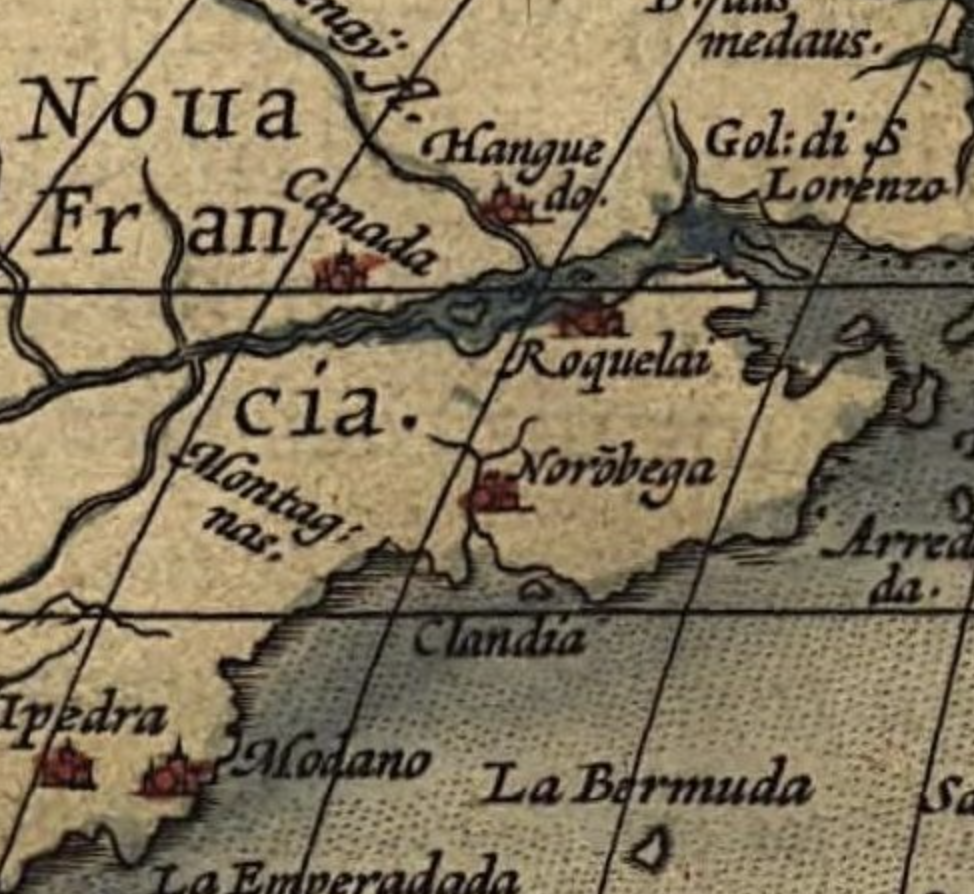
    Prévoyance. The word tantalizes me, capturing my imagination, tauntingly just out of reach. It’s a French word, essentially translating basically to “foreseeability”. Prévoyance is powerful when applied to the markets, or business, social trends or simply whether to bring an umbrella with you on your walk. It also helps greatly when managing our own lives. I heard a richer and more profound definition from David Hackett Fischer when describing this trait in Samuel Champlain. He defined prévoyance as “the power of a prepared mind to act upon chance events in a world of deep uncertainty.” My French hasn’t reached that level of nuance just yet (and never will without immersion), so I’m grateful when people point out the magic sprinkled in such words.

    The problem with learning is in learning what you don’t know, or levels that you haven’t yet reached in life. But within that inherent underlying frustration lies growth and progression towards a higher self. And that’s where I find myself: decades into life and scrambling over jumbled bits of acquired knowledge in a climb to wisdom and higher truth. The promised land that I’ll never quite reach, but a step closer than I was yesterday or the day before. Sisyphus has nothing on me.

    It was better to be in the right place than to be smart and work hard. It was best to be cunning and focus on results rather than inputs. Acting on a few key insights produced the goods. Being intelligent and hard working did not.”Richard Koch, The 80/20 Principle

    In this life I find myself climbing a succession of mountains, looking around with a sigh, and descending back down to climb yet another (refer to yesterday’s post). Perhaps with a bit more prévoyance I might have climbed fewer mountains, and chosen the right one much earlier in life. But such is life: we don’t know what we don’t know until we gain experience or acquire and leverage knowledge from others who have had the experience.

    What I must do is all that concerns me, not what the people think. This rule, equally arduous in actual and in intellectual life, may serve for the whole distinction between greatness and meanness.” – Ralph Waldo Emerson, Self-Reliance

    That distinction between greatness and meanness lies in which mountains we climb, and how soon we turn back down the path to ascend a different mountain than the one we’re climbing. And that leads back to foreseeability, to prévoyance, and acting upon chance events in a world of deep uncertainty. And so I stuff the brain with as many bits of knowledge from as many perspectives as I can consume, for knowledge, well-used, is the key to prévoyance. This blog, in many ways, is the public-facing library of that accumulated knowledge (such that it is), and the breadcrumbs on the path of where I’ve been recently. And in the 370,000 thousand published words, perhaps it telegraphs where I’m going too.

  • Choosing the Path

    “A lot of people don’t want to pick up the new skills that are necessary, or they don’t want to, for example, physically move, or they don’t want to disappoint the people in the relationships that they already have to make room for new relationships.

    So everybody wants to start where they are. Nobody wants to go back down the mountain to find the path going to the top. Everybody wants to stay on the path that they’re on, maybe make a few tweaks and get to the top. Or like Charlie Munger jokes; ‘You know people always ask me how do I get to be rich like you except quicker. I don’t want to be the old rich guy, I want to be the young rich guy.’

    So I think these are the hard parts. The hard parts aren’t the learning it’s the unlearning. The hard part isn’t the climbing up the mountain its the going back down to the bottom of the mountain and starting over. Its the beginner’s mind that every great artist or every great business person has, which is you have to be willing to start from scratch. You have to be willing to hit reset and go back to zero. Because you have to realize is that what you already know and what you are already doing is actually an impediment to your full potential. And most people just don’t want to acknowledge that.” – Naval Ravikant, on The Tim Ferriss Show Episode #473

    That’s a long quote, but I found it compelling enough to include it in its entirety. Naval has a way of waking you up to yourself. He’s a deep thinker who demands deep thinking from you as well. And he reminds you that you ought to demand it of yourself.

    Sometimes you climb to a certain rise in your career, your relationship or with some other pursuit you’re deeply invested in, you look around and realize that the path you’re on isn’t going to the top of the mountain you were meant to climb. That’s happened to me a few times in my life. It will surely again at some point in the future should I stick around long enough. The question is whether you make the decision to go back and start all over again. Can you teach an old dog a new trick?

    The obvious example of this is in my inner circle is the crew of Fayaway climbing off the mountain in their individual careers and going back to zero (income) with a three year sabbatical to see the world. And with the pandemic they’ve descended back down off of this mountain that they just started climbing and gone back to jobs to reset yet again. I admire their willingness to keep at it, and they challenge and inspire me to climb other mountains myself.

    So the question is, are you climbing, descending or stuck in place? What you’re already doing is an impediment to reaching your full potential. Staying put is the easy part. The hard part is turning back down the mountain and starting all over again. So where are you going anyway?

  • Jump In First

    I called three work friends yesterday to check in. I’m a bit old-school that way; I’d rather speak with someone than text with them. Two were doing well, one not so well with troubles at home and an uncertain job situation. All are surfing the same wave of 2020 crazy that the rest of us are. But we all react to things a bit differently, don’t we? I’m not a surfer, but I know a bumpy wave in choppy conditions is less enjoyable for surfing. I believe bumpy applies equally well in how some are facing this current year.

    I wouldn’t have known about the current situation with my friend if I hadn’t called him. He’s not posting marriage updates on Facebook (and I’m avoiding that platform at the moment anyway), and you don’t just run into people this year, so you haven’t heard about so-and-so from some mutual acquaintance. No, if you don’t reach out you don’t know how someone is really doing. So by all means, reach out. Jump in first. They could probably use the connection right about now.

    I’m not a natural at this, but I make a point of trying to connect with people. If you aren’t calling to check in, you’re waiting for them to reach out to you. They could well be waiting for you to do the same, and months and years go by without a call. I have some relatives who I adore and love speaking with who I haven’t connected with in years. While that’s on both of us, I believe the fault is mine. If the phone works both ways, then there’s no reason for you to not pick up the damned phone first. You might just be the difference in a dark day.

    And that got me thinking, if life is a collection of experiences, shouldn’t we:

    Make the call?

    Jump in first?

    Ask?

    Say it?

    Get out there?

    Try?

    Do the work?

    I suppose I could go on like this, but you get the idea.  Life is a brief collection of experiences, so why not experience life? Be the first couple on the dance floor. Be the first to jump in the cold water. Be first to do it. Be the first to say it. And if you aren’t first be quick to voice appreciation for those who go before you. It took a hell of a lot for them to jump in first.