Author: nhcarmichael

  • Queen Victoria and the Prince

    Kensington Palace… interesting place to visit, but I wouldn’t want to live there. Too much museum, not enough home for my tastes, but then, I’m not exactly touring the private quarters of the Royal Family, am I? But there’s humanity there at the Palace, and like many I found myself drawn to the life of one previous resident.

    I’ve always had an image of Queen Victoria dressed in black, in her senior years, but Kensington Palace shows you the entire life of Victoria, which offers remarkable new perspective. Standing in the room she was born in offers perspective. As does seeing her children’s rooms. Focus on the jewels if you will, stunning as they are. But nothing jolted me like seeing the seductive young Victoria in a self-commissioned painting for her true love, Prince Albert. This Victoria would have loved iPhones and selfies, I think, if only for the fun they might have brought to her time with Albert.

    They have a wonderful quote from Victoria describing her attractive Prince, and this marvelous line she used to convey what she was feeling: “My heart is quite going.” Alas, true love doesn’t last forever, and Queen Victoria is later quoted after the passing of Prince Albert, “Who will ever call me Victoria now?” And with that you can feel her grief through the decades. Who doesn’t read that and grieve with her?

    Kensington Palace is full of human stories like this. Mary, Victoria, Diana, Kate; I understand the fascination some people have with the Royal Family, though I confess I don’t share the same… enthusiasm. I’d rather live my own life, thank you. But in young Victoria I found a connection.

  • The Vivacious Many

    There’s more to do, surely, before we go. But enough is enough. Lists are checked and then confirmed again. Having set one bird to fly it’s time to fly again myself. And I’m ready.

    “Who can guess the impatience of stone longing to be ground down, to be part again of something livelier?” – Mary Oliver, The Moth, The Mountains, The Rivers

    I understand…  As much as I embrace the daily ritual of routine; the obligations of family and work and making sure the recycling is put neatly into a rolling bin on the edge of the road, I’m ready.  I’m ready for the speed dating bucket list items knocked off in succession, of conceding to wait in line for the obligatory went-there but then rewarding myself by lingering a bit longer in a few remote corners I’d never heard of before stumbling upon them. Shifting a car with my left hand.  Reflecting on alchemy in a distillery or two along the way.  Feeling the pulse of London and the weight of Edinburgh. The remote chance of an Aurora Borealis sighting in Skye or Speyside.  A pilgrimage to Abbey Road and Quiraing and Pennan. These precious few have been unchecked for way too long.

    And I suggest them to you also, that your spirit grow in curiosity, that your life be richer than it is, that you bow to the earth as you feel how it actually is, that we—so clever, and ambitious, and selfish, and unrestrained—are only one design of the moving, the vivacious many.” – Mary Oliver, The Moth, The Mountains, The Rivers

    The world calls.  Let other voices try to shout it down.  Tonight we fly.

  • Bury the Bright Edge Deep

    “The cold smell of potato mould, the

    squelch and slap

    Of soggy peat, the curt cuts of an edge

    Through living roots awaken in my head.

    But I’ve no spade to follow men like them.

    Between my finger and my thumb

    The squat pen rests.

    I’ll dig with it.” – Seamus Heaney, Digging

    Jim Rohn said that we are the average of the five people we associate with the most. I tend to agree with that, not just in people but in authors, media, podcasters… etc. Influencers on our outlook should be scrutinized regularly at minimum, and wholly changed over now and then just to keep your mind sharp. There’s nothing like a different perspective to floss the brain. And lately I’ve been sprinkling in more Seamus Heaney, Mary Oliver and Robert Frost. When life throws political chaos, war and social media trolls at you, turn to the poets to re-set the sail.

    The garden is done for the year, other than a few mums and asters and one lone fuchsia blossom that stubbornly holds out hope for company. But harder frosts are coming, and with it the growing season ends. Heaney’s words sprinkle memories of planting in my mind, of burying the bright edge of a spade deep to turn the soil, and I smile at the thought. There’ll be no planting for six months to come. But Seamus points to another digging tool in writing, and that seems a good place to spend my time as well. Pull out the weeds that work to root in your mind, turn over the fertile ground to aerate it, and plant some new ideas to grow and ripen.

  • Rise to the Role

    Reading history you learn just how violently brutal our ancestors were to each other.  Read about people being drawn and quartered, most famously William Wallace, and you shake your head at the cruelty of the slow death.  Listen to the Hardcore History podcast and every episode is about the brutality of mankind in wars from raids of Genghis Kahn to the Rape of Nanking.  This kind of horror should serve as an active deterrent for all future wars, and yet memories fade, people in leadership positions don’t learn the lessons of the past, or worse think of war in terms of a business transaction; a deal to be made, a win in the books, more for me, less for you.

    I’ve no tolerance for the ignorant in positions of power.  That old Spider Man “with great power comes great responsibility” quote is true.  But too many don’t honor that responsibility.  If you rise to a position of power, you only deserve it so much as you earn it every day in how you rise to the occasion.  Rise in embracing the lessons of history.  Rise in meeting the people you lead eye-to-eye.  Rise in acting decisively with compassion, dignity, humility and honor.

    The opposite of great responsibility is backroom betrayals, spreadsheet business decisions that destroy people’s lives, trophy hunting, and ego-driven decision-making.  Padding the bank accounts of “leaders”, but big steps back for humanity.  The world needs more honorable leaders who rise to the role.  Less power-grabbing, wealth-seeking, frail egos.  When we take our collective eye off the people grabbing for power, we’re left with few good choices at the top.  There are plenty of examples of that on the world stage, on Wall Street, and in turf wars around the globe.

    There’s hope too.  Many are rising to make the world a better place.  Public servants who take the term to heart.  Driven individuals who sacrifice time, money and position for others.  Listen to a cancer research doctor to learn what selfless purpose it.  Look at the MOSAIC Expedition on the Arctic, deliberately freezing their ship into the ice to better understand climate change.  And look at the people in the International Space Station, zipping around the globe, collaborating with each other no matter the nationality.  The mix of people changes with every mission, but they all manage to work together towards common goals. Their survival depends on it.  They’re just a fragile little ball flying around in space, highly dependent on the people around them to rise to the occasion.

    The analogy to the rest of us on Earth should be obvious, and yet we have too many people who think only of themselves, who don’t rise to the role they’re in.  They don’t seem to realize or care that our survival depends on it.  We can destroy the planet easily, we can wipe out entire cities in seconds.  We can cut down rainforests for profit, overfish for short term gain, contaminate groundwater to wring oil out of the ground, and start wars to collect on old grudges.  But we’re all living on this fragile ball flying around in space, and rising to the occasion to keep it livable for thousands of generations to come is really the only choice.

    For the individual, pointing at corrupt politicians is an easy out.  I vote, but I didn’t vote for that guy.  But too many don’t run for public office because it’s a really tough job.  You are scrutinized, berated, mocked and threatened.  Who needs that?  We all need that “Man in the Arena” hero who fights for what is right.  History favors the bold.  We need more people who rise to the role, fight through the nonsense and make the place better for having been there.  How will future generations look back at our history?  If the last three years have done anything, they’ve reignited a passionate call to serve, and I’m encouraged by the numbers of people who are rising up to say choose me instead.

    And I’m reminded once again of Walt Whitman, asking a similar question in a time of change, and I’m encouraged:

    “Oh me! Oh life! of the questions of these recurring,
    Of the endless trains of the faithless, of cities fill’d with the foolish,
    Of myself forever reproaching myself, (for who more foolish than I, and who more faithless?)
    Of eyes that vainly crave the light, of the objects mean, of the struggle ever renew’d,
    Of the poor results of all, of the plodding and sordid crowds I see around me,
    Of the empty and useless years of the rest, with the rest me intertwined,
    The question, O me! so sad, recurring—What good amid these, O me, O life?

    Answer.
    That you are here—that life exists and identity,
    That the powerful play goes on, and you may contribute a verse.” – Walt Whitman, O Me, O Life!

    And the next question, from Dead Poet’s Society, “What will your verse be?”

  • The Great Conversation

    I’m bouncing again, book-to-book, pulling this book off the shelf, scanning over that sentence on the Kindle app, and stacking the pile higher. It’s funny how one thing sparks another thing, it’s what Robert Maynard Hutchins called The Great Conversation, written work building on written work, theory built on theory, across time, but shrunken down to just the books in my personal library. Each offering a little something to keep the imagination abuzz. This morning’s great conversation started with a little stoicism:

    “What’s the meaning of life? Why was I born? Most of us struggle with these questions—sometimes when we’re young, sometimes not until we’re older. Rarely do we find much in the way of direction. But that’s simply because we miss the point. As Viktor Frankl points out in Man’s Search for Meaning , it is not our question to ask. Instead, it is we who are being asked the question. It’s our lives that are the answer.” – Ryan Holiday, The Daily Stoic

    That led me right to the source, and I pulled Frankl’s classic off the shelf for additional perspective:

    “It did not really matter what we expected from life, but rather what life expected from us. We needed to stop asking about the meaning of life, and instead to think of ourselves as those who were being questioned by life – daily and hourly. Our answer must consist, not in talk and meditation, but in right action and in right conduct. Life ultimately means taking the responsibility to find the right answer to its problems and fulfill the tasks which it constantly sets for each individual.” – Viktor Frankl, Man’s Search For Meaning

    Outside I hear the telltale roar of hot air balloon burners. It breaks my focus and I walk outside barefoot to look for the familiar visitors, but all I hear is them announcing “we’re close”. Bare feet quickly turn cold on the pool deck and I move back inside. Shoes are one of our best inventions as a species, but we miss so much information about our environment that is telegraphed through our bare feet (today’s telegraph: put some shoes on you fool, that’s what they were invented for). I glance outside and spot the yellow top of smiley face balloon over the trees and, seeing its landing elsewhere, give a nod of welcome and get back inside to the great conversation. Life is calling, but I have a few things to mull over first.

    “Well, what are you? What is it about you that you have always known as yourself? What are you conscious of in yourself: your kidneys, your liver, your blood vessels? No. However far back you go in your memory it is always some external manifestation of yourself where you came across your identity: in the work of your hands, in your family, in other people. And now, listen carefully. You in others – this is what you are, this is what your consciousness has breathed, and lived on, and enjoyed throughout your life, your soul, your immortality – your life in others.” – Boris Pasternak, Doctor Zhivago

    I read that passage for the first time in 1989, the year I graduated from college, not in Doctor Zhivago, but as a quote from a book by Warren Bennis called On Becoming a Leader. This book, along with Frankl and more recently Holiday’s books, can be thought of as stepping stones in the stream of life, there for me when I needed a solid footing on my way across. And they’re also voices at the table, part of the great conversation happening still. There are hundreds of voices at that table: authors, poets, songwriters, coaches, family and friends. All voices in that great conversation, ripples across time, influencing me in ways subtle and profound. And you’re at the table too. Welcome.

  • A Weekend Between Trips

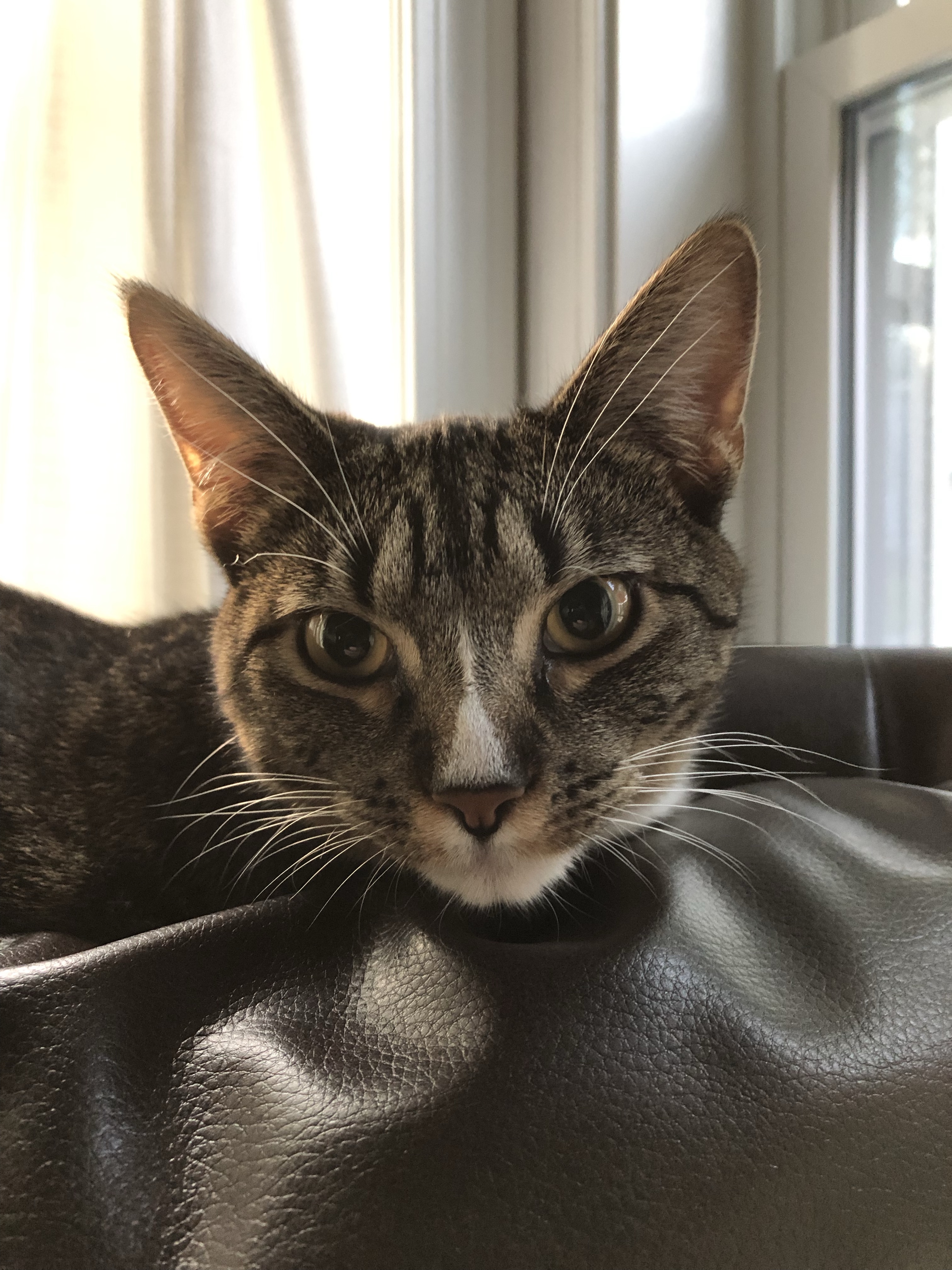
    I knew she’d be trouble.  My week away had wound her up, but it was her persistent hunger pangs that drove her mad.  12 hours between meals for a teenager is too long.  And as much as I wanted to finish reading the history of the sacking of Berwick in 1296, my office was being sacked while I ignored her.  First she got up under my book, pushing it back up to my chest.  I conceded a moment to pet her.  Next came the knocking about of small nuisance items, easy to ignore.  Finally, she got up on the end table, flicked her tail at me and knocked the lamp to the floor, shattering the bulb as it landed upside down.  Point made.  I cleaned up the shards of glass, righted the lamp and fed the cats.  It wasn’t yet dawn, but the fast was broken.

    I’ve been reading up on Scottish and English history in preparation for my trip.  I’ll call it a refresher course, as I’ve read much of it before, but with the immediacy of a pending trip I realize what I don’t know.  A personal goal is to never visit a place ignorant of its significance.  As with this trip, there’s so much to digest and so little time.  But we make do with the time we have, don’t we?

    Over the summer I smiled at my daughter as she packed and repacked bags for her semester abroad.  Now, just back from a week away and leaving in a few days for my own trip abroad, the joke’s on me.  There’s a lot to do before the trip, not least of which is taking care of matters on the home front before we leave.  Security cameras?  Check.  Alert neighbors to keep an eye on things?  To be checked.  Arrangements to have the cats fed so there’s a house left to come home to?  Definitely checked.

    I’ve mentally circled this weekend as the in-between time.  I had a business trip that wrapped up last night, a couple of days to get loose ends tied, and then off to the airport for the next trip.  The preparation is largely done.  The lists are made and ready for checking.  Last minute purchases of toiletries, laundry to do, decisions to be made on what to leave out when the bags grow inevitably overstuffed.  I feel like I just got home (I did), but I’m eager to get going once again.  The travel bug has got ahold of me once again.  My apologies to the cat.

  • Edgy in Satire: Edith Lunt Small

    There’s a painting in the long hallway at Richardson’s Canal House that you can get lost in for hours. The artist was Edith Lunt Small, who passed away in 2017, 38 years after creating this fanciful world on canvas. Edith lives on in the painting, portraying herself as a skinny-dipping artist swimming in the Erie Canal in 1825. As the self-portrait indicates, there’s a lot of whimsy in her work, and I enjoyed spending a few minutes with this one.

    Art is meant to be enjoyed, and I found myself smiling at the little details she dropped into this painting, commissioned for Richardson’s Canal House. 1825 Bushnell’s Basin in Small’s world was raucous fun, and I imagine the artist was too. Her son called her work edgy in satire in his eulogy, and based on this one, I see what he means. I was happy to get a glimpse into the spirit that was Edith Lunt Small. These close-ups offer a small glimpse for you as well. This was an artist who clearly loved life!

  • An Hour on the Table

    I got a massage from a muscular guy named Jim. I don’t generally get massages mind you – this was the fourth I can remember getting in my life, other than two chair massages to help pass the time. But this lie down on a table kind? Not generally my thing. Except for the nagging shoulder pain that crept into my neck. After 41 consecutive weeks of daily burpees I finally said the hell with it and gave my shoulders a rest. And then a massage. I’m deep into three weeks away from home and don’t need an injury now. Time for preventative maintenance on the old buggy.

    I figure I’ve done roughly 3200 burpees this year. And I’ll do more soon, but I’m switching to longer walks for the next few weeks. Burpees have been very good for me. Too many consecutive days of burpees… not so good. It seems my shoulders are my weak link. Shoulder and neck pain impact other important things, like sleep cycles and train of thought. So a shift to walking for now. Maybe a call to get back on the erg when travel slows a bit. Rowing has never injured me physically. I do still carry some psychological pain from anaerobic threshold moments in my past. But I’m mostly over that, right?

    So my new friend Jim pulverized the knots upon knots in my shoulders. Did it flip a switch and make it all go away? No, not yet. But it certainly helped a great deal. So why don’t I get massages more? I don’t have a good answer for you. But if you’re thinking of getting one, I’d recommend Jim.

  • The Odd Greeting

    Walking offers a unique experiment in etiquette. My upbringing as a hiker trained me to greet everyone I passed along the way with at minimum a “hello”. But this doesn’t go over well in some places. People are naturally on guard for the unwelcome intrusion on personal space on city sidewalks, but surprisingly on rail trails too.

    Sure, I understand a female jogger not wanting to invite trouble by being too engaging on a trail with a tall stranger walking towards them. Completely understandable that you’d want to minimize risk. But I am surprised by the number of men who avoid eye contact, let alone a curt “Hi” as you march on by. Such is the world we live in where sensational outcome stories run top of mind, like a bleeds-it-leads story on the 6 o’clock news.

    I don’t push the issue. You know within five paces whether someone is a greeter or not. Which presents another etiquette problem. At what point in your walk towards each other is it proper to make eye contact, say your greeting and look away. Staring at someone as you walk towards them is unnerving at best, will get you berated or physically assaulted at worst. No, a quick glance over at two paces, a clever remark as warranted or a quick hello and back to the path with those eyes. Staring after a greeting is right up there with pre-greeting staring, with the same result just as likely.

    I’ve found that the more you’ve worked to get wherever you happen to be passing someone, the more likely there will be a greeting. Hiking the White Mountains? Pretty likely. Walking the path across Boston Common? Improbable. Unless you’re brought together by circumstance. Like walking in a snowstorm or driving rain, when you greet each other with that “can you believe this?” look. Shared experience builds comradely, if only for a brief moment. And really, we’re all in this together, aren’t we? Well, except for those people who hike with earbuds in. They’re definitely flying solo.

  • Leap

    I was contemplating the Erie Canal on a walk early this morning and thinking about whether there were fish in it.  And to answer one jumped out of the water and splashed down in a ring of ripples.  And I thanked the fish for clearing that up for me.  Then it occurred to me; Most fish don’t jump out of the water, only a few do.  If all fish jumped out of the water the surface would look like a pot of boiling water.  Instead it’s an event.  And I wondered, why wouldn’t all fish jump out of the water to see what’s on the other side?  Because most fish are content with the environment they’re in and don’t care to know what’s “out there”.

    People are like fish in that way.  Most just swim along blissfully unconcerned about the state of the world outside their pond.  But the bold few make the leap, breaking the surface tension for the glorious freedom just beyond their comfort zone and make a bigger ripple in their moment.

    I’m watching some people in my life take bold leaps, and I’m thrilled for them.  There’s nothing wrong with the pond, after all that’s what keeps you alive, but seeing the world beyond seems worth a leap now and then. Go make a big ring of ripples. I’ll do the same.