Author: nhcarmichael

  • The Friday Crawl

    Driving south I saw the traffic going northbound. It basically ran for ten or twelve miles, opened up for a short spell, and then clogged again for a few miles. This is one of those moments where I can’t just say good thing I’m not going north. Once I’m done with a lunch meeting I’ll be merging right into that traffic going back to where I came from.

    It’s summer in New England, and the traffic is relentless. Tourists heading to Maine, New Hampshire, or Canada join the normal commuter weekend head-starters. It’s a recipe for frustration if you let it get to you. Today I’ll put on some favorite music and crawl along with the rest of them. No use putting it off any longer, it won’t get better anytime soon. My Friday crawl is about to begin.

  • Life Lessons from Deacon Recompense Smith and Captain Ichabod Hinckley

    I had a chance to visit a distant relative in Connecticut yesterday.  He’s long dead, but had a lot to say nonetheless.  I met a few of his neighbors while looking for him, including a long dead United States Senator and several Revolutionary War veterans.  One of them had a message for all of us.  But first the man I came here to find: Henry Smith, or more formally and for all time on his headstone; Deacon Recompense Henry Smith, who died on March 7, 1804.  Which meant he walked among the giants of the time – the Founding Fathers save for Benjamin Franklin were still alive, and Abraham Lincoln’s entire lifetime took place on Henry Smith’s watch.  The United States of America was finding its stride in those years.  It was an extraordinary time in our country’s history and a fascinating time to be alive.

    Deacon Recompense is a position of distinction.  To be a Deacon is to be a leader in your faith and in the community.  Recompense means to compensate, and in religious terms it usually meant life beyond the grave as a servant of the Lord.  So Henry Smith was a leader and revered as such in his community.  That community is the Stafford and Tolland area, in the northern central part of Connecticut.  Travelers between New York City and Boston by coach would have come through this community then on the Post Road, just as we do now on I-84.

    In general Connecticut is not my cup of tea. Heavy traffic clogs the roads seemingly always, and drivers tend towards the crazy side. But there are lovely places here, and one of them was this place called Skungamaug Cemetery.  This is a quiet place, but the whispers are strong here.  Less than half a mile away is an archeological site where 7000 years ago Native Americans camped, hunted and left time capsules for the future.  They surely walked on the land that is now the cemetery, just as those currently residing there may have in their time, and I did yesterday.  Our time is fleeting, as the stoics would remind us.  And it turns out Deacon Smith and one of his neighbors a few stones away had a little stoic in them.  Each offered advice for me, and man they’d never imagine would be walking over their remains, but perhaps they contemplated someone like me reading their advice.

    “The fate of mortals here behold

    For young must die

    As well as old

    For refuge then

    To Jesus fly

    Forget this world”

    – From the Headstone of Deacon Recompense Smith

    Captain Ichabod Hinckley died in 1807 at the ripe old age of 72 (there must be something in that Skungamaug River water). Ishabod was a veteran of the French and Indian War and served in the 2nd Connecticut Regiment in the Revolutionary War, where he was stationed at Valley Forge and commanded a company of fellow Connecticut men.  He offered his own message, even more stoic than my Great (x 5 or 6) Granddad’s, for those who would heed it. I found Ichabod before I found Henry. Had it been the other way around I’d likely never have met him. Perhaps the two conspired in some way to make that happen, so I’ll share his words here too:

    “Remember Death

    Death is a debt

    To nature due

    Which I have paid

    And so will you”

    – From the Headstone of Ichabod Hinckley

  • Karma’s Gonna Get You

    This morning I was inspecting the grapes, which seem to be thriving this year, when I felt  a familiar stinging sensation on my hand.  Looking down quickly I saw the reason, I’d grabbed the fence right at the spot where a hornet had built a nest in the cavity made by the U-shaped metal top rail.  And there was the hornet flying about still annoyed with me.

    Wasps and hornets offer value to the garden, hunting pests that would otherwise damage your plants.  But they also tend to build nests in places inconvenient to humans trying to live in the same space.  I’ve seen a couple of other hornet nests in the fence but this one was a surprise for me.  Unfortunately it’s right next to the gate to the backyard and a safety concern, so I’ll have to spray this one.  I don’t mind coexisting with hornets but not when they endanger my family and guests.  They aren’t my favorite neighbors but they are a sign of a healthy ecosystem.  In a year when the bee population seems to be lower in my garden, I’ll take any positive I can find.

    That said, I view this entire incident as karma, as last night I finally got around to destroying a nest of yellow jackets in my grill.  They built a nest the size of a Nerf football right behind the propane tank.  That would qualify as unacceptable risk for me and anyone else that uses the grill or opens the cabinet door for the grill brush.  Nope, they had to go.  And karma came in the form of a sting this morning.  As I type this the sting still throbs a bit to remind me that it’s best to look carefully before grabbing hold of anything.  Another lesson from the garden…

  • Jonathan Haynes and a Trip Cut Short

    On February 22, 1698, Jonathan Haynes and Samuel Ladd were returning home from a day collecting cut hay when they were surrounded by a party of Abenaki warriors. Hopelessly outnumbered, they asked for quarter but none would be given for the older men. Both would be killed that day, and one each of their sons captured. One of Haynes’ other sons escaped on a horse. This all happened in what is now Haverhill, Massachusetts near the West Gate Market Plaza.  Today there’s very little evidence of the events of that day, save for a mention on a monument erected by descendants two hundred years later. Those descendants, happily alive at the time, are long gone now too.

    Jonathan Haynes lived a short walk from where Hannah Duston was kidnapped less than a year before.  In fact, Jonathan Haynes had been kidnapped two years before along with four of his children.  Two came back to Haverhill with their father, two lived out their lives in Canada.  This time Jonathan paid the price for living on the edge of the frontier.  The warriors who killed Haynes and Ladd had come from a raid in Andover (likely present-day North Andover) where they had killed five settlers, including Pasco Chubb, his wife and daughter.  Chubb is a story for another day, but it seems that the Abenaki were out for revenge and went to his home in winter to kill him.  Haynes and Ladd were simply unlucky to be on the path that the Abenaki warriors were taking back to what is now Concord.

    There’s a rich history in this region, full of stories like this one that are largely lost to the past. The relentless terror for people living with the threat of raids must have been unbearable at times.  Today there are only whispers.  Evidence of the once powerful Abenaki is almost impossible to find.  But sometimes you find clues to the lives of the original settlers if you simply pay attention.  The Duston Garrison still stands less than two miles away.  And thousands of people drive by the small burial ground where Haynes and his descendants are buried.  Most of the oldest gravestones are illegible as time wears away the engravings on the stone.  The burial ground, like the garrison, is one of the few places in this corner of Haverhill that hasn’t changed all that much in 320 years.  It still marks time as it has since that day so long ago when a trip home was unexpectedly and tragically cut short.

  • The Loon Comeback Story

    Early this morning I was reading in the backyard when I heard something I’ve never heard in twenty years of living in this place; the distinct call of a loon as it flew over the house.  In my lifetime loons have always been rare, and usually you’d find them up on the relatively quiet northern lakes.  The first time I heard a loon was on First Connecticut Lake up in Pittsburgh, New Hampshire.  I was 23 at the time; far too old to be hearing a loon for the first time.  Interestingly enough that was the same weekend I first saw a moose in the wild (thanks Pittsburgh).  But it remained a rare experience if you weren’t up in the Lakes Region or north.

    Loons, like hawks and eagles, are the canaries in the coal mine for our ecosystem.  When DDT and other pesticides worked their way up through the food chain it killed more than just bugs.  One research article talked about massive loon die-offs in the mid-1960’s related to pesticides and human interference on Lake Michigan.  This was repeated all around the country as attempts to knock out the mosquito population and pests that eat food crops created unintended consequences.  With the ban of the worst of these pesticides and intelligent management of the rest, wildlife started making a comeback.  As the world struggles with the questions of climate change and plastic in the environment, perhaps looking back on the 40-year rebound of the loon population would be a good example of what positive, long-term change looks like.

    The loons have made a comeback.  The population has tripled in the last 40 years from about 100 in 1974 to over 300 last year.  As the population increases nesting pairs move into new lakes and ponds in Southern New Hampshire, making the once rare sound of a loon song increasingly common again.  That loon flying over my house could have been heading to any of the half dozen large lakes nearby, or perhaps one of the many smaller ponds and that flow into the Spicket River.  But wherever it was heading, it was a signal that things are slowly improving for the loons, and for the rest of us as well.

  • Tigers and Time Travel

    This is the time of year when the orange time machines announce they’re back. Along old stone walls, foundations of farmhouses and in places random today but logical once upon a time. The tiger lilies are back.

    The land whispers to us of those who came before us. Tiger lilies were planted generations ago, divided and planted again at the next generation’s homes, and so on. Tiger lilies came out of China in the middle of the 18th century, made their way to England in the early 19th century and then to the United States. Tiger lilies are entirely edible, from the bulbs that supposedly taste like potatoes to the flowers. But most people plant them as ornamentals.

    Tiger lilies are a common sight in New England’s summer. On a 3 1/2 mile walk around the block I passed maybe a hundred of them. Time machines of orange and green, whispering the names of generations of people long gone who brought them to this place.

  • Design Elements

    This morning our backyard is filled with bluebird song. There are 3 to 5 of them up in the trees, flying about and announcing to the world that this is an extraordinary morning. Other birds – cardinals, robins and the like, are playing the rhythm section in the background. Lead guitar is firmly with the bluebirds. And of course it’s by design – keep filling the feeder, put up the birdhouse and they reward you with song. The opposite is true as well. I stopped filling the other feeders in May and the cardinals, jays and finches have receded into the background. This immediately prompts thoughts of the Cherokee story about the two wolves for me (which wolf wins? The one you feed), but in a slightly different way.

    We all design our lives to attract what we desire into it. The work we do, the people we surround ourselves with, the habits we form, and the media we consume are all design elements that move us forward on the path or set us off course.  And design doesn’t equal results.  Sometimes the bluebirds fill the yard with song, sometimes the timing is off or they’re filling someone else’s yard.  My neighbor on the other side of the fence gets the same bluebird song without earning a bit of it (Then again he’s not outside to hear it anyway).  You keep doing the right things and eventually you build the life you’ve wanted for yourself.  And sometimes the rewards you’ve earned benefit others.  I planted daffodil bulbs on the corner of our street with the main street.  Those daffodils rewarded thousands of people driving by, though the majority of those people barely noticed them at all.  I build playlists and fill the house with music with the same intent, and perhaps the same result.  I’ve built an itinerary for Scotland in the fall that I’m especially excited about.  Hopefully the results surpass the design.

    I tend to fill social media with pictures of the kids, the garden, places I’ve travelled to and  generally the positive things about plodding through this life together.  Plenty of people use the same platform for negativity or to point out things they’re angry about, to cry for attention, or to somehow teach the rest of the world that they were right all along about something or other.  Who knows which of us is right, but I do know that’s not for me.  Whenever I post something I’m angry about I feel like I’ve taken a step back in my own development, so I try to filter it out before it lands.  Abraham Lincoln had a drawer full of angry letters to his generals and other people that he never sent.  I’m trying my best to use social media the same way.  What moves us all forward?

    My morning was filled with bluebirds and hummingbirds and the sound of thousands of drops of water hitting the ground as the tree leaves shake off the overnight rain in the breeze.  My evening will be filled with celebration and music and friendship.  In between I’ll so the work that must be done to enable all of that.  Yard work and cooking and building playlists and touching base with family and friends.  In general being actively engaged with life…  and the life you want.  You never know if the bluebirds will come, but you do what you can to attract them anyway.

  • Hit the Minimum and Check the Box

    I ran into trouble last year when I increased the number of burpees I was doing to 50 per day.  As the reps increased I started using my upper body strength to make up for core weakness.  This poor form led to injury, which led to me not doing burpees for a couple of months.  Not what I was hoping for.

    This year I started doing burpees again, but with a focus on technique.  I also kept my total to 10 max for a few months.  Embarrassingly low number of burpees, but the long view is to keep doing them every day for life and not repeat the issues I had last fall.  But even at 10 per day I started getting shoulder pain again.  I made a point of looking straight ahead at the wall in front of me so I wasn’t using my shoulders to bear the weight, and that helped.  I started doing shoulder warm-up exercises to get the blood flowing, and that helped too.  But that familiar shoulder pain was creeping back in anyway.

    Two weeks ago I made a minor adjustment to the push-up part of the burpee; pointing my fingers towards each other and forming a diamond shape.  This angled my elbows outward and combined with the rest of my focus on good form relieved the stress on my shoulders.  Will this hold up over time as the solution?  We’ll see, but that minor tweak in form has been a huge relief in doing burpees.  I’ve increased the number of reps slightly and will see how it goes.  I’d like to get back to 50 per day if possible, as there’s no better travel exercise than burpees.

    Good form is essential in burpees, as it is in everything that we do where long term results are the objective.  Burpees are portable – I’ve done them on the lawn on the Cape and in hotel rooms and gyms around the world.  That means that I’ve done burpees at sea level and 15 stories up in a Manhattan hotel.  My goal in hotel rooms is stealth – I don’t want to be the guy shaking the entire floor while I do these things.  I land softly, usually barefoot in a hotel room and wearing running shoes everywhere else.  Focusing on a soft landing offers another benefit (aside from being a good neighbor) in that it keeps my knees from absorbing unnecessary shock.

    I figure my burpee ninja exercises have increased my overall strength, nullified some bad travel food and prompted me to make better nutritional choices along the way.  And one good thing leads to another.  I don’t just do burpees, but they’re the gateway to other exercise that I do based on where I am.  Walking, climbing stairs, rowing, swimming…. whatever.  But always with burpees.  Hit the minimum and check the box.  Good form and good habits offer sustainability and a foundation on which to build something bigger.  And that’s why I’m focus on getting it right from the beginning.

  • Changing the Perspective

    There’s no place like home, but there’s a lot to be said for changing the view once in awhile. So we picked up and relocated to the Cape for one night in the middle of a work week. I’m back to work today, but with a refreshed mind. We settle into a pattern of familiarity when we do the same thing day-after-day. Routine is powerful, and can be hugely beneficial in earning compound interest over time from daily, positive habits. But sometimes the plaque buildup on our minds needs a cleansing to create new perspective on a project or problem you might be tackling. Nothing changes perspective like a system re-boot like a vacation or a sabbatical.  But those opportunities aren’t always there. Changing scenery does the trick most of the time, even when you can’t take extended time off.

    This morning I’m back to work, but the view out the window has improved, and a quick early morning walk on the beach offered its own rewards. I noticed a burst of energy in my work tasks, and I’ve seen the fog burn off, not just on the bay but in myself as well. I re-read a bit of Atomic Habits this morning as well. Something kept bringing me to this graph that illustrates the conflict between expectations and reality. James Clear calls it the “Valley of Disappointment”. Seth Godin calls it “The Dip”.  It’s the lagging measure of results to actions you’ve taken.  Whenever I start a new sales job I try to gauge the amount of runway I have available to take off.  If you aren’t selling the trendiest stuff out there at commodity prices then you need time to build demand for your product, build a channel, get it specified, wait out budget cycles and finally get it purchased for installation.

    Valleys of disappointment happen, but it’s important to see the forest for the trees.  Perspective is invaluable when you’re in the valley, and just as important when you’ve climbed out of the valley.  A little change of scenery almost always does the trick.  Sometimes that scenery is physical like the beach, sometimes it’s mental, like looking ahead instead of looking back.  Jon Acuff wrote in a recent newsletter about the ten year question.  In short, what will you look back on ten years from now and wish you’d done today?  That is what you should do.  Acuff flips the narrative from looking back with regret to fast forwarding to a future you, and looking back from there.  Fascinating exercise, and a good way to give you perspective on what is important now. So I tackled the day with new energy, new perspective and a new focus, and that was the goal all along.


  • Salty Swims

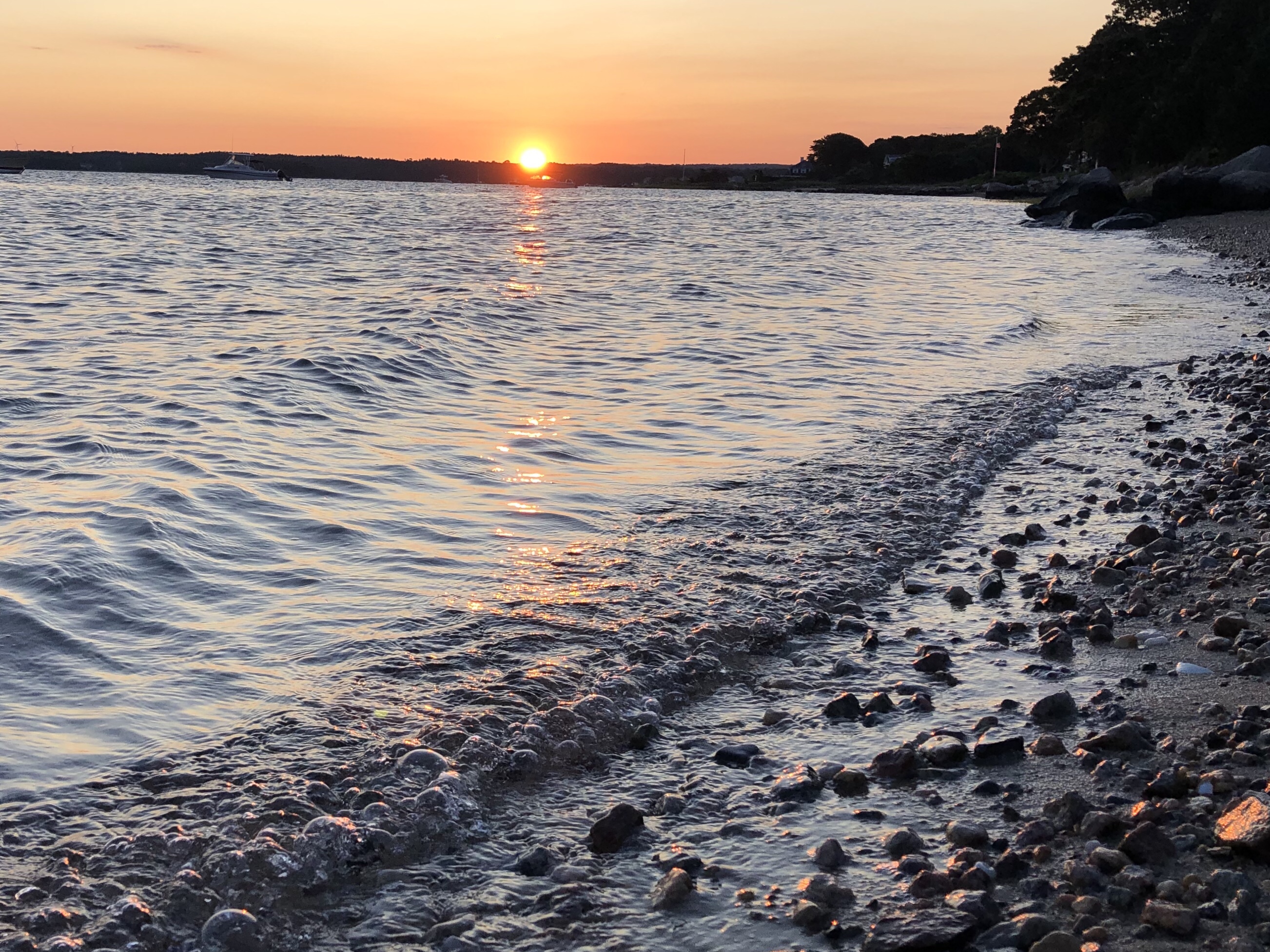
    Tonight I went for an evening swim in the bay. It occurred to me that I was way overdue for it. I prefer swimming in the ocean over ponds, pools, rivers and streams. I’ve swum in ’em all, and enjoy most every one of them. But let’s face it; Salt water is better than fresh water. Unless you need a drink anyway. But I’m talking about swimming, so don’t go throwing hydration at me. With swimming nothing beats the ocean. The buoyancy is better, and the salt is better for your skin. Don’t tell me about sharks. I’ll take sharks over alligators. At least with a shark they’ll spit you back out most of the time.

    When you jump in the ocean you become a part of the ocean, which makes you a part of all of the oceans, which makes you a part of the world. You just don’t get that kind of a connection in a pool, no matter how big it is. I’m not really sure if people living in the middle of the country understand the draw of surf, sand and the taste of salt on your tongue. But once you’ve tasted it why would you ever leave?