Author: nhcarmichael

  • The Daily Buzz

    I keep the news at arms length most days, but I’m generally aware of what’s going on in the world.  One headline that’s hard to miss is the distinct threat to the bee population as commercial bees are on the decline due to constantly movement from farm to farm, disease and pesticides take a toll on them.  Add in the threat to native bees as development swallows up wildflowers and we find ourselves in a precarious place.  No bees, no flower pollination.  No pollination no food.  I know I’m simplifying it, but in general that’s the problem we’re facing.

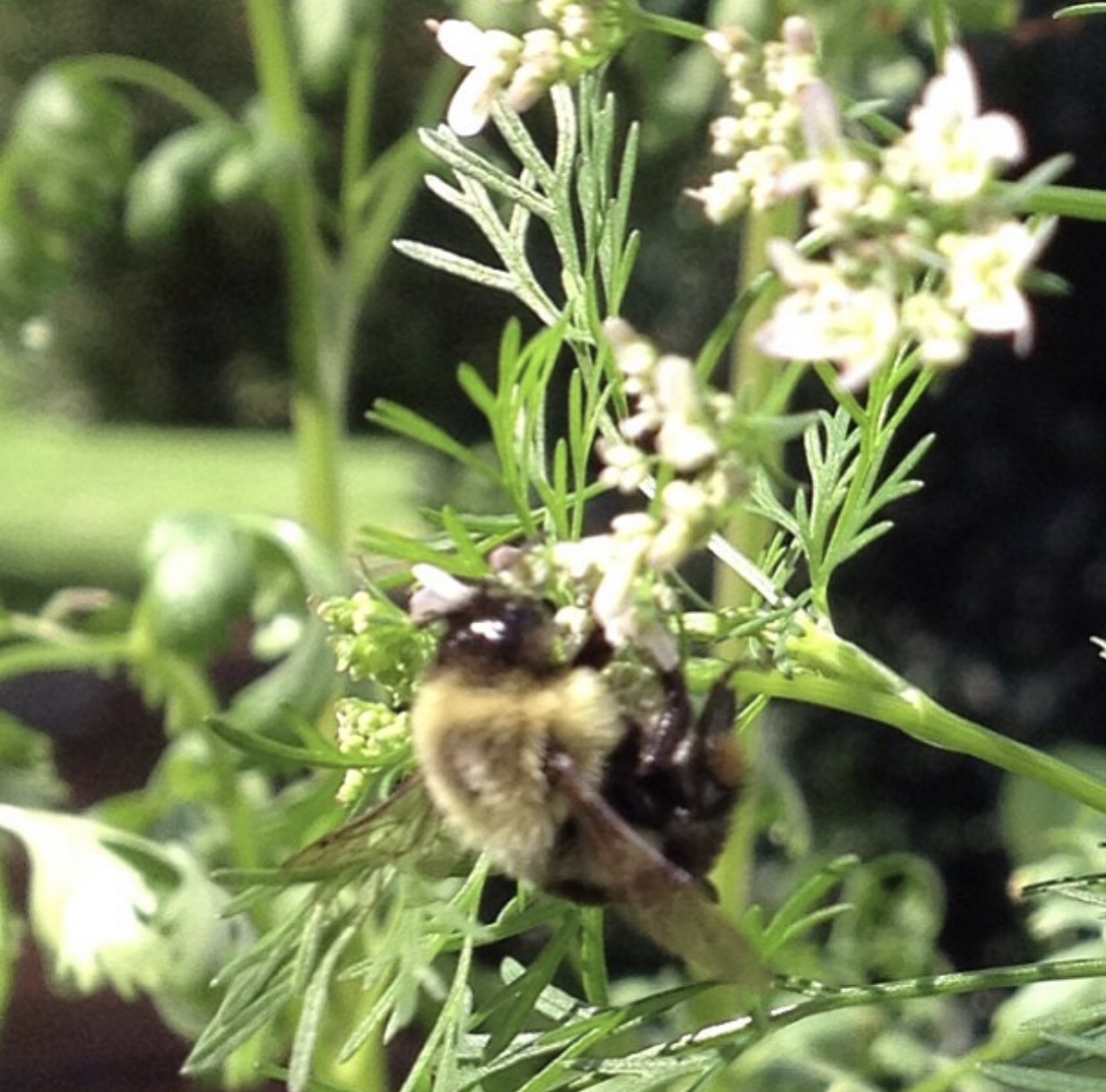
    I have friends who post constantly about bees on social media.  I prefer to plant instead.  If the bee population is suffering, I’m offering up my yard as a sanctuary garden.  I don’t use pesticides as a rule, preferring traps for Japanese Beetles and leaving most of the plants to fend for themselves.  And so this morning, as I sipped my coffee and watch the sweat bees dancing along on the Sweet Alyssum I cast my vote for the New Hampshire bee population.  The butterflies and hummingbirds don’t seem to mind either.  And I’ve made a similar bee and butterfly sanctuary down on the Cape, where the Pocasset garden, a standout well before I got involved, has recently been supplemented with bee balm, Purple Coneflower, and cilantro.

    I’m no expert on bees, but I’m trying to learn a bit more about them.  What I’m sure about is that they could use a little help from people in the form of more flowers, and maybe a little less asphalt and concrete.  It’s not uncommon to see more wildflowers seeded and left to grow on the sides and median strip of highways.  Generally more awareness creates better ecosystems for all of us.  As with everything though, it starts at home.

  • The Second Step is Easier

    “A journey of a thousand miles begins with a single step” – Chinese Proverb

    The first burpee is the worst one. More specifically, the first push-up on the first burpee is the worst one. Sure, they don’t get more pleasant later in the set, but then it’s just fatigue. On the first one you have to clear the hurdle too.

    I do these burpees at 6:15 AM, when the tightness in my shoulders stubbornly refuses to go quietly. Warming up on the erg helps, and some dynamic stretching gets the blood flowing in the old joints, but that first one is always a bear. Just getting on with it, fingers pointing slightly inward to relieve stress points, I shoot my legs back into plank position and slowly descend into the push-up. Creaking old guy complaints ensue and then recede; I’m on my way.

    The starting is the hard part. Always. But once you get going it becomes a lot easier.  The habit loop makes it easier to get some exercise in the morning, get some reading in, and to do some writing.  This morning was particularly foggy and the brain wasn’t completely wrapped around things until I started those burpees.  They have a way of focusing you quickly…  once you begin.

    And beginning is the theme of this morning.  Get started already, do what you’ve got to do to move forward.  Burpees, writing, work tasks…  whatever.  Carpe Diem isn’t just a clever quote in Dead Poets Society.  It’s a call to action not a poster on the wall.  Seize the day already!

    “How we spend our days is, of course, how we spend our lives. What we do with this hour, and that one, is what we are doing. A schedule defends from chaos and whim. It is a net for catching days. It is a scaffolding on which a worker can stand and labor with both hands at sections of time. A schedule is a mock-up of reason and order—willed, faked, and so brought into being; it is a peace and a haven set into the wreck of time; it is a lifeboat on which you find yourself, decades later, still living.” – Annie Dillard

    Dillard reminds us to structure our day to make the most of it.  And life is a series of days of course, though we don’t always see the forest for the trees…  I’ve been guilty of winging it over the years.  A scheduled day minimizes the downtime a restless mind carves out for you.  But not busywork; productive, planned tasks that move you forward.

    I’ve found the scheduled reading time immediately after exercise has been highly beneficial.  And starting with a little stoicism before reading whatever book I’m tackling is like finishing that first burpee – I’m focused and ready for what comes next.  The Daily Stoic is a good level set for me that I wish I’d discovered earlier in life.  Ryan Holiday boils down the wisdom of Marcus Aurelius, Epictetus, Seneca and other great Stoics into bite sized daily chunks.  I wish I’d thought to write this book, but since he did I’m thoroughly enjoying it.

    That habit loop got the heart rate up today, but also got the electrodes firing in the brain.  When the student is ready the teacher will appear….   and the messages keep piling up this morning.  James Clear Tweeted his own reminder to get on with it today:

    “Life is short.

    And if life is short, then moving quickly matters. Launch the product. Write the book. Ask the question. Take the chance.

    Be thoughtful, but get moving.”

    And on cue, Mookie starts whipping me with her tail as she murders the birds outside the window in her mind.  I haven’t done all the reading I wanted to do this morning, but I can’t ignore the messages.  Get to it.  I realized that I haven’t had a second cup of coffee this morning.  Somehow that fog I walked downstairs with has lifted without the need for much caffeine.  And the day is well underway now.  Best to focus on the next task at hand.

  • Finding the Essence

    I grew up following my grandfather around the garden. By all accounts he wasn’t a good husband or father to his 16 kids, and I’m told he was once a vicious drunk. But he was a good grandfather to me. Age likely tempered him as it does most of us, but I think it was largely because my memories of him were from that garden. With 16 kids you need to grow some of your own food, and he knew his way around the garden. He’d likely shake his head at my flower garden, wondering why I’d take up so much valuable land on ornamentals. But I’ve raised a more manageable number of kids, and there’s benefit to flowers that go beyond caloric intake.

    I think of myself as primarily a flower gardener, but taking stock I have a respectable number of herbs and edibles mixed in; basil, cilantro, oregano, lemon verbena, chives, monarda, dill, bell peppers, jalapeño peppers and four varieties of tomatoes. I also have two apple trees, blueberry bushes, a lime tree and coffee bush in pots… and those frustratingly unproductive grapes. This year I opted out of some other vegetables I’ve traditionally grown like nasturtium, sunflowers, string beans and squash because they simply overwhelmed the garden.

    The harvest is already coming in, particularly the herbs. The challenge now is to keep up with them. Which means expanding the menu. Growing a new herb or vegetable offers two unique experiences; figuring out how to optimize its growth and then what to do with it when its time to harvest. When I was in Israel the employee kitchen had bunches of freshly picked mint that people would plunk stem and all into their tea.  I’ve been growing mint for years but never thought to do that until they taught by example.  Now that the mint is exploding I’ve taken to drinking more tea with fresh mint and give a nod to my former co-workers for showing me the way.

    So consuming the edibles is one benefit, but the larger gift is in living amongst them day-to-day. Rub the leaves and smell the oil released on the fingertips. Flowering herbs like cilantro, chives and monarda (bee balm) are good for the local bee population, and good for me as I enjoy the show as they work their way around the garden. The garden becomes multidimensional. Good for the senses, good for the palette, good for the soul.

    I think my grandfather was essentially a good man, but he was caught up in the frustrating struggles of his life and alcohol poisoned his mind. The garden drew out his attributes, and I saw the good in him. I haven’t struggled with the demons he struggled with, but I know I’m better for having been in the garden. And so was he.

  • Tech Leaps and Twinkies

    Yesterday morning I caught myself in a moment unimaginable at any time in human history beyond the last generation or two. I sat parked in my car inside a touch less car wash. Realizing I had upwards of five minutes of downtime I pulled out my Surface Pro, logged onto my iPhone’s wireless hotspot, connected to the Salesforce CRM and modified a quote that I submitted before the car wash moved to the rinse stage. None of these things existed when I last ate a Twinkie, which was, by my best estimate, sometime around 1987 or so.

    Sometimes our collective massive leap forward seems commonplace.  People watching streaming movies or checking email on a plane flying from New York to Tel Aviv is a miracle, and yet we think nothing of it.  We live in a time where miracles happen all the time but we’re so focused on the latest outrage on Twitter that we don’t appreciate the phone we’re reading it on.

    I remember being wowed by Sony Walkmans, and Compact Disks, and Cell Phones, and Blueray, and HD, and Wi-Fi, and the Internet…  and so on.  The march ahead with technology in my lifetime has been stunning.  Moore’s Law may have predicted something like this on paper, but just look at what we’ve created in so short a time.  Amazing.

    The technological leap forward from here is even more striking.  Artificial Intelligence is coming fast.  Robotics, automation, sensor data correlation, facial recognition, self driving cars, unmanned aerial vehicles (UAV’s), Hyperloop vacuum tube travel, and 3D printing are already here in various stages of development or adoption.  We’re in an exponential technological revolution the likes of which has never been seen before.  Best to take a moment to appreciate the little miracles that happen all the time now.  Blink and you’ll miss it.

  • An Island of Two Names

    I got to spend a little time on Rhode Island, in the State of Rhode Island, on Friday and Saturday.  It wasn’t a long stay, but with my son living in Portsmouth and working in Newport, it was a worthwhile one.  There are three towns on the island; these two and the appropriately named Middletown between them.  There are three bridges connecting the island to the rest of the state.

    The Narraganset called this island Aquidnet, and this evolved into the English calling it Aquidneck Island.  But like so many places where one population gave way to another, this island has that other name too – Rhode Island.  So the smallest state in the nation shares its name with its biggest island.  In fact its the origin of the name for the state.  Newport and Portsmouth were the original settlements and things just grew around them. But why have two names when you can just call the island Aquidneck and the state Rhode Island?  Because that’s the way Rhode Islanders like it.

    A close-up of that 1677 John Foster “Mapp of New England” shows the name as Rhode Island.  Newport is noted, and Portsmouth is shown as a town though not named.  Mount Hope is just across the water and Providence is further inland.  The map is oriented with West up and North to the right, and things are out of scale but you can clearly see Rhode Island as they knew it.

    Portsmouth was settled by a group of “Christian Disidents” seeking religious freedom.  The most famous of whom was Anne Hutchinson.  They noted their intent in the Portsmouth Compact on March 7th, 1638:  They noted their intent in the Portsmouth Compact on March 7th, 1638. This, according to Wikipedia, was the first document in American history that severed both political and religious ties with England:

    The 7th Day of the First Month, 1638.
    We whose names are underwritten do hereby solemnly in the presence of Jehovah incorporate ourselves into a Bodie Politick and as He shall help, will submit our persons, lives and estates unto our Lord Jesus Christ, the King of Kings, and Lord of Lords, and to all those perfect and most absolute laws of His given in His Holy Word of truth, to be guided and judged thereby.

    The most famous of the three towns was and is Newport of course.  It was founded after Portsmouth by some of the settlers who moved from that town down the island.  Newport’s fame came when it became the playground of the wealthy who tried to outdo each other with their summer homes, the Newport Mansions.  That wealth brought in sports that the wealthy pursued; It was home of the America’s Cup for years, and home of the Tennis Hall of Fame, complete with grass court.  Newport has a certain upper crust vibe to it, much like Nantucket.  Middletown and Portsmouth are more working class, but with equally beautiful waterfront views. The main route through all of them has evolved to be strip mall heavy, but as with many places, once you get off the retail strip things improve greatly.

    This island was occupied by the British during the Revolutionary War, and held by them for three years.  As with Manhattan and Philadelphia it was an excellent port that worked to the strengths of the British Navy, allowing them to stage troop movement against the Americans. The American Army tried to displace the British once in that time in the Battle of Rhode Island with the support of French ships blockading the British.  This was the first engagement of the combined American and French forces against the British.  It didn’t go as planned as the French weren’t particularly aggressive in the naval engagements and the Americans were driven away when British reinforcements were able to land.  British naval might may have gotten into the heads of the French, who had the tactical advantage at the time. One other notable first from the battle was the very first mixed-race regiment, the 1st Rhode Island Regiment, had their first action of the war on the island.

    I’ve got a few connections to this island, but it remains a place I haven’t spent enough time in.  The last couple of years has changed that, and perhaps I’ll explore the island even more over the next few.  But as is my nature, I’ll most likely do it in the off-season when the crowds die down a bit.  There’s a history worth exploring on Aquidneck Island, er, Rhode Island… or whatever you want to call it.

  • Easy Like Sunday Morning

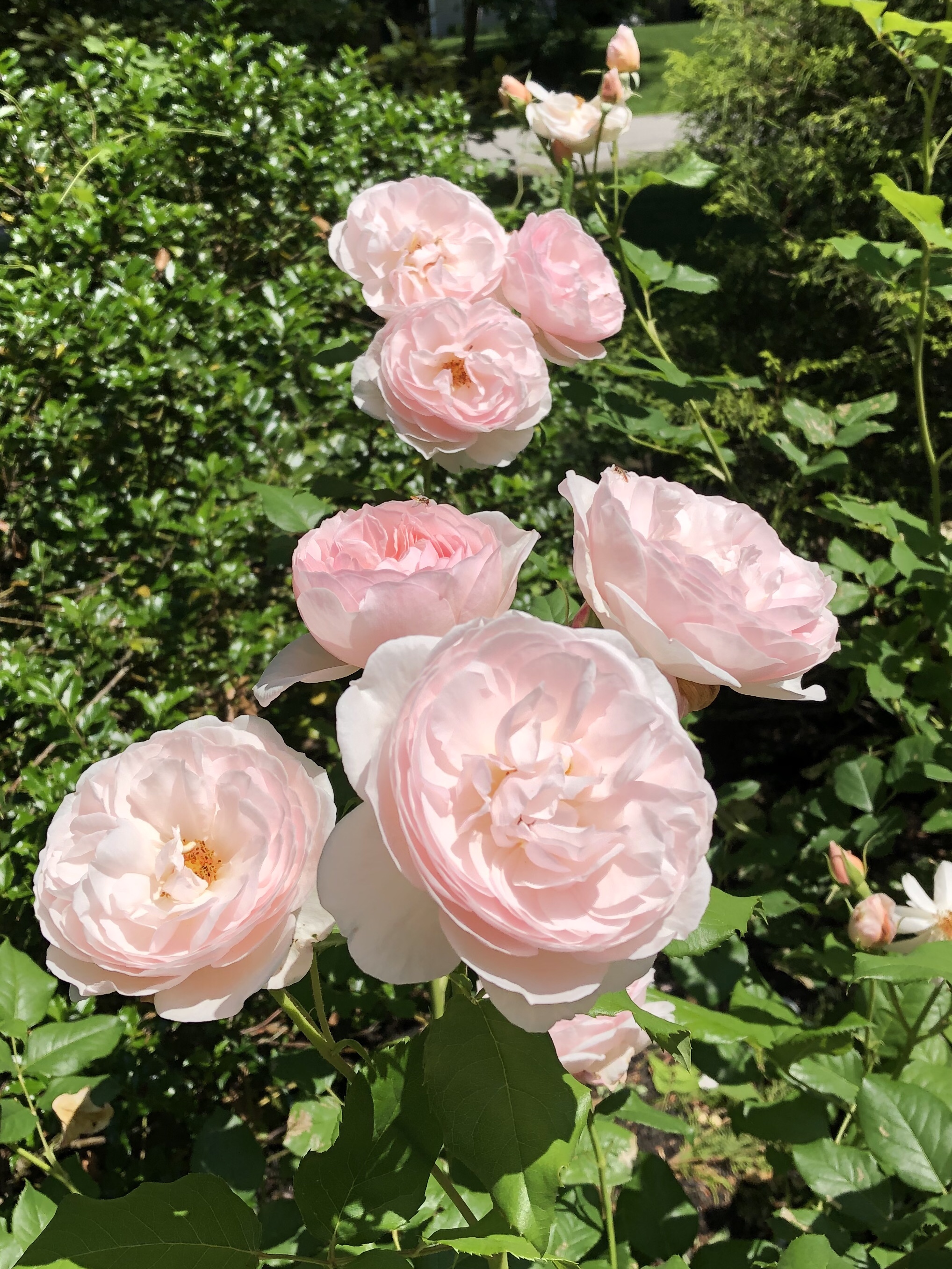
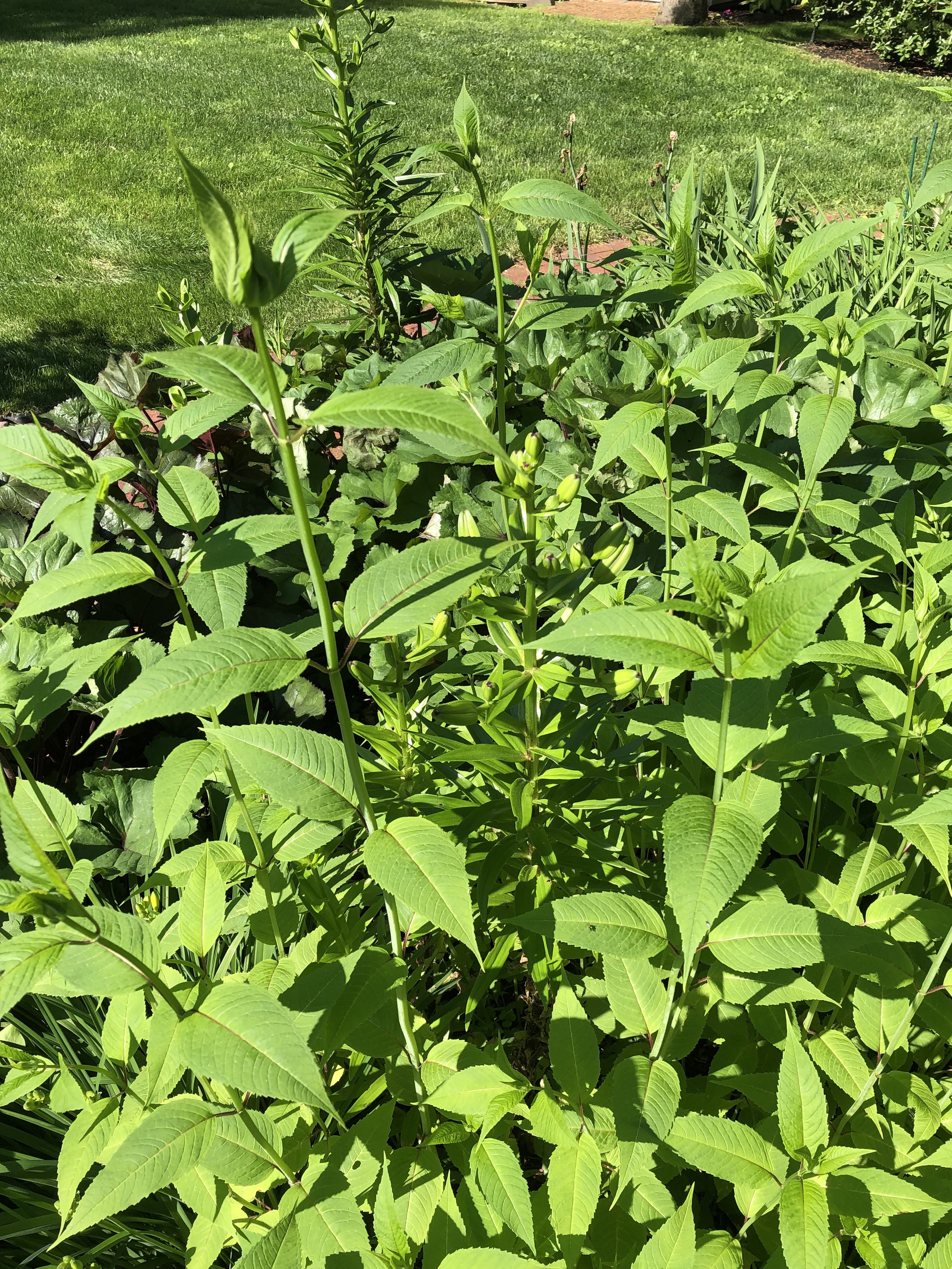
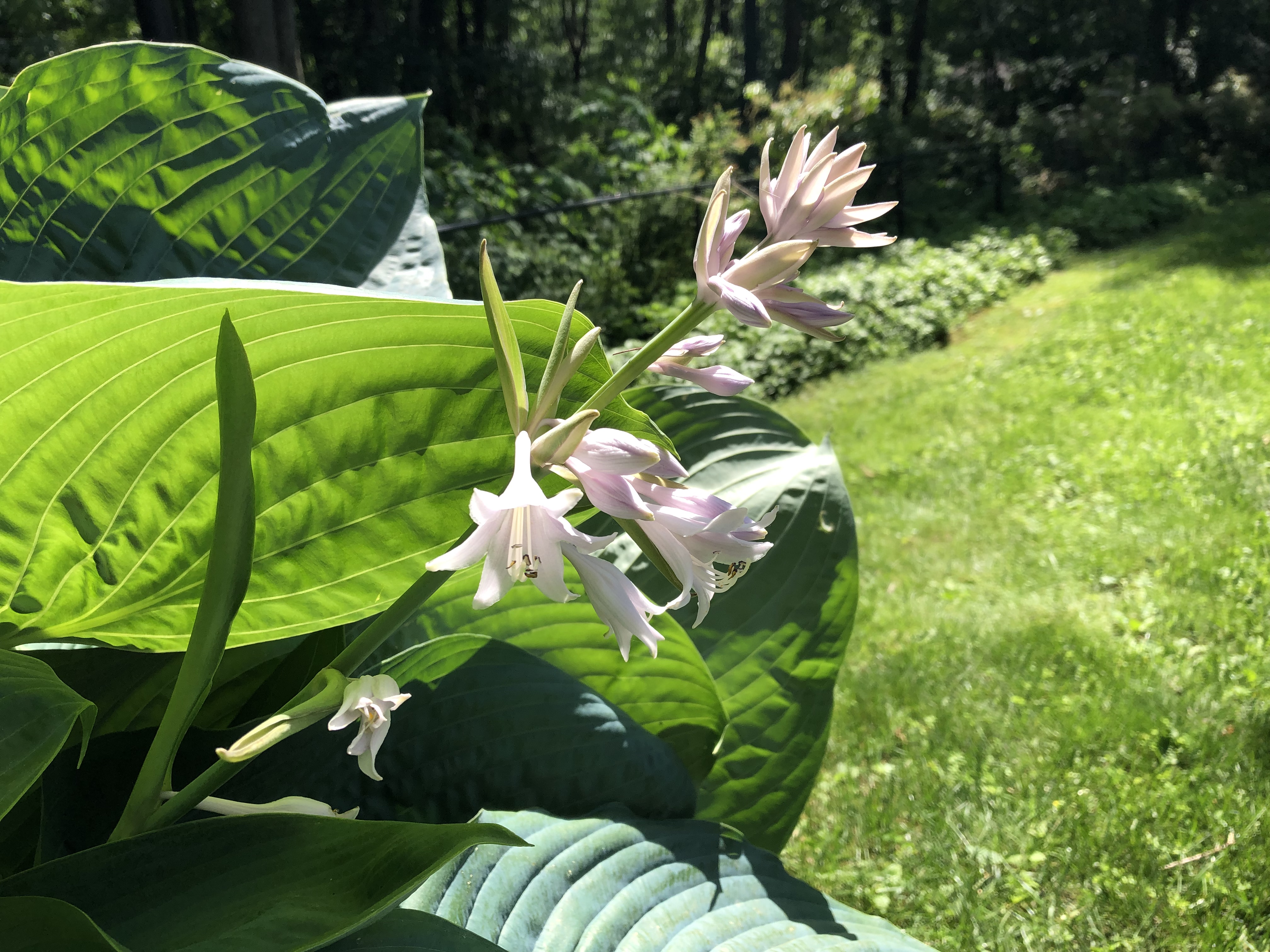
    Sipping coffee in the garden while watching the bluebirds fly between the feeder and the birdhouse I put up for them last year. Summer is finally here, the tea roses are blooming and the next round of garden perennials are about to burst in color. Monarda, hosts, day lilies, geraniums and rugosa roses are up soon. The garden is a delight of change.

    Morning is for reviewing what’s working and what needs work. I’ve filled in the holes in the garden and now maintenance is the rule of law. Easy like Sunday morning, but the rest of the day was filled with chores. Indeed, there are no breaks for the gardener in June. Pruning tree limbs, weeding, dead heading, staking, planting fill-ins, and house chores to round out the list. No, Sunday isn’t a day of rest for me. But the days fly by as I’m lost in the work, and most days I can’t say that about my chosen career. But its time to wrap this up – as you might expect I have work to do.

  • Elbow Room

    I’m not sure what my best life is, but I know that it doesn’t involve sitting in a car by myself stopped in relentless traffic.  But that’s where I found myself twice in the last 24 hours.  Friday getaway traffic in the rain was understandable.  Saturday logjam on two different highways was less expected.

    The older I get, the less I want to participate in the engineered world we’ve built around us in the United States.  I’m not particularly interested in sitting on a crowded beach, or going to the Esplanade on the 4th of July, or shopping on Black Friday, or commuting to anywhere on Route 128, or the Financial District, or really anywhere a lot of people are trying to congregate.  I don’t like traffic lights all that much, especially the ones that aren’t synced to have traffic flow logically.

    Crowded attractions aren’t my scene. Going to a Patriots game or a concert at Gillette Stadium is wonderful when you’re tailgating or in your seat watching the action.  Shuffling through security lines, lining up to go to the bathroom, shuffling back to your car to wait in traffic on Route 1?  I think not.  Irish Cottage on St. Patrick’s Day?  No Way.  Hampton Beach on a hot July Saturday?  Rain check.  Disney in peak summer crowds?  Been there, never doing it again.  Standing in line to get the best picture of St Mark’s Campanile in Venice?  No thanks.  Times Square?  I’ll walk three blocks around to avoid it.  Stand in a cue to summit Mount Everest?  You’ve got to be kidding me.  No, I’m an off-season kind of guy.  If I can’t get away with off-season, then you’ll find me up early before the crowds blow up your day.

    The planet is getting more crowded.  More people have disposable income that allows them to travel to the top sites in the world.  And I’ve got my own bucket list that includes some pretty popular places; Hawaii, London, Paris, Rome, and yes, Venice.  But I’ll find off-season if at all possible, thank you.  I’m not a hermit, I love a great conversation, a boisterous party, and the energy of a great concert.  But there’s no solitude in a line, and there’s great upside in a little elbow room.  So tell me how it goes at the opening weekend for the Encore Casino in Everett.  Expecting 50,000?  Lovely – I promise I won’t make it 50,001.  If there’s any upside to that, it’s that I’m giving someone else a little more elbow room at the slots.  You’re welcome.


  • Soggy with a Chance of Rain

    There are places in the world experiencing severe drought.  This is not one of those places.  New Hampshire is one of many states experiencing significant rainfall.  The rain seems to be with us day after day after soggy day.  I don’t mind the rain at all, but I like a little balance with my weather.  And so does the garden.

    The lawn looks as good as it’s going to look.  Most of the foliage is thriving in the garden as the plants are drunk with rain water.  The constant rain has also greened up the forest, providing deep shade that the ferns seem to thrive in.  A walk in the woods right now would require rain pants as much as a rain coat.  The drawback of course is that the rain has delighted the mosquito population.  I keep emptying the birdbath so they don’t use it as a breeding ground, but lets face it, there’s no shortage of wet places for mosquitos to breed this month.

    And not all plants love the rain.  The tomatoes are growing but being constantly wet isn’t good for them.  Likewise, the Supertunias are suffering from the constant wetness on the flowers and leaves.  The cilantro looks genuinely annoyed with the weather.  These are plants bred for hot sunny days, not April showers in June.  But that’s the state of spring in New England most years now.  And so we make the most of it, the plants and me too.

    If the garden accelerates with the rain, traffic does the opposite.  Things slow to a standstill when you add water to roads, and this week has been tough for commuters.  People drive more slowly, and people that drive carelessly have less room for error, resulting in more accidents.  Indeed, the highways are more unpleasant with this weather, and so are the people on them.

    But the garden offers refuge.  A little rain doesn’t stop a gardener, and I was out in the garden early this morning surveying things before getting to work.  And things are looking up.  The plants, for the most part, are thriving.  My water bill will be lower this June than in years past.  And the weekend looks like a return to sunny days.  Things are looking up, even in a downpour.

  • Clean Water or Jobs?

    In 1969 the Cuyahoga River in Ohio caught fire.  It wasn’t the only time – the river had caught on fire at least 13 times in 100 years.  This wasn’t a case of a temporary oil spill sparking a fire, it was a case of a river so polluted that it would just CATCH ON FIRE.  Time Magazine described it as the river that “oozes rather than flows”.  The 1969 fire had one benefit, it was a catalyst for the creation of the Environmental Protection Agency.  People had had enough of disregard for the environment and this gave enough political will for Congress to do something about it.

    Closer to my home, the Nashua River famously changed colors daily depending on what they were dumping into it that day.  There’s a great story in the Huffington Post that describes how the efforts of one woman inspired other to join in to save the Nashua River, once, like the Cuyahoga River, one of the ten most polluted rivers in the country.  When people questioned the reasoning of companies dumping waste into the rivers, which was legal until 1962, one industrialist smugly replied to an employee; “Which would you rather have—clean water or your jobs?”  

    The Nashua River flows into the Merrimack River, which flows into the Atlantic Ocean.  Cities like Lowell, Lawrence and Haverhill, Massachusetts tap into the river for drinking water.  I still remember when I went to college in Lowell in 1984 and first smelled the water.  It was a smell you got used to, but it wasn’t comforting.  And that was almost twenty years into the cleanup of the Nashua River and other upstream tributaries.

    The Housatonic River is a Superfund site because GE dumped PCB’s into the river for years…  after all, it was legal to do so, and what would you rather have – clean water or jobs?  Onondaga Lake in Syracuse was considered the most polluted lake in America because of a lovely combination of human sewage and Honeywell PCB’s and other chemicals being dumped into the lake.  Boston Harbor was considered the most polluted harbor in the country back in the 80’s until a massive cleanup effort and the Deer Island Wastewater Treatment Plant finally began operating in 2000.  So why the hell did we let our waterways be treated so badly for so long?

    There are different categories of disregard for the environment, running from casual disregard to malicious intent.  Most people fall into the ignorant category.  People who throw their trash out the window of their car are no different than the person dumping chemicals into the river.  Their problem goes away, but it becomes someone else’s problem.  Selfish, narcissistic behavior that requires societal intervention ranging from public shaming, to fines to prison time.  Tossing your McDonalds bag of trash out the window might make your car cleaner, but it’s an eyesore for the rest of us.

    Not in my backyard.  It doesn’t matter that the river is bright orange as long as I’m not tapping into it for drinking water.  It doesn’t matter how many PCB’s are flushed into the lake because I don’t live on that lake.  Its okay to have more coal burning power plants because I won’t be around when the planet is a vast wasteland.  It’s okay if we erode the power of the EPA because shareholder value increases when enforcement gets swept under the rug.

    I had a roommate in college who got all of the people in the apartment together at the beginning of the semester to agree to a dirty dish enforcement policy.  If your dirty dishes where left on the counter or in the sink instead of cleaned after you made a meal the dishes were put into your bed.  This proved to be surprisingly effective, because it was hard to ignore a pile of dirty dishes piled on your bed.  It’s easy to ignore things until it directly impacts your quality of life.  That applies equally to a pile of dishes as it does for a polluter or litterer.  There’s a great video of a person sweeping the road when someone throws their trash out the window right at the feet of the person sweeping.  Another guy sees this, walks up and borrowed the broom and dustpan, swept up the trash that was just dumped out and dumps it into the car of the litterer.  It’s viral because most of us would love to do that to the person dumping the trash.  It’s the equivalent of putting the dirty dishes in the bed of the offender.  I’m all for taking the CEO of GE or Honeywell and having them swim in the Housatonic River or Lake Onondaga, or taking those PCB’s and dumping them in that CEO’s pool.

    The world is a fragile place.  We only have the one planet, but there are too many people who think the world is flat, that climate change is a scam or political ploy, that jobs are more important than clean water.  When Marketing genius Seth Godin proposed changing the discussion point from “Climate Change” to “Atmosphere Cancer“, there were some indignant bloggers whining about the insensitivity towards people with cancer.  They completely missed the point as usual.  At one point when the Cuyahoga River caught fire and the Nashua River flowed a different color every day we reached a critical mass of people who said enough is enough – we don’t want orange rivers or rivers of flamable sludge.  We don’t want to be forced to wear a pollution mask when we take a walk.  We’d like to have things like coral reefs and glaciers and plastic-free oceans.  The race is on, will we reach the resolve needed to course correct, or will we slide into Exponential View’s Climate Calamity.  The choice is ours.

  • Samuel Mott; General and Justice of the Peace

    I love random events that introduce me to people from the past.  It’s a dance with a ghost, a handshake with history.  This is one of those stories…
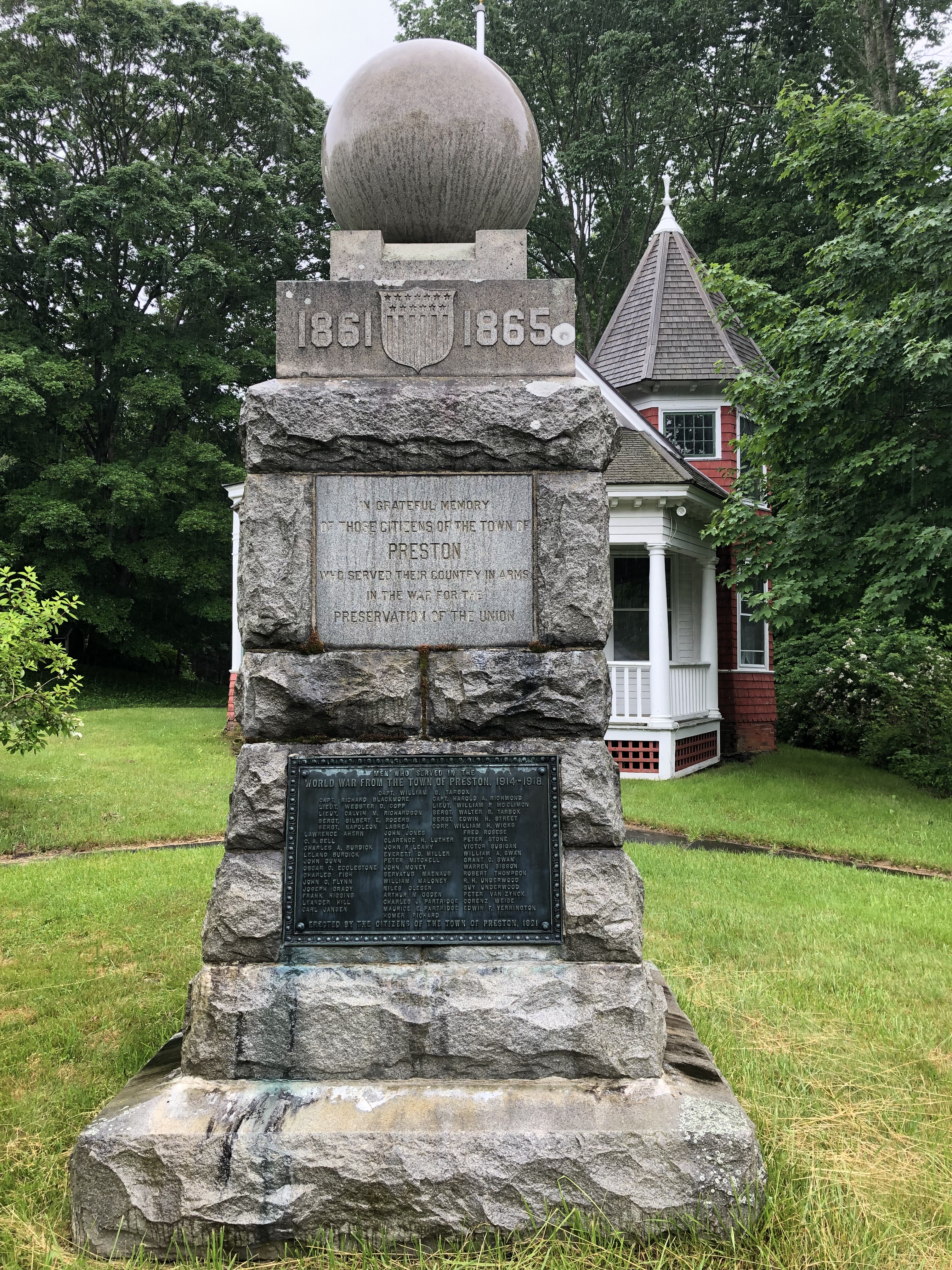
    I’d driven by this monument several times over the last few years whenever I went to Foxwoods Casino for meetings.  Shaped like a pawn on a chessboard, it was big and different and meaningful when placed on this spot, but seemed largely neglected and ignored by the thousands of cars that drive by going to and from the casino.  I’d glance over and contemplate stopping to read the engraved tributes on the monument, but the driveway was tight and not particularly welcoming for someone zipping by in a line of cars.  From the road I could read the dates on the top of the front face of the monument – 1861 1865 – the American Civil War.  Just about every town that was a town during the Civil War has a monument to those who served, and in many cases died there.  I resolved to pull into the tight driveway on my return from my meeting for a quick visit.

    By all accounts, this monument isn’t a big draw.  I may be the first person to pull into the driveway to walk around it in months.  It’s lovely and all, but let’s face it, most people aren’t thinking about the Civil War and World War One veterans of Preston, Connecticut.  The monument is right up on the road, but there are no flags commemorating those who fought, and on this rainy day no flag on the flagpole behind the monument either.  The monument was sited on the grounds of the former mansion of General Samuel Mott, who lived here and apparently, like seemingly every soldier in the Revolutionary War, hosted General George Washington.  His home is long gone, but the library that replaced the building stands watch.  The library in turn has been replaced by a newer building somewhere else in town and the old one, like the monument, doesn’t appear to have a lot of visitors.

    Of the four faces on the monument, two are dedicated to the Civil War veterans from Preston who served, one to the guy who paid for the monument in 1898 (That guy gets a nod if only for preserving his name for the life of that monument for a modest cash donation.  Hey, you can’t take it with you…), and one face was dedicated to General Samuel Mott.  That face was facing the old library, meaning it was facing away from the road…  meaning that very few people ever read his name anymore.

    This monument marks the dwelling place of General Samuel Mott

    Eminent citizen

    Upright Magistrate

    Soldier of the Revolution

    Friend of Washington

    To honor the Civil War veterans, the town offered these two tributes:

    “From this town obedient to the call of patriotism and humanity went forth one hundred and fifty men as soldiers in the Civil War.”

    “In grateful memory of those citizens of the town of Preston who served their country in arms in the war for the preservation of the Union.”

    Interestingly, the town decided to bolt on a bronze tablet honoring the men from Preston who served in World War One below the “grateful memory” engraving.  I imagine there are other memorials in town to the veterans of each war, but I found it curious that they turned the Civil War memorial into a general “War Memorial” after WWI.  There’s likely a story about the bolting on of the tablet buried somewhere in the town’s history, but it speaks to Yankee frugality.  At least they faced it towards the road so people could see it.

    “Colonel (afterwards General) Samuel Mott, at whose house General Washington is said to have called, lived in Preston City; his house occupied the spot where now (1922) stands the Public Library of that town  …  Samuel Mott was appointed an Engineer in 1776.  He was Lieutenant-Colonel when he served in the Northern campaign at Ticonderoga, Crown Point and Quebec…” The Descendents of Governor Thomas Wells

    Samuel Mott wasn’t a big name in the Revolutionary War, but he served his country in some of the most critical battles in the early part of the war.  Being promoted to general was a highly political business during the war, but it does speak to some level of respect for his accomplishments to that point.  I’m sure he knew Benedict Arnold well, being a fellow Connecticut guy, and likely served under him on those early campaigns when Arnold was still a complicated hero.  Arnold led troops to Quebec through Maine and was met there by General Richard Montgomery, who came up from Lake Champlain.    The soldiers who laid siege on Quebec faced starvation, smallpox, and a determined enemy.  They barely escaped with their lives when the British sailed up the St Lawrence River in the spring to reinforce Quebec and drive out the Northern Army.  Mott is a guy who saw a lot in his time in the army.
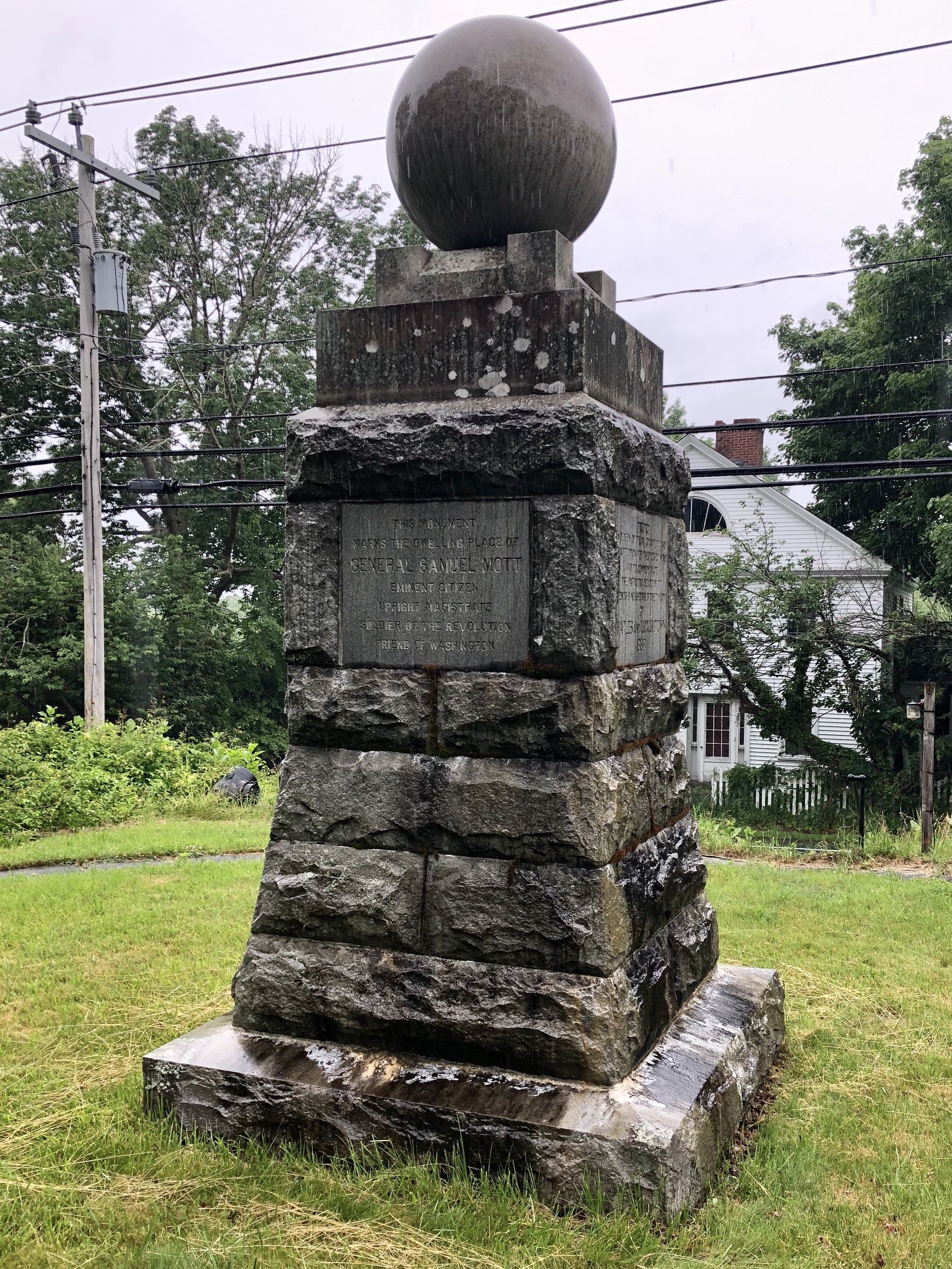
    Mott moved to Preston in 1747, and came back after the war, where he served as the Justice of the Peace.  There’s a record online of the many marriages that he blessed from 1769 to 1811.  He died in 1813 at the ripe old age (for the time) of 78, and likely had quite a few people remembering him fondly as the gentleman who married them.  I think of that Jewish saying when I meet someone long gone randomly:  We all die twice; the day we stop breathing and the day people stop saying your name.   If that’s the case, Samuel Mott has a little more time with us.  I appreciated the call to go visit his old stomping grounds on a rainy June afternoon.  My dress shirt quickly darkened as the rain pelted down on me as I walked around the monument reading and taking pictures.  Drivers buzzing by surely thought I was crazy and they may be right.  But I’m glad I stopped, and I’ll be sure to give a nod to the General whenever I drive by that monument.