Author: nhcarmichael

  • For the Birds

    Yesterday while walking with Bodhi I caught a glimpse of brilliant blue in a neighbors tree.  It was a bluebird frittering from branch to branch.  With the snow as a backdrop it’s colors were thrilling as I paused to watch it.  Its not lost on me that I use descriptive adjectives often, and I offer no apologies. The ride is short and I’m going to make the most of it while on it.

    I’m not a birdwatcher per se, as in you won’t find me with a pair of binoculars chasing a tufted titmouse.  But I take the time to observe them, as I do other wildlife.  Bluebirds, finches, orioles, cardinals and hummingbirds highlight the backyard, offering life, motion and color to a sometimes drab canvas.  Hawks, eagles and osprey, so focused on their next meal, are thrilling to watch in action.  Pileated woodpeckers offer their own thrill, with a unique call and a rapid, loud knock that betrays their presence even when you don’t see these shy birds.

    As I’ve said before, I feed the birds, and view the investment in time and seed as worthwhile.  Bluebirds don’t generally visit my yard for seed because they prefer mealworms.  I’ve already started planning the addition of a Bluebird feeder, with it’s smaller 1 1/2′ holes to keep the bigger birds out.  The ground is frozen now and I don’t think it practical to add another feeder to an already crowded pole out back.

    Having an awareness of the world around you – birds, flowers, stars in the sky, the gurgling of the stream as the snow melt feeds it – doesn’t seem unusual to me, but it feels like many people don’t notice, or don’t care.  Maybe they’re much more focused on their careers, or their projects, or replaying a scene from something they watched on television.  Or maybe I don’t notice them noticing the same things I notice.

    We got eight inches of snow overnight, but its rapidly melting as the sun does its work.  Spring is closer, and with it the world becomes more alive.  I’m sensing change in the air.  Longer days as the earth tilts us towards the sun.  2018 is two months old and already highly interesting.  I’ll be starting a new job soon too.  Brilliant color on an otherwise drab landscape draws my eye.  I feel its worth the investment.

  • Morning Person

    I like to think of myself as a morning person.  Most days I actually am one.  By morning I mean that period of time between night and when the sun rises.  Pre-dawn is my time.  It goes back to when I coached crew and had to be up at 4:30 to get to the boathouse.  It was a struggle at times, but the payoff was when I was out on the river as the sky slowly flooded with light.  We used to say that we did more before the sun came up than most people did all day.  I’ve heard that same expression used with people in the military like Jocco Willink who’s started a cult following with his 4:30 club.

    As a 50-something, I’ve grown lazy.  Sure I try to get my 10,000 steps.  But I rarely lift weights anymore, and even rowing on the erg is hit or miss.  Doing either at 4:30 is prohibitively unpleasant.  At least that’s what I tell myself.  And so I put off working out and have a coffee or two.  I journal or read.

    There’s a 63 year old character named Joe in Hampton, New Hampshire who goes for a power walk every morning before sunrise.  His wife also goes for a power walk but they don’t walk together.  Instead Joe walks with a flight attendant of roughly the same age while his wife walks with some other friends.  Occasionally they meet up and walk together at the end of their respective power walks, but usually they do their own walks independent of each other.  Joe looks a lot like Rodney Dangerfield and has a similar sense of humor.  I imagine his walks with the flight attendant are filled with much laughter.

    Joe used to live in Atkinson, New Hampshire where I live.  He downsized a few years ago, selling his house, his condo on the lake up in Maine and the boat that he had up there for a condo near the beach in Hampton.  Joe is happier now than I recall him ever being.  He works part time in a butcher shop, power walks and flirts with women half his age.  Joe is a morning person for sure.

    For me being outside getting some exercise before sunrise is just about the perfect start to the day.  I’ve settled for a couple of cups of coffee and some light reading.  It’s about time I get back to being a real morning person.

  • Ebb & Flow

    Temperatures in southern New Hampshire have risen into the mid-40’s today.  As a result the snow pack is melting, swelling the streams, creating foggy patches and revealing bare lawn and a hint of the pool cover.  It’s easy to fall into the trap of believing spring is in the air.  Hardened New Englanders don’t take the bait.  We’ve been here before.  The promise of spring is a tease followed by nor’easters and April Fools Day storms.

    Sure enough, tomorrow night there’s a snow storm brewing.  New England doesn’t let you off the hook that easily.  Our personalities match this.  One minute you’re getting a compliment from someone, the next you’re the butt of a joke they’re making.  Love with a smack of sarcasm.  That’s how we roll around here, and it’s easy to blame the weather.

  • Sea Glass

    Another offseason walk on the beach brought me to Salisbury Beach.  I walk for all the reasons you might expect, and I seek out open space to give my mind room to expand.  Salisbury in summer is a mess of arcades, pizza joints and go-carts.  It’s slowly gentrifying, but it’s no Rye.  Salisbury is a working class beach, and it offers no apologies.  While I turn my nose up at arcades in middle age, I acknowledge that Salisbury Beach has great sand, crashing waves and in February, elbow room.  A receding tide offers even more elbow room, and a chance to look for treasure.

    A beach walk generally doesn’t require you look at where you’re walking.   None of the tripping hazards that some of my more granite-forward paths take me on.  Just beach sand and the occasional sea gull or metal detector swinger.  Swingers always fit the same profile; early retirement years, male, work alone and wear a very serious expression on their face.  I’ve noted some similarities in my current beach walk and will strive to never purchase a metal detector.

    The treasure I seek on a beach is glass.  Sure, sea shells and smooth stones are great too, but seasoned beach glass is a rare find indeed.  Glass comes in different levels of maturity on a beach.  There’s the juvenile, hazardous freshly broken glass, which is every barefoot beach walkers worst nightmare.  When I come across this I curse the drinker who it originated from and do my best to safely remove it from the beach.  This glass almost always originated right on the beach.

    Lightly-seasoned sea glass is a bit more interesting.  It originated somewhere out at sea, as indicated by the light buffing that the surf and sand have done to it.  Lightly-seasoned glass has the sharpness removed, but it’s still rigid around those edges.  It’s also easy to see through.  It’s always a tough call whether to keep it, leave it for another stroller or dispose of it.  My answer is to pick it up and leave it on a railing near the entrance to the beach as an offering to the retirement gods.

    The class of the sea glass is well-seasoned glass.  Like a fine wine it’s been aged appropriately, and shows unique characteristics that make finding it special.  The edges are smooth and rounded, and the glass itself is opaque, so you can’t really see through it.  Well-seasoned glass is tough to find, an usually only available on special beaches.

    My favorite beach for finding well-seasoned sea glass is in the Hamptons on Long Island.  Millions of tons of trash was dumped in the ocean over the years, and this expensive real estate features some of the best sea glass I’ve come across.  Salisbury Beach beach glass is more of the lightly-seasoned variety.  Bottles floating down the Merrimack River or dumped in the ocean offshore eventually makes it’s way to the beaches.

    Sea glass is the beautiful byproduct of trash.  At some point in the not-too-distant past a trash barge or an ignorant boater dumped that bottle overboard.  Time battered it into pieces, and the surf action buffed it.  Given the appropriate amount of aging, beach glass is charmingly beautiful.  Something out of nothing.  The environmentalist in me cringes at the origin, but embraces the recycling of the glass into something more than it once was.

    Today there just aren’t as many glass bottles being dumped into the ocean.  Plastic bottles have taken over the trash, and it’s a horrible addition to the ocean.  Much more of an environmental tragedy than adding glass bottles.  Plastic is the real enemy on the beach and in the ocean.  Thankfully the ocean isn’t the dumping ground that it once was but it will take time to make the oceans clean.  I hope we’re up for the task.  And over time our friend sea glass will become an endangered species, which makes finding it a real treasure.

  • Dogtown

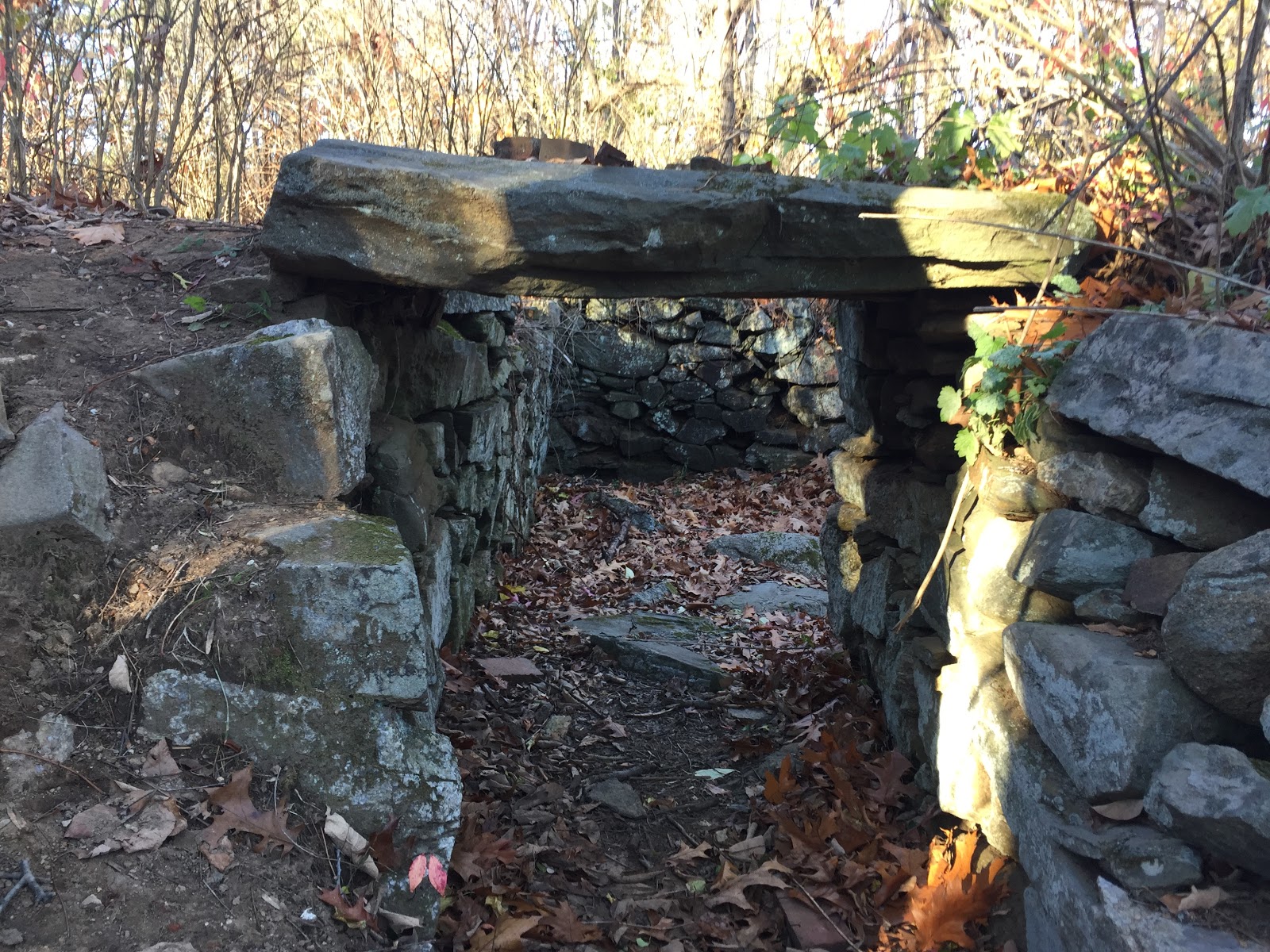
    New England is deeply rooted in its colonial past.  Walking through the woods in most towns in the area, you’ll come across miles of stone walls, old cellar holes and forgotten road beds.  But there is no walk in the woods quite like Dogtown Common.  I had an opportunity to take a walk through this abandoned village yesterday, a bright February Tuesday.  While it was a beautiful day for a walk in the woods, I didn’t see another soul in the two hours I spent there.

    Dogtown is located in Gloucester, Massachusetts, right on the edge of the town of Rockport, on Cape Anne.   It was once a small community of settlers who cleared and farmed the land as so many other communities did in New England.  Unfortunately, they chose a tough spot for this.  As the name Rockport indicates, this area is basically arid piles of loose granite sitting on top of ledge, sprinkled with some dirt.  Once the trees were cleared and the livestock grazed the remaining vegetation to the ground, there wasn’t much left to work with.  Compounding things, Dogtown was sited in an exposed area near the sea, making it an easy target for the British in the Revolutionary War and the War of 1812.  So over time residents moved on, abandoning the area for easier living elsewhere.

    Sheep continued to graze in this area into the early 20th century, but as with so much of New England    the farmers and herders passed on, leaving the land to return to the woods.  Dogtown 100 years ago was a rocky land sprinkled with grass and shrubs.  Today it’s a forest with a bed of boulders, ledge, old stone walls and cellar holes, similar to what you’d see in forests throughout the region.  What makes Dogtown unique is the work of Roger Babson, who commissioned unemployed stonecutters to carve words and numbers into the granite boulders that litter Dogtown.  Babson was an interesting guy; he was a Prohibition Party member, he predicted the market crash that led to the Great Depression, and he founded Babson College.  As a tenth generation Babson from Gloucester Dogwood Common was figuratively in his blood.


    Walking through the woods of Dogtown on a bright winter day, the work of Babson resonated with me.  I chose a Tuesday when most people are working to visit, and had the place to myself.  Aside from seeing mountain bike tire prints, the sounds of commuter trains on the tracks that cut through Dogtown and the sounds of construction encroaching on the woods at the nearby office park betraying the current century, my visit was timeless.  The stonemasons and the settlers to this area have come and gone from this place and it was my turn, alone amongst the boulders.
    Babson spoke to me from the past with his choice of words and phrases carved into the boulders.  “Get A Job” is highly relevant for me as I leave the struggles of one job for the hope of another.  “Truth” challenges me to be honest with myself about where my own strengths and weaknesses lie.  “Courage” shoves me in the chest and knocks me back a step, urging me to be bold today.  And “Prosperity Follows Service” reminds me that to earn anything worthwhile you’ve got to give much more of yourself.  While some view the messages as a strange curiosity, Babson’s boulders for me are a humbling reminder of what I can be.
    I came to the woods knowing of this place.  Perhaps because I was alone on this brilliant winter day, or maybe because of the place I’m at in my own life, but Dogtown resonated as I walked its quiet paths.  They say that when the student is ready the teacher will appear.  Maybe it was the woods, with voices of the past whispering in my ear as I walked.  Maybe it was me moving on from one job to the next and working that through in my mind.  Or maybe it was a message from a tenth generation Gloucester Babson who died a year after I was born.


  • Ambient Light

    Last night was one of those nights you hope for when you’re a stargazer.  Brilliantly clear skies, with cold air providing sharp focus.  Just a quick glance at the sky showed old friends Orion, Ursa Major and Ursa Minor, and down low in the southern sky, Canis Major with the brilliant Sirius a beacon on the constellation.  Sadly, the neighborhood was lit up like a prison yard as several of the neighbors chose to leave their outdoor lights on.  Another celestial show foiled again by the neighbors…

    I seek out the sky, and often walk looking up, sometimes started when I step off the pavement onto the shoulder of the road.  I once sailed from Norfolk, Virginia to Newburyport, Massachusetts, and eagerly watched the night sky when we were well offshore.  Cape Cod in winter offers some good viewing.  Any large body of water serves to subtract ambient light, simply because there usually aren’t lights shining there.  A favorite place in southern New Hampshire is Big Island Pond, where many a late night boat ride was spent marveling at the night sky.  Another spot I have fond memories of is the Robert Frost Farm in Derry.  Back in the late 1990’s I joined a couple of friends for a late night viewing of the Hale-Bopp comet in these Frost fields.  I think old Bob would have approved and joined us for a turn at the telescope had he been alive.  The next comet will be Halley’s Comet in 2062.  I would be 96 in 2062.  I hope I’m around to see it, and have my wits about me to recognize it.

    In search of dark skies, I came across The International Dark Sky Association, which lists Mont-Mégantic (Québec) as the closest, and first-in-the-world, International Dark Sky Reserve.  I’ll confess I wasn’t aware of this distinction prior to today.  Mont-Mégantic is roughly a four hour drive, directly through the White Mountains of New Hampshire, past the Connecticut Lakes region and into Quebec.  This region is familiar country for me.  I’ve visited the area to see moose, canoe on First Connecticut Lake and see and hear loons.  It’s an area that stays in my memory even after a quarter century.  If I was going to pick a part of New England that would have the darkest skies, this corridor between Franconia Notch and Pittsburgh would be on the short list.  Shifting northeast into Maine, I’d pick the Hundred Mile Wilderness along the Appalachian Trail as a likely dark sky candidate, and of course the unnamed wilderness to the north.

    Curious about where the darkest places in New England actually are, I came across this helpful site called Dark Sky Finder, (http://www.jshine.net/astronomy/dark_sky/index.php?lat=40.384212768155045&lng=-74.300537109375&zoom=8).  As this image shows, the darkest areas are in the north-easternmost corner of New Hampshire northeastward through a large swath of remote wilderness in Maine between Baxter State Park and the Allagash Wilderness Waterway that runs along the Canadian border.

    It was an easy guess picking the wilderness of Maine as the darkest skies in the northeast.  My memories of hiking the Hundred Mile Wilderness aren’t filled with a lot of ambient light.  Another memory comes to me.  The first time I hiked the Appalachian Trail through Mahoosuc Notch I was in my early 20’s.  A bunch of us set up camp at the Speck Pond Campsite, had dinner and swapped stories from our day through the Notch.  After dinner we hiked halfway up the trail to Old Speck Mountain and settled in for star gazing.  There was a meteor shower that night and the clear dark skies gave us the perfect canvas for a stunning show.  That night is what I think about when I look to the skies.  I guess I’m still chasing stars.

  • Population Growth and Conservation

    This morning there were six to eight deer in the woods behind my home.  It was hard to tell exactly how many since they blend into the woods so well.  That camouflage helps with survival in a harsh world full of predators.  The wild turkeys that make an appearance almost daily around the area sport similar camouflage.  It’s no coincidence that both are rebounding in record numbers in New England. While there’s some irony that this is happening while development encroaches on more and more of the undeveloped areas that they live in, wild animals enjoy the relative security that comes with fewer predators.

    I know a few hunters, but I know a lot more people who don’t hunt.  According to the Quality Deer Management Association, there are 5-8 hunters per square mile in New Hampshire, Maine and Massachusetts, 9-12 hunters per square mile in Connecticut and Vermont, and 13-16 per square mile in New York and Rhode Island.  Pennsylvania leads the way with more than 20 hunters per square mile.  Of course, when you factor in the length of hunting season, and restrictions in where hunters can hunt, you see why deer and turkey populations continue to increase.

    I’m not a fan of urban sprawl, and I hate to see new developments pop up in the town where I live.  I recognize that the very neighborhood I live in was once woods that someone else valued for it’s pristine condition.  Being a preservationist or a conservationist is tricky business.  Ultimately, the market determines real estate values and the appeal of new developments.  Towns determine zoning restrictions, size of lots, and how many building permits are issued annually.  Towns like Carlisle, Massachusetts have a lot of conservation land, mixed with unbuildable wetlands.  Real estate prices escalate as a result of supply versus demand.  Carlisle happens to be in a desirable part of the state and shares a school system with another desirable town (Concord), so those two factors combine for one of the more expensive towns to live in.

    Contrast that with neighboring towns Billerica or Chelmsford.  Each of these towns have conservation land, but they’ve also allowed significant development as residential and commercial development has snatched up much of the available land in these towns.  The train has left the station for large tracts of conservation land.  What they have is largely what they’ll have going forward.  Even in neighboring Concord, which has large tracts of conservation land and significant cultural and historical value, the fight to save Waldon Woods from developers has taken decades and millions of dollars to secure, and that fight is long from over.

    Perhaps the future of development will be Serenbe, the “progressive community connected to nature on the edge of Atlanta” that blends large tracts of preserved natural areas with properties for sale or rent, restaurants and recreational facilities.  As rural areas become increasingly developed, this may be one way to stem the tide of urban sprawl.  As we’ve seen with the current President, designating lands as public doesn’t necessarily protect them from those who would profit from them.

    My own development was built when there was a four acre minimum for each house.  This restriction created a natural buffer that theoretically limited development.  My neighborhood utilized a loophole where the lots could be smaller – my lot is 3/4 of an acre – while still preserving large tracts of the land as natural buffers.  So the land behind my home is preserved for wildlife and for us all to enjoy.  Sadly this hasn’t been the norm, and many of the developments that have popped up in this and surrounding towns are designed to maximize the profits of the developer versus ensuring open space.

    While cities seem to be gaining more popularity, there seems to be a parallel explosion in 55+ and condo/townhouse developments spreading into previously rural towns.  Hunters and conservationists can work with developers to protect large tracts of land for future generations, but the time to do it is now.  Ultimately money and political will drive much of what will happen.  Time will tell who wins.

  • Salt

    I came back from a trip to Upstate New York to find a skating rink for a driveway.  It’s a northeast thing.  February snow quickly turns to concrete when you add freezing rain on top of it and give it a night to set in.  The key is to be diligent about cleaning the driveway, deck or other surfaces that you actually want to use.  But when you travel sometimes the weather gets ahead of you.  So when you’re greeted by ice, you turn to rock salt.  Salt changes the melting point of ice in ways I’ve chosen not to be qualified to answer.

    Bags of rock salt are a must when you have constant freeze/thaw conditions.  With a driveway completely coated in ice, I had to bring in the heavy artillery and sprinkled 120 pounds of salt on the driveway.  Salt, scrape off what you can, repeat.  Salt is tough on the pavement and nearby plants, and it’s equally tough on any metal it contacts.  It’s not optimal for maintaining a pristine environment.  But it’s a necessary evil in the northeast, especially at times like these.  That I had to use three bags of salt is insane, but it’s indicative of just how much ice was on the driveway.

    Much of the rock salt used on roads and driveways like mine comes from Upstate New York.  Syracuse is nicknamed the salt city, and there are salt mines all through the area.  It’s an industry that took off in the 1800’s, and remains one of the largest exports from Upstate New York.  People that live in that area know all about it, and I’d heard about one of the salt mines from a local who told me about the Cargill Mine that run underneath Cayuga Lake in Lansing, NY.  This and other mines were highlighted a couple of years ago when 17 miners had to be rescued when an elevator failed.

    Salt mines tap into the ancient salt deposits left from Ohio to New York.  To think of Upstate New York or Ohio as the bottom of the ocean 450 million years ago shrinks the ego down to size.  Our world is both much smaller and much larger than we believe.  But our lifetimes on this earth is infinitesimal when you think about the time it took for these salt deposits to form.  So I confess I don’t generally think about salt, but I’ve come to appreciate it for more than the job it does on my driveway.  The humble rock salt in turn has humbled me.

  • Playlist: Beach Music, February Edition

    My musical tastes are pretty eclectic and diverse.  I run from classical to heavy metal, with long stops in alternative and classic rock.  But beach music is what I come back to time and again.  It’s a year-long soundtrack, whether I’m on a beach or thawing out inside after shoveling the driveway.  Beach music isn’t meant to challenge you or pump you up.  It’s not getting critical acclaim.  Beach music enhances your good mood or helps get you there.  Beach music is about celebrating life, or reflecting on it with a cocktail and a setting sun.

    Reggae, Calypso and Latin music are all great, and I play a fair amount of each.  But to me beach music means the blend of 70’s singer/songwriter with a dash of pop and country crooner.  Jimmy Buffett, Kenny Chesney, Jason Mraz, Zac Brown, Jack Johnson, and The Eagles are the most common contributors.  Sprinkle in a few other gems and you’ve got a 40 song playlist that pairs well with rum.  As with any playlist you could go on forever adding songs.  This is a good starter kit.

    A Pirate Looks at 40 – Jimmy Buffett
    Nautical Wheelers – Jimmy Buffett
    Havana Daydreamin’ – Jimmy Buffett
    Blue Island Rendezvous – Jimmy Buffett
    Barometer Soup – Jimmy Buffett
    That Luck Old Sun (Just Rolls Around Heaven All Day) – Kenny Chesney & Willie Nelson
    Soul of a Sailor – Kenny Chesney
    Somewhere in the Sun – Kenny Chesney
    Boston – Kenny Chesney
    The Life – Kenny Chesney
    Three Little Birds – Bob Marley
    One Love – Bob Marley
    Slip Away – John Frinzi
    Do You Remember – Jack Johnson
    Better Together – Jack Johnson
    Constellations – Jack Johnson
    Island Song – Zac Brown Band
    Loving You Easy – Zac Brown Band
    Tequila Sunrise – Eagles
    Peaceful Easy Feeling – Eagles
    Best of My Love – Eagles
    Ol’ 55 – Eagles
    I’m Yours – Jason Mraz
    Live High (From an Avacado Salad Session) – Jason Mraz
    Come Away With Me – Norah Jones
    Find It – Bankie Banx
    Sitting Here in Limbo – Jimmy Cliff
    Secret O’ Life – James Taylor
    Sweet Baby James – James Taylor
    Don’t Worry Baby – Beach Boys
    Good to be Alive – Nitty Gritty Dirt Band
    Just Another Sundown – Toby Keith
    At Last – Etta James
    The Summer Wind – Frank Sinatra
    Carey – Joni Mitchell
    Lovely Day – Bill Withers
    The Rainbow Connection – Willie Nelson
    Smile – Uncle Cracker
    Summer Side of Life – Gordon Lightfoot
    Vienna – Billy Joel

  • What’s in a Name, Part II

    Driving through the Southern Tier in Upstate New York is like time travel in slow motion.  You can see the change that time brings.  The wooded hills aren’t as tall as they were when the Oneida and Mohawk tribes ruled this land, but the woods have re-established themselves in many areas.  And with the trees the whispers of the mighty Iroquois Confederacy float through the valley.  The  Mohawk, Onondaga, Oneida, Cayuga, Seneca and Delaware tribes that populated Upstate New York will never return, but in some ways they’ve never left.  Their names live on as counties, towns, rivers and other place names like monuments to the tragic past of disease and violent displacement that stole them from these lands.  The remnants of the Seneca Nation reside mostly in three reservations in the area.

    Place names may honor our own past or be borrowed from those who came before us.  Towns and villages are often named for the settlers who first cleared and farmed the land, or to honor a notable person from the time, like Washington, Franklin, or Madison.  Upstate New York was settled at a time when names pointed towards Greek or Roman culture or mythology.  Ithaca, Greece, Rome, Ulysses, Syracuse all point to this practice from the 1800’s.  Perhaps the best story of the randomness of naming a town comes from Utica, where the name was literally pulled out of a hat.

    Today’s rural Upstate New York is dominated by corn and dairy farms, but the life of a farmer is difficult, and many of the old farms are returning to the land.  Rotted and falling barns and silos dot the land.  Farmhouses advertise the poverty level of the region with flaking paint, sagging porches and and blue tarp roofs.  Villages along Route 206 like Whitney Point, Triangle, Greene, Coventry and Bainbridge proudly point to their roots between the Revolutionary War and the War of 1812 while looking towards an uncertain future.  Technology or population growth may one day bring growth and prosperity to this region, but I hope the land returns to nature and the names fade like whispers on the wind.