Blog

  • Seeing It

    “The world is full of wonderful things you haven’t seen yet. Don’t ever give up on the chance of seeing them.” ― J.K. Rowling

    Here on the home front, the acorns and crickets signal the last days of summer are closing in on us. And once again, we seem to have an abundance of each. Whether we like it or not, the clock is ticking on summer days, and that old back to school feeling is all around us (along with Halloween candy displays—why?!). The Final Countdown is playing in my head, and to be honest, I’ve never liked that song. Someone make it stop!

    When I take stock of what I’ve done this year thus far, I have no right to complain about not traveling more. But end of summer always makes me think about the places I haven’t reached just yet. Once a vagabond, always a vagabond. At least in spirit. We may be grateful for the places we’ve reached in our life while still aspiring for more. A mindset of kaizen (constant, never-ending improvement) includes never being truly satisfied. But there’s still time for a little more exploration and discovery.

    This blog began as a vehicle to write about what I saw in an active regional travel routine. Through deliberate lifestyle design, I’ve gone from 80% travel to 0% in my work. Work travel may satisfy the mind’s desire to see something new each day, but let’s face it, most Hilton hotel rooms are about the same. Travel is not the accumulation of points or the “free” bottles of water, it’s the revelatory experience of stumbling upon wonderful and taking the time to learn something about it.

    The thing is, we can discover wonder anywhere, in any season. We just have to be open and curious and willing to experience what is right in front of us. I can wonder at the explosive production of cucumbers growing in pots on the patio just as easily as I can about some roadside historical sign. Why did it take me so many years to give that a try? Just as the garden is where you grow it, gratitude is where you nurture it.

    This was a season when being home was more essential than ever. The end of life journey of my father, a brief summer reunion with old friends, and the time with our children as they each making significant pivots in their own lives, is time I would never have had if I’d been off checking bucket list destinations off the list. There is a season for everything in life. When we are forever looking for the next, we miss so much of the now. Being here, now, and seeing what is right in front of us all along is the true journey of discovery. Do we see it?

  • Whispering in the Maelstrom

    “There are three classes of people: those who see. Those who see when they are shown. Those who do not see.”
    — Leonardo da Vinci

    Recent visits to modern art museums stretched my perspective on things I previously hadn’t seen. When we’re rushing past a work of art to go see something more accessible, we’re never going to absorb what the artist was trying to tell us. To find our own pace, set for discovery, opens up our senses in ways that we never might have reached otherwise. This level of awareness is transferrable to the rest of our lives, but it requires elbow room to grow.

    We live in a time where anyone can believe anything and get someone to follow along if they shout long enough in the right direction. Personally, I’m tired of the ambient noise. I’ve worked to back away from much of the technology that amplifies the uninformed or self-righteous in favor of deeper waters. We humans think and see and feel best when we aren’t floating in a soup of chaos. Heightened awareness comes from focus.

    I believe I saved my life this summer by focusing on fewer things, just when many things erupted all at once. Maybe not my imminent demise, but by avoiding an irreversible downward trend of declining health, rising stress and perpetual distraction. Most of our physical and mental health problems are based on accumulating and holding on to toxins: trans fats, sodium, alcohol, angry people, social media, stagnation… you get the idea. We must learn to stop collecting all this garbage in our lives if we are to ever reach clarity again.

    The thing is, it’s easy to stay on the carousel. It’s easy to get back on it too. We catch a glimpse of the bright lights and galloping horses, hear the catchy music and we’re drawn in. To walk away from all of that life wants to throw at us is difficult by design, but it’s the only way to finally see what else is out there in the world, wanting our attention—beginning with that inner voice whispering in the maelstrom for us to follow a different path while there’s still time.

  • The Beauty of Enough in the Pursuit of Excellence

    “Never let the quest for more distract you from the beauty of enough.” ― Sahil Bloom

    “If you are going to achieve excellence in big things, you develop the habit in little matters. Excellence is not an exception, it is a prevailing attitude.” — Colin Powell

    How much is enough? For many, there’s never enough. But what about us? How much money do we need? How much time do we trade in exchange? What would we use that time for if not this relentless pursuit of more? These are questions worthy of consideration if we are to live a life of optimization—if we are to reach a place closer to arete, or personal excellence.

    So what is that place? Personal excellence is different for all of us. For me if means reaching a higher level of being. Writing this blog every day is one step on that journey. Reading every day is likewise essential. And so is the admittedly aggressive fitness plan I’ve been on that has resulted in my losing 11% of my previous body weight. The arrival of a leaner version of me isn’t the point, it’s the daily ritual reckoning of choosing to be what I decided to be that brings me closer to my version of arete. We know we’ll never arrive there, but the journey to it is the whole point.

    Personal excellence is not a relentless pursuit of more, it’s a consistent refinement of who we are. It’s not about accumulation of wealth or the fancy car or the private jet. It’s about learning to live a life of significance and purpose. That prevailing attitude of refinement and self-improvement towards someone better in all areas of our lives is what bridges the gap between who we are and who we might become.

    Is there a conflict between the beauty of enough and the pursuit of excellence? Our journey should always be towards the person we wish to become (decide what to be and go be it), and our identity is reinforced by incremental, daily effort in that direction. Making the bed in the morning, or washing the dishes, or doing the workout, or writing the blog post before stepping into a busy life—these are the realization of enough through active presence in our daily rituals on this journey of a lifetime. And that, friends, is beautiful.

  • Kairos and Our Moment of Moments

    Kairos [kahy-rahs, -rohs]
    noun
    a time that is particularly crucial or suited for carrying out an action.

    We modern types with our schedules and time commitments tend to live in chronological order. Chronos, the embodiment of time, is sequential. But we know that some time is far more important in our lives than other times are. These are ripe moments of potential and meaning that stand out from all the rest. And this is where Kairos comes in.

    This is the time is a feeling. We know it when we reach it. And we ignore it at our peril, for such moments are fleeting. Like the muse for artists and writers, kairos isn’t hanging around until we finish watching that cat video. We must seize what flees or watch time—and our moment with it—slip away.

    Carpe diem, friend. Seize the day. And more, learn to recognize the moment of moments when we must launch ourselves into action. We must live in a state of heightened awareness, that we sense where we are on our journey through time, and have the audacity to take action when it’s demanded of us. To do otherwise is simply to kill time. Where is the joy on a trail of dead hours?

    We are conditioned to treat time as an orderly sequence of seconds to minutes to hours to days. We can train ourselves to leap into action at a moments notice. This isn’t spontaneous as much as a bias towards action when called upon in the moment. If not now, then when? Be bold.

  • Sea Change

    Nothing of him that doth fade,
    But doth suffer a sea-change
    Into something rich and strange.
    — William Shakespeare, The Tempest

    “Anyone who isn’t embarrassed of who they were last year probably isn’t learning enough.” ― Alain de Botton

    We know when we’re deep in the midst of massive change in our lives. Transformation is palpable and omnipresent in our days. In such moments, we hope we’re in the driver’s seat, though sometimes we’re simply on the bus. We ought to buckle up and see the ride through at any rate.

    This is a year of sea change in the world, and most certainly in my own world. We cannot control everything, but we can control how we react to change, and act to change that which we may influence in positive ways, that we go in the direction that we wish to go in. We have agency in our lives—we must remember this and be active agents of growth and transformation. Life demands this of us, or eventually sweeps us aside. Because life isn’t fair, it simply isn’t. It’s demanding and has high expectations of its participants. So we must rise to the occasion if we hope to optimize our experience in this one go at things.

    The thing is, one rung up the ladder of progress helps us see things differently than we did on that lower rung. We see where we’ve influenced our outcomes, where we fell short, and what might work on the next step up from here. Steady, consistent progress towards better on whatever ladder we’re climbing. Our story isn’t complete, not just yet, but it’s evolving with the times. Take it somewhere even more compelling.

  • What You See Is (Not) All There Is

    “A mind that follows WYSIATI will achieve high confidence much too easily by ignoring what it does not know. It is therefore not surprising that many of us are prone to have high confidence in unfounded intuitions… the confidence that people have in their intuitions is not a reliable guide to their validity.”
    — Daniel Kahneman, Thinking, Fast and Slow

    Kahneman positioned What You See Is All There Is (WYSIATI) as System 1 thinking. This means the quick thinking, intuitive decision-making we humans do all the time. By contrast, System 2 thinking is concentrated, deeper determination—like working out a problem in your head to find a solution.

    We need both of these systems to be fully-optimized and successful people, but surely we can think of examples of people in high places who seemingly wing it all the time and get away with it because of luck or strength of personality. I call these “bro’s figuring shit out as they go”. These characters are thought of as quick thinkers and tend to scrap and fight their way to positions of leadership in companies, in the military or in politics.

    The thing is, quick thinkers aren’t using strategy, they’re figuring shit out as they go. Mistakes are made with real consequences. So they need to either slow down and do some deep thinking themselves, or more likely, deploy a team of deep thinkers (advisors) behind the curtain who do the work to keep the train on the right track. We need both to be fully optimized as people or as part of a larger organization or society.

    I’m not going to say reading Kahneman’s book has been light summer reading for me, but it’s been revelatory. We all move through life thinking that we’re fully engaging our brains to work things out and come up with the right choices, one to the next, that move us towards successful outcomes. Learning to recognize that our first intuition is not all there is to see expands our options significantly. We all could benefit from a deeper level of thinking to optimize our own outcomes.

    It’s important to ask ourselves when considering any strategic move, is this all there is, or is there more to the story that we aren’t considering? This mitigates the rush to judgement that often leads us into even more trouble than we had before. Decisions compound, and the more good choices we can make the more likely it is that we’ll arrive at a better place in the end.

  • Our Quiet Proximity

    Oh good scholar,
    I say to myself,
    how can you help

    but grow wise
    with such teachings
    as these—
    the untrimmable light

    of the world,
    the ocean’s shine,
    the prayers that are made
    out of grass?
    — Mary Oliver, Mindful

    Yesterday I watched a skunk shuffle along in that skunky way, sniffing and moving through the neighborhood. Bad break for those of us with dogs, and a reminder for us to be more aware. Dogs have no problem being aware, and boldly curious, which is why they end up on the wrong end of skunks all too often.

    On that very same walk, I watched a snapping turtle glide underwater in the stream as I walked over the bridge. The turtle is an active participant in the stream—I’ve seen her before, seen where she had buried her eggs, and expect I might see her every time I walk. But sometimes I see the blue heron instead, or the river otter, or the ducks moving through the slow August current. These characters aren’t fond of spectators hovering over them on the bridge, so I’ve learned to ease up slowly and glance discreetly down. And so has the pup.

    On the day that my father passed from this world, I remained very much a part of it, fully aware of what surrounded me. That we should rush through life without noticing the blessings around us is the curse of a busy mind. If my long goodbye with my father taught me anything, it was to appreciate the gift of presence for all it offers. It’s not a eureka moment, it’s a lingering awareness of all that is and will be in our quiet proximity. The light of the world continues to shine through in unexpected ways, simply awaiting our notice.

  • Agree to Disagree

    Yesterdays post stirred the pot a bit, with an angry response from someone who firmly believes in a “them” versus an “us”. And that’s the state of the world now, with people crawling deep into their angry place and not seeing the nuance of conversation. To slap down any reach across the aisle or to cancel anyone who dares to have a different viewpoint is the way many people choose to live… but not me. I can see the system is rigged, I can be angry at the injustice in the world, and I can choose to live a positive and productive life of inclusion and generosity anyway.

    The thing is, the world can impose itself on our day at any time. We choose how we react to that imposition. Fight or flight? Thoughtful consideration or immediate dismissal? We only have so much time in our days, we must therefore use it judiciously.

    There is no them
    There’s only us
    — U2, Invisible

    These words triggered, but why? Because we don’t want to believe that “them” is “us” too? That there is a conspiracy of them manipulating our every move? We may acknowledge that and choose to react differently. Every moment stuck wrapped around angry retort is a moment less doing something joyful and productive. Stick with us, it’s a less miserable place to be. That doesn’t mean we have it all figured out, but that we find connection despite the torn fabric humanity has always dealt with.

    The way we hold fabric together is by mending tears. Agreeing to disagree is finding agreement on something, even if that something is disagreement. We can then move on to the next thing, and build from there. If we become what we focus on the most, focus on becoming something better—together.

  • The Chain of Understanding

    “A man receives only what he is ready to receive, whether physically or intellectually or morally, as animals conceive at certain seasons their kind only. We hear and apprehend only what we already half know. If there is something which does not concern me, which is out of my line, which by experience or by genius my attention is not drawn to, however novel and remarkable it may be, if it is spoken, we hear it not, if it is written, we read it not, or if we read it, it does not detain us. Every man thus tracks himself through life, in all his hearing and reading and observation and travelling. His observations make a chain. The phenomenon or fact that cannot in any wise be linked with the rest which he has observed, he does not observe. By and by we may be ready to receive what we cannot receive now.” — Henry David Thoreau, The Journal of Henry David Thoreau

    We are conditioned to see by what we’ve seen. When I think about half of the country believing the current direction of our leadership is great, while the other half are horrified and angry, I can only understand it by conditioning. Those who are conditioned by fear and a scarcity mentality believe one thing. Those who are conditioned to be empathetic and develop a growth mindset in their education, spiritual, career, health and financial life believe another thing.

    Knowing this, I see that the answer lies in education and diversity. Unfortunately, the other side knows this too, and so books are banned, late night talk show hosts are cancelled, and even satellites that give us information about climate change are targeted for destruction. Ignorance is bliss. And humanity takes two steps back.

    So what do we do in a world that is so infuriating? We continue listening, reading, observing and traveling. We keep finding the truth and share it with others. We counter the momentum of ignorance with insight and mutual understanding. We are the ambassadors of truth and compassion, and we aren’t going away any time soon.

    There is no them
    There’s only us
    — U2, Invisible

    So stay the course—learn and grow and share. There is no them, there’s only us. When we stop thinking of them as different from us and simply less aware, something opens up within our own minds. We are ready to build bridges—to help them see, not simply them, but all of us. The solution has always been right in front of us, waiting for enough of us to finally receive it. We are all links in the human chain. That chain connects to an anchor of truth or shackles of mistrust. What we connect to is up to us.

  • Walk it Off

    “Above all, do not lose your desire to walk. Everyday, I walk myself into a state of well-being & walk away from every illness. I have walked myself into my best thoughts, and I know of no thought so burdensome that one cannot walk away from it. But by sitting still, & the more one sits still, the closer one comes to feeling ill. Thus if one just keeps on walking, everything will be all right.”
    ― Søren Kierkegaard

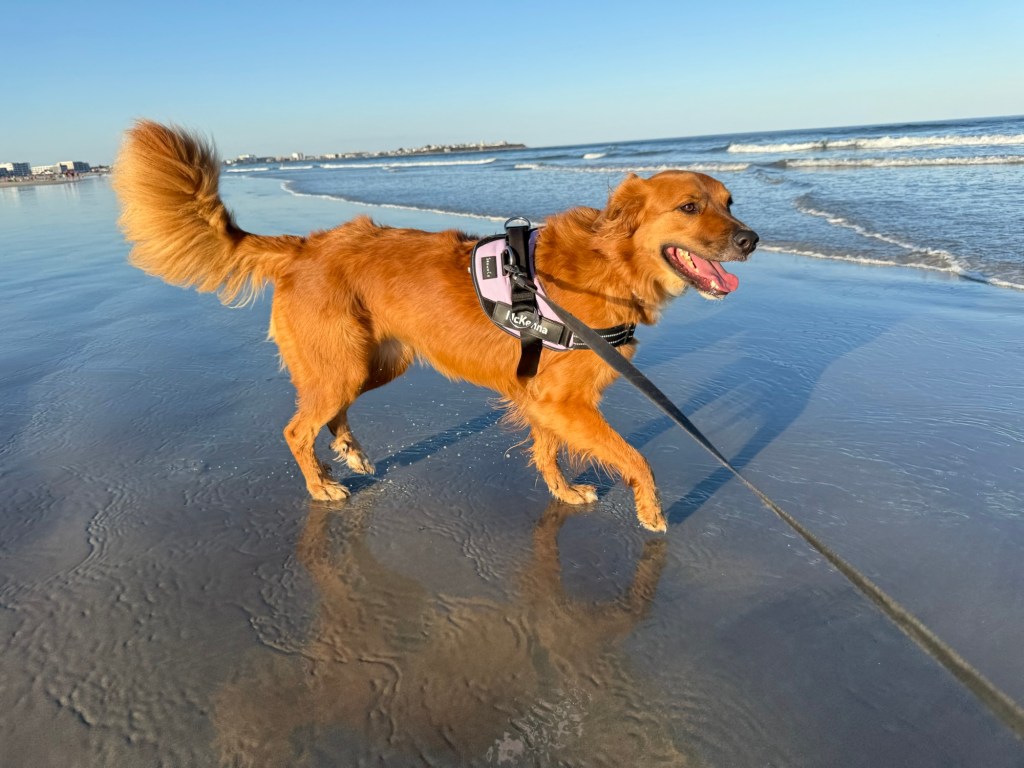
    As I write this, the pup is sighing behind me, expressing some minor indignation that I’m spending these moments tapping on a keyboard instead of walking with her out in her kingdom, where she can keep track of the squirrels and rabbits who dare to encroach. We each have a purpose for our walks, but we share discovery in common. She catches up on the latest action in the neighborhood, I sometimes process the changes myself, or I dive deeply into introspection. Each step is different.

    Walking is a nonnegotiable part of my life. Every day I must walk, if not for myself than for that insistent puppy who has also deemed walking a nonnegotiable. For all my focus on cycling and rowing and kettle bell weight circuits, walking remains the one activity I do every day, and sometimes several times a day. The reason for walking hardly matters now, it’s simply a part of my identity—it’s who I am.

    Philosophy and walking are natural allies. We think best when we are moving, particularly when we don’t have distractions like music or podcasts plugged into our ears. Walking is also the best way to experience a place when traveling, and I make a point of walking extensively wherever I go to. My step count always spikes up when I’ve landed in a new place for a few days. Writing that sentence, I feel wanderlust stirring inside me. Walking is a nomadic experience. Our ancestors migrated around the world on their feet. Why not us?

    All this talk of walking reminds me that the world awaits. Shall we step to it? Be still no more than is absolutely necessary, friend. For we were born to move.