Blog

  • Halifax Christmas Tree

    If you live in Boston or Halifax you likely know Boston’s Christmas tree is an annual gift from Halifax. Since 1971 Halifax has sent a tree to Boston. Fifty years of tree giving. This isn’t inconsequential. The cost of transporting a tree 700 miles to Boston surely add up. So why make the commitment at all? The story behind that tradition is lesser known.

    In 1917, at the height of World War One, a French ship named the SS Mont Blanc was loaded with munitions and set out from Halifax Harbor for Europe. The ship would never leave Halifax. She collided with another ship in the narrows and caught on fire. When the fire reached the munitions there was a massive explosion that wiped out part of Halifax, killing over 2000 people and injuring another 9000. At the time it was the largest manmade explosion in history. And it occurred in a heavily populated area.

    When Boston’s Mayor Curley heard about the tragedy, he immediately sent a group of doctors and nurses to aid Halifax with medical supplies. Boston’s response was actually significantly faster that Ottawa’s. The team of doctors and nurses spent Christmas 1917 in Halifax, decorating Christmas trees in the hospitals. The bond between Halifax and Boston was forever fused.

    The connection between the two cities goes beyond Christmas trees: Halifax broadcasts Boston’s WCVB and also has a large following of Red Sox and Patriots fans as the games are broadcast there. And then there’s family connections. Since the Port of Halifax was the Ellis Island of Canada, many New Englanders are descendants of immigrants who came through Nova Scotia. The bond is indeed deep.

    In 1971, within the lifetimes of many of the people who lived through that tragedy, Halifax began donating a tree every year. I bet there were several survivors of the explosion who shed a few tears the day that first tree was shipped to Boston. Boston remembered as well, and the tree serves as a reminder of the common bond between the two cities. Today is the lighting of the Christmas tree in Boston, and we turn our eyes north to our friends in Halifax.

    The pandemic has closed borders, blocking access to people and places we took for granted. With the border closed even the Christmas tree took a unique route to Boston in 2020: It was shipped from Halifax to Portland, Maine and then driven down the rest of the way. Many of us look forward to having the borders open again so that we may once again see our friends and kin up north.

  • From Asquamchumauke to Baker: What’s in a Name?

    The Baker River flows from Mount Moosilauke to the Pemigewasset River in present day Plymouth, New Hampshire. On the map the name is cut and dried: Baker. But when you cross the river at the Gorge Brook Trailhead another name emerges from the past: Asquamchumauke. History once again whispering for all who might hear.

    Dartmouth College honoring the original name

    Asquamchumauke means “crooked water from high places” in the language of the Abenaki tribes that once thrived here. It’s a lovely, descriptive name that brings romantic notions of Native Americans living in this place for generations. Yet we’ve called it Baker since well before the American Revolution. The story behind the name change is another fascinating chapter in the violent history of New Hampshire.

    Thomas Baker was a soldier in Deerfield, Massachusetts on February 29, 1704 when the Deerfield Raid occurred. Deerfield was a seminal event in Queen Anne’s War and New England history. French and Native American warriors overran the fortified settlement, 47 settlers were killed and 112 captives, including Baker, were marched up to Montreal. The Native American warriors came from around the northeast, including several tribes of the Wabenaki Confederacy. One of them was a Pennacook sachem named Wattanumman.

    Whether Baker and Wattanumman met during the fighting or forced march to Montreal is unclear, but events would bring them together again eight years later. Thomas Baker led an expedition north with around 30 men and ambushed Wattanumman, a dozen of his men and their families at the site in present-day Plymouth where the Asquamchumauke River meets the Pemigewasset River. Wattanumman and several others were killed and scalped. The men collected furs and anything of value and brought it all down to Massachusetts where Baker was rewarded for his efforts with £40.

    And this is where present-day morality meets the violent frontier morality of New England in the earliest days of our history. Both men participated in violent raids against the other in a time of war. But for fate Baker might have been killed in Deerfield, which may have extended Wattanumman’s life a few more years. Who knows? All of us are subject to the whims of fate.

    There was one other reward for Thomas. To honor what Baker and his men did in this place the name of the river was changed from Asquamchumauke to Baker, a name it still has today. With one event the life of Wattanumman was erased, and the legacy of Baker was sealed. We Americans tend to honor people with place names, while the Native Americans honored the spirit of the place itself. Asquamchumauke: crooked water from high places.

    Has a nice ring to it.

  • Grains of Sand

    “Every time you wake up and ask yourself, “What good things am I going to do today?” remember that, when the sun goes down at sunset, it will take a part of your life with it.” – Indian Proverb

    I’m not sure of the source of the quote, but “Indian Proverb” seems as likely a source as any. There’s something timeless in the wisdom, even as it points out the value of a single day. That old cliché about time slipping by like sand slips through your hands comes to mind. The tighter you try to hold onto it the quicker it falls away. Making sense of time is folly; living each day as if it were our last seems a better place to focus.

    “People say that time slips through our fingers like sand. What they don’t acknowledge is that some of the sand sticks to the skin. These are memories that will remain, memories of the time when there was still time left.” – David Levithan, Invisibility

    The fact is, life is a blur. We aren’t walking down some endless beach here. This patch of sand is all we’ve got, no matter the mad swirl of wind or crash of the waves. What will stick and what will fall away?

    The central question from that Indian Proverb is “What good things am I going to do today?”, which is where those memories that remain come from. The grains of sand stuck to our hand are the interactions with others, the laughs and the tears; the memorable. Those are what make up a lifetime.

  • Small and Green and Hard

    “At first the fruit is small and
    green and hard.
    Everything has dreams,
    hope, ambition
    – Mary Oliver, Someday

    I was thinking about a post I made on social media three years ago next month. Newfoundland. I’d gotten up early, as I usually do, and drove to the eastern edge of the continental North America for sunrise. A month after that photo I was on the western edge of continental Europe taking in the the crashing ocean and looking back towards where I was from.

    I looked like quite a world traveler on social media, but a week after that trip to Portugal I was unemployed. I didn’t post that on social media. I just scrambled to reach out to my contacts and find meaningful work as quickly as possible. We tend to amplify the positive: trips, events, big meals, relationships… the highlight reel stuff.

    That month of unemployment transformed my writing from a once in a while thing to an every day thing. I switched from Blogger to WordPress, found my voice through repetition and trips to local places, read a lot, and mostly just wrote. The fruit of my labor is still small and green and hard, but I see it ripening. At least I believe it to be so.

    We’re all works in progress, they say. Mastery is elusive. Ten thousand hours elusive. Lifetime elusive. But the art is in the doing, day in and day out. When the fruit is small and green and hard and you’re hungry it seems like it will never ripen. But being a bit hungry is where the art comes from. There’s nothing burning inside when you’re well-fed and satiated. The mind says maybe this is enough.

    In the spring my apple trees were a wonder of showy blooms. I was thrilled and dreamed of a rich harvest. But the dry summer transformed that bounty of blooms into a few deformed, tiny apples. By contrast the grapes were bountiful this year and fed the birds and yellow jackets when I couldn’t keep up. Funny the way two plants of the same age react to the same conditions, isn’t it?

    Everything has dreams, hope, ambition. We never know what will ripen and bear fruit. How the seasons will shape us. But fruit withers without focused energy. So we must keep at it.

  • Hiking Mount Moosilauke

    I’ve heard about this mountain from several people. Popular because of the great payoff in views and experience for the amount of energy expended compared to other trails. I’d even heard about the Dartmouth Lodge at the head of the trail we were hiking. But you forget what you’ve heard before when you see such places. It served as another reminder that you must get out and see for yourself wonders in this world while you have time.

    There are several trails up to the summit. I’d highlighted the Beaver Brook Trail as one to do based on the cascades there, but with the gimpy ankle my hiking buddies chose an easier trail for this day. The warnings about the Beaver Brook Trail certainly discouraged trying it on an icy day like yesterday. Here’s a typical warning from the AMC: This trail may be extremely dangerous in icy conditions. Okay, got it. Instead we hiked the Gorge Brook Trail out and back. Easier, beautiful, and comparatively free of the ankle-busters you experience on most White Mountain trails.

    Ultimately, this hike made me feel better about the progress of my ankle as it wasn’t a factor. It also made me feel better about the progress of my fitness as the rowing has improved my stamina enough that I didn’t feel winded chasing jackrabbit hikers up the trails. Granted, this was an easy trail and they were likely taking it easy on me.

    Yesterday was several hikes in one. The lower section was wet and a bit muddy in places. The snow started accumulating on ice at higher elevations and prompted us to slip on micro spikes for crunchy hiking. The wind became a factor above tree line. Layers were added and thicker gloves went on. And then on the descent the micro spikes became leaf catchers and clumped up enough that we all opted to stick them back in the packs.

    Moosilauke means “bald place” I’m told, and the summit is fully exposed as advertised. What isn’t guaranteed when you hike is the view. This one would be socked in with fog and snow. No matter, for views are a notable bonus, but hiking the trail to the summit is the goal all along. I’ve got this one on my short list of summits to return to again on a clear day.

    Socked-in summit
    Foundation at summit
    In-between season where there’s snow but still exposed rock
    Snowshoe Hare (see yesterday’s post)
    Rime ice and snow frosting
  • Encounter with a Snowshoe Hare

    The snowy and windy summit of Mount Moosilauke wasn’t a place to linger long. We’d summited and were about to head down below tree line to have lunch when I saw some rime ice building on a cairn and took my iPhone out to snap a couple of pictures of it. Just then I heard a shout from a couple of hikers nearby and a flash of motion. One of my hiking buddies shouted “It’s a Snowshoe Hare!” and a quick glance confirmed it was indeed. With the camera already on I was able to snap a few photos as the hare bounded around me and towards the cover of trees.

    Snowshoe Hare

    The Snowshoe Hare, with the excellent Latin name Lepus Americanus, is native to New Hampshire and loves throughout North America’s colder regions. Its hair turns from brown to white in the fall, triggered by the change in light just as leaves are. The hare I saw looked huge, but it was probably about 5 pounds, which is on the heavier side of their weight range. The distinctively huge rear paws act like snowshoes to launch the hare forward. It was literally born to run in snow.

    As we descended from the summit we wondered what the heck the Snowshoe Hare ate in winter. Looking around there just wasn’t much edible stuff around. According to a State of New Hampshire survey on the animals, they eat up to 2/3 of a pound of “woody browse” per day, and also re-ingest their soft droppings…. yum. May have been better to leave it a mystery.

    Seeing a Snowshoe Hare running through snow in the wild is absolutely thrilling. The only thing more thrilling would have been seeing a lynx or fox chasing after it in a high stakes race. Nothing like that today, just a bunch of appreciative hikers buzzing about the blur of white fur that graced us with a speedy show. And it proved that when you get out there you may just see something amazing.

  • The Grinch Seeks the Seashore

    “The sea-shore is a sort of neutral ground, a most advantageous point from which to contemplate this world.” – Henry David Thoreau, Cape Cod

    I’m a bit of a contrarian in this family. While others are planning to transform the house into a Christmas wonderland, I’m thinking about cold and isolated beaches. Don’t get me wrong, I like warm beaches too, but they’re in short supply this time of year in New England. And when they’re warm they definitely aren’t isolated.

    I saw some of the extended commercial they call the Macy’s Thanksgiving Parade on NBC yesterday while prepping for Thanksgiving dinner. The best way to watch the parade is standing on a street corner in New York. But maybe not in a pandemic. The second best way to watch it is on mute so you don’t have to hear all the breathless commercials for each sponsor as some designated singer lip syncs their cover of a holiday song that will be featured on some rom com special on… NBC. But really, I love the holidays.

    Christmas decorations are lovely, the problem is me. I don’t turn on a dime like that. I don’t rush out to grab whatever is on sale, I don’t flip a switch to start Christmas the moment the Thanksgiving dishes are cleaned, and I don’t have all my gifts purchased yet either. I like to ease into the holidays one at a time, thank you.

    So while the holidays are ramping up in this New Hampshire household, I’m thinking about staring at the ocean. Perhaps too many SV Delos videos? Too much time away from the sea? Really, it could be any number of things, but mostly I think I’m not ready for the crush of Christmas. And yet here we are anyway.

    I’ve plotted an escape. A quick weekend on Cape Cod next weekend to stare at Buzzards Bay, feel the brisk wind on my face, and mentally shift gears from Autumn to winter. Cape Cod in early December is wondrously quiet, which is just what the Grinch needs before he switches to Have Yourself A Merry Little Christmas.

    But that’s next weekend. Today the Grinch strings Christmas lights on dormant trees. After all, it isn’t all about you. Right? Happy Holidays.

  • Thanksgiving 2020

    This morning would normally be abuzz with Thanksgiving runners scrambling out the door to run the Feaster Five in Andover, Massachusetts. They have a virtual race this year, I’m told. I’m not the runner in the household. Normally I’d wish the runners good luck and focus on other things. For I have other obligations on this day.

    I am the designated turkey escort: I escort it from the refrigerator to the sink to the counter to the oven to the table. It’s fair to say I get to know the turkey more than the turkey gets to know me. Cooking turkey is relatively easy compared to other meals, but the timing matters a lot. And so does the preparation. And so my morning is spent honoring the poultry despite the indignities I put it through.

    This year features a sharply smaller group, yet a turkey similar in size to other Thanksgivings. It seems you can’t ask the turkey to shed the pounds after they spent all year bulking up, and so there was a serious shortage of smaller turkeys available for the suddenly smaller gatherings. I hope the really big ones find a good home with those in need.

    Often this year I’ve wondered at the world we live in, and why the dynamics of human relationships seem to divide on what media source you consume. Politics, belief in mask-wearing, vast conspiracy talk… At times this year I’ve walked away from it, dove deep into the middle of it, and tried to mediate it. And all of that has reinforced for me that you can’t live happily in a pile of “it”.

    The beauty of a smaller gathering is we can ignore all that and focus on what matters. We’re all just a little bit world-weary and shell-shocked from absorbing what was lost this year and on edge about what might still come to pass. And yet we still have so much to be thankful for. The world wallows in self-pity, but it turns on hope and love and generosity. And so we celebrate our short time together on this earth and count the blessings we’ve had in a most challenging year.

    Happy Thanksgiving.

  • Graced with the Ordinary

    “Let the world
    have its way with you,
    luminous as it is with mystery
    and pain –
    graced as it is
    with the ordinary.”

    – Mary Oliver, Summer Morning

    Today, for his birthday, I used the camel hair shaving brush while shaving. He gave it to me in a ceremonial way, as if turning over command of the Bridge, about eighteen months ago. Hard to say when, really, but it was clear it meant something to him and he wanted me to have it. And to use it. Well, old habits die hard, and when you shave your face every day you form deep habits. Still, I’d use the brush now and then because it performs. Nothing lathers your shaving cream like a good shaving brush.

    The small, ordinary things stand out for me. Maybe it’s the writing that draws my eye to the commonplace, but honestly I think it may be the other way around. I’ve always had an inordinate focus on the small things around me, and those small things seek a voice in the universe. We honor the things we amplify.

    The old Navy pilot would pull me aside and talk of my writing, such that it is, and encourage me to keep going with it. He read a lot, he knew good writing, and he saw something in mine that sparked his interest. It was shortly after that that he gave me the shaving brush. Maybe he had it in mind for me all along, but it felt connected. And I feel the connection with him when I use it to shave.

    Happy Birthday Pops.

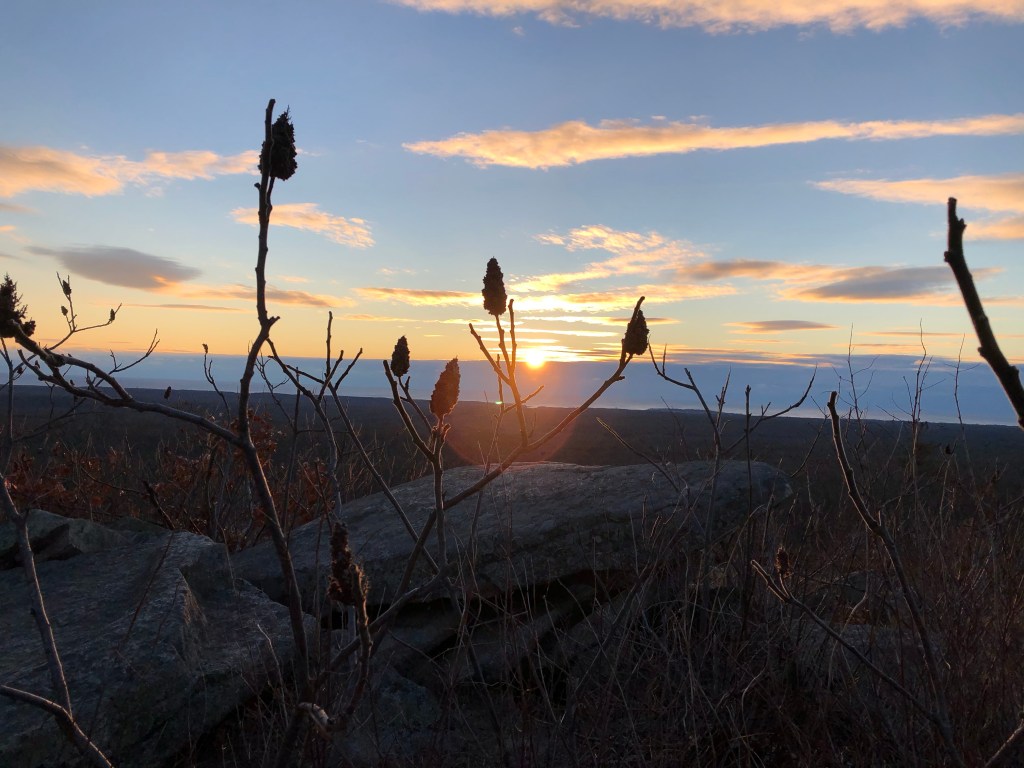
  • Agamenticus Sunrise

    “It is a serious thing
    just to be alive
    on this fresh morning
    in this broken world.”
    – Mary Oliver, Invitation

    I woke up twenty minutes before the 4:30 wake-up call and contemplated skipping the planned sunrise hike. But I wouldn’t skip an early morning business flight, so why skip on this? With no good answer I got up and dressed in the dark.

    Driving an hour, it stuck me how many people were already up. Cars lined up at a traffic light heading to some job or other, while I drove the opposite way. I had work to do today as well. But first this. Arriving at the access road, I read the sign informing me the gate wouldn’t be open until 7 AM. I was the only car in the lot next to the gate to start this sunrise trek. Others would follow soon enough.

    I geared up and started hiking the half mile up the road. Hard to even call it a hike… a brisk walk up the hill? Semantics don’t matter, the destination did. It was already brightening enough that I could slip my headlamp into my coat pocket. This walk would be just enough to warm my core for the cold breeze at the summit.

    Mount Agamenticus is an old mountain, worn down by time. It’s more of a hill now at 692 feet, but does have a prominence of 522 feet. But 220 million years ago it was part of a 20,000 foot tall volcano. They say it was once part of Africa. Now you look out and see the Atlantic Ocean and a long way to the continents that were once joined. A lot can happen in 220 million years; continents shift, mountains erode, people come and go. That’s what? Eight billion sunrises? For the sun and for this mountain it was one more in a long string of greeting each other.

    This morning it was my turn in a long succession of people standing atop this old volcano gazing out at the sun rising to begin another day. Billions of sunrises and this morning I got to share the reunion between the mountain, the ocean and the sun. And it was indeed a serious thing just to be alive to see it.