Blog

  • A High Line Walk

    “Open your eyes and see what you can with them before they close forever.” — Anthony Doerr, All the Light We Cannot See

    Early morning walks are nothing new for me, but I rarely take them when I’m in Manhattan. Simply put, I don’t love walking in the city the way I love walking in other places. Blame it on the endless concrete, traffic noise and dog owners who don’t pick up their dogs crap. I can love the energy of the city while not enjoying the walking environment—I’m complicated in that way.

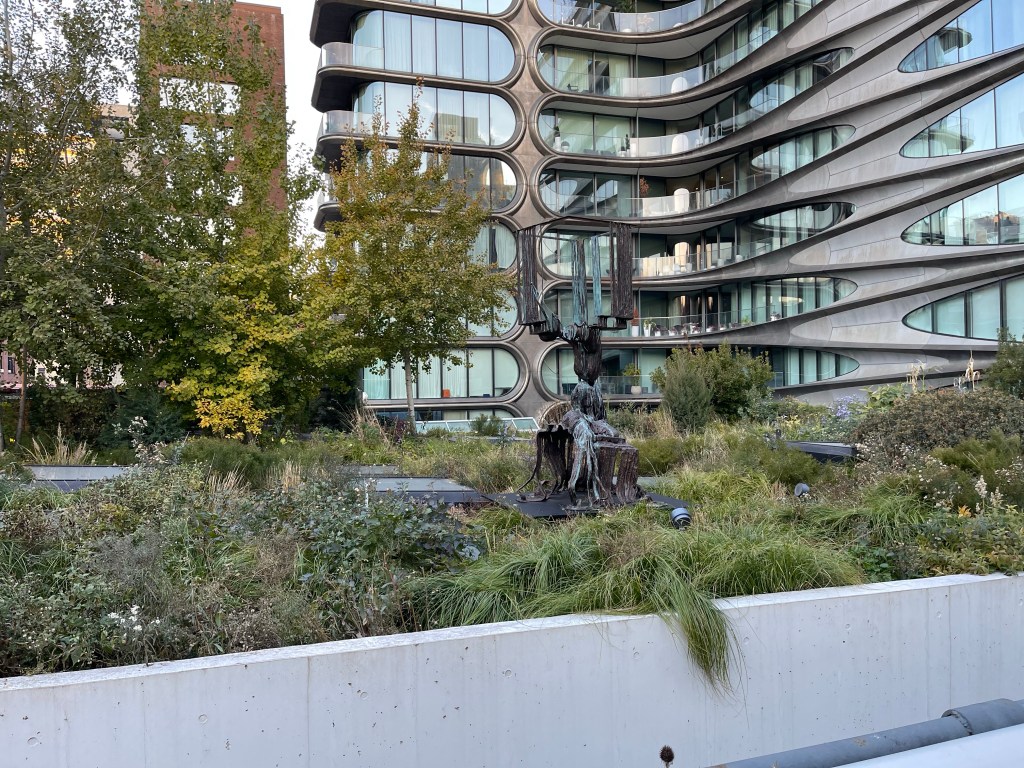
    There are exceptions to this rule. Central Park is one. The riverfront is another. And then there’s the High Line, that old elevated railway turned into a pedestrian walk. This delightful walkway doesn’t allow bicycles or skateboards or even dogs (for the record: I love dogs, it’s irresponsible owners I don’t love). This is to protect the fragile plants along the walkway, but it has the side benefit of protecting your footwear too.

    The High Line has proven to be a big hit with the public precisely because of the removal of all that I dislike about walking in the city. You feel like you’re in another world up on the High Line. A world of art and natural plantings and no cars. It’s the kind of environment that could make you love walking in Manhattan.

    Alas, my walk was abbreviated by construction. walking down the stairs back to street level reminded me that I’m a country mouse at heart. Still, a short walk on the High Line is better than nothing.

  • Strokes of Virtue

    “Keep the faculty of effort alive in you by a little gratuitous exercise every day. That is, be systematically heroic in little unnecessary points, do every day or two something for no other reason than its difficulty, so that, when the hour of dire need draws nigh, it may find you not unnerved and untrained to stand the test. Asceticism of this sort is like the insurance which a man pays on his house and goods. The tax does him no good at the time, and possibly may never bring him a return. But, if the fire does come, his having paid it will be his salvation from ruin. So with the man who has daily inured himself to habits of concentrated attention, energetic volition, and self-denial in unnecessary things. He will stand like a tower when everything rocks around him, and his softer fellow-mortals are winnowed like chaff in the blast… We are spinning our own fates, good or evil, and never to be undone. Every smallest stroke of virtue or of vice leaves its never-so-little scar.” ― William James, The Principles of Psychology

    On Sunday my bride and I walked fifteen miles around Newport, Rhode Island seeing all that we could in the time we had. We might have driven from place-to-place, we might have chosen a ride service. Then again, we might have simply plunged into the many indulgences Newport offers in food and drink and leisure. But we walked instead, burning more calories than we ate, getting out in the crisp and cold air to navigate city streets and coastal boulders alike. We certainly didn’t leave Newport without enjoying some of its many restaurants and bars, but the central part of our experience was walking.

    The trick is to keep it going. Keep doing the things that bring us to a place of better fitness, greater resilience, deeper connection and richer experience. Most of us have work to do and commitments to keep that prevent brisk walks about town every day, but we can still carve out the time to do something meaningful each day. We can be actively engaged with the world simply by consistently stepping out into it—further and further with every step.

    We are a collection of habits and circumstance, spun around the sun once a year for however long fate gives us. We must rise to meet our better self. To be more resilient in the face of hardship, we must earn it with the things we do each day to be more fit, financially sound, emotionally intelligent, street smart, book smart and with the proper collection of trusted allies. What we do with our time matters deeply, if not to the universe, then surely in how we perceive our place in it.

    The quality of our life lies in our compounding habits. To be healthier than we might otherwise have been, we ought to exercise more and eat better. Even writing that I felt the cliché ripple across the keyboard with a shudder, but we know the universal truth in it, don’t we? When we inevitably get sick or have an accident, that resilient and healthy body of ours will make us more likely to rebound than we otherwise might have been. And we know it to be true that good fitness and nutrition habits allow us to be more resistant to things that a weaker body might succumb to.

    The power of teams comes into play in how we live, for that which we lack ought to be filled in by having the right team around us, just as we fill in a void that they may have. Without the right partner in my own life, I might have opted for an Uber ride back after the first ten miles, but we pressed on and saw nooks and crannies of the city we wouldn’t have seen otherwise, talking about life all the way, while burning calories and locking in memories we’ll reflect on in future days. The people we row with will either propel us to a better future or sink us. Choose carefully and see just how far you can go together.

    Writing this blog every day, I’ve come to see the changes in myself over the last five years. It’s a way to track activity, reflect on what I’ve read or experienced, and to cajole myself beyond complacency. There must be urgency in our days, and the blog is my way of reminding myself to take stock of where I am and get back to it already. I’m surely no ascetic, but I do strive for greater discipline and consistent improvement in all aspects of this brief dance with you. After all, we’re on the same team, aren’t we? Let’s see all that we can in the time we have.

  • The Newport Cliff Walk

    Newport, Rhode Island is known its notable music scene with world-renowned folk and jazz festivals, as an epicenter of sailing culture (longtime home of the America’s Cup) and the party town any sailor would want in a home port, for the Tennis Hall of Fame, but mostly, Newport is famous for its mansions. Those mansions, built as summer “cottages” by wealthy families like the Vanderbilts, are massive and interesting to tour if you want to get a sense for how the wealthy lived in the Gilded Age of 1870 to 1910. Industrial titans and savvy global traders moved here to be where other wealthy people lived—to be amongst their peers in net worth.

    The phrase “The Gilded Age” was coined by Mark Twain, and not as a complement. He was pointing to the thin veneer of wealth that hid a lot of problems underneath it. It has taken on a romanticized connotation since then, but we ought to remember that these were just people with the same issues we all face in families and relationships, with the blessing and curse that money layers into the mix. I’m not a fan of wealth politics or keeping up with the Jones as a lifestyle choice, but I can appreciate the craftsmanship of the mansions and the wealth required to build and maintain them.

    The strip of land between this collection of Gilded Age and modern-day mansions and the sea is public domain. It’s here that you’ll find the Cliff Walk. Sections of the Cliff Walk are meant for everyone to traverse. You could easily walk or roll a wheelchair on most of the paved sections between Memorial Drive and 40 Steps, the staircase that descends to the ocean. The section between Salve Regina University and The Breakers is equally well-suited for accessibility. Beyond that the path becomes best for the sure-footed. If you don’t love hopping between boulders there are sections of the Cliff Walk that aren’t for you. But there’s something for everyone.

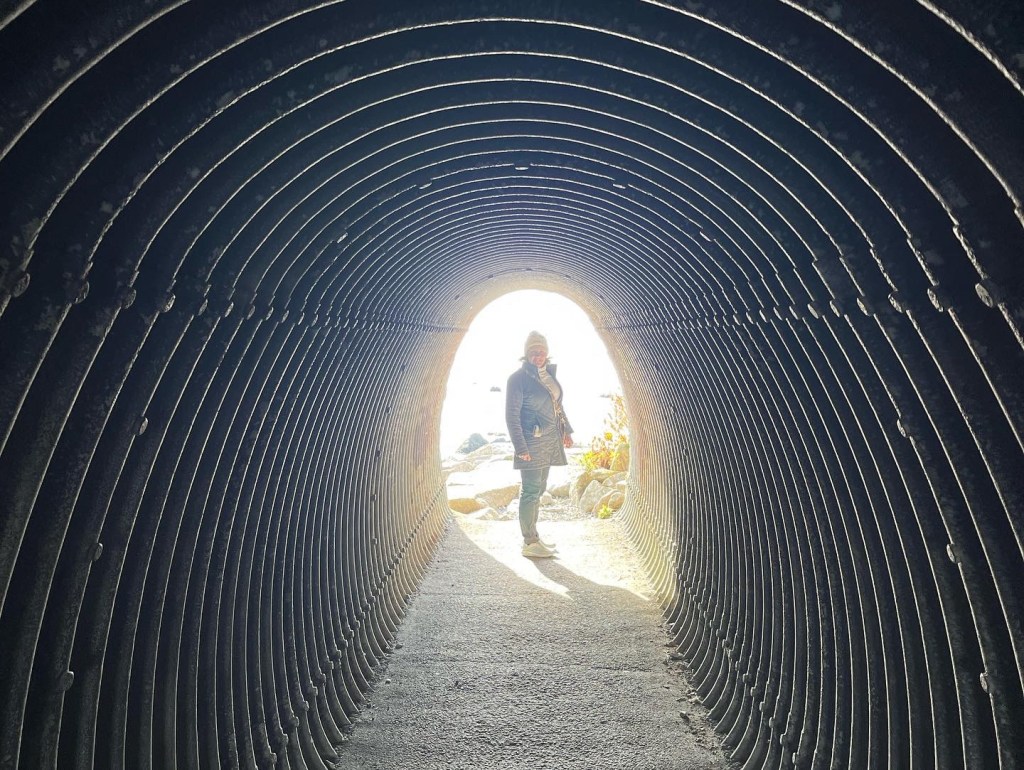
    For me, the magic of the Cliff Walk isn’t just the glimpses of manicured lawns and mansions, it’s the diversity of the walk itself. At times paved walkway, other times rock scramble or beach sand. Even a couple of tunnels to move the public quietly through the historic and high end real estate above. It’s a fascinating place to traverse, taking you from one beach to another past billions of dollars of American wealth.

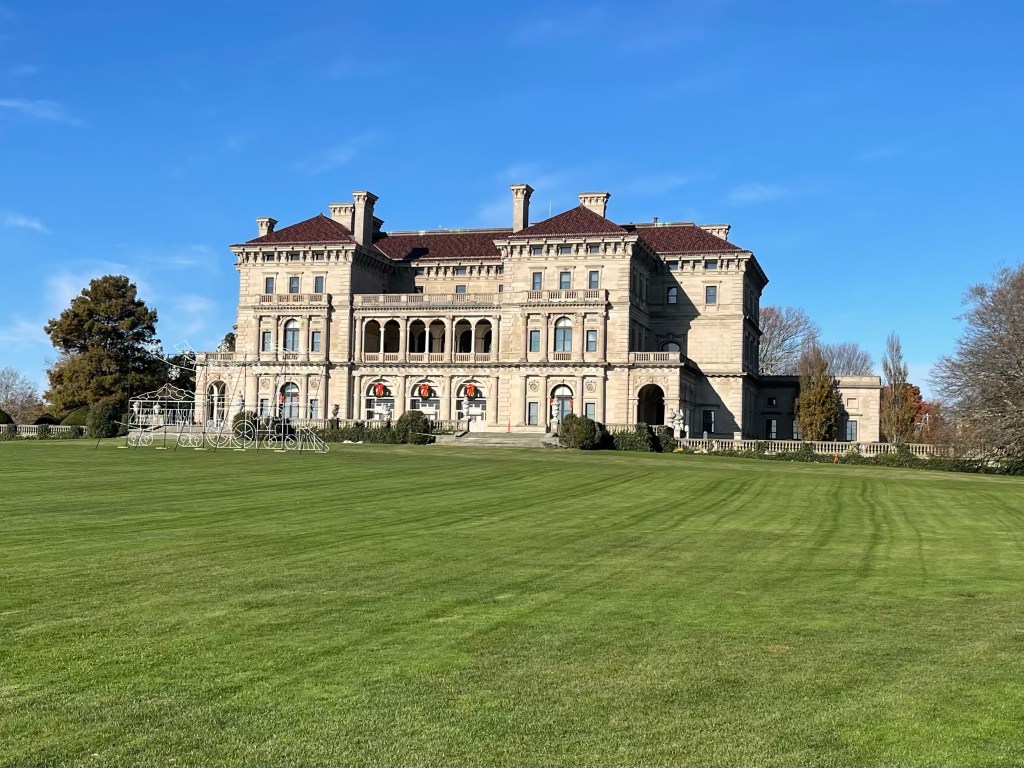
    The Cliff Walk is officially 3 1/2 miles long, but we extended it to almost 6 miles, from Old Town to the Eaton’s Beach starting point, and from the end at Baily’s Beach along Bellevue Avenue to Rosecliff Mansion. On a crisp and sunny November day it wasn’t crowded but it was surely beautiful. From Rosecliff it’s an easy walk to The Breakers, the largest of the mansions and the flagship of Newport’s Gilded Age “cottages”. The fact that they called them cottages tells you all you need to know about the vast wealth of the families who visited Newport each summer.

    Ultimately, a stay in Newport is never quite long enough. I didn’t have a summer to mingle with the locals, but a mere weekend. The Cliff Walk was a great lynchpin stringing together an epic walking day in the Celestial City. It justified some of the great dining experiences we had, and have us thinking about a return trip sometime soon.

    The Breakers
    Beautiful gazebo tucked up tightly against the Cliff Walk
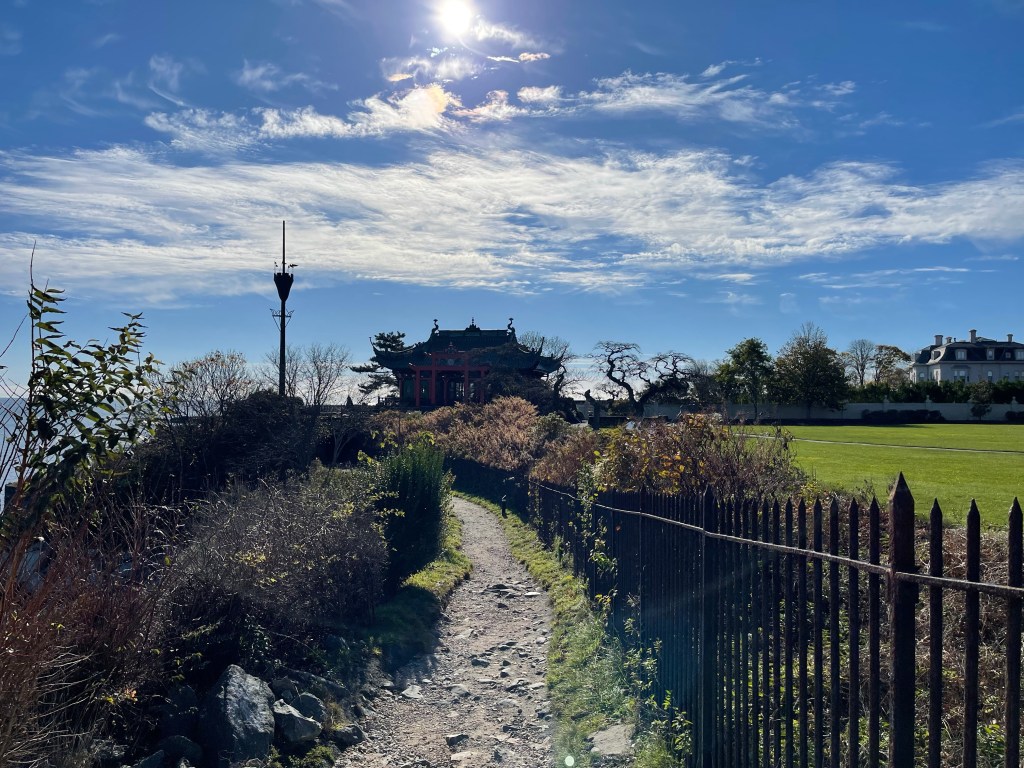
    The Tea House, shadowed by morning sun
    Tunnel under the Tea House
    Not all sections of the Cliff Walk are easy to traverse
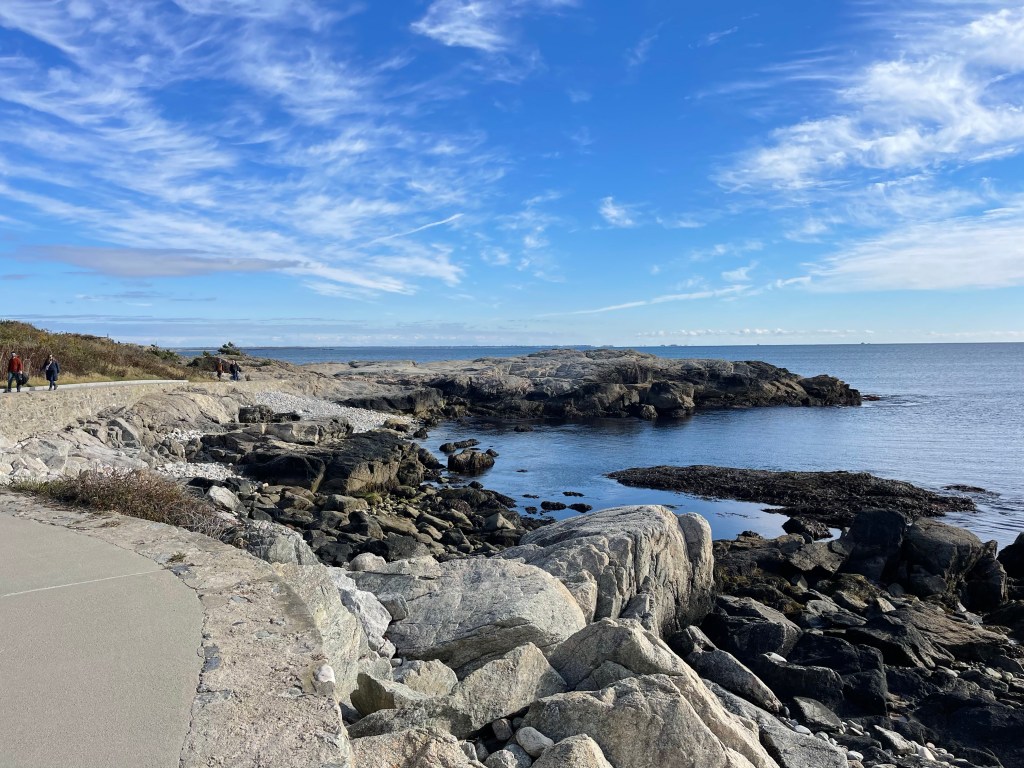
    Rugged coastal beauty is everywhere between the Cliff Walk and the sea
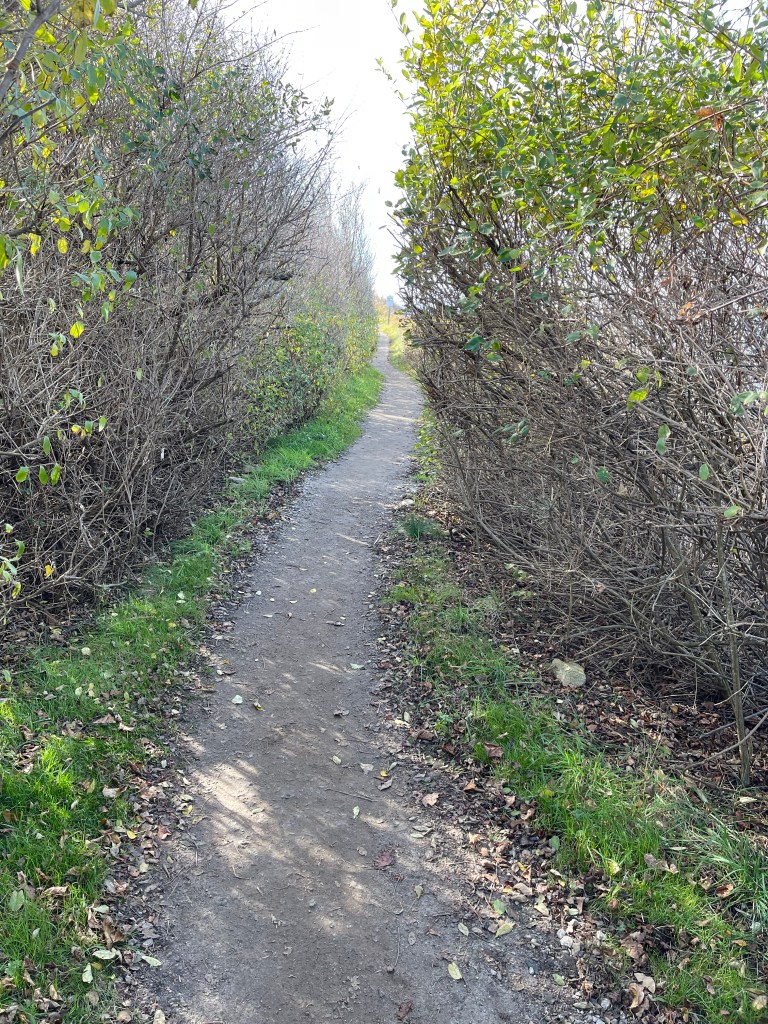
    All kinds of terrain will greet you on your walk
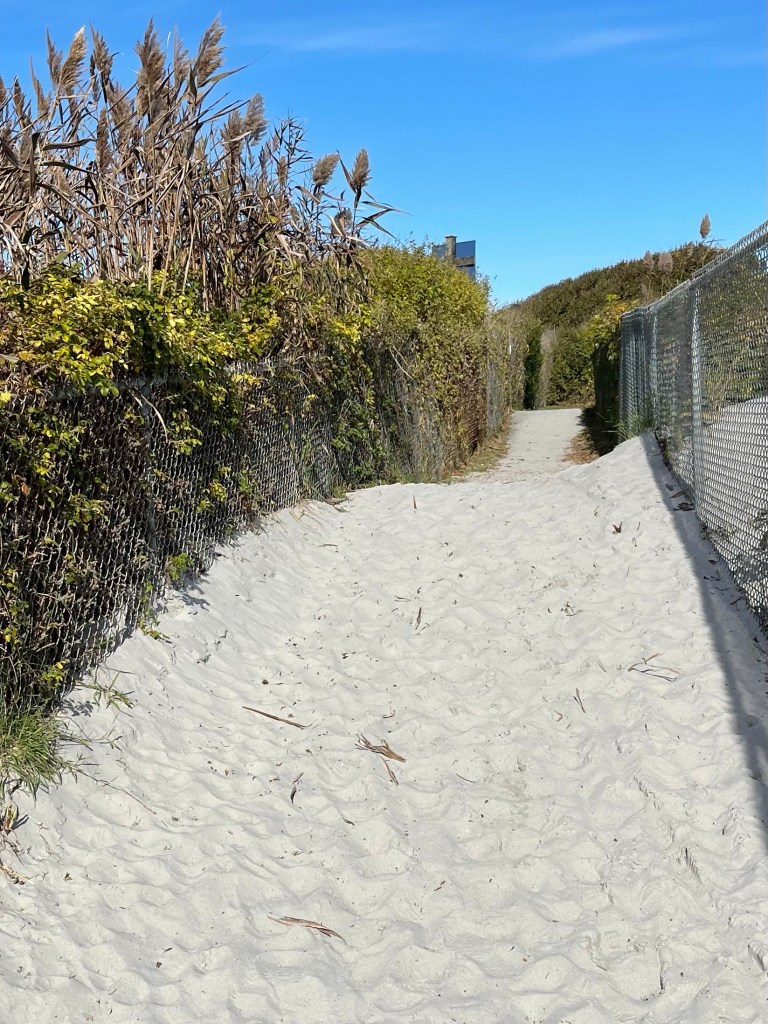
    The finale of the Cliff Walk is a walk through beach sand to the road
  • Serenity

    “Life is a series of natural and spontaneous changes. Don’t resist them; that only creates sorrow. Let reality be reality. Let things flow naturally forward in whatever way they like.” — Lao Tzu

    We are time travelers, landing from one stage of life to the next. Each leap offers a landing, each landing offers a leap. We choose who we want to be and surely try to be it. Sometimes it works out, sometimes we find our landing place isn’t what we thought it might be and we must leap again. There’s an underlying restlessness to living for the leap. There’s an underlying complacency to living with the landing.

    Somewhere within us lies serenity. We believe we seek it somewhere beyond ourselves when it’s been there all along, awaiting our awareness that the world doesn’t matter a lick if we don’t reconcile ourselves with it. Acceptance seems essential to a serene soul, aware of the world and open to the changes thrown at us from all sides. We may yet be serene even as life turns us upside down at times.

    There is no happiness without inner peace. There is no acceptance of a life well-lived without serenity. If we’re aware, we may just find that it was hiding there all along, just waiting for us to arrive.

  • Missing the Signs

    After dinner with my bride at a local tavern, she saw a neighbor across the room and went over to say hello. We would see this woman and her husband now and then at restaurants and joke that we never seemed to see them in the neighborhood, where they lived just across the street from us. This time she was having a drink alone, and she explained that her husband had passed away in July with express wishes to not make a big deal of it.

    A big deal of it… We were shocked at his passing and wondered how we’d missed the signs of his absence since then. Construction project at home, a new puppy, friends staying over for a time, and vacation time all conspired this summer to make us less aware, but so unaware that we didn’t notice the absence of a neighbor for three months?

    It turns out we did notice—we just didn’t put it together. Different people mowing the lawn. The trash barrels rolled out at a different time than they used to be rolled out. The pickup truck no longer in the driveway. All of it washing over us as we made our way home.

    When you live in a place for years, you get to know some of the neighbors quite well. You watch their children grow up and move out, you watch relationships end, new ones begin, and people pass away from this world. When you think back, most of the time we’re just a witness to the passing of time, not an active participant in the lives of those around us. Some people leave their struggles behind closed doors.

    The details mattered a great deal, and we reflected on what we missed. How we might have helped more had we only known. We are each on our own journey, shared with others but in the end ours alone. We have some touchstone moments with our fellow travelers that resonate more than others, but it’s up to each of us to weave those into a tapestry of connection. When our time ends, all that remains is the memories and moments that linger with others.

    Our neighbor gave us a sign: Help needed. Too late for her husband but not for her. One more touchstone moment connecting us to someone just across the street but seemingly so far away.

  • Life Change

    “To change one’s life:
    1. Start immediately.
    2. Do it flamboyantly.
    3. No exceptions.”
    ― William James

    Some of us think of radical change but do precious little of it in practice. Instead we opt for incremental change by changing habits or jobs or the way we commute to work. There’s a strong case for incremental change in our lives, for it sets us up for long-term success. Flossing and brushing one’s teeth are good habits that can change your life (and those in close proximity to you) for the better. So is reading and writing every day: The benefits are long-term and tangible and well beyond holding your own at a cocktail party.

    The idea of changing radically and immediately is fascinating when we get stuck in a routine that doesn’t inspire us. When you see people do it, it seems less ridiculous to think you can do it too. I’m more inclined to believe selling everything to sail off to ports unknown is possible because friends have done it. There’s magic in possibility realized, and we all want a bit of magic in our lives.

    William James’ recipe for change is a simple two step approach. Begin now, not someday. And be bold in both your vision and how you communicate it to the world. We shouldn’t go slinking off to some incremental change—we must follow our damned dream to the ends of the earth if that’s what it takes. Changing the bath towels isn’t going to do it.

    Tangible life change is really a combination of bold choices and consistent action. Dreams can be realized in one bold act, but for change to last we have to do the work to make our desired identity stick. Put another way, we can buy a plane ticket to paradise, but if we don’t work a plan for our life when we arrive there it’s nothing but a brief holiday before the world wants us back. Is there anything sadder than returning to something you don’t love after a brief but glorious dance with a dream? Here’s an idea: establish what you love and put yourself in the place where you can best realize it.

    Lately I’ve been talking to people of a certain age about what their exit plan is. What are they going to do when they’re not doing “this”? It turns out most people have a general vision for a future version of themselves, but it isn’t very specific. Playing golf seems to come up a lot. Travel. More time with family. These are all very nice things, but are they bold? Do they stir the fire deep within?

    To be fair, maybe the long-term comfort of a warm hearth was the answer all along. We don’t know what we’ve got ’til it’s gone, as Joni Mitchell reminds us. We ought to ask ourselves why we want change, not just what we want to change. If the why is compelling, the what often seems to take care of itself. Habit formation is easy when the vision is clear. That vision is the person we want to be in this brief dance with light. Being a bit more flamboyant with that vision is the least we can do for ourselves, don’t you think?

  • These Bare November Days

    My sorrow, when she’s here with me,
    Thinks these dark days of autumn rain
    Are beautiful as days can be;
    She loves the bare, the withered tree;
    She walks the sodden pasture lane.

    Her pleasure will not let me stay.
    She talks and I am fain to list:
    She’s glad the birds are gone away,
    She’s glad her simple worsted grey
    Is silver now with clinging mist.

    The desolate, deserted trees,
    The faded earth, the heavy sky,
    The beauties she so truly sees,
    She thinks I have no eye for these,
    And vexes me for reason why.

    Not yesterday I learned to know
    The love of bare November days
    Before the coming of the snow,
    But it were vain to tell her so,
    And they are better for her praise.

    — Robert Frost, My November Guest

    Stick season in New Hampshire. Sleet and rain greet me as I bring the pup out for her morning relief. These are darker days, surely, for the days are shorter than they were yesterday and the day before. The earth turns a cold shoulder on the warmth of the sun, and we are left to work with the light that’s left for us.

    I don’t struggle with seasonal depression, but I certainly understand where it comes from. The trick is to get outdoors anyway and greet the day no matter how dismal her response or cold her shoulder. We navigate through our days, rain or shine. That’s not naive optimism, it’s awareness of the conditions around and within. Dress accordingly.

    Frost was a New Hampshire resident, just up the road a bit from where I call home. He lived through his own share of dark Novembers and naked trees. He turned his days into poetry. I wonder sometimes, especially on cold, wet and dark November mornings, what are we doing with our own?

    As the sleet accumulated on the walk, the pup delighted in this new world of snow cone bliss. She ran about, licking up this unexpected abundance of icy treats, tail wagging furiously in her excitement at this previously unimagined experience. When you treat whatever the universe throws at you with such wonder, how can you do anything but love these bare November days?

  • The Most Important Pursuit

    “Remember that there is only one important time and that is now. The present moment is the only time over which we have dominion. The most important person is always the person you are with, who is right before you, for who knows if you will have dealings with any other person in the future? The most important pursuit is making the person standing at your side happy, for that alone is the pursuit of life.” — Leo Tolstoy, The Emperor’s Three Questions

    Tolstoy’s story resonates because it’s timeless. Consider: What is the best time to do each thing? Now, because we are not timeless ourselves. Who are the most important people to work with? The person we’re with in this moment, because there is no guarantee that the person we are interacting with is not the very last person we’ll ever interact with. What is the most important thing to do at all times? The most essential thing we can do in our brief dance together is to find happiness right here and now.

    I am an active practitioner of the three questions because of how I was raised, not because I sought the advice of Tolstoy, but his philosophy resonates because of the universal truth in the words. Shouldn’t we be present in this moment, with full attention directed towards the person we’re with, with the sincere objective of making the moment joyful for both parties?

    Consider the most recent interaction you had with a stranger. Say, the person who served you breakfast the last time you went out for it. Do you treat that person as a servant or as a fellow traveler on this trip around the sun? If the roles were reversed, how would you expect to be treated by them? Shouldn’t the golden rule apply in every such situation?

    The thing is, I have people in my life who roll their eyes when I engage in conversation with random strangers—there he goes again. But the point of each of these engagements is to acknowledge that we’re all in the same orbit at the same moment. We may never pass this way again. In most cases, the chances are extremely high that we won’t. So we ought to make the most of that moment.

    We know the world is full of angry people. I often get spun up at the unfairness in the world, and the sheer cruelty of some people who don’t see the worth in anyone but themselves. We all witness bad behavior that is the antithesis of the golden rule. But we don’t have to swim in that sea of misery ourselves. Why splash around where so many have drowned?

    Here’s the thing: We all want to live a fulfilling and joyful life. To be actively engaged in living is to be in the game in every moment, not just a few chosen highlights. So embrace the opportunity to be fully alive now, whatever now brings to you. The thing about those nows is that they tend to string together into a pretty amazing life.

  • Connection in Solitude

    I find it wholesome to be alone the greater part of the time. To be in company, even with the best, is soon wearisome and dissipating. I love to be alone. I never found the companion that was so companionable as solitude. We are for the most part more lonely when we go abroad among men than when we stay in our chambers. A man thinking or working is always alone, let him be where he will. Solitude is not measured by the miles of space that intervene between a man and his fellows. The really diligent student in one of the crowded hives of Cambridge College is as solitary as a dervish in the desert. The farmer can work alone in the field or the woods all day, hoeing or chopping, and not feel lonesome, because he is employed; but when he comes home at night he cannot sit down in a room alone, at the mercy of his thoughts, but must be where he can “see the folks,” and recreate, and, as he thinks, remunerate himself for his day’s solitude; and hence he wonders how the student can sit alone in the house all night and most of the day without ennui and “the blues”; but he does not realize that the student, though in the house, is still at work in his field, and chopping in his woods, as the farmer in his, and in turn seeks the same recreation and society that the latter does, though it may be a more condensed form of it.— Henry David Thoreau, Walden

    Another example of a Thoreau word-explosion-as-paragraph, and one I wanted to compress into a smaller bite, mind you, but didn’t have the heart to. Henry was never lonely because he surrounded himself with an ample supply of words. His work resonates because he combined so many of them into insightful and timeless nuggets that we still find nutritious today. For a guy who spent so much time alone, he still manages to connect with so many.

    The difference between solitude and loneliness is very much aligned with what we perceive ourselves to be doing with the time. Active engagement in meaningful work, expressed creativity, meditation, exercise and prayer are each forms of reaching outside of ourselves for connection to the greater energy force that hums all around us. I write this knowing the words will come, and I’m but an editor for the muse. How can you feel alone in such moments?

    Many people encountered solitude during the pandemic and were forced to reconcile what it meant for them. I found it to be a time of connection with family, who otherwise would have been off doing their own thing as I did mine. It made no difference whether I was alone in a home office or in a hotel room, for solitude is solitude anywhere—but it doesn’t have to be loneliness. Feeling alone is to look for connection with the universe and finding no answer.

    There’s no doubt that surrounding ourselves with the right people leads to a happier, more fulfilling and longer life. With any strong group dynamic we rise to meet others, even as they rise to meet us, providing a lift to the entire group. Community gives us momentum and mutual support, solitude gives us the elbow room to mine the best out of ourselves. Don’t we each need both to live a full life?

  • Lighting Our Own Torch

    “Work is only a part of life. But work is life only when done in mindfulness. Otherwise, one becomes like the person “who lives as though dead.” We need to light our own torch in order to carry on. But the life of each one of us is connected with the life of those around us. If we know how to live in mindfulness, if we know how to preserve and care for our own mind and heart, then thanks to that, our brothers and sisters will also know how to live in mindfulness.” — Thich Nhat Hanh, The Miracle of Mindfulness

    Monday’s seem to sneak up a bit more quickly lately. The weekends fly by in a swirl of activity, then suddenly it’s Monday morning again. How we react to that depends on what our relationship is with our work. Then again, how we react to getting up any morning is directly related to how we feel about our life anyway. Rising to meet the day is more attractive when we live a life of joyfulness and awareness. Don’t we owe it to ourselves to reach that place?

    I lingered with the sunrise this morning, not to delay writing but to meet the day properly. A bit of frisbee with the pup, a cuppa to clear the cobwebs free, and full awareness of the light show happening above me as the world turned to meet the sun. The point of living is to be fully alive in these brief moments stacked like dominoes along our timeline. Those dominoes behind us have fallen away, all that’s left is the stack standing in front of us. Just how long that stack is is anyone’s guess. The pup and I felt satisfied with the one just fallen behind us.

    What is work but a series of dominoes stacked in our timeline? Each of those dominoes will fall behind us eventually, but what direction are they carrying us in? We either work out of a sense of obligation to others or we follow the call to contribute something more. The latter is often harder to hear—more a whisper than a scream (that screaming sound you hear is a thousand souls commuting to jobs they deeply resent). Whispers of work to be done are meaningful clues to the life we ought to be living.

    When those dominoes fall behind us, do they land with a hollow thud or do they resonate as time well spent? We each have our share of hollow moments, but we ought to work towards a life that reverberates. To light our own torch is to choose a life of resonance and meaning. That’s something to work towards.