Category: Birds

  • What Is

    “What is left
    is what is.”
    – Wendell Berry, The Broken Ground

    Lingering soreness from a long winter hike and tackling a foot of snow with a snowblower that quite halfway through the task, leaving only shovels to overcome mechanical obstinance. Fatigue, not all of it in muscles, wished me a good morning with a smirk.

    Looking out the window, I saw the tip of a snow drift dropping down from the roof, as if a wave frozen in the middle of its break. This naturally lured me outside for a look, which led to a walkabout, which led to slipping on snowshoes for a walk in the deep snow out to the bird feeders at the edge of the woods. Silently carving my two foot path across the yard, nothing but the rubbing clumpy sound that cold snow makes when compressed. One foot in front of the other, out and back, feeders filled. Were the yard only longer, for I wasn’t quite ready to finish.

    The feeders were wiped out by Starlings. Greedy, sloppy eaters who cast away seed by the shovelful to get at the dried fruit and other choice treats they favor. What’s left is an empty feeder and a mess on the snowy ground that is gobbled up by squirrels and Mourning Doves and other such ground feeders. The food is there for this purpose, so do I have a right to complain? Only at the waste and frenzied emptying. I can either pause feeding until they find somewhere else to ransack or tolerate the intrusion. But once you commit to feeding the birds you can’t very well stop after a heavy snowstorm.

    For all the dry sameness of the inside of the house, outdoors offers something new at every turn. The second morning after a big snowfall lacks the drama of tackling the job at hand, but it makes up for it with time to have a look around. To see what’s changed. To assess the landscape and yourself. To see what’s left. What is.

  • Hummingbirds in Winter

    “For unless one is able to live fully in the present, the future is a hoax. There is no point whatever in making plans for a future which you will never be able to enjoy. When your plans mature, you will still be living for some other future beyond. You will never, never be able to sit back with full contentment and say, “Now, I’ve arrived!” Your entire education has deprived you of this capacity because it was preparing you for the future, instead of showing you how to be alive now.” – Alan Watts

    I was thinking about flowers. Specifically, Bee Balm (Monarda). The blooms of next summer are currently scheming in the frozen turf of the garden, awaiting the heat of late June and July to burst onto the scene. In that respect, I share more in common with the flower than the hummingbird, which ignores border restrictions altogether and zips down to Mexico and Central America for the winter. You think that snowbird expression invented itself? The hummingbird is one of many birds that bolts the limited prospects of survival in the north for the tropics.

    Still, I don’t mind winter, when we have it. This year is a confusion of rain and frigid temperatures, but no significant snow to speak of just yet. But that’s the world we live in now, with seasons shifted slightly askew, and some uninformed loud people thinking climate change is a hoax, like COVID and election results and any science that doesn’t jibe with their worldview.

    I imagine the hummingbirds I got to know last summer are doing the Macarina with friends from around North America in some tropical paradise right about now. And why shouldn’t they? They flew 3000 miles and straight across the Gulf of Mexico to arrive in the tropics. So go on: guzzle that nectar and dance to your heart’s content!

    Back here in the frozen north, we wonder when the snow might return again, and then the flowers, and finally the hummingbirds. But, as Watts points out, we can’t live in the future, we can only embrace what we have now. We keep things going here, the dormant flowers and their gardener, making the most of what we’ve got until warmer days and open borders.

    As a gardener, I know there’s merit in planning for the future that Watts doesn’t account for in the quote above. Amending the soil, sowing, weeding and generally seeing your crop through to harvest are inherently forward-looking activities that happen in the present. There’s nothing wrong with knowing where you’re going while living fully in the present. Watts knew this too of course, but you can’t wedge everything into one clever quote.

    Here in New Hampshire, I’m packing as much alive time as possible into each day as it presents itself. In six months time, should we be fortunate to arrive there together, I’ll get reacquainted with the hummingbirds, who like to hover at eye level and check out the character who tends the garden for them. They’ll have squeaky tales of perilous travel over open water and jungle reunions with cousins. What shall my own tales be for them? Don’t we owe it to them to make it interesting?

  • The Birds and Stars Remind

    Let’s face it, the days between the US National Election and the events of January 6th were some of the craziest we’ve ever witnessed in our lifetimes. Not since 9/11 have I been so angry and distracted as I was on the afternoon of January 6th, 2021. And it can be easy to wrap yourself around the pole of ongoing coverage and online opinion and speculation. I let myself indulge in some of that too.

    And then last night I took a walk outside on a brilliantly clear night and saw Orion poised above me. Orion has seen it all before and recognizes the smallness in our human lifetimes. This is big by human standards, but we’re like ants to the universe, and not the big ants but the tiny little ones that you have to squint to make out the features on. Orion whispered “This might be a big week for you but this ain’t nothing to the universe, kid.”

    Earlier this morning I waited for the water to boil for my morning jolt of goodness and watched the birds flitter about from the feeder to the ground, ground to the shrub, and back to the feeder. This crowd featured bluebirds and cardinals and mourning doves and sparrows. Mostly taking their turns at the feeder (except for the mourning doves who rely on scraps falling to the ground), but sometimes impatient with each other to get a move on so they can have their turn. This frenzy continued on well past the coffee being ready. Small little things fighting for their share and a little bit more. Perspective is where you find it.

    This week we saw people acting like squabbling birds at the feeder not wanting to take turns, while others pounced on the scraps below. It was maddening, and the days ahead are fraught with peril. But a walk or a glance outside offers lessons in perspective. We have work to do. A lot of work. But the worst of this will pass if we work together to make things better. Generally humanity is moving ever so slowly towards a better place. We might see this if we break our focus on selfishly fighting amongst ourselves. This ain’t nothing to the universe kid. This too shall pass.

  • Ready and Open To It

    “I am grateful for what I have not yet completed”
    – Kat Lehmann, Small Stones from the River

    With an eye towards the weather the plotting resumes. Conspiracies of wonder, awaiting launch orders, sit at the ready. Waiting to begin again.

    I’m sometimes vexed at peaks I haven’t climbed, countries I haven’t visited, waterfalls unseen, books I haven’t read…. and words I haven’t written. I dwelled in one such moment yesterday. And then I looked out the window at a Bluebird on the feeder staring in indignation at a Downy Woodpecker who wouldn’t get off the suet already. I stifled a laugh and whatever irked me faded away.

    Of all the birds who visit the yard, the Bluebird is the most aware of where I am at any given time. When I’m outside they’re high up in the tree canopy awaiting the all clear. But they also know when I’m at the window watching them at the feeder. They’re hyper-aware creatures who visit on their terms. So I observe them from a step behind where I might observe other birds. Their visits are a gift subsidized with dried worms and suet.

    They remind me to be patient; for the world will come to you if you remain at the ready and open to it.

    A side note: If you really want to wade into it, tap into the debate over whether common bird names are considered proper nouns and thus warrant capitalization. I’ve been known to stretch the rules of proper English in my blog, and though Wikipedia might refer to Sialia sialis as the Eastern bluebird, I’m just going to call it Bluebird. I always did enjoy stretching the rules.

  • Good Forever

    There is no past and no future; no one has ever entered those two imaginary kingdoms. There is only the present. Do not worry about the future, because there is no future. Live in the present and for the present, and if your present is good, then it is good forever.” – Leo Tolstoy

    Here is the present, such that it is. On the whole you’d call it good (we woke up didn’t we?), yet more challenging than other days we might remember. But that’s the trap, isn’t it? Comparison to fond memories robs the present as much as dreams of the future does. There’s only today, buttercup. Dance to the song the band is playing now.

    I walked outside to a red dawn and a chorus of nuthatches noisily haw-hawing their way up and down the tree trunks. They know where the party is: it’s right here, right now! Nothing lives in the moment like a wild animal. It’s the humans who get all wound up in past moments, or stirred up about what may come to pass in the future. These are stories we tell ourselves. If I’ve learned anything balancing 5-6 books I’m reading at a time, it’s that you can’t read them all at once. So stick to the story of the present.

    The flip side of the present being good is that it isn’t very good at all. If that’s the case, then it seems we must accept what we’ve got and work on making something of this moment that is better than it might have been. Those nuthatches would probably prefer an endless summer of warm days and tasty bugs. They woke up to a leaf-less, cold November morning. But they were singing away in the trees this morning like it was Whoville on Christmas morning. You can learn a lot about living from a nuthatch.

  • Hiking Mount Moriah

    The goal of life is to make your heartbeat match the beat of the universe, to match your nature with Nature.” – Joseph Campbell

    The last 4000 foot peak on the Appalachian Trail in New Hampshire before entering Maine is 4049 foot Mount Moriah. Hiking it as a single day out and back, it became a 9 mile round trip that felt just a little bit longer because the ankle objected to the angle of descent, which in warmer months means walking down exposed granite slabs with feet flat, toes down and weight distributed as evenly as possible, but slightly back on the heels. With good footwear this serves to spread the load across the sole of the boot or trail running shoe (for those who choose to endure a higher level of pain). This creates enough friction to keep you upright and in a controlled descent. But it also beats the crap out of your knees and ankles.

    But all that complaining doesn’t change the fact that I sat above treeline eating lunch with the White Mountains clearly visible all around me, and feeding Gray Jays who are well-known opportunists on this particular summit. I didn’t mind offering up a bit of my trail mix for the jays – there’s a certain thrill in interacting with wild animals, and a few almonds, peanuts and raisons were a small price to pay. And my heartbeat matched the universe a bit more today than it might have had I stayed home doing yard work. Aches and pains fade over time, but summiting Moriah remains a forever check mark and a step closer to matching my nature to Nature.

    The first half of the hike from the trailhead is very easy, with a gradual incline and minimal erosion compared to what you see in other parts of the White Mountains. Unfortunately the loggers have been busy on the lower hills, clearing much of the forest away. This is what happens when the land isn’t preserved, it becomes a “land of many uses”, including logging everything except a strip of land on either side of the trail. The logging served to preview the views that we’d see later, though it was marred by the clearing.

    The first wow moments come on the granite ledges of Mount Surprise, a 2194 foot gem that lives up to its name. Views of the Presidential Range were glorious, and served as a nice appetizer for the views we’d see later from the summit of Mount Moriah. They say on a clear day you can see forever from the summit, and it seemed we could. If there’s a drawback to the summit its the very small footprint that many people want to enjoy, and in a time of social distancing I was disappointed in the unmasked proximity of several people from a group of twenty-somethings. But lingering on the summit meant you were going to have that kind of company, so we made a point of wrapping up lunch and clearing the way for others.

    Mount Moriah is not a hike to do on a wet day, which is why I hiked it today instead of last week. But its a worthwhile hike to complete on a beautiful day. I look forward to doing it sometime when it has a heavy snow blanket to cushion the unforgiving granite. I’ll be sore tomorrow in the usual places, but it’s the price you pay for dancing in the clouds. Another 4000 footer checked off the list and a few memories worth celebrating.

  • The Methodical Hunt of Red-Tailed Hawks

    Treading water on an early morning swim and looking up to sky, I observed a pair of red-tailed hawks moving across the landscape in a coordinated hunt.  It was an impressive display, with one hawk working to spook prey into revealing themselves and the other perched nearby ready to pounce on the unsuspecting victim.  A methodical dance of deadly consequences for some prey yet to be determined.  This was clearly part of the act I saw last week when a hawk landed on the umbrella, but I’d only seen half the story then.  I was grateful I was a bit larger than they felt they could take on.  When you see a pair of hunters working the neighborhood, you wonder how any squirrel, chipmunk or rabbit survives long enough to reproduce.  This was a highly coordinated, efficient operation in action, and I came away deeply impressed.

    Red-Tailed Hawks are also known as “chicken hawks” because they wreak havoc on chickens, ducks and other domestic birds.  The name is a bit of a misnomer, but makes me think of the cartoon character I grew up watching, always trying to take on the much bigger rooster Foghorn Leghorn.  But watching them hunt made me realize they’re much more like the Velociraptors hunting the kids in Jurassic Park.  But then again, they’re direct descendants of dinosaurs, so it makes sense they’d hunt in such a way.  Velociraptors were the most bird-like of all the dinosaurs, and I saw the similarity immediately watching that pair of hawks (at least to the movie version).

    Red-Tailed Hawks tend to hunt solo most of the time, but when you see a pair hunting together it generally means that they’re mates or siblings or its a parent teaching the kiddos to kill their own meals.  These were adults, so I’m guessing they were mates.  What’s more romantic than hunting small animals together in a choreographed dance along the edge of the woods?  If you read about these hunters, the details of the prey can be gruesome, which I’ll spare you from here.  They live a life of noble pursuit, not killing for sport but for food.  Humans could learn a few things watching them.

    When my dog was younger we had this game of hide and seek we’d play, where I’d take his favorite fuzzy dice and throw them into a different room for him to fetch.  While he was chasing them down I’d quickly run out of the room and hide.  He’d come back, realize I was gone and excitedly bounce up and down like a reindeer, and the hunt would be on.  He’d check room after room looking for me, and when he found me we’d celebrate with a big human and Labrador hug.  Those games of hide and seek would get my heart rate way up into anaerobic territory and I’d find myself out of breath when the game went on for any length of time.  I was the “prey” in those games, but all in fun.  I can’t imagine being prey in a real life and death hunt, and I’m grateful to live in a time when I can casually observe the hunt of hawks.  With a few notable exceptions that quickly make the news, we generally don’t have to worry about animals hunting us down.  More often than not its other humans we have to worry about, and even then its becoming increasingly safe to coexist in the world with others.  I took a moment to appreciate that as I watched the methodical dance of Red-Tailed Hawks.

  • Missing Poultry and Other Such Thoughts

    I woke up thinking about missing turkeys.  This isn’t a normal occurrence.  I dwelled on the question; Where do the turkeys go in summer?  They made a point of being very present for winter and spring, but seemingly go on vacation all summer.  Sure you might still see one now and then on the side of the road, but it seems lost and disgruntled, wondering where the rest of the family went without her.  There’s always that one oddball in the family.  But then again, some just might view me that way (I hope so: “normal” is boring).

    When the mind is alive and vibrant and most of all open the world pours willingly in.  It might have been trying all along, but sometimes your senses are too dulled to pay much attention.  I’m paying attention.  Perhaps too much attention.  Almost certainly too much attention.  Wondering about such abstract, random things as where the poultry that swarmed the neighborhood went, and what might have prompted them to go there.  Clearly turkey have their own version of The Great Wildebeest Migration that happens in Tanzania, or the Monarch butterfly migration across North America to hang out in Mexico for the winter.  And let’s not forget the Humpback Whale migration in both the Atlantic and Pacific Oceans as they swim from the colder waters of the north to the Caribbean or Hawaiian waters, respectively.  There are many more examples, often driven by the search for food and water and of course mating (There’s always mating involved when you go to the tropics).

    So what’s the deal with turkeys?

    According to the National Wild Turkey Federation (who knew?) “the annual home range of wild turkeys varies from 370 to 1,360 acres”.  The county I live in has approximately 695 square miles of land, which equates to almost 445,000 acres of land for roaming turkeys.  And that’s assuming they don’t all cross over into bordering Massachusetts.  That’s a lot of alula room for a flock of turkeys.  All I’m sure of is that they aren’t in my neighborhood at the moment.  And I guess I’m good with that.  Just let them know I was thinking of them.  Enough that I had to look up alula.

    All of this turkey talk is just my vibrant mind (no really, stick with me on this) wondering at the world around me.  I view getting out of your own head as a good thing, and thinking of things other than yourself as a noble path.  And so it is that I’m spending time this Tuesday talking turkey.  Which brings me to alliteration… 


  • Return of Wonder

    Wonder dies and is replaced by boredom, as we develop language and words and concepts. Then hopefully, if we’re lucky, we’ll return to wonder again.” – Anthony de Mello, Awakening

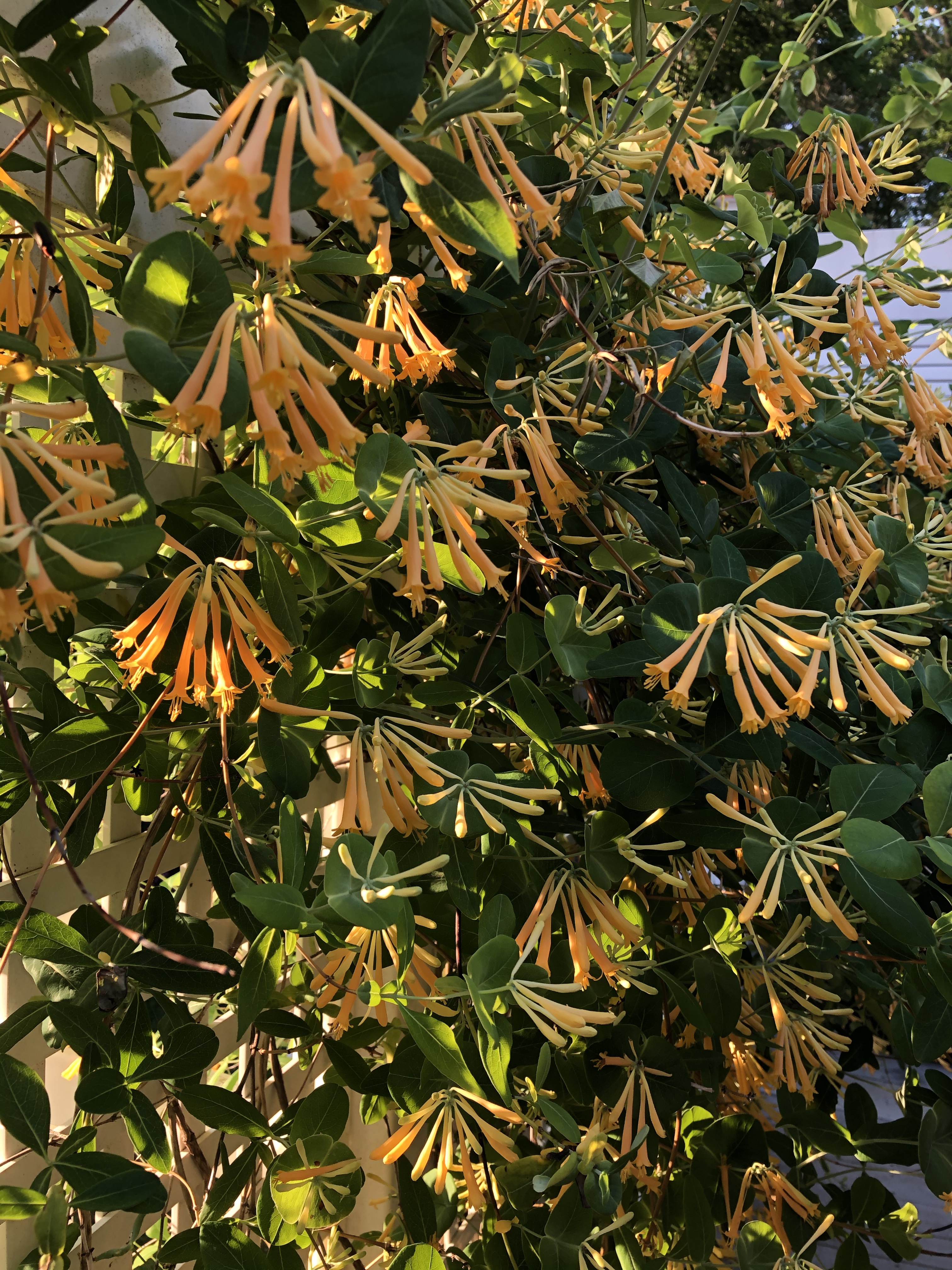
    The hummingbirds work their way across the mounds of honeysuckle in turns. One fills up and flies off and another takes its place. The vine and the birds return year-after-year and each season I marvel at the intimate dance of the honeysuckle and the hummingbird. I’ve learned over many seasons together to sit silently and let the dance happen. I’m rewarded once again in 2020, a year like no other, and nod in gratitude to the dancers.

    I keep returning to Anthony de Mello, and why not? Every visit mines gold, like a hummingbird returning to honeysuckle. This is an especially good year to re-read Awakening, and lately I’m scanning a few pages in between history and philosophy and poetry. There’s so much you miss the first time through with great books, and I’m reading it again with a new sense of wonder. And isn’t that the way with everything worthwhile? The garden is different every time you visit it, and so is the forest, and the ocean, and mountains, and old friends in our lives and surely a spouse. And so are we, if we’ll just sit still long enough to see.

    I’m lucky. I know this. I can sit quietly in the garden and watch hummingbirds. I can walk on a dark street alone at night looking at the stars without concern. Born in a place and time with a skin color that offers me a silent leg up over people who are in every way my peers or a few notches above me. I’m not struggling the way many people struggle, and I’m grateful. But what do you do with the gift? Become bored with it? Jealousy hold it tight, not willing to share it with others? Lecture those who don’t see the wonder?

    I think the first step is to appreciate the beauty in your own life. To truly see it anew. And then share it with the world. Pull wisdom from the ages and embrace it, and shine a light on it for others to see. To be a stabilizing force for those who need a hand, and a teacher for those who need to see the wonder in all of us. I view the merit of another person by the sparkle in their eyes, not by the color of their skin or the position they hold. Help others to see. To find wonder themselves. We all live by concepts we’ve learned along the way. Concepts are funny things. They change when the student is ready and not a moment sooner. Offer a hand to those struggling with the climb, an ear for those who need you to hear and a shoulder for those who are hurting to cry on. Share wonder with the world and dance with those who rise up with you. And keep offering a place on the dance floor for those who aren’t there just yet. They could use some wonder too..

  • Consider The Hummingbird

    “Consider the hummingbird for a long moment…. Each one visits a thousand flowers a day. They can dive at sixty miles an hour. They can fly backward. They can fly more than five hundred miles without pausing to rest. But when they rest they come close to death: on frigid nights, or when they are starving, they retreat into torpor, their metabolic rate slowing to a fifteenth of their normal sleep rate, their hearts sludging nearly to a halt, barely beating, and if they are not soon warmed, if they do not soon find that which is sweet, their hearts grow cold, and they cease to be… The price of their ambition is a life closer to death; they suffer more heart attacks and aneurysms and ruptures than any other living creature.”

    “Every creature on earth has approximately two billion heartbeats to spend in a lifetime. You can spend them slowly, like a tortoise, and live to be two hundred years old, or you can spend them fast, like a hummingbird, and live to be two years old.”

    “No living being is without interior liquid motion. We all churn inside.” – Brian Doyle, Joyas Voladoras

    I get a bit breathless when I read something as stunning as Joyas Voladoras, and perhaps I share too much of it here.  It’s from a collection of essays by Brian Doyle in One Long River Of Song.  I’ve been saving it until I saw my first hummingbird of the season, figuring it would be a nice way to mark the occasion.  Well, that happened over two days ago, and I’m happy to share the sparkling light of Joyas Voladoras with you now.  Welcome back, hummingbirds, I’m glad to see you return to the garden.

    I play my part in keeping them from retreating to tupor with as many hummingbird-friendly plants and flowers as I can justify cramming into the sunniest corners of my backyard.  And in return they keep me from returning to tupor, if only for this short season.  For that I’m grateful, and I keep finding more excuses to add maybe just one more plant.  The bees return first, followed by the hummingbirds, and soon the butterflies will return too and the garden will be complete.  Or maybe it’s me that will be, or maybe all of us, in this together with our collection of heartbeats thumping to the song of today.

    Reading an essay like Joyas Voladoras swings the spotlight onto my own work, and I recognize that I have a ways to go in the writing.  But the blog serves as my apprenticeship and I keep putting it out there even if it misses the mark or is welcomed with grateful indifference.  I’m silently plotting an escape for my ambitions, one post at a time.  Words and structure of sentences are one thing, but weaving sparkling light and magic into those words is another.  What makes you breathless as a reader?  We all churn inside, don’t we?  How do we share that with the world?  Bird by bird, today and tomorrow too.  There’s enough tupor in the world, we all need a bit more warmth.