Category: Exercise

  • A Pre-Dawn Waterfall Chase

    Harriman State Park in New York is the second largest state park in the state, and honestly it feels pretty big when you’re in it. Still, it doesn’t feel like there should be this kind of elbow room so close to the gridlock of Metro NY. And yet here it is.

    This story began two days ago, when I participated in a group hike with several co-workers. As these things go, our available time for hiking got compressed and we had a couple of people who were a bit slower than the average hiker speed. Combined this created a situation where we had a little more than an hour to hike one of Harriman’s most popular trails, the Reeves Brook Trail Loop. Instead of reaching a waterfall and pond we’d been hoping for, we had to cut the trip short and head back. Still, that waterfall stayed with me.

    There was only one thing to do: get up early and take a solo hike to find it. If there’s a problem with April hikes, it’s that it doesn’t really get light out until close to 6 AM. I didn’t have that kind of time and headed out at 5:30 in search of the waterfall. I had a headlamp with a weak battery and two iPhones as backup for light, but found I didn’t really need any of that once my eyes adjusted. It helped that I’d done a good part of the trail two days earlier and knew the landmarks that might otherwise have been a mystery in the dark.

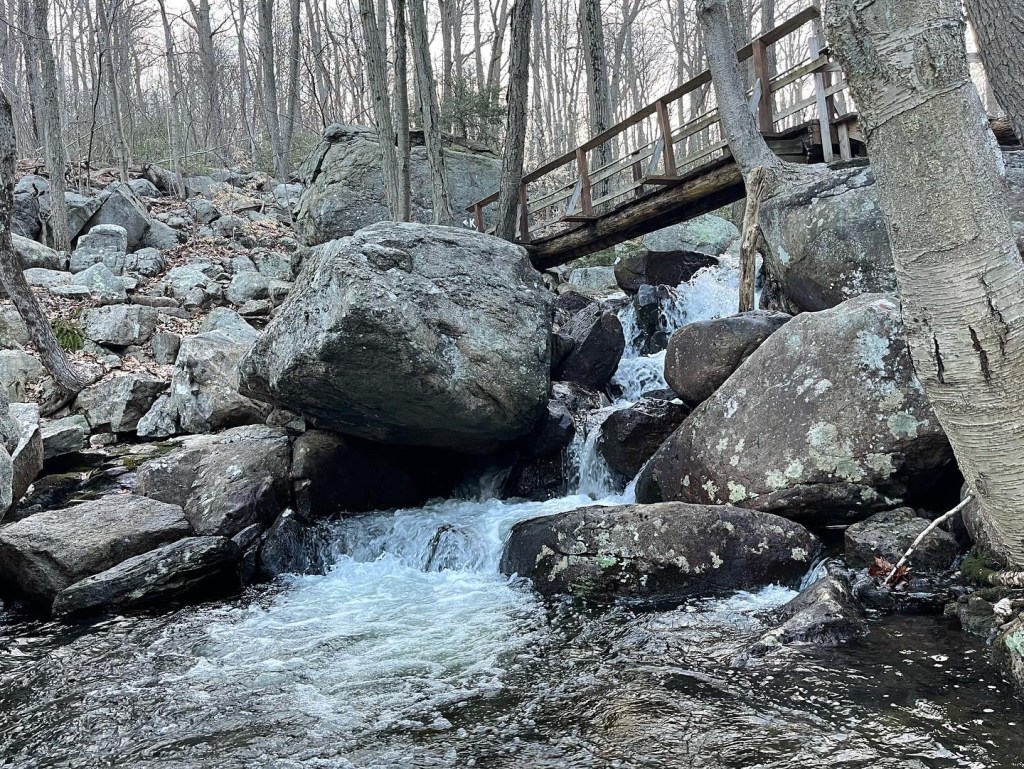
    I eventually found that waterfall, just ten minutes away from where we’d turned around on the previous hike. So close and yet so far. But the waterfall looked smaller than I’d anticipated, so to be sure I hiked another ten minutes up to a bridge where the trail split. Looking at my watch, I recognized that there was no way I’d have the time to hike the entire loop around the Reeves Brook Trail Loop…. damn. The pond and rock scrambles would have to wait for another day. I headed back down with a solid hike completed and a hot shower waiting for me. And like the waterfall before, the pond now calls my name. Knowing there’s so much more to see, I’ll carve out half a day for going much deeper into the network of trails next time. Definitely something to look forward to.
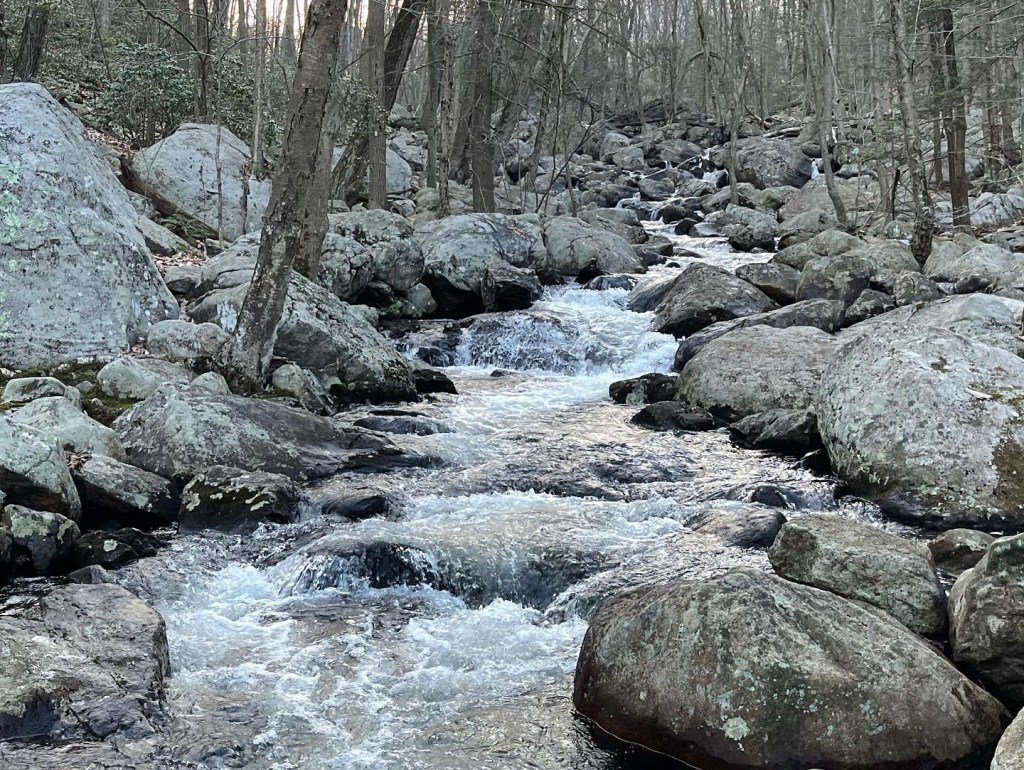
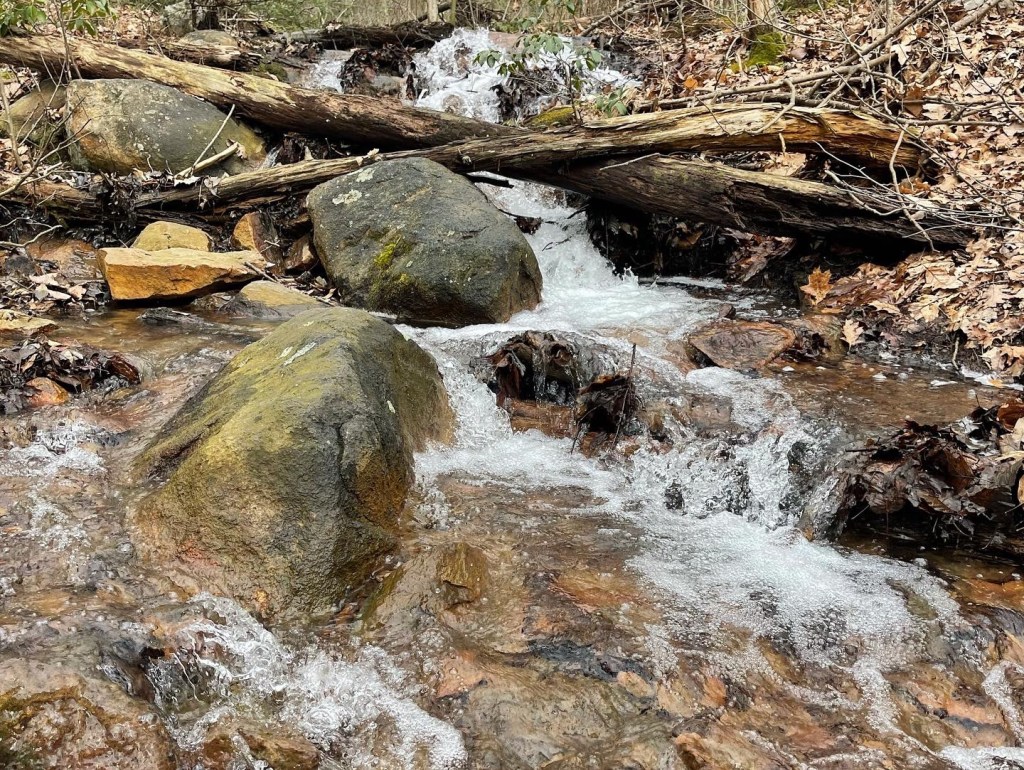
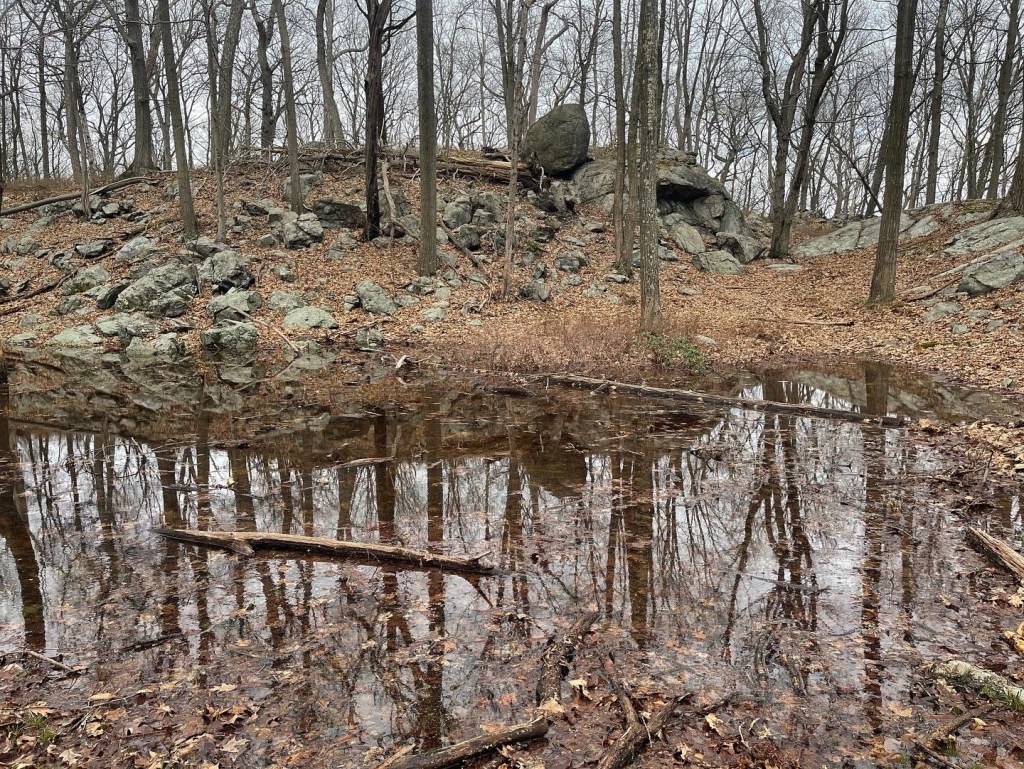
    Stony Brook lives up to it’s name
    An elusive waterfall, wrapped in boulders and capped with a bridge.
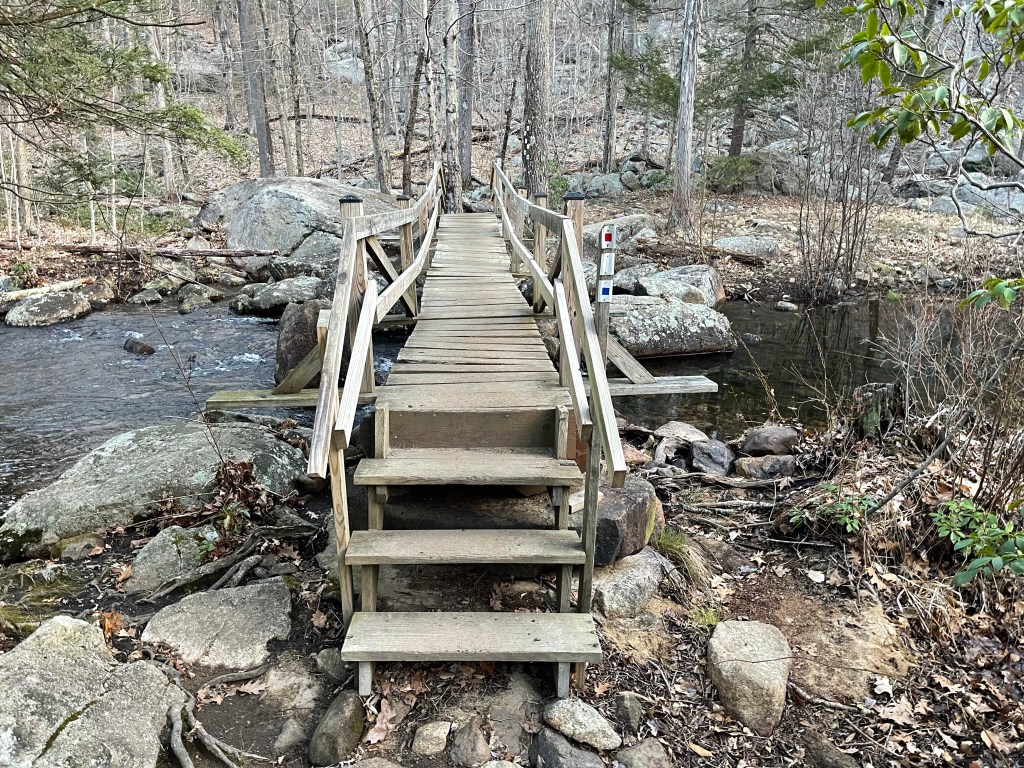
    Crossing this bridge convinced me that I’d best turn back and try again another day for the pond.
  • Create Evidence

    “Belief in yourself is overrated. Generate evidence.” — Ryan Holiday

    What does your personal scorecard look like as we crossed off the first 100 days of 2022 earlier this week? What were your highlights? What hasn’t met your expectations when we began the year?

    Doesn’t that inform us of what needs to change immediately?

  • A Quick Hike Up the Nose

    Let’s get the elephant in the room addressed right off the bat: Anthony’s Nose has an odd name. Here’s one story I came across in Kiddle that describes how it got it:

    “Pierre Van Cortlandt, who owned this mountain, said it was named for a pre-Revolutionary War sea captain, Anthony Hogan. This captain was reputed to have a Cyrano de Bergerac type nose. One of his mates, looking at this mount, as they sailed by it, compared it to that of the captain’s nose. He said that they looked similar in size. This good-natured joke soon spread, and the name Anthony’s Nose stuck to this peak. Washington Irving’s History of New York, a satire, attributes the name to one Antony Van Corlear, who was the trumpeter on Henry Hudson’s ship.”

    Whatever the source, it requires that each hiker now forever able to say they went up Anthony’s Nose. How you feel about that is entirely up to you. For me, the motivation was to see a bridge I hadn’t seen in almost 30 years, get a quick hike in to break up a long drive and get a feel for a stretch of the Hudson River from a hill top.

    There are a few routes up Anthony’s Nose (sorry). The most direct route is a steep granite “staircase” that brings you to your destination relatively quickly. This requires street parking on a busy stretch of road. Alternatively, there are a couple of longer routes to the lookout spot, the one I favored followed the white blazes of the Appalachian Trail. The AT crosses the Bear Mountain Bridge over the Hudson River and meanders up through a final stretch of New York before reaching Connecticut. You might expect a stretch of the AT to be lovely hiking. You’d be correct for this stretch.

    There seems to be a lot of confusion about where the trailhead is for Anthony’s Nose. If you’re going to hike straight up the staircase, you begin at a small deck on the side of the road not far from the bridge. If you’re more interested in a 90 minute round trip hike, take the AT route. The trailhead begins on South Mountain Pass Road, which is a rutted stone dust road for a long stretch. If you’ve got a small sedan you might consider driving in from the Blue Mountain Beacon Highway side, which offers a bit more pavement to work with. Driving a truck, I enjoyed the off-road feel of reaching the trailhead after a few hours of highway driving to get there.

    The key for the trail is to follow the white blazes, which leave an old roadbed a few hundred yards up and begin descending towards a small stream before climbing back along the ridge line. The trail head would benefit from a bit of signage and a map, as one hiker after another asked each other if they were in the right spot. Perhaps a Boy Scout Troop could take it on as a project.

    The hike took 90 minutes round trip. Parts of the trail felt like you were in the middle of the White Mountains, but with glimpses of the Hudson River along the way. There was a bit of traffic buzz in the background, but overall it was a perfect hike to break up a drive from New Hampshire to New Jersey for me, or a short destination hike away from New York City. I’d recommend bringing lunch and soaking up the view.

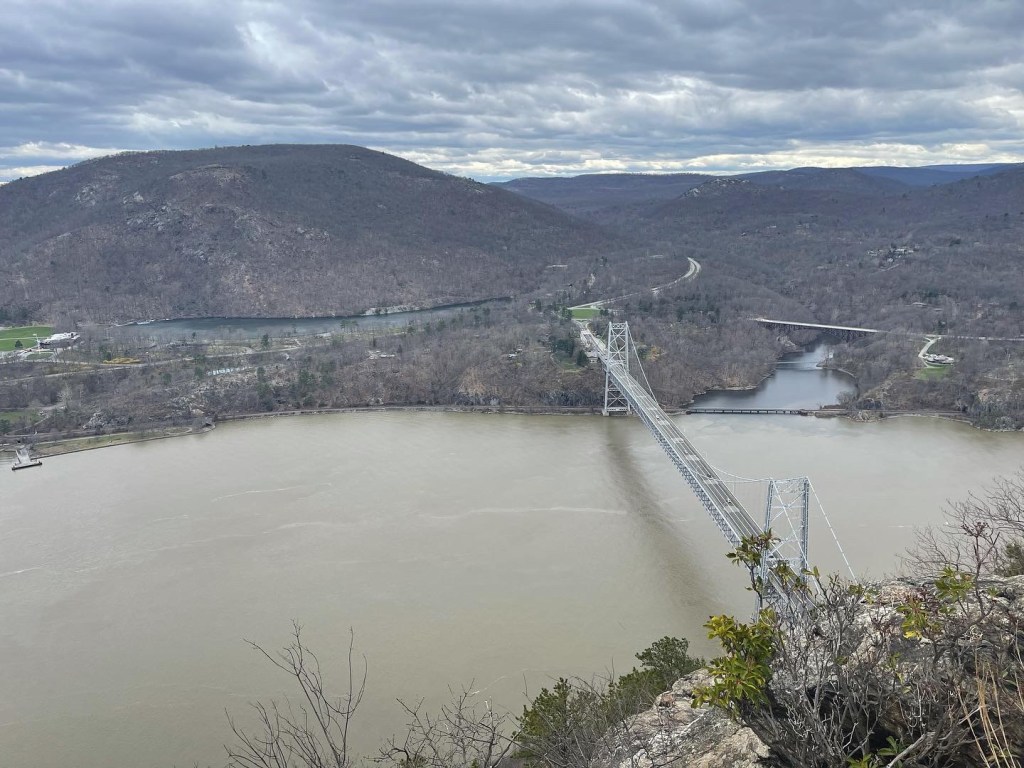
    Bear Mountain Bridge with it’s namesake rising up behind it
  • Developing Identity

    At what point on the line of consistent routine does a habit accelerate from a regular part of your life to a major part of your identity? Put another way, if we are what we repeatedly do, at what moment does what we do become us? It may be that moment when you can’t imagine doing anything else but this habit now and forever. But I think it’s a notch beyond that: when others see you as that character you’ve developed into and that habit is reinforced and self-perpetuates.

    Consider a friend who has only been consistently hiking for maybe ten years. Her identity developed around hiking and she’s gained hundreds of followers on her InstaGram account because people associate an activity they want to do more of with her. Or consider my bride, who has run consistently since she was a teenager. Half the town knows her as that lady that’s always out running. Heck, I sometimes think of her as that lady too. Consistent routine develops identity. Identity becomes the essence of who we are.

    But both of these women began with a first awkward step out into the unknown. Both learned what worked for them and what definitely was not going to work. The essence of who we are is derived from what is essential for us. The rest is marketing. You either inform the world of who you’ve become or wait for them to see it for themselves.

    Like a river carving its deepest channel on its truest route, what we say yes and no to as we favor our chosen path becomes the deepest part of our channel. In a river oxbows gather silt and are eventually cut off altogether in favor of the channel. Likewise, some things that were so very much a part of our identity peter out and die from lack of attention. I once fancied myself a sailor, yet I don’t currently have a boat. A friend also fancied himself a sailor and purposefully accelerated and reinforced that identity by trading up to bigger and bigger boats and forgoing career advancement for a log book full of hopes and dreams realized. Who’s the sailor?

    I’m about to click publish on this blog, as I’ve done every day for a few years running now. Does that make me a writer? The answer is what you want it to be. Decide what to be and go be it. And then inform the world (and yourself) with your consistency.

  • Plans

    What is an intention when compared to a plan? —Amor Towles, A Gentleman in Moscow

    What you intend to do is meaningless.

    What you actually do is everything.

    What requires a why for fuel in its darkest hours.

    What flounders without a plan.

    Habits carry plans to their completion.

    Plan your habits wisely, then follow through as if your life depended on it.

    Doesn’t it?

  • What You Drift Away From

    My spouse recently deprioritized potato chips and Diet Coke from her life. For me, I could pass the rest of my days without ever consuming either of them, but for her these were a big part of her eating ritual. You make a sandwich for lunch, you need something crunchy and salty with it. And of course something to wash it down with. Dropping each was hard for her but she’s finding her stride.

    I’ve got my own demons. A love of great cheese, pasta, rice and beer — wonderful foods that I’ve largely eradicated from my life in 2022. In previous years I used to have cheat days where I’d eat all of this stuff in a binge of epic proportions. Now I let things drift away. I’ll have an occasional beer with friends, and I’ll sprinkle a bit of grated cheese on a meal now and then, but surprisingly I don’t miss it much.

    Food in this way is like old friends you don’t see anymore, you just fill the void with other things that bring you delight. Jennifer Senior wrote an article called It’s your Friends Who Break Your Heart in the latest edition of The Atlantic that speaks to the drifting away of friends in your life. We’ve all experienced it: In school or in your career you collect friendships. When you’re a parent of active children you tend to collect fellow collaborators who become friends. It’s only when the nest empties and a pandemic grabs a couple of years of your life that you look around and find that only a small core group remains. The great reckoning of what’s really important in your life is a harsh judge.

    I have long work relationships that fell away like a bag of chips with lunch. I have some people in my life that I haven’t talked to since it became clear how different our worldviews were on science and politics. Friendships of convenience always drift away with physical or emotional distance. The ones that stand the test of time are honed on common interests, deep roots and a shared commitment to keeping it going.

    Lately I’ve been struggling with my daily rituals. The morning has always been about writing, but work increasingly pulls at me, prompting me to cut short my writing and jump into the fray. The workouts and long walks became a casualty too frequently. This won’t do. We become what we prioritize, and you must fold positive habits into your daily life or you’ll eventually find yourself overweight, unproductive, uneducated and void of meaningful relationships.

    We are what we repeatedly do.

    You are what you eat.

    We are the sum of the five people we hang around with the most.

    There’s truth in these statements, which is why we all know them by heart. So why don’t we do more to prioritize the positive actions, food and people in our daily lives? I believe it’s because we all live in a whirlwind, and sometimes it just feels easier to turn on the television and distract yourself with other people’s problems than to deal with your own. Grab a bag of chips and beer while you’re at it. Habits and rituals work both ways. We’re either improving our lot or slipping sideways down the cliff. You just don’t notice it right away until there’s some tangible negative momentum in your slide.

    Maybe the answer really is all things in moderation. But you know even saying that that it isn’t really true. The real truth is some things in moderation, some things not at all. Some things in abundance, and nothing in excess. We ought to stop drifting through the whirlwind of life and decide what brings you closer to who you want to become. In doing so, we must allow some things to drift silently away from us. And hold on to other things for dear life.

  • Bluebirds in Winter (Playing the Long Game)

    Many moons I have lived
    My body’s weathered and worn
    Ask yourself how old you’d be
    If you didn’t know the day you were born
    Try to love on your wife
    And stay close to your friends
    Toast each sundown with wine
    And don’t let the old man in

    Written by Toby Keith/sung by Willie Nelson, Don’t Let the Old Man In

    There are few things more beautiful than a bluebird set against snow on a brilliant, sunny day. But bluebirds don’t just randomly show up to brighten your snowy landscape. If you want bluebirds in winter you’ve got to give them a compelling reason to visit. The work starts in the longer and warmer days establishing a consistent and reliable place for them, to be rewarded when the days grow shorter.

    Age is an attitude. Sure, you might make a case for the gradual breakdown of the body, but with consistent effort you can control the rate with which the body breaks down. There are plenty of voices out there pointing towards habits and social norms dictating our long term health and vibrancy, not the number of trips around the sun. We all know people who defy expectations about age, bouncing around well into their 90’s and beyond. And we can rattle off examples of people who died too young, with the wheels coming off at a shockingly young age.

    We know there are no guarantees in this world, but barring accident or underlying hereditary conditions, when we die often comes back to how we live. Which makes you think, as you see the days fly by, how are you going to play this hand? What are the habits and norms that are going to dictate how we feel when we wake up tomorrow morning, or how we feel in five years? What can we do today to feel better in ten years than we feel now? Shouldn’t we focus on doing more of that?

    If we want to play the long game, we ought to walk away from the short term temptations that compromise our fitness tomorrow. Eat well, drink less, move more, experience something new every day and spend time with friends and loved ones. The long game means putting our bodies and minds in the best possible position to meet the future.

    Remember the old expression: The best time to plant a tree was twenty years ago. The second best time is right now. What are you building towards? Best to get started today. Plant that tree. It’ll give you a place to hang the bluebird feeder.

  • Action Plans and Comfort Zones

    Don’t look now, but as I post this on February 9th, we’re almost 11% through the year. How are those New Year’s Resolutions looking? Yeah, I know what you mean. Action plans without execution soon fall away like so many broken dreams.

    I don’t make resolutions, I chip away at habit formation. I’m particularly locked in on writing every day, as quirky and all over the map as it might be for the reader. I’m a streaker, if you will, committing to not breaking streaks in the habits I want to have in my life. Writing, reading, learning a bit of a foreign language or two, getting a full night’s sleep and eating relatively well are consistently checked off on the streak list.

    But then there are the broken streaks: rowing and lifting every day, not drinking on weekdays, and some work productivity goals that pain my friend on sabbatical too much to mention. My action plan for each of these have all succumbed to the comfort zone. It’s so much easier to just make a coffee first thing in the morning and begin writing than it is to jump on the rowing ergometer and row for 10,000 meters. It’s so much more pleasant to have a glass of red wine with dinner than to drink yet another glass of water. Comfort trumps committed action when you haven’t established routine.

    So I’ve put the action plan aside in favor of the habit tracker. Each morning I have my reckoning, checking off the things I did the day before. And leaving a glaring void where the things I meant to do (or not do) missed a day. And then I try to avoid having two of those voids in a row. Sometimes it works, sometimes I go a long, long way between check marks.

    Ultimately, life is meant to be lived to our fullest extent possible. But we live in a pay me now, pay me later reality. The bad habits add up, just as the good habits do. Decide what to be and go be it. But don’t lie to yourself.

    I still make action plans, but now I try to identify the key daily steps that lead to success down the road. Sometimes I succeed, often I don’t. But I just keep trying to check the box. After all, there’s a certain comfort in established habits too.

  • The Crunch of Now on an Icy Trail

    Friday offered heavy rain that turned to sleet and finally snow. With temperatures plummeting, this quickly turned into a frozen mess on the roads. And temperatures stayed well below freezing, guaranteeing that anything frozen was likely to stay that way for a few days. The snow was transformed to rock-hard ice, with a light frosting of granular snow atop it. It was perfect for slipping on boots and micro spikes and heading for the trails.

    The same conditions that make roads miserable transform trails into magic carpet rides. Most of the sins of the trail are locked below the frozen hard pack, and with the right gear the trail is a joyful peregrinate through the wonders of the forest. Streams and waterfalls become sculpture. Granite recedes from primary feature to delightful accent locked in the ice blanket. The trail itself offers an entirely different experience than it did just days before when snowshoes were the kit of choice. In winter every day brings something new, should you go out to find it.

    Much like the landscape around you, walking alone through the woods on a frozen but brilliant sunny day you become intensely embedded in the moment. You don’t walk with purpose to a destination, the walk is your destination. Every step becomes the point of your being here. With micro spikes announcing their grip on the ice, every step becomes a cry of Now! Here! Now!

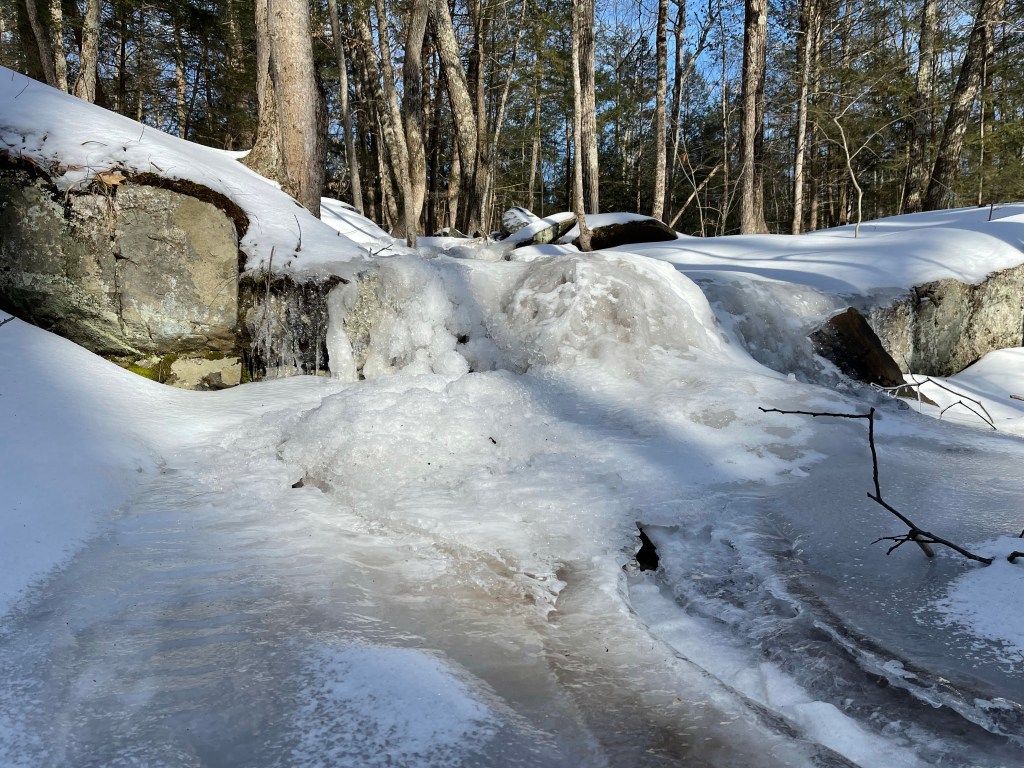
    I visit a frozen waterfall. I only seem to visit it in winter, when it’s locked away in ice, and each visit I tell myself I ought to stop by in spring when the water is running angry. We all feel locked away ourselves in winter, I suppose the waterfall and I are kindred spirits in this way. My visit becomes a vote of solidarity with the falls behind the ice. I promise once again that I’ll be back, and believe I mean it this time. The frozen waterfall is indifferent to my promises. All that matters is the present for a waterfall. The future lies upstream, waiting for its moment. Whether I’m here for it doesn’t matter to the waterfall.

    I come across a few people along the way, couples and dog walkers and snowshoers gamely giving it a go on the ice. Read the room, folks. The trail betrays all who have come before me: fat tire tracks, boots, paw prints and snowshoe tracks. We believe we’re the only people on earth when we’re alone in the frozen woods, yet here was proof of all who came before, with all that you chance upon. You aren’t really alone in the woods, you’re alone in the moment. And there’s a measure of delight that washes over you as you make your way towards your own future.

    Waterfall, locked in the moment
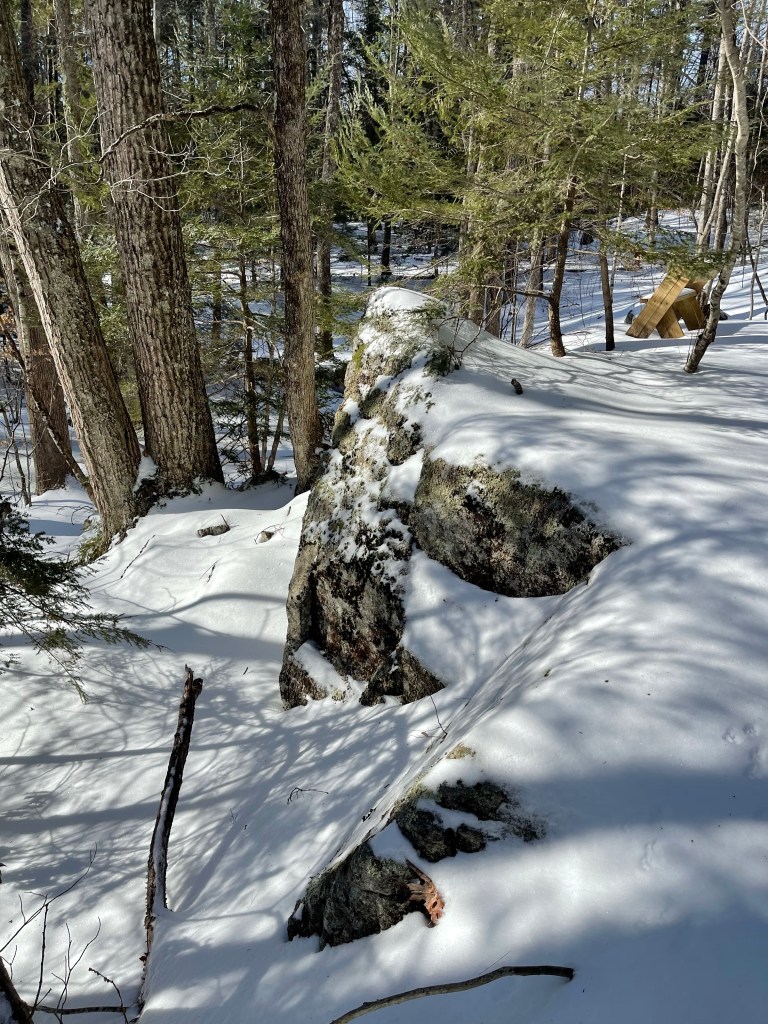
    Frozen granite
  • Unbroken Snow & Writing

    There are different kinds of snow, and different kinds of snowshoeing. Snowshoe hiking up a mountain is very different than snowshoeing across a snow-covered field. Like walking on these terrains when there’s no snow, there’s a certain tactical change that develops with each. Hiking up a mountain, there’s a unique relief in flipping up the heel lifts on snowshoes to level your foot to the incline that you naturally wouldn’t feel on flat terrain. There’s also a wholly different intensity in grinding up an unbroken mountain trail. Steep terrain and unbroken snow are a workout. For me it’s a bit like technical writing, you know the payoff will be big but in your lowest moments the effort feels like it isn’t worth it (it’s almost always worth it).

    Flat terrain snowshoeing is a different story altogether. Easier, in a lot of ways, but that ease releases you to explore more than you might on something more technical and demanding. But that very freedom can force people to stick with the formula of the familiar. Why be uncomfortable in breaking new ground? Because that’s where things get most interesting!

    There are times when you’ve got to stay on the path. Inevitably, you’ll begin on broken ground: trails that lead from a parking lot to open fields, or woodland trails that must be honored before you reach open space. There’s an obligation, unsaid, to help groom the trail by tamping it down with your snowshoes. We do our part, but it feels like paying penance, and you look ahead to where you might break free. The very unevenness of the broken trail is what makes it a chore. Compacting broken snow means staying in your lane, taking what others have left for you and finding a path through it. Broken snow, especially when regular walkers use the same trail, exposes boulders and roots and ruts that lead to post holing on the trail. There’s a certain satisfaction in tamping down the brokenness, akin, in a way, to editing a sloppy bit of writing.

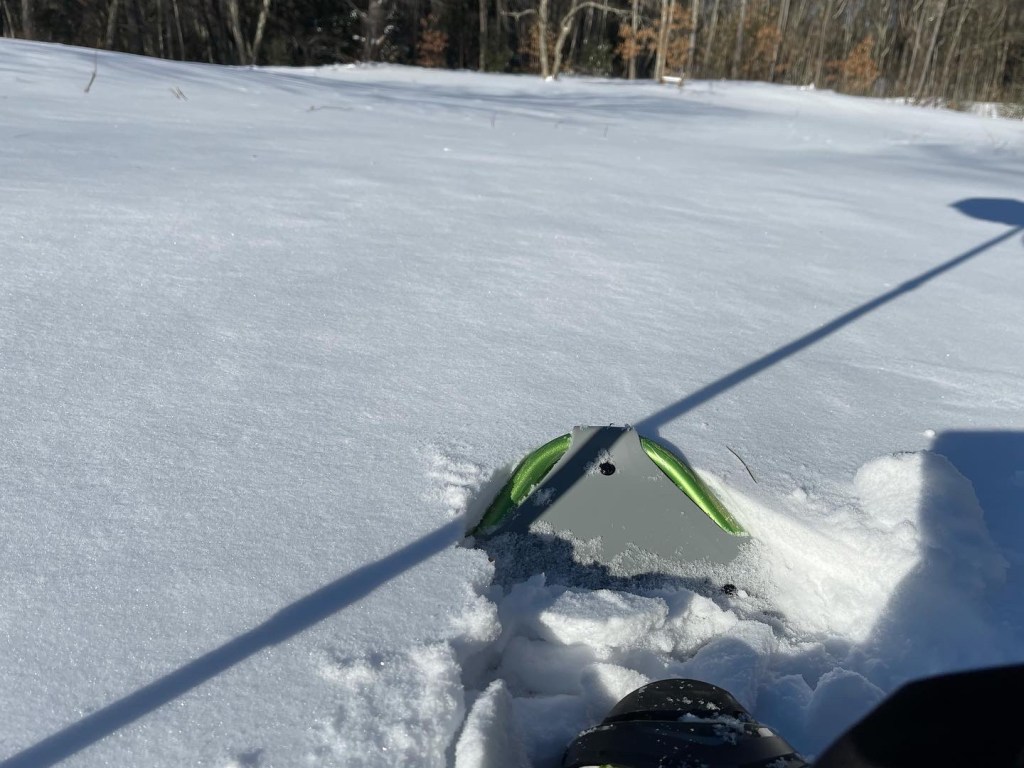
    But the real fun begins when you find an opening to fly. A small break in an old stone fence that leads you to a virgin field of unbroken snow, or a wide open field with a single broken path going across it each whispers, “It’s time: FLY!” and gives you the opportunity to break from all expectations and obligations and just go for it. Like a plane freeing itself from the obligation of the runway, launching yourself into unbroken snow is freedom. It’s just you and the snow, and you can go in any direction you want.

    Writing can feel very much the same. You chafe at the obligatory structure, you get caught up in the rules of punctuation and order, you try to clean up run-on sentences and spelling errors and the like as you go. But to really fly with writing you’ve just got to just launch yourself into it, technique and order be damned, and just see where it takes you. Inevitably to places you never imagined when you started. If you truly let yourself go you don’t worry about editing the broken trail you leave behind you. There’ll be time for that another day. No, this is your time to take wing.

    If you’ll forgive me another analogy about snowshoeing and writing, it’s the conditioning. When you haven’t been out on snowshoes in a while you forget the pace and rhythm and become a bit breathless. When you do it every day you quickly find your pace and rhythm and just get right to it. It becomes natural–a part of you. And when you reach that point you can cover so much more ground than you would otherwise. The lesson, of course, is to get to it every day.

    The obligation of the broken trail
    The freedom of unbroken ground