Category: Fitness

  • That Which Is Around Us

    “I am what is around me.” – Wallace Stevens, Theory

    We build the world around us, surrounding ourselves with things and people that reinforce for us that image in our minds. Believe you’re a hiker? Go to the mountains and be one. Sailor? Get a boat or crew in someone else’s. Runner? Get some good running shoes and hit the pavement again and again until it becomes your identity. Writer? Write every day: immerse yourself in the Great Conversation, pull in all that is around you like a warm blanket on a cold night and share it with the world.

    I heard about the death of a friendly acquaintance last night. He was larger than life in some ways, but fragile from years of abusing his body. He would drink too much, love too many, drive too fast and talk even faster, but he had a good heart and it showed in how he treated those around him. He lived the work hard, play hard mantra more than anyone I’ve ever met. I learned not to keep up with him drinking, to drive separately when going to meetings, and to keep pace when it came to work. I was just in his town last week but decided not to call him, thinking I didn’t have the time. It turns out I only had that time.

    We are what is around us. Jimmy surrounded himself with a lifestyle that killed him young, but was as fully alive as anyone I’ve met. We don’t get to choose everything that happens in our lives, but in our daily habits we slowly build up and reinforce our image of ourselves and what we might become. Ultimately it’s all just a story in our mind, and like any story you can choose to send it in another direction at any time. But you can’t turn a tragic-comedy into an action-adventure or a romance novel easily. Sometimes you’ve got to scrap the entire first draft and start writing a new book.

    As a nod to Jimmy, I’ll work to be more alive in the moment, but with a lot less vodka. I’ll work hard in my career and play hard at healthier activities than he chose. Like Jimmy I’ll beam in pride at my kids, but will try to lead by example that the things you surround yourself with in this one precious life matter much more than you might think. Those things either hold you up or press you down, so choose wisely. Thanks for the reminder Jimmy.

  • The Abnormal Climb

    “You can’t be normal and expect abnormal results.”Naval Ravikant

    There’s nothing wrong with normal; the pursuit of normal usually offers you an average, lovely life. But if you want to be ultra-wealthy or a washboard abs model or win the Olympics or be an astronaut or a Nobel Peace Prize winner, well, be abnormal. They don’t just give space suits to the guy ahead of you at Starbucks. Unless that guy is a Navy pilot with a Masters in Astrophysics anyway, and even then his odds aren’t great. Nope, be different than the billions of people marching through life…. or embrace the beauty of average. We all have that choice.

    I’ve dabbled in the pursuit of excellence in athletics, and frankly I opted out early. Pursue Olympic-level rowing? Thought I’d give it a try. Learned quickly that it was a very steep and long climb. I opted to be a big fish in a smaller pond. Regrets? I’ve had a few. Pursuing elite rowing isn’t one of them. I’ve known several Olympians over the years, one rowed out of the same boathouse as me. She won a silver medal! Olympians seem average on the surface, there’s an abnormal core there – a focus, that I deeply admire. But I knew it wasn’t me.

    We all want to be excellent at something, if we’re lucky we figure out quickly what we shouldn’t attempt to excel in. Sometimes great or pretty good still sets us up for an exceptional life. I was a pretty good rower back in my time, but not willing to do the “abnormal” work needed to be world class. I smile thinking about the lecture I heard from the National Team Coach emphatically telling a friend and me that the work needed was far beyond what we were doing at the time (and we were very fit). I appreciated his time and candor, assessed my willingness to execute on the plan and opted out. In a different pond I might have pushed through, but the pond I was in seemed good enough.

    Whenever you find yourself on the side of the majority, it is time to pause and reflect.” – Mark Twain

    This quote on the surface is funny (or scary in this political climate), but peel back a layer and there’s truth in the message. In the context of pursuing the abnormal there’s magic in Mark’s clever quip. Find your unique path, work hard and be excellent at it. Don’t be the majority, be something more. I’ve long since hung up the oar, but hey, maybe the writing will take off. At the very least I owe it to myself to become a better writer. There’s honor in the pursuit of excellence, even if we never reach it. Somebody once said that “never” is a belief, it doesn’t have to be shackles. I saw that in rowers who accepted the same challenge I opted out of who eventually wore Olympic hardware.

    “Blah, blah, blah, blah. DO THE WORK.” – Jocko Willink

    At some point you get tired of regurgitating excuses and you find something to be singularly focused on pursuing. We’re all running out of time, get up and do something already. Balance is important but it’s also an excuse. Prioritize, focus and do the work. Want to be a writer? Do the work? Ab model? Do the work. Olympic athlete? Do. The. Work. We arrive at excellence by what we focus on, and by what we say no to along the way. The day offers the same opportunity for all of us living in a free society, so why exhaust that day coming up with excuses for why you didn’t do something? Get fit, work abnormally hard at your chosen craft, whether writing or astronaut or parent, be consistently, abnormally doing the work, and you’ll reach a level of excellence – or at the very least, be well above average. Seems a worthwhile climb after all.

  • Miles of Crunch

    The math adds up, mostly. When you walk 4.25 miles in one direction on a rail trail, you should get the same number coming back in the other direction. Except that I took a couple of detours on the walk north, exploring side paths that I’ve previously marched right by. This wasn’t a timed walk, it was all about being outside, alone with the ice. Well, mostly alone; there were the seven other people I saw, shufflers every one. The iciness of the rail trail made it unsafe for walking without micro spikes strapped into your hiking shoes, but crunchy ease with them.

    That crunchiness. The quiet solitude made the crunch, crunch, crunch of my every step echo off the frozen landscape, and I paused now and then to listen to the stillness I was disrupting with my walk. The crunch was caused by my micro spikes biting into the two inches of frozen carpet atop the rail trail, sprinkled on top with bits of broken ice accretion fallen off the branches above as the trees shrugged off last week’s icy embrace. Snowflakes drifted silently to the ground, not in an accumulating way but in a complete the scene way. I welcomed them and noted their progress along with my own.

    The ice crunch was my companion the entire afternoon, the chatty hiking partner with a lot to say, but not the only ice talking to me. The ponds on either side of me also spoke, in sustained, low rumbles and pops as the ice sheet on the ponds came alive in the relative warmth of the sun. For those in places where ponds don’t freeze, it’s a fascinating rumble, almost like a serpent is brushing against the icy ceiling, looking for a place to break free. It’s particularly exhilarating when you’re standing out in the middle of that frozen pond, with your body weight adding to the groaning of the ice. These are days when you forget the rest of the madness in the world, and it’s just you and the ice.

    I reached the depot on the north end of my walk, looked around a bit, seeing only two cars in the parking lot and knowing the three people who they belonged to whom I’d see on my return south. And I began the four mile walk back, walking with purpose, focused on getting back in a little more than an hour. That’s a good clip marching on ice, but my meandering was for the northward leg of my walk; it was time to accelerate on the return. Frozen footprints in the ice make fast walking challenging and a bit dangerous in the middle of the rail trail, and getting injured alone two miles from help wouldn’t do at all, but the sides of the trail were generally footprint-free and I made the desired progress. Walking for speed offers a different reward than meandering, this was more workout, less pondering the world. But I made it back to the southern parking lot pleasantly surprised by my speedy pace, finding my car alone in the icy parking lot, patiently waiting for its own chance to move.

    Ice offers its own rewards, if you’ll only look for it. This winter has been uncommonly warm, and the ice was a welcome return to winter for me. A well-prepared walk on a frozen carpet of wonder, surrounded by ice sculptures and rumbling ponds. That’s the February Sunday afternoon I’d been hoping for, an exclamation mark on the weekend and a chance to pivot into the week with a clear head.

    Frozen pond with a lot to say
    Ice sculptures change daily on the trail
    Broken bits of ice accretion sprinkle the landscape. These still show the curve from the branches they hugged
  • Walking in Circles

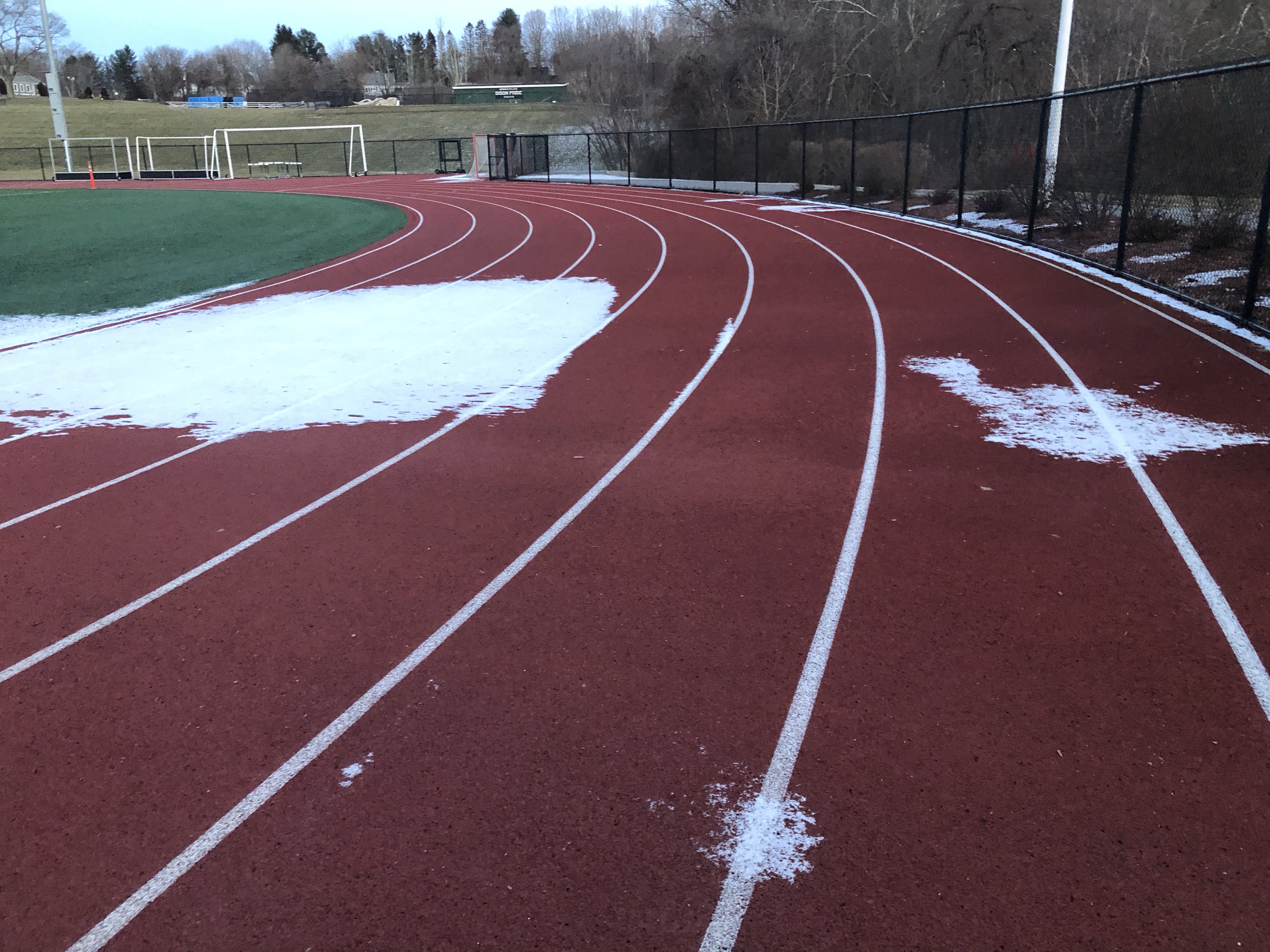
    Last night I glanced at my watch and recognized that the walk streak was in peril.  I did the math, adding the drive times ahead of me, my son’s college basketball game I planned to watch, and the number of steps I had to do to get there.  I pulled into the parking lot of a small college in Massachusetts, glanced around and thought this was it; streak over.  I had to walk 2 miles to get over the hump, or 4000 steps.  It was a bitingly cold evening and the sun was setting.  What to do?  Walk around the campus as it got dark?  Possible, but this wasn’t a campus to wander around in the dark.  Safe, but completely foreign to me.  I told myself to stop thinking about it and just get out there, left the warmth of the car and walked down the hill looking for a path.  And there was the outdoor track, sprinkled in snow but mostly clear.  One gate was left unlocked, inviting runners and walkers to take a spin but getting no takers until I came along.  Floodlights remained cold and dark, as if to say “Why bother?  What kind of fool would be on this frozen track tonight?”  Hey there dark floodlights, I’m your fool!

    Did I mention the biting cold?  Yes?  Did I mention I was wearing business casual clothing with a light coat on and dress shoes?  No?  Well, that was the athletic attire for the two mile spin around the track in the darkening sky, shoehorned between work and a basketball game.  Take a lap, complain to myself about not bringing running shoes.  Take another lap, feel the cold seep inside the thin coat I wore.  Repeat.  But then something funny happened; I stopped caring about the cold and started checking the progress of my steps.  On a track there’s no mystery: 400 meters any way you look at it, repeat eight times and you get to 2 miles, which is what I needed to get over the top.  So I stopped whining to myself and got it done, and felt better for having done so.  The darkening sky was beautiful with the full “wolf” moon rising to mock my discomfort, and I smiled and mocked myself too.

    The thing about 10,000 steps is that it isn’t all that much in the big scheme of things.  I recognize it’s the bare minimum and more must be done to be truly fit.  But it’s a promise I made to myself to keep the streak alive for as long as possible, and I’m tired of breaking promises to myself.  So the track workout checked the box for another day – 33 and counting – and I got into the warmth of the gym and watched real athletes compete at a high level.  I used to be on of them, rowing instead of basketball, but an extremely fit, disciplined college athlete.  Then a few decades slip by, work, kids, commitments…  and habits slide with promises unkept, but you forgive yourself and move on.  If my hour on the track in dress shoes told me anything, it’s that I’m less tolerant of excuses I make to myself.  10,000 steps is one small habit on a stack of small habits I’ve been tracking.  Instead of thinking about resolutions and big  transformation, I’m thinking small daily habits and keeping the streak alive another day.  It seems to be getting me where I’d like to go, even if it seems like I’m walking in circles.

  • Better Decisions

    In most of our decisions, we are not betting against another person. Rather, we are betting against all the future versions of ourselves that we are not choosing.” – Annie Duke, Thinking In Bets

    As we enter the first full work week of the New Year, I’m focused on this concept of Second Order Thinking and working to apply it better in my life.  In short, asking what will be the consequences of doing this versus that in the first order, the second order and the third order?  If I eat this donut because it looks delicious (first order), then I’ll add more empty calories and gain weight (second order), which will make me more stressed out in the future when my pants are getting too snug (third order).  Second and third order thinking is a way of fast-forwarding into the future as you decide on whether or not to do something in the present.  It gets you out of the self-centered immediate gratification of now and looking at the ultimate satisfaction of then.  Ray Dalio describes it as the lower-level you winning out over the higher-level you.  I haven’t been consistent with this in my lifetime, particularly when it comes to snacking.  I’d say it’s time to look up from the proverbial candy dish and think beyond the moment.

    “Decide what to be and go be it.” – The Avett Brothers, Head Full of Doubt/Road Full of Promise

    I didn’t believe I’d like the book Thinking In Bets.  I’m not a poker player and have no desire to immerse myself in the world of poker. They wear sunglasses indoors and pull their hats down low to cover expressions on their faces.  I mean, who wants to hang out with people doing that?  But this isn’t a book about poker, it’s a book about decision-making.  And making better decisions is something I’ve been working on in myself for some time.  It started with this idea of Second Order Thinking, where you weigh the consequences of your decision now and into the future.  I’ve made plenty of decisions in my lifetime that made sense in the immediacy of the moment that turned out to be bad decisions down the road.  And a few that I thought weren’t great early on that turned out to be brilliant (and lucky) decisions with hindsight.

    We’re the average of the five people we hang around with the most, as Jim Rohn would put it.  Applied to what I’m reading, I’m currently hanging around with stoics, poets and experts in creating and sustaining better habits.  And now I’ve invited decision-making experts to the party.  I’m okay with that mix, and will enhance it over time.  But reading about something isn’t doing something.  That’s a trap that you realize as you read book after book without applying the knowledge you pick up from all that reading.  No, the rubber meets the road when you take action.  Applied knowledge, repeated daily, leads to exponential improvement over time.  I’ve seen that working in all things over the course of my life.  The focus now is to improve the decision-making process so I spend that time on better, more productive activity.  Dance a bit more in the higher-level self.  Now is as good a time as any to get to it.

  • Crunchy Meditation

    There’s nothing like a long walk to sort things out and help you forget about the madness in the world.  Last week New Hampshire received a few inches of heavy, wet snow. Once walked upon, slushy snow becomes a clutter of footprints.  Let it freeze and that snow becomes a crunchy, treacherous mine field.  And such was the state of the Windham Rail Trail on my Sunday walk.  Micro spikes over hiking boots answered most of the challenge, and a little care on where you stepped solved the rest.  A long walk alone became crunchy meditation, with a good workout as a bonus.

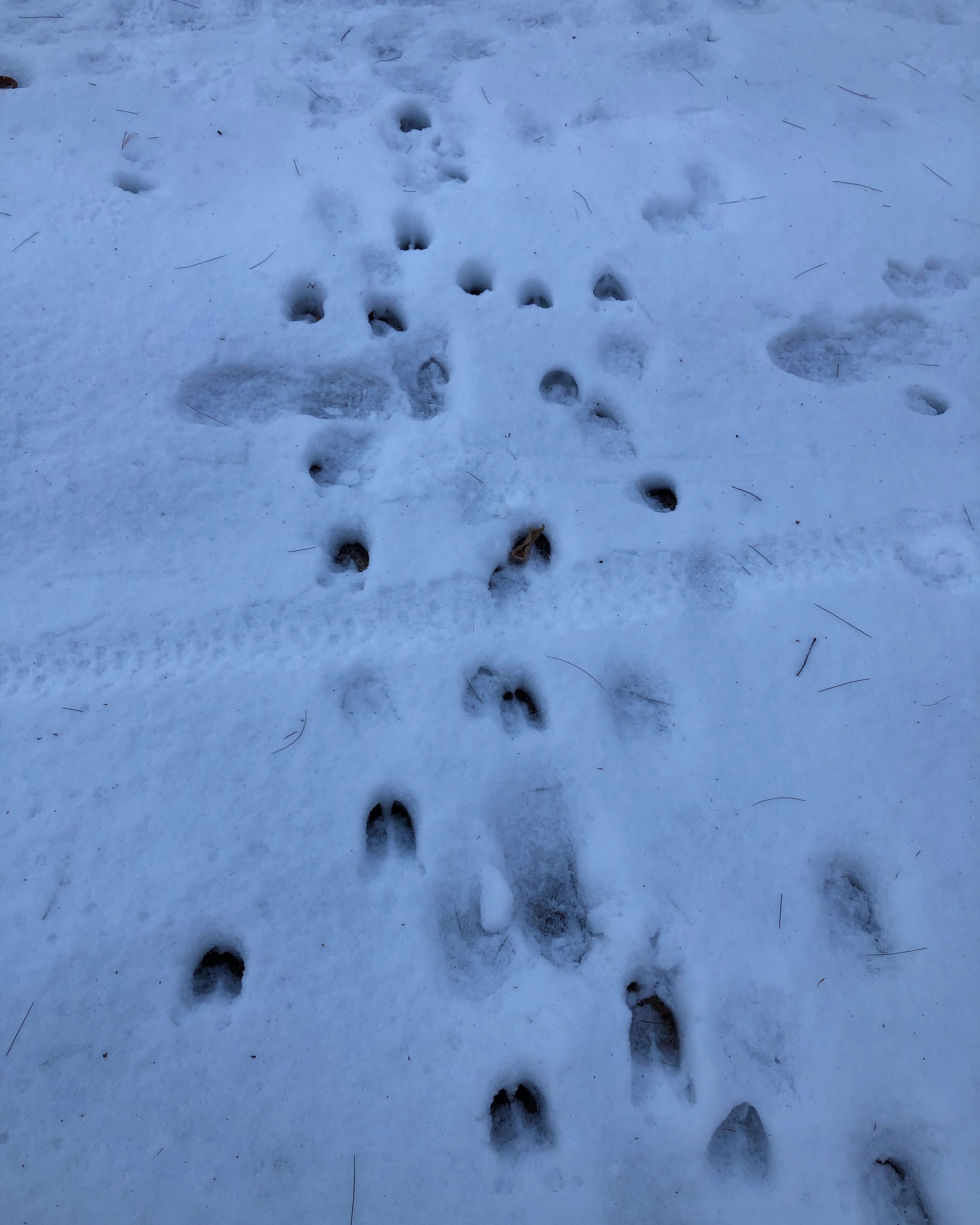
    About three miles into the walk I came across a column of deer tracks crossing perpendicular to the rail trail.  Nothing surprising in that; this is deer country here in Southern New Hampshire after all.  But I found the tracks fascinating anyway.  The deer walked in a line like Native American warriors or Roger’s Rangers would have done when this area was contested frontier.  In the case of warriors and rangers it masks the numbers from the adversary.  I wondered if the deer instinctively mask their numbers or just follow the leader to minimize the calorie burn of moving through snow.  The latter makes sense, doesn’t it? In winter where calories equal survival efficiency in movement means everything.

    For me the goal was just the opposite of the deer: burn as many calories as possible in two hours of walking and be outdoors as an active participant in winter. Mix in a visually interesting trek on rough terrain and this afternoon’s 10,000 (+!) steps scored a high bliss rating. And who doesn’t need more bliss in the short, dark days of January?

  • Playing Nice With the Vital Organs

    You are what you eat.  Simple, right?  It is until you see the assortment of treats laid out during the holidays.  Or the rows of donuts calling your name when you buy a coffee.  Saying no to empty calories is challenging, saying yes to healthy calories shouldn’t be.  I think the easiest way to remove empty calories from the diet is to remove the temptation in the first place.  Saying no at the market makes the rest of the week less torturous at home.

    I’ve mentioned before my concern about brain health, with people in my life struggling with dementia that was hammered home during the holidays.  So doubling down on brain food makes a lot of sense.  But it’s not just for the long term, eating the right foods now also enhances your mood and overall fitness.  I’d call that a triple play worth betting on.

    A search on food that is good for your brain health nets you many results, but the following are common across most lists:

    Broccoli, walnuts. dark chocolate, blueberries, turmeric, pumpkin seeds, avocado, beets, sage, tomato, green tea, eggs, coconut oil

    A similar search on food that enhances your mood offers the following results:

    Salmon, eggs, dark chocolate, almonds, avocados, bananas, lentils, blueberries, green leafy vegetables, coffee, green tea, oysters, quinoa, cottage cheese, broccoli, grapes, bell peppers

    So the takeaway is that I’ve been eating most of these foods already (maybe that’s why I’m usually in a good mood?), but doubling down on the ones that appear on both lists is logical.  But wait!  There’s more!  Another bonus; most of the same foods appear on the list of heart healthy foods too.  Knowing how much Omega-3 and phytonutrients, magnesium, fiber and assorted vitamins to add to your diet is cumbersome for me.  I only have so much room at the mindfulness inn to invite guests like that on a daily basis.  But eating grilled salmon instead of steak?  Easy.  Coffee and dark chocolate?  Are you kidding me?  I think I’ve got that one covered.  Just about the only one that I’m not consuming regularly is turmeric, and that can be solved with adding it to a smoothy or a cup of tea in the morning.

    The flip side is also important.  What will you say no to more often?  And the obvious answers are red meat, fried food, beer, cheese, sugar and bread…  Damn.  Nothing I don’t know already, but a couple of those are regulars on my dietary stage.  Cheese and crackers and a handful of M & M’s have been dancing in my stomach since Halloween.  Which directly correlates to the scale flatlining since I’ve increased my daily exercise.  The accepted trick is to make these things an occasional treat.  Having a cheat day when you can eat all  of the junk you’ve been saying no too, but also some of the delicious foods you love that don’t play nice with the vital organs, is important.  If nothing else it keeps you sane.  And what’s the point of having good brain health if your diet makes you crazy?

  • Get To It

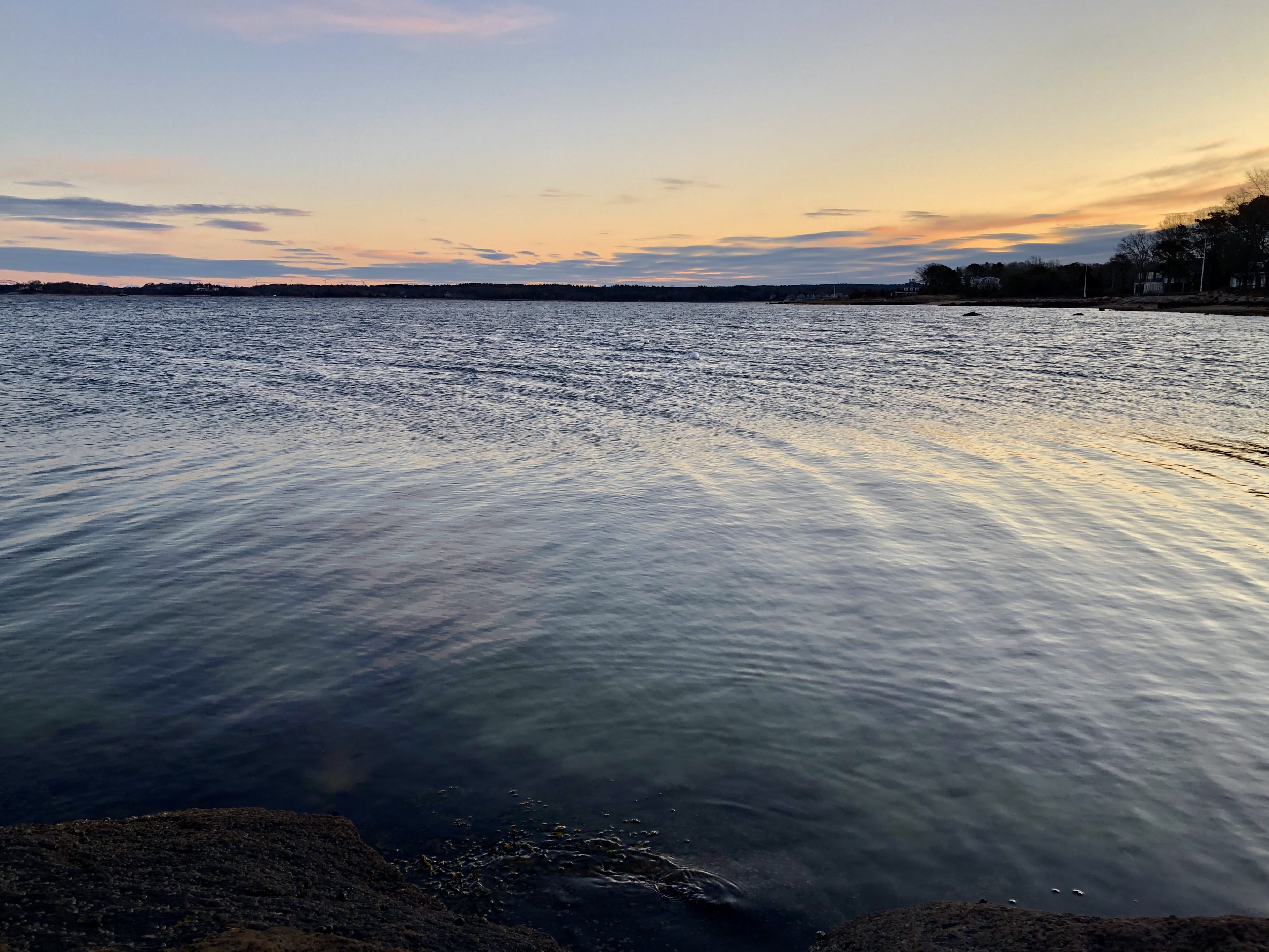
    Standing out on the jetty thirty feet out in Buzzards Bay earlier this morning looking for that familiar glimmer of sunrise, I realized that the show was going to be too far into the trees over land. It seems Earth’s obliquity, or axial tilt, is so far along that the sunrise is 30 degrees past where I’m used to seeing it. According to timeanddate.com, we’re at 23.43668° or 23°26’12.0″ today. Numbers really, until you see how far over the sunrise is or how short the days are. And let’s face it, the days are short in the Northern Hemisphere on January 1.

    All of this axial tilt stuff aside, it’s a new day, a new year, and a new decade. What will we make of it? Improvement seems to be the objective. Better choices in how we spend our time. What we eat, how much we move, where we go and what we produce. In short, who we become. That makes this morning like every other morning in the question that comes to mind, the question Mary Oliver asked so eloquently:

    “Tell me, what is it you plan to do

    With your one wild and precious life?”

    We think of New Year’s Day as a beginning, but it’s really a continuation of our journey. A bit like that crest on the trail where you pause for a rest and some water, to take a look around and a glance at the map to see where you are and where you’re going next. So where are you? Where are you going next? There’s no telling the future, really, but we can get back up and start climbing again. And that’s my plan. To get back at it working on the person I want to become, one step at a time on this journey; this one wild and precious life. So let’s get to it.

  • Restlessness Met Sadness And They Both Smiled In Recognition

    Life is like the 55 meter indoor hurdles run by klutzes for its briefness and the lack of elegance with which we all get through it.  Family gatherings during the holidays offer the opportunity to take stock.  How have you been and what are you dancing with now?  Jamming multiple family events into one day means not spending enough time with any one person, but instead getting quick downloads between eating too much and taking pictures for posterity and InstaGram.  The latter offers immediate notification of what you’ve been up to for your followers (some of whom are in the picture), the former is the path highlighted for you years later when everything has changed.

    In the last family event of the night, after all the caloric intake and the unwrapping of gifts and the catching up on what you’ve been up to, I realized I was way too warm and needed a walk outside in the cool air.  Looking at my watch I calculated how realistic it was to hit 10,000 steps and weighed it against the limited time I have with these people in my life.  I settled on a quick walk around the block and resigned myself to getting the rest done in the shrinking time left in the evening.  I’d get over the mark eventually, with an hour to spare in the day.  Should’ve knocked it off first thing in the morning but such are the holidays.

    When I have a goal in mind I get restless, and sitting in a chair for hours isn’t going to cut it for me, so it wasn’t long before I needed to walk around the house a bit.  So I left the crowded room to walk around the kitchen and into the formal living room, built for showing furniture that people don’t sit on.  There standing by the door was the oldest aunt of my wife, waiting for a ride home that wouldn’t come for awhile as my father-in-law chatted in the other room with my kids.  In that moment she looked like a teenager, though she is dancing with 90, waiting by the door to go.  We talked about sports she used to play, for she was a very active in tennis and skiing for much of her life, and her eyes welled up as she talked about not doing those things anymore.  We smiled and talked and eventually it was time to go and we opted to bring her back to her apartment and chatted more with her as we drove.

    My restlessness met her sadness and they recognized each other.  The sadness was rooted in her own frustrated restlessness, doomed to an older body and an aging mind battling dementia.  She missed Thanksgiving on a bad day, but on Christmas she was lucid and sharp, seeking out conversation and connection.  And we connected and smiled at stories of past glories, recent small victories and setbacks overcome.  And I thought about my own restlessness and wondered when it would meet sadness again.  We all look in the mirror and see our story.  If I’m lucky enough to get there I want the sadness in my old age to be for the things I can no longer do, not the things I never did.

  • Sorting Out The Walk

    The funny thing about walking 10,000 steps every day is that I don’t lose weight doing it.  10K is a minimum recommendation after all.  But I’m healthier for having done it.  At the very least I’m not eating or drinking when I walk, so those calories float away.  But walking 10-12K isn’t going to burn a lot of calories.  I know from experience that if I’d rowed every day for the amount of time that I walked, I’d lose weight pretty quickly.  And with the holidays here perhaps I should be rowing more to get ahead of the calories.  But I like to walk and so I do it.  I feel the mild ache in the morning and know that I’ve been doing something positive.  Back when I rowed we’d call it the good kind of sore.  That rowing soreness was a whole body sore.  Walking is a different sore altogether, but still good.

    I tend to walk early in the morning or late in the evening.  When you walk in the neighborhood in the middle of the day it turns into a chat instead of a walk.  At night the neighbors notice me walking as they drive by or call in their barking dog (thanks), and I carry a flashlight so they know it’s just me, walking again.  I give a wave and explain away this walking at night behavior with a generic “gotta get those 10,000 steps” statement, at which they smile knowingly.  Or maybe uncomfortably, as in just humor him and let’s move on.

    Walking feels like forever only when I’m trying to check that 10,000 step box.  On the treadmill this is misery because it takes so long.  Walking outside I forget that I’ve got this goal of 10K and just walk, and it just happens.  There’s a lot to be said for being outside, when outside offers solitude anyway.  Yeah, there’s that too.  I’m a social being and enjoy walking with other people, but there’s a lot to be said for walking alone too.  I try to sort things out as I walk.  I assess my general health when I walk (Why is my heart racing going up this hill?  Too much caffeine?).  Or sometimes I don’t think about anything and just look at the stars and, this time of year, the Christmas lights in the neighborhood.  But mostly I walk, and feel better for having done so.  And isn’t that the point?