Category: Hiking

  • Isle au Haut: A Billion Stars and Pristine Trails

    “This whole earth which we inhabit is but a point in space. How far apart, think you, dwell the two most distant inhabitants of yonder star, the breadth of whose disk cannot be appreciated by our instruments? Why should I feel lonely? Is not our planet in the Milky Way?” — Henry David Thoreau, Walden

    Anchored in a quiet cove, boat rolling steadily (and indicating why we were alone in this place), we stepped out into a brilliant sky to bear witness to a billion stars. The Milky Way so bright it reflected off the water. This was what we’d hoped for, yet almost missed fleeing mosquitoes earlier in the evening. We were not so alone after all.

    The thing about sailing that is so attractive is your ability to place yourself in places like this, nudged up against a corner of Acadia National Park that few ever venture to. There are no buses or fifth wheel camp trailers on Isle au Haut. Those are fine people too, just more than I seek out when getting away from it all. Here you find the quiet bliss inferred in the very concept of a nature preserve.

    Spending a bit of time on the main stretch (where the road is actually paved), we found the locals friendly and the ice cream sandwiches tasty, but I couldn’t buy a stamp for my postcard after 11 AM. Isle au Haut has what must be one of the nation’s smallest Post Offices. If you want counter service get there early. So it goes. The stamp will have to wait.

    The hiking trails are mostly well-defined here, and in some boggy corners nature’s winning the battle to reclaim them. They say build it and they will come, and surely we do, but not so many that you ever feel you can’t get some solitude. We saw precious few fellow hikers, despite the delightful trail network. This naturally continued out at the anchorage. Precious few fellow sailboats. There is plenty of elbow room on Isle au Haut. May it always be this way.

    Isle au Haut Lighthouse (1907)
  • Experiencing More “Ought to Do’s”

    Lately, my personal quest to stack memories seems to be paying off. Scheduled experiences this year have been notable and surely memorable, but so too have the family cookouts, early morning plunges into the pool and evenings throwing axes or on a lake with friends. These are things we ought to do more often, we tell ourselves, and then we never seem to do them very often at all. Best to put it on the calendar. Or forget the calendar altogether and just do it now.

    Our perspective on what ought to be done changes over time. Some people rise up to become far more important investments in our time than others. Likewise, some activities do the same. Lately I’ve had everything from pickle ball to scuba diving dangled in front of me as things we ought to do. It all sounds fun. Find me the time. Take, for example, hiking. I’m still trying to get in more hiking time. I’m not like some other friends that prioritize it every weekend, with a nod to them for making it so. No, I’m an acknowledged casual hiker chipping away at a list of peaks I’d like to hike in the near future. When it isn’t scheduled, it simply gets pushed down the stack.

    And what of that stack? Life is full of trade-offs, and each yes is a no to something else. In the end there will be far more “no’s” than “yes’s”, so we must choose wisely. Living an active and meaningful life is taking those most important “ought to do’s” and prioritizing them immediately. Sometimes urgency matters a great deal more than at other times, when we play the long game. Some experiences simply won’t be around next time; we may never pass this way again. They say that everything has its time. At least until we’re out of it.

    There are two lenses with which to determine what to choose: Our fitness and how meaningful the experience is. Regarding fitness: will we be able to do this in five or ten or twenty years, or is this one of those things we ought to do now? If you want to run a marathon or hike the Appalachian Trail, you’re better off doing it sooner than later. But there also has to be meaning to what we do. We aren’t nihilists, we’ve got a soul that speaks to us in the quiet moments, looking for something more than a good time.

    Contemplation and reflection have a place in our lives, which is why writing is another “ought to do” that I’ve managed to do every day for almost five years now. Clicking publish and sending these blog posts out into the wild, where everyone or nobody will read them, is important for me. The goal has never been to become a wildly successful blogger (thank goodness), but to become a better writer. If there’s an obvious side benefit, I get to communicate regularly with people invested in what I might have to say. Thanks for that. It also prompts me to seek out more experiences, that the writing isn’t just a repository of philosophy notes and collected poetry.

    There are a lifetime of experiences waiting for us, should we find the time to have them. Is it audacious to expect more than we’ve currently got? Clearly—but who else is going to advocate for such experiences? We must each determine who we want to be and set out to go be it. Adding more “ought to do’s” to our days is a lifetime mission. This isn’t bucket list fare, it’s setting out every day to raise the bar on what we experience. Accumulated, this makes for a more exceptional life than we might have otherwise.

  • Mingling with Do You Ever

    There is a pleasure in the pathless woods,
    There is a rapture on the lonely shore,
    There is society, where none intrudes,
    By the deep Sea, and music in its roar:
    I love not Man the less, but Nature more,
    From these our interviews, in which I steal
    From all I may be, or have been before,
    To mingle with the Universe, and feel
    What I can ne’er express, yet cannot all conceal.
    — Lord Byron, Childe Harold’s Pilgrimage

    Do you ever look at the surface of a pond or pool and wonder at the gumption of those who would breach the surface and enter another world? Dolphins and whales leap from the deep and experience our world for a brief moment. Humans dive into water and recall deep within the connection. There’s a calling in water that draws us there. Those who live there apparently seek time in our world as well. This is as it should be, for we are all of the water.

    Do you ever feel the presence of the trees when you walk deep in the woods? The ancients, not the brash young things fighting for a place in this world. Old growth trees know things we’ll never know in our brief lifetime. Rooted deeply into the past, reaching into the future, grounded by a sense of place, trees are the life force of the forest. When we cut down forests we rob ourselves and generations to follow of all of these things.

    Do you ever spend time above treeline, looking at clouds mingling with the lower peaks below you. Are we meant to be in such places where even the wild things steer clear? Walking in such places brings us closer to the universe, and to the heights we may aspire to in our quiet moments of bold reflection.

    We all want a sense of timelessness and a place with the infinite. We forget sometimes that we’re already a part of it. We can’t see the forest for the trees. We must break the surface of self-absorption and see what we’ve been missing deep within ourselves. Doing more of the “do you ever” things is a step in the right direction.

  • Stillness Instead

    Have I lived enough?
    Have I loved enough?
    Have I considered Right Action enough, have I come to any conclusion?
    Have I experienced happiness with sufficient gratitude?
    Have I endured loneliness with grace?

    I say this, or perhaps I’m just thinking it.
    Actually, I probably think too much.

    Then I step out into the garden,
    where the gardener, who is said to be a simple man,
    is tending his children, the roses.
    — Mary Oliver, The Gardener

    Just this morning, I opted for the garden instead of a hike. I’ve done that a lot recently, choosing just about anything instead of a hike. Last week it was finishing a book I’d wanted to dive into, and I celebrated my time not doing something else I love. For it isn’t that I don’t love hiking, I surely do, it’s more a case of wanting something else instead. When you have free will you get to choose, within reason, such things as where to be and what to do.

    When it comes to such things as checklists of books read and summits climbed, we sometimes opt for none of the above. Life is a series of days where anything is possible if we just persist, or nothing gets done if we resist. What leads to resistance in a world that rewards action? Are we the lesser for having opted out? Or do we find something else in stillness?

    Lately I’ve wanted nothing more than time in the garden. It’s June, after all, and even a raw and wet June is still a month of growth and possibility. Slowing down enough to find the beauty in my own backyard seems the best use of this time.

    “It is the beauty within us that makes it possible for us to recognize the beauty around us. The question is not what you look at but what you see.” ― Henry David Thoreau

    That old expression, “when the student is ready, the teacher will appear”, applies equally well with the geraniums as with the mountains. When this student is ready I’ll attend to that checklist of summits once again, or perhaps I won’t. For today there are other lessons to learn.

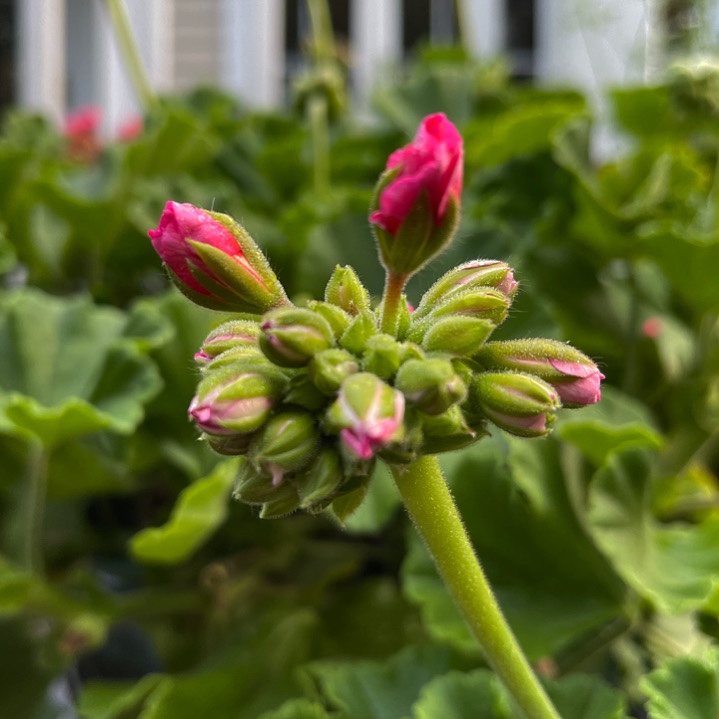
    Geranium
  • My Earth Day Reckoning

    And we died of the future,
    of calling and mission only we could keep,
    leaping into every favorite season;
    sinking into roots, dreams, and books.
    — Li-Young Lee, First World

    “I am losing precious days. I am degenerating into a machine for making money. I am learning nothing in this trivial world of men. I must break away and get out into the mountains to learn the news” — John Muir

    Looking back, it seems quite natural to be locked into this routine of daily obligations—of work and chores and driving from here to there. Things fall apart and must be fixed. We must be fixed too. We are what we repeatedly do, as I repeatedly remind myself. So when is there time for nature and hiking? When is there time for long walks in the woods?

    There is no other time than now. We must go, and see, and take something of it with us for eternity. Not a rock or a leaf or even a flower, but a memory of who we were when we found the truth. Earth is far bigger and more beautiful than we’ll ever fully realize, no matter the frequent flyer miles accumulated. Earth is fragile yet resilient, and will wait an eternity to shrug herself of humanity. It may take a million years, but Earth will fix itself in time. We’re the ones who suffer for our neglect.

    Yet we are a small ripple in this big pond. Whether I recycle or not makes little difference, not when we see the crisis of leadership in the bigger things happening in the world. Nonetheless, we all make a small difference. We might pile on or opt in to the mission of making the planet a better place for our children’s children. Our small daily actions aren’t meant for others to see, they affirm who we tell ourselves we want to be in this world. We’re part of a larger chorus, and our accumulation of voices make a difference even when we can’t see it. A forest is made up of thousands of trees and millions of leaves. There is power in numbers.

    “I would say that there exist a thousand unbreakable links between each of us and everything else, and that our dignity and our chances are one. The farthest star and the mud at our feet are a family; and there is no decency or sense in honoring one thing, or a few things, and then closing the list. The pine tree, the leopard, the Platte River, and ourselves—we are at risk together, or we are on our way to a sustainable world together. We are each other’s destiny.”
    — Mary Oliver, Winter Hours

    Earth Day is a reckoning, a day when we take stock of what we’re doing to the Earth, but also a day when we take stock of what we’re doing with our own brief time on this planet. There are things we say yes to in this world, which means we say no to many other things. In the end, we must choose, what dreams will die with us? What will we stand for? What will we stand up against?

    We all see the changes in the world, but forget we have some agency in the matter. Is this a year of incremental improvement or reckless abandonment of what we believe we ought to be. These are questions for society, surely, but also for each of us in our daily lives. The question is always the same: who are we becoming?

  • A Visit to Joshua Tree

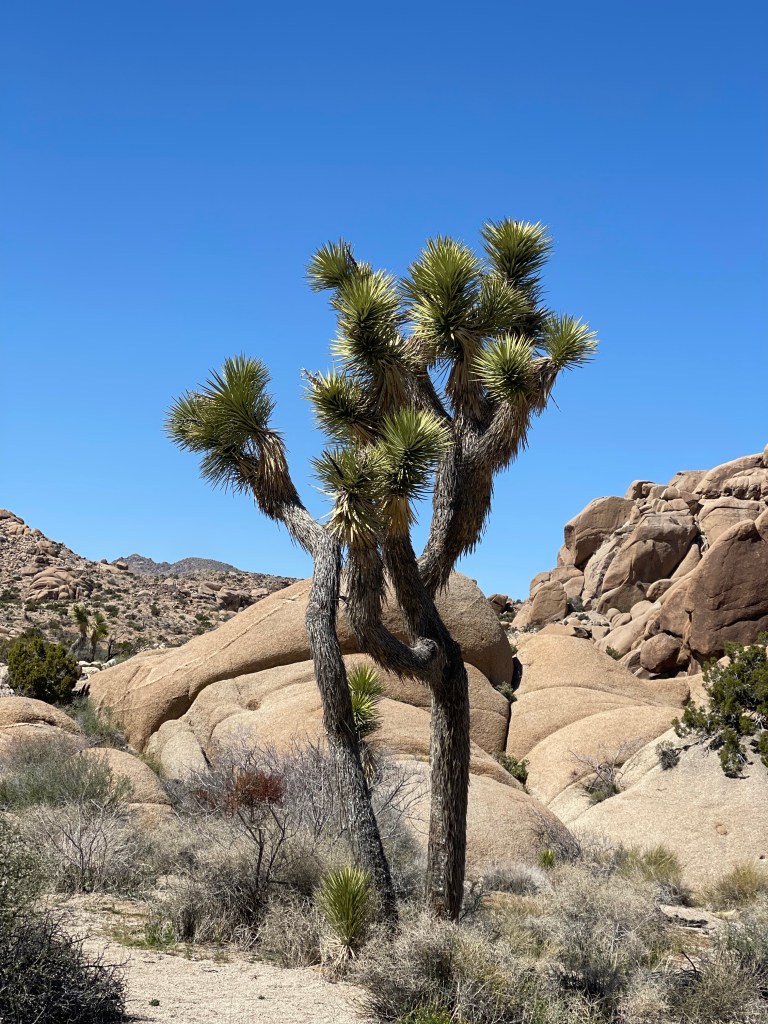
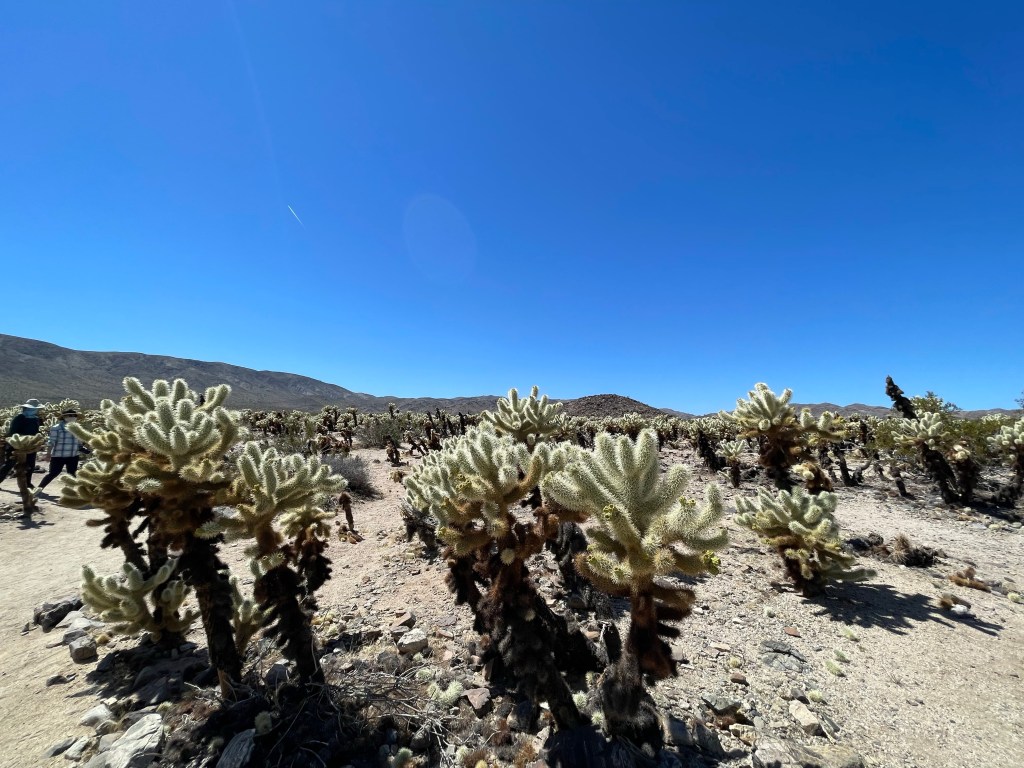
    California’s Joshua Tree National Park is technically a part of the Mojave Desert, but it straddles the Colorado Desert. Where the Mojave is considered a high elevation desert, the Colorado Desert is a low elevation desert. So Joshua Tree is the unique meeting place of the two extremes. It was protected as a national monument in 1936, largely to stop cactus poachers from taking everything, and elevated to a national park in 1994 as part of the Desert Protection Bill. It’s namesake, the Joshua Tree, or Yucca brevifolia, earned its nickname for resembling arms raised in supplication, and became famous when U2 gave the name to their biggest album. U2 put Joshua Tree on my radar, and I’ve felt compelled to visit ever since.

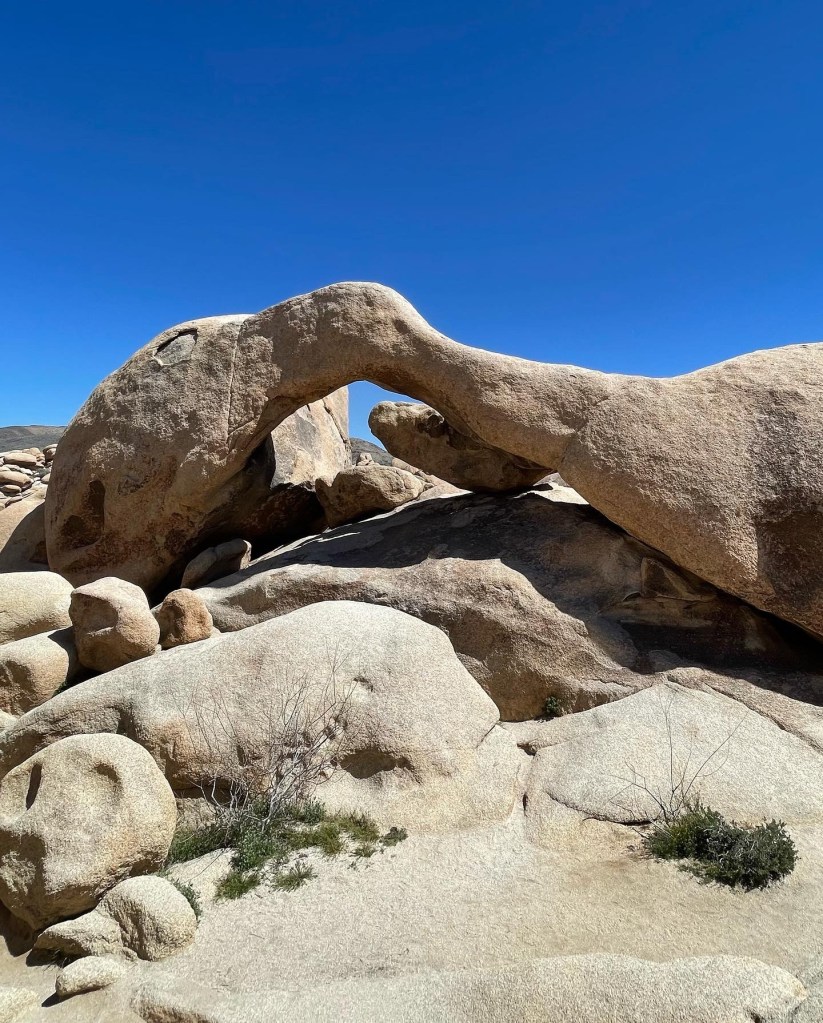
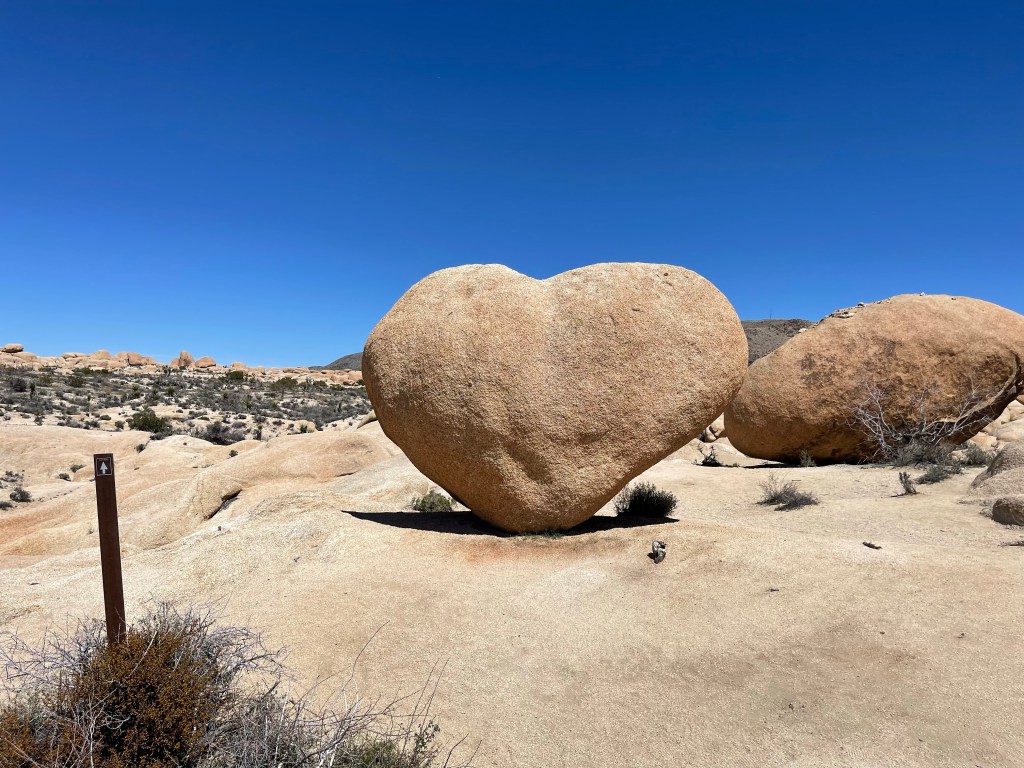
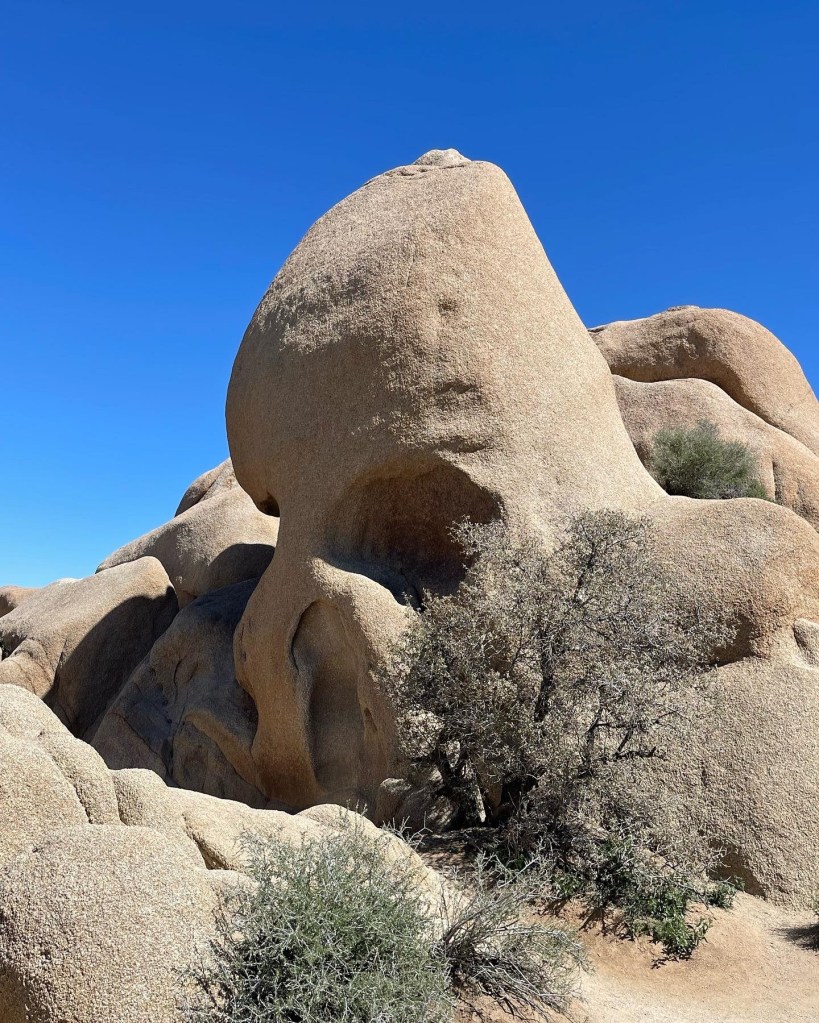
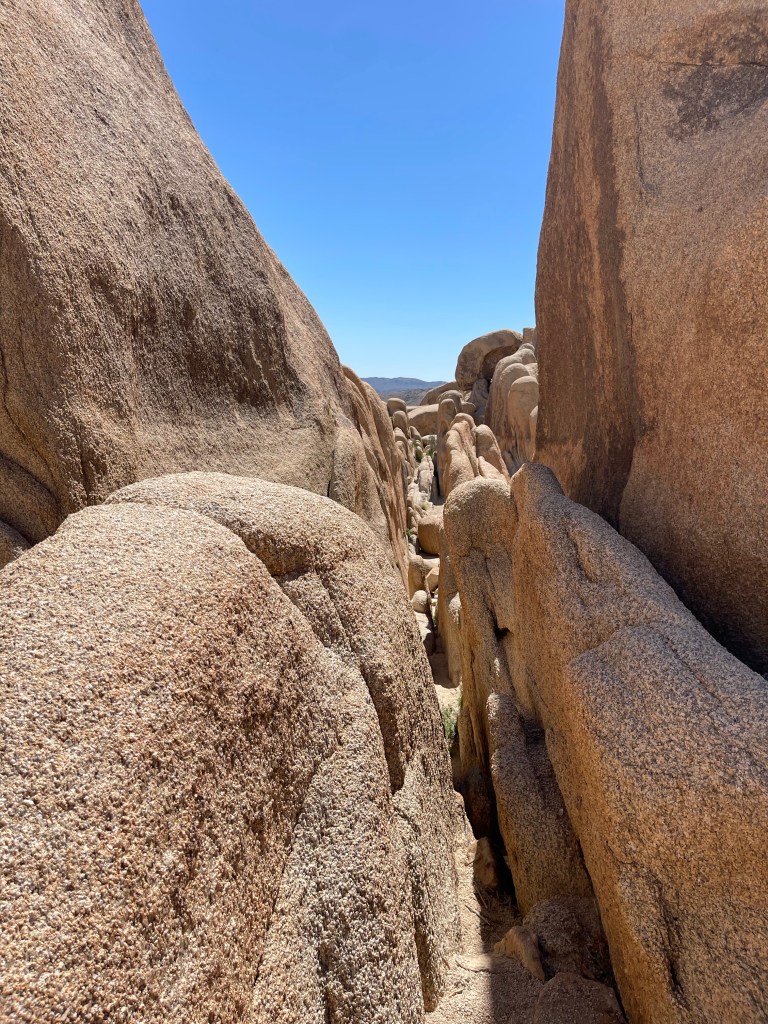
    Joshua Tree is famous for more than just the yuccas dotting the arid landscape. There are massive boulders and rock formations to explore. Three of the most famous of these are Arch Rock, Skull Rock and the once evasive Heart Rock. Fame comes with a price, and each had swarms of tourists descending on them for photographs. I descended on them too, of course, and managed a few pictures without people crawling into view with patience and creative staging. Each picture you see below was the result of waiting out the people taking their version of the same picture. But this is what you get in a place like this. Better to share than to have it owned by a private individual who bars access. National Parks are a treasure for all citizens to enjoy.

    My visit to Joshua Tree National Park was a detour from Las Vegas to Los Angeles. This drive took me through the stark landscape of the Mojave Desert. This is a place where a full tank of gasoline and plenty of water are essential elements of your self-preservation. It’s so very different from the two cities on either end of the journey. You can see no signs of life for miles around you driving through the desert, and the desert is indifferent to your desire to stay alive in it. Come prepared.

    There are several places to camp in Joshua Tree, and some additional motels nearby. There’s even a Starbucks in Twentynine Palms, not ten minutes from one of the entrances to the park. Civilization isn’t far at all from some parts of Joshua Tree, but you’ll feel like you’re on another planet anyway.

    Arch Rock
    Heart Rock
    Joshua Tree (Yucca brevifolia)
    Cholla Cactus Garden
    Skull Rock
    Rock scrambler’s paradise
  • Walking to a Better Place

    “Above all, do not lose your desire to walk: every day I walk myself into a state of well-being and walk away from every illness; I have walked myself into my best thoughts, and I know of no thought so burdensome that one cannot walk away from it.” — Søren Kierkegaard

    As I write this, it’s warmed up to -12 degrees Fahrenheit outside. On the summit of Mount Washington, a few hour’s drive away from me, the temperature is currently -45 with a wind chill of -107 degrees. Simply put, this is not a good day for a hike. But every day is a good day for a walk, conceding that some days we have got to be a little more creative to get the steps in.

    If my family or my neighbors were to observe my behavior on certain days when I feel trapped in the house, they’d think I was crazy (they likely do already). I’ll walk up and down the stairs ten times to get the blood moving between meetings, circumnavigating the interior of the house in a circle (always counterclockwise, for reasons I can’t explain) and now and then throw in some burpees or pushups to spice things up. This has not led to six-pack abs, but nonetheless it does a body good.

    Clearly, getting outside is the better way to move. Long walks on pavement are okay, but I prefer to walk on local trails not far from home, with trees and the occasional dog walker as company. Hiking is a favorite form of exercise, practiced in moderation for reasons of practical living as opposed to lack of desire for more. We simply can’t do everything, but doing a lot of things in moderation seems to work for me. We are as much what we say no to as the things we say yes to.

    Walking has remained the one constant form of exercise that has followed me wherever I’ve gone in this world. I’ve walked in places as diverse as the Old City in Jerusalem, the Mayan port city of Tulum, Red Square in Moscow, amongst the Redwoods in Muir Woods and followed in the footsteps of Thoreau at Walden Pond, but I’ve never taken more steps in any place than I have on the plot of land I currently reside on in New Hampshire. Place is variable, the stride varies, but the act of walking remains a constant companion.

    As the temperatures creep back up I’ll plot my escape from this self-imposed exile I call home and get back to outdoor walking. There are empty beaches to explore, ridge trails to traverse, and faraway places calling me. Walking is the most reliable way to get to a better place, simply by putting one foot in front of the other.

  • A Winter Hike on the Welch-Dickey Loop Trail

    The Welch-Dickey Loop Trail is one of the most popular trails in New Hampshire. There are many reasons for this, including its relative closeness compared to trails further north and its proximity to popular recreation destination Waterville Valley. But really, people hike this trail because the views are spectacular and you can do the hike in a few hours if you want to push, or linger with those views if you wish to take your time. In summer the blueberry bushes are generous and those ledges are great places to sit awhile. In winter, those ledges look like toboggan runs to a hard landing. Best to stick to the trail, wear spikes and respect the unforgiving nature of the White Mountains when people get careless.

    As the name infers, there are two mountains on this 4.4 mile loop: Mount Welch and Mount Dickey. Both have a ton of exposed granite ledge that let the world open up for you, making the payoff in views exceptional for the effort expended. In summer, it’s a fun scramble up the granite, in winter, it’s strongly advisable to have micro spikes or crampons. Even with spikes on, I was very deliberate with every step hiking up Mount Welch. It’s not a trail to be doing in casual footwear in winter.

    At some point along the way, I recognized that the prominence of the summit wasn’t ever my goal, it was simply getting out in nature at elevation, to a place where I earn the view with every step. I’ve been too distracted by numbers (48, 200 & 4000: there are 48 4000 foot mountains with a prominence of 200 feet or more) lately, forgetting that lists are not the point. While it’s in my nature to finish what I started and complete the 48, it took this winter hike on the Welch-Dickey Loop Trail to remind me that deep down I’m seeking experience, not validation. The numbers can take a hike. I’ll finish when I finish.

    If you’re looking for incredible views with a relatively easy hike, the Welch-Dickey Loop Trail brings you to two summits of the five I’d recommend in New Hampshire, along with Mounts Monadnock, Major and Willard. In summer or during foliage season these hikes are maddeningly crowded on the weekends, but winter brings relative quiet and pristine beauty. Just remember those micro spikes.

    The steep ledge scramble up Mount Welch
    Would you hike this without spikes?
  • Tossing Aside the Blindfold

    “In the eighteenth century, when educated European tourists visited the Alps, they deliberately blindfolded their eyes to shield themselves from the evidence of the earth’s horrid irregularity. It is hard to say if this was not merely affectation, for today, newborn infants, who have not yet been taught our ideas of beauty, repeatedly show in tests that they prefer complex to simple designs. At any rate, after the Romantic Revolution, and after Darwin, I might add, our conscious notions of beauty changed. Were the earth as smooth as a ball bearing, it might be beautiful seen from another planet, as the rings of Saturn are. But here we live and move; we wander up and down the banks of the creek, we ride a railway through the Alps, and the landscape shifts and changes. Were the earth smooth, our brains would be smooth as well; we would wake, blink, walk two steps to get the whole picture, and lapse into a dreamless sleep. Because we are living people, and because we are on the receiving end of beauty, another element necessarily enters the question. The texture of space is a condition of time. Time is the warp and matter the weft of the woven texture of beauty in space, and death is the hurtling shuttle. Did those eighteenth-century people think they were immortal? Or were their carriages stalled to rigidity, so that they knew they would never move again, and, panicked, they reached for their blindfolds?” — Annie Dillard, Pilgrim at Tinker Creek

    I think the point of Dillard’s quote, and the reason I chose it, was to highlight the imperfect nature of our time here, and the extraordinary capacity to receive and embrace beauty despite, or perhaps because of our awareness of the duration of the ride. We are active receivers of the ugly truth and the beautiful realization that life is a brief dance with wonder. Our version of modern blindfolds is of course a mobile phone with its infinite distractions flashing pretty images in our face. Do we truly see the rugged imperfections surrounding us when we’re a click away from something with ten million views just waiting for ours?

    A man died of exposure on a trail I’m very familiar with over the Christmas weekend. The details haven’t fully been released but it appears he was unprepared for the elements, trusted his phone to guide him and light his way when it got dark, and perished when he lost the trail and his battery faded away with his life force. Friends or relatives on the other side of the planet alerted emergency personnel, who found him too late to save him. That mobile phone might connect us to the world, but it isn’t active connection to other people, just the illusion of it. Life is a fragile dance with beauty, and (it seems) his ended when he got too comfortable with that illusion in a cold and unforgiving place.

    The thing is, that trail is one of the most beautiful and popular trails in the White Mountains. It’s easy to understand why he chose it. The tragic irony is that he received the beauty he sought in his climb, but his blindfold killed him in the end. It’s unfair to judge the hiker who perished, for at least he was out there trying to make the most of his moment (if tragically unprepared).

    There’s a lesson for every hiker in his story. But isn’t there another lesson hidden in plain sight? For shouldn’t we wonder, how many others are slowly wasting their lives staring into their own blindfolds? We must be actively engaged in our lives to see the imperfect beauty surrounding us.

  • Creating Irreplaceable

    “Do not do what someone else could do as well as you. Do not say, do not write what someone else could say, could write as well as you. Care for nothing in yourself but what you feel exists nowhere else. And, out of yourself create, impatiently or patiently, the most irreplaceable of beings.“ — André Gide

    [Quick aside: I’ve used the two quotes in this blog before, but feel there’s more to be said about them. Perhaps more still, even after this post. Forgive the repetition. We are what we repeatedly do?]

    It’s fair to ask ourselves, as we begin each day enabled or encumbered in our routines, just what it is we’re up to. Where exactly is this day bringing us on our journey? For that matter, what is the destination anyway? Big questions, to be sure, but life is full of big questions deftly dodged. When we avoid answering our deepest questions how can we possibly expect to reach our potential? We can’t succumb to distraction when we’re creating irreplaceable.

    A few weeks ago a friend planted a seed in my brain about finally hiking the Grand Canyon rim-to-rim. I’ve contemplated doing this for years, and deep down I knew it was going to slip away like so many other dreams. Until I decided to realize that particular dream. Now don’t get me wrong: it’s still unrealized, but it aligns with my identity, lends itself to other life goals, and is attainable with applied focus, time and effort. For better or worse, I’ve also just announced that intent to everyone who reads this blog, breaking a rule about announcing what I intend to do instead of informing about what I’ve just done. But sometimes you need to add peer pressure to reach your goals in life.

    A year or ten ago, I began hinting at a novel I was writing. I had no business writing a novel when I first started talking about writing one, because I didn’t believe I had any business writing it. Naturally the novel never was written, but the desire to write it remained. So I started blogging every day as a step towards writing better, applied daily through my commitment to post something every day. My blog posts are written the day they’re posted, which is why the time is variable, because I finish it when I finish it. You might add that the quality of the post is also highly variable, but the point is to ship the work, ready or not.

    “Every action you take is a vote for the type of person you wish to become.
    No single instance will transform your beliefs, but as the votes build up, so does the evidence of your identity.
    This is why habits are crucial. They cast repeated votes for being a type of person.”
    James Clear

    We all wonder what the future will bring, but don’t always see we’re building it with each action. We have more agency in our lives than we give ourselves credit for, and often overthink things instead of just taking another step. That which is irreplaceable cannot be realized without consistent effort. We must choose our direction and do the work to realize it. Fate decides the rest.