Category: Hiking

  • Finding Relative Quiet at Muir Woods

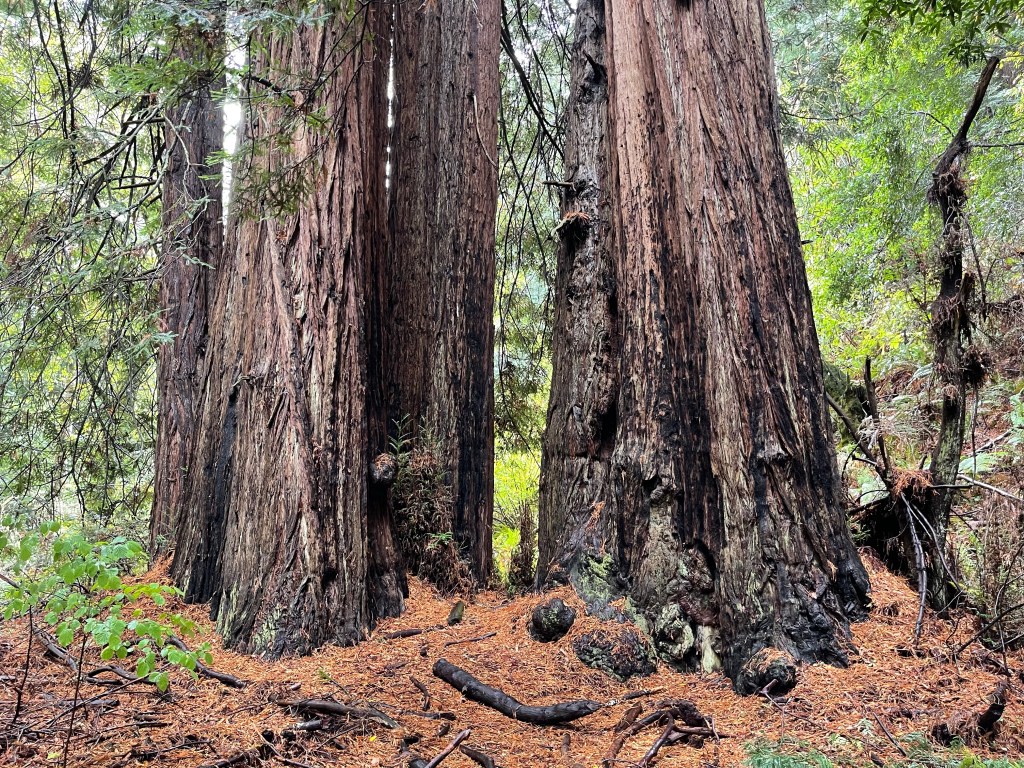
    Taking a long, slow walk amongst the Redwoods in Muir Woods, I deliberately slowed down, lingered, and sometimes stood still to feel the forest. Looking straight up I watched water drops formed in the tree tops from the light mist fall a few hundred feet. There are trees here that have stood here for more than a thousand years, my visit was just one blip in their lifespan. And here I found what I’d been looking for, what I’d hoped I’d find on this twisting drive through the hills. Here were the ancient forests of my imagination.

    Seeking quiet, reverent space amongst the giants is tricky business if you only stay on the main path. No matter how much signage they put up, tourists chat like they’re at the mall, oblivious to the glorious silence. You must go there expecting this careless chatter, but you don’t have to participate in it. The best option for silence is to take the paths less taken, and Muir Woods offers these opportunities. Take any trail that scares the masses – be it mud or the promise of exertion or even a dead end sign and you quickly find yourself in relative quiet.

    There are other old growth redwood forests, not enough of them we might agree, but they’re out there as state and national parks throughout the region. These offer more opportunities for isolation. Muir Woods is both the most famous and the most crowded. The trees won’t ever disappoint you, but your fellow man might.

    If we lost all the money we have and saved these trees, it would be worthwhile, wouldn’t it?” – William Kent

    William Kent purchased this land and fended off those who planned to log the redwoods to rebuild San Francisco after the 1906 earthquake and then flood the valley as a reservoir. He might have named it after himself but chose to honor John Muir. Modest? No doubt, but there’s an element of brand recognition at work here too. Since 1908, the Muir Woods National Monument has stood as protected land, surely thrilling Kent and those who worked so hard to save the trees, and capturing the imagination of reverent pilgrims ever since.

    If you visit, make a parking reservation well in advance. Go as early as possible to avoid the worst of the crowds. Wear appropriate footwear for hiking the side trails. And save the casual conversation for later. For you’ll have plenty to talk about.
  • A Coastal Walk in San Francisco

    San Francisco is known for many things, but the Golden Gate Bridge has to be near the top of that list we make in our heads. Without being a tourist checking boxes, shouldn’t you try to see the sites that make a place unique? But seeing doesn’t have to mean doing what everybody else does.

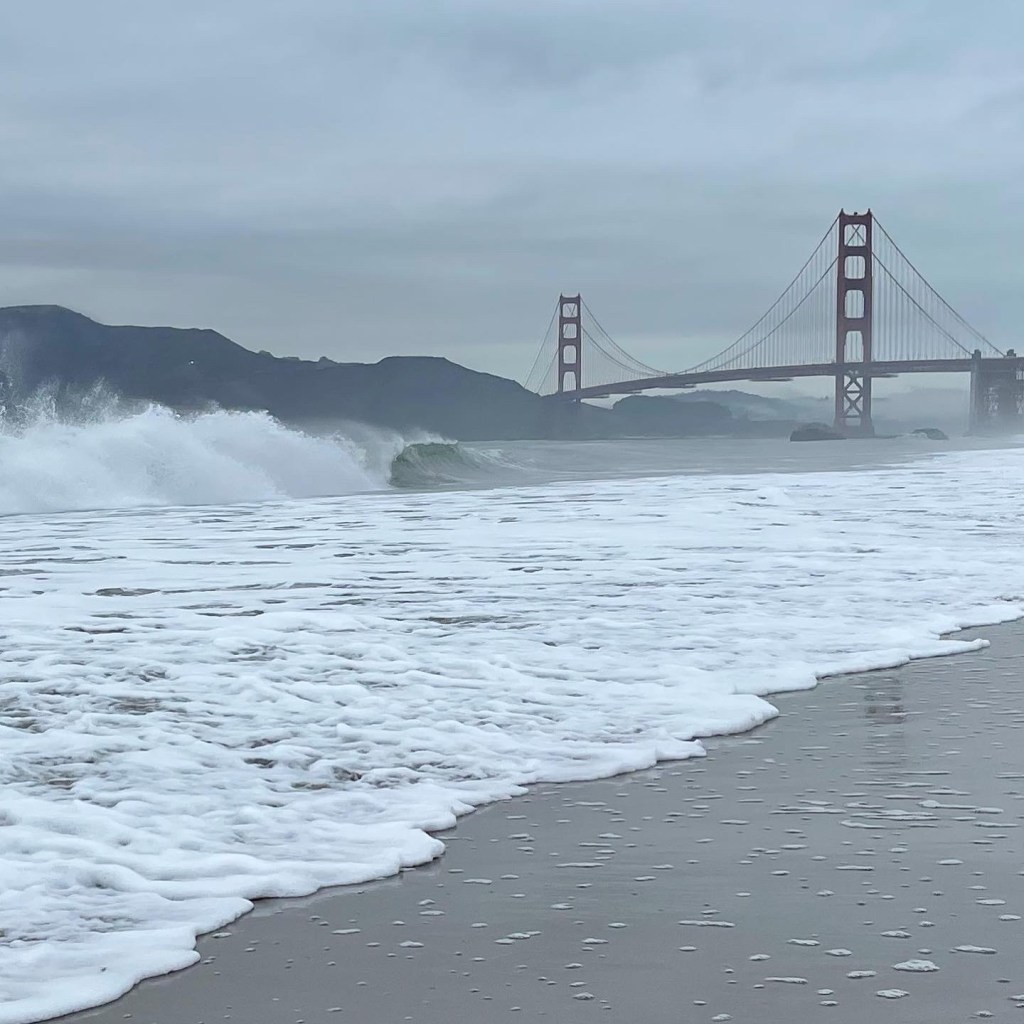
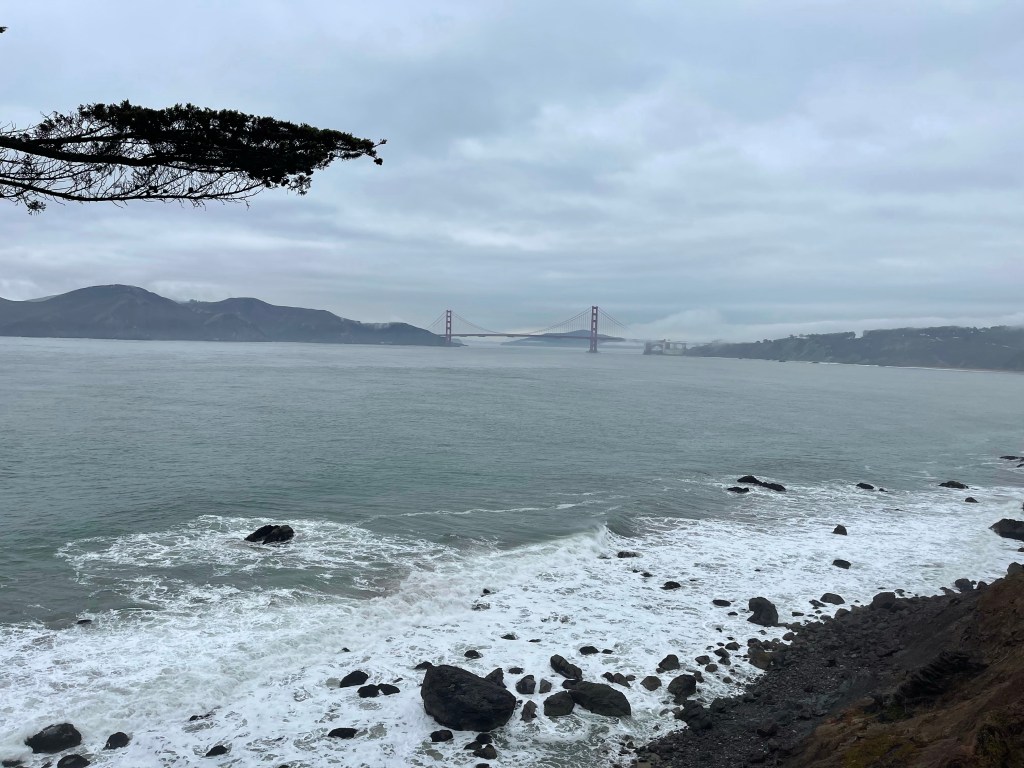
    So how do you see something as famous as the Golden Gate Bridge in a different way? You let it come to you gradually. The perfect way to do that is with a walk from Lands End to the bridge. This walk takes you along a diverse landscape of rocky cliffs, spectacular beaches with crashing surf, high end neighborhoods, past defensive fortifications dating from the world wars and finally to the bridge itself.

    You can Google the route and map it out neatly, but maps only offer a one-dimensional view. Even Street View, for all its delights, can’t convey everything. You don’t experience the clumpy clay in the sand after a light rain, or the shear cliffs that claim the lives of the careless adventurers looking for that perfect vantage point, or the spa-like aromas emanating from the wet flora, or the cheap plastic Halloween decorations adorning multi-million dollar homes. No, you’ve got to walk it to experience these things.

    The walk itself is a good workout, with a lot of climbing and long stretches on soft sand, but it’s not the Appalachian Trail, you can get by with a moderate fitness level and good walking shoes. The bridge and the roar of crashing waves will be your constant companion. Were it not for the bridge you might think you were in another place.

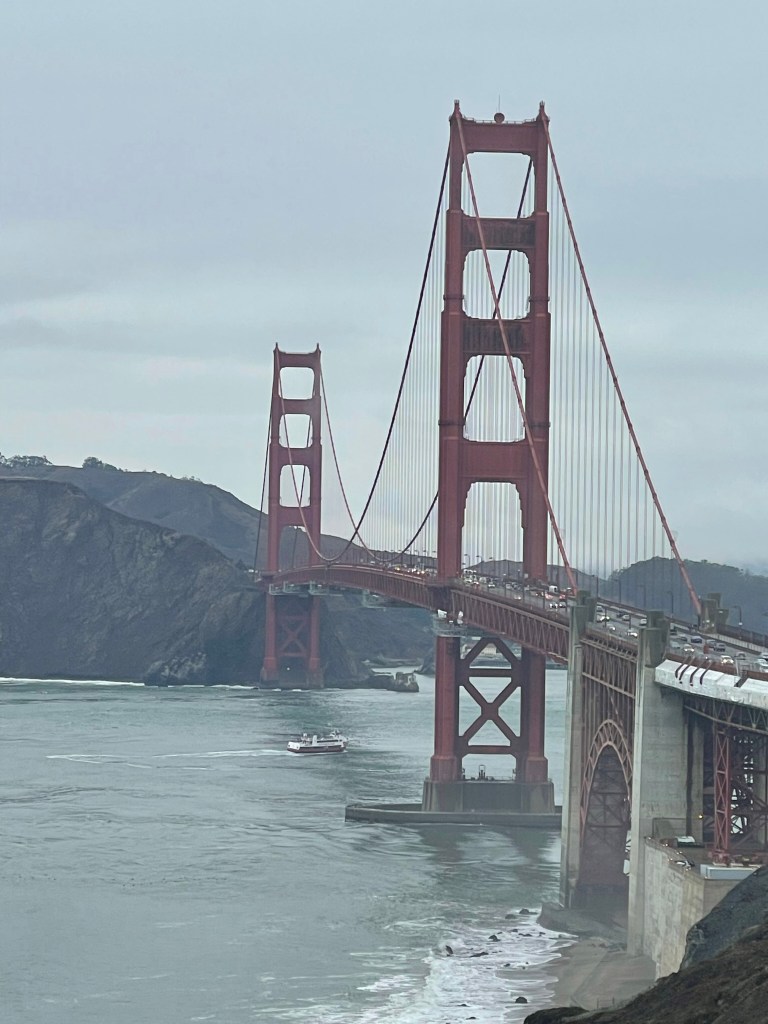
    The bridge comes at you from different vantage points. One of those vantage points is mental. We can all visualize the Golden Gate Bridge in our minds. So it can be invigorating when you see the real thing. It was thought impossible to build by many, but 84 years after opening she looks as good as you imagine she would.

  • An Allegiance With Gravity

    Rivers and stones are forever
    in allegiance with gravity
    while we ourselves dream of rising.
    – Mary Oliver, Mysteries, Yes

    How do you explain yourself when someone jokingly asks you the question, “You don’t watch TV, what do you do?” I heard that question yesterday, smiled and said I keep busy. For how do you tell someone who is so deeply focused on one thing that you choose to use your time in other ways?

    In a bit of indulgence this week, I purchased some beautiful new Petzl crampons. This is a nod to supply chain challenges in the world, to the changing seasons and anticipation of winter hiking, but also an acknowledgement that I just can’t get out there to hike right now. For now, anyway, I’m investing my brief, fragile time in other ways.

    I visited the homes of three family members this week (including the television fan’s), each with some work that must be done and nobody to do it. In each case, knowing that if I’m not doing the work it’s going to get punted down the field indefinitely. So instead the hiking gets punted, at least for a little while. Autumn hiking is too crowded anyway… right?

    “What we think or what we know or what we believe is in the end of little consequence. The only thing of consequence is what we do” – John Ruskin

    I dream of rising: Of winter hiking and digging these new crampons into an icy incline. Of traversing beautiful ridge line. Of travel and visits to faraway places. And (sometimes) of finally watching some program I’ve heard so much about from people in the know. But for now there’s work to be done. And at the moment I’m in an allegiance with gravity.

  • A Hike to Waterville Cascades

    This hike was meant to be a compromise to myself. No salt water weekend, no longer hikes to knock off another 4000 footer or three. But still spectacular, still a light workout on a beautiful trail, and the real payoff; seven waterfalls in a relatively short span.

    I had my doubts. You walk to the trailhead at Waterville Valley Resort and see right away that this hike is going to start between the road and some of the village condos. But you cross a road and leave most of that behind you. From then on you are hiking a pleasant trail to the first waterfall and not really seeing many people (for me, a Saturday afternoon).

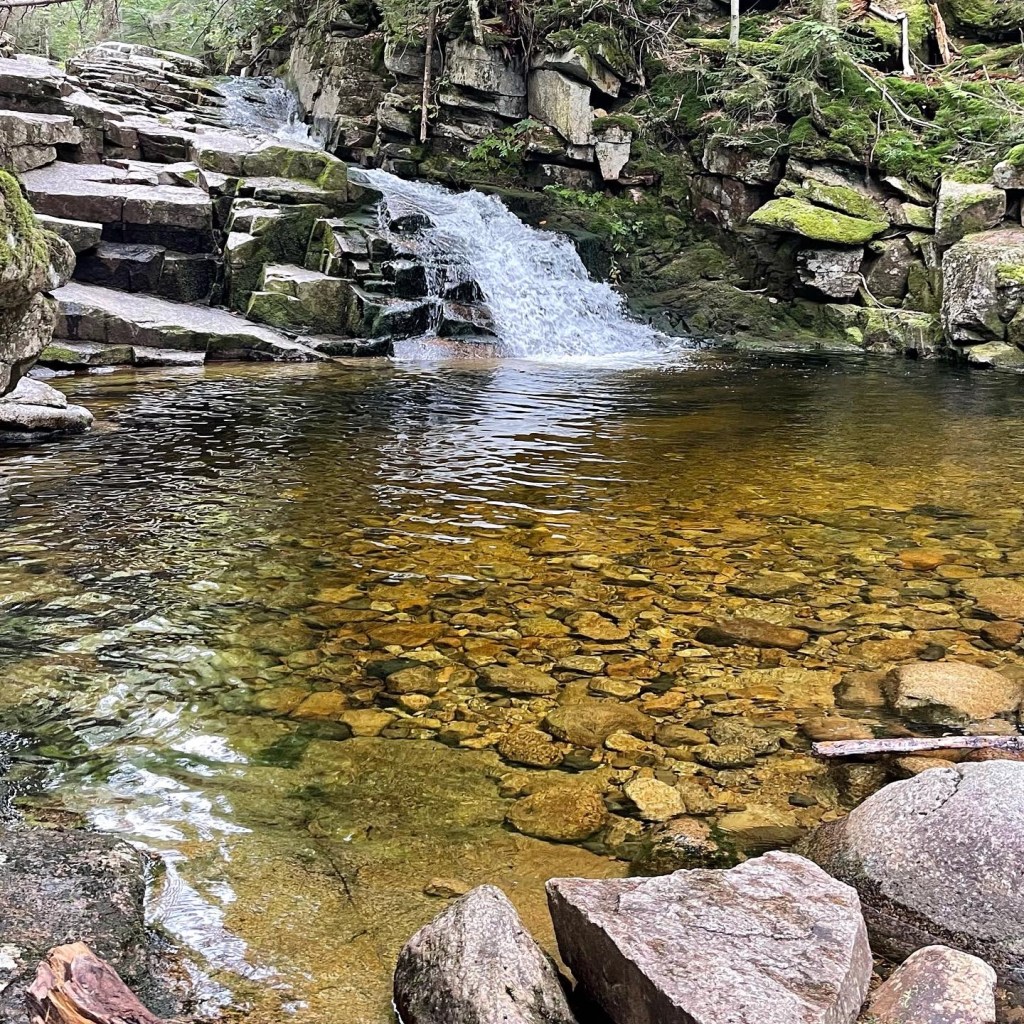
    The Cascade Trail is a 3 mile round trip to the Waterville Cascades. The silence of the forest is notable and welcome. You quickly forget that you’re in close proximity to a ski resort, and instead immerse yourself in hiking relatively pristine second growth forest that wraps itself around you and shuts out the outside world. Before you know it the hike brings you to the first cascade on Cascade Brook, a series of seven plunges that feel bigger and more remote than they really are.

    But there are reminders of the alternative paths to the falls. We met a group we’d seen in the parking lot that opted to ride the chairlift up instead of hiking. We spoke to another couple of guys on mountain bikes who had ridden up to the falls to soak in the swimming holes. Both conversations reminded us that there were other faster ways to reach the cascades than hiking. We saw sad proof of this when we passed a pyramid of empty Bud Lite cans that some fools had stacked alongside the brook. Without a backpack for this short hike I had to leave this mess for someone else to deal with. Not everyone who ventures into the woods leaves them as they found them. This is the price of proximity.

    But the falls themselves were each wonders, and we celebrated the unique beauty of each as we climbed higher and higher up the trail. When you reach the last big cascade there’s a bridge for a mountain bike trail that you can cross to descend the other side and return you to the Cascade Trail and your hike back down.

    I’m interested in how people meet the falls. Some are reverent and respectful, some more nonchalant about the experience. I think it’s relative to how much work you put in towards reaching them, and the path you chose for yourself. But that may seem dismissive and smug when a hiker says it. More specifically, it’s not the work you put into reaching it, it’s how your attitude when you reach it that matters most.

    The work-to-reward ratio of the Waterville Cascades makes it an easy choice. The proximity of that resort comes in handy for lunch or dinner and a restroom afterwards. The entire experience reminds you that finding beautiful in this world isn’t all that hard if you just put yourself out there to meet it.

  • No Likeness to That Human World Below

    You ask me:
    Why do I live
    On this green mountain?
    I smile
    No answer
    My heart serene
    On flowing water
    Peachblow
    Quietly going
    Far away
    Another earth
    This is
    Another sky
    No likeness
    To that human world below
    ~Li Po, On The Mountain: Question And Answer
    (translated by C.H. Kwôck & Vincent McHugh)

    Three days later and I’m still on a mountaintop. The aches and pains fade but the glow of walking the ridge line between peaks stays with me. And I wonder at this world I’ve created for myself, pressed in close to a desk, laptop at the ready, always asking for more. The mountains don’t ask for anything of you, but it’s understood that they demand respect.

    Solo hiking, for all the social abuse I receive for it, offers meditation and a connection to the mountains that you don’t get with even the quietest, most reverent hiking buddy. So occasionally I like to indulge in time alone on trails, walking until my own voice finally stops talking to me and I begin at last to listen to the song of the infinite.

    Yet you’re never quite alone in the mountains. There’s always a fellow hiker on a pilgrimage of their own, with a knowing look and a brief exchange before turning their attention back to the trail. The mountains aren’t entirely about solitude, for there are more people than ever on the trails. And every one of us with a reason for being up there.

    There’s an energy that you draw on when hiking with others. A momentum of common purpose, shared struggle, and shared beliefs. I do like hiking with others, quite a lot, and look forward to sharing the mountains with them again soon. Just give me a moment alone with this sky before I reluctantly descend to that human world below. Where I’ll plot my return.

  • Hiking Passaconaway & Whiteface

    Hot, muggy August days create hazy, sweaty conditions for hiking, with a dash of risk for thunderstorms. But it’s been six long months since I’d last hiked a 4000 footer, and I was way overdue to notch one or two more. The question then is, who do you hike with? For me, the answer for this day was to hike solo. I needed to work out the rust of hiking on granite again without feeling the obligation of keeping pace. And more importantly, I needed the mental space that hiking offers after another half a year of working during a pandemic.

    My thoughts on hiking alone aside, I didn’t want to drive an extra hour to find the less crowded peaks of the northern White Mountains. So my focus turned to Mounts Passaconaway and Whiteface, each part of the Sandwich range and relatively close with relatively good elbow room. And planned my hike the way most people seem to do it, to hike Mount Whiteface first and then loop around to Mount Passaconaway afterwards. Plans are lovely things, aren’t they?

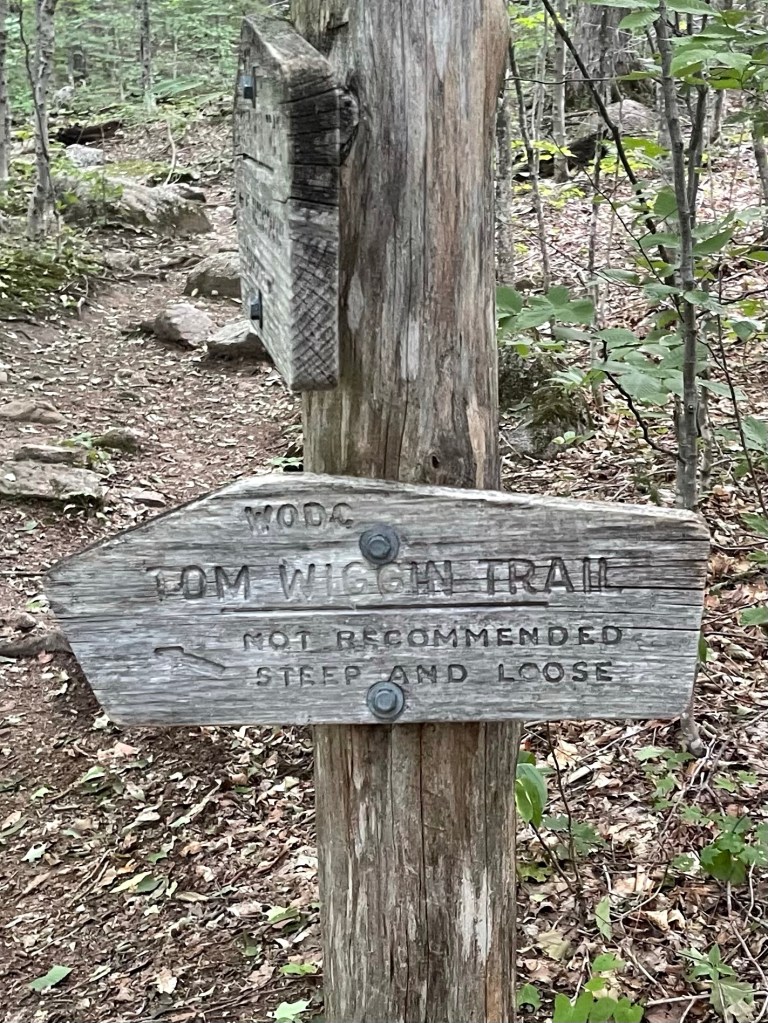
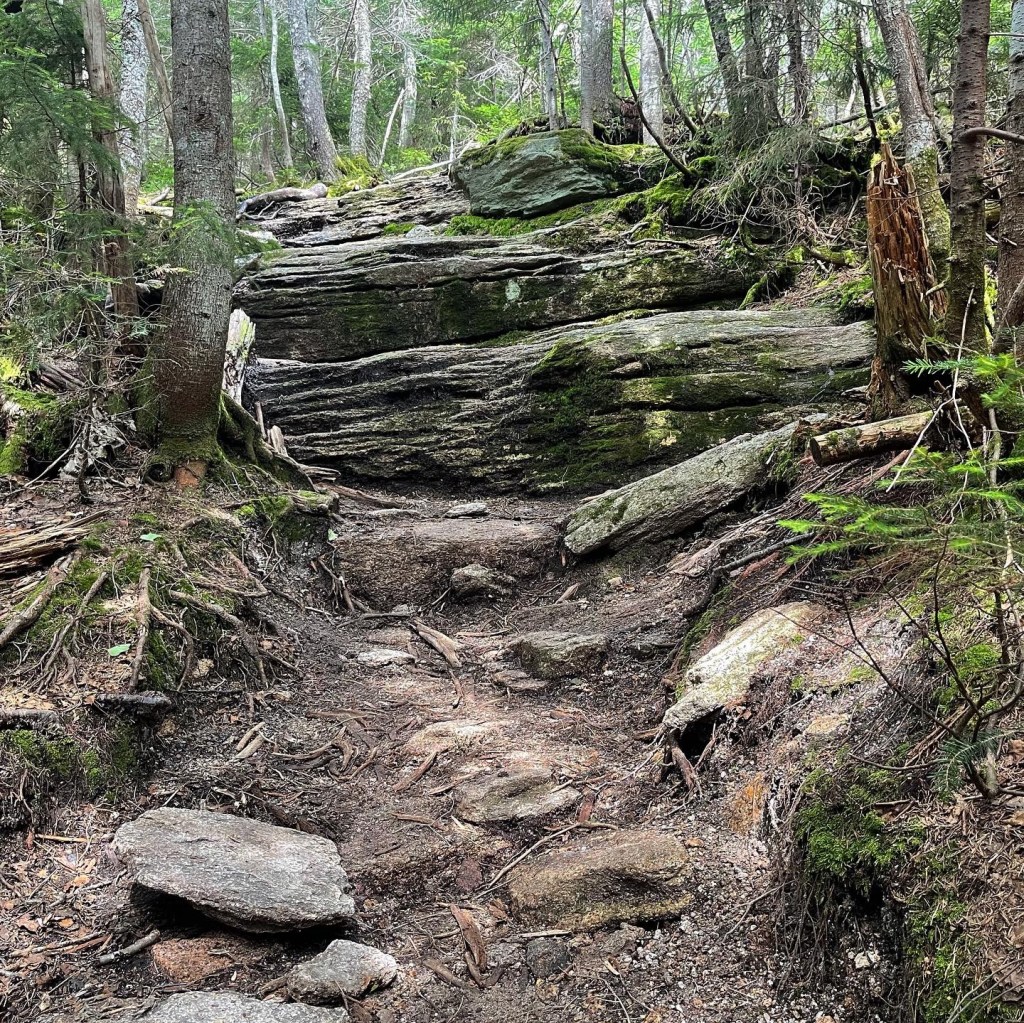
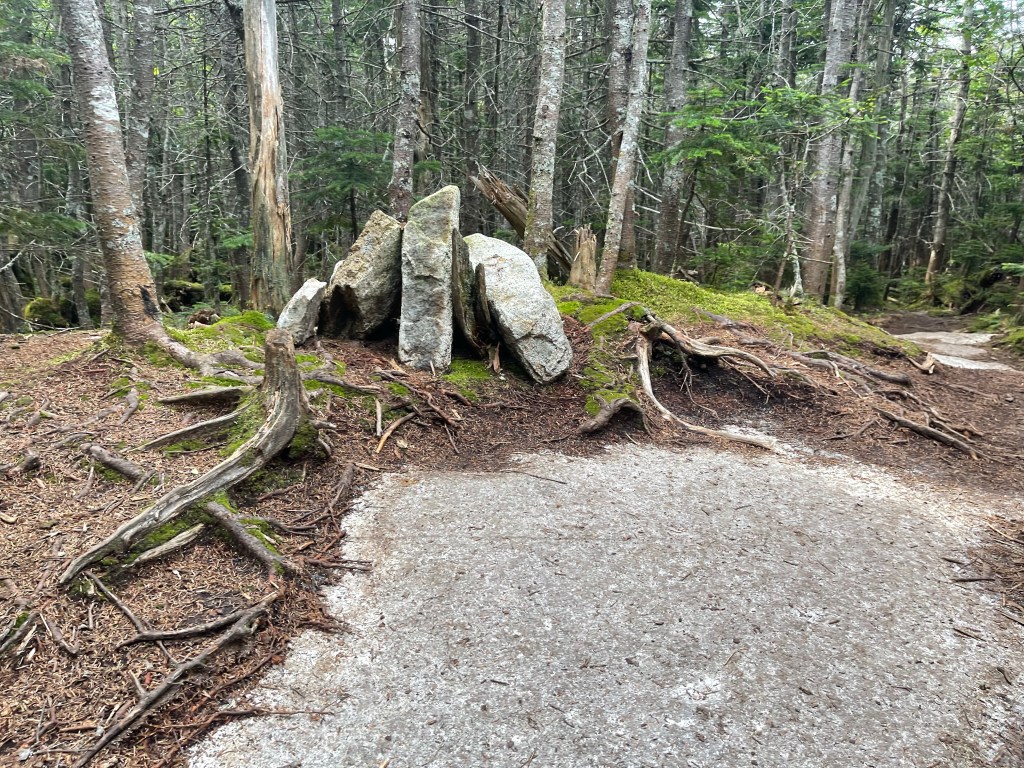
    When you’re hiking on a trail and come across a spot where you can either haul yourself over a boulder or bypass it entirely by taking the worn path around it, which do you choose? The answer is subjective, isn’t it? It depends on the size of the boulder. It depends on the condition of the worn path around it. And it depends on your mood at the time. My mood at the time I reached the Tom Wiggins trail was such that when I read the sign warning that the trail was not recommended because it was “steep and loose” I paused for a couple of minutes to consult my trail map, contemplate the implications to the overall mileage I’d do that day, and opt for the out and back option instead of the loop. This decision added almost five miles to my hike, and I’d second-guess it the rest of the day, but sometimes you have to trust your gut.

    Decision Time

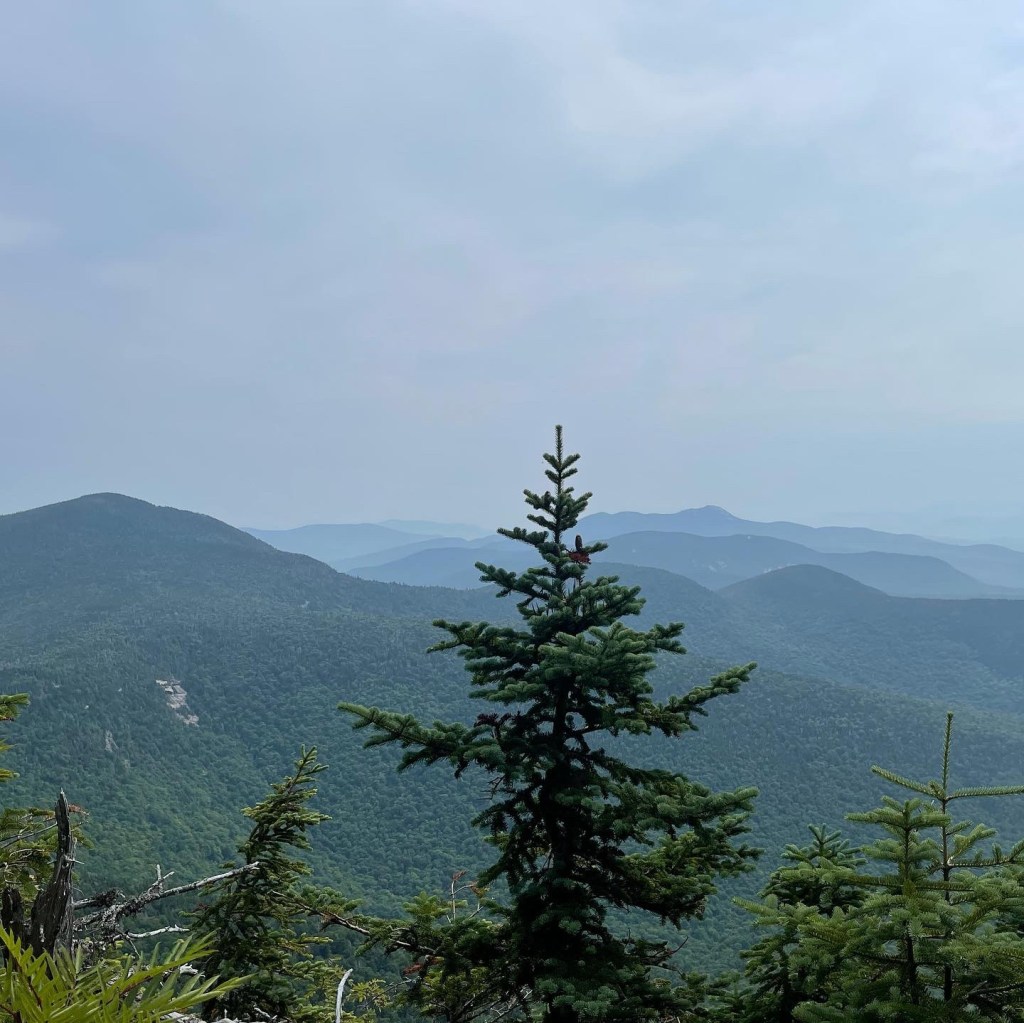
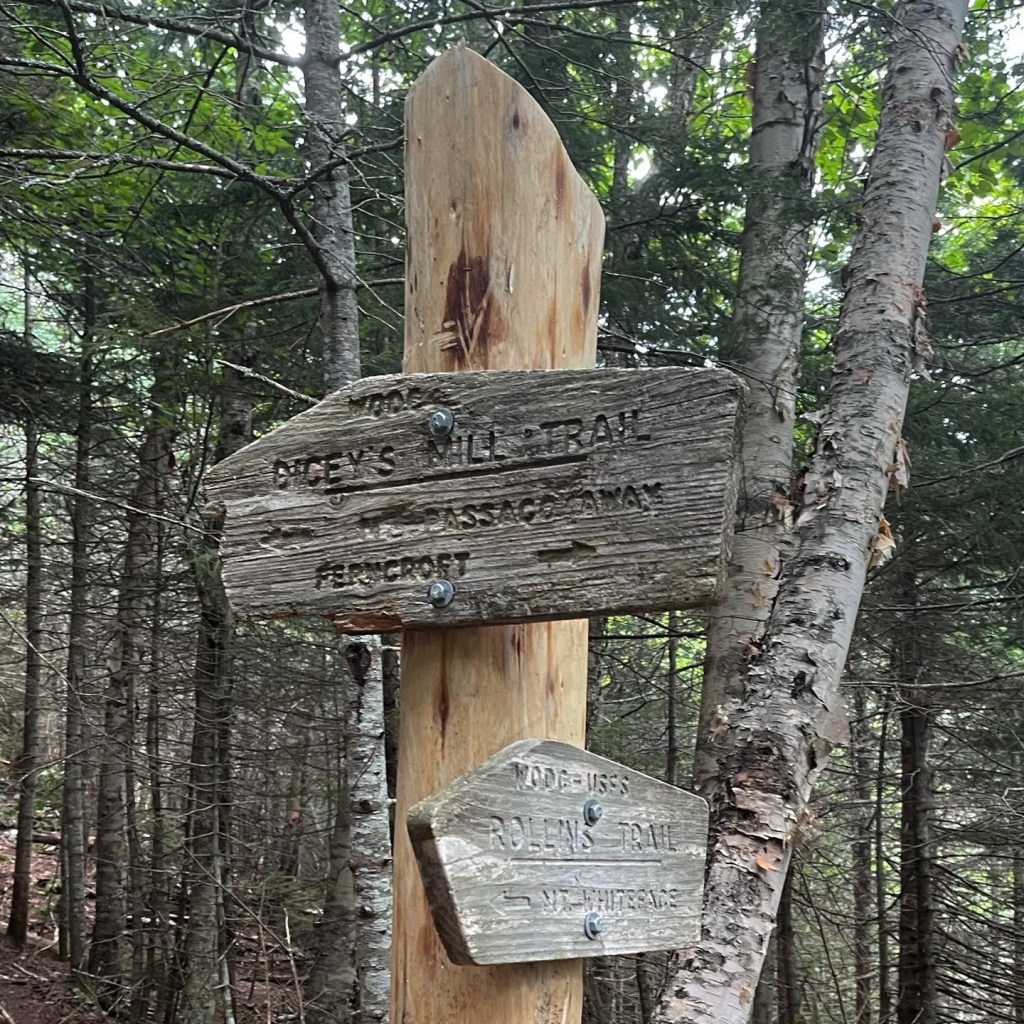
    Decision made, I hiked the Dicey Mill Trail to the junction of the Rollins Trail, where I had another choice to make: knock off summitting Mount Passaconaway first, or hike over to Mount Whiteface via the Rollins Trail and save Passaconaway for last? And here I made another choice that I’d second guess the rest of the day. I chose Whiteface, and hiked the 2.3 miles over to the cairn that marked the summit, went past it to the next trail junction and then turned around and hiked all the way back to where I’d begun. Far simpler to have just knocked off Passaconaway while the legs were fresh. It would have given me the option of descending the Tom Wiggins Trail (which was admittedly advertised as steep and loose). I may still have doubled back, but at least I’d have the option. Anyway, these are the hindsight options you think about as you’re sweating through your hiking shirt and feeling your knees and ankles remind you of your choices in life.

    This out and back hike wasn’t all that challenging, it was just long. And that’s exactly what I’d signed up for back at that sign. Sometimes you have to make peace with your decisions in life, and I’m okay with this one. Seeing comparable hikers who started right in front of me finishing the loop I’d contemplated after me, I recognized that either option was fine. I’ll hike the steep and loose section another day, probably in winter when the only part that matters is steep.

    This was my non-traditional hike of two more 4000 footers. I know if I’d hiked with friends I’d have just done the loop I’d planned all along, but sometimes you’ve got to just go it alone. And live with your choices along the way.

    Second Decision
    Summit of Whiteface
  • Spending Time With Profile Falls

    If time is the ultimate currency, why do we spend it frivolously? I wondered that as I drove north, breaking away from work on a rainy Monday to chase a waterfall. I knew the drive, and thought that maybe I should have combined it with a hike, or another waterfall, or a meeting with an industry acquaintance. Instead I made the falls their own destination and turned off thoughts of efficiencies.

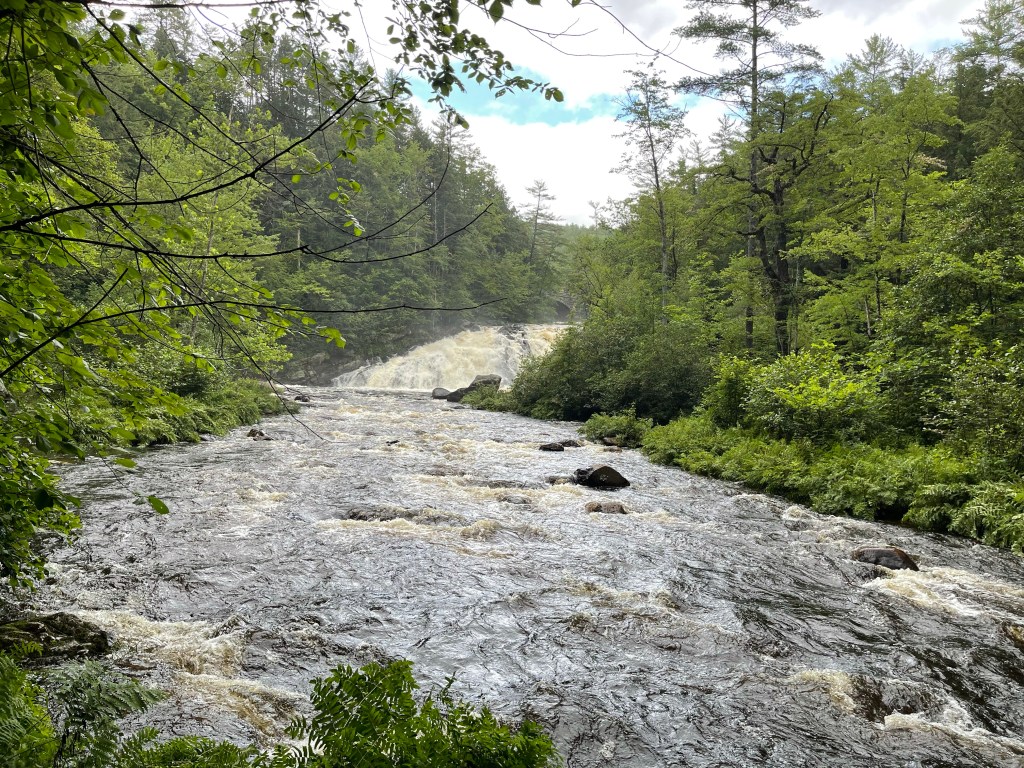
    Profile Falls is an easy walk from the parking lot in Bristol, New Hampshire. You can’t call it a hike, really. You follow the path on the northern bank right to the edge of the water, and then decide how much you want to risk as you assess high, fast moving water, slippery rocks and poison ivy. My vote? Just enough to get a decent picture. Not enough to lose my phone and dignity to the mocking river gods.

    Profile Falls

    After following the path of least resistance, I returned to the parking lot and decided to try the view from the southern bank. The river turns just after the falls, making a view from this side trickier. I made my way past a picnic area to a wet path along the steep and rocky embankment. This quickly proved to be a dead end of sorts. The closer you got to the falls, the worse the vantage point became. I should think walking right up the river in low water might be the very best option. For me, this was enough.

    The Smith River flows a few miles from just above Tewksbury Pond, gaining tributaries and power, before it gives itself to the Pemigewasset River, which flows into the Merrimack River at Franklin, New Hampshire and then 117 miles to the Atlantic Ocean at Newburyport, Massachusetts. It’s an epic journey, and one of the highlights is surely the 30 foot plunge over Profile Falls.

    For those keeping track, there are a lot of place names there that I have a deep connection to, which should have drawn me out here sooner in my life than this, but it seems I was spending time more frivolously then. I’m making up for lost time in some ways. Chasing waterfalls in the rain and using my currency in ways that work for me.

  • The Sleeping Compass

    You go through life thinking you’ve got things pretty well figured out (while knowing deep down that nobody does), and suddenly you trip over something you never thought of before. That’s the beauty of travel and expanded reading – you discover things that challenge the way you think. When you consume the same information every day that shell you crawl into gets pretty thick. ’tis better to get out and swim in new currents to see where it takes you.

    Many people know of Feng Shui and Vastu Shastra and this business of designing your dwelling to optimize living. Honestly, this isn’t an area where I’ve applied significant mental capacity. But lately I’ve read a bit more about Vastu Shastra and the direction you sleep in. Generally I spend about as much time figuring out which direction to sleep in as it takes to see where the headboard is. Perhaps I should have thought about it a little more.

    There are sleep compass headings developed over billions of lifetimes. The ideal sleep position for restful, restorative sleep is south. Those seeking knowledge should point east. If you’re seeking success, point west. And north? That seems to be reserved for the walking dead. Like sticking your head in a freezer.

    It seems I’ve been sleeping with my head pointing towards the west for the last 22 years. This is much better than my previous home, where I slept with my head pointing north. I’m sure glad we got out of there! Would my life have turned out differently had I simply stuck the headboard on the south-facing wall? Has facing west made that much of a difference in my success? What might have been?

    The thing is, I’m not sure I’m going to start moving the furniture around in the bedroom, or bringing a compass with me when I start staying in hotels again, but I see the merit of knowing where you are and how you’re positioned. I do believe the next overnight hiking trip might involve a quick consultation with the compass before setting up the tent and sleeping pad. After a long day of hiking a restful, restorative sleep would be most welcome.

    Living a fully optimized life begins with evaluating the best practices of our billions of fellow humans and seeing what works for you. That last bit, seeing what works for you, requires an open mind and the willingness to try something new. Maybe pointing your sleepy head to the south is worth a try.

  • Each Leap

    It’s funny how things cluster together. Bursts of activity that lump together depending on the place that you’re in emotionally, physically, developmentally. Like jumping rock-to-rock to cross a stream, these places are where we land at a given moment in our lives.

    Some are easy to identify: “student” to “early career” to “committed relationship” to “parent” are all leaps we’re familiar with. But there are other, smaller leaps that come to mind. Over the last year I’ve had clusters of activity – hiking, chasing waterfalls, devouring poetry, home improvement projects, etc. that consumed me for a time and then I was on to the next thing for a while. Those waterfalls are still calling, just as mountain peaks are, it’s just not their time right now.

    Each leap lands you in another place in your life. Each leap changes you forever. I’ll never be who I was before I had children, nor will I ever be the same person as I was before I read The Summer Day or saw a snowshoe hare sprinting through the snow on the summit of Mount Moosilauke or a hundred other leaps large and small that have brought me to this particular landing spot.

    Each leap brings us further across the stream, further from who we once were while closer to what we might be. Knowing we’ve changed, and fully aware of the risks, we must choose which leap to take next. Sometimes we get wet, sometimes we reach a dead end, and sometimes we reach a landing spot we never dreamed of getting to. There are lessons in each.

    At the moment I’ve landed on a series of home improvement projects that demand the usual investment of time and money. But I’m already plotting my next leap, and have an eye on the one after that too. All while the characters in my life are making their own leaps, some drawing closer, others moving further away. And this is as it should be. The stream keeps flowing, even as we leap from stone to stone.

    Nothing ever has been or ever will be the same. You can’t just sit on a rock in the middle of the stream forever. You’ve got to leap again. So make it a good one.

  • Friends with the Sky

    “One of the many ways we have made ourselves lonely without gaining the deeper nourishment and intimacies of true aloneness, is the way we have lost the greater supporting circle of friendship available to us in the created, natural world: to be friends with the sky, the rain, the changing light of a given day and the horizon always leading us beyond the circle we have drawn too readily for ourselves.” – David Whyte, from the forward of Essentials

    I’ve often wondered at loneliness. I’m rarely lonely, but I’m often alone. I think the root of it lies in Whyte’s observation about the greater supporting circle – a connection to the world around you and with your own inner voice. Nothing awakens your relationship with the world like lingering with it on its terms.

    One of the things I miss about having a dog is that forced connection with the outside, no matter the weather. It’s easy to just stay inside when it’s raining sideways or bitter cold. But having a dog forces your hand – they’ve gotta go, and you must connect them with the place they go. Letting them out is a cop-out. You must walk as a true offering to the pet gods.

    This connection to the outdoors doesn’t require a dog, I’ve had similar connection with hiking, rowing and sailing where you’re forced to deal with nature as it comes to you. When you’re a small part of the natural world you tend to see it differently than you might looking at a screen from the comfort of a favorite chair. Nature demands that we meet it with respect and reverence, and in return we awaken something deeper in us.

    I suppose a circle drawn around us feels like a hug or the blankets you pull over yourself on the coldest nights. The problem with a tight circle is that it’s inherently limiting. Getting out under the open sky and feeling the elements, you recognize that you’re alone, yet a part of something bigger than yourself. When you see the world outside that old circle, you’re never quite the same.

    Loneliness is a state of isolation derived from looking inward. Connection is looking outward, and beyond yourself. Stepping outside the circle is a courageous act if you haven’t spent much time there, but it leads to a world that is alive with wonder. A sensory world of conversations in many dimensions. A world where we can become more than whatever it was you were when contained in that circle. That’s where you’ll find larger possibility. You’ll never be lonely outside your comfort zone.