Category: History

  • Beliefs and Truths

    “Trust, but verify.” — Ronald Reagan

    There’s an interesting story about that expression, “Trust but verify”, attributed to Ronald Reagan. During his Presidency, when the Cold War between the US and the USSR peaked, an advisor to the President told him that the Soviets like to communicate using proverbs. “Trust, but verify” is the english version of an old Russian proverb, doveryai, no proveryai. Whatever we each may believe about Ronald Reagan as a President, we can all agree that he was a talented communicator who captured the imagination of his followers. All consensus begins with some agreed-upon truth. Reagan’s use of the proverb met the Russians on their ground, and it made all the difference.

    Coming from a long line of travelling sales people on my mother’s side
    I wasn’t gonna buy just anyone’s cockatoo
    So why would I invite a complete stranger into my home
    Would you?
    — U2, Breathe

    One should never challenge the beliefs of another person, just as one should never impose their own beliefs on another person. That doesn’t mean we aren’t allowed to question those beliefs, or to decide for ourselves what makes the most sense for us. We are not simply zealots; we are intelligent beings moving through a lifetime of information, sifting through all that experience to find our truth. We may be living in a time when people don’t want to agree upon a common truth, but that doesn’t make the presence of that truth any less true.

    “I don’t want to believe. I want to know.” ― Carl Sagan

    I’m not a scientist, nor an engineer, but I still prefer my information diet to be rich in fact and truth. Skepticism is not a contradiction of another’s beliefs, it’s a survival tool that leaves a healthy gap between what someone is telling us and what we ultimately believe ourselves. Developing a strong BS filter is a survival tool. It doesn’t come from books, but from street smarts. We must build our foundations on something solid, or the very structure of our lives—the stories we tell ourselves are true—will crumble one day.

    To pass from this world still believing a lie isn’t the worst way to go. It’s far worse getting to our deathbed and finding out that it was cockatoo all along, told to keep us in line. History is full of such lies disguised as truth. A little skeptical curiosity goes a long way towards finding the real truth. The question is, do we really want to know it, or would we prefer to just drink the Kool-Aid and hope that everything will turn out fine in the end? Give me the clarity of knowing over the haze of belief. Trust, but verify.

  • A Day at The Met

    The first thing you learn when you spend a day at The Metropolitan Museum of Art is that a day is comically not nearly enough time to see everything. A year at The Met might do. And be sure to capitalize that T in “The” because the official name is what it is and details matter. In matters of affectionate familiarity, it’s perfectly fine to simply call it The Met.

    Comic or not, I had one random Thursday for a Met marathon. The only thing to do is to get to it—to meander through the maze of exhibits, to see, to linger on art that whispers for you to be with it for a moment, to eavesdrop on tour guides as they drop insight on what seemed randomness a moment before, to gawk at the famous and smile at the packs of teenagers giggling about the lack of fig leaves, and to move relentlessly through as much of the collection as time and mental capacity allows. As with all things, we hope to return again one day and pick up where we left off. Like that expression about the river, we will have changed in the interim, and everything we see will seem different with that new perspective.

    Claude Monet, "Bouquet of Sunflowers", 1881
    Claude Monet, “Bouquet of Sunflowers”, 1881
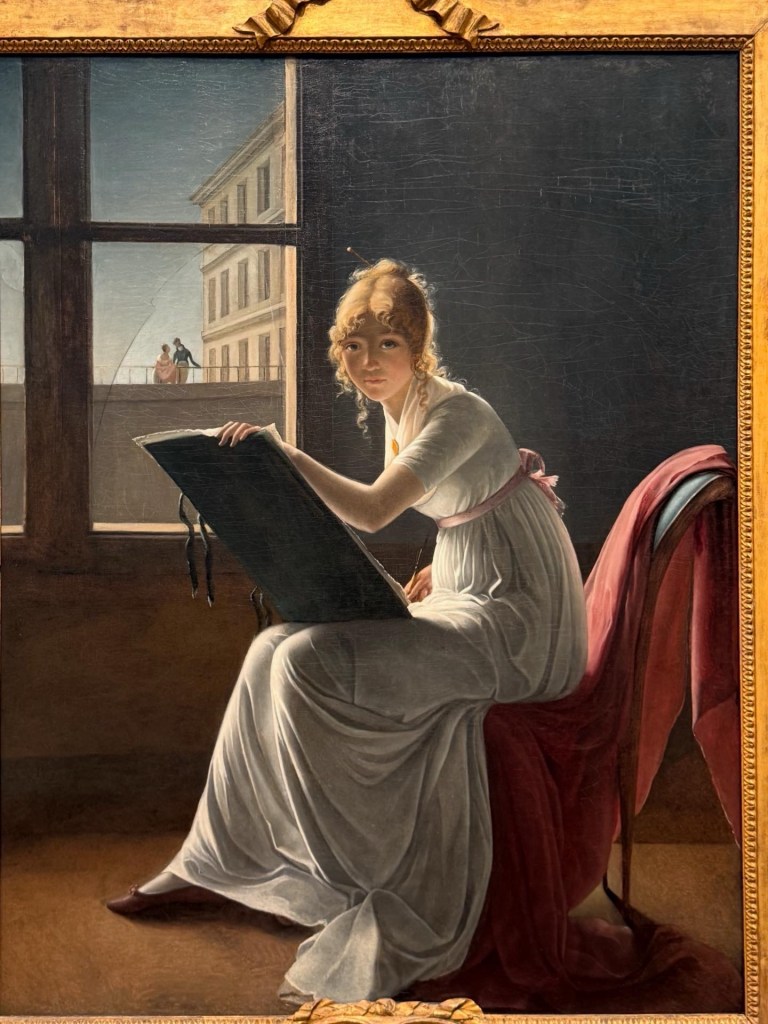
    Marie Denise Villers, Marie Joséphine Charlotte du Val d'Ognes (1786-1868), 1801
    Marie Denise Villers, Marie Joséphine Charlotte du Val d’Ognes (1786-1868), 1801
    Jean-Baptiste Carpeaux, Why Born Enslaved!
    Jean-Baptiste Carpeaux, Why Born Enslaved!
    Claude Monet, "Bridge over a Pond of Water Lilies", 1899
    Claude Monet, “Bridge over a Pond of Water Lilies”, 1899
    August Rodin, "Beside the Sea", 1907
    August Rodin, “Beside the Sea”, 1907
    William Bouguereau, "Breton Brother and Sister", 1871
    William Bouguereau, “Breton Brother and Sister”, 1871
    Vincent van Gogh, "Wheat Field with Cypresses", 1889
    Vincent van Gogh, “Wheat Field with Cypresses”, 1889
    Bronze statuette of a satyr with a torch and wineskin
    Bronze statuette of a satyr with a torch and wineskin
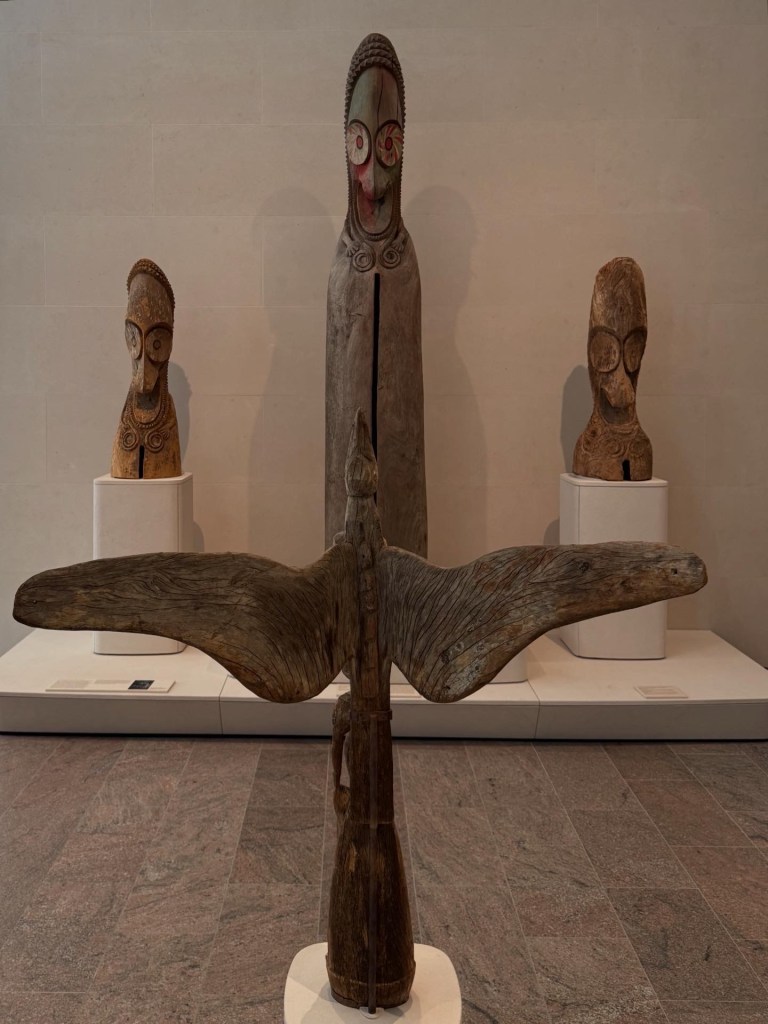
    Foreground: Finial for a ceremonial house, Sawos artist; Kaimbiam village, Middle Sepik River, Papua New Guinea
Background: Finials from Ambrym Island artists; Fanla village, Vanuatu
    Foreground: Finial for a ceremonial house, Sawos artist; Kaimbiam village, Middle Sepik River, Papua New Guinea
    Background: Finials from Ambrym Island artists; Fanla village, Vanuatu
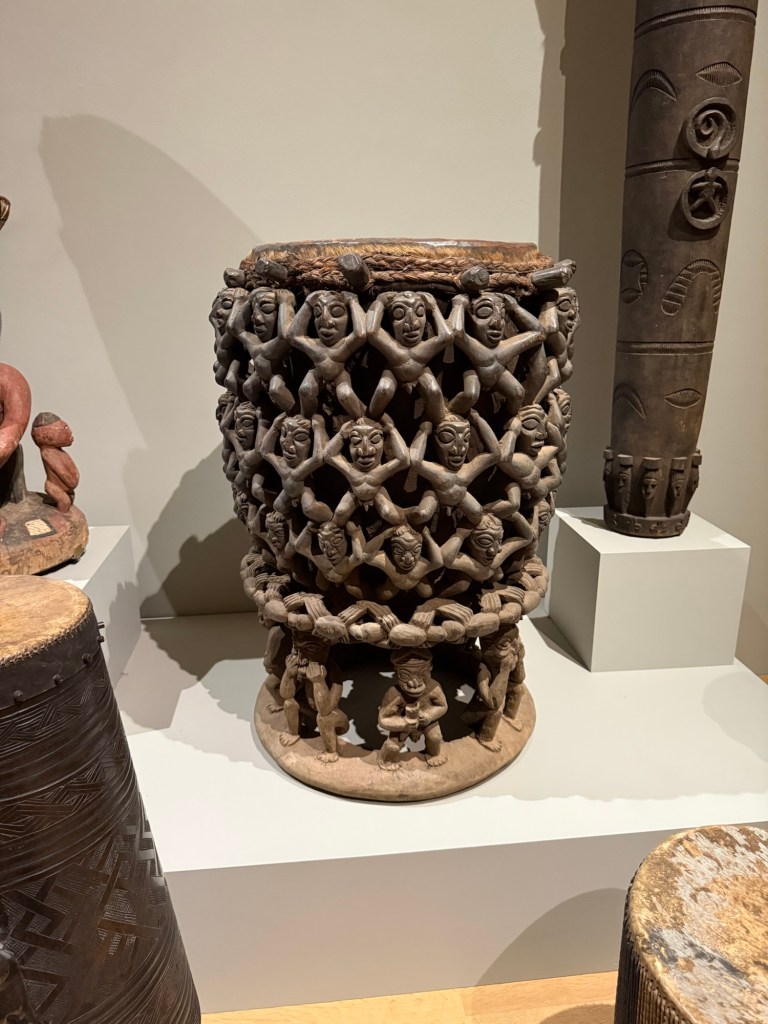
    Drum
Possibly Babungo/Vengo people
Cameroon, ca. 1940
    Drum
    Possibly Babungo/Vengo people
    Cameroon, ca. 1940
    Arms and Armor Room from above
    Arms and Armor Room from above
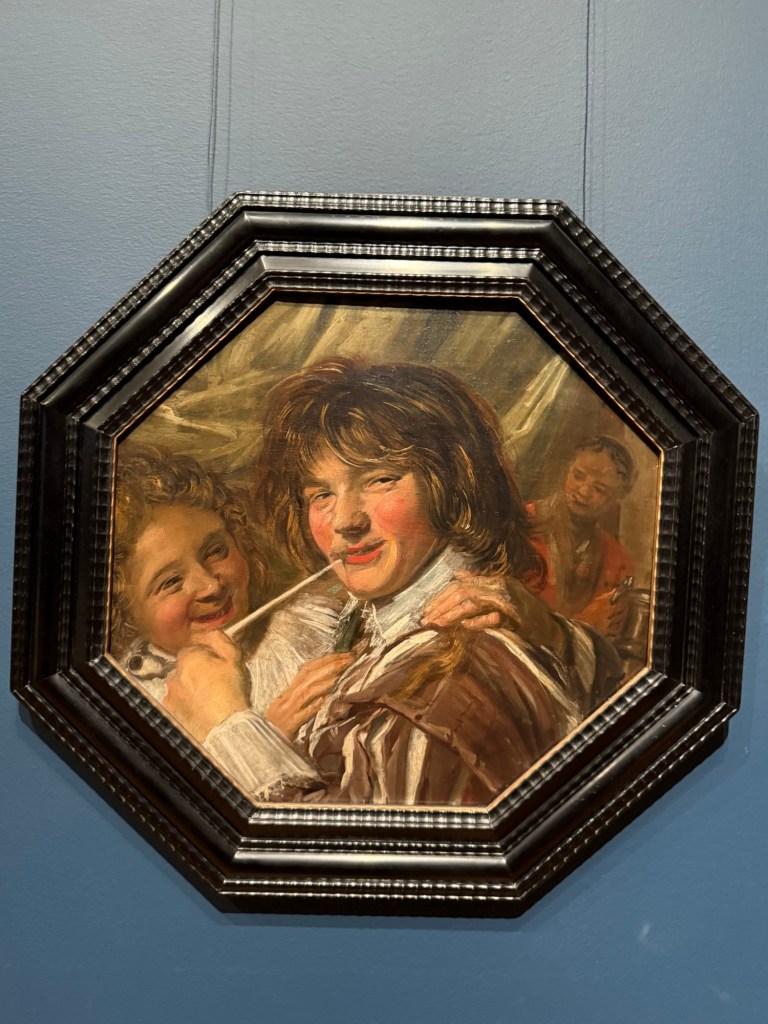
    Frans Hals, "The Smoker", ca. 1623-1625
    Frans Hals, “The Smoker”, ca. 1623-1625
    Pablo Picasso, "The Blind Man's Meal", 1903
    Pablo Picasso, “The Blind Man’s Meal”, 1903
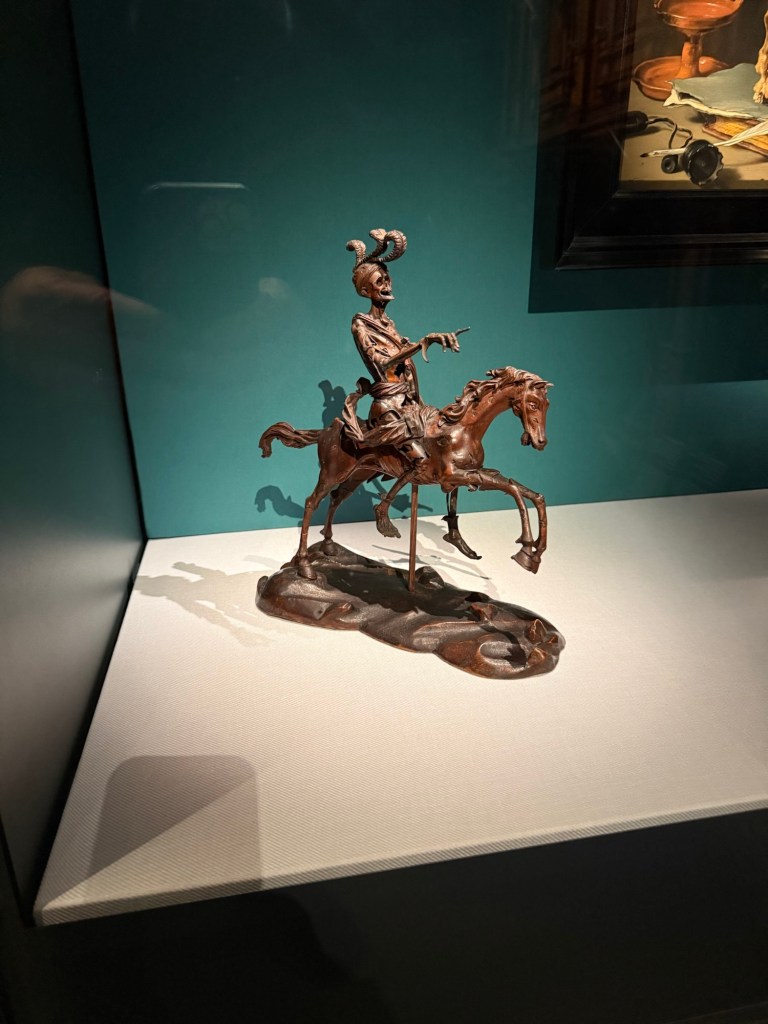
    Death
German, mid-17th century
Lindenwood with traces of pigment, spruce base
    Death
    German, mid-17th century
    Lindenwood with traces of pigment, spruce base
    Auguste Rodin, "The Burghers of Calais"
    Auguste Rodin, “The Burghers of Calais”
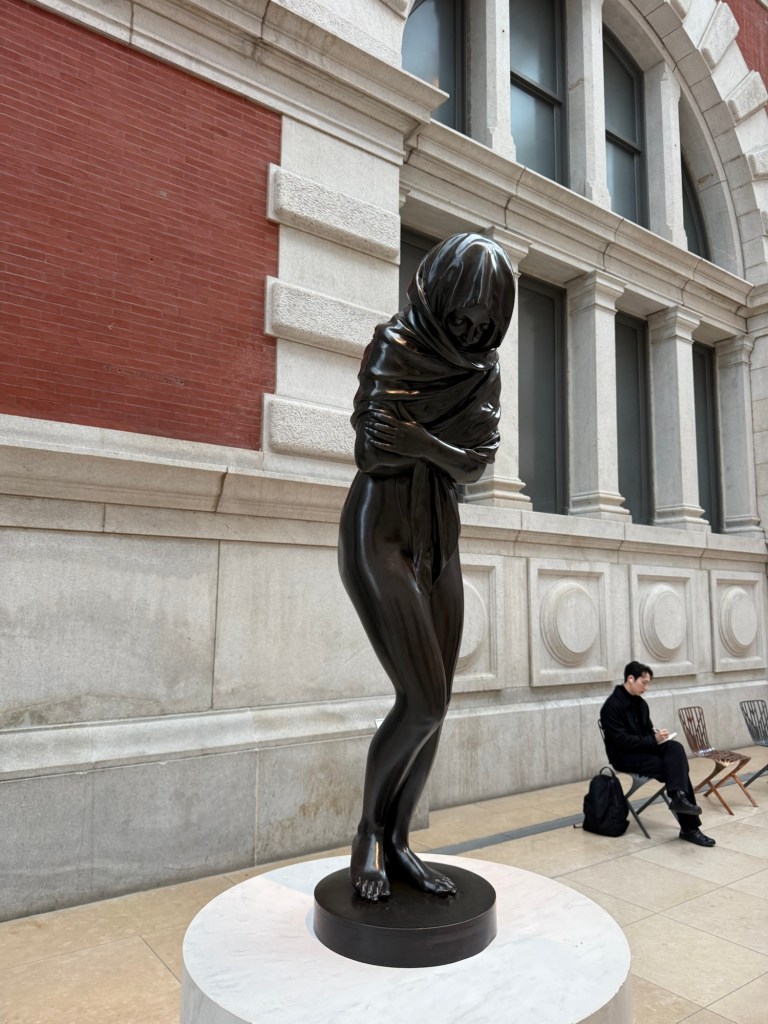
    Jean Antoine Houdon, "Winter", 1787
    Jean Antoine Houdon, “Winter”, 1787
    Fireplace Surround
Attributed to Désiré Muller, ca. 1900
    Fireplace Surround
    Attributed to Désiré Muller, ca. 1900
    Harriet Whitney Frishmuth, "The Vine", 1921 (this cast 1924)
    Harriet Whitney Frishmuth, “The Vine”, 1921 (this cast 1924)
    Antonio Canova, "Perseus with the Head of Medusa", 1804-6
    Antonio Canova, “Perseus with the Head of Medusa”, 1804-6
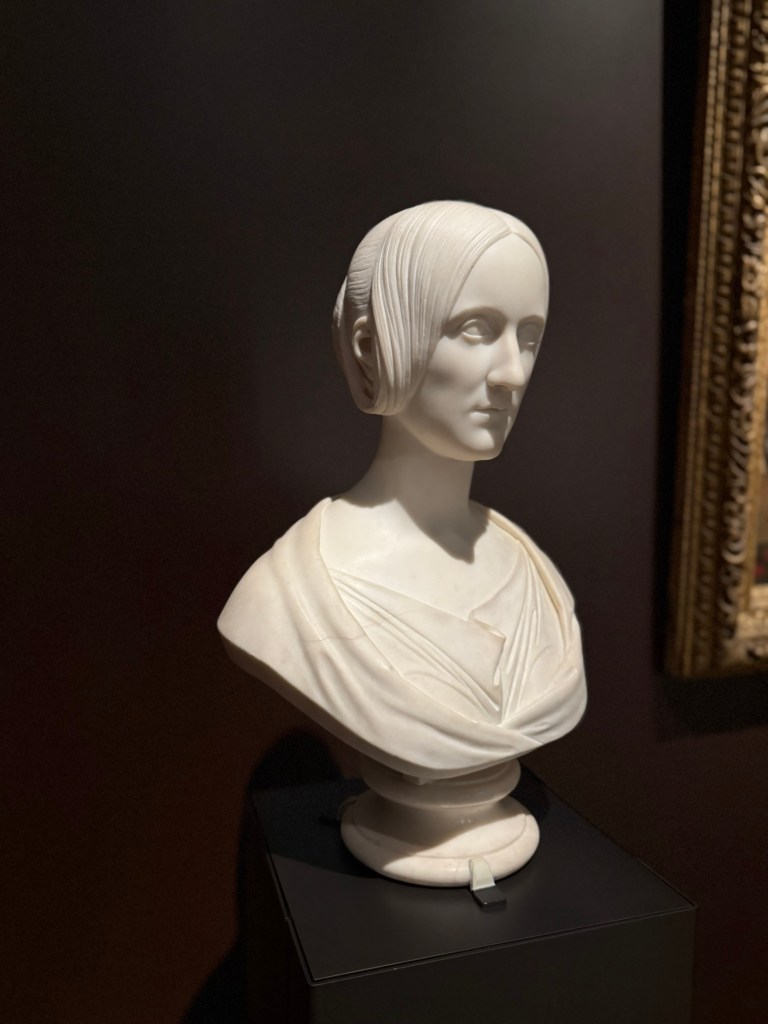
    Camillo Pistrucci, "Mary Shelley", 1843
    Camillo Pistrucci, “Mary Shelley”, 1843
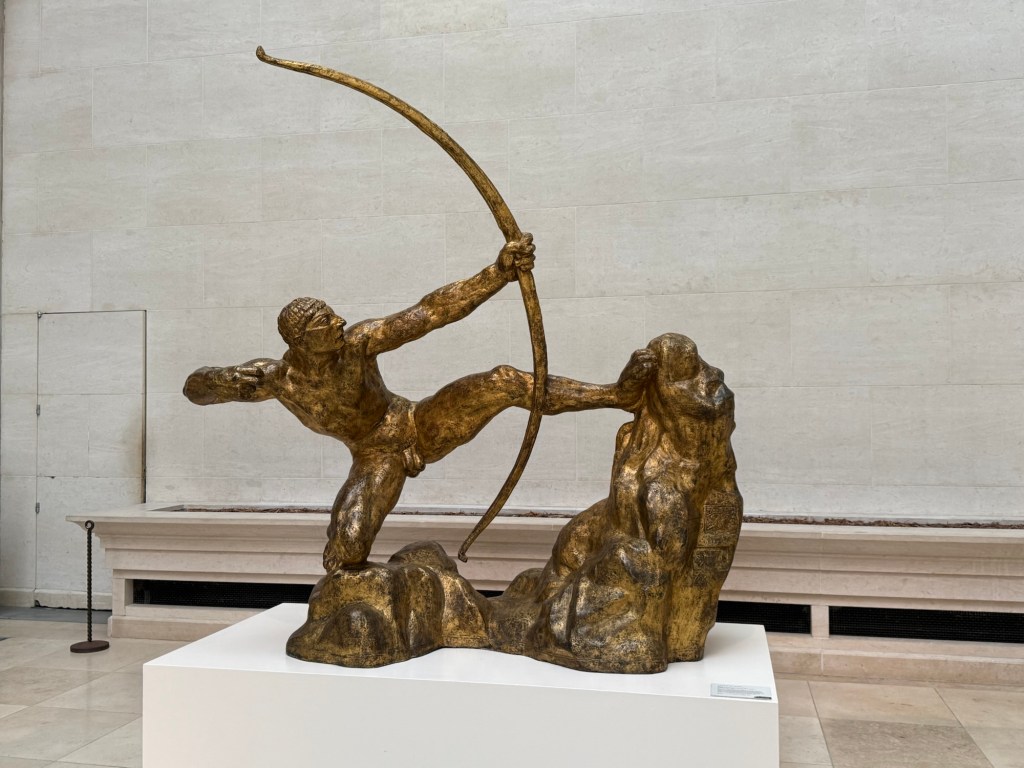
    Émile-Antoine Bourdelle, "Herakles the Archer", 1909
    Émile-Antoine Bourdelle, “Herakles the Archer”, 1909
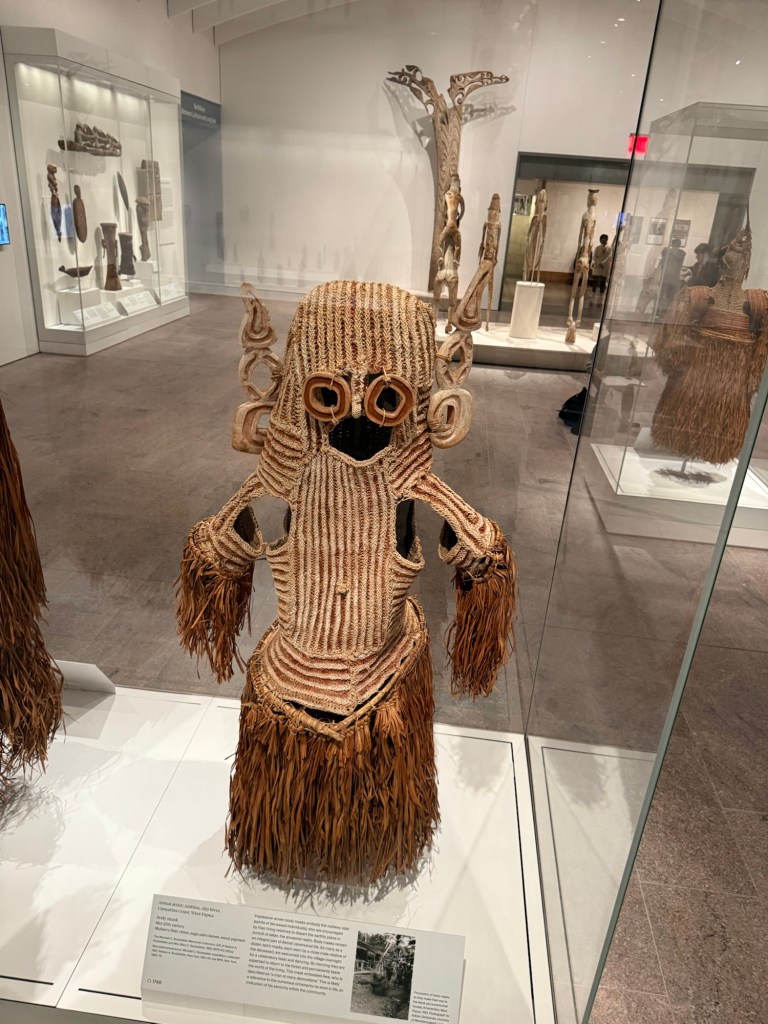
    Body Mask
Asmat artist; Ambisu, Ajip River, Casuarina Coast, West Papua
    Body Mask
    Asmat artist; Ambisu, Ajip River, Casuarina Coast, West Papua
    Bronze helmet of the Illyrian type
Greek, late 6th-early 5th century, B.C.
    Bronze helmet of the Illyrian type
    Greek, late 6th-early 5th century, B.C.
    Mechanical Table
Workshop of David Roentgen, ca. 1780-90
    Mechanical Table
    Workshop of David Roentgen, ca. 1780-90
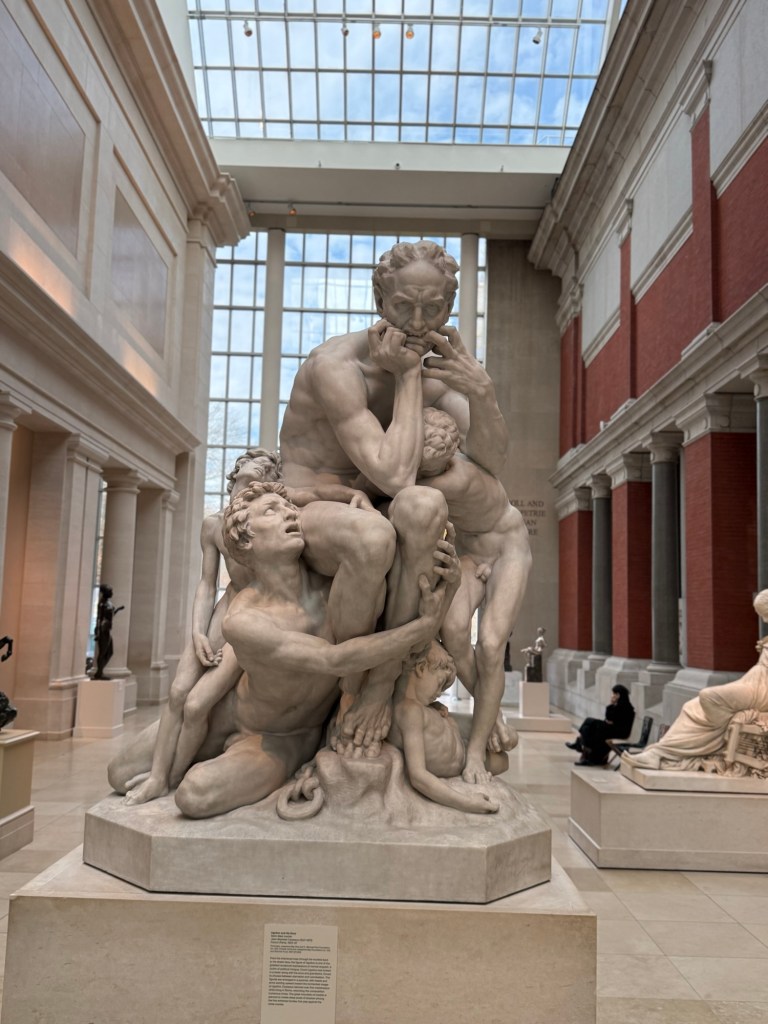
    Jean-Basptiste Carpeaux, "Ugolino and His Sons", 1865-67
    Jean-Basptiste Carpeaux, “Ugolino and His Sons”, 1865-67
    Augustus Saint-Gaudens, "Hiawatha", 1874
    Augustus Saint-Gaudens, “Hiawatha”, 1874
    Asmat artist, Yamas village, West Papua
Wuramon (spirit canoe)
    Asmat artist, Yamas village, West Papua
    Wuramon (spirit canoe)
    Bronze ornament from a chariot pole
Head of Medusa
Roman, 1st-2nd century A.D.
    Bronze ornament from a chariot pole
    Head of Medusa
    Roman, 1st-2nd century A.D.
  • The JFK Memorial, Hyannis

    “I believe it is important that this country sail and not lie still in the harbor.” — John F Kennedy

    When I was a kid, Hyannis, Massachusetts was the place we’d go to walk Main Street and buy some candy. When I got a little older it was the place to hang out with college friends or to catch a ferry to Nantucket. Hyannis isn’t quaint or quintessential Cape Cod, it’s a bustling village in the town of Barnstable. I practice active-avoidance here the way locals avoid tourist traps anywhere in the world. But I’m not a local, just way too familiar with the place.

    And yet I’d never visited the John F Kennedy Memorial. It’s a quietly-dignified and understated nod to the President who once sailed in the harbor this memorial overlooks. Finding myself with a little time to spare, I fell back on my old habit of seeking out the most interesting and often overlooked places wherever I was at the moment. And this moment brought me to Hyannis.

    I remember having a glimpse of the entrance to the Kennedy Compound from the back of a station wagon as a kid, but to me that’s like watching the Lifestyles of the Rich and Famous. That’s not for me. Far more interesting is an offseason visit to a quiet memorial to honor the brief, brilliant flame that was JFK.

    The memorial features a fieldstone wall with a placard of JFK. Appropriately, it faces the harbor. There’s a fountain with the quote noted above engraved around it. In the offseason it’s simply a drained pool. I’m sure in summer it’s lively and impressive. But for my purposes, its stillness was appropriate for the somber occasion for the memorial. While it celebrates the life of the man, it also reminds us of all that we missed when he was assassinated that day in Dallas in 1963.

  • 50 Years: SS Edmund Fitzgerald

    Does anyone know where the love of God goes
    When the waves turn the minutes to hours?
    The searchers all say they’d have made Whitefish Bay
    If they’d put 15 more miles behind her
    They might have split up or they might have capsized
    They may have broke deep and took water
    And all that remains is the faces and the names
    Of the wives and the sons and the daughters

    — Gordon Lightfoot, The Wreck of the Edmund Fitzgerald

    I’d be remiss to let the 50th anniversary of the sinking of the SS Edmund Fitzgerald pass without a mention. It would be a footnote were it not for the Gordon Lightfoot song that made ship and crew immortal, but tell that to the families. We all pass eventually, preferably peacefully in our sleep a long time from now. An abrupt, tragic end was not on anyone’s mind when those 29 men sailed off into history. One wonders what their final moments were like, but what is certain is that all hands were lost and the ship broke in two. It was the final straw for shipping on the Great Lakes, prompting higher safety standards and oversight. And perhaps that is the ultimate legacy of the Edmund Fitzgerald.

  • Worthy of Its Own Passion

    “What else is love but understanding and rejoicing that another lives, works, and feels in a different and opposite way to ourselves? That love may be able to bridge over the contrasts by joys, we must not remove or deny those contrasts. Even self-love presupposes an irreconcilable duality (or plurality) in one person.” — Friedrich Nietzsche

    We all understand the concept of the battle of good and evil. It’s deeply embedded in every aspect of our lives, from religion to politics to movies and literature. Good and evil always gets our attention, which is why dualism is used so frequently by those who would divide us. As a society and as individuals, just who do we want to become? If there is an evil in this world, it surely resides in those who would divide us.

    The rhetoric of good and evil is a red flag for extremism. Such all or nothing, black and white language is designed to call us out. We’re either with the crowd or we’re suspect. They used to burn people at the stake for such things. Now we cancel people, deport or ostracize them. The outcome is the same with less screaming. If we aren’t good we must be evil, and evil must be wiped out. The voice of reason gets drowned out in the fervor.

    Manichaeism was a religion founded on this idea of light and darkness, good and evil and all that. It lasted a thousand years before being swept away by Christianity, which has it’s own dualistic tendencies. Manichaeism may have died out, but dualism is alive and kicking. We know it when we hear it, because it’s just so commonplace in our culture.

    Being a voice of reason in an unreasonable time is a lonely path. People want us to pick a side, and dismiss anyone who attempts to weigh the opinion of others deemed woke or MAGA or some other version of dark and evil. Isn’t it a pity that we’ve reached a point where reason isn’t heard? The thing is, dualism stirs the survival instinct within us, where “fight or flight” overpowers the nuance of reason.

    We ought to turn off the noise that would draw us away from reason. We ought to find more creative ways to influence and help people to see that most of the world is good, and very little of it is evil. That those who would use dualism to divide us are stoking that fire for their own gain. Is it so unreasonable to see that unity is a path worthy of its own passion?

  • Hiking Through the Boulders of Pawtuckaway

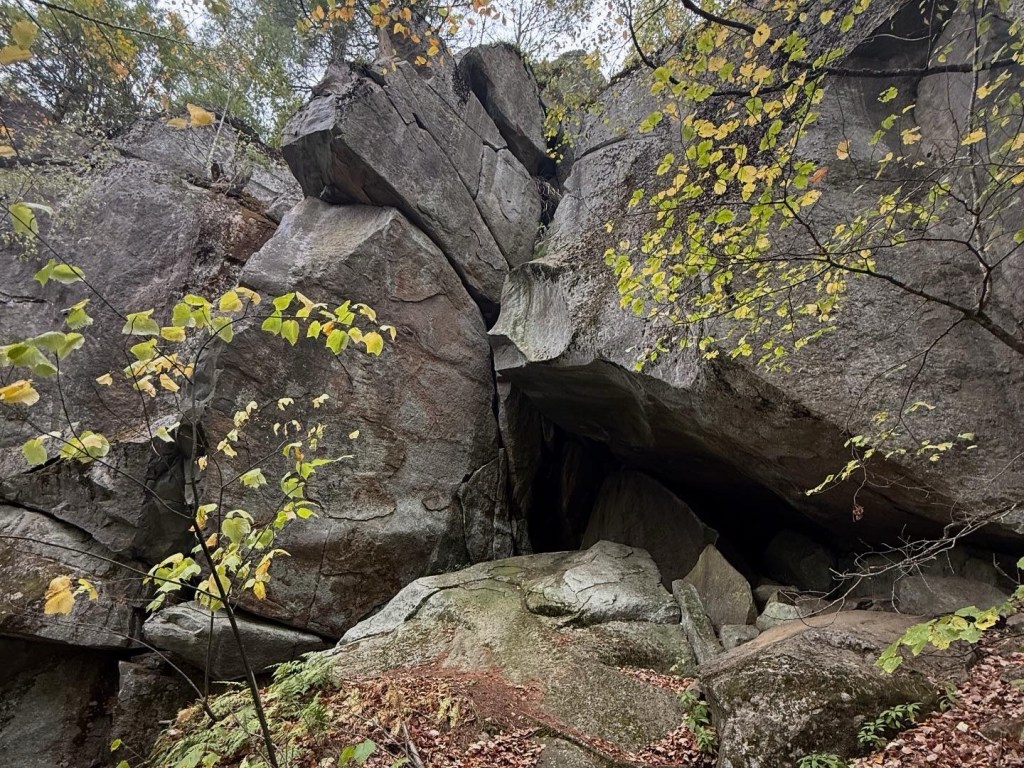
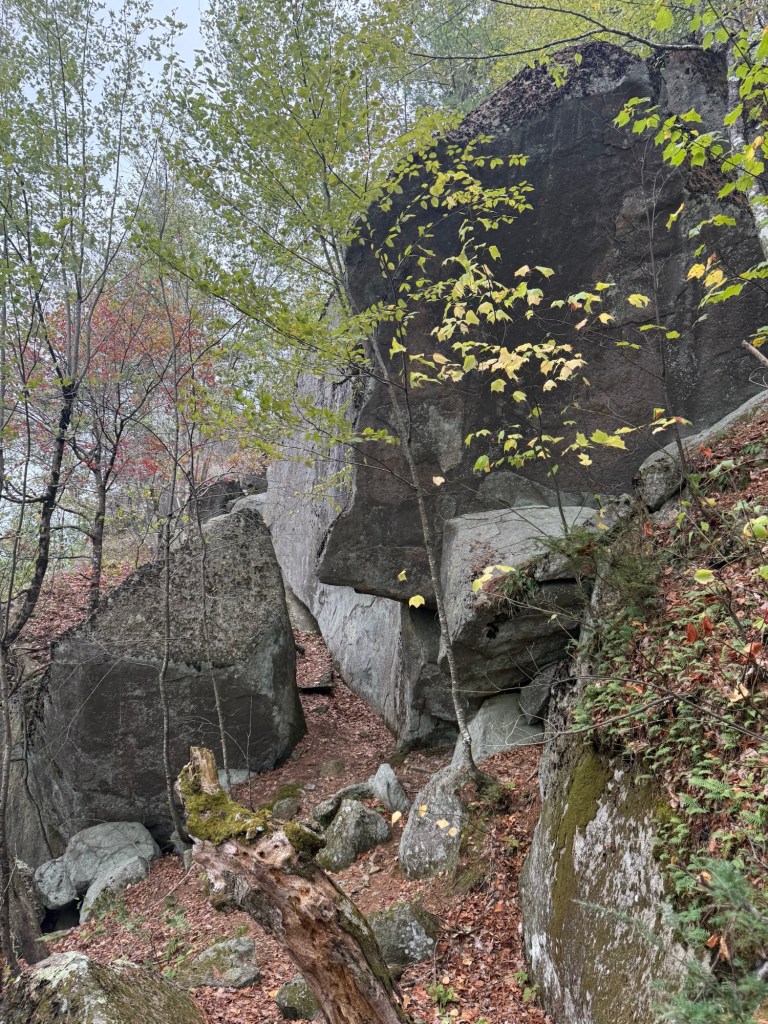
    On a cool, raw and occasionally wet Sunday an avid hiker friend and I explored the trails and summits of Pawtuckaway State Park. Situated within the towns of Nottingham and Deerfield, New Hampshire, Pawtuckaway is easy to reach compared with some other mountains in New England. And of course it’s hard to call them mountains at all, if you want to get righteous about the height thing. Doing North and South Mountains together offers a gain of only 1409 feet, I’m told, but the story isn’t the elevation gain, it’s the geological interest that draws you here.

    “High up on South Mountain a dike of black trap rock cuts the granite-like rock of the mountain, and breaking out rectangular blocks provides the treads and risers of Devil’s Staircase. The top of South Mountain and the firetower rising above it command a view overlooking the sea to the east and the mountains to the north. The Devil’s Den Trail to North Mountain first passes the huge Pawtuckaway Boulders. These tremendous blocks of rock ranging up to 60 feet in some dimensions and probably comprising the largest group of boulders anywhere, are strewn for about a quarter mile along the trail. Once a part of North Mountain, they were plucked by the glacier during the Great Ice Age and dumped in their present position when the ice melted. Devil’s Den was hollowed out by this same plucking action.”
    — Jacob Freedman, The Geology of the Mt. Pawtuckaway Quadrangle

    “Forces in the earth developed a circular fracture around the solid rock, and into this fracture more magma of a different composition rose. It consolidated to form a gray coarse-grained granite-like rock called monzonite, which now makes up the circle of the Pawtuckaway Mountains in what is called a ring-dike.” — Jacob Freedman, The Geology of the Mt. Pawtuckaway Quadrangle

    Winding through these fields of plucked glacial erratics, you’ll find plenty of rock climbers bouldering the monzonite, mountain bikers and the usual assortment of casual and serious hikers navigating the trails, and a surprising amount of horse manure indicating that some of the trails are very popular for horseback riding. There are gravel roads throughout the park as well, and we found these to be useful connectors between trails on our 12 mile hike.

    Reading about the history of the area, it seems there was a character known as the “Barefoot Farmer of Pawtuckaway” named George Goodrich who played a large role in making it a state park. The Goodrich family farmed this rocky land, and you can find the family graveyard within the state park. I can’t imagine hiking the terrain barefoot the way he farmed it, but I suppose a few decades of barefoot farming would go a long way to toughen up the toes.

    New Hampshire is in a serious drought, and you could see the impact it’s having in the streams, ponds and wetlands. Stream beds are largely dried up and the ponds are showing plenty of their muddy bottoms. The foliage is muted this year too after the stress of a dry season. But our hike coincided with the beginning of a few days of rain, and we hiked out to a misty, raw sendoff.

    I’d hiked this place before, almost twenty years ago, focused mainly on South Mountain and the fire tower you can climb up. That’s surely the most popular trail because it’s relatively easy with a nice payoff in views when you reach the summit. But for my money, North Mountain and the ledges and boulders below it are the most dramatic and fascinating place in Pawtuckaway. If you go, you can’t miss them. Shoes are optional, of course, but highly recommended.

  • The Schooner Ardelle on a Celtic Sunset Cruise

    These summer clouds she sets for sail,
    The sun is her masthead light,
    She tows the moon like a pinnace frail
    Where her phosphor wake churns bright.
    Now hid, now looming clear,
    On the face of the dangerous blue
    The star fleets tack and wheel and veer,
    But on, but on does the old earth steer
    As if her port she knew.
    — William Vaughn Moody, Gloucester Moors

    We know when we are in the midst of something extraordinary. Anticipation creeps up on us as the minutes pass by, awaiting our participation. Awareness floods in as the magic unfolds. Joy and gratitude edge in, provoking other emotions. There comes a time when we must simply put away the camera, stop searching for just the right word or phrase, and simply be a part of all that is happening around us.

    Gloucester, Massachusetts has a long history with the sea. Its famous harbor has long welcomed home fisherman and sailors from passages as far and wide as the ocean’s reach. One feels the history sailing in this harbor, and you play some small part in the play for having been here at all. The fleets of old are mostly all gone now, ghosts of what once was. But there are a few holdouts, and newcomers built in the traditional way, to offer some hint of what it was like long ago.

    Harold Burnham has built several schooners in the traditional fashion. For a couple of centuries the Burnham’s have built ships in Essex, Massachusetts. Two of his schooners are harbored in nearby Gloucester, and Harold himself captains sunset cruises. You simply have to put yourself in the way of beauty and sign up to participate. And if you’re especially fortunate, you may join on a night of Celtic music to offer a proper soundtrack for a September night when the clouds are just so to harness a bit of heavenly magic.

    Maritime Heritage Charters offers many opportunities to learn and experience a few hours on a schooner sailing in Gloucester Harbor. One not to miss is the Celtic Music Sunset Sail with Michael O’Leary & Friends cruise, when traditional music and song fill the heart and soul as you slip past history and witness the divine dance of fading light. The experience is one that will stay with you forever.

    The Schooner Ardelle, Gloucester, Massachusetts
  • The Loyalty Building

    In Milwaukee, Wisconsin there are plenty of fascinating things to see, ranging from the strikingly gorgeous Milwaukee Art Museum to the time machine Bronze Fonz statue to the exceptional German food and beer scene. But beyond all of that, there’s a gem hidden in the most unusual of places that most tourists would never see. Unless, of course, they stayed there.

    In the late 19th century, the Northwestern Mutual Life Insurance Co. had commissioned the construction of a Richardsonian Romanesque building designed by S.S. Beman. That building, known as the Loyalty Building was completed in 1886 and is now both a National Historic Landmark and the most beautiful and unique Hilton Garden Inn I’ve ever been in.

    The building was built of Maine and Indiana granite, with arches and modern features like dual-lighting (gas and electric!), heating and an innovative cooling system. A massive glass ceiling lets in tons of natural light, and the floors feature terra cotta and terrazzo tiles in intricate patterns. Honestly, you don’t know where to look there’s just so much to see!

    But then you see and know. The star of the show is the staircase, with cast iron balusters and bronze newels topped with tall copper inverted cone-shaped finials. It’s those finials that catch your attention—that’s a lot of copper sitting their marking time. Those cones made it through the Great Depression and two world wars. And it’s the story of their survival that is most interesting of all.

    During World War II, copper was in short supply and being scooped up and thrown into the war effort all over the country. The building’s owner at the time, not having the heart to see the copper finials melted down, painted them black to escape notice. They stayed that way, forgotten it seems, until the 1960’s when they were uncovered for the world to see once again. And all you have to do is step into the Hilton Garden Inn in Milwaukee.

  • Following the Rhode Island to Bermuda Thread

    We stayed on St. David’s Island this week while we were in Bermuda. It wasn’t a conscious choice to stay there, but I’m pleased we did, for otherwise I don’t believe we would have gotten there on this particular trip. When I speak of conscious choices, I want to acknowledge that unconsciously I knew the connection between New England and Bermuda. In particular, between Rhode Island and St. David’s Island. Not simply the famous sailing race, but the historic slave trade. Bermuda was the destination for many of those “problematic” Native Americans who were being crowded out by waves of settlers changing the landscape of North America.

    One generation after the Pilgrims were saved in their first brutal winter in Plymouth, their saviors’ offspring were fighting for survival in what became known as King Philip’s War (1675-1676). King Philip was the English name for Metacomet, Chief of the Pokanoket, who’s seat was in Mount Hope, Rhode Island. The direct descendants of the Pokanoket are the Pocasset Wampanoag Tribe. When Metacomet was eventually tracked down and killed, ending the war, his wife Wootonekanuske and their son were sold into slavery in Bermuda, meeting the fate of many other Native Americans. Mother and son were separated on the island and lived out their lives as slaves. The son was said to have been on St. David’s Island.

    What seems completely separate is often connected in ways we don’t always understand. Our histories all blend together at some point, sometimes generations later. The story of humanity is tumultuous, tragic and beautiful all intertwined as a tapestry. One thread leads to the next, and we are one. We are forever learning, forgetting and relearning those connections. In a place called St. David’s Island, or in Bristol, Rhode Island, we find those threads and are reminded that our stories will forever be one and the same, even as our outcomes diverge.

    Smith Island, as seen from St. David’s Island, looks a lot like Bermuda in its earliest days might have looked. An active archeological dig is uncovering English settlement in this part of the island.
    The rugged point of St. David’s Island near Fort Hill Bay, with Nonsuch Island seen to the left
  • Quo Fata Ferunt: How Fate Created Bermuda

    The normal way to cross the Atlantic east to west is to go south to the Canary Islands and catch the trade winds over to the Caribbean. But what should one do when the two end points are controlled by hostile forces? The answer for the British in 1609 was to sail the route north of the accepted route to avoid the Spanish altogether. And this led them to fate.

    The Sea Venture was the lead ship in a small flotilla resupplying Jamestown, Virginia. They ran into a major storm and the ships got separated. One ship sank with all souls lost, and the Sea Venture was foundering, taking on dangerous levels of seawater after the chalking between the ship’s timbers failed. And then by some miracle (that northern route), they spotted land. Admiral Sir George Saunders attempted to navigate the reefs to land and the ship wedged into it, saving all hands. They landed, built two ships and continued on to Jamestown. But having discovered it, the British would soon return to found Bermuda and establish another foothold in the New World.

    Quo fata ferunt (“Whither the fates carry us”) is thus an appropriate motto for Bermuda, and maybe for the rest of us too. We cannot control where fate might bring us, but we can accept it (amor fati) and make the most of the moment. Like Bermuda, we may be adapt and become resilient to whatever circumstances arise, and sometimes even thrive for having risen to the occasion.

    Coat of Arms of Bermuda (image: wikipedia)