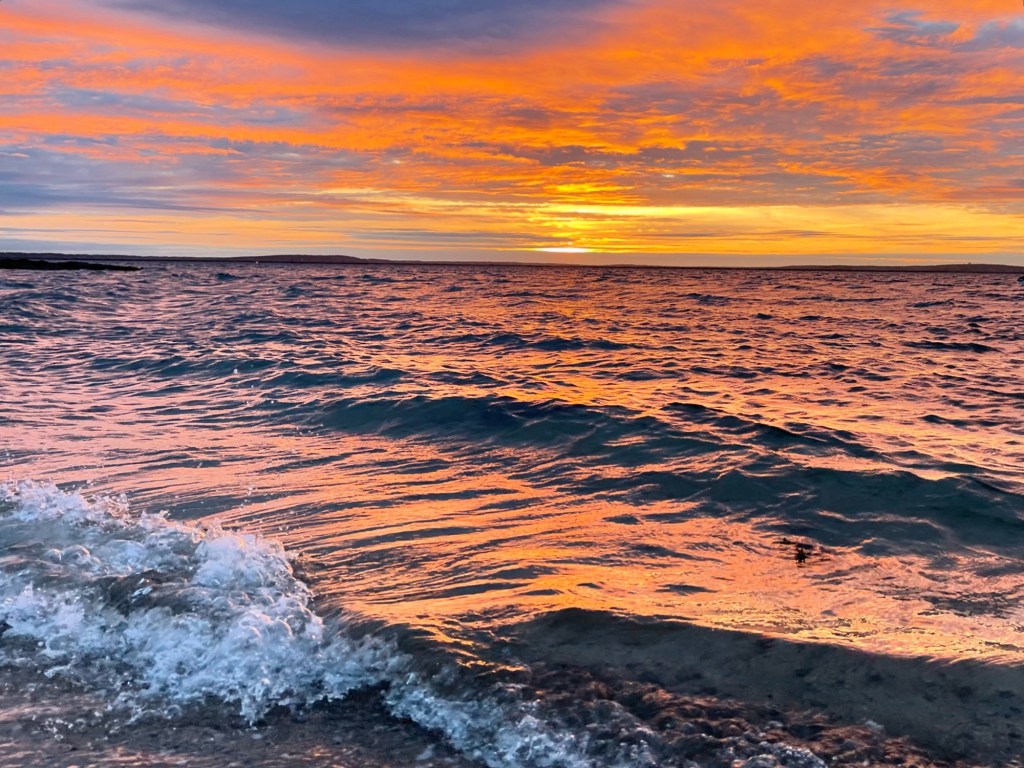
Category: Discovery

  • Stepping Out of the Box

    Let me ask you this.
    Do you also think that beauty exists for some
    fabulous reason?
    And, if you have not been enchanted by this adventure—
    your life—
    what would do for you?
    — Mary Oliver, To Begin With, the Sweet Grass

    Plotting our next adventure in a faraway place, we went out for breakfast to dance with the hopefulness of scheduled enchantment. We ran into a woman we know, who once was married and then she wasn’t, but she never accepted that she wasn’t and retreated into herself and the rituals of the church and suddenly twenty years later she’s still the same shell of a person she was then but older and more insulated from the world. She might have gone with us on our adventure, or perhaps one of her own, had she only gotten out of her own way.

    She made me wonder—what rituals of routine are getting in my own way? If the opposite of boredom is engagement and being captivated by the world around us, why do we settle for something less? What lingers just outside the box of our identity? Why is that so frightening? To live in fear of the world is to never be alive.

    As this is published it’s the first Monday in March. March was once the first month of the original Roman calendar. If you think about it, the calendar is arbitrary and nothing but a shared belief that keeps this whole game going. We can’t very well change the calendar and function in a society that works off of it, but we can use it as a reminder to ourselves that we can change things when we find our routine isn’t working for us any more. It’s like adding two months to a year our ancestors thought they had figured out. It turns out the extra two months made it better. Imagine what we can make better if we changed too?

    A few days ago we had a leap day on that 12-month calendar, tacked on to the end of a month that once didn’t exist in the minds of mankind. It was a bonus day and a chance to do something truly different. Most of us went about our lives as we did the day before or the days since. It was sort of like New Year’s Day in this way, where we might think up all sorts of ways we may break out of the box but end up right back in our ritual of routine. Imagining our possibility is easier than actually living it. We forget that we don’t have to leap, we could simply step out of the box and close the door behind us.

  • Shepherds and Poets

    “For the shepherd the poet is too facile, too easily satiated. The poet would say ‘there was… they were…’ But the shepherd says ‘he lives, he is, he does…’ The poet is always a thousand years too late—and blind to boot. The shepherd is eternal, an earth-bound spirit, a renunciator. On these hillsides forever and ever there will be the shepherd with his flock: he will survive everything including the tradition of all that ever was.” — Henry Miller, The Colossus of Maroussi

    “Describe your sorrows and desires, passing thoughts and the belief in some sort of beauty — describe all these with loving, quiet, humble sincerity, and use, to express yourself, the things in your environment, the images from your dreams, and the objects of your memory. If your daily life seems poor, do not blame it; blame yourself, tell yourself that you are not poet enough to call forth its riches; for to the creator there is no poverty and no poor indifferent place.”
    — Rainer Maria Rilke, Letters to a Young Poet

    We know great poetry, because it feels as eternal as that earth-bound shepherd. We know bad poetry because it clings to us like tree sap, cursed in it’s stickiness. A bad line of poetry haunts us for a lifetime. Great poetry feels revelatory as we discover some truth about ourselves that seems so obvious after stumbling over it. In the entirety of this blog, I’ve written one poem about a kitten who once thought she was a dog (she’s since become decidedly cat-like). I aspire to write like a poet but I save poetry for those who dare more greatly. You know who you are, and thank you for your audacity.

    For most of my life I’ve fancied myself a shepherd; tending my flock, trying not to step in it and eternally minding the weather. Aspirations of poetry are saved for moments of brevity in writing. Poetry for me is the last holdover of a time when I told myself I wasn’t good enough to be a writer, choosing history instead, where looking backwards seemed safer than facing the truth in the present.

    The thing is, Miller and Rilke were both on to something. The worst shepherds have their heads up in the clouds, paying no attention to the needs of the flock. The worst poets likewise dance in flowery prose, searching for clever instead of truth. Great poetry is earth-bound, with a bit of dirt and manure smudges showing the truth of the matter. We must live in the immediacy of the flock and write as if the wolves were just over the rise.

  • Why This?

    “The real voyage of discovery consists not in seeking new landscapes, but in having new eyes. ― Marcel Proust

    Yesterday I wrote of writing every day no matter what. The streak is very much alive and will be until the day it isn’t. The underlying question is why? Why do this at all? No fame or fortune or other such ego stroke. A blogger can’t even state they’re a novelist. Plenty of helpful people in my life would like me to lump a bunch of these blog posts into a series of books. Honestly, once they’ve been released into the world the words aren’t ours anymore. Perhaps that’s why they come so freely? No paywall or subscription necessary. This is just me in the moment, telling friends what I’ve stumbled upon on my journey.

    Writing is discovery. It’s finding something new within ourselves each day and bringing it to the surface. It’s surprising ourselves and others that we’re still at this thing. It’s the occasional comment from someone you hadn’t realized was paying attention at all. Writing is processing the complexities of the world and our place in it and putting a stake in the ground for who we are at this moment in time. I write these words without truly knowing where they’re coming from. We surf in this way with the Muse, along for the ride pretending we have some measure of control.

    Writing leads to an increased power of observation. It leads to new books and podcasts and small corners of the past that most people drive by on their way to someplace else. If awareness is the key to being present, then self-awareness is knowing when to shut the hell up and understand what is happening in the moment. When we write we’ve channeled that awareness into words. Here’s another time stamp of that dance.