Category: Discovery

  • What Would Do?

    And, if you have not been enchanted by this adventure—
        your life—
    what would do for you?
    — Mary Oliver, To Begin With, the Sweet Grass

    There’s still time today to find adventure. The day is still young, and we are young enough to be bold—and old enough to play this hand wisely. Seek adventure, as Thoreau whispers from his root-covered grave in Sleepy Hollow Cemetery. Be enchanted, Oliver whispers from her grave in Amarillo.

    And so we must heed the call, with the sum of who we are, to multiply our experiences. There is no deferring with living. Do the math: Every day we subtract another.

    Yes, these are distracting times, and things like adventure and enchantment may seem frivolous when there’s so much at stake in the world. But this is our time, and these are our days to be alive. Do something that stirs and inspires. The world will still be there, miserable as ever, when we return to it.

    What would do for you? What are you waiting for? Do. Be. While there’s still time.

  • Little Flower

    “The little flower that opens in the meadows lives and dies in a season; but what agencies have concentrated themselves to produce it! So the human soul lives in the midst of heavenly help.” — Elizabeth Palmer Peabody

    Elizabeth Palmer Peabody was a teacher and a publisher, born in Billerica, Massachusetts, tutored in Greek by Emerson, the first to publish Thoreau, a leading voice in the education of children and the philosophy of transcendentalism. A little flower who moved with the giants and made her mark in her season.

    We are moving through time, together for this brief moment and then apart. Perhaps we’ll meet again on our timelines, perhaps not. We may savor the moment for all it offers or leave it grateful for the lessons we’ve accumulated.

    Learning is a lifelong mission, honed through self-awareness that in turn stirs a belief within that we must become more than this. May that feeling last a lifetime. For that which is not growing is dying, and we have more to do in this world, you and I. Grow and produce something of consequence. Our season is not over yet, little flower.

  • Sublimity Above Scorn

    “Scorn trifles, lift your aims: do what you are afraid to do: sublimity of character must come from sublimity of motive.” — Mary Moody Emerson

    We’ve all pondered some variation of the question, “who in history would we most love to have a conversation with?” We can easily come up with our short list of fascinating characters. One can easily derive who tops my list by the frequency with which I quote them in this blog. But not all. Consider Mary Moody Emerson, the aunt of Ralph Waldo Emerson and by all accounts a delightful, energetic and fascinating woman who could talk circles around her nephew and the thought leaders of the day residing in or around Concord, Massachusetts.

    She was born in Concord at the beginning of the American Revolution and passed away in the middle of the American Civil War. She saw a few things in her time, and was an avid reader and practitioner of commonplacing, which is essentially the format of this blog for the last several years. For all the bitterness that those two wars represented in our history, she sought enlightenment and sublimity through reading and conversation to better understand the great thinkers of the time. One can easily say she played a strong part in the rise of transcendentalism.

    The America of today is again splitting apart on ideology and scorn. It’s easy to get wrapped up in the ugliness of the moment, and I’m not advocating ignoring it (we’ve seen what happens when authoritarians are unchecked). Awareness and resolve are essential characteristics of the resilient mind. But we must be aware of the cost of participation in the war of words. Perhaps we should listen to someone who saw the worst and the best of humanity in her time and chose to lift her aims. We too may seek sublimity over scorn, knowing it will not easy, but nonetheless essential work.

  • Says I to Myself

    “To-day you may write a chapter on the advantages of travelling, and to-morrow you may write another chapter on the advantages of not travelling. The horizon has one kind of beauty and attraction to him who has never explored the hills and mountains in it, and another, I fear a less ethereal and glorious one, to him who has. That blue mountain in the horizon is certainly the most heavenly, the most elysian, which we have not climbed, on which we have not camped for a night. But only our horizon is moved thus further off, and if our whole life should prove thus a failure, the future which is to atone for all, where still there must be some success, will be more glorious still. ‘Says I to myself’ should be the motto of my journal. It is fatal to the writer to be too much possessed by his thought. Things must lie a little remote to be described.” — Henry David Thoreau, The Journal of Henry David Thoreau

    The thing about writing a blog every day is that it can feel like a journal pretty quickly. That’s not the intention at all, especially given the number of wonderful people in my life that read the blog. Sure, I’ve made this bed now I’ve got to lie in it. But it will never be a journal, even if people occasionally comment on it as if it was.

    We reach a place in our lives, look off to the horizon and see another mountain to climb. We reach that one and it all starts again. A life lived in pursuit of personal excellence is a constant process of seeing the next goal and setting out for it. When do we get to rest? In our graves? But so goes the journey of becoming. It will always be action-oriented, it will always be a climb. But oh, the view!

  • Don’t Imagine They’ll All Come True

    You’ve got your passion, you’ve got your pride
    but don’t you know that only fools are satisfied?
    Dream on, but don’t imagine they’ll all come true
    When will you realize, Vienna waits for you?
    — Billy Joel, Vienna

    Blame it on the maddening state of the world, or for reaching an age where paths diverge in a person’s life, but I’ve been struggling with uncertainty lately. Make a decision, change my mind and cancel plans, then abruptly pivot back to the original plan again… or not. Really, it’s all a confused mess. And that’s no way to go through one’s days.

    To never be fully satisfied with the plan, and to thus always feeling compelled to modify it, is a blessing and a curse. Forever seeking Kaizen (constant and never-ending improvement) is a path to personal excellence, or to a restless life never fully realized because there’s always going to be something to work on. What works for Toyota ought to work for us, right? But we aren’t corporations, we’re humans. We can’t simply systematize ourselves and expect we’ll arrive at perfection. We must dig deeper and understand where the restlessness is rooted in.

    The answer typically lies in the question: what do we want out of life? That is our direction. Coming to understand it, we may set out in that direction today without trying to change course over and over again. Good habits and a healthy routine automate some important behaviors in our lives like exercise and flossing and writing, serving as gyroscopic stabilizers so we don’t get seasick from rocking back and forth too much with our behavior.

    Some people go to a Vienna coffeehouse simply to enjoy a torte or Buchteln. Some go to lasso a muse. Both can be right. To borrow a lyric from another Billy Joel song, do what’s good for you, or you’re no good for anybody. And to rock abruptly back to Vienna, don’t imagine all your dreams will come true, just focus on the one’s that do.

  • The Path

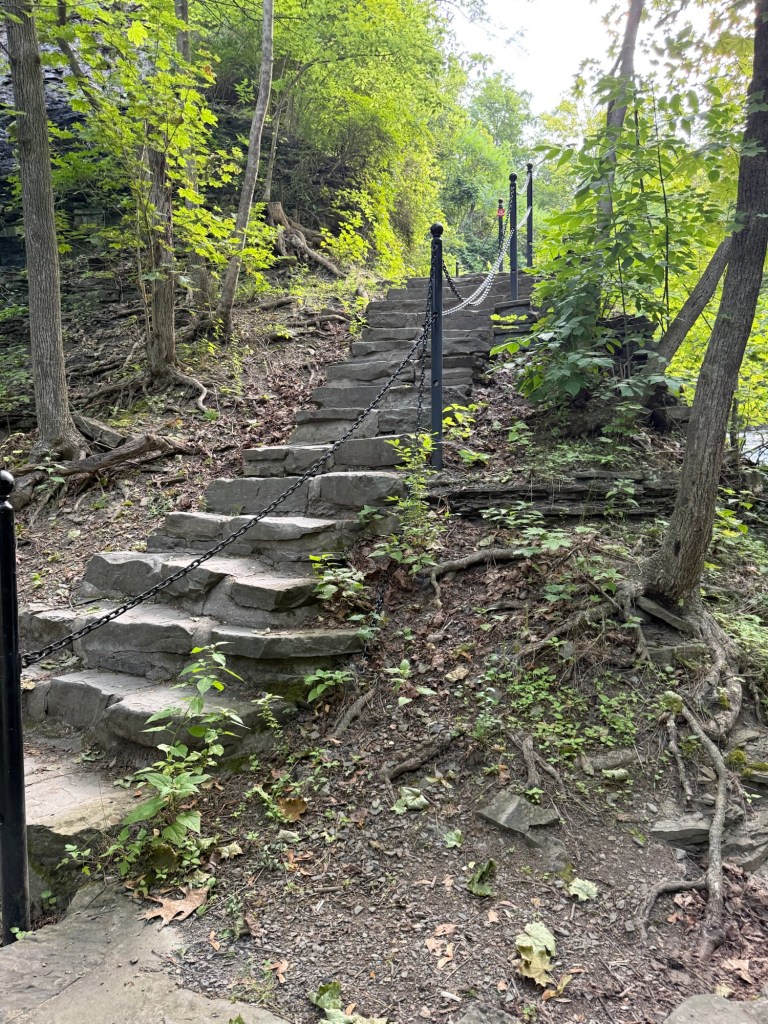
    Routine sets the tone of our days, which in turn sets the tone of our lives. Routine can be our savior or our executioner, our best friend or our worst enemy. We inevitably feel that we’re either wrapped or trapped in in our routine. Just what path are we on anyway? Our routine leads to a life of optimization or frustration. and so we must step in and design a routine that carries us to a place we want to go to.

    We must listen to the question that stirs within: what is the purpose of this path we’ve chosen for ourselves? When we have a why that is compelling, with a routine that is designed to optimize our purpose, we move through life with a higher level of energy and passion. People that tell you to follow your passion aren’t wrong, they’re just missing a step. Following your purpose leads you to passion. Passion is directionless and can lead us astray. When we get our direction from purpose, passion naturally builds within us.

    What drives us to a rewarding and meaningful life? It’s not the steering wheel, even if we can’t imagine getting anywhere without it. It’s not the engine, necessary as a good engine may be. These are our what and how, and surely necessary to move anywhere at all in this world—but to move where? We must develop a strong navigation system. When we know where we are going, the what and how to get us there are exponentially more useful and efficient.

    And suddenly everything begins to click. Like a fine-tuned vehicle, our routine carries us towards our purpose. And the wow (passion!) begins to stir within and exude outward. When we develop a high level of passion and purpose, we create positive momentum. Everything great in our lives builds from purpose backed by propulsion (action: our engine) and creative adaptability (steering and the set of our sails). This is the path to personal excellence.

  • Building Breadth and Depth

    “The length of your education is less important than its breadth, and the length of your life is less important than its depth.”
    — Marilyn vos Savant

    Many of us go through a stage in life where we’ve collected our diplomas and degrees and feel that we’re finally educated, and then realize when we walk out into the world that we don’t really know as much as we thought we did. A formal education is nothing but a starting point for a lifetime of learning. We can be both very smart and not very full of accumulated wisdom. Of course, we can also be devoid of both intelligence and wisdom and never realize it. Such people usually talk very loudly and confidently, and quickly put the spotlight on the imperfections of others to hide their own. We all know the type all too well now.

    When we reach the end of our lives, we may feel that we’ve left some experiences on the table that we wish we’d pursued more. The better thing to focus on is what we said yes to in our lives, at the expense of those no’s. We can dabble in many things but only master one or two at most. Are we here for mastery or to be a generalist? Just how broad a life do we wish to have? Just how deeply do we wish to go in any given area of our lives? Deathbed regrets are inevitable, for we can’t possibly do it all, but we can surely have a go at a few things.

    I’ve noticed that several of my neighbors have retired recently. I talk to them and every one of them are exuberant and engaged in something. One man has tapped his maple trees to try to make maple syrup. Another has invested heavily in woodworking equipment and turned his engineering skills into fine furniture. And a couple of close friends are currently bobbing at anchor in the Bahamas, dreaming of a bigger boat than the beautiful one they’re currently sailing on, that they may expand on already expansive experience.

    Many of us are not at an age or inclination to retire just yet, but we can chip away at accumulating wisdom and experience just the same. The trick for all of us is to live an ever-expansive life each day, regardless of the stage of life we’re currently in. Experience builds on itself, layer-by-layer, and we grow into a broader and deeper version of ourselves with each. Our minds and our lives are what we make of them. So by all means: get back to building.

  • Limitations and Openings

    Any framework, method, or label
    you impose on yourself
    is just as likely to be a limitation
    as an opening.
    — Rick Ruben, The Creative Act: A Way of Being

    Every morning I wake up and start to think about what I’m going to write about. Routine has brought me to this place, and even if the entire day turns to crap, even if I’m distracted and frustrated by the world around me, even if it feels like this will be the last blog I ever write because I’m just done with the entire process, my mind settles into the rhythm of writing just as soon as my fingers begin to keep up with where my mind is taking them. And here we are again.

    This blog is not taking the world by storm. I’m under no illusion of grandeur about my place in the lives of its readers, or the number of ripples these thoughts and words will carry across space and time. I write because I fancy myself both a thinker and a writer, and it follows that one ought to jot down what one is thinking about, if only to see where it takes us.

    The question is, does the process take us to a breakthrough, or are we simply going around in circles? Is the very act of blogging a limitation on other writing that isn’t being done because the mind is satiated every morning at around this time? And what other habits and routines would take the place of writing, should it be relegated to later in the day? Would the writing slip like workouts slip?

    We’re caught in a trap
    I can’t walk out
    Because I love you too much, baby
    — Elvis Presley, Suspicious Minds

    We know when it’s time for a change. But how often does knowing lead to doing? Identity is built on the habits and routines we create our days with. And our days in turn become our lives. We ought to ask ourselves when we’ve finished writing and click publish, is this process a limitation for me or an opening? Just where are we going anyway?

    <click>

  • Accepting the Path

    Before I′m pushin’ up daisies
    Give me a long, heady summer
    With arms open wide
    I won′t take this world for granted
    I’ll become what I′ve been askin’
    I′ll accept the path that lays before my eyes
    — Sam Fender, Nostalgia’s Lie

    In order to chase the dream, we must first decide to launch ourselves in that direction. The launch is nothing but the first step in a series of steps, and anyone wondering what happened to their New Years resolutions knows the score on first steps. It’s the ones after the first that really count, because we’re gradually trying on a new identity, one step at a time, accepting the path that we’ve determined for ourselves as ours.

    Decide what to be and go be it, as the Avett Brothers song demands of us, and surely it must be so for us to reach our creative potential, for us to get closer to our version of personal excellence, to realize the dream. Don’t be that person on their death bed wondering what happened. What happened was forever deferring the path in favor of the maze. Once we step into a maze the path is no longer clear, and what feels like progress is often nothing but a dead end.

    We don’t always know a maze until we’re in it, but hit enough dead ends and it becomes evident eventually. The answer, of course, is to get the hell out of the maze and back on the path. To become what we’ve been asking of ourselves. Where each step makes the path clearer than it was before. Knowing deep down that whatever the path, the clock is ticking.

  • Answers

    “Your mind will answer most questions if you learn to relax and wait for the answer.” — William S. Burroughs

    Yes, and how many years must a mountain exist
    Before it is washed to the sea?
    And how many years can some people exist
    Before they’re allowed to be free?
    Yes, and how many times can a man turn his head
    And pretend that he just doesn’t see?
    The answer, my friend, is blowin’ in the wind
    — Bob Dylan, Blowin’ in the Wind

    The world is a confusing mess that we may either work to make sense of or practice active avoidance of. Most of us are somewhere in the middle. I used to pride myself on reading the news every day, and doubled down by watching the news every morning to be informed before I stepped out the door. It was my way of having a perspective on things when asked for my opinion, but also because I thought it was my duty as a citizen to know what the hell was happening.

    Lately, I’ve had an ongoing dialogue with a good friend about which media source is most unbiased. We all should know that they’re all biased, because they’re all hoping for enough traction to be profitable, but which is the best for fair and mostly unbiased information? Those who follow one source for all information are a slave to that source. We must seek information from multiple sources and sort it out ourselves.

    Or not. The historian in me knows the truth is never found in the headlines, but in the stories that come out long after the dust settles. We know certain truths, but we certainly don’t know everything. The lens of time offers true perspective. And even though we see the world burning, even though we may feel outraged far more than we ever believed we’d be outraged at this point in human history, we must separate emotion from the moment and see what happens (while fighting for what’s right in this world).

    We know that those who say they have it all figured out are generally full of crap and trying to sell us something (well, unfortunately, slightly less than half of us know that). Knowing everything is not in the cards. Our answers will come to us in time, if we’re lucky enough to have time, and so we must rely on what we believe to be true for us and set ourselves in a direction that feels right.

    All that said, the historian in me also knows that history is written by the victors, and vast swaths of truth have been swept aside and blown away in the winds of time. We’ll never know the full story about anything, only what we are able to capture and discern. The trick for us in this moment is to ensure that we come out on the other side to bring the truth to the future.

    And that brings me back to the Burroughs quote that kicked us off today. We must learn to quiet our minds and find the answers within ourselves in the context of the times we live in. To be aware of the world is essential for navigating within it, but we cannot forget to turn inward and listen to what our own truth is. And if we find those answers, we may set our compass in a direction that carries us through the confusion and madness in the world to a place we know deep down is right for us.