Category: Poetry

  • That’s Not Me

    With apologies to the rest of the Starks, the best character arc in Game of Thrones is Arya’s. Beginning way back in season one when her father Ned talks about how she’ll grow up to marry a high lord and rule his castle, and she looks at him and replies, “No, that’s not me”. It’s the beginning of an amazing journey for Arya.

    That line stays with me, as it stays with many people.  But will you listen?  Just yesterday I opened a trade magazine and scanned their list of 40 under 40 up and comers, and thought of how this might have driven me at one point in my life, but no longer. Taking nothing away from the accomplishments of those forty, and I know a few of them, I’m happy to reply; “No, it’s not me”. I stepped away from the management track 12 years ago and haven’t looked back. Knowing how way leads on to way, I doubted if I should ever come back.  Don’t live your life based on the expectations of others, choose your own path.

    “Two roads diverged in a yellow wood,
    And sorry I could not travel both
    And be one traveler, long I stood
    And looked down one as far as I could
    To where it bent in the undergrowth;

    Then took the other, as just as fair,
    And having perhaps the better claim,
    Because it was grassy and wanted wear;
    Though as for that the passing there
    Had worn them really about the same,

    And both that morning equally lay
    In leaves no step had trodden black.
    Oh, I kept the first for another day!
    Yet knowing how way leads on to way,
    I doubted if I should ever come back.

    I shall be telling this with a sigh
    Somewhere ages and ages hence:
    Two roads diverged in a wood, and I—
    I took the one less traveled by,
    And that has made all the difference.”  

    – Robert Frost, The Road Not Taken

    It turns out the path I chose was full of twists and turns and hard climbs.  The path itself diverged a few times along the way.  Financially not as lucrative at times as the original, but time is a more valuable currency than income, and I’ve followed a path that gave me a hefty time raise over the previous path.  And interestingly enough, the income hasn’t been all that far off the other path either.  Keeping score of your life using income, position, clicks and likes is a trap.  It’s nothing more than trying to meet the expectations of others.  Be yourself, and grow organically.  The path will get you there eventually, and even if it turns out to be longer and harder than anticipated, the view is better. And that will make all the difference.

  • Poppies… In Flanders Fields

    Poppies are everywhere in London in the weeks leading up to Remembrance Day.  In Canada too, poppies are seemingly everywhere.  In the United States, where we call it Veterans Day, you don’t see many poppies nowadays.  And that’s a shame, because poppies are not just a symbol of support for our veterans and a gesture of remembrance for those who sacrificed for us in World War One and subsequent wars, those poppies raise millions for charity.  When I go to Canada, I make a point of purchasing a poppy for my jacket.  And I did the same when I went to London the last week of October and the first week of November.

    And how did poppies come to symbolize Remembrance Day?  From this poem:

    “In Flanders fields the poppies blow
    Between the crosses, row on row,
    That mark our place; and in the sky
    The larks, still bravely singing, fly
    Scarce heard amid the guns below.

    We are the Dead. Short days ago
    We lived, felt dawn, saw sunset glow,
    Loved and were loved, and now we lie,
    In Flanders fields.

    Take up our quarrel with the foe:
    To you from failing hands we throw
    The torch; be yours to hold it high.
    If ye break faith with us who die
    We shall not sleep, though poppies grow
    In Flanders fields.”

    – John McCrae, In Flanders Fields

    So do take a moment to remember those who sacrificed so much a century ago, and those who have served since then.  May we never break faith and have their sacrifice forgotten.  And may we never have another war where such sacrifices are needed.

  • The Farmer and the Poet

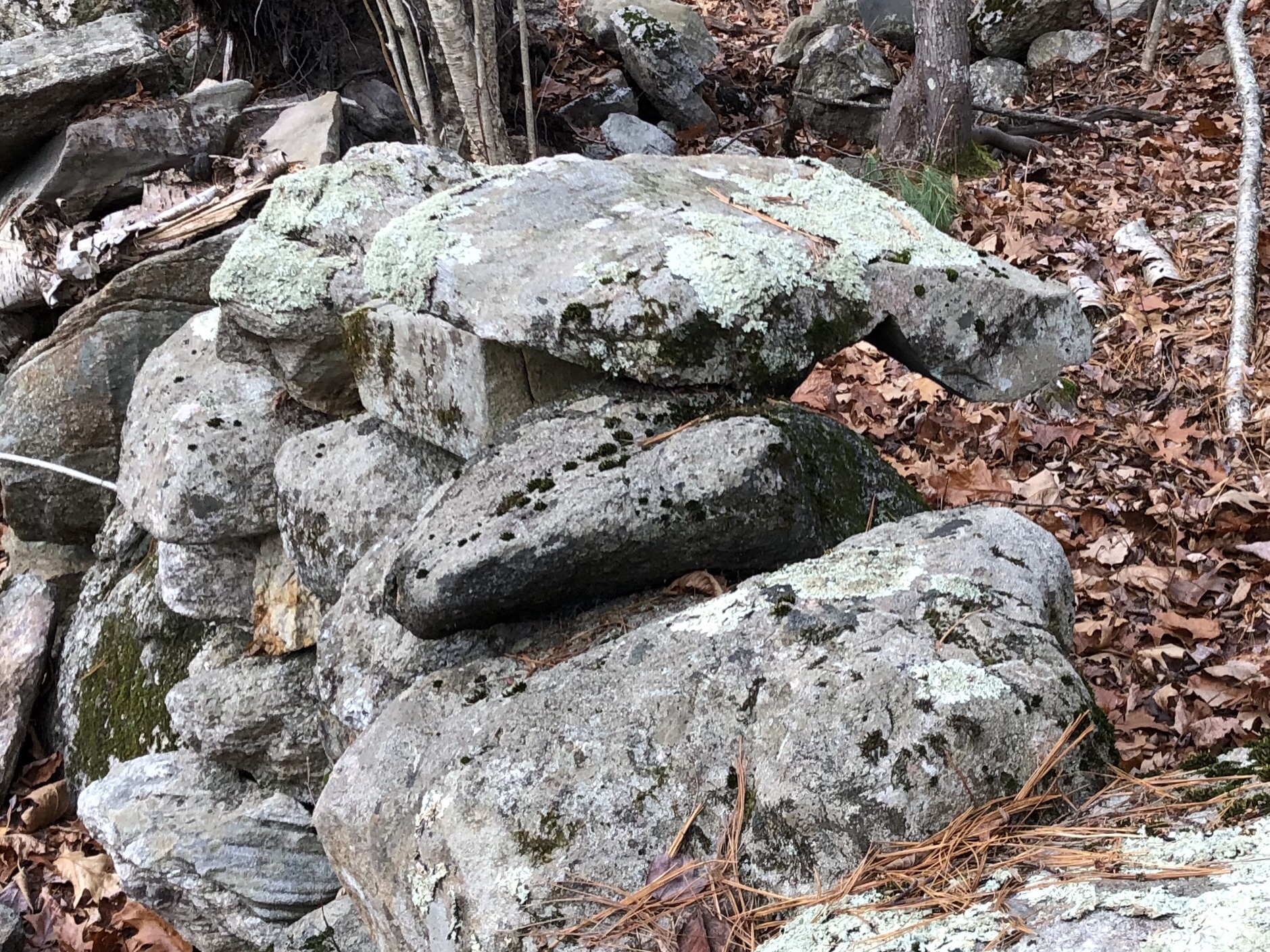
    It sits perched atop its fellow stones, neatly laid as a capstone of sorts. Who’s hands laid this stone? A farmer from the earliest days of this nation? Or perhaps their grandchild, the last generation to farm this land before the young turned to the mills or went west? Once the land surrounding the wall was cultivated, bearing harvests of corn, beans and squash. Then the farms faded and the trees regained the land. This wall marks the past, and this stone waits eternally to tell its story, like that poem buried in a musty old book on a library shelf. The farmer and the poet each speak to us through their creations long after they’re gone. If only we’ll listen.

  • Stumbling Upon Buried Treasure

    While waiting for a taxi to the airport I scanned the wonderful old books lining the shelves at the London hotel I’d been staying in. I do this often when I have moments like this, it’s where the buried treasure is after all. I saw two books on a shelf at eye level that drew my attention; Two Years Before the Mast, by Richard Henry Dana Jr. and an old collection of English poems. I’d read Two Years Before The Mast several years ago at the recommendation of a friend who’s doing exactly that at the moment. I flipped through it quickly, saw the old stamps indicating it was a library book and smiled. Libraries were where I found most of my buried treasure before the Google and Amazon changed everything.

    To this day my favorite discovery was an old copy of Typee by Hermin Melville pulled at random from a university library shelf in the fall of 1984. I was a freshman then, figuring out this college thing, and fascinated with the vast rows of books I could walk through. I picked up Typee and brought it to a reading nook and read the first couple of chapters, quickly falling in love with this other world. I’d return the book and come back again and again to it in the same fashion until I finished it, never checking it out (sadly not including my name on the stamp), but finishing it nonetheless. That friend who loaned me Two Years Before The Mast in turn took my recommendation to read Typee and now has a boat named Fayaway, a compelling character in the story.

    That other book, the one on poetry? I opened to a completely random page in a completely random book in an old library book stuck on a hotel shelf in London….. so you know; random. And I read this:

    Care-Charming Sleep, thou easer of all woes,

    Brother to Death, sweetly thyself dispose

    On this afflicted prince; fall, like a cloud,

    In gentle showers; give nothing that is loud

    Or painful to his slumbers; easy, light,

    And as a purling stream, thou son of Night,

    Pass by his troubled senses; sing his pain,

    Like hollow murmuring wind or silver rain;

    Into this prince gently, oh, gently slide,

    And kiss him into slumbers like a bride!John Fletcher

    Fletcher died in 1625. Analogies between sleep and dying are common, and Fletcher dabbling with the concept in this poem/song from 400 years ago illustrates that. We all want to gently fall asleep, and given the choice we’d likely all wish the same for our final sleep. Poetry either grabs you or it doesn’t. I haven’t made up my mind on this one, which means it’s the latter. Not everything you pick up in a book is going to be buried treasure. If it were what would be the value anyway? But there’s something to chew on here anyway.

    Two Years Before The Mast was written by a man named Richard Henry Dana Jr. after he left Harvard to regain his health after contracting measles. It’s a fascinating book that illustrates life onboard a merchant ship on a two year journey as they rounded Cape Horn to pick up cattle hides in California to haul back to Massachusetts. Seeing the book again prompted me to read a bit more about Dana, and I was struck by one part of his legacy. Dana Point, California is named after him. I’ve spent a fair amount of time in Dana Point, but never made the connection to the book until today. It seems I found some buried treasure after all.

  • The Vivacious Many

    There’s more to do, surely, before we go. But enough is enough. Lists are checked and then confirmed again. Having set one bird to fly it’s time to fly again myself. And I’m ready.

    “Who can guess the impatience of stone longing to be ground down, to be part again of something livelier?” – Mary Oliver, The Moth, The Mountains, The Rivers

    I understand…  As much as I embrace the daily ritual of routine; the obligations of family and work and making sure the recycling is put neatly into a rolling bin on the edge of the road, I’m ready.  I’m ready for the speed dating bucket list items knocked off in succession, of conceding to wait in line for the obligatory went-there but then rewarding myself by lingering a bit longer in a few remote corners I’d never heard of before stumbling upon them. Shifting a car with my left hand.  Reflecting on alchemy in a distillery or two along the way.  Feeling the pulse of London and the weight of Edinburgh. The remote chance of an Aurora Borealis sighting in Skye or Speyside.  A pilgrimage to Abbey Road and Quiraing and Pennan. These precious few have been unchecked for way too long.

    And I suggest them to you also, that your spirit grow in curiosity, that your life be richer than it is, that you bow to the earth as you feel how it actually is, that we—so clever, and ambitious, and selfish, and unrestrained—are only one design of the moving, the vivacious many.” – Mary Oliver, The Moth, The Mountains, The Rivers

    The world calls.  Let other voices try to shout it down.  Tonight we fly.

  • Bury the Bright Edge Deep

    “The cold smell of potato mould, the

    squelch and slap

    Of soggy peat, the curt cuts of an edge

    Through living roots awaken in my head.

    But I’ve no spade to follow men like them.

    Between my finger and my thumb

    The squat pen rests.

    I’ll dig with it.” – Seamus Heaney, Digging

    Jim Rohn said that we are the average of the five people we associate with the most. I tend to agree with that, not just in people but in authors, media, podcasters… etc. Influencers on our outlook should be scrutinized regularly at minimum, and wholly changed over now and then just to keep your mind sharp. There’s nothing like a different perspective to floss the brain. And lately I’ve been sprinkling in more Seamus Heaney, Mary Oliver and Robert Frost. When life throws political chaos, war and social media trolls at you, turn to the poets to re-set the sail.

    The garden is done for the year, other than a few mums and asters and one lone fuchsia blossom that stubbornly holds out hope for company. But harder frosts are coming, and with it the growing season ends. Heaney’s words sprinkle memories of planting in my mind, of burying the bright edge of a spade deep to turn the soil, and I smile at the thought. There’ll be no planting for six months to come. But Seamus points to another digging tool in writing, and that seems a good place to spend my time as well. Pull out the weeds that work to root in your mind, turn over the fertile ground to aerate it, and plant some new ideas to grow and ripen.

  • Rise to the Role

    Reading history you learn just how violently brutal our ancestors were to each other.  Read about people being drawn and quartered, most famously William Wallace, and you shake your head at the cruelty of the slow death.  Listen to the Hardcore History podcast and every episode is about the brutality of mankind in wars from raids of Genghis Kahn to the Rape of Nanking.  This kind of horror should serve as an active deterrent for all future wars, and yet memories fade, people in leadership positions don’t learn the lessons of the past, or worse think of war in terms of a business transaction; a deal to be made, a win in the books, more for me, less for you.

    I’ve no tolerance for the ignorant in positions of power.  That old Spider Man “with great power comes great responsibility” quote is true.  But too many don’t honor that responsibility.  If you rise to a position of power, you only deserve it so much as you earn it every day in how you rise to the occasion.  Rise in embracing the lessons of history.  Rise in meeting the people you lead eye-to-eye.  Rise in acting decisively with compassion, dignity, humility and honor.

    The opposite of great responsibility is backroom betrayals, spreadsheet business decisions that destroy people’s lives, trophy hunting, and ego-driven decision-making.  Padding the bank accounts of “leaders”, but big steps back for humanity.  The world needs more honorable leaders who rise to the role.  Less power-grabbing, wealth-seeking, frail egos.  When we take our collective eye off the people grabbing for power, we’re left with few good choices at the top.  There are plenty of examples of that on the world stage, on Wall Street, and in turf wars around the globe.

    There’s hope too.  Many are rising to make the world a better place.  Public servants who take the term to heart.  Driven individuals who sacrifice time, money and position for others.  Listen to a cancer research doctor to learn what selfless purpose it.  Look at the MOSAIC Expedition on the Arctic, deliberately freezing their ship into the ice to better understand climate change.  And look at the people in the International Space Station, zipping around the globe, collaborating with each other no matter the nationality.  The mix of people changes with every mission, but they all manage to work together towards common goals. Their survival depends on it.  They’re just a fragile little ball flying around in space, highly dependent on the people around them to rise to the occasion.

    The analogy to the rest of us on Earth should be obvious, and yet we have too many people who think only of themselves, who don’t rise to the role they’re in.  They don’t seem to realize or care that our survival depends on it.  We can destroy the planet easily, we can wipe out entire cities in seconds.  We can cut down rainforests for profit, overfish for short term gain, contaminate groundwater to wring oil out of the ground, and start wars to collect on old grudges.  But we’re all living on this fragile ball flying around in space, and rising to the occasion to keep it livable for thousands of generations to come is really the only choice.

    For the individual, pointing at corrupt politicians is an easy out.  I vote, but I didn’t vote for that guy.  But too many don’t run for public office because it’s a really tough job.  You are scrutinized, berated, mocked and threatened.  Who needs that?  We all need that “Man in the Arena” hero who fights for what is right.  History favors the bold.  We need more people who rise to the role, fight through the nonsense and make the place better for having been there.  How will future generations look back at our history?  If the last three years have done anything, they’ve reignited a passionate call to serve, and I’m encouraged by the numbers of people who are rising up to say choose me instead.

    And I’m reminded once again of Walt Whitman, asking a similar question in a time of change, and I’m encouraged:

    “Oh me! Oh life! of the questions of these recurring,
    Of the endless trains of the faithless, of cities fill’d with the foolish,
    Of myself forever reproaching myself, (for who more foolish than I, and who more faithless?)
    Of eyes that vainly crave the light, of the objects mean, of the struggle ever renew’d,
    Of the poor results of all, of the plodding and sordid crowds I see around me,
    Of the empty and useless years of the rest, with the rest me intertwined,
    The question, O me! so sad, recurring—What good amid these, O me, O life?

    Answer.
    That you are here—that life exists and identity,
    That the powerful play goes on, and you may contribute a verse.” – Walt Whitman, O Me, O Life!

    And the next question, from Dead Poet’s Society, “What will your verse be?”

  • On Foliage and the Passing of Time

    “Who made the world?
    Who made the swan, and the black bear?
    Who made the grasshopper?
    This grasshopper, I mean-
    the one who has flung herself out of the grass,
    the one who is eating sugar out of my hand,
    who is moving her jaws back and forth instead of up and down-
    who is gazing around with her enormous and complicated eyes.
    Now she lifts her pale forearms and thoroughly washes her face.
    Now she snaps her wings open, and floats away.
    I don’t know exactly what a prayer is.
    I do know how to pay attention, how to fall down
    into the grass, how to kneel down in the grass,
    how to be idle and blessed, how to stroll through the fields,
    which is what I have been doing all day.
    Tell me, what else should I have done?
    Doesn’t everything die at last, and too soon?
    Tell me, what is it you plan to do
    with your one wild and precious life?”
    —Mary Oliver, ‘The Summer Day’

    Mary Oliver passed away in January this year, at the age of 83.  If I may say it, too soon.  With her passing, her question commands even more urgency than before:

    Tell me, what else should I have done?
    Doesn’t everything die at last, and too soon?
    Tell me, what is it you plan to do
    with your one wild and precious life?”

    This afternoon I drove back from meetings in Boston, flipped open my laptop and diligently followed up on the list of items that demanded my time.  All save one, which required closing the laptop, stepping outside and finding foliage.  New Hampshire glows in orange, yellow and red in October, and I’ve spent entirely too much of the first eleven days of the month indoors or behind the wheel of my car.  So a walk down to a local pond on a gusty day felt more like living than crafting another email for somebody’s spam filter.

    Foliage stirs up memories of autumns past, and I try to push those aside.  Not because the memories aren’t mostly pleasant, but because there’s more than enough living now to occupy my limited brain cells.  And there’s only today; words we all know but seem to push aside for the distraction of the moment.  “What else should I have done?”  Indeed.  Take “what is it you plan to do with your one wild and precious life?” and replace “life” with “day”.  For really, that’s all we have, isn’t it?  The foliage illuminates the cold black water of a small pond nearby, and soon those leaves will float down onto the water, drift along the surface for awhile and then slowly slip quietly under the surface to return to the earth.  The briefness of this life exemplified in a single leaf.  Had I not gone to witness the foliage would the opportunity have been there tomorrow?  Surely that’s a trick question.

  • Stargazing

    “But let’s not talk about fare-thee-wells now
    The night is a starry dome
    And they’re playin’ that scratchy rock and roll
    Beneath the Matala Moon” – Joni Mitchell, “Carey”

    These particular lyrics jump out at me every time I hear this song.  The spell of a starry dome night on a beach in Mexico with rock and roll music playing.  I’ve done my best to duplicate that portrait many times over the years, sometimes on a beach somewhere, sometimes just in the backyard around a fire pit, and sometimes on an island on a New Hampshire lake with loud music, fire and friends.  Stars over water, stars high on mountain tops, stars in the desert…  always stargazing in the darkest corners I can find.  Epic bonding time with my dog for years before he couldn’t go on our stargazing walks anymore…  and it seems I wouldn’t without him.

    The days grow shorter with the tilt of the earth away from the sun in the northern hemisphere.  Better suited for seeing that starry dome overhead.  A good reason to get back to nighttime walks, head tilted up for constellations, satellites, and the occasional shooting star.  There’s so much going on up there, and we sit in our houses unaware of the dance happening above the roof.

    “You know Orion always comes up sideways,
    Throwing a leg up over our fence of mountains,
    And rising on his hands, he looks in on me
    Busy outdoors by lantern-light with something
    I should have done by daylight, and indeed,
    After the ground is frozen, I should have done
    Before it froze, and a gust flings a handful
    Of waste leaves at my smoky lantern chimney
    To make fun of my way of doing things,
    Or else fun of Orion for having caught me . . .”

     – Robert Frost, “The Star Splitter”

    Orion returns to the dance soon.  I’ve missed this sky dancer most of all these summer months.  I smiled reading Frost’s description of Orion throwing a leg sideways over the mountains.  Were I that clever with a few choice words!  I’ll get there, or at least enjoy the process of trying to get there.  We can’t all be Robert Frost or Joni Mitchell spinning magic in words.  But they weren’t that once either.  Just get out there and do your dance under the stars.  They won’t judge you.

  • Go Above Your Nerve

    If your Nerve, deny you—

    Go above your Nerve”

    – Emily Dickinson

    How the hell did I go all these years without reading that Dickinson poem? Too much time not reading poetry, I’d say. And not casting the net farther. That’s on me, but I’m catching up. Learning is a lifetime sport, and I woke up this morning still very much alive.

    I first felt the whispers of Dickinson when I coached at Amherst College. She lived in Amherst, appropriately there’s a Dickinson museum there, and a thriving community of scholars too. The Amherst air is full of her whispers. But I wasn’t ready to hear them, and left after a year following other voices.

    Perhaps if I’d read this poem before I left I may have listened more. I heard other voices then. The call of other places made it hard to hear. A shame it took so long really, but I’m catching up now. Emily was patiently waiting, and she whispers to me now:

    “If your Nerve, deny you—

    Go above your Nerve

    He can lean against the Grave,

    if he fail to swerve”

    Do you hear her whisper? Get on with it already. What are you afraid of?