Category: seasons

  • Finding Aurora

    “The Aurora Borealis is a fickle phenomenon. A week can pass without a flicker … then bang! The Northern Lights come on like a celestial lava lamp.” — Nigel Tisdall

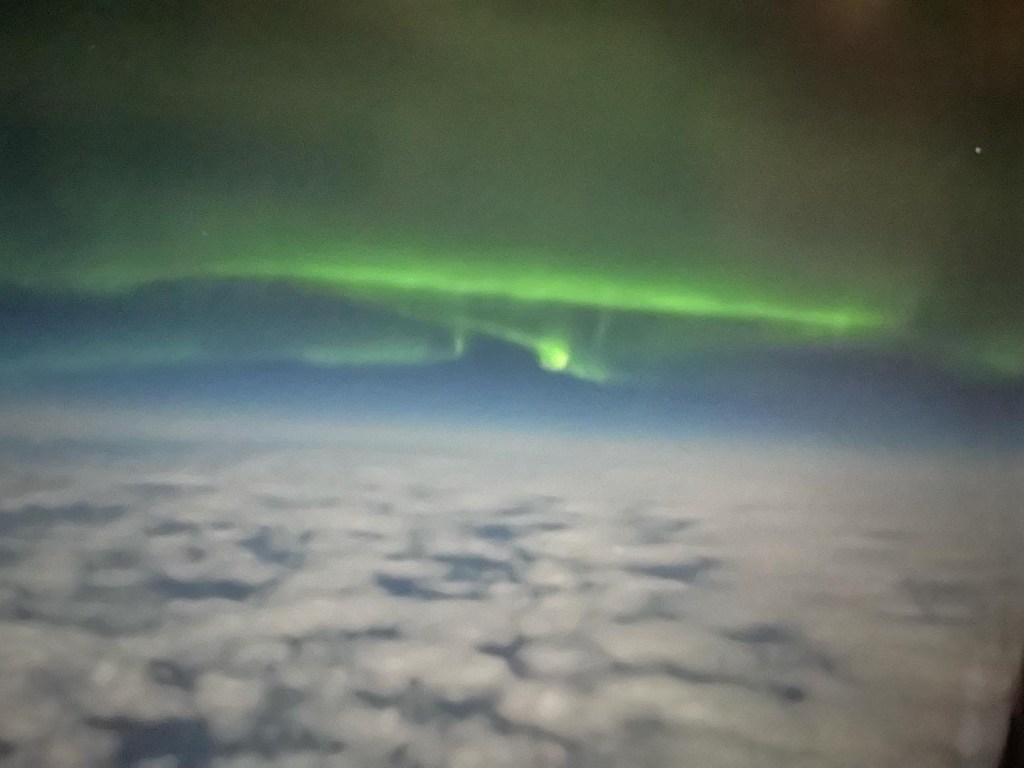
    I went to Iceland expecting to be disappointed by the weather. I’m not a pessimist by nature, but the forecast simply didn’t look good. There are a lot of reasons to go to Iceland in winter, but the primary reason is to see the Aurora Borealis. Yes, there are waterfalls and volcanoes, geysers and glaciers. These are spectacular, but also things that you can see any old month. But the Northern Lights are more evasive than that. Dark, clear skies are merely a starting point. You must also have some luck. Winter brings ample darkness but also some challenging weather conditions. We put ourselves in the way of beauty, but a bit of luck goes a long way too.

    Sure enough, we arrived to heavy snow. That might have frustrated me, but I’d already seen the Northern Lights on this trip. We’d had an ace up our sleeve, a window seat facing north for the flight, which carried us over the snow-laden clouds, up where auroras dance. It’s there that I finally glimpsed it, checking a box I wondered when I’d ever get to. There’s still hope for more dances with Aurora, should the weather cooperate, beginning tonight. Bucket lists deserve more than a brief encounter to savor, don’t you think?

  • A Wisp of a Moment, Captured

    On a recent walk I noticed the recently painted median strip dividing the road featured artwork now and then. It seems they painted the road in autumn, as the oak leaves returned to the earth to close their cycle and begin again. A few rebels, wishing for immortality perhaps, found the opportunity to capture the moment. It struck me this was what all artists do; reach out from the anonymous mass of their moment and leave something of ourselves for others to find.

    There’s something lovely in the temporary nature of this street art, akin to chalk drawings on sidewalks or sandcastles at low tide. Some art is meant to someday be a memory, recalled in quiet moments when you again walk down that street or on that particular stretch of beach. Do you remember the leaves of autumn, swirling in the wind? How quickly they fade from memory. We surf on a wisp of a moment, sometimes captured, mostly lost forever. We ought to embrace the freedom in that, elusive as it feels, for this is our fragile dance.

    “If you would create something, you must be something.” ― Johann Wolfgang von Goethe

    At times we hear the call from the naked page of a notebook, and at times from the middle of the road. Leaves locked in the amber of their moment are a whisper from seasons past to do something with this one. To feel the urgency of the season and make the most of it before the moment fades. This is the unique call of our work, leaping to our attention in the strangest of places. In each case, the question lingers in the moment: Where will you take us now?

  • Deliberate Reflection

    “Productive activity has nothing to do with being swept away by the inertia of busyness. It is not about quantity, either. Rather, it is a deliberate choice of where and how to direct one’s attention.” — Brad Stulberg, The Practice of Groundedness

    We seek solitude, when possible, in the quiet places. Places of stoic beauty with elbow room necessary to reflect. Places of quiet walks and the indifference of cold. For me these places are off-season beaches and lonely trails that lead me deep into the woods, or most days simply the magic hour before the rest of the world awakens.

    Some believe solitude is the very opposite of a productive place, thinking collaborative effort and the energy of the pack fuels production. But we humans aren’t cogs in a factory, at least we aren’t meant to be. We can be so much more than that if we choose to find it within ourselves. There is no reflection in a turbulent sea.

    Sometimes, even in quiet places, perhaps especially so, we come across characters who are starved for attention. They’ll steal sand from our hourglass if we let them, and take us away from ourselves. These sand gobblers disguise themselves brilliantly in the faces we trust the most. There’s nothing wrong with sharing our sand with others, but we must guard against the gluttonous lest they take it all.

    We must be deliberate in where we use our time, and mindful of just who is the director of our attention. The world will always ask for everything. What we give to it is up to us. We earn our director position in every moment. Deliberate reflection is not an act of selfishness, it’s preservation of the self.

  • An Unusual Winter

    Winter is different this year. The ground, frozen for weeks leading up to the New Year, thawed in a warming trend that hit New England in the first few weeks of the year. We sometimes say we’re grateful when it rains instead of snows here, knowing the general equation of one inch of rain equalling one foot of snow, but some of us actually prefer the snow. And when it finally came after the thaw and heavy rains, it made for muddy cleanup when you dared stray off the pavement. Yes, winter is finally here, sort of, and fashionably late, so enjoy it while you can. Just don’t go straying out on pond ice or try to steer a snowblower across the lawn to the shed. Each of these reckless acts will end in regret.

    Plenty of friends and acquaintances celebrate a mild winter. Perennially overextended, they’d rather deal with snow on their terms, with a quick ride up I-93 to the ski resorts. “Let them have the snow;” they say, “we’d rather not deal with it here”. As if we aren’t meant to have it here. Here isn’t all that far from there, I think, and winter has retreated enough already.

    I’m more sympathetic with the aged and the frail amongst us. Shoveling and navigating the world is a lot more complicated for them when you add heavy snow. This is where a sense of community is essential, to help those who might not be physically able to help themselves. Like snow, we accumulate awareness and empathy over time, and learn to check in on people more than we might have when we were younger and more carefree.

    We witness the changes in those we know moving from vibrant wrestlers of winter conditions to a more fragile condition. On days of particularly heavy and wet snow, we learn to face our own move to a more fragile condition. They call it “heart attack snow” for a reason, and something as mundane as shoveling snow can be a reckless act if our heart isn’t up for the task. We ought to celebrate the things we can do now, like walking in snow through the woods to visit a pond or simply shoveling the deck, for one day it will be beyond our reach.

    After cleaning up the remnants of the latest storm, I took a walk through the woods to see how winter was treating a local pond. During the drought of summer it had dropped to sad levels. With the rains of autumn and winter the water levels were back to normal and now coated with a slushy ice coating that wasn’t to be trusted. Still, it made for a pretty winter scene on a quiet winter morning. Moments like this are what we remember about winter, even as we forget that winter isn’t what it once was.

    Facing the changes this winter, it’s easy to see that everything is connected. Everything has its time, maybe even normal winters. With things like climate and physical fitness, we ought to do what we can while we can. Regret is no way to cap a window of time when it closes.

  • Tossing Aside the Blindfold

    “In the eighteenth century, when educated European tourists visited the Alps, they deliberately blindfolded their eyes to shield themselves from the evidence of the earth’s horrid irregularity. It is hard to say if this was not merely affectation, for today, newborn infants, who have not yet been taught our ideas of beauty, repeatedly show in tests that they prefer complex to simple designs. At any rate, after the Romantic Revolution, and after Darwin, I might add, our conscious notions of beauty changed. Were the earth as smooth as a ball bearing, it might be beautiful seen from another planet, as the rings of Saturn are. But here we live and move; we wander up and down the banks of the creek, we ride a railway through the Alps, and the landscape shifts and changes. Were the earth smooth, our brains would be smooth as well; we would wake, blink, walk two steps to get the whole picture, and lapse into a dreamless sleep. Because we are living people, and because we are on the receiving end of beauty, another element necessarily enters the question. The texture of space is a condition of time. Time is the warp and matter the weft of the woven texture of beauty in space, and death is the hurtling shuttle. Did those eighteenth-century people think they were immortal? Or were their carriages stalled to rigidity, so that they knew they would never move again, and, panicked, they reached for their blindfolds?” — Annie Dillard, Pilgrim at Tinker Creek

    I think the point of Dillard’s quote, and the reason I chose it, was to highlight the imperfect nature of our time here, and the extraordinary capacity to receive and embrace beauty despite, or perhaps because of our awareness of the duration of the ride. We are active receivers of the ugly truth and the beautiful realization that life is a brief dance with wonder. Our version of modern blindfolds is of course a mobile phone with its infinite distractions flashing pretty images in our face. Do we truly see the rugged imperfections surrounding us when we’re a click away from something with ten million views just waiting for ours?

    A man died of exposure on a trail I’m very familiar with over the Christmas weekend. The details haven’t fully been released but it appears he was unprepared for the elements, trusted his phone to guide him and light his way when it got dark, and perished when he lost the trail and his battery faded away with his life force. Friends or relatives on the other side of the planet alerted emergency personnel, who found him too late to save him. That mobile phone might connect us to the world, but it isn’t active connection to other people, just the illusion of it. Life is a fragile dance with beauty, and (it seems) his ended when he got too comfortable with that illusion in a cold and unforgiving place.

    The thing is, that trail is one of the most beautiful and popular trails in the White Mountains. It’s easy to understand why he chose it. The tragic irony is that he received the beauty he sought in his climb, but his blindfold killed him in the end. It’s unfair to judge the hiker who perished, for at least he was out there trying to make the most of his moment (if tragically unprepared).

    There’s a lesson for every hiker in his story. But isn’t there another lesson hidden in plain sight? For shouldn’t we wonder, how many others are slowly wasting their lives staring into their own blindfolds? We must be actively engaged in our lives to see the imperfect beauty surrounding us.

  • The Land of the Whispering Trees

    Let us live in the land of the whispering trees,
    Alder and aspen and poplar and birch,
    Singing our prayers in a pale, sea-green breeze,
    With star-flower rosaries and moss banks for church.
    All of our dreams will be clearer than glass,
    Clad in the water or sun, as you wish,
    We will watch the white feet of the young morning pass
    And dine upon honey and small shiny fish.

    — Elizabeth Bishop, Let Us Live (With nod to The Book Binder’s Daughter)

    I was describing the trails through nearby conservation land to a neighbor who sticks to running on pavement. She is reluctant to stray into the woods, blaming everything from the possibility of getting lost to hunting season. There are surely risks in the woods, but aren’t there also risks in never venturing into them? How do you find magic on pavement? Its only purpose is speed. Isn’t life fast enough already?

    Humans have chosen to be bound to the clock and calendar where speed is valued more than meandering. More than lingering. More than reverence. We ought to put aside our schedules and listen more. The trees in the forest live in a timeless world, rooted to their ancestral home and holding things together for future generations.

    We humans are rapidly closing out another year on the calendar. Did we meet our goals and realize our dreams? Are we making progress or slowly sliding backwards? Human lives are filled with such questions. We fill our lives with so much noise that it becomes hard to hear the answers.

    A forest is a choir, singing to the universe. We’d be wise to listen. They suggest that we might choose a different life, free from such human constraints as clocks and calendars, yet sustained and rooted just the same. The forest, timeless as it is, whispers only one question: Just what do we dream of anyway?

  • December Bay

    Sunsets must be earned in winter. There are no casual seaside deck conversations with a few pictures between sips of rum. No, you must seek out December sunsets by going to where it falls into the bay while bracing against biting cold winds galloping towards you in a stampede of frothy fury. Still, it makes a pretty picture and another memory.

    Micro-adventures and stolen moments of dancing with life count just the same as big trips and scheduled events. Life is our collection of all such experiences. We ought to sprinkle a bit more salt on our days to make them savory. For our best days are savored, aren’t they?

    Not as warm as it looks
  • Sensing November

    November. Stick season in the northern hemisphere. The big reveal as the trees grudgingly go to sleep for winter. The weather begins to sort itself out, and we come to terms with what it brings us. For there’s no denying the seasons now.

    As with everything in life, we reconcile ourselves to the changes and choose how we react. Snowbirds retreat to the comfort of the tropics while the rest of us add layers, peel them off, and add them back again based on the height of the sun and the strength of the breeze. For some of us, November brings up memories of family coming together. For others, it means escape. Some use it as an excuse to stop shaving, others to write in earnest. November is what we make of it.

    When you think back on your lifetime, what comes to mind when you hear the sounds of November? Rustling leaves? Whistles and cheers at a football game? Relentless political attack ads? Laughter around the Thanksgiving table? Crackling fires and splitting wood? Shots fired deep in the woods at dawn? The furnace churning away in the background? November, of course, sounds like all of these things.

    When you think of the smells of November, do you think of piled leaves decomposing or freshly split oak? Isn’t it more the aromas of the kitchen that dominate the senses this time of year? Roasting turkey and baking pies? Nutmeg and apple cider and eggnog? This month is a calorie-counter’s nightmare, and fresh off the Halloween candy no less! You can practically smell the waistline growing.

    Pausing to reflect for a moment, you can also feel something else in the air. For November is associated with aging and decline. You can see it in the shorter days and beauty of the more glamorous days of September and October falling emphatically to the earth. We know what is coming, don’t we? It’s a gift, really, an opportunity to use this, our time, to do what must be done, say what must be said, and love one another while we can.

    Whatever we feel this month, doesn’t it make sense to be fully aware of all it brings? These are days we’ll remember. The sights and sounds, smells and the very feel of November are upon us. Ready or not, we ought to make the most of this time.

  • To Be On Our Way

    In the deep fall
    don’t you imagine the leaves think how
    comfortable it will be to touch
    the earth instead of the
    nothingness of air and the endless
    freshets of wind? And don’t you think
    the trees themselves, especially those with mossy,
    warm caves, begin to think
    of the birds that will come – six, a dozen – to sleep
    inside their bodies? And don’t you hear
    the goldenrod whispering goodbye,
    the everlasting being crowned with the first
    tuffets of snow? The pond
    vanishes, and the white field over which
    the fox runs so quickly brings out
    its blue shadows. And the wind pumps its
    bellows. And at evening especially,
    the piled firewood shifts a little,
    longing to be on its way.

    — Mary Oliver, Song for Autumn

    Autumn whispers to us through trees. For trees, naturally rooted to place, learn a thing or two in their seasons. Whole communities once thrived in places where only trees stand today. Old stone walls and cellar holes, old road beds and grooves in stone that once served as a simple mill. These things become more apparent when we act like trees and linger awhile.

    Humans aren’t rooted to a place, not really, we’re too prone to wandering. In this way, we’re more like the leaves, sailing off to find our place in the wind, eventually landing and becoming a part of the place we settle into in our time. If leaves become loam and feed the forest, don’t we too feed the future in our service to others?

    But there’s a restlessness in many of us. Perhaps remembering our time as leaves and longing to fly once again, a fire burns inside. Our fire, when fully expressed, may transform and carry us to places we couldn’t imagine before we fed the spark. Feed the fire, autumn whispers.

    Surely, ash returns to earth just as leaves do. But how far might it soar before it turns back towards the earth? We live in days, but ought to think in seasons. Everything has its time. The earth awaits.

  • A Day of Reckoning in Autumnal Sunshine

    “I cannot endure to waste anything so precious as autumnal sunshine by staying in the house.” ― Nathaniel Hawthorne, The American Notebooks

    I write this knowing what awaits me. Today is the day of reckoning for a lover of trees. For in late October we turn our eyes from the skies to the work at hand, and sweat and toil to relocate those countless, blessed fallen leaves from the yard and place them with their kin in the woods. This process will repeat itself several times before it’s done, and this writer will bow to the trees in the order of their fall; the maple and elm, hickory and oak, even the pine sheds itself of old needles. Autumn is called fall for a reason, after all, so fall they must.

    My secret is a fondness for such labor. It’s a workout to be sure, but work that fills the soul, as weeding or washing dishes fills the soul when meditated upon in the moment. Our singular focus on any one thing is preciously rare in this world of sound bites and notifications. Leave the phone behind and get back to the work—and find yourself in the process.

    There will be no rider mower efficiency in this work. I made the choice to walk my lawn when mowing a few years ago, and don’t regret it. There is a soreness that offers solace on a crisp October day, earned through such moments wrestling fallen leaves. If this seems wonderful to you, come celebrate with me. For there are more than enough leaves to share, and only so much autumnal sunshine to work with.