Category: seasons

  • November Woods

    My favorite walks are November walks in the woods. The leaves stir underfoot, announcing your progress for those who would listen. And I have no doubt they listen. Deer, fox, squirrels and rabbits for sure, and many more I don’t consider. But I’m not here for them today, I’m here for the land, and the productive solitude it offers.

    I don’t take the time to understand people that don’t walk in the woods. There’s nothing to understand, really. You either come alive in the woods or you remain detached and resistant. Some people come alive shopping for bargains, a place where I’m detached and resistant, so I know that we all have our element. Mine is the woods.

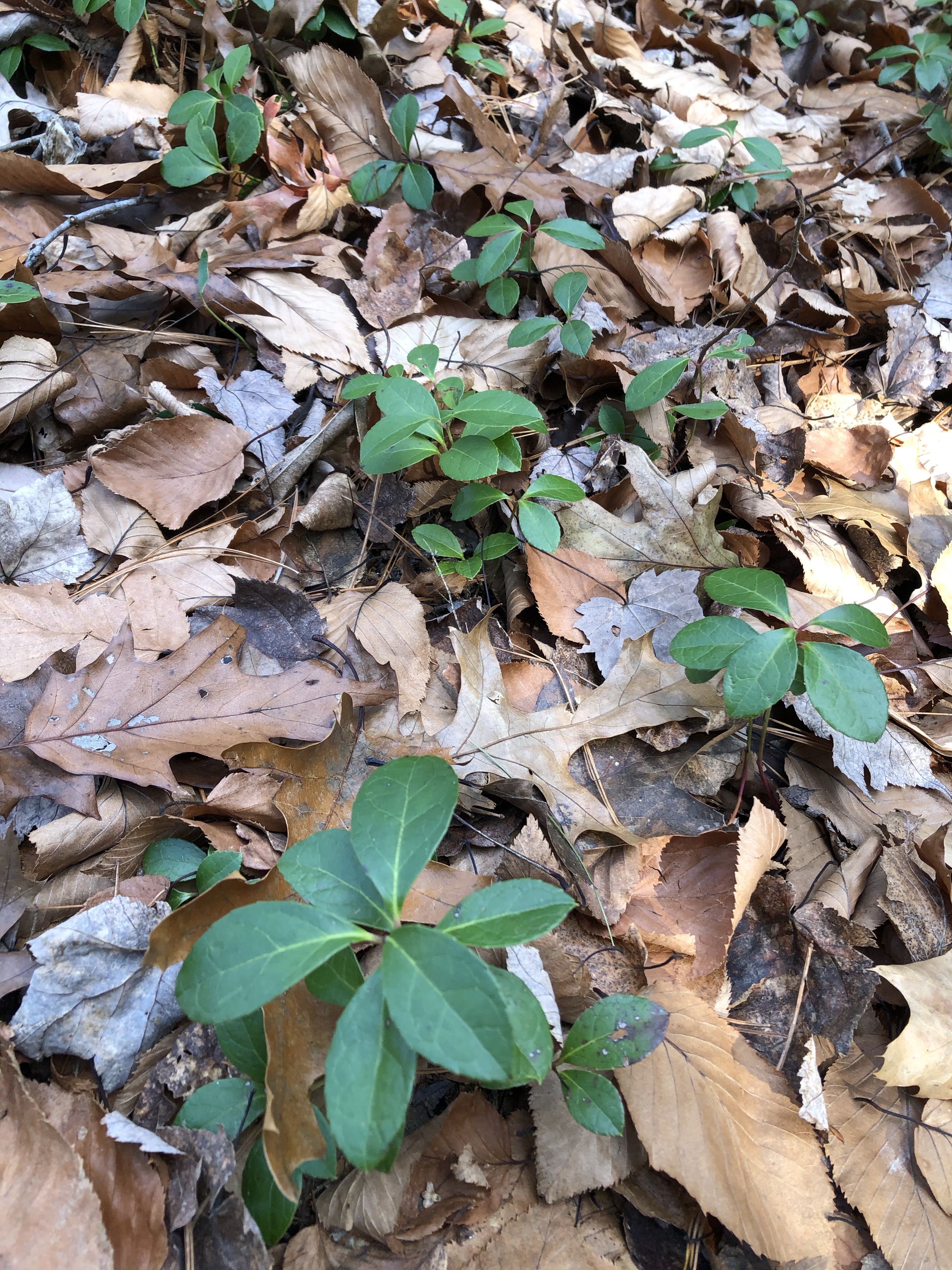
    I walk on and come across wintergreen in a sea of brown oak leaves, which reminds me of Carlisle, Massachusetts and the Great Brook Farm State Park. I pick a leaf, snap it in two and smell the minty freshness. Memories of wintergreen moments from years ago invade my mind for a moment, and I smile and release them with the folded leaf.
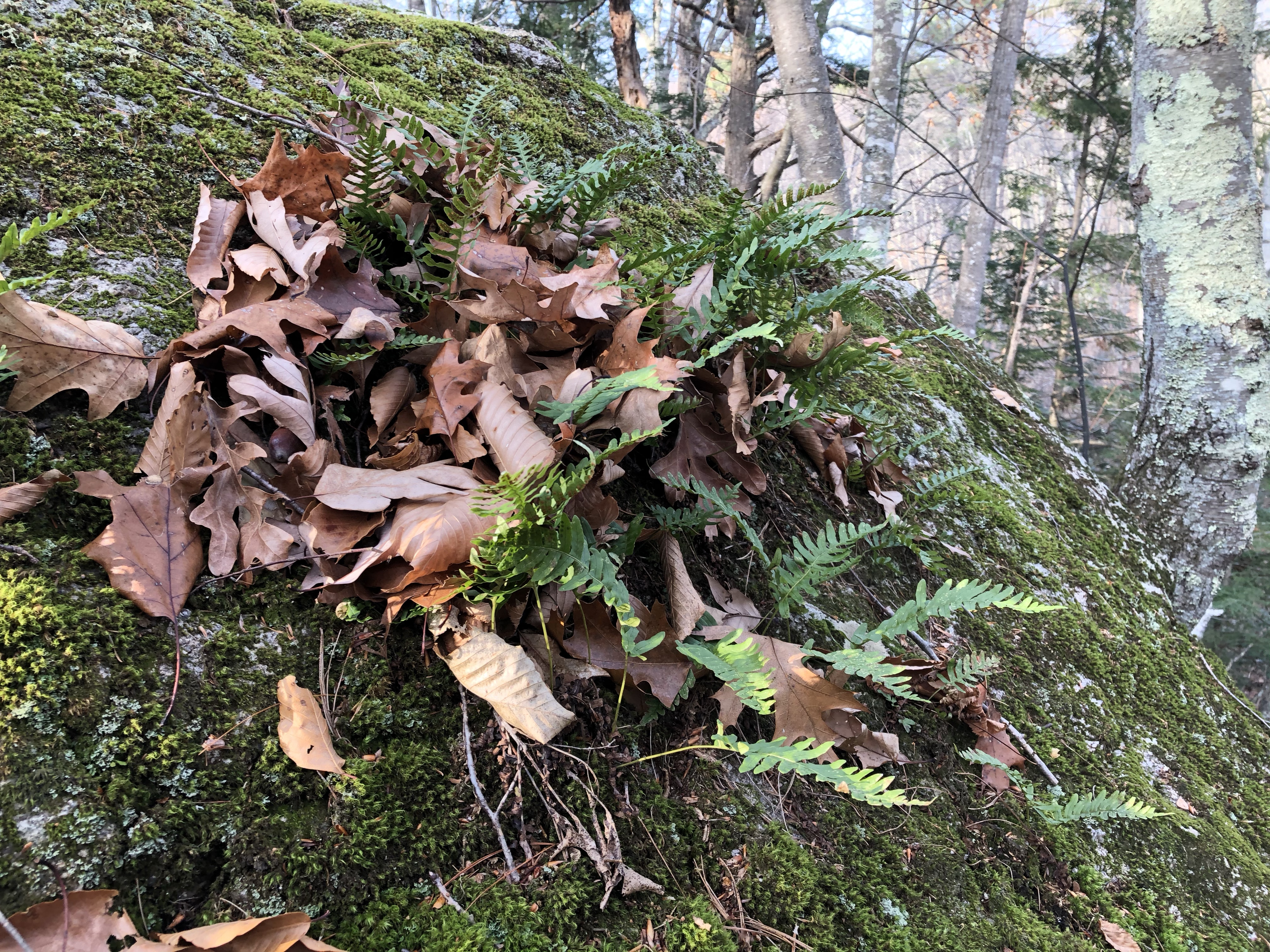
    I walk slowly through the woods; I’ve already reached my destination. I’m here to see not to get somewhere. Climbing a rise I wonder at the moss-covered granite ledge. Ferns cling to the moss, catching oak leaves that only wanted to fly. Will they return to the earth, or feed the ferns right here on the granite? That’s a question for time.
    Conservation land offers familiarity without risk. Risk that this will become yet another housing development. It’s a friend that won’t be betrayed like that friend down the street was. The land has been betrayed before, you see it in the walls and cellar holes. It may be again someday, but in conservation there’s hope for more permanence. At the very least these woods should outlast me in some form. Still, there are no guarantees: Even these woods show signs of recent harvesting.

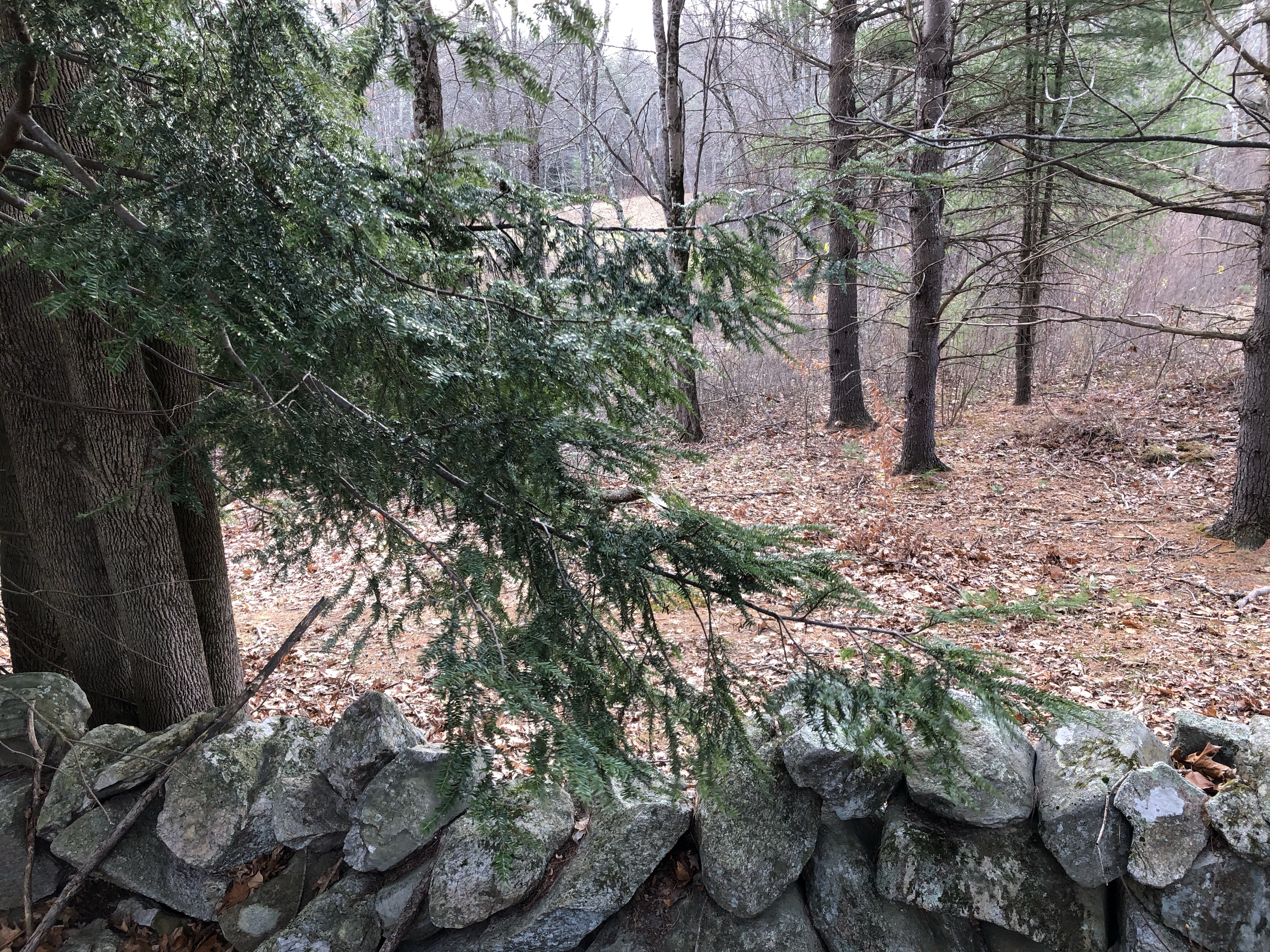
    I turn back towards home. The days are short now and I have things to do. But I pause once again for the hemlocks. For all the bare trees in the November woods, a few remain evergreen. My favorite is the hemlock, with their lacy green limbs riding the breeze. These limbs fold down neatly under snow load, while the oaks stoically resist. This means the oaks stand naked in November while the hemlocks still proudly wear their deep green dress. A case for being flexible under stressful conditions, it seems. So I stay still, watching one limb bouncing above a stone wall that stand tired but proud amongst the clutter of fallen late autumn leaves. It reminds me of an Irish step dance on a carpet of oak leaves in a granite hall. I reluctantly walk on from this performance for an audience of one with a nod to the performer. And I’m awake once again.
  • The Farmer and the Poet

    It sits perched atop its fellow stones, neatly laid as a capstone of sorts. Who’s hands laid this stone? A farmer from the earliest days of this nation? Or perhaps their grandchild, the last generation to farm this land before the young turned to the mills or went west? Once the land surrounding the wall was cultivated, bearing harvests of corn, beans and squash. Then the farms faded and the trees regained the land. This wall marks the past, and this stone waits eternally to tell its story, like that poem buried in a musty old book on a library shelf. The farmer and the poet each speak to us through their creations long after they’re gone. If only we’ll listen.

  • On Foliage and the Passing of Time

    “Who made the world?
    Who made the swan, and the black bear?
    Who made the grasshopper?
    This grasshopper, I mean-
    the one who has flung herself out of the grass,
    the one who is eating sugar out of my hand,
    who is moving her jaws back and forth instead of up and down-
    who is gazing around with her enormous and complicated eyes.
    Now she lifts her pale forearms and thoroughly washes her face.
    Now she snaps her wings open, and floats away.
    I don’t know exactly what a prayer is.
    I do know how to pay attention, how to fall down
    into the grass, how to kneel down in the grass,
    how to be idle and blessed, how to stroll through the fields,
    which is what I have been doing all day.
    Tell me, what else should I have done?
    Doesn’t everything die at last, and too soon?
    Tell me, what is it you plan to do
    with your one wild and precious life?”
    —Mary Oliver, ‘The Summer Day’

    Mary Oliver passed away in January this year, at the age of 83.  If I may say it, too soon.  With her passing, her question commands even more urgency than before:

    Tell me, what else should I have done?
    Doesn’t everything die at last, and too soon?
    Tell me, what is it you plan to do
    with your one wild and precious life?”

    This afternoon I drove back from meetings in Boston, flipped open my laptop and diligently followed up on the list of items that demanded my time.  All save one, which required closing the laptop, stepping outside and finding foliage.  New Hampshire glows in orange, yellow and red in October, and I’ve spent entirely too much of the first eleven days of the month indoors or behind the wheel of my car.  So a walk down to a local pond on a gusty day felt more like living than crafting another email for somebody’s spam filter.

    Foliage stirs up memories of autumns past, and I try to push those aside.  Not because the memories aren’t mostly pleasant, but because there’s more than enough living now to occupy my limited brain cells.  And there’s only today; words we all know but seem to push aside for the distraction of the moment.  “What else should I have done?”  Indeed.  Take “what is it you plan to do with your one wild and precious life?” and replace “life” with “day”.  For really, that’s all we have, isn’t it?  The foliage illuminates the cold black water of a small pond nearby, and soon those leaves will float down onto the water, drift along the surface for awhile and then slowly slip quietly under the surface to return to the earth.  The briefness of this life exemplified in a single leaf.  Had I not gone to witness the foliage would the opportunity have been there tomorrow?  Surely that’s a trick question.

  • Writing Illuminates

    October 7th and there’s no escaping it now. The morning concedes more and more of herself to the greedy darkness. Darkness, not satiated, comes back for more sooner and sooner each afternoon. The days are more beautiful than ever this time of year in New Hampshire, there’s just less time in the day to enjoy it all.

    The available light changes routine. No going outside to read in the still morning light now. Instead I find myself huddled inside during the magic hour. This won’t do at all. Perhaps a brisk morning walk outside would serve me better, with reading later? But thoughts of work encroach the later in the morning it gets, and by 7 AM there’s no escaping the feeling that the jig is up. Daylight brings responsibility, there’s no more buffer when the earth turns a cold shoulder to the sun.

    Still, there’s beauty in darkness. That old huntsman Orion greeted me in all his glory over the weekend. He’s tired of playing hide and seek with the Northern Hemisphere. And I delighted in greeting him once again. True, the Autumnal Equinox makes stargazing more accessible. There’s that. Take what the day brings you, that’s the answer isn’t it?

    Darkness grudgingly concedes the day, and I must be moving on. Writing calls, but so does the day job. The endless wrestling match between creative output and economic responsibilities. One voice tends to dominate the conversation. So what’s a writer to do? The answer, it seems, is to get up even earlier tomorrow. More time alone in the darkness, though not in the dark. Writing… illuminates.

  • Time Travel on the Rail Trail

    I took a walk on a local rail trail during a lunch break.  The trail brought solitude occasionally interrupted by fellow walkers, joggers and cyclists. But not really solitude.  There were glimpses of frogs warily looking back at me, chirps of chipmunks announcing “here’s another one.” as I walked by, and a distant hum of traffic in the distance.  But I was alone with my thoughts.  After cutting way back on listening to podcasts and music on most walks and rows, I’ve realized a net benefit in improved creativity.  Everyone has their thing, mine is quiet.

    An acorn stood in the middle of the path, shed of its cap and firmly on its fat end seeking perhaps a bare foot.  But likely hoping for a kick to the grass where it might take root. Asphalt is no place for an acorn with aspirations.  The remains of hundreds of its kin lay massacred on the trail, victims of bicycle tires and shoes alike.  Looking back, I regret not kicking that acorn into the grass.  It might have stood a fighting chance.

    I paused at a wall, built of granite by hand. Dimpled from the stone cutter, lichen and moss-covered from a long watch under a canopy of oak and maple trees.  The wall has stood here for at least 170 years, and aside from a crack or two looks like it could stand for three times that.  If a generation is 30 years, the man that built this wall could well have been my great-great-great-great-great-great grandfather.  I wonder if he thought of that when placing these stones?  Turning back the way I came, I thought the wall could easily stand for another ten generations if left to itself.  Perhaps they’ll stand where I stood today, thinking as I do of those who came before and those who belong to the future.  My moment with the wall was just a glimpse of a time machine passing from then to there, with a brief visit with me along the way.

    That acorn is a time machine as well, waiting to find the right landing place to take root and grow.  It too could outlive all of us.  And a part of me hopes that it does.

  • Lost in an Autumn Playlist

    Autumn. Smell the pumpkin and ripe apples and decaying leaves and wood smoke. Late September through Thanksgiving in New England offer vibrancy with the fourth sense fully engaged in the game of being alive. I could live in many places in the world, but these crisp nine weeks are when I appreciate living in New Hampshire most.

    Autumn. Blue jeans and long sleeves, the heat radiating through a mug warming your hands, wiping dew off the chair before sitting down in the backyard writing chair. Blankets pressing you down into the mattress like you’re a panini. Socks. The days grow shorter and cooler, and the wardrobe changes with the tilt of the earth. We’ve been here before, and we grow reacquainted once again with fabric on our extremities. The dance with Autumn inevitably means literally feeling her on your skin.

    Autumn. Yellow and red waves sweep first over the highlands and wetlands, moving southward and finally capturing the strongest holdouts in between. Northern vistas so stunning you can’t help but stare, and apologize profusely for being so rude. I confess my productivity decreases when I travel to Vermont or northern New Hampshire. Like stained glass in a church, the leaves demand your attention.

    Autumn. Sweetness of apples and the omnipresent pumpkin spice. Last of the harvest turned to cider and preserves. Lighter summer fare giving way to richer dishes that warm you inside out. If you haven’t lost those few extra pounds by now you face an uphill battle as caloric intake holds the advantage. Baked goods take the place of salads, rum gives way to scotch, soups and stews and casseroles tempt and delight. The scale be damned.

    Autumn. The fading crickets song grows sadder while the crows caw grows bolder. Soon the red-winged blackbirds and other transients fill the trees with a cacophony of excited conversation. The hiss and pop of an outdoor fire. And always, a playlist of standards for Autumn. There’s a soundtrack for every season, and Autumn is when my playlists grow reflective.  In the spirit of the senses, I’ll limit myself to five standards that set the tone for Autumn in New Hampshire:

    Philosophers Stone by Van Morrison (King of Autumn music)

    The Long Day is Over by Nora Jones

    I Was Brought to My Senses by Sting

    You Don’t Have to Say You Love Me by Shelby Lynne (sorry Dusty)

    Deacon Blues by Steely Dan

  • Stargazing

    “But let’s not talk about fare-thee-wells now
    The night is a starry dome
    And they’re playin’ that scratchy rock and roll
    Beneath the Matala Moon” – Joni Mitchell, “Carey”

    These particular lyrics jump out at me every time I hear this song.  The spell of a starry dome night on a beach in Mexico with rock and roll music playing.  I’ve done my best to duplicate that portrait many times over the years, sometimes on a beach somewhere, sometimes just in the backyard around a fire pit, and sometimes on an island on a New Hampshire lake with loud music, fire and friends.  Stars over water, stars high on mountain tops, stars in the desert…  always stargazing in the darkest corners I can find.  Epic bonding time with my dog for years before he couldn’t go on our stargazing walks anymore…  and it seems I wouldn’t without him.

    The days grow shorter with the tilt of the earth away from the sun in the northern hemisphere.  Better suited for seeing that starry dome overhead.  A good reason to get back to nighttime walks, head tilted up for constellations, satellites, and the occasional shooting star.  There’s so much going on up there, and we sit in our houses unaware of the dance happening above the roof.

    “You know Orion always comes up sideways,
    Throwing a leg up over our fence of mountains,
    And rising on his hands, he looks in on me
    Busy outdoors by lantern-light with something
    I should have done by daylight, and indeed,
    After the ground is frozen, I should have done
    Before it froze, and a gust flings a handful
    Of waste leaves at my smoky lantern chimney
    To make fun of my way of doing things,
    Or else fun of Orion for having caught me . . .”

     – Robert Frost, “The Star Splitter”

    Orion returns to the dance soon.  I’ve missed this sky dancer most of all these summer months.  I smiled reading Frost’s description of Orion throwing a leg sideways over the mountains.  Were I that clever with a few choice words!  I’ll get there, or at least enjoy the process of trying to get there.  We can’t all be Robert Frost or Joni Mitchell spinning magic in words.  But they weren’t that once either.  Just get out there and do your dance under the stars.  They won’t judge you.

  • And Then Came the Crows

    It was the owls that first woke me. Talking to each other in conspiratorial murmurs.

    As the darkness faded to light they moved on and the brown thrasher took over; ever the early bird.

    Soon the sharp honk of geese flying in tight formation and whooshing feathers carving air to advantage.

    And then came the crows.

    Another Sunday morning with the neighbors at the edge of New Hampshire woods.

  • Frogs and Acorns and Autumn Joy

    I’m not going to sugarcoat it, the garden is fading fast.  Sure, there’s crisp fall air to appreciate if you must.  Autumn is my favorite season, and particularly this year I’m excited about an upcoming trip to London and Scotland.  But this year summer ended abruptly with two events changing the backyard paradise I worked all spring for.

    The first affront to summer was having the roof done.  A new roof is a lovely thing indeed, but the damage done to the summer garden was catastrophic.  Some of it was my own doing of course – strategic weed wacker work through the faded bee balm and daisies to carve a path for the inevitable tarps and plywood needed to catch the roof debris.  But alas, a few prized perennials caught errant shingles as well.  The garden will rebound next year, but it may hold a grudge.

    Second, the pool is covered over for winter weeks earlier than normal.  I can hear the condensation drips splashing into the pool now, saying “What happened to the sky?” while frogs circle the perimeter wondering where the trendy amphibious nightclub went.  I expect I’ve ruined a lot of frog dates closing shop so early.  Sorry frogs.  Not seeing the water hurts me too, but not as much as watching acorns ricochet off the deck, bounce across the patio and splash into the pool to serve as beach balls for coy frog daters.  Autumn is called fall for a reason, and we’ve got some serious fall happening.  Something had to give and this year it was pool season.

    So what we’re left with is a few survivors dancing in the garden, faded potted tropicals wondering where they went wrong in life, and the extraordinary Sedum ‘Autumn Joy’ standing proudly amongst the destruction in the garden; a miracle of color in an otherwise sad garden.  Even the roofers seemed to be rooting for it, and I appreciate their protective efforts as so many of her neighbors fell.

    So here we are.  Autumn in New Hampshire.  A bit different this year, but autumn nonetheless. September eases you into it, with apples and pumpkins and outdoor evening fires.  October will bring the foliage and then the leaves grudgingly join the acorns scattered throughout the yard (there’s no walking barefoot at night in September when you have oak trees).  Autumn joy indeed.


  • Great is Today

    If you want to fully feel the urgency of “now” watch a veteran roofing crew begin work on a house. There’s no time to get in touch with their feelings, they pull up, assess and get on with it. Get it done ASAP, and move on to the next house tomorrow.

    It’s the first Tuesday in September, and the first day of school pictures will be snapped all over Massachusetts. New Hampshire went back last week, but really that’s just to get a head start on snow days to come. School begins in earnest this week from kindergarten to college. And so [unofficially] summer ends, Autumn begins, and there’s a heightened sense of the moment.

    I read Leaves of Grass last week. More precisely I finished Leaves of Grass last week. Walt Whitman has some brilliant prose, and some sprinkled liberally throughout this work, but there’s a lot of chewing to get this one down. Lot of Walt getting in touch with his sensuality stuff in there that proved controversial for the time, but this isn’t going to be a post about the work as a whole. Instead, this line jumped out at me:

    Great is today, and beautiful, It is good to live in this age… there never was any better.” – Walt Whitman, Leaves of Grass

    Whitman wrote that sometime between 1850 and 1855, when Leaves of Grass was published. It was before the Civil War and other dark days in Whitman’s life. But there are always dark days, and always vibrant days throughout history. Life is the ebb and flow. Don’t bury your head in the sand when darkness reigns, but don’t ignore the extraordinary gift of now we’ve been given either.

    Look around. Look around. How lucky we are to be alive right now.” – The Schuyler Sisters, Hamilton

    Be alive, right now. That’s all there is. We can’t time travel backwards, and we can’t hit fast-forward.  We all know Aesop’s fable about the ants and the grasshopper, but he wasn’t saying there’s no time for play, he was saying that we need to harvest first, then dance and sing.  So by all means work, and build that nest egg, but don’t lose sight of this magic moment along the way. 

    Do not be concerned with the fruit of your action – just give attention to the action itself. The fruit will come of its own accord.” – Eckhart Tolle, The Power of Now

    I’m weighing that fable as roofers strip the roof over my head and I contemplate Whitman. The irony isn’t lost on me, I’ve been on construction crews and know their world. They don’t stop to smell the roses for very long, but sometimes a moment appears. As I spoke with them before they started I pointed to the ripe grapes they would soon cover over to protect them from debris and told them to help themselves. They savored the sweetness of the grapes with audible pleasure, even as they got on with the work at hand. The fruit came of it’s own accord, then it was time to get back to work.