Category: Travel

  • Finding the Way

    Nobody ever says of a painter that he has lost his way. It is said of writers. But when one is talking about a painter one says, “He is finding his way.” — Mary Oliver, Sand Dabs, Six

    The curse of restlessness, as described yesterday, is a burning desire to pile on more and more to the to-do list. How much can we fit in? More, more, more! The worker bee in me seeks to do more. The philosopher in me wishes to still the madness and listen to the universe. The writer in me finds his way tactfully between the two, looking for just the right way to sum up the day.

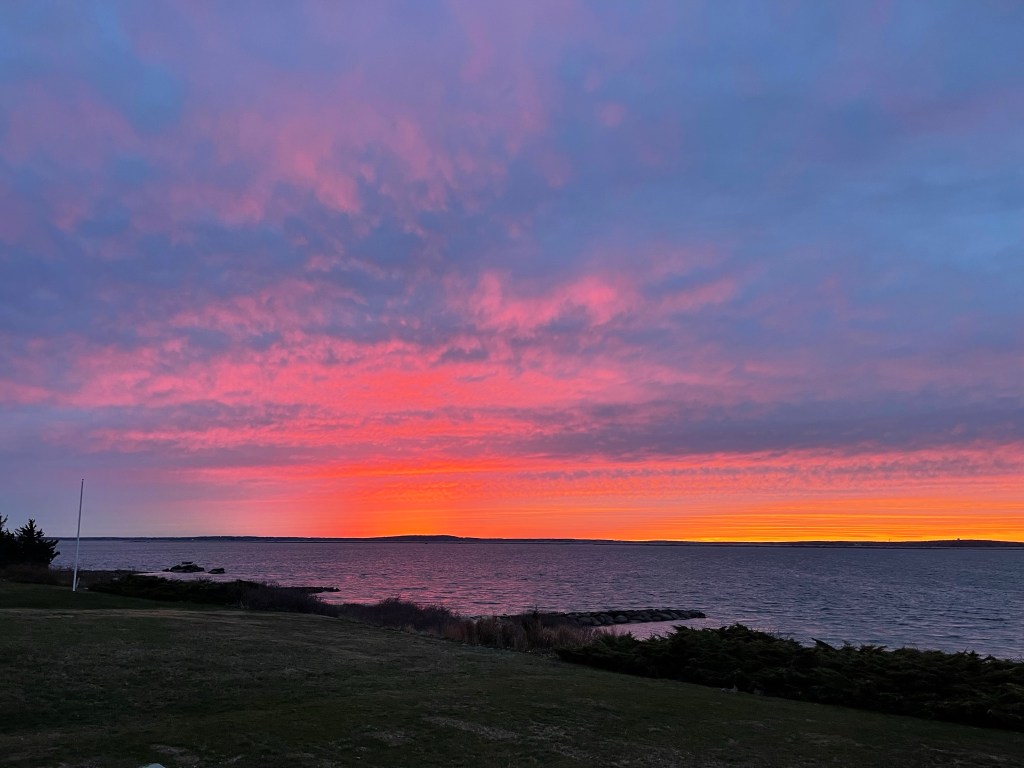
    And so it is that the words come. Today, before the wave crashes, I delight in the colors in the clouds as I listen to the growing roar. And click publish before I’m swept away.

  • The Call of the Wild

    “Deep in the forest a call was sounding, and as often as he heard this call, mysteriously thrilling and luring, he felt compelled to turn his back upon the fire and the beaten earth around it, and to plunge into the forest, and on and on, he knew not where or why; nor did he wonder where or why, the call sounding imperiously, deep in the forest.”
    ― Jack London, The Call of the Wild

    Finishing my first cup of coffee, I heard the distinctive honk of a skein of geese. Quickly removing myself from the comfort of the moment, I caught the geese circling back around the woods and turn towards a local pond. The rising sun caught them in flight, illuminating their bodies in the red light of dawn. They soon disappeared behind the roofline and the honks faded away as I walked back into the warmth of the nest.

    We know deep down whether we were meant to be wild things or creatures of comfort. The world wants very much for us to seek comfort, to leave those crazy dreams well enough alone and celebrate the nest—to turn back towards the fire. Maybe a little part of us feels this too. So why are we so drawn to wild things? What is it that we seek?

    I believe it’s vitality. Vitality bursts out of us, it isn’t buried in the mundane. It is not another cup of coffee to get through the hour, or a nightcap to wash away the day. To be fully alive we must step out of ourselves and be uncomfortable. Test limits and stretch to new places. To do otherwise is to avoid a full and vibrant life.

    “You cannot find peace by avoiding life.” — Virginia Woolf

    Will we be drawn to the Siren’s call to the rocks or to the call of the wild? One calls us to accept what always was until our end, the other calls us to fly. We ought to ask ourselves, is inertia comfort in disguise, and vitality masked by the judgement of imprudence? We are, each of us, on a hero’s journey, listening for our calling. What call will we turn towards?

  • Bury Regret

    “I want to live my life so that my nights are not full of regrets.” — D. H. Lawrence

    D. H. Lawrence, his hand forced by a society that wasn’t quite ready for what he had to say, was a traveler. One could safely say he had an adventurous spirit. That his ashes were eventually scattered in the sea to freely roam the world seems poetic in the end.

    Recently I’ve opted out of two adventures that didn’t seem prudent at the time. I wonder, even now, what the return shall be on my investment in practicality? A stack of still more practical days thereafter? I should think a collection of passport stamps, photographs and memories would be the more sound investment.

    D.H. died at 44, a young man still, not so very full of an old man’s regrets. The lesson, from he and all who came before us, remains starkly clear. The graveyard is full of unresolved regret. We the living, must clear our minds of all that we might regret later by living a full life today. Never nihilism, for meaning and purpose are our pursuit, but surely embracing richer experience. We regret that which remains unfulfilled. Bury regret in favor of a full life today.

  • Everywhere

    “I haven’t been everywhere, but it’s on my list.” ― Susan Sontag

    What’s next? Where to? These are things the earnest world traveller considers in between days. Just back from one country, scheming the next, what meets the strict budget of time and money? The world is calling, and life is so very short. Yet we simply can’t be everywhere.

    What of here? Don’t we give place short shrift when we look to the world with wanderlust? Life is presence. Life is right here, wherever we find ourselves, not everywhere all at once. We are what we pay attention to.

    The thing is, we each reconcile the possible with the probable. We see the time flying by, see people around us passing away or saddled with restrictive illness, and we wonder why we aren’t out there meeting the universe while there’s time. What are we to do?

    Distraction is merely comparison run amuck. It’s what the Buddhists call the monkey mind. We live in a noisy world, full of distraction and the temptation of what might be next. We fixate on what we don’t have instead of celebrating what we are blessed with. Our lives are right here, right now. It’s the universe offering us the moment. We dishonor the gift when we reject it for the next one.

    Celebrate here and now. Plan for there and then. Everywhere may arrive in time, in its time. Here is where it’s at, for now.

  • Something Amazing

    “Life is never what one dreams. It is seldom what one desires, but for the vital spirit and the eager mind, the future will always hold the search for buried treasure and the possibility of high adventure.” — Ellen Glasgow

    The very idea of l’élan vital, the vital spirit, of living each moment with rapt attention and the eager anticipation of what comes next is a bold, some might say extravagant, way of moving through our days. But what is the alternative? Practical living? Skating our lane to the last? Give me something amazing, thank you. Give me adventure and the search for buried treasure hidden in the moments to come. Give me joie de vivre. Give me l’élan vital.

    But Glasgow also pointed out that this vitality has a shelf life in the moment:

    “No matter how vital experience might be while you lived it, no sooner was it ended and dead than it became as lifeless as the piles of dry dust in a school history book.” — Ellen Glasgow

    The thing is, an active, vital life isn’t meant to be a singular moment, but singular moments stacked one upon the other, lifting us to a higher level of engagement with the world. What’s done is surely done, but something of it remains within us, a hint of something betrayed in the sparkle in our eye. Those who acquire enough of it emanate a magnetic energy that attracts others. We’re all walking swarms of electrons looking to dance with life.

    I’ve surely lost the physicists with my blog today, but nonetheless, there’s something to being actively engaged in living that increases our vitality. The hunt for the buried treasure in the next moment is a mindset. It reveals a zest for life and a reach for boldness. Aspiring for something amazing in our next moment isn’t setting us up for disappointment, it’s setting us up to find more of what we seek.

  • Little Things

    Elle est retrouvée!
    Quoi? -l’Éternité.
    C’est la mer allée
    Avec le soleil.


    She is found!
    What? -Eternity.
    It’s the sea gone
    With the sun. — Arthur Rimbaud

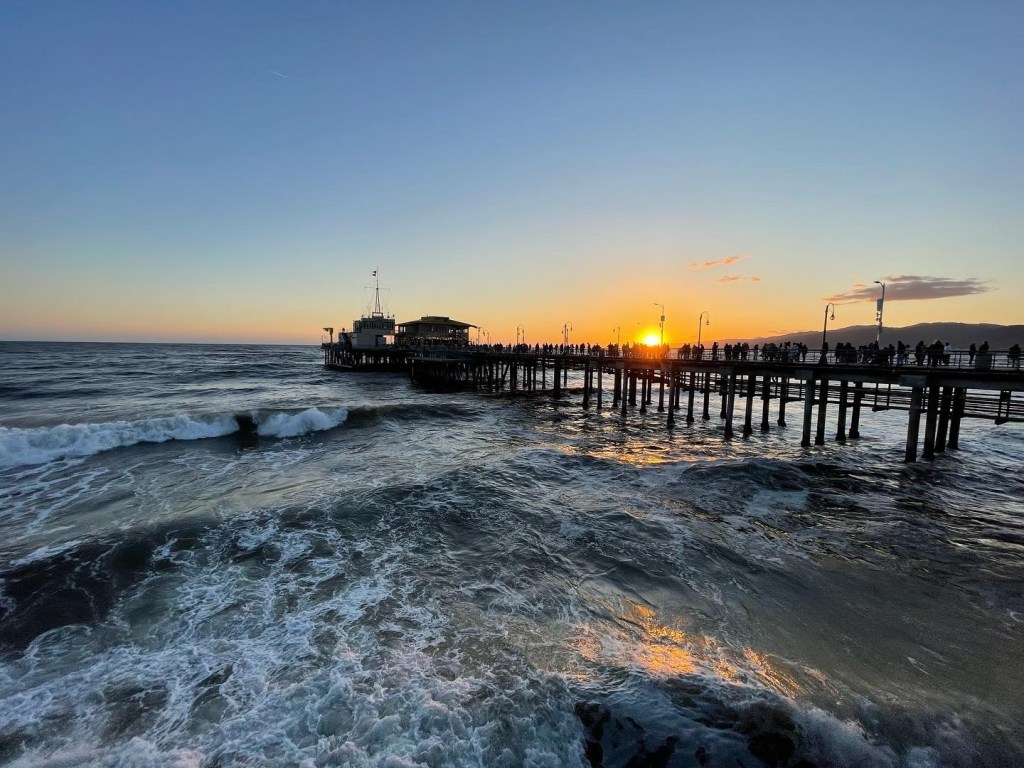
    Sunsets are routine, often ritualized. Little things, really, repeated daily. I’ve been known for carrying on about such things as the position of the sun relative to where it was in warmer days. Most people, it seems, could care less about where the tilt of the earth is. We are what we focus on.

    “Little things in life, which afford what [Daniel] Kahneman calls “experiences that you think about when you’re having them,” provide a great deal of everyday enjoyment. Because you’re apt to pay more attention to your remembering than your experiencing self, however, it’s all too easy to forget to indulge yourself in these small but important pleasures on a daily basis, thus depriving yourself of much joy.” — Winifred Gallagher, Rapt

    I should think life would be less enjoyable the very moment one forgot to savor the little things. We get used to things that once delighted us, looking for the next big thing to replace that feeling, always chasing. Never really savoring.

    Most writers have an eye for details, and linger in them longer than the average bear, seeking a deeper understanding. There’s pleasure to be derived from digging deeply into what seems trivial. Consider Rimbauld’s twelve words, arranged just so, that draw so much out of what someone else might think of as just another sunset. Poetry itself might be thought a little thing. Ah, but what things they are, sunsets and poems! I think I’ll stick with little things, thank you.

  • Footsteps

    I wonder, now and then, who has tread on the ground I walk on. Surely this thought comes to mind often in famous places where people whom we remember did things that stir the imagination and puts us in their shoes, if only for a little while. The history buff in me lingers in places where famous moments happened. It’s my way of understanding their moment a little better, even as my moment in that place is so very different. I’m a visitor in that place in that moment, they defined the place in theirs. Walden, Culloden, Kehlsteinhaus, Liverpool’s Cavern, Saratoga… each stirred up ghosts as I walked in footsteps. Some we honor, some we simply try to understand.

    There’s that word again: understand. We can never put ourselves in the place of the characters who brought us here, but we can learn from them. History rhymes, after all. When we learn from those who came before us we might change the script, or gain insight into our next move. We’re all just re-writing history, we’re all playing the same chords. We make of it what we will.

    Last week I visited Gljúfrabúi, partly inspired by watching a YouTube video of someone walking into the gorge to experience the hidden waterfall. I re-watched that video, just to see it again from the perspective of someone who has now been there. For all the thousands of people who have likely walked there, the experience of that particular person walking in my footsteps when I’d actually walked in theirs felt circularly surreal for me. It reminded me that each of us is walking in the footsteps of others while also creating footsteps for those who will follow us. Doesn’t it make you wonder, how will we define our place?

  • A Visit to Black Sand Beach

    When polling the five people I visited Iceland with last week, the consensus pick for most memorable place to visit was Black Sand Beach (Reynisfjar​a). There are plenty of options to choose from aside from that particular location—epic waterfalls, glaciers, volcanoes, geysers, the Blue Lagoon, tectonic plates drifting away from each other, and of course, Reykjavik. Each offers a possible highlight moment on a normal week of living on this planet. But the Black Sand Beach stood out for all of us.

    Why? Because a place like Reynisfjar​a changes you, as travel does, but more viscerally than visiting the tasty Icelandic hot dog stand. It might be the distinct black sand, ground up bits of lava expressing itself vividly against the white salty foam of the crashing waves. It might be the angry seas with their sneaker waves, always threatening to pull a distracted tourist to their doom. Maybe it was the basalt columns rising up from the sand and sea, standing against the ocean in a fight to the end of time. Mostly it was all of those things, combined into a magical place that is indifferent to the hordes of tour buses casting tourists upon the sands. The beach will be here long after we’re gone, but each of us take black sand memories with us.

    Reynisfjar​a
    The white foam against black sand was mesmerizing to watch as the waves receded.
    The famous basalt columns at Reynisfjar​a. You can see them referenced in architecture in Reykjavik. You just might also see a few tourists at this beach, and this time of year, a bit of snow.
  • On Valentine’s Day, Accept Þetta Reddast

    In Iceland there’s a saying that speaks of resilience and hopefulness. In only a few days there I heard it several times, evidence of the shared belief of her people, . Þetta Reddast means it (Þetta) will all work out (Reddast). In case you’re wondering, as I did, Þetta Reddast is pronounced “thet tah red ahst“. As with countless visitors before me I fell in love with Iceland almost immediately. And I also learned that she won’t always love you back but not to worry because it all works out in the end. Þetta Reddast, friend.

    On Valentine’s Day, we celebrate the love we have for that special someone. But love is a fickle and evasive thing indeed. Live a few years and you’ll experience the good, bad and ugly of love. Some of us are lucky and find a lifetime partner. Some of us never find love at all. Most are somewhere in the middle sorting it out one day at a time. As with Iceland, it all works out in the end, mostly. Enjoy the chocolate either way.

    I say love will come to you
    Hoping just because I spoke the words that they’re true
    As if I offered up a crystal ball to look through
    Where there’s now one there will be two
    — The Indigo Girls, Love Will Come to You

    The thing about finding true love is you can’t expect it, but you have to have faith that love will sort itself out for you eventually. It’s never perfect, for none of us are perfect, and to expect it to be so is a fools game. It’s simply two people finding each other at the right time and place in their lives, when the single track trail becomes wide enough for two to walk the path together. But trails narrow and widen as we keep hiking, don’t they? Þetta Reddast. Remember it will all work out in time.

    My bride and I went to Iceland looking for adventure and a glimpse of the Northern Lights. We found adventure, but we danced with Iceland’s notorious weather and wind each night instead of the Aurora Borealis. Looking at the Aurora app, we could see epic reds, oranges and greens dancing just out of reach. We learned quickly to accept the truth in Þetta Reddast. It just wasn’t our time to be on the dance floor with Norðurljós. Perhaps, as with love, our paths will cross some other time. I’m hoping just because I spoke the words that they’re true.

  • The Practice of Living More

    I’ve become known in some circles as an avid traveler, but don’t think of myself that way. That’s comparison at work, both theirs and mine, fogging the lens of perspective. Wiping it clear, it’s more that I’m an aspiring traveler immersed in a busy life. That’s not quite the same thing, but better for me at this point in my life. Travel is a choice, and so is building a strong sense of place and contribution. We can have a healthy measure of each applying a little balance and flexibility, but we can’t have it all. What will we choose, knowing this?

    “We are what we repeatedly do. Excellence, then, is not an act, but a habit. — Aristotle

    Aristotle may have also observed that mediocrity is also built on repeatedly doing. We each get our stack of days to work with. Some choices are taken from us, some choices are hidden from us, but most of us in the modern western world have the agency to do with the bulk of our time what we would. Habitualizing excellence seems a prudent use of that time.

    The trick in living a life closer to excellence is in the repeatedly doing part. Arete, or excellence in life, is something to aspire to through our daily action. We pay penance to the gods we serve through our habits and applied effort. Put another way, through our practice:

    “When an activity becomes a practice, it shifts from something that you are doing at a point in time to an ongoing process of becoming.” — Brad Stulberg, The Practice of Groundedness

    The practice of daily living is ongoing, but with an expiration date we either reconcile ourselves with or distract ourselves from. Stoicism is holding on to that realization that this all ends one day and making the most of the time. How we live matters a great deal when we feel the urgency of an expiration date. Continuous improvement and living with intent are a prudent use of that urgency. The practice of living more means working to realize the things we aspire to, while savoring the life we’ve already built for ourselves.