Category: Travel

  • Tory or Loyalist? (Depends on which side you’re on)

    Tory or Loyalist?  (Depends on which side you’re on)

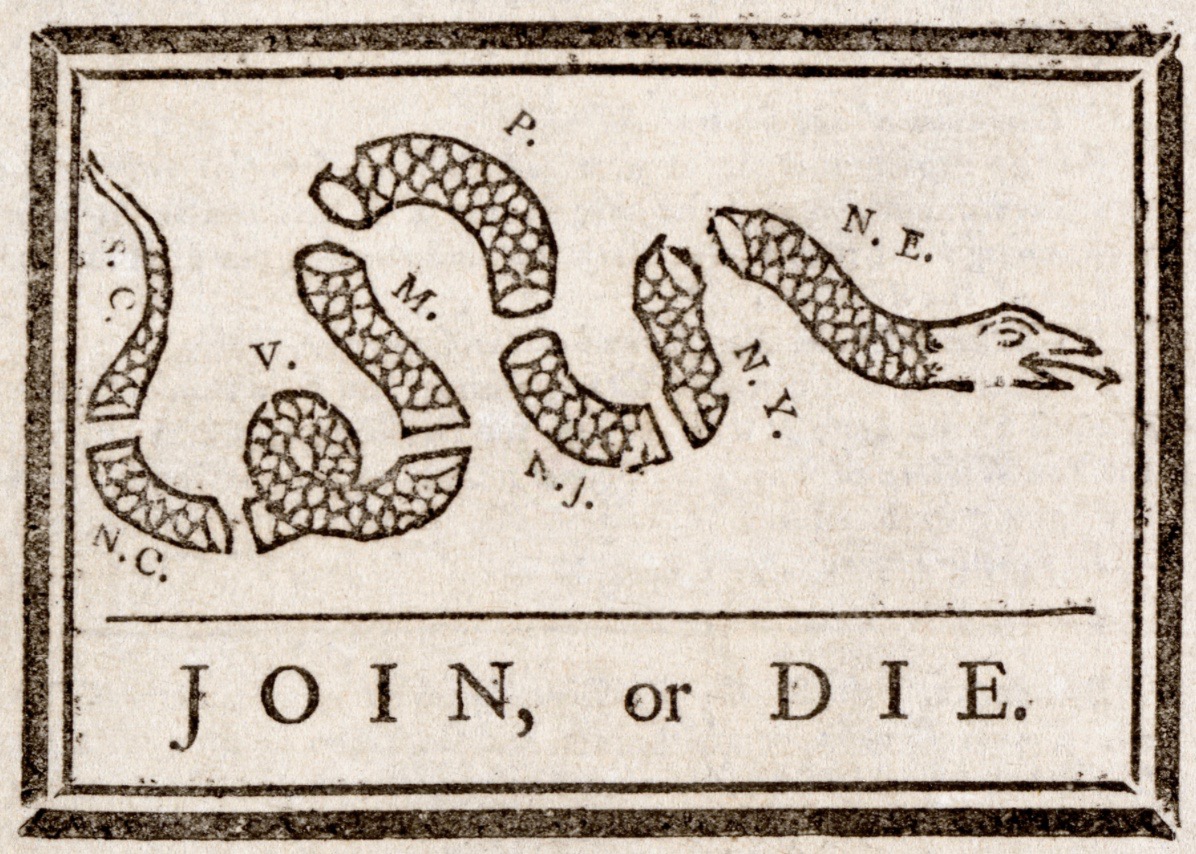
    When you win a war you get to decide what you call the people who opposed you in the war.  The history of the United States is full of examples of this.  In the years leading up to and during the Revolutionary War those who wanted to break with the British referred themselves as Patriots and those who opposed them and wanted to remain under the crown were called Tories.  If we think that our current climate is divisive imagine living in 1775 when you had to choose whether to fall in line with your family or neighbors and take up arms against the governing authority you’ve known your entire life or stay loyal and risk being tarred and feathered, having your house burned down, or worse.

    Northern loyalists fled the colonies for Nova Scotia, Prince Edward Island, and New Brunswick.  In fact, New Brunswick was once part of Nova Scotia until the population swelled with United Empire Loyalists relocating to areas still controlled by the British.  Southern loyalists fled to Florida and the Caribbean islands under British control.  Many took their slaves with them.  Many others returned to England.

    Being from Boston and having a fair amount of Scottish blood running through my veins, I feel a strong connection with Halifax.  When you’re in Halifax that bond with Boston is clear as well.  And there’s also a strong connection to Great Britain in the area.  Over 240 years since the start of the Revolutionary War, and there’s still a fascination with British royalty in all of North America.  How hard it must have been for the loyalists to choose.  Ben Franklin is one of the Founding Fathers.  His own son William was a leader in the Loyalist movement.  This of course drove a permanent wedge in their relationship.

    In contrast to the United States, Canada became independent using diplomacy instead of conflict.  They met amongst themselves to discuss it in 1864, and then met with the British to request it.  July 1, 1867 was the day that Canada was granted self-governance with the British North America Act.  I think many of the original loyalists who fled the colonies would have preferred a diplomatic solution like that had it been available to them.  Uprooting your family from a place you’ve grown a livelihood in must have been both challenging and terrifying for the loyalists.  For the Patriots it was a time to take matters into their own hands, birthing a nation through bold action.  It was complicated for both sides.  Taking up arms and fighting for independence is our American legacy.

    Growing up on the history taught in school in the 70’s, when the tories were “traitors”, the Indians were “savages” and Columbus discovered America, you never thought much about what life was like for the people on the other side.  It wasn’t until I was in college that I really started to see that you can’t believe everything you’re told about another group of people.  I wish a few more people would stop yelling long enough to learn from history.

  • Three Works of Daniel Chester French

    Three Works of Daniel Chester French

    While a lot of the attention in Concord, Massachusetts rightfully goes to the extraordinary writers who lived amongst each other in town, there were other highly-accomplished artists who lived there too.  One of the most celebrated is Daniel Chester French.  French was an American Renaissance/Beaux-arts artist most famous for his sculptures of The Minute Man at the site of the Battle of Concord and for the Lincoln Memorial.  These two works bookended his career and ensured his place amongst the giants of Concord.  In between, French had many notable works, but perhaps his most powerful, and one of his favorites, stands close to French even to this day.

    With the centennial anniversary of the battles of Lexington and Concord approaching, key people in Concord were organizing an event for April 19, 1875.  The existing obelisk marking the site had been placed on the eastern bank of the Concord River, where the British had assembled.  The western side of the bridge where the minute men had assembled to fight them was bare ground.  So a statue honoring those who fought the British was commissioned and designs were solicited for consideration.  French, who’s father was a prominent judge and the inventor of the French drain, was friendly with Concord royalty, including Ralph Waldo Emerson.  Emerson asked Daniel Chester French to submit a design, which of course was chosen.  French was 22 when he started designing the statue, and 25 when it was unveiled to the world.

    The ceremony to unveil “The Minute Man” as part of the centennial celebration of the shot heard round the world was attended by President US Grant, Vice President Henry Wilson, Poets Henry Wadsworth Longfellow and James Russell Lowell, Oliver Wendell Holmes and of course Emerson.  They were joined by an overflowing crowd of over 50,000.  Concord must have been a mad house that week in April 1875.  Ironically, the man of the hour, Daniel Chester French, was not at the centennial celebration, he was in Florence studying under another famous sculptor, Thomas Ball, who created the statue of George Washington on his horse that forever rides in the Boston Public Garden.  Much more information about French’s work on “The Minute Man” can be found in an extraordinary blog post here.

    If “The Minute Man” marked the beginning of French’s career as a renowned sculptor, “Abraham Lincoln” in the Lincoln Memorial was French at his peak.  When completed he was 70.  “Abraham Lincoln” is 170 tons of white Georgia marble.  French began the project in 1914 and did most of the work on this giant at Chesterwood, his summer home and studio in Western Massachusetts.  French spent a lot of time on the hands of Abraham Lincoln.  They’re very detailed and, it’s rumored, give a nod to Lincoln’s support for the deaf by subtly signing the initials “A” and “L”.  I’ve visited the Lincoln Memorial three times and each time I pick up something new.  I’ve never focused on Abraham Lincoln’s hands, but surely will should I have the opportunity to visit again.

    French died in 1931 and is buried at Sleepy Hollow Cemetery not far from Author’s Ridge.  I’m sure he chose this spot carefully as his final resting place.  With old family friend Emerson at the top of the ridge in front of his grave, and one of his favorite monuments right around the corner behind him; his creation “Mourning Victory”.  The Melvin Memorial features French’s monument “Mourning Victory”.  It was commissioned by James Melvin to honor the lives of his three brothers who died in the Civil War.  “Mourning Victory” looks towards the South.  “Mourning Victory” was unveiled on June 19, 1909, 45 years to the day after John was killed.  Of the three brothers who died in the war he’s the only one buried at Sleepy Hollow Cemetery.

    As we approach Memorial Day I think more about this monument and the devastation that came with victory it created for so many families like the Melvin’s.

    “In memory of three brothers born in Concord who as private soldiers gave their lives in the war to save the country this memorial is placed here by their surviving brother, himself a private soldier in the same war.
    I with uncovered head
    Salute the sacred dead
    Who went and who return not.”

    On the day that I visited Sleepy Hollow Cemetery, there was a ceremony happening nearby.  A solitary bagpiper played, filling the cemetery with music.  I viewed it as a welcome from the  permanent residents, and I tried to honor them during my time with them.  Daniel Chester French, once a young man starting his career with “The Minute Man” statue just down the street from this spot, chose this place to be his permanent home.  His own grave is simple, not displaying any of the Beaux-art charisma that you see in his work.  Perhaps he drew inspiration from the simple dignity of his neighbor’s graves.  I would contend that that quiet dignity is present in all his great works, and inspires us to this day.

  • Now Comes Good Sailing

    Now Comes Good Sailing

    I’m not sure how I’ll go peacefully into the night, but I hope it’s a long time from now.  When my time comes I hope my last words are as interesting as those of Henry David Thoreau, who, in addition to saying “Now comes good sailing“, added “Moose” and “Indian“.  I’m no expert on Thoreau, but as I understand it he had visited Maine and seen both, and said it would be a lovely place to be buried.

    Thoreau is one of the many interesting people to have come out of Concord, Massachusetts.  Born in 1817, and dying in 1862, he lived a bold life in his 44 years.  Of the greats on Author’s Ridge at Sleepy Hollow Cemetery – Thoreau, Louisa May Alcott, Nathanial Hawthorn and Ralph Waldo Emerson, Thoreau died first.  Hawthorn followed him to the ridge two year later, Emerson twenty years later and finally Alcott in 1888.  There were other legends in Concord at this time, but these four shared a connection in life and the same ground in death.

    Environmentalist, abolitionist, surveyor, handyman, pencil maker, writer, traveler – it seems he would an interesting guy to have an speak with.  I’d love to have been canoeing with Thoreau and Hawthorne to hear some of their conversations.  I’d love to have been at the table at The Old Manse when Thoreau and Emerson got together.  When Emerson traveled Thoreau lived at Emerson’s house.  He lived on Emerson’s land at Walden Pond, where he famously wrote Walden.  He wrote about other places he’d visited – Mount Katahdin in Maine, Cape Cod, his journey up the Concord and Merrimack Rivers.  He also visited Niagara Falls, Quebec, Montreal, and other points in North America.  He never traveled overseas, and he never married.

    Walden was his great work.  The book that influenced me and so many others.  I’m overdue to read it again.  Like many books on my list it waits patiently for another day.  Thoreau might have pointed out that I’ve got to decide what to eliminate to give myself that time.  He didn’t have a television or a smart phone to distract him, but life in 1854 was not without distraction.  The nation was dividing and heading towards civil war.  People lived harder lives.  Henry’s brother died from a shaving cut.  And Henry died young too, but he squeezed immortality out of his 44 years.

    Now comes good sailing.  What an interesting thing to say on your death bed.  Thoreau was clearly interested in death and what awaited him on the other side.  I’m 6 years older than Henry was when he died and I’m in no great hurry to join him.  Will it be good sailing?  Time will tell.

  • Bucket Lists and Daily Life

    Bucket Lists and Daily Life

    We’re in the mad dash now.  Kids in college, new job ramping up, house showing need for repairs, retirement saving, mileage on the cars, Bodhi needing more meds, appliances acting up, stuff accumulating, stuff we seemingly need, stuff we definitely don’t need, should we stay or should we go now?  Time ticking along.  Here we are: This American life as we’ve built it.  Domestic bliss.

    Is that a spaghetti squash on the counter?  The kids are adults now.  I’m not sure I am yet, but they’re eating new foods, trying new things, opening their eyes to the world.  Sometimes they like what they see, a lot of times they don’t.  The world is a complicated nest of too much information, fake news versus real information, everybody trying to get more clicks or views or subscribers.  The drive for influence and income – power and money – drive behavior in the media and in social media.

    I was asked why I don’t get my blog out there for more people to see.  Why nobody knows about it.  Honestly I write it for myself and invite others to see what they want to see.  At some point when there’s critical mass in content maybe I’ll shift it to an e-book.  For now it’s enough to stay in the habit of writing and contributing to something daily (or when I can).  I believe that the people screaming the most for attention have the least to say.  I’d prefer to say something, even if the volume isn’t in line with the world we live in at the moment.

    So….   this post is all over the map but that’s where I want to be myself.  Keep the home and the garden and the job in some form or another but get out and see the world.  Sometimes the world is a flight to Europe or a hike on the AT or sailing from here to there.  Sometimes the world is a walk down the street to visit an old graveyard I’ve driven past for 20 years.   That’s my bucket list now.  Just get out and experience as much as possible in the time I have.  Maybe ease off on the booze and red meat and sugar a bit during the journey.  Eat more leafy greens or dark purple berries.  There’s plenty of advice online should I need guidance.

    Bodhi is clicking his way over here now.  He’s ready to go outside.  He sniffs and snorts and groans and shakes his head.  Time for me to get outside!  Time to go!  What are you waiting for?!  Don’t just sit there!  Let’s go!!  Now, please!  Now!  I know how you feel Bodhi, I know how you feel.

  • Sleeping Giant

    Sleeping Giant

    The Metacomet Ridge runs roughly along the Connecticut River from the Vermont border through Massachusetts and into Connecticut.  In that state, close to Long Island Sound in Hamden, is Sleeping Giant State Park.  This is a part of the Metacomet Ridge and for my money the most interesting formation in the entire ridge.  If you look at the ridge from the North or the South you can see what looks like a giant person lying down…. thus the name.

    This is considered a trap rock mount, made from flowing lava and forming a step formation.  In fact, much of the Metacomet Ridge is trap rock and geologically distinct from other mountains in New England.  The ridge was previously called the Traprock Ridge, which is more descriptive but not nearly as interesting.  The name Metacomet comes from Native American chief who fought with the colonists.  He’s better known as King Philip.

    This picture shows what the “head” of the giant and the upper torso.  Other vantage points offer up the entire body of the sleeping giant.  The foreground, is “progress” in the form of a Dunkin Donuts, liquor store, etc.  I’m sure there were better places to take this photo, but this was what I had to work with today.  The head is also known as Mount Carmel.  Right at the base of Mount Carmel is Quinnipiac University.  There was a time right before Sleeping Giant became a state park when there was an active quarry at Mount Carmel.  With the establishment of the park it ceased operations, thus protecting the park for forever being known as the Headless Giant State Park.

  • To Dance with the Sky

    To Dance with the Sky

    In Tonawanda, New York the Erie Canal meets up with the Niagara River.  Bridges like this one were designed to raise and lower based on boat traffic.  However, the sheer expense of building drawbridges the length of the canal was deemed prohibitively expensive.  As a result they scrapped the plans, killing any hopes of sailing the length of the canal.

    Ultimately the Delaware Street Bridge was only raised a few times for testing, and never for actual boat traffic.  It’s sad when bridges don’t reach their potential.  I wonder what the designers, engineers and laborers who worked on this bridge thought about their creation sitting for years in the lowered position.  For a bridge builder this is probably akin to what a Ferrari designer sees when their car is sold to someone who parks it in the garage without ever taking it for a spin.  While not at all practical, it would almost be better to see the bridge fully open, reaching for the sky.  Alas, that would be a sign of aspiration, not function.  The bridge is still used for trains, so its more logical to leave it in the functional position.  And so this bridge sits in eternal limbo, never again dancing with the sky.

  • Windshield Indicators

    Here in the northeast, there are a few things that mark the change from early to late spring.  Many tend to show up in decorative patterns on my windshield as I drive around the northeast or park my car outside for any length of time.  Bugs and pollen are the two leading indicators that late spring is upon us.

    I drive a white car.  At least it used to be white.  Now its faded tennis ball green.  I just had my car washed yesterday.  Not because of the pollen, but for the bugs.  Last week I was in Upstate New York.  There are few places on earth where mass quantities of bugs meet their maker like I-90 in New York.  Wiper fluid barely makes a dent in the spatter marks on the windshield.  No, these glue-like guts require elbow grease and a heavy duty gas station squeegee to remove the last remains of the unfortunate bug that found my windshield.  It’s a sad tale, really.  This bug waited all winter to come out for the big spring bug fling.  Things were going well, hope was springing and…  thwack!  Darkness.

    When I was ten years old I had a similar date with a windshield.  Running across the street I thought of nothing but the bottle I was chasing in the stream (don’t ask how the bottle got in the stream).  When it went under the bridge I dashed across the street to meet it on the other side.  Well, I dashed part way across the street.  Until I met a lovely couple who were coming back from the grocery store, talking about the latest episode of Solid Gold or CHIPS when my right leg connected with their bumper and I cartwheeled headfirst into their windshield.  I can still see the shocked expression on the face of the woman in the passenger seat.  I hope they didn’t buy ice cream that trip because it must have melted in the trunk while we sorted things out.  By we I mean everyone else.  I took the opportunity to assess the gravel on the side of the road until the ambulance arrived for me.

    So I’ve had experience with windshields.  Not the catastrophic bug explosion kind, but not far from it.   Thankfully he was trying hard to stop, and my leg bore the brunt of the impact instead of my head.  But if you’re wondering just what the heck is wrong with me, well, now you know; I identify with bugs.

    The other indicator of spring is this pollen.  Today it’s birch and maple gumming up my sinuses and coating everything in that lovely yellow-green.  In a few weeks it’ll be pine, which dramatically releases from the trees in a giant green cloud that drifts across the landscape looking for a point of entry into your nose and throat.  Spring has a distinct chain of events:  Pollen, sneezing, antihistamine, nodding off, caffeine, bathroom.  So I blame pollen for having to go to the bathroom more this spring.

    This is the price of spring in the northeast.  Sure, you survived winter and mud season.  But Mother Nature isn’t done with you just yet.  Still, we have it better than the bugs.

  • Halifax Citadel

    Overlooking Halifax and the harbor beyond it is the Citadel.  Situated high up on a hill, the star-shaped fort has sweeping fields of fire for the soldiers who manned it.  Both rifle fire and the cannon designed to swivel to provide a wide arc of fire on any ship daring to challenge from the harbor would have been deadly.  The hill from the water to the walls of the Citadel is steep, and until the city was built up it offered little in the way of shelter for anyone crazy enough to attack it.  No army ever did.

    This fort (officially “Fort George”) was rebuilt several times as threats emerged, first from the French, then from the upstart Americans.  When Benedict Arnold sailed with his army from Newburyport to Maine for the long march through the wilderness to Quebec, the British thought they were sailing for Halifax.  This would have been a devastating blow to the British had they won, but on the flip side, the army could easily have been decimated in an attack, which would have been equally devastating for the Continental Army.

    I’ve visited the Citadel each time I’ve been to Halifax.  The climb up the hill is a workout, especially if you’re starting from the waterfront.  The views from the top aren’t what they used to be – after all Halifax is a city of skyscrapers that obscure parts of the waterfront.  But the view, and perspective you receive, is worth the workout.  While there was never a shot fired at the Citadel, it was a great deterrent and a reassuring presence high up on the hill for residents of Halifax and for the sailors anchored in the harbor.

    For the soldiers stationed here during the wars with the French and Americans it was a reprieve from the dangers of the front lines.  This may have led some to be a bit casual about their duty.  In an effort to resolve the tardiness of the troops who manned the fort,  Prince Edward, the Duke of Kent commissioned the Halifax Clock Tower in 1800.  It was completed and began keeping time in 1803 and continues to mark the passage of time on this hill overlooking the city.

    When you’re standing on the top of the hill looking out on the city and the harbor beyond, you can see the site of the Halifax explosion to your left, Pier 21 to your right, and some great bars and restaurants in between.  Halifax is a fun town; a great walking city with a lot of history.  As a guy from Boston I can appreciate that.


  • Pier 21

    Pier 21

    People in the United States look to Ellis Island as the port of entry for many of the immigrants to our country.  In Canada, Halifax was that port, and Pier 21 was where people were either welcomed or turned away.  I visited Pier 21 on a rain-soaked day a year ago.  Like Ellis Island its a museum now.  A place to visit, learn and reflect.  For me it was a welcome reprieve from the sideways rain and on that day I almost had the place to myself.  I’d also arrived at the end of the day and entry is free in the last hour, so I took advantage of the opportunity.

    Ellis Island was the major entry point for immigrants to North America, taking in over 12 million people from 1892 and 1954.  By comparison, Halifax was active between 1928 and 1971 and took in about 1 million immigrants through Pier 21.  Quebec City and Vancouver were also entry points for immigrants to Canada, spreading the load between these three eased the burden on Halifax.  Pier 21 is the only site still in existence today.

    Walking around the Pier 21 museum essentially alone on that rainy day it was easy to immerse yourself in the stories of the immigrants who came through this point of entry.  I’m generally more sympathetic to the plight of immigrants than most, and hearing stories about desperate immigrants who were turned away angers me.  The most famous example of course is the HS St Louis, with over 907 refugees fleeing the Nazis, being turned away from the United States, this port in Halifax, Canada and Cuba before having to return to Europe.  254 of those refugees died in the Holocaust.  Canadian President Justin Trudeau announced this week that Canada would formally apologize for that act.  Certainly I believe everyone should know about the plight of the HS St Louis before they blithely turn a blind eye on the latest generation of refugees.

    I’ve heard about ancestors who came through Halifax and have wanted to spend a little time researching it, but I keep putting it off.  As a history buff I’m not sure why I wouldn’t dive deeper into my own family history.  Maybe that’s a good goal for the remainder of 2018.  Certainly another excuse to get to Halifax is always welcome.  Travel has a way of opening your eyes to the rest of the world.  And the world could use a little more empathy today.

  • Richardson’s Tavern

    Richardson’s Tavern

    When the Erie Canal was being constructed, it ignited the local economy along its length first as laborers moved in and eventually as the travelers on the canal moved through the area.  One such boomtown was Perinton, a canal town with a tavern located alongside the Erie Canal where travelers could get a meal and drink some ale.  The tavern, which opened 200 years ago in 1818, was operated by Elias and Gould Richardson and became renowned as the best tavern on the Erie Canal.

    Today the Richardson Canal House is listed on the National Register of Historic Places and is the oldest original canal house on the Erie Canal.  While the building has served many purposes over the years, today it’s back to being a tavern of renown.  The long building has much of its original character, with painted brick columns supporting the overall structure and much of the original building intact.  That yellow paint is the original color of the tavern.  The building was almost torn down in the dark days of 1970’s when historic preservation was less interesting than strip malls and office parks.  Thankfully logic won out with the help of local support and the old tavern was restored to its former glory.

    Those locals love the summer dining outside next to the canal, where Richardson’s has a trendy vibe and al fresco dining is embraced in the snow belt of Upstate New York.   I’m sure that’s lovely, but for me sitting at the bar drinking a couple of pints of Richardson’s Bicentenni Ale and having a meal in the same tavern that the engineers and laborers who built the canal ate and drank in 200 years ago was more my style.  I’m sure Elias and Gould would have been thrilled to know that the tavern they built along that new canal would survive and keep the Richardson name alive long after they were gone.