Category: Walking

  • The Newport Cliff Walk

    Newport, Rhode Island is known its notable music scene with world-renowned folk and jazz festivals, as an epicenter of sailing culture (longtime home of the America’s Cup) and the party town any sailor would want in a home port, for the Tennis Hall of Fame, but mostly, Newport is famous for its mansions. Those mansions, built as summer “cottages” by wealthy families like the Vanderbilts, are massive and interesting to tour if you want to get a sense for how the wealthy lived in the Gilded Age of 1870 to 1910. Industrial titans and savvy global traders moved here to be where other wealthy people lived—to be amongst their peers in net worth.

    The phrase “The Gilded Age” was coined by Mark Twain, and not as a complement. He was pointing to the thin veneer of wealth that hid a lot of problems underneath it. It has taken on a romanticized connotation since then, but we ought to remember that these were just people with the same issues we all face in families and relationships, with the blessing and curse that money layers into the mix. I’m not a fan of wealth politics or keeping up with the Jones as a lifestyle choice, but I can appreciate the craftsmanship of the mansions and the wealth required to build and maintain them.

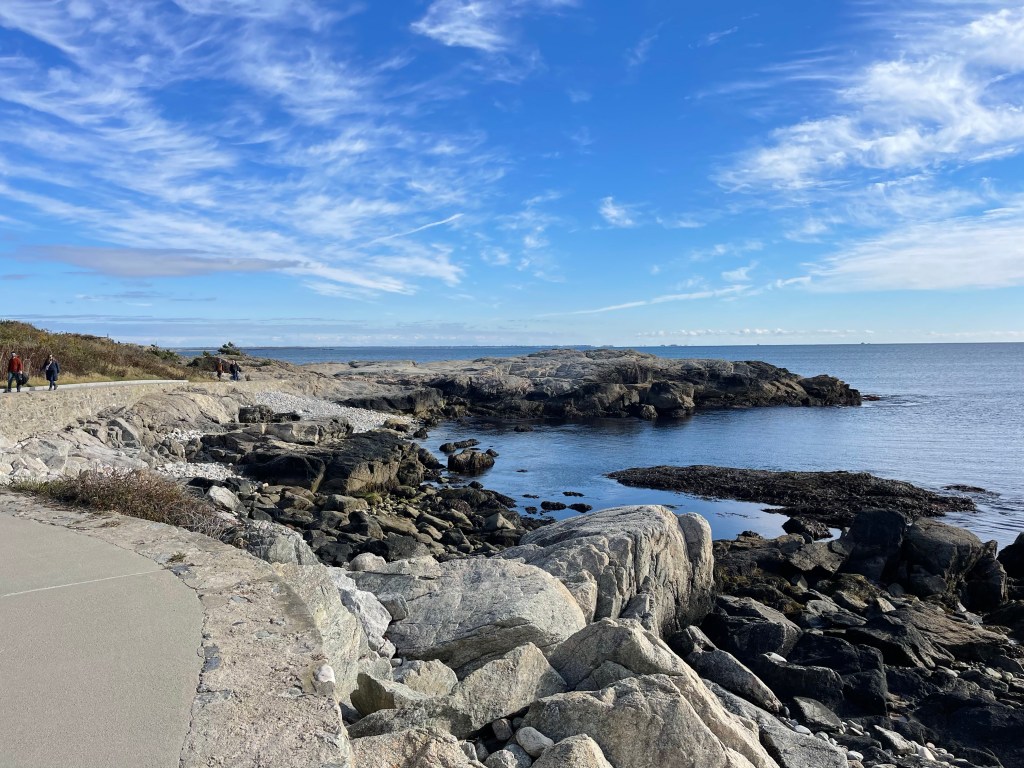
    The strip of land between this collection of Gilded Age and modern-day mansions and the sea is public domain. It’s here that you’ll find the Cliff Walk. Sections of the Cliff Walk are meant for everyone to traverse. You could easily walk or roll a wheelchair on most of the paved sections between Memorial Drive and 40 Steps, the staircase that descends to the ocean. The section between Salve Regina University and The Breakers is equally well-suited for accessibility. Beyond that the path becomes best for the sure-footed. If you don’t love hopping between boulders there are sections of the Cliff Walk that aren’t for you. But there’s something for everyone.

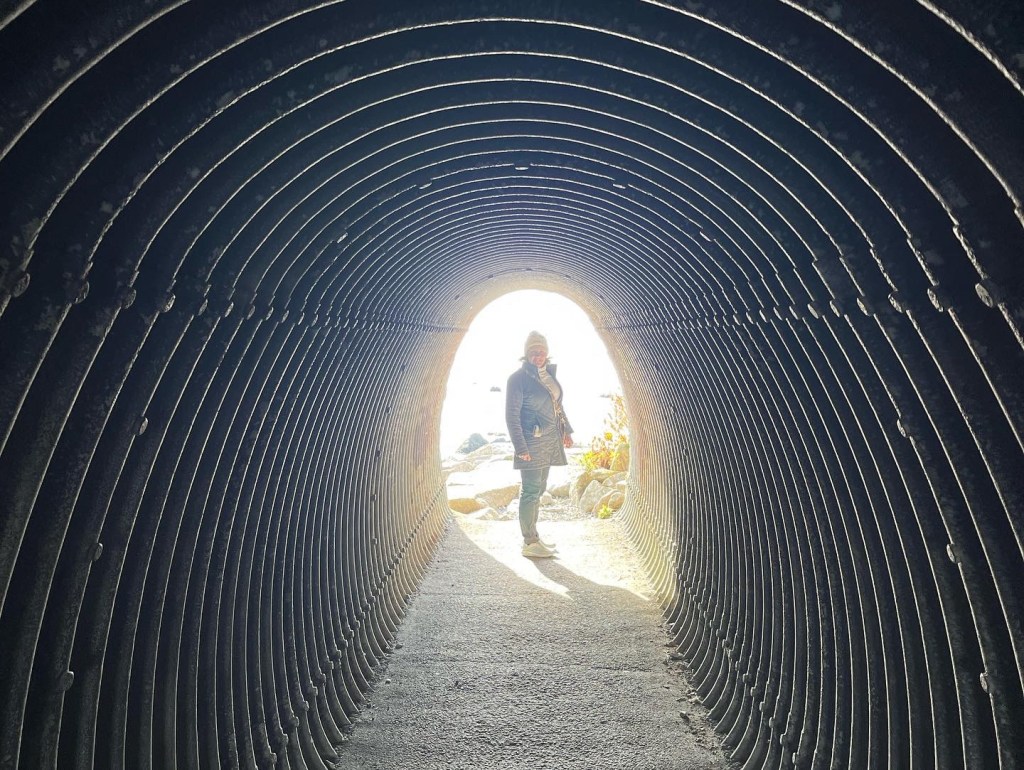
    For me, the magic of the Cliff Walk isn’t just the glimpses of manicured lawns and mansions, it’s the diversity of the walk itself. At times paved walkway, other times rock scramble or beach sand. Even a couple of tunnels to move the public quietly through the historic and high end real estate above. It’s a fascinating place to traverse, taking you from one beach to another past billions of dollars of American wealth.

    The Cliff Walk is officially 3 1/2 miles long, but we extended it to almost 6 miles, from Old Town to the Eaton’s Beach starting point, and from the end at Baily’s Beach along Bellevue Avenue to Rosecliff Mansion. On a crisp and sunny November day it wasn’t crowded but it was surely beautiful. From Rosecliff it’s an easy walk to The Breakers, the largest of the mansions and the flagship of Newport’s Gilded Age “cottages”. The fact that they called them cottages tells you all you need to know about the vast wealth of the families who visited Newport each summer.

    Ultimately, a stay in Newport is never quite long enough. I didn’t have a summer to mingle with the locals, but a mere weekend. The Cliff Walk was a great lynchpin stringing together an epic walking day in the Celestial City. It justified some of the great dining experiences we had, and have us thinking about a return trip sometime soon.

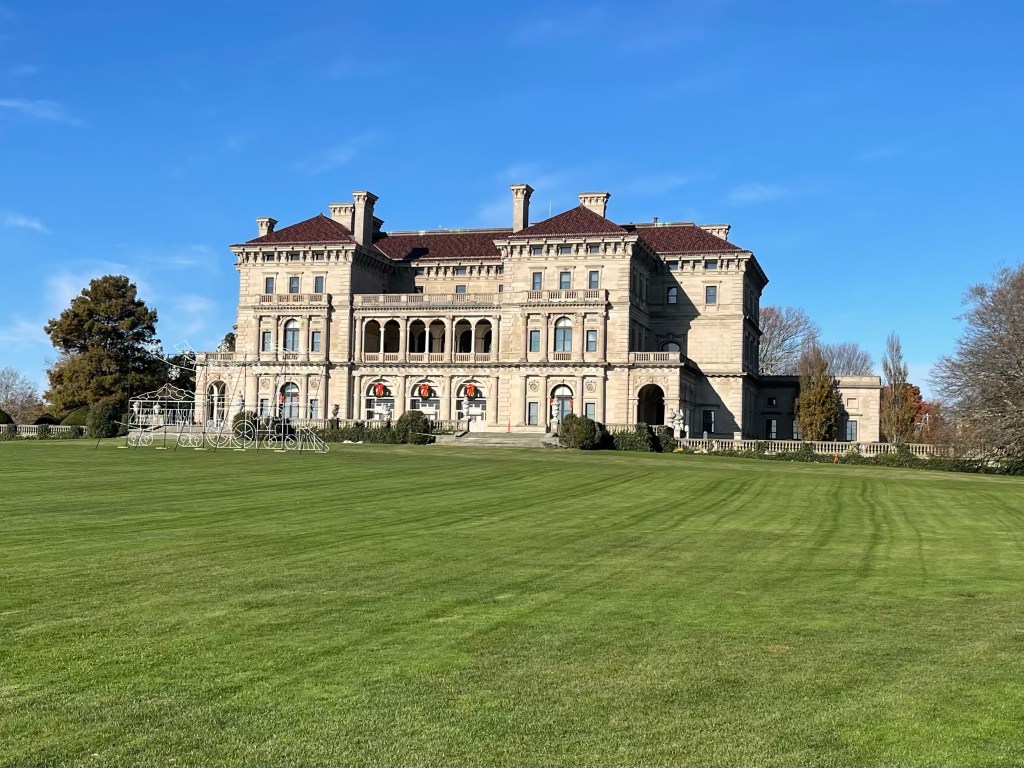
    The Breakers
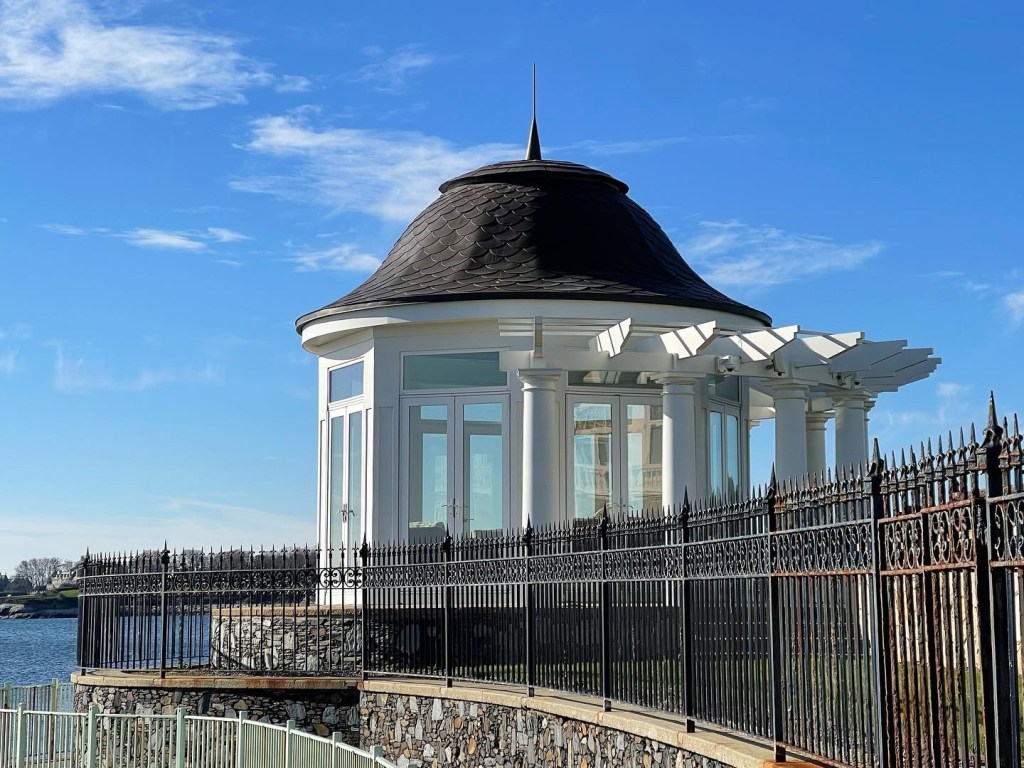
    Beautiful gazebo tucked up tightly against the Cliff Walk
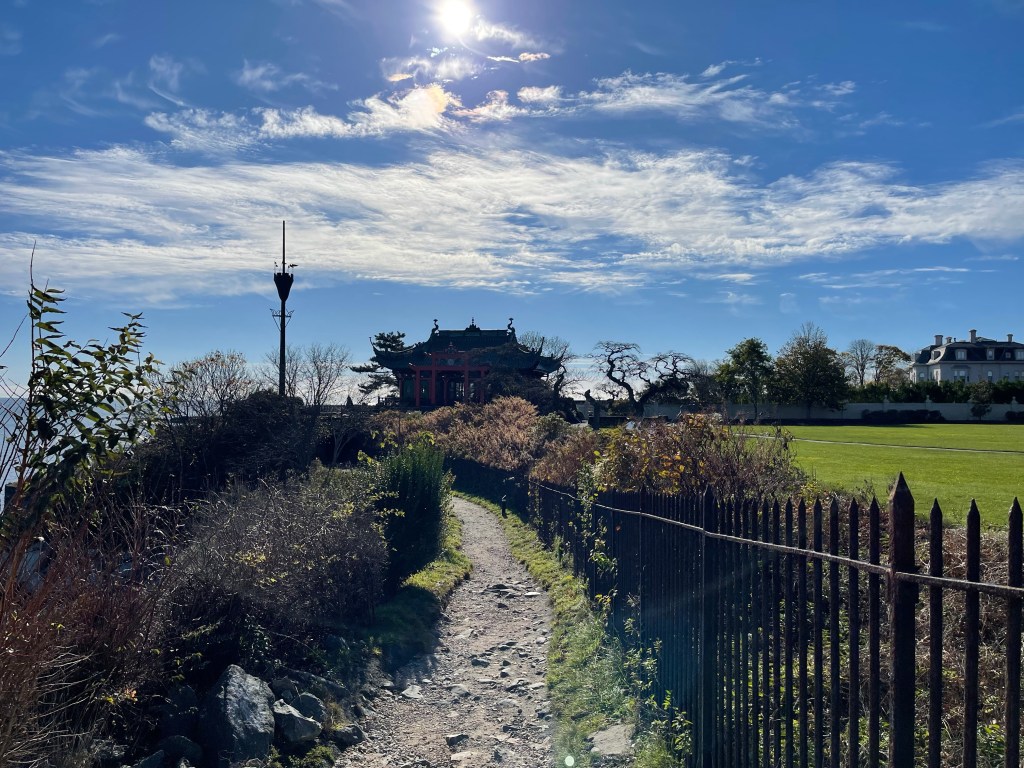
    The Tea House, shadowed by morning sun
    Tunnel under the Tea House
    Not all sections of the Cliff Walk are easy to traverse
    Rugged coastal beauty is everywhere between the Cliff Walk and the sea
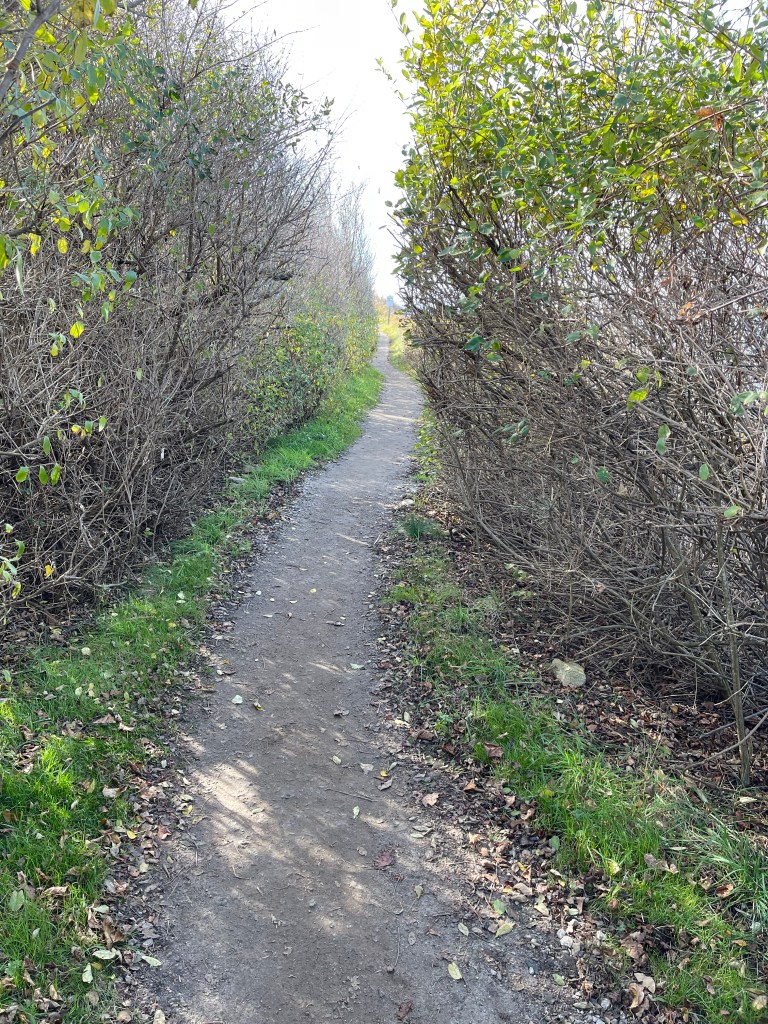
    All kinds of terrain will greet you on your walk
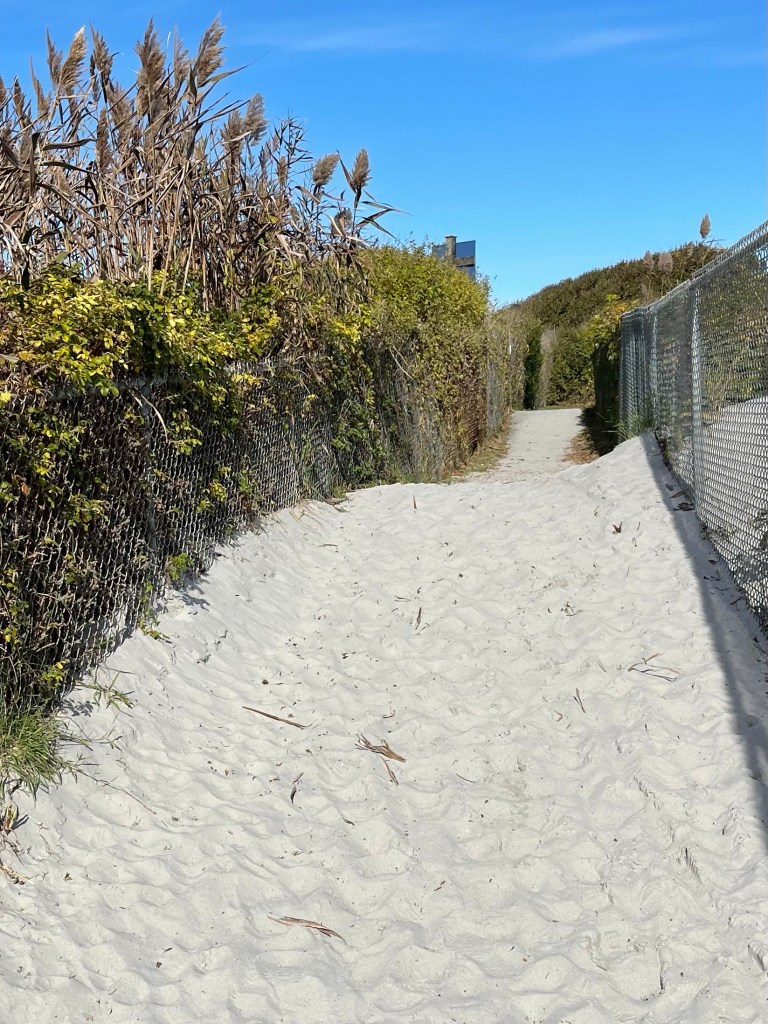
    The finale of the Cliff Walk is a walk through beach sand to the road
  • As Luck Would Have It

    On a visit to the Jefferson Memorial in Washington, DC this week, I found myself in a dark corner of the National Mall with no viable ride sharing pickup location nearby. I’d walked to the monument on dark pathways from the Lincoln Memorial and could always go back in that general direction to pick up a cab or Uber there. Alternatively, I could just start walking towards my hotel in Crystal City and pick up a ride from some business or bright parking lot along the way. I opted for the latter, and descended into yet another adventure.

    You can see the walking path I took with a quick Google map with Jefferson Memorial as the starting point and the Westin hotel in Crystal City as the end point. It looks pretty simple on the computer screen—a basic three mile walk on across the George Mason Bridge to the Mount Vernon Trail, past the airport and you’re basically there. In the daylight I bet it’s a lovely stretch of trail to take, and I’d recommend it in the opposite direction for a morning walk to the National Mall. At 10:30 PM (22:30) it feels entirely different. Once you cross the bridge there’s no illumination on the path until you reach the airport. Cars zipping along the George Washington Memorial Parkway provide ambient light, but also ruin night vision. Planes taking off from Ronald Reagan Washington National Airport launch dramatically overhead, making it hard to hear anything else. In short, situational awareness is greatly inhibited. Throw in a place you’ve never been before and only a map on your phone to guide you and you might begin to understand the potential sketchiness of the walk.

    Perhaps I should have turned back towards the National Mall, perhaps I should have walked with others. Perhaps a strong flashlight or headlamp might have helped, had I the foresight to bring them. Then again, perhaps just staying in my safe hotel room when it got dark out may have been the answer. But we ought to embrace whatever adventure we create for ourselves and make the most of it. Not in a reckless fashion, but rather as open-minded seekers of a larger life.

    The thing is, luck would have it that I made it from point A to point B with nothing but a good story to tell. Luck might also have thrown a mugger at me, or a sprained ankle on the darkest stretch of trail far from help. Luck might have had my phone die at an inopportune time. Luck is not something to rely upon. We must rely upon ourselves.

    Whatever we do, whether it’s walking alone in some dark and isolated place or stepping into a crowded, target-rich hostile environment in a city we aren’t familiar with, we must keep our wits about us. Just as we can’t have good situational awareness if we’re distracted with our phone, we can’t make good decisions about what to do next when we stumble into potential danger if we panic. So take a deep breath, assess the situation and choose the best option available at the moment. That’s generally where our luck begins to improve.

  • An Evening Walk in Washington, DC

    America’s capital city is beautiful in the daylight, but it sparkles at night. This was my feeling as I departed a dinner and walked seven looping miles around the National Mall back to my hotel instead of using Uber. Some of the employees of Washington, DC disappoint Americans all the time, but its not the city’s fault, it’s those darned politicians, lobbyists and bureaucrats. The walk was magical, with a little drama mixed in for good measure.

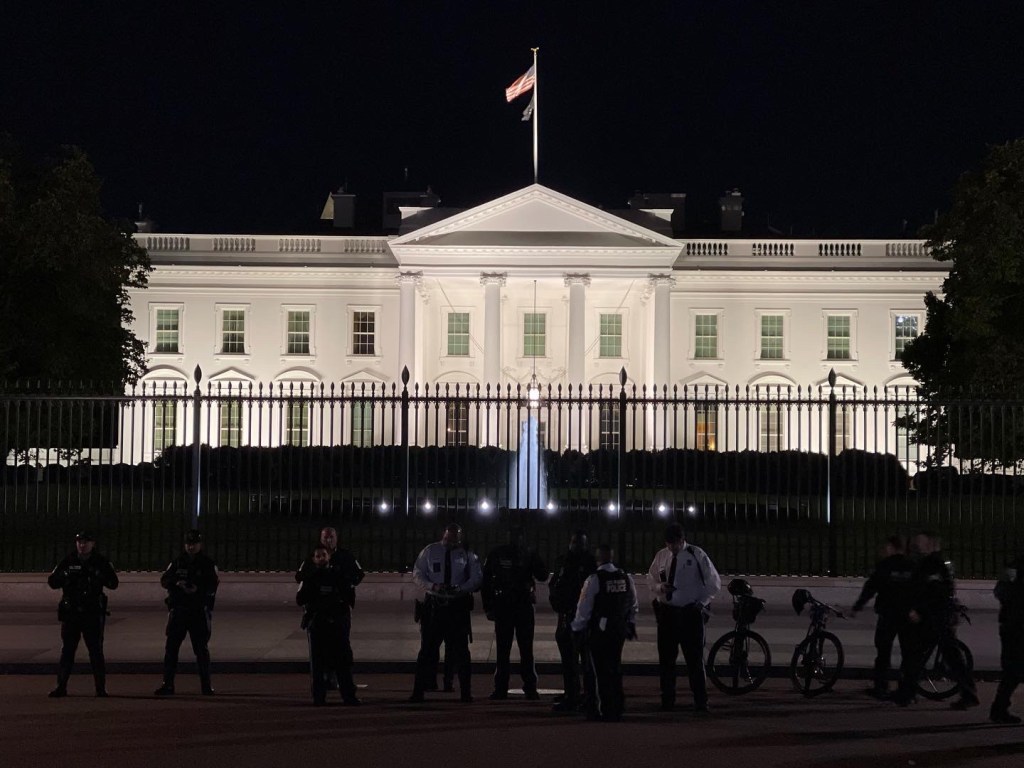
    The walk began with a quick stroll to the White House, or rather, as close as one can get to the White House without a pass. For this walker that meant Lafayette Square, directly across Pennsylvania Avenue from the White House. Unfortunately, world events had that location full of Palestinians protesting boisterously, with a line of police officers lining Pennsylvania Avenue between them and the President’s place of residence. Not to be deterred, I found myself a spot between the protesters and the barricades to snap a picture of the White House and quickly got myself out of there.

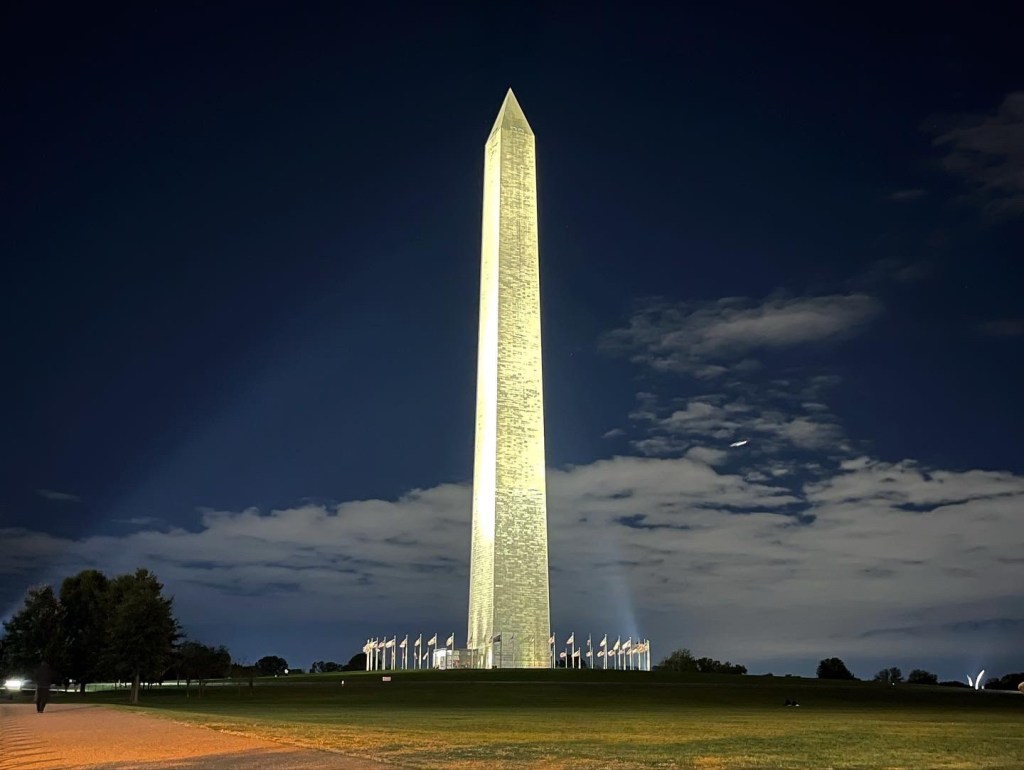
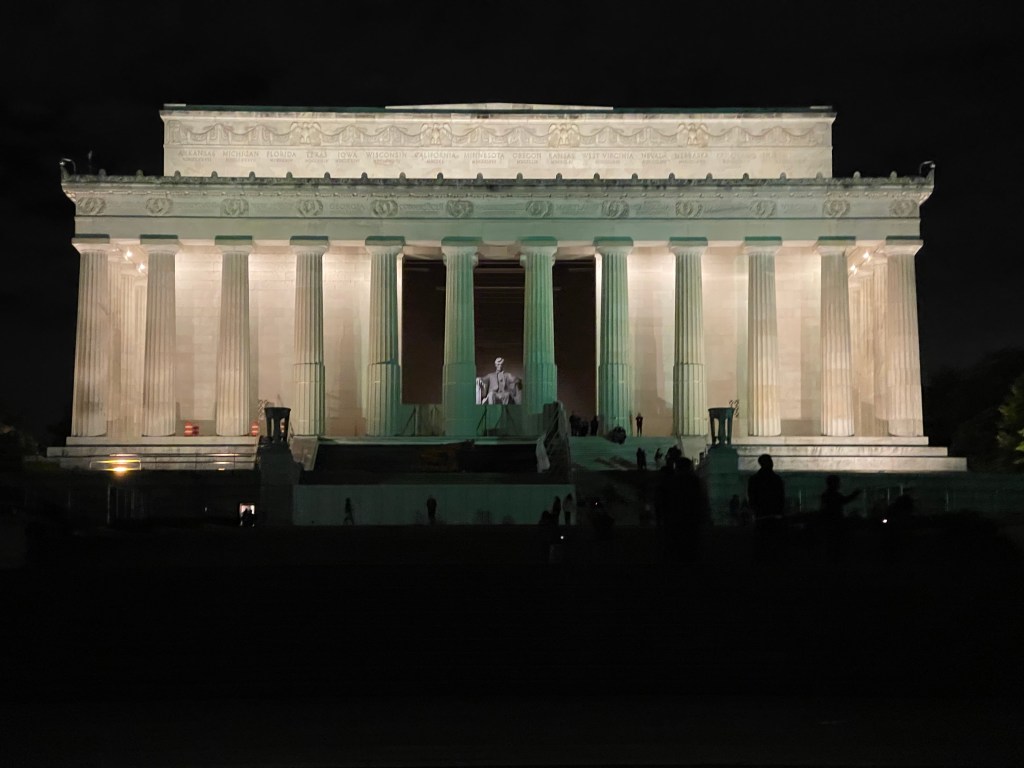
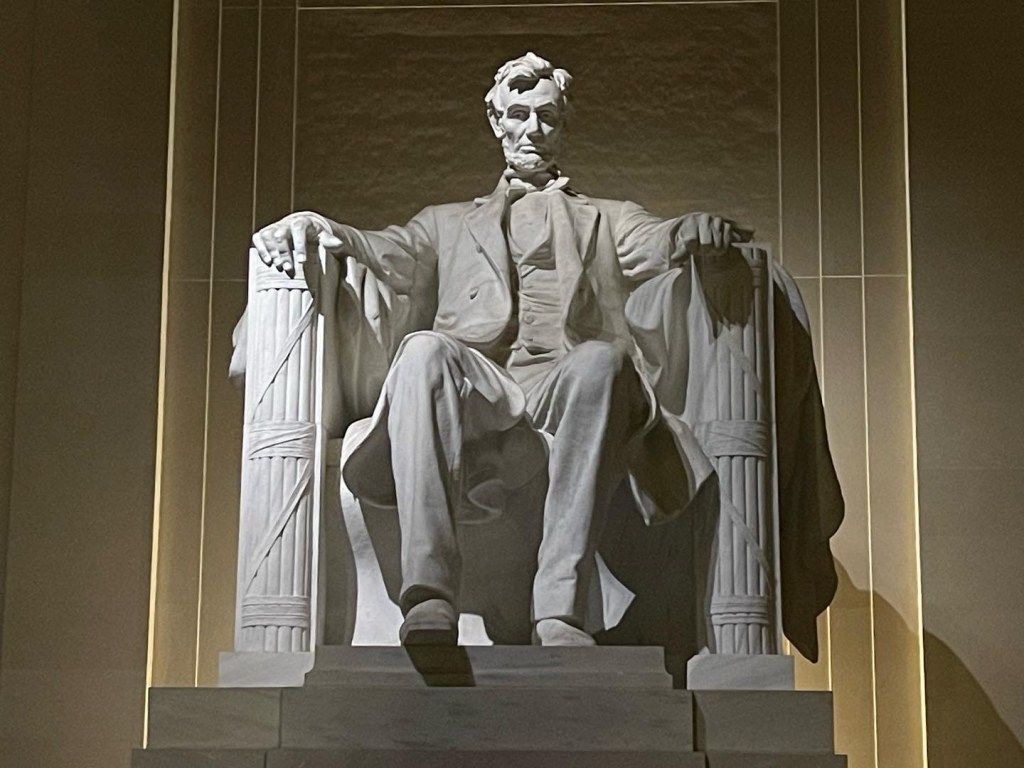
    After deciding it was impractical to head towards the US Capital I headed directly for the big Presidential Memorials: Washington, Lincoln, and Jefferson. Each is impressive, with the Washington Memorial the appropriate central point of the National Mall and the Lincoln Memorial the Daniel Chester French masterpiece must-see with the crowd to show it. I can’t come to Washington, DC and not visit Abe. Lingering a bit, I take the time to read the Gettysburg Address engraved on the wall. If I did nothing else in Washington I would visit this place whenever possible.

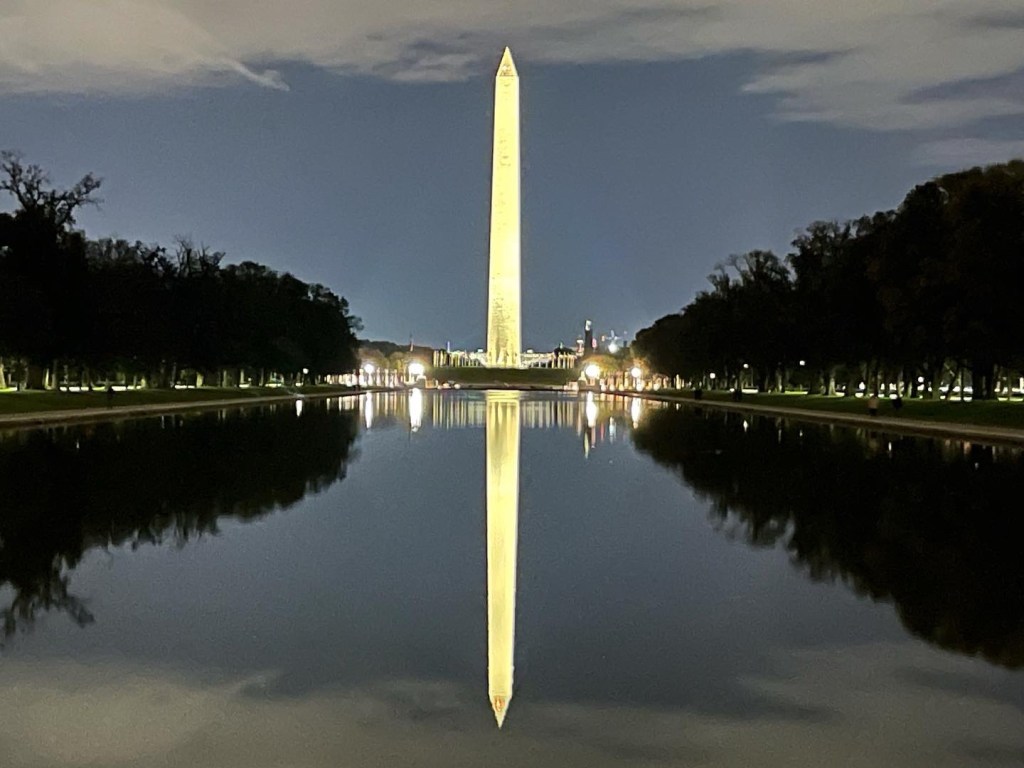
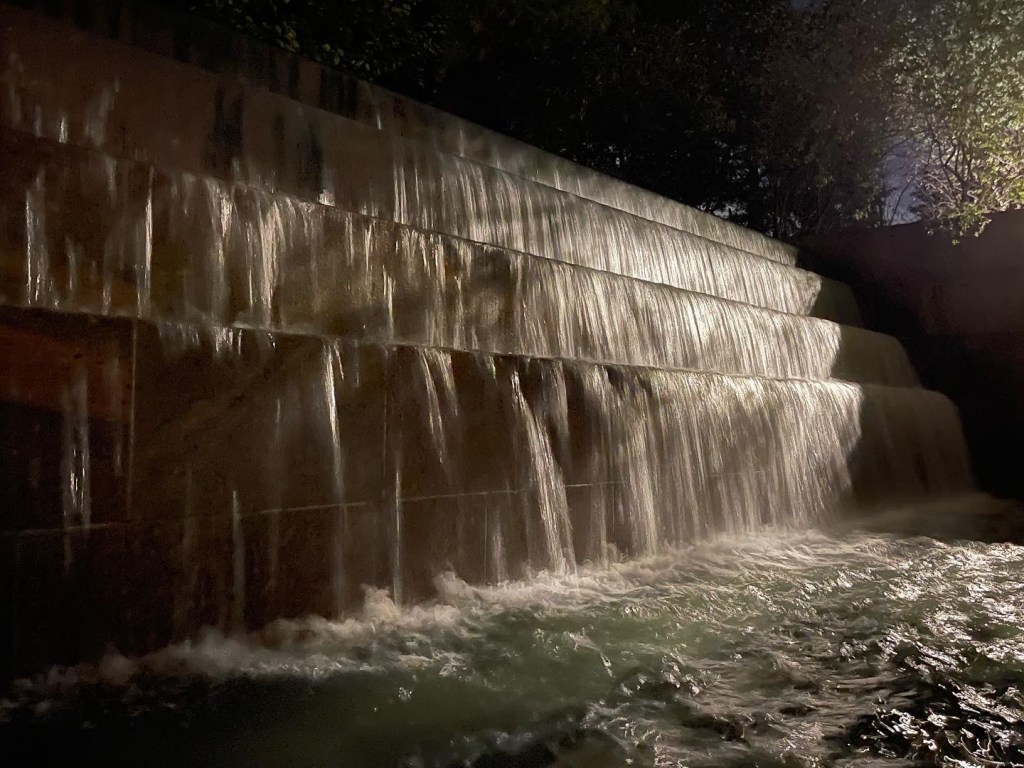
    After Lincoln there’s a lovely photo opportunity at the Lincoln Memorial Reflecting Pool with the Washington Memorial rising behind it. Nearby are the Vietnam and Korean War Memorials, both striking at night. I paid my respects to an uncle who’s name is engraved in the latter wall and moved on to the Martin Luther King, Jr. Memorial overlooking The Basin. Not far from this is the Franklin Delano Roosevelt Memorial. It’s quietly impressive at night, with the bare minimum of lighting and cascading water filling the senses.

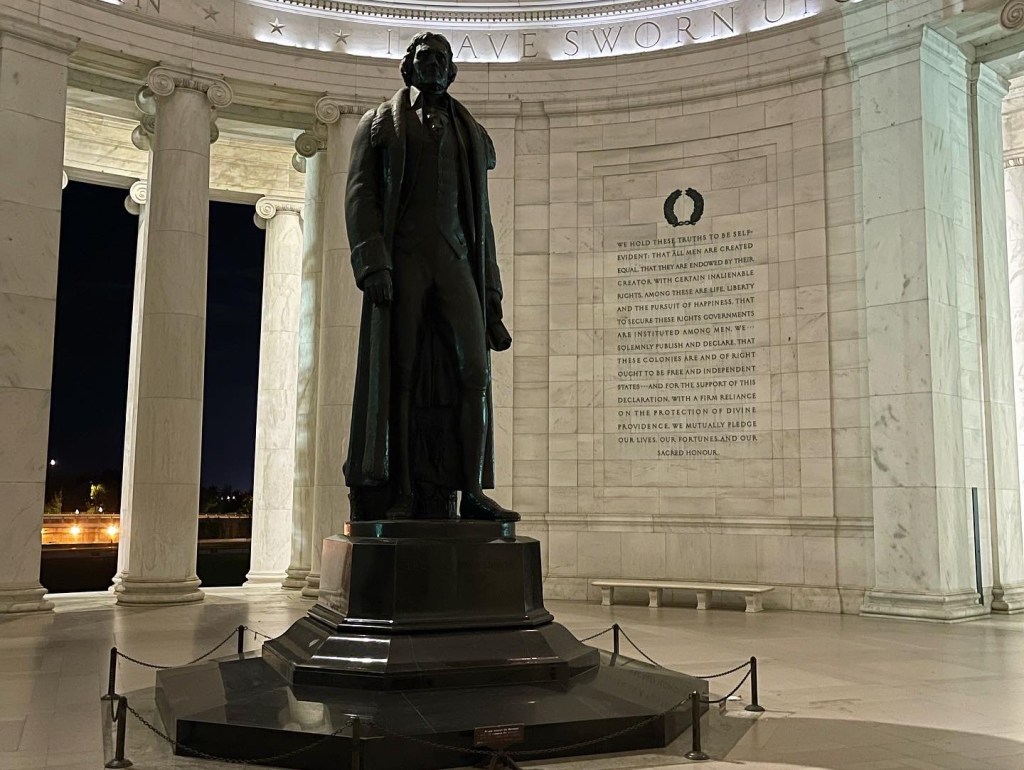
    The Jefferson Memorial is quietly impressive, but it’s no Lincoln Memorial. One must commit to visiting it, especially at night. The walk along The Basin at night is dark and lonely. As a tall man I don’t think of myself as vulnerable in situations like that, but I maintained situational awareness nonetheless. The National Mall area is generally pretty safe but one must always be aware. I would need that awareness again later in the night, but that’s a blog post for another day.

    There were several other Memorials and Monuments skipped on this walk depending on the path chosen. The World War II Memorial is particularly impressive, and some other sites were just far enough off course to warrant a visit another time. But the highlights were covered on a wonderful walk in America’s capital city.

  • All or Nothing at All

    All or nothing at all
    If it’s love, there ain’t no in between
    Why begin then cry for something that might have been?
    No, I’d rather, rather have nothing at all
    — Frank Sinatra, All or Nothing at All

    We get busy, don’t we? We pour ourselves into our work, into our passions, and forget that there are other things that are important for us to do, to accomplish, to experience. Life is a series of tradeoffs and compromises, with a few things dominating our lives in the uncompromising way that identity shades the lenses through which we see the world.

    A month ago I finished a fairly intense burst of high-mileage walking, and then simply stopped. I’ve done this before, with rowing a million meters, with rowing itself, and with other passions that mattered a great deal to complete in the season that they were essential and then became yesterday’s news. It’s either a symptom of being focused on accomplishing what the day at hand demands (generous), or a mind that prefers to stick with one big thing at a time (more likely). It’s an all or nothing at all way of walking through the world.

    “You have feet, and if you don’t make use of them it’s a loss and a waste. Someone is telling you now so that in the future you cannot say: “No one told me that it was important to enjoy using my feet.” — Thích Nhất Hạnh, How to Walk (Mindfulness Essentials, #4)

    The thing is, that walking was serving me quite well, but I just sort of got busy with other things. And suddenly a month flies by and as Thích Nhất Hạnh observed, it becomes a loss and a waste for having not continued to ride the momentum of the moment. And so it must begin again, instead of having simply continued. The lesson is to always lean into the positive momentum in your life.

    We must live our lives as if this time was all we had, for soon it will be nothing at all. Distractions be damned, enjoy the things that fill our days with joy and our future with an abundance of health and energy. We must step to it already.

  • The Freedom of Inaction

    “Nature knows no pause in progress and development, and attaches her curse on all inaction.” — Johann Wolfgang von Goethe

    “The human race is a monotonous affair. Most people spend the greatest part of their time working in order to live, and what little freedom remains so fills them with fear that they seek out any and every means to be rid of it.” — Johann Wolfgang von Goethe

    The 28th of August is Goethe’s birthday, so I thought it fitting to reflect on two quotes that, on the face of it, seem to contradict each other. Quotes have a way of expressing what you want them to, without the depth and nuance of the longer work they’re drawn from. We live in a soundbites culture, after all, and the lede is all some people want to read. We know Goethe went far deeper, and owe it to ourselves to jump into the deep end ourselves, don’t we?

    On the one hand, we know it to be true that momentum is sustained by continuous action (Stephen Covey would have said pushing the flywheel), yet on the other know that rest is as essential to our long term wellbeing as action is(Covey’s sharpening the saw). They don’t contradict, they aggregate. As with everything else in life, balance is the key.

    As I close out the final miles of a walking challenge I made for myself this summer, I see the cumulative benefit of it in better fitness even as I feel the soreness from some long walks to close out the goal. We know when we ought to rest more, and ignore it at our peril. This is true in everything. Taking some time off from work last week, I anticipated long walks balanced by long stints on the beach diving into the stack of books I’d been collecting for the occasion. That beach time largely evaporated as I conceded time to projects that simply had to get done. The feeling of watching the week slip away with most of that stack of books unread was akin to feeling like you missed your flight as it departed the gate.

    The thing is, there’s freedom in inaction. Deliberate down time without distraction forces us to sort things out in both body and spirit, and clear the way for the next phase of action to follow. That compulsion to do more instead of embracing essential rest eventually catches up to us. I return from time off feeling there was unfinished business, unlike a few weeks ago when sailing, where plugging in or doing projects simply weren’t options. So it seems the key for relaxation is to eliminate any means to rid ourselves of the freedom of inaction. This shouldn’t be physically removing ourselves from task mania, but instead mentally doing so. Just say no to the task master inside.

    Happy Birthday Johann. I’ll try to relax a bit today in your honor. But there’s work to do before that. You know: no pause in progress and development, and all that.

  • A Soggy Blessing

    We didn’t mean to walk in the rain. We’d hoped to get it in before the skies opened up, but our timing proved wrong. Amor fati. We accepted our fate and carried on.

    The drizzle soon turned to a shower, and then a downpour. She shook off the water accumulating on her coat and looked back at me, as if to say, “Have we had enough yet?” “Not quite yet”, I replied. Attempt after attempt to lap up muddy puddle water were repelled. Rebellious crossing back and forth, left to right were corrected. She likes to find her boundaries, and I reliably inform her of what we can and cannot do. I’m no pushover, but also no Drill Sargent. She has an acceptable margin of error for puppy curiosity.

    By the time we turned back the rain had slowed to a drizzle, fooling me into believing that it was done. No such luck: it began to pour again, even heavier than before. We ducked under the tree canopy lining the side of the gravel road for cover. She turned to look at me, thinking me crazy perhaps. “It’s only water”, I reminded her again. Or was I reminding myself? I thought of those days rowing in weather like this, accumulating water sloshing around in the bottom of the hull, water that would pour over our heads when we lifted the rowing shell overhead after practice. What was it Odysseus said? “Be still, my heart; thou hast known worse than this.“

    The thing is, a puppy’s first walk in the rain is a thing to behold. We could dwell on our discomforts in the moment, or let them roll off our skin in favor of savoring the experience. Each walk is a new experience for a puppy, and their discovery is ours too. Had it been raining before we had started our walk we might never gone out. So perhaps it was a soggy blessing in disguise; a chance to see the world from a different perspective. Toweling off the excess water when we returned home, I reminded the puppy that she too was a soggy blessing.

  • Breaking It Down

    “It’s your road and yours alone. Others may walk it with you, but no one can walk it for you.” — Rumi

    When you break down distances into bite-sized chunks, they don’t seem all that bad. To walk 250 miles over the course of roughly two months I needed to average 35 miles per week, or 5 miles per day. Put another way, That’s roughly 10,000 steps above and beyond the normal 10,000 steps we’re told we need to average in a day. The entire point of the challenge wasn’t to be average, but to stretch my comfort zone.

    Objective well on the way to being achieved, but to what end? What is the “why?” in any new habit we develop? It’s the “what is the why not?” that prompts resistance to accomplishing an otherwise worthy goal. Carrots and sticks, internalized. So what drives us anyway?

    Any habit begins with a compelling why. That why is derived from a commitment to something larger than ourselves and a vision of who we want to be. We cast votes for our identity, as James Clear puts it. I’m walking those steps for a good cause (a worthy charity) and a belief that I’m a person who follows through on my commitments.

    The question is, will the habit stick after the commitment is honored? After all, it’s happened before, once rowing a million meters for a worthy cause and taking time off afterwards that quickly chilled any momentum in the habit. Knowing that, I look at this period of increased activity differently. The trick is to keep doing the habit, even if it’s a greatly reduced workload. Breaking it down is a good starting point. Just keep doing it, but in smaller bites.

  • Dog Days & Lily Ponds

    August of another summer, and once again
    I am drinking the sun
    and the lilies again are spread across the water.
    I know now what they want is to touch each other.

    — Mary Oliver, The Pond

    As we head into the dog days of summer, I find myself with a good dog to share walks with. Puppy walks are wonderful too, but the longer walks are mine alone. Walking for distance solves many problems for me: general fitness and quality time with the occasional long-form podcast, but mostly it offers the opportunity to reacquaint myself with the world.

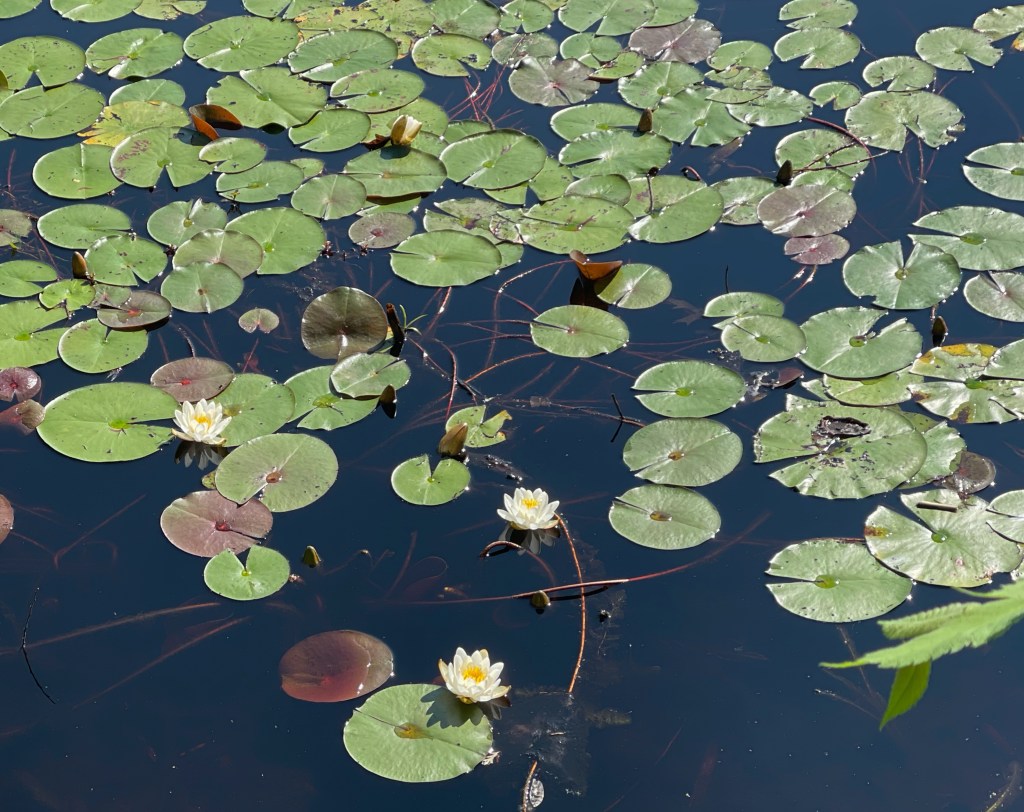
    One of my favorite things about this time of year is the abundance of flowers dotting the lilies in the ponds I walk past. Each is a marvel, and each is just far enough away that I can’t possibly get a good picture with my phone’s camera. But that’s just the way it is. After all, this is a written blog, not a first-rate photography blog.

    About that drinking the sun business Mary Oliver speaks of in her dance with words: We haven’t had all that much of it this summer in the northeast. Not at the frequency that we wait for all winter, anyway. So on a stunningly beautiful weekend what are we to do but get out in it? To be with others outside invites conversation and smiles, and like the lilies, we are drawn to each other on warm summer days. We want these days to last forever, but know they’ll be gone too soon. Savoring summer days with all our might is the very best way to pass this time. So forgive me if I step outside once again.

  • Our Most Important Things

    So easily forgotten are the most important things
    Like the melody and the moonlight in your eyes
    And a song that lasts forever, keeps on gettin’ better
    All the time
    — Keb’ Mo, Life Is Beautiful

    Walking a lot of miles lately, I’ve come to see the town I live in at ground level, turning corners into places I haven’t been in a long time, or ever before. I see the changing nature of things, and I’m reminded of a time not so long ago when it was my own children at beginner’s summer soccer camp or at baseball practice. These stages of life fly by quickly, but the next generation steps right on to that field to build someone else’s memories. Our own will inevitably fade, perhaps, but the foundation laid in time and presence is strong.

    I walk to cover miles, deliberate and at the fastest pace I can sustain for 5-7 miles. I’m not a speed walker but I have a long stride that helps when the aim is fitness and mileage. Countering this pace, a couple of times a day I take the new puppy for a walk. She’s finding her courage in a strange new world, and the pace is much slower than my normal stride. My favorite Navy pilot once told me that when you’re walking a dog you aren’t walking, the dog is walking. You’re just keeping it company while it experiences the world. So rushing that experience does the dog a disservice, but it does for us too. Like those children growing up way too quickly if we aren’t paying attention, puppies grow up too. Embrace the pace you find yourself in, for one day it will change again.

    For all the changes happening all around us, some things remain the same. It’s easy to forget the people and routines that hold us to solid ground when life does cartwheels. They offer something tangible and meaningful for us in good times and bad, through the dizzying pace of rapid change and the dullest days of stagnation and limited progress. We ought to celebrate our quiet anchors, even as we explore the changes life takes us through. They are our most important things as we sort out the changes and find our stride for what comes next.

  • To Be Open

    “Few people know how to take a walk. The qualifications are endurance, plain clothes, old shoes, an eye for nature, good humor, vast curiosity, good speech, good silence and nothing too much.” ― Ralph Waldo Emerson

    I set out on an early morning walk fully prepared to listen to a podcast through noise-cancelling headphones for the bulk of the five miles I’d planned to traverse. Walking down the driveway, I heard the distinct song of a cardinal greeting the morning. Listening more carefully, I heard almost nothing else beyond the cardinal. With such clear guidance, I stuffed the earbuds in my pocket and opted to take in the world instead of block it out.

    A proper walk ought to be simplified. Without earbuds I could hear the approach of cars, industrious squirrels harvesting acorns high above, and feel the world around me in a way not possible when you’re focused on a podcast or your favorite playlist. There’s a place for multi-tasking with earbuds, but there are times when bringing your ears to the walk offers a greater overall experience.

    All of this seems obvious on a hike or a walk through a place we’re visiting for the first time. Could you imagine walking through Edinburgh or Amsterdam or across a stunning ridgeline for the very first time wearing earbuds? Neither can I. We tend to save the addition of media for the mundane. But what if we sought out something new in each step? This is only possible when we’re fully present.

    The thing is, it’s not just walking, is it? Within each moment we have the choice to block out the world or let it in. What we do in that moment influences our now and our accumulation of experiences. We don’t just learn how to live, we learn how to live optimally. To be open to the world allows us to receive more than we otherwise might have.