Category: Walking

  • A Walk Around the Timeless Kenoza Lake

    Kenoza! O’er no sweeter lake
    Shall morning break, or moon-cloud sail,
    No lighter wave than thine shall take
    The sunset’s golden veil.
    — John Greenleaf Whittier, Kenoza

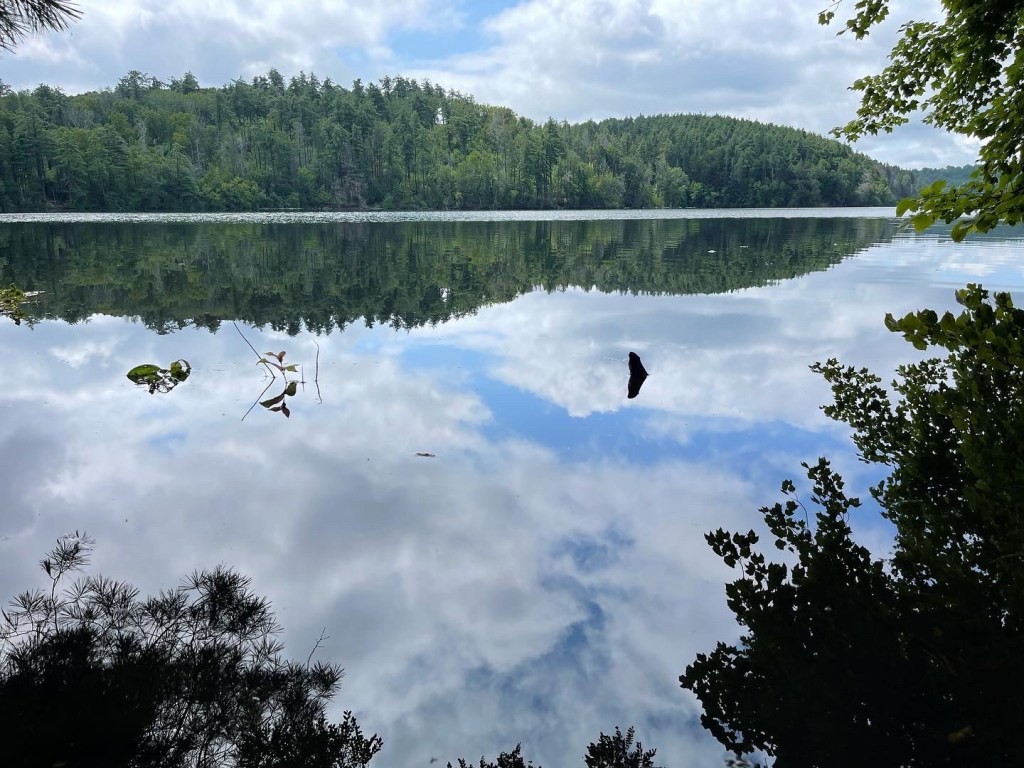
    Whittier wrote this poem for the dedication for a beautiful lake in Haverhill, Massachusetts that was to be named Kenoza Lake. Kenoza means “lake of the pickerel” in the native Algonquian language, and in 1859 the locals formalized the name. There is irony in Native American place names living on when the people who’s language was being used for those names were swept away, but that’s everywhere in the world. The names always betray the past if you dig deeply enough.

    Whittier was an abolitionist, and likely saw the plight of the Native Americans who once lived here with a sympathetic eye. He once lived just a couple of miles away from Kenoza Lake in a quiet farmhouse. His farm looks very much the same today as it did then. Importantly, Kenoza itself also remains pristine, today a protected reservoir that supplies drinking water to the City of Haverhill. That lends a timelessness to the lake and surrounding land that’s impossible not to feel as you walk the grounds.

    The land has transformed over time. It was once deep forest, became farmland (like so much of America in colonial times) and eventually returned to forest again. That the land wasn’t developed required some luck. Dr. James R. Nichols, a wealthy scientist who made his fortune developing chemical fertilizers, acquired the farmland and set about building a castle for himself on top of a hill with views of three states. He called the place “Winnekenni”, which means “very beautiful” in Algonquian. Walking the property, today maintained by the City of Haverhill as parkland and a natural buffer for the reservoir, feels like you’ve been transported back to another time.

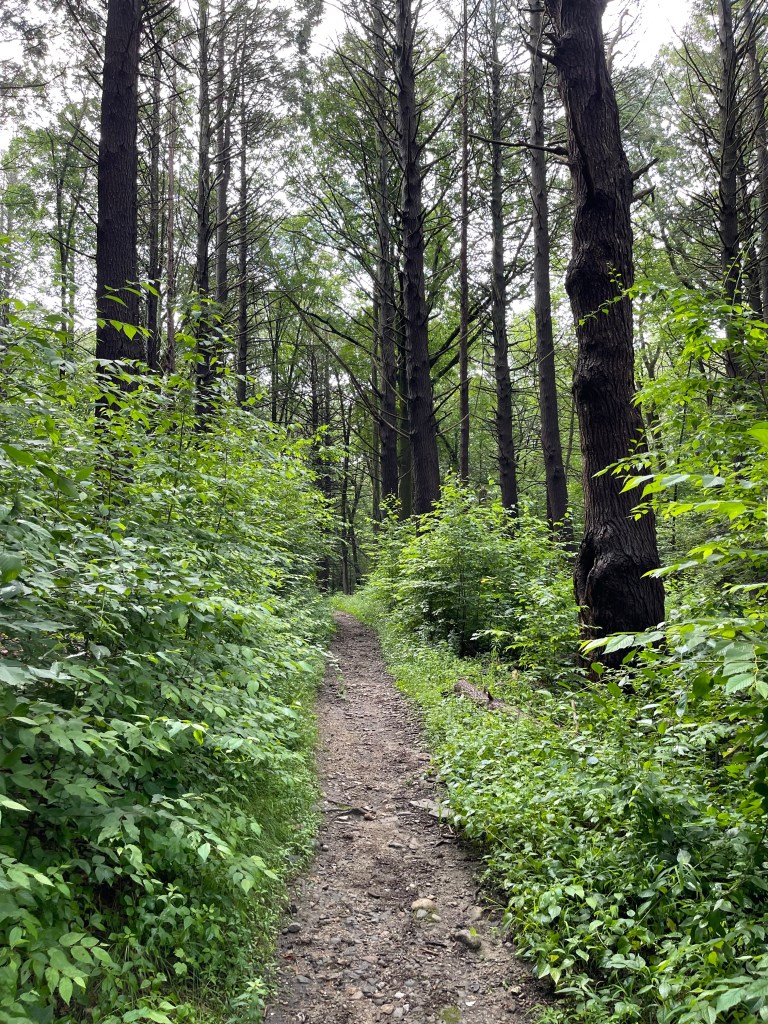
    There is a network of trails throughout the the park, and you can manage a great step count by doing the entire loop around the lake. They range from gravel roads to single track paths squeezed on both sides by abundant undergrowth(including, alas, poison ivy). The trails are well-marked and it’s very difficult to get lost, as you always have the lake to show you your progress. We encountered plenty of walkers, horseback riders and mountain bikers on the trek around the lake, but never felt it was overcrowded. Indeed, on the single track we saw only one other person, a trail runner who quickly distanced himself from us.

    Reservoirs, like graveyards, are time machines back to the days they were established. The lay of the land remains largely as it was then, and offers an opportunity to hear the whispers of history. It’s relatively easy to imagine how this place looked for Dr. Nichols or John Greenleaf Whittier because it’s largely that same place today: timeless, and beautiful.

    Kenoza Lake
    Winnekenni Castle
    The lake is almost always in view
    Local resident
    Very large Bondarzewiaceae fungi enjoying the wet summer
    Single track trail
    One of several memorials in the park
  • This is Bliss

    “I believe that happiness is, it’s really a default state. It’s what’s there when you remove the sense that something is missing in your life. We are highly judgmental, survival, and replication machines. We are constantly walking around thinking I need this, I need that, trapped in the web of desires. Happiness is that state when nothing is missing. When nothing is missing, your mind shuts down and your mind stops running into the future or running into the past to regret something or to plan something. In that absence for a moment, you have internal silence. When you have internal silence, then you are content and you are happy.” — Naval Ravikant, Naval Ravikant: The Angel Philosopher (2017) [The Knowledge Project Ep. #171]

    I have people in my life who believe that I’m not happy deep down inside because I’m not out there chasing my professed dreams in the world. I contend that I’m just as happy taking a walk around the block as I am visiting some faraway place I’ve had on some bucket list. Happiness is a state we are either in or not in, based entirely on how we view the moment. My default, thankfully, is a state of happiness. That doesn’t mean I don’t stray into the desire for more—we all do that on occasion (and some of us dare to write about it). That desire for more disrupts our current state, upsetting the apple cart of happiness. Sometimes that’s necessary for growth, and sometimes it’s nothing but a distraction from the moment. Either way it’s a state change.

    I’ve been chasing a state change all of my life. Maybe you have as well. But nowadays I’m less into chasing and more into embracing the current state. Writing and creative output bring me to the moment very quickly. I walk and row more, which each lend themselves to being present for the next step or stroke, respectively. I’m equally present in the garden: when I’m dead-heading the geraniums or pulling weeds I’m very much in the moment. This is a state of presence the arrival in the internal silence Naval speaks of. This is bliss.

    The thing is, when we’re declaring our desire to travel or experience something outside of the moment we’re in, we’ve noticed something missing. In doing so, we’re missing the moment. If comparison is the thief of joy, then comparing our current state against some future or past state where we are somewhere else is a happiness remover. Sometimes we might need that kick in the ass: I’m moving more because I was unhappy being lazy and inactive. By being active again I’ve rediscovered a level of happiness that wasn’t there before. But if I start comparing my active body of today against that active body of peak fitness at 22, I may find my happiness knocked down a notch. All that really matters is the next step, the next stroke, and knowing this is the path for us now.

    Direction matters a great deal in reaching bliss, but it doesn’t infer we’ve reached our destination, only that we’re progressing there. We must remember that “there” is just a compass heading. Here is where living happens.

  • Mingling with Do You Ever

    There is a pleasure in the pathless woods,
    There is a rapture on the lonely shore,
    There is society, where none intrudes,
    By the deep Sea, and music in its roar:
    I love not Man the less, but Nature more,
    From these our interviews, in which I steal
    From all I may be, or have been before,
    To mingle with the Universe, and feel
    What I can ne’er express, yet cannot all conceal.
    — Lord Byron, Childe Harold’s Pilgrimage

    Do you ever look at the surface of a pond or pool and wonder at the gumption of those who would breach the surface and enter another world? Dolphins and whales leap from the deep and experience our world for a brief moment. Humans dive into water and recall deep within the connection. There’s a calling in water that draws us there. Those who live there apparently seek time in our world as well. This is as it should be, for we are all of the water.

    Do you ever feel the presence of the trees when you walk deep in the woods? The ancients, not the brash young things fighting for a place in this world. Old growth trees know things we’ll never know in our brief lifetime. Rooted deeply into the past, reaching into the future, grounded by a sense of place, trees are the life force of the forest. When we cut down forests we rob ourselves and generations to follow of all of these things.

    Do you ever spend time above treeline, looking at clouds mingling with the lower peaks below you. Are we meant to be in such places where even the wild things steer clear? Walking in such places brings us closer to the universe, and to the heights we may aspire to in our quiet moments of bold reflection.

    We all want a sense of timelessness and a place with the infinite. We forget sometimes that we’re already a part of it. We can’t see the forest for the trees. We must break the surface of self-absorption and see what we’ve been missing deep within ourselves. Doing more of the “do you ever” things is a step in the right direction.

  • The Traveling Stoic Meets a Flight Delay

    “Develop an interest in life as you see it; the people, things, literature, music – the world is so rich, simply throbbing with rich treasures, beautiful souls and interesting people. Forget yourself.” — Henry Miller

    There’s no better time to practice stoicism than during business travel using the uniquely out-of-your-own-control limbo of domestic flights. Short delays become long delays, longer delays become cancellations, soon you begin to feel that creeping realization that we’re all just pawns on a chessboard. Who dreamed up this hellscape anyway?

    Amor fati. This is the moment when a deep breath and stepping outside ourselves clarifies. After all, enjoying life, even the grind of travel going badly, begins with knowing it’s all a game. If the why isn’t compelling enough to stay in this particular game, change the game. This applies equally well to the long term as the short. Life is altogether too brief to linger longer than absolutely necessary in the inconsequential.

    Walking helps more than visiting the bar. Seeing how many steps you can get in pulling your carry-on throughout the limits the airport sets for you is a more productive game than sampling the drink menu. Seeing how other people react to the same challenges you’re presented with is interesting, but who wants to live constantly comparing yourself to others? It’s better to take a walk, removing yourself entirely from that part of the chessboard to see how the game is going elsewhere. This offers an immediate change of state, both in what you pay attention to and the changes a bit of exercise offers.

    The things you see in an airport terminal when you have the time to wander can be fascinating…. Or at least interesting enough to make you forget where you could have been otherwise. The thing is, we are here, now, in whatever circumstances life throws at us. So buckle up and enjoy the ride.

  • Observations From a 20K Day

    Sunday is supposed to be a day of rest, and I’d planned to do just that. There shall be no hiking or waterfall chasing for you, I told myself. But when you believe that we aren’t built to be sedentary beings, eventually those rigid thoughts of who we ought to be evolve into action. I wrapped my mind around 20,000 steps as a goal for the day, no matter what. What is the first rule with any goal? Putting ourselves in the best position to achieve that goal.

    The path to a 20K day really began a few years back, when I decided I was going to buy a push mower and walk the lawn instead of driving around on it. Would it be nice to sit on a cushy seat with a cup holder? Of course! But my work has me sitting entirely too much already. Mowing, trimming and leaf blowing the yard easily knocks off 4000 steps in roughly an hour. Is that the equivalent of hiking a 4000 foot mountain? Of course not, but it’s a starting point for an active lifestyle, and a head-start towards my activity goal for the day.

    I’ve hit 20K just doing yard work, but a change of scenery was in order. On a beautiful Sunday afternoon there were many choices available, but I opted for the local rail trail. As with beaches, I favor the rail trail when few people venture onto it, during snow or light rain, in the early morning or dead of winter. The rail trail in the middle of the day during peak season is an entirely different experience.

    A rail trail is popular because you’re safely removed from automobile traffic, but there are other hazards to consider. As on a highway, one must skate one’s lane and be predictable to avoid collisions. Hoards of cyclists, joggers and walkers descend on the trail, making it near impossible to be on a spot where there isn’t someone in your line of sight. e-bike Andretti’s zip past at breakneck speed, and clumps of independent teenagers on bicycles ride towards you shoulder-to-shoulder leaving you the choice of standing your ground or stepping aside (there’s magic in the moment they realize that you’ve—responsibly—put the choice back on them).

    In the off-season on this rail trail, I would immerse myself in the nature around me. There’s surely a lot more to witness when sharing the path with hundreds of people on a long walk. Inevitably, you begin to people watch. Humans are quirky. Fashion on the path runs from traditional breathable fabrics to bold statements of individuality. Of all the travelers, the e-bikers seemed to be the most outlandish, fully kitted with fishing poles or picnic baskets, small dogs poking out of backpacks, and fat tires announcing they’re about to pass you from 100 meters away. It was an impressive display, and reminded me of the parade of custom golf carts seen at 55 plus developments and campgrounds around the country. But I was here for walking, not powered transportation. There’s relative simplicity on a rail trail: you walk one direction for as long as you want, then you turn around and walk back.

    The thing about goal-setting is that we know the obstacles before we begin, but we don’t always account for them in our bold declaration that we’re going to do this thing. The only things that get in the way of completing a good goal are available time, resources (like health) and willpower. Hitting fitness goals usually comes down to simply beginning and not stopping until we’ve met our objective. On a day of rest I decided to hit 20K, not exactly a bold number but high enough that it required my time and attention. It also served as a reminder that I’m not ready to retire to an e-bike and backpack dog just yet. There’s still so much to do.

  • Tropical Rewind

    Hey, stop talking, think I can hear the sea.
    And did I tell you the sound of the surf
    Makes strange things happen to me.
    — Del Amitri, Here and Now

    There’s nothing better than an off-season beach, save perhaps an off-season beach in the tropics. Celebrating a quiet beach is best accomplished in the early morning light, when magic happens in the universe, but only witnessed by those who make the pilgrimage. The advantage of a tropical beach is in the warm breezes and even warmer ocean water. An off-season beach in northern climates has all of the beauty, but is served with a frigid sting. Such things matter when you linger in a place by the sea.

    Walking the beach in St. Kitts well before the dancers of the night before ever thought to awaken, I had no souls to keep me company but the sea birds, a stray dog and an inquisitive cat. Warm tropical breezes offered a different experience than the norm for me. It’s an experience you can certainly get used to very quickly. This explains why so many move to the tropics. But we all know that everything loses its magic if you get too used to it. At least that’s what I told myself as I walked back from the beach to face reality once again.

    [Postscript: This post was written but never made it out of international waters. The streak of writing is alive, the streak of posting is subject to interpretation.]

  • A Visit to Joshua Tree

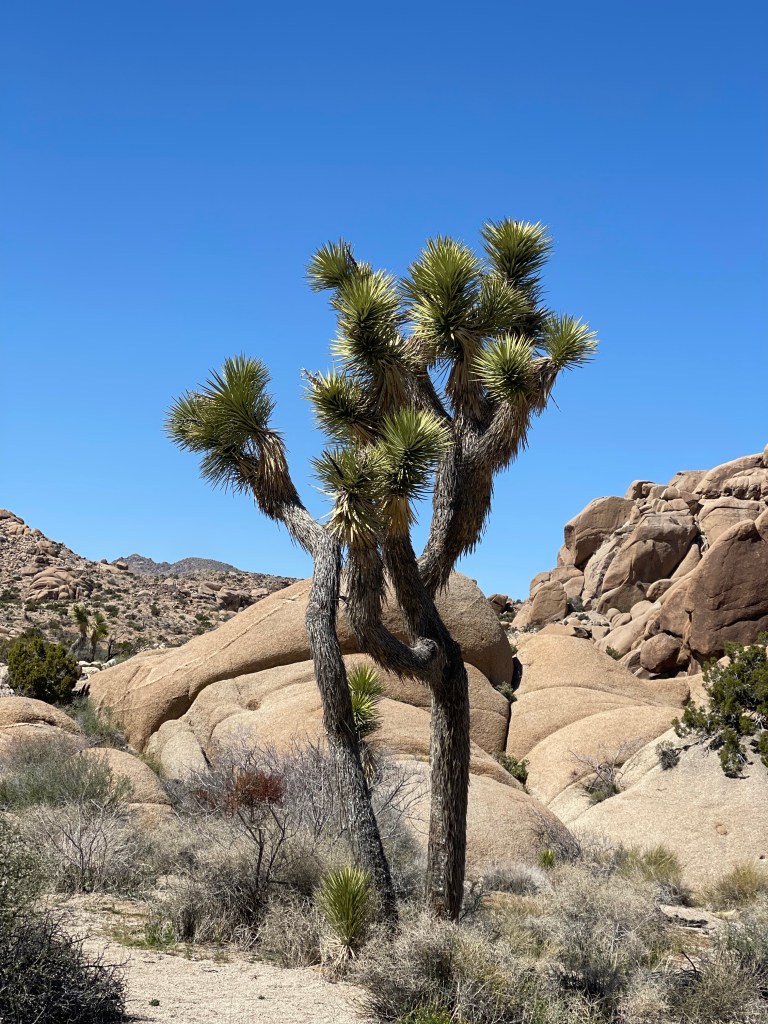
    California’s Joshua Tree National Park is technically a part of the Mojave Desert, but it straddles the Colorado Desert. Where the Mojave is considered a high elevation desert, the Colorado Desert is a low elevation desert. So Joshua Tree is the unique meeting place of the two extremes. It was protected as a national monument in 1936, largely to stop cactus poachers from taking everything, and elevated to a national park in 1994 as part of the Desert Protection Bill. It’s namesake, the Joshua Tree, or Yucca brevifolia, earned its nickname for resembling arms raised in supplication, and became famous when U2 gave the name to their biggest album. U2 put Joshua Tree on my radar, and I’ve felt compelled to visit ever since.

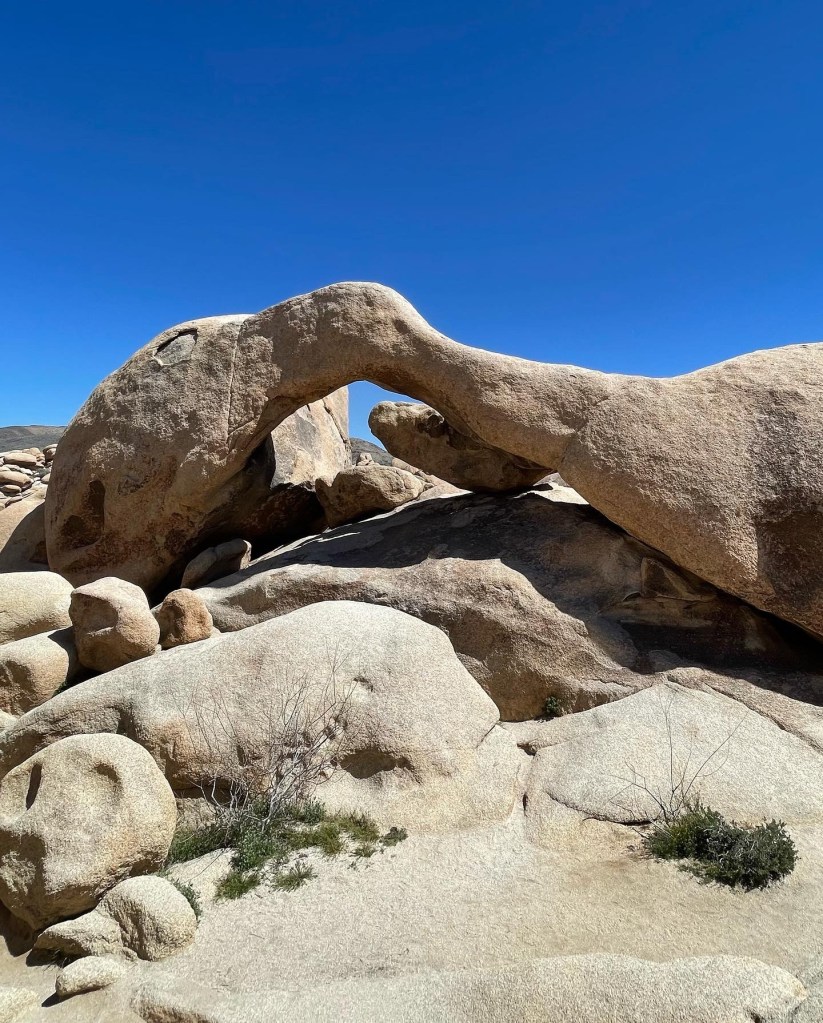
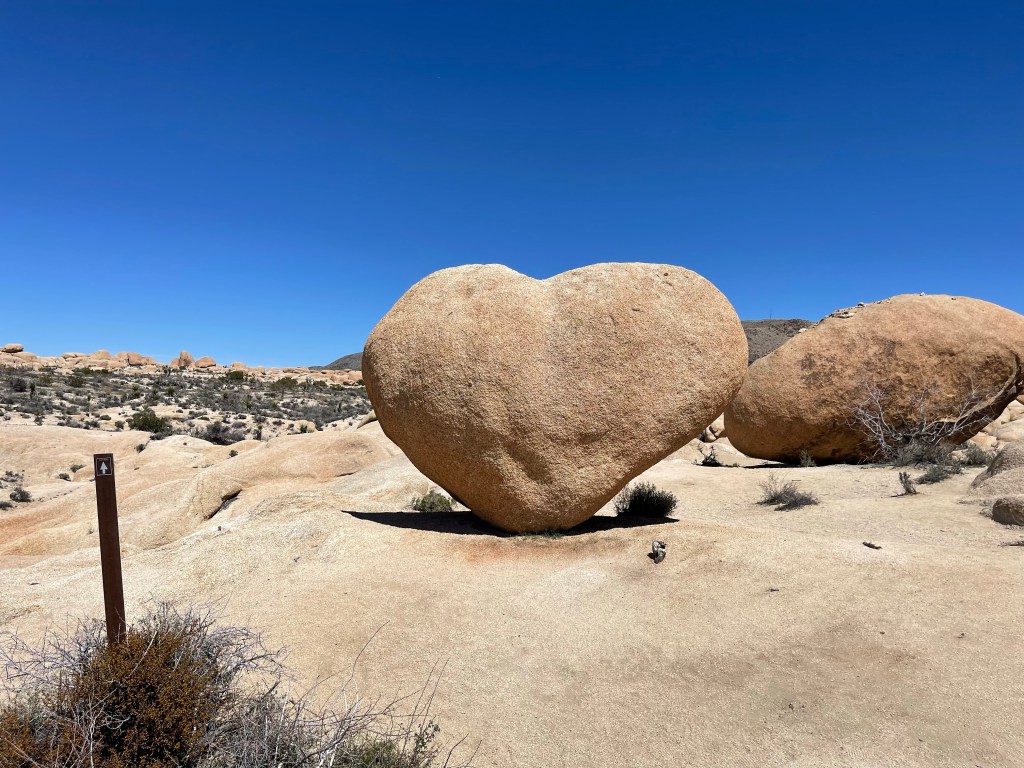
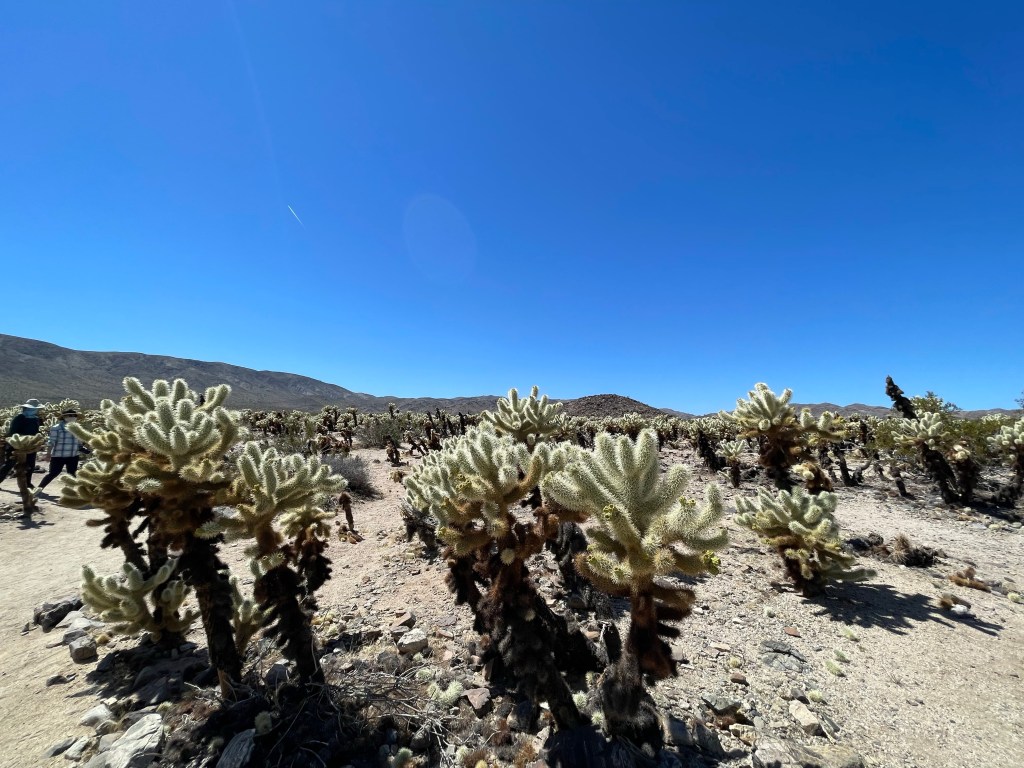
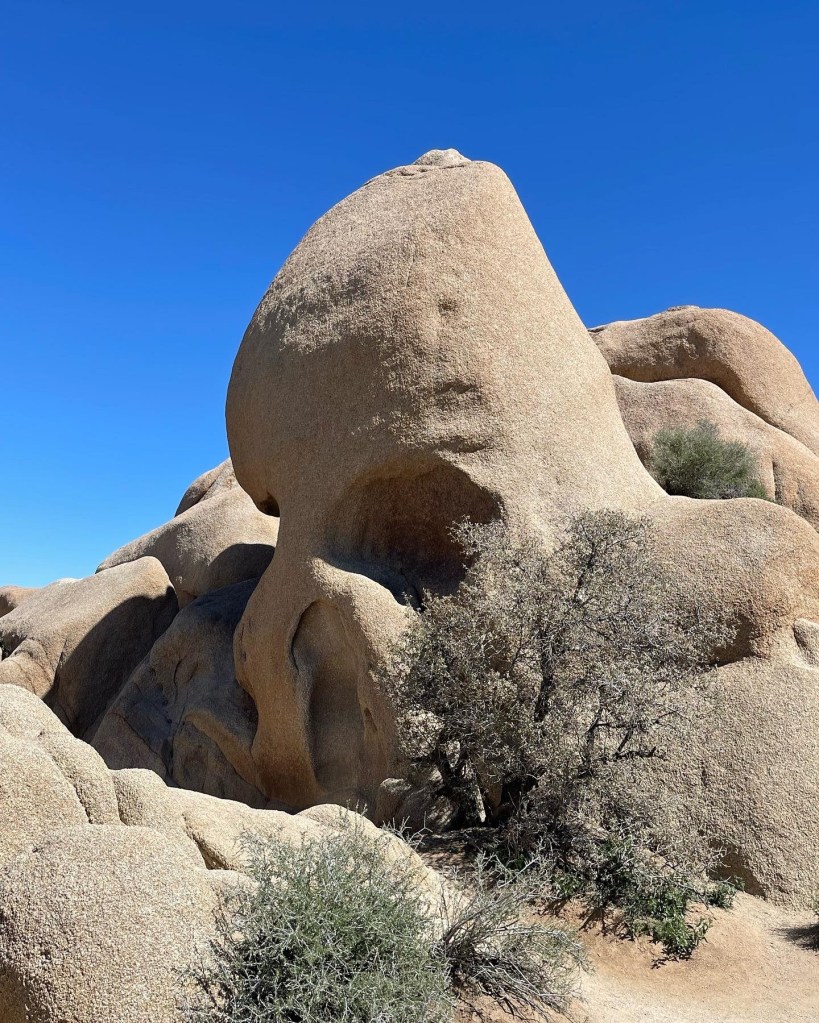
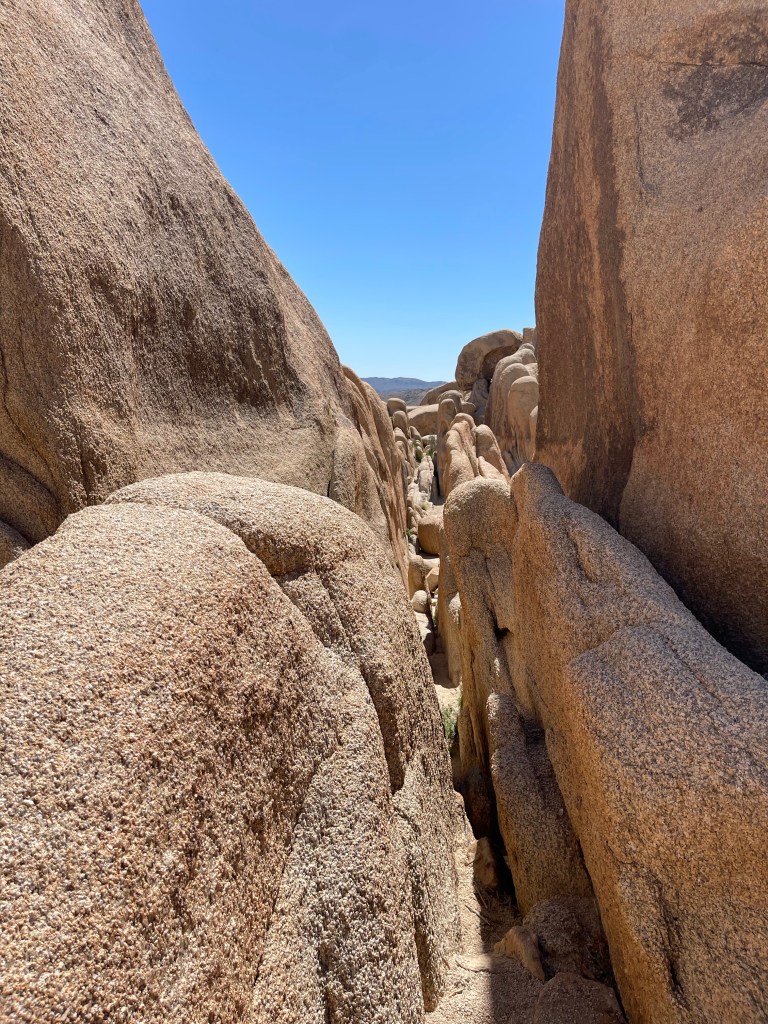
    Joshua Tree is famous for more than just the yuccas dotting the arid landscape. There are massive boulders and rock formations to explore. Three of the most famous of these are Arch Rock, Skull Rock and the once evasive Heart Rock. Fame comes with a price, and each had swarms of tourists descending on them for photographs. I descended on them too, of course, and managed a few pictures without people crawling into view with patience and creative staging. Each picture you see below was the result of waiting out the people taking their version of the same picture. But this is what you get in a place like this. Better to share than to have it owned by a private individual who bars access. National Parks are a treasure for all citizens to enjoy.

    My visit to Joshua Tree National Park was a detour from Las Vegas to Los Angeles. This drive took me through the stark landscape of the Mojave Desert. This is a place where a full tank of gasoline and plenty of water are essential elements of your self-preservation. It’s so very different from the two cities on either end of the journey. You can see no signs of life for miles around you driving through the desert, and the desert is indifferent to your desire to stay alive in it. Come prepared.

    There are several places to camp in Joshua Tree, and some additional motels nearby. There’s even a Starbucks in Twentynine Palms, not ten minutes from one of the entrances to the park. Civilization isn’t far at all from some parts of Joshua Tree, but you’ll feel like you’re on another planet anyway.

    Arch Rock
    Heart Rock
    Joshua Tree (Yucca brevifolia)
    Cholla Cactus Garden
    Skull Rock
    Rock scrambler’s paradise
  • More of This

    As I publish this, it’s the 18th of March, or the 77th day of the year. Lucky sevens, if you will, falling just after St. Patrick’s Day. The luck of the Irish following us? Let’s hope for that, but get back to living with purpose just the same. For we make our own luck, don’t we?

    We can usually predict the future by looking at what we consistently do. With that in mind, I’ll likely be writing every day, barely keeping the Duolingo streak alive and will have read my share of books (though never quite enough). It’s easy to see those filling in from now until the end, whatever that looks like. But what of the gaps? The inconsistencies also predict who we become, don’t they?

    It’s clear I need to get a dog soon if I want to maintain a walking streak, as walking the neighborhood at night without a dog just makes me feel like the weird neighbor. I probably don’t need to enhance that reputation. Alternatively, I could move to a place where walking is just the most obvious thing to do with your time. Kudos to friend and fellow blogger Joe, who managed to find a job and home in close enough proximity to each other that he can walk or snowshoe between the two. Joe doesn’t seem to complain about finding time to walk, he just walks. He proves every day that we can create the situation that works best for us when we focus on it.

    Life can surely be unpredictable, but we can safely predict that our life will mostly be more of this if we keep doing the same thing every day. The question to ask is, is more of this okay, or is it carrying us to a place we’d rather not go? Almost a quarter of the way into the year, we can see the trend we’re setting for ourselves, can’t we?

    “You should be far more concerned with your current trajectory than with your current results.”
    ― James Clear, Atomic Habits

    When the year is over, it would be great to have written all I’d like to write, to have read all that I’ve got on my reading list, and to finally hold my own in a rapid-fire conversation in French. But it would also be great to be in better shape than I began the year, to have positioned myself for a successful year in my career, and to spend meaningful time with exceptional people. These are things we can look back on the blank spaces with regret, or we can celebrate as small wins strung together just so. More of this can be a positive statement, if we create the right situation for ourselves.

    So what’s the trajectory? Is more of this a good thing or bad? With this answered, we’ll know what to do next.

  • A Snowball Walk in the Woods

    There are winters when it seem to snow, relentlessly, mercilessly, every day. The types of winters that wiped out half of the pilgrims on the Mayflower. “Hungry? Eat more snow!” kind of winters. This was not that kind of winter in New England. And now that we’re well into March, when the sun is higher and the snow melts quickly, it seems clear that opportunities to celebrate winter are drawing to a close.

    Blame it on seasonal variability or jet streams run askew or climate change, whatever the reason, the opportunities to fly across snow on skis or snowshoes wasn’t quite available locally. None of that quick lunch hour snowshoe hiking presented itself this year in southern New Hampshire. And truthfully, I missed it. When friends invited me to hike up north after a heavy snowfall on Saturday, I leaned in towards it but pivoted back to home. I wanted to savor the local trails instead. It turned out to be a sound decision.

    Driving over to a local town forest, I expected the parking lot to be jammed full of fellow snow lovers. Instead, I found it relatively quiet. Tracks indicated others had set off on snowshoes, while a few chose to post-hole their way through the snow, wrecking the pristine trail. This would prove a problem on the wooded trails, but in the fields I simply flew off on my snowshoes to break my own trail. After all, this was what I missed most this winter—flying atop unbroken snow.

    It proved to be as delightful as I’d hoped it would be, but already the sun was up and working on the snow pack. The trees began dropping snowballs, often with small branches, which dampened my enthusiasm for the wooded trails. The fields were better, and I thumped my way around in earnest, seeking that flying feeling until I was breathless. Stopping for a rest, I looked around and listened. Nothing but snowballs falling in the woods. Not a single human voice, or dog barking, or even a car far off in the distance. Just a clydesdale in snow, appreciating the briefness of the moment. We never know if we might have another opportunity to do something. A winter like this one teaches you to make the most of the moment before it melts away.

    A rare opportunity to fly over snow
  • Walking to a Better Place

    “Above all, do not lose your desire to walk: every day I walk myself into a state of well-being and walk away from every illness; I have walked myself into my best thoughts, and I know of no thought so burdensome that one cannot walk away from it.” — Søren Kierkegaard

    As I write this, it’s warmed up to -12 degrees Fahrenheit outside. On the summit of Mount Washington, a few hour’s drive away from me, the temperature is currently -45 with a wind chill of -107 degrees. Simply put, this is not a good day for a hike. But every day is a good day for a walk, conceding that some days we have got to be a little more creative to get the steps in.

    If my family or my neighbors were to observe my behavior on certain days when I feel trapped in the house, they’d think I was crazy (they likely do already). I’ll walk up and down the stairs ten times to get the blood moving between meetings, circumnavigating the interior of the house in a circle (always counterclockwise, for reasons I can’t explain) and now and then throw in some burpees or pushups to spice things up. This has not led to six-pack abs, but nonetheless it does a body good.

    Clearly, getting outside is the better way to move. Long walks on pavement are okay, but I prefer to walk on local trails not far from home, with trees and the occasional dog walker as company. Hiking is a favorite form of exercise, practiced in moderation for reasons of practical living as opposed to lack of desire for more. We simply can’t do everything, but doing a lot of things in moderation seems to work for me. We are as much what we say no to as the things we say yes to.

    Walking has remained the one constant form of exercise that has followed me wherever I’ve gone in this world. I’ve walked in places as diverse as the Old City in Jerusalem, the Mayan port city of Tulum, Red Square in Moscow, amongst the Redwoods in Muir Woods and followed in the footsteps of Thoreau at Walden Pond, but I’ve never taken more steps in any place than I have on the plot of land I currently reside on in New Hampshire. Place is variable, the stride varies, but the act of walking remains a constant companion.

    As the temperatures creep back up I’ll plot my escape from this self-imposed exile I call home and get back to outdoor walking. There are empty beaches to explore, ridge trails to traverse, and faraway places calling me. Walking is the most reliable way to get to a better place, simply by putting one foot in front of the other.