Category: Walking

  • A Snowball Walk in the Woods

    There are winters when it seem to snow, relentlessly, mercilessly, every day. The types of winters that wiped out half of the pilgrims on the Mayflower. “Hungry? Eat more snow!” kind of winters. This was not that kind of winter in New England. And now that we’re well into March, when the sun is higher and the snow melts quickly, it seems clear that opportunities to celebrate winter are drawing to a close.

    Blame it on seasonal variability or jet streams run askew or climate change, whatever the reason, the opportunities to fly across snow on skis or snowshoes wasn’t quite available locally. None of that quick lunch hour snowshoe hiking presented itself this year in southern New Hampshire. And truthfully, I missed it. When friends invited me to hike up north after a heavy snowfall on Saturday, I leaned in towards it but pivoted back to home. I wanted to savor the local trails instead. It turned out to be a sound decision.

    Driving over to a local town forest, I expected the parking lot to be jammed full of fellow snow lovers. Instead, I found it relatively quiet. Tracks indicated others had set off on snowshoes, while a few chose to post-hole their way through the snow, wrecking the pristine trail. This would prove a problem on the wooded trails, but in the fields I simply flew off on my snowshoes to break my own trail. After all, this was what I missed most this winter—flying atop unbroken snow.

    It proved to be as delightful as I’d hoped it would be, but already the sun was up and working on the snow pack. The trees began dropping snowballs, often with small branches, which dampened my enthusiasm for the wooded trails. The fields were better, and I thumped my way around in earnest, seeking that flying feeling until I was breathless. Stopping for a rest, I looked around and listened. Nothing but snowballs falling in the woods. Not a single human voice, or dog barking, or even a car far off in the distance. Just a clydesdale in snow, appreciating the briefness of the moment. We never know if we might have another opportunity to do something. A winter like this one teaches you to make the most of the moment before it melts away.

    A rare opportunity to fly over snow
  • Walking to a Better Place

    “Above all, do not lose your desire to walk: every day I walk myself into a state of well-being and walk away from every illness; I have walked myself into my best thoughts, and I know of no thought so burdensome that one cannot walk away from it.” — Søren Kierkegaard

    As I write this, it’s warmed up to -12 degrees Fahrenheit outside. On the summit of Mount Washington, a few hour’s drive away from me, the temperature is currently -45 with a wind chill of -107 degrees. Simply put, this is not a good day for a hike. But every day is a good day for a walk, conceding that some days we have got to be a little more creative to get the steps in.

    If my family or my neighbors were to observe my behavior on certain days when I feel trapped in the house, they’d think I was crazy (they likely do already). I’ll walk up and down the stairs ten times to get the blood moving between meetings, circumnavigating the interior of the house in a circle (always counterclockwise, for reasons I can’t explain) and now and then throw in some burpees or pushups to spice things up. This has not led to six-pack abs, but nonetheless it does a body good.

    Clearly, getting outside is the better way to move. Long walks on pavement are okay, but I prefer to walk on local trails not far from home, with trees and the occasional dog walker as company. Hiking is a favorite form of exercise, practiced in moderation for reasons of practical living as opposed to lack of desire for more. We simply can’t do everything, but doing a lot of things in moderation seems to work for me. We are as much what we say no to as the things we say yes to.

    Walking has remained the one constant form of exercise that has followed me wherever I’ve gone in this world. I’ve walked in places as diverse as the Old City in Jerusalem, the Mayan port city of Tulum, Red Square in Moscow, amongst the Redwoods in Muir Woods and followed in the footsteps of Thoreau at Walden Pond, but I’ve never taken more steps in any place than I have on the plot of land I currently reside on in New Hampshire. Place is variable, the stride varies, but the act of walking remains a constant companion.

    As the temperatures creep back up I’ll plot my escape from this self-imposed exile I call home and get back to outdoor walking. There are empty beaches to explore, ridge trails to traverse, and faraway places calling me. Walking is the most reliable way to get to a better place, simply by putting one foot in front of the other.

  • A Winter Hike on the Welch-Dickey Loop Trail

    The Welch-Dickey Loop Trail is one of the most popular trails in New Hampshire. There are many reasons for this, including its relative closeness compared to trails further north and its proximity to popular recreation destination Waterville Valley. But really, people hike this trail because the views are spectacular and you can do the hike in a few hours if you want to push, or linger with those views if you wish to take your time. In summer the blueberry bushes are generous and those ledges are great places to sit awhile. In winter, those ledges look like toboggan runs to a hard landing. Best to stick to the trail, wear spikes and respect the unforgiving nature of the White Mountains when people get careless.

    As the name infers, there are two mountains on this 4.4 mile loop: Mount Welch and Mount Dickey. Both have a ton of exposed granite ledge that let the world open up for you, making the payoff in views exceptional for the effort expended. In summer, it’s a fun scramble up the granite, in winter, it’s strongly advisable to have micro spikes or crampons. Even with spikes on, I was very deliberate with every step hiking up Mount Welch. It’s not a trail to be doing in casual footwear in winter.

    At some point along the way, I recognized that the prominence of the summit wasn’t ever my goal, it was simply getting out in nature at elevation, to a place where I earn the view with every step. I’ve been too distracted by numbers (48, 200 & 4000: there are 48 4000 foot mountains with a prominence of 200 feet or more) lately, forgetting that lists are not the point. While it’s in my nature to finish what I started and complete the 48, it took this winter hike on the Welch-Dickey Loop Trail to remind me that deep down I’m seeking experience, not validation. The numbers can take a hike. I’ll finish when I finish.

    If you’re looking for incredible views with a relatively easy hike, the Welch-Dickey Loop Trail brings you to two summits of the five I’d recommend in New Hampshire, along with Mounts Monadnock, Major and Willard. In summer or during foliage season these hikes are maddeningly crowded on the weekends, but winter brings relative quiet and pristine beauty. Just remember those micro spikes.

    The steep ledge scramble up Mount Welch
    Would you hike this without spikes?
  • A Walk Around Walden Pond

    A visit to Walden Pond can be immersive, if you go at the right time. Many people go in summer to swim and enjoy the pristine water. Many fish for large mouth bass and other prizes. But the pilgrims go to visit Henry David Thoreau’s famous pond and the woods surrounding it. I’ve watched the place change over the years, but the pond and woods remain largely as Thoreau would recognize.

    You must treat a brief visit to Walden as you would a visit to a nightclub with a cover charge. There’s a flat fee of $30 USD to park. That applies for an hour or the entire day. There’s a lower fee, apparently, for Massachusetts residents. I suppose you can also opt for other ways to get to Walden Pond, but this was the simplest way to spend time at a place. The area surrounding Walden Pond is a mix of highway, commuter railroad (as it was in Thoreau’s time), capped landfill and houses increasingly further out of reach for someone choosing the lifestyle of the person who made this place famous.

    Early December is considered late autumn, but my visit felt more mid-autumn, with temperatures warmer than they should be this time of year. Henry David Thoreau would have shaken his head, I think, at some of the same behavior he observed in his day leading to the climate change we’re experiencing today but generally sitting on our hands about. But it made for a lovely day to walk around the pond.

    There is a well-defined path around the pond. It’s maintained and easy for most walkers to navigate. They make you feel like you’re in a cattle chute for much of it, with wire strung on each side of the path to keep wanderers from straying off the path. Signage explains this as erosion control measures. As a hiker of the White Mountains in New Hampshire, I’m all too familiar with the impact of popularity on trails and the surrounding landscape. I stay to the path, liberated from the freedom to wander, I instead focused on the environment around me.

    You can hear the world encroach on you at Walden. Distant highway sounds, construction, sirens, airplanes flying overhead and the commuter train all remind you that you’re in a suburb of Boston. It’s best to acknowledge this, but let it go as Thoreau let the train go as it went past in his time. The landscape is largely preserved, the water clear, awaiting those who would linger.

    When I was younger, there was no visitor center, but there was a bath house. At some point well before I came into this world some well-meaning people decided that the best way to save Walden Pond was to make it a recreation center. So a bath house was built, beach sand extended and you had a destination for family recreation. Thoreau’s cabin is on the opposite shore from the bath house, but it’s the first thing you see when you walk down the visitor parking lot. You’re either at peace with it or not, but it’s relatively benign in the off-season.

    Walden Woods extend well beyond the perimeter of the pond, and we can thank people like Don Henley for their commitment to preservation. Generations of developers find a way to squeeze as much money as they can from resources, and there are plenty of people who would turn the place inside out and up. There’s a place for development in this world, but there ought to be a place for preservation too.

    I’d brought a water bottle with me on the walk, warm day that it was, and decided in a moment of inspiration to fill it with water from Walden Pond. Thoreau drank straight from the pond in his day, I’m not inclined to do that without a filter. Instead, I brought the water with me for another pilgrimage. Just across that highway is the center of Concord, where Thoreau and Ralph Waldo Emerson lived. Just beyond the center is the Sleepy Hollow Cemetery, site of Author’s Ridge, where Thoreau, Emerson, Alcott and others are buried. I stopped for a brief visit on Author’s Ridge, told of my visit to his old cabin site, and poured Henry a sip of Walden Pond. Cheers Henry.

    Walden Pond
    A view of the pond just down the hill from Thoreau’s cabin site. This is similar to the view he would have had.
    Pile of stones next to the cabin site. I’m not loving it, but cairns are how people seem to express themselves. The site to me feels like a construction site, cleared and ready to build.
    The cabin site is surrounded by granite pillars to denote the position and size of the cabin.
    Creative cairn art rising out of Walden Pond.
  • Learn to Reawaken

    “The millions are awake enough for physical labor; but only one in a million is awake enough for effective intellectual exertion, only one in a hundred millions to a poetic or divine life. To be awake is to be alive. I have never yet met a man who was quite awake. How could I have looked him in the face? We must learn to reawaken and keep ourselves awake, not by mechanical aids, but by an infinite expectation of the dawn, which does not forsake us in our soundest sleep. I know of no more encouraging fact than the unquestionable ability of man to elevate his life by a conscious endeavor.” — Henry David Thoreau, Walden

    How rare is the poetic or divine life today? It’s hard to say. In talking to people, there is a distinct lack of engagement in the workforce. A lack of inspiration for putting yourself into things, no passion for the work, a going through of the motions that must be reconciled. If one in a hundred million souls were sparked by the poetic or divine in Thoreau’s time, I wonder what the ratio is now?

    Do we linger in a post-pandemic stupor? Is it a generational change as the kids raised with iPhones and social media and gaming become the primary fuel that powers economic and cultural life? Is it older generations, churned and manipulated, poked and prodded, finally having enough? Is it the relentlessly obvious climate change impacting everything while seemingly nothing is done about it? It makes you want to sail away sometimes, especially when you see how much fun those who did are having. But there’s inspired work to be done still, and clearly a need for more of us to lift others.

    We must learn to reawaken and keep ourselves awake. We each have purpose in this lifetime that must be fulfilled. To do otherwise is to live in quiet desperation, as Henry would point out. But how do we keep ourselves awake in such a noisy, conflicted and demanding world? He showed the way, didn’t he? Walk away from the noise, find a quiet place to contemplate your place in the world and pay attention to what happens to you. He didn’t travel very far himself (his friends would take the short walk to visit him, and he them). Mostly, solitude is turning off the electronic babysitter and the insistent chatter of the uninspired and listening to yourself. Writing it all down surely helps.

    Thoreau has always been my grounding rod. When I become disenchanted or feel that quiet desperation stirring inside or have simply had enough of the loud talkers in my world I return to Thoreau’s work, or visit his grave, or take a pilgrimage to Walden. He remains a voice of reason in an unreasonable world, speaking universal truths like so many time travelers. Their spark forever awake, forever informing, forever a beacon to light the way even as their physical selves forever rest.

    From where do we derive hope and an infinite expectation of the dawn? Answers are inclined to find us. Don’t let its whisper be drowned out in the noise.

  • Finding Balance, One Step at a Time

    “Life is like riding a bicycle. To keep your balance, you must keep moving.” – Albert Einstein

    Walking into a hotel room, exhausted after a long day on my feet and driving three hours for the privilege of sleeping in a town previously unknown to me, I looked at my Apple Watch to find out what the score was. I’m a streaky player in this game of life, and currently I’m hitting 10,000 steps per day and closing all my “circles” every day for 22 days. My watch informed me that I still had work to do, still (despite how tired you feel buckaroo). Reluctantly I slipped on running shoes and walk down the stairs for a reckoning with the pavement.

    Streaks keep us honest, forcing our hand when we’re on the fence and could easily slip towards the comforts of life. My inclination last night was to grab a drink at the bar before it closed and read a book I’ve been putting off. But comfort zones are for people that don’t want to go anywhere in life. That’s not us, friend.

    We must keep moving, and push ourselves to move a bit more than we’d like now and then. This bicycle ride won’t last forever, will it? And there’s just so much left to see.

  • Two Centuries, One Mile

    “I’ve got a mule and her name is Sal
    Fifteen miles on the Erie Canal
    She’s a good old worker and a good old pal
    Fifteen miles on the Erie Canal” — Erie Canal

    For the last three days I’ve stacked up miles walking along the Erie Canal (Nearly 15 miles, reminding me of the old Erie Canal song). Roughly a mile of that walk traverses the Great Embankment, completed 200 years ago this year. Back in 1822 building an earthen embankment a mile long and 70 feet high was kind of a big deal, and so was the completion of the big ditch known as the Erie Canal. It made the young United States less dependent on the St. Lawrence Seaway and the whims of Canada and the Great Britain to give them access. The success of the canal made fortunes in places from Buffalo to New York City.

    Nowadays, it’s more of a tourist attraction than an active commercial highway, but you still see a barge or powerboat making its way from there to here. Seeing them is interesting, and reinforces the belief that the Erie Canal isn’t just a big ditch, but a once powerful statement that we’ll make our own way, thank you. When I walk on the path next to the canal I hear the whispers of history and my very brief moment with place. Think of what that mile of canal has seen in two centuries. And this week it hosted me once again.

    On my recent walk the path was filled with bicycles, walkers and runners. I make eye contact with most, give a brief nod of hello and march onward. I’m but a momentary close encounter in their lives, as they are in mine. Someday we’ll all be history ourselves, just a flash of movement in the long life of the long ditch. I wonder if they’ll write about us?

  • A Walk to the Edge of Ambient Light

    Autumn, delightful as it is in so many ways, is the source of one bit of frustration: the quickly receding number of daylight hours. Traveling west, the morning becomes more and more difficult to work with if you’re trying to be active outdoors. Sure, you can strap on all manner of lighting to make you more visible and to offer a tunnel of light to walk through. But you lose something in all that battery-powered brightness–a feeling of connectedness with the land around you. And isn’t that the point of going outside to walk in the first place?

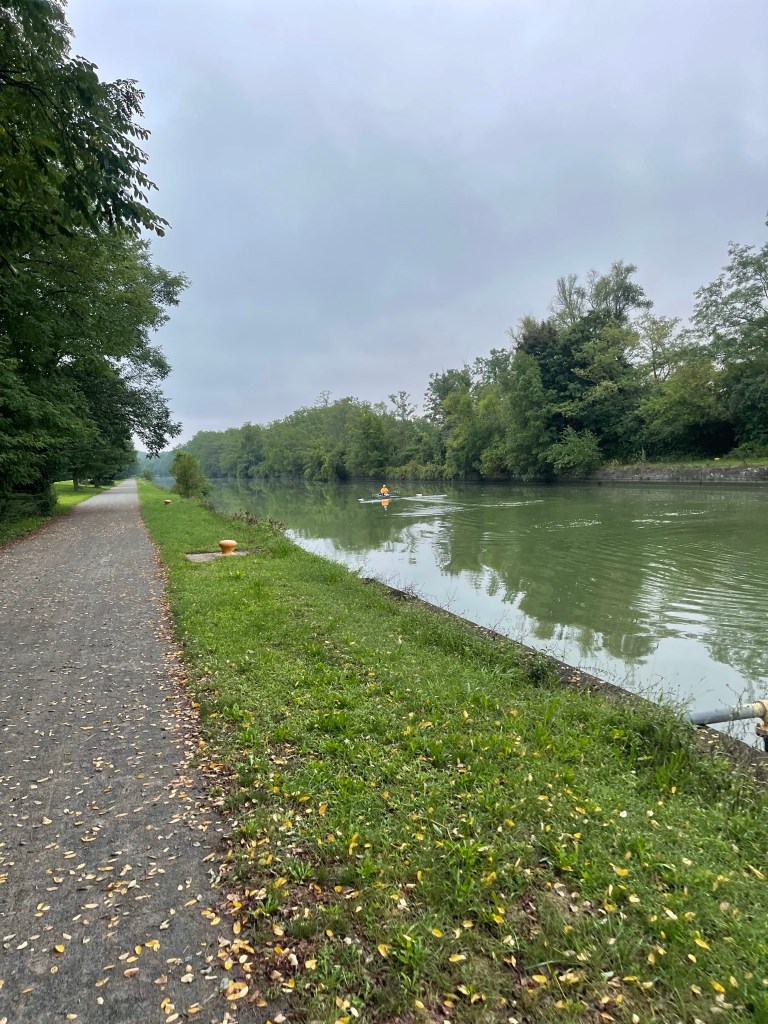
    Just yesterday I was walking on a warm and humid day on Cape Cod. This morning, I found myself next to an old favorite, the Erie Canal at Bushnell’s Basin. The canal trail here is mostly stone dust, with a few paved places along the way. Familiarity is helpful when you’re walking in the dark, and so is choosing to walk in the early morning. Morning offers hope for improving conditions, something an evening walk would be short of. In a safe area like Pittsford there aren’t a lot of concerns about getting mugged, but in a sketchier area most of the thugs eventually go to sleep, leaving the morning generally safer for wannabee fitness models.

    Still, there’s something about seeing that offers comfort. Even on a walk I’ve done a dozen times or so, when you run out of ambient light you’ve got to make choices in life. Press ahead into the dark or return to the ambient light? What are the risks? Walking into a branch? A skunk? The Erie Canal? Getting run over by a random cyclist not using a headlamp? None of those sound particularly appealing to start a work day. So I turned back to the light.

    Here’s the trick, you don’t walk all the way back to the brightest parts of your walk. You walk just far enough that your eyes can still see in the dim early morning light, then turn around and see how far you can go the next time. Does walking back and forth on a 1000 meter section of cinder path sound fun? You know what? It actually was. Just me and the ducks and some vehicle traffic on the other side of the canal. Back and forth, a bit further each time, until the scales tipped at 6 AM and suddenly you could see everything clear as… well, almost clear as day.

    It might seem ridiculous, this walking in the dark business, but I managed four miles before coffee, and sort of saw the Erie Canal from a different perspective than I’m used to. There’s a lot to be said for checking a few boxes before breakfast–exercise, reading, and writing this blog. The only thing that might have made it better would have been an epic sunrise. Perhaps tomorrow, when I plan to be out there again.

  • Early Morning Walk on the Cape Cod Canal

    Quietly walking downstairs in the dark, water bottle filled, I opened the front door and slipped outside, hoping the dogs wouldn’t bark. They bark all the time… but thankfully not this time. I get in the truck and begin the drive to the Railroad Bridge (capitalized, thank you). 5:30 AM, it ought to be super quiet there, I think, just me and a couple of fishermen.

    Pulling into the parking lot, I see just how wrong I was. The entire parking lot is completely filled with pickup trucks and cars. Every contractor in Eastern Massachusetts must be along the canal, rods protruding from shore in hopes of that big catch. I felt like a single woman walking alone into a bar full of dudes, and like her, promptly turned around and got the hell out of there.

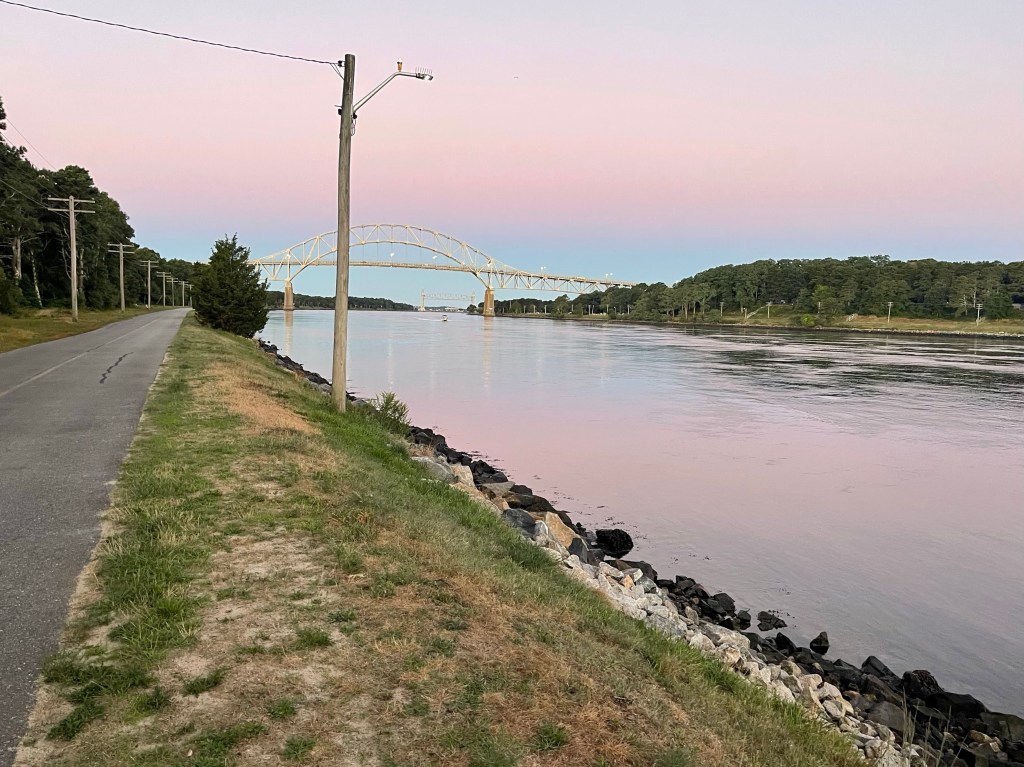
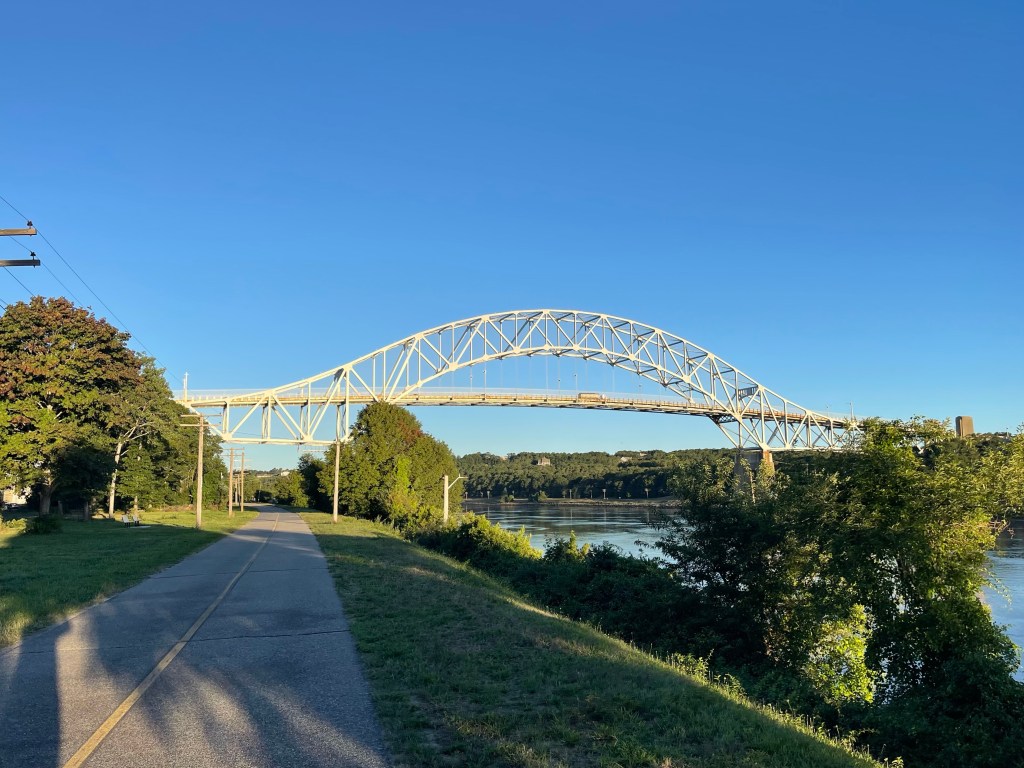
    Driving to the Bourne Bridge parking lot, I’m relieved to find it relatively empty, as if the fish don’t like the canal water a mile further. No matter, I’m not here to fish, but to walk. The aim was a bridge-to-bridge walk, but instead of the Railroad Bridge it’s the Bourne to Sagamore Bridge out and back. That net’s me roughly 6.8 miles, and that’s enough for this workout.

    Early mornings are a lovely time to walk the canal, and the best time to do it without earbuds in. It’s best to hear what’s happening around you when it’s dark out. Situational awareness is important, no matter who you are. Random cyclists and salty fishermen on old bicycles ride past at various speeds. All I can do is hold my line and keep the pace.

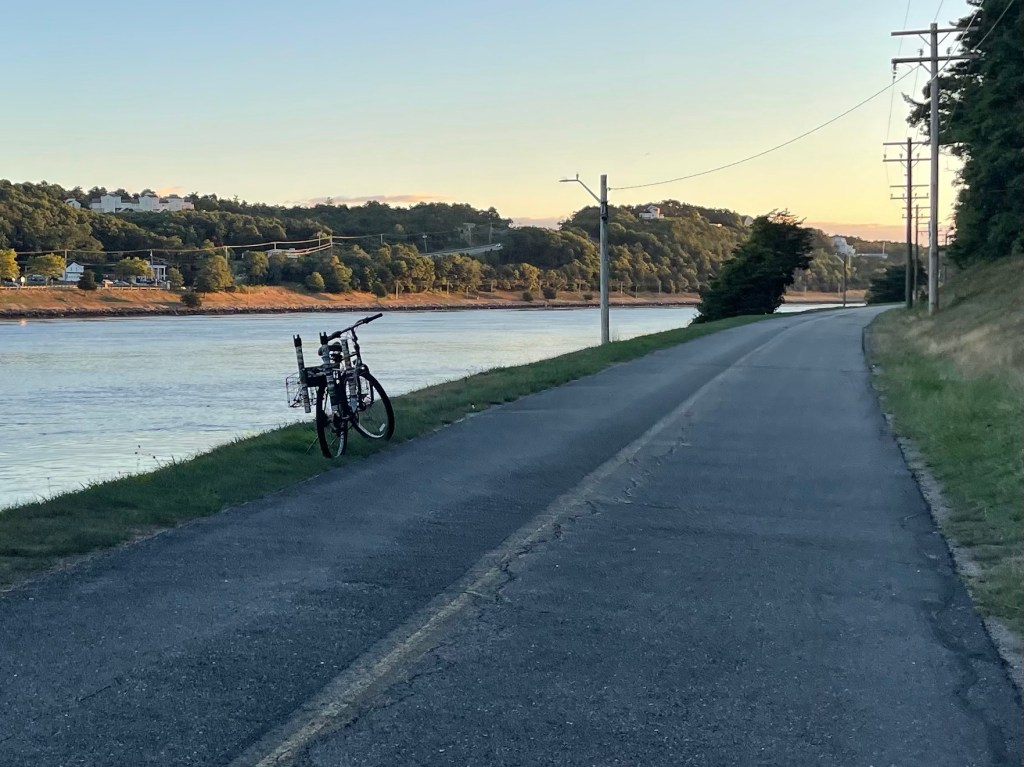
    Canal fishermen, and they all seem to be men at 5:30 AM, tend to fall into two categories: those who stay near the parking lots, and those who ride bicycles to their own private fishing spot. The bicycles are an odd mix of cheap mountain bikes and yard sale bikes of all shapes and sizes. Each has a basket for fishing gear and two or three PVC rod holders bolted on. I wondered quietly at the aftermarket potential for a bicycle rod holder business and decided it just wasn’t for me. These aren’t the kinds of customers who are going to go with premium pricing, and I don’t have the heart to sell commodity fishing bicycle accessories.

    Mind back to the walk, the bladder begins to call. I promise myself I’m not going to stop until I get to the port-o-potty under the Sagamore Bridge, and, feeling the urgency, push my pace a bit to get there sooner. Just as I arrive another character walking from the other direction sees me and makes a beeline for the plastic throne. I silently grumble, walk beyond the bridge to 3.4 and turn around. On the return the facilities are blessedly empty and soon my bladder is too. Relieved, the walk began again in earnest.

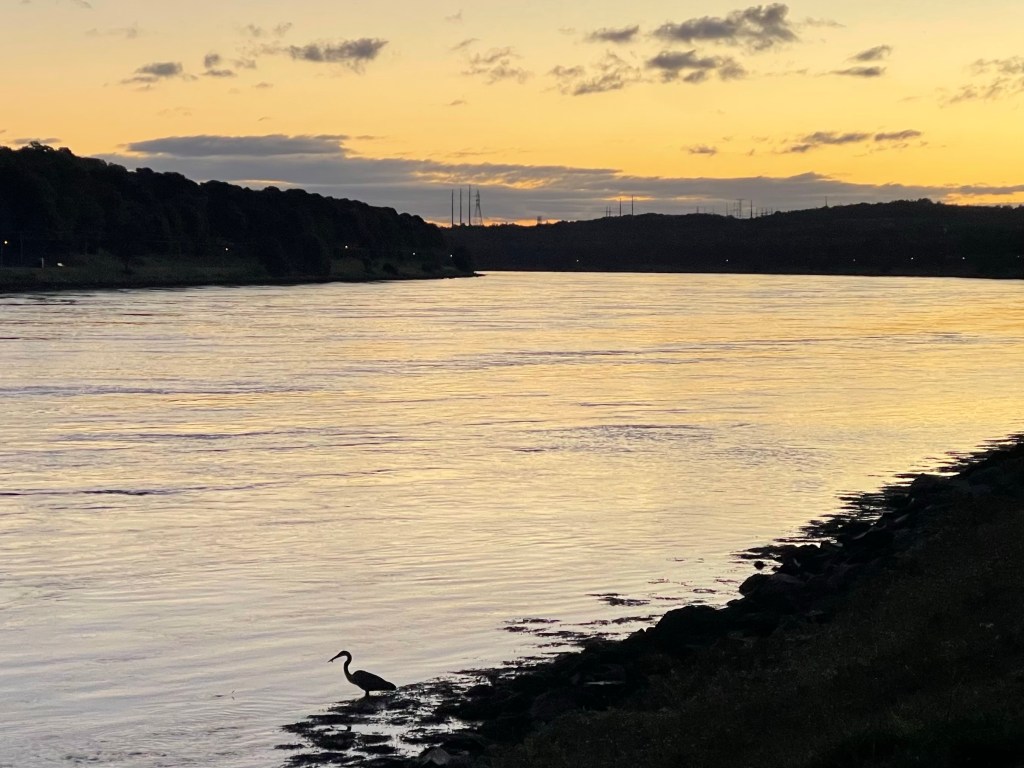
    Out and back walks always feel shorter on the return trip, and this walk was no exception. I was a known commodity for the fishermen on my return trip, and ambivalent good morning nods became indifferent been there, done that focus on the task at hand. The fish seemed to win the day, as I only saw two catches on the entire walk, and one of those was a heron catching its breakfast. The only winner, besides the fish, seemed to be Dunkin Donuts, judging from the endless parade of Dunks iced cups passed on the walk. Good coffee stock investment tip for those paying attention.

    Finishing a long walk brings with it the satisfaction of clicking that key word “end” on the Apple Watch. Lately I’ve been competing against a couple of women who suffer from the delusion that I’m going to let up and allow them to beat me in a seven day competition. Ha! Competitive banter aside, it’s funny how adding some people to the daily fitness routine can really enhance motivation to do the work. This one in the books, I quietly drove back to the house, waiting for the heckling to begin. And knowing I’m one step ahead, at least for this day.

    Not all fishing is done with poles
    Bourne Bridge
    Fisherman’s Bike
    Canal traffic
    Turning around to return under the Sagamore Bridge
  • Every Single Day

    “If you want to write, if you want to create, you must be the most sublime fool that God ever turned out and sent rambling. You must write every single day of your life. You must read dreadful dumb books and glorious books, and let them wrestle in beautiful fights inside your head, vulgar one moment, brilliant the next. You must lurk in libraries and climb the stacks like ladders to sniff books like perfumes and wear books like hats upon your crazy heads. I wish you a wrestling match with your Creative Muse that will last a lifetime. I wish craziness and foolishness and madness upon you. May you live with hysteria, and out of it make fine stories — science fiction or otherwise. Which finally means, may you be in love every day for the next 20,000 days. And out of that love, remake a world.”― Ray Bradbury

    I went for a long walk late in the day yesterday, dodging raindrops, a rarity this summer, to power through nine muggy miles (14.5 km). The mileage wasn’t a surprise, for it was agreed upon before the walk began. The trick in longer walks is to set your expectations and pace, and naturally, to wear good shoes. The rest is just putting one foot in front of the other and observing the world as it comes to you.

    The similarities with writing, or any other mission you decide to show up for every single day, are within reach if one should be inclined to harvest them. We establish our routines, dance with the muse one idea at a time and let it run through us to become something tangible. When it’s finished we share a sense of accomplishment and loss all at once, linger for a beat and shift our mind to what comes next.

    Life is a series of days, repeated one after the other, optimized by expectations and pace. We do with them what we will. And then? We move on to whatever comes next. Yet we always return, don’t we, to the things that matter most to us?

    It would be bold to expect another 20,000 days in my own lifetime. That would make me a very old blogger indeed. But I do have this one, and maybe tomorrow, or maybe not. So I work to make this blog post count for something, maybe stand up as that final post should it be that. Of course, every sentence can’t end in an exclamation point, we’d be seen as more insane than most think of writers as already, but we can’t put our best into everything we do in the moment… just in case.

    Hope to see you tomorrow. 😉