“You want to become a clearer thinker, you need to spend more time alone with your own thoughts, and keep writing every day.” — @Orangebook
How do we reach clarity? Don’t we have to wrestle with conflicting thoughts to see which emerges more persuasive than the rest? The vehicle to clarity might be walking or meditation or therapy or writing, but the wrestling within that vehicle must happen. The alternative is to reach for distraction. We all have moments with each, but which way do the scales tip?
Maybe we never reach clarity at all, maybe we reach contentment with the great compromise of the clear and the unknown. The stoics have a saying, amor fati, which translates to love of fate. We control very little in this universe, the rest belongs to the universe to decide. Accepting what we can control is certainly a milestone moment on our journey to clarity.
The thing is, the process of sorting out the journey is what life is. We might think more clearly, but this step in becoming brings us into a more complex head full of doubt, which, transcended, in turn leads to another. We ought to celebrate the journey to clarity, without expecting to actually arrive.
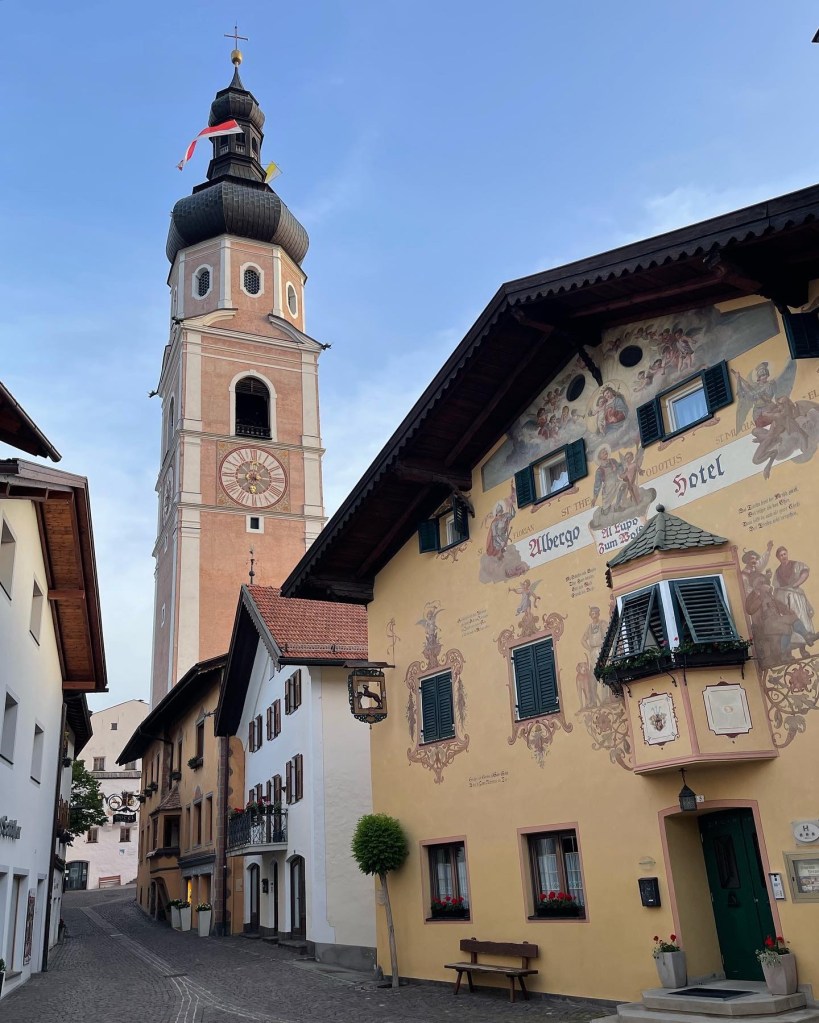
As an American from the northeast, I know all about traffic, but it was a surprise to encounter so much of it on the stretch from Hohenschwangau, Germany to Castelrotto, Italy. Then again, it was a beautiful Saturday morning and the world seemed to be going on holiday. Chalk it up to poor planning on my part. If there was a silver lining, the drive was stunningly beautiful and all that sitting at a standstill allowed me to look around.
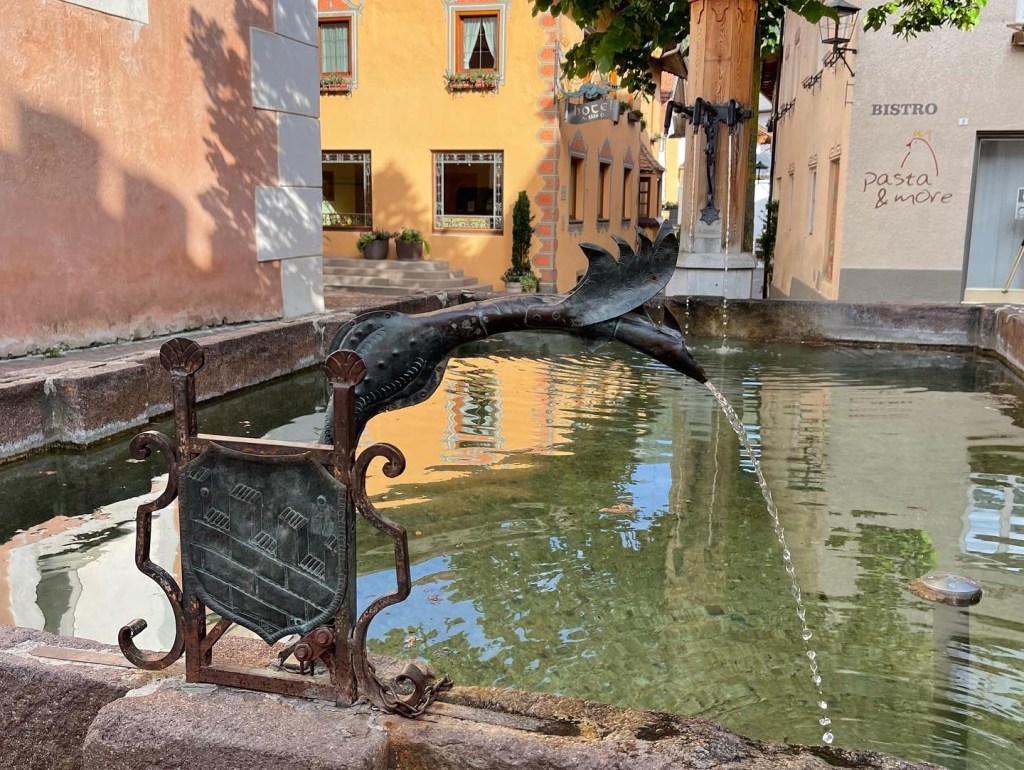
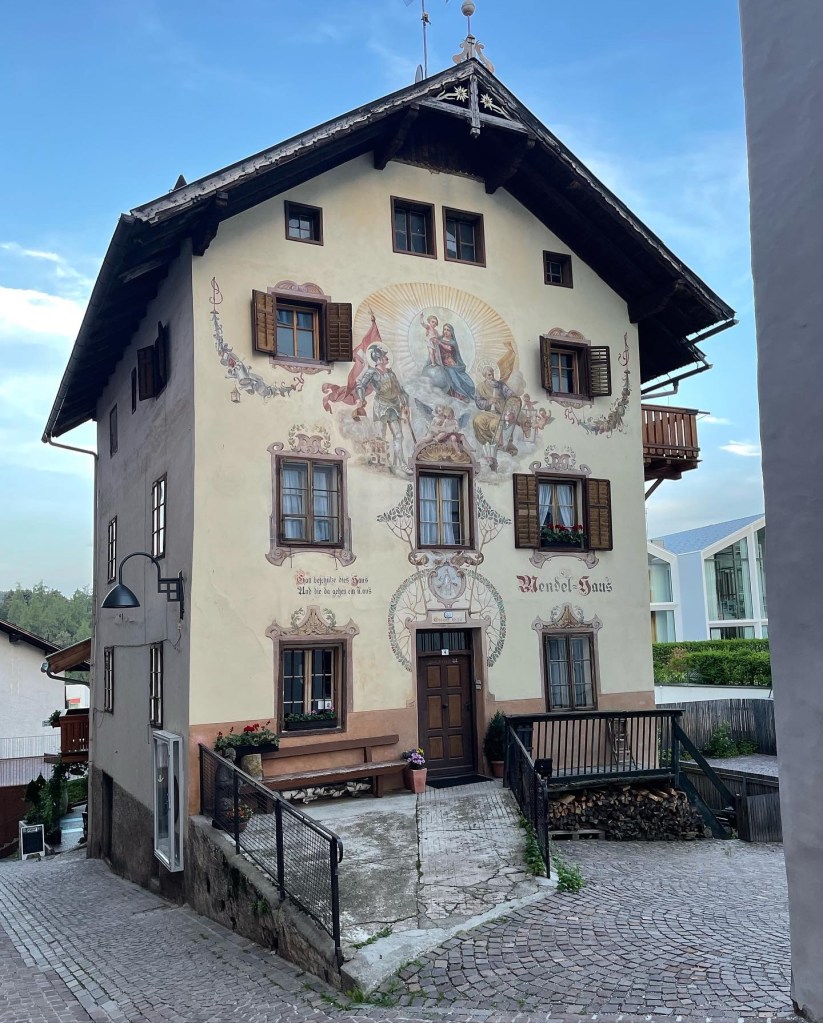
When we finally got to Castelrotto, we weren’t inclined to jump right back into the car and leave this lovely little town. A brief walk after dinner revealed the character of the place, which prompted an early morning walk before the bell tower started its daily ritual of marking time beginning at 6 AM. The magic in any place is revealed on the edges of the day, for me that time before the world wakes up is most special. And so it was that I fell in love with this little town that seemed impossible to get to the day before.
There are three languages spoken here, and the locals seem to know a few more than that. Italian, German and Ladin are the core languages, which reveals both geography and a history of land grabbing. World War I settled the border, but the locals seem to roll with it and pivot quickly to whatever language you’re speaking. After my brief stumbling with German, that generously included English. No matter, the beauty of the place transcends my words anyway.
“Slow down and taste and smell and hear, and let your senses come alive. If you want a royal road to mysticism, sit down quietly and listen to all the sounds around you. You do not focus on any one sound; you try to hear them all. Oh, you’ll see the miracles that happen to you when your senses come unclogged.” — Anthony de Mello, Awareness
The world wants us to focus on it. It calls to us constantly. Sure, those notifications on our phones and smart watches and other electronics are designed to capture our attention. Our to-do lists grow relentlessly longer. The demand for our attention has never been greater.
There’s nothing wrong with letting it all drift away.
Unclogging our senses brings us to them. Focus intently on a task at hand, or nothing at all. Recognize what matters when we get out and listen to nature, or our own voice. Walking is the great sifter of souls, shaking the nagging little things away. Why don’t we walk more?
We think we’re too busy.
We have so much noise in our lives that we don’t hear our own voice. We must sift it all away and find what really speaks to us. What is a better use of our time than listening to our own calling and taking meaningful action towards change? We can’t set our compass if we don’t step out into the world and find out where we are right now.
“Deep in the forest there is something sacred that exists without a perceptible function. This is the central core, the navel of the world, and I want to return to that place.” — Hayao Miyazaki
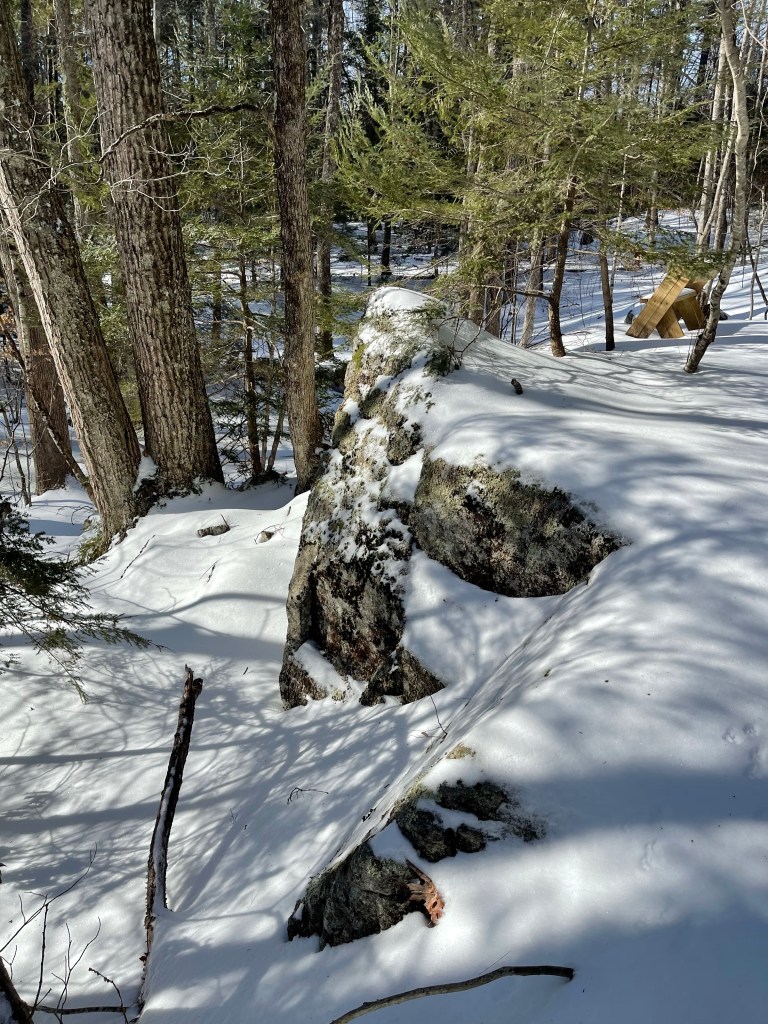
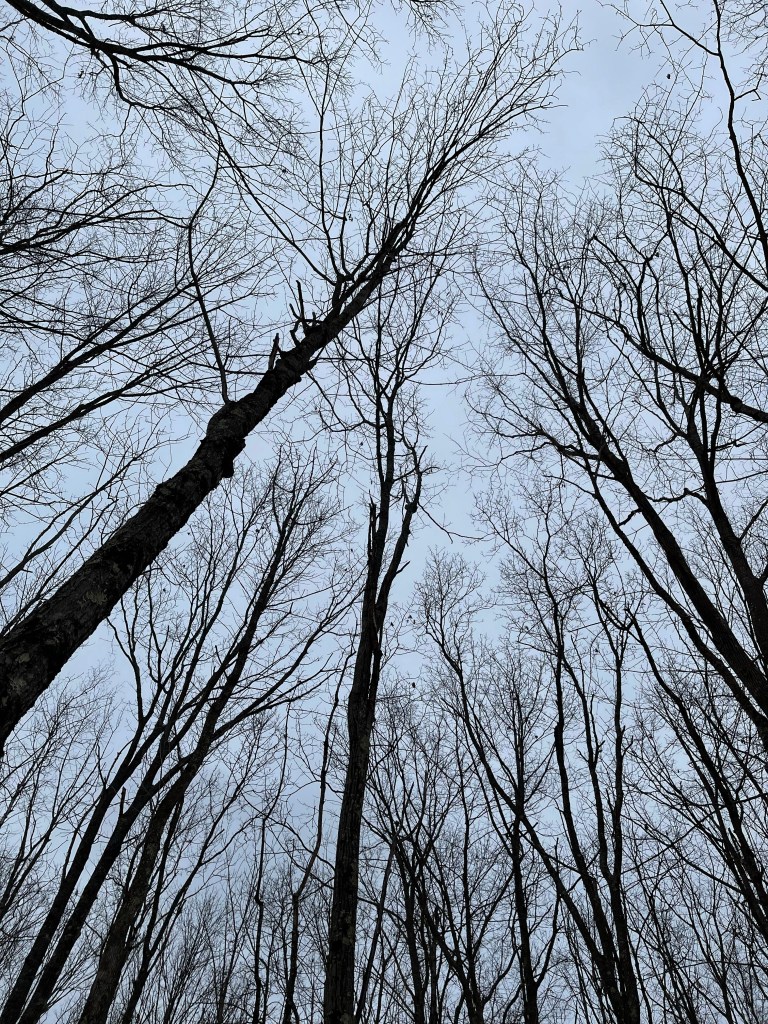
Last month I walked through a forest with several coworkers on a group hike. One of them commented that the naked trees were spooky and reminded him of The Blair Witch Project. I looked around and saw something completely different. And two days later I doubled down on that place and hiked alone in the dark before dawn with a failing headlamp. The things we do for love.
So much of the world is what we perceive it to be. I may find tranquility in a stand of trees, someone else sees a buildable lot and the trees themselves as a commodity to haul off to the mill. America was built on such vision. Thankfully there are people who saw the land as something timeless and preserved it. Were we to level every forest where would we ever find ourselves?
The trees are beginning to leaf out in the Northern Hemisphere, transforming the naked landscape. Soon the forest will hide things that are apparent in colder months. Leaves bring deep shade and mystery to the forest. Often what we see appears distinctly different from one person to another. What the forest is really showing us is not itself, but our own nature. My hiking friend that day saw horror in the naked forest. I saw tranquility.
“On every side, the eye ranged over successive circles of towns, rising one above another, like the terraces of a vineyard, till they were lost in the horizon. Wachusett is, in fact, the observatory of the State. There lay Massachusetts, spread out before us in its length and breadth, like a map. There was the level horizon, which told of the sea on the east and south, the well-known hills of New Hampshire on the north, and the misty summits of the Hoosac and Green Mountains, first made visible to us the evening before, blue and unsubstantial, like some bank of clouds which the morning wind would dissipate, on the northwest and west. These last distant ranges, on which the eye rests unwearied, commence with an abrupt boulder in the north, beyond the Connecticut, and travel southward, with three or four peaks dimly seen. But Monadnock, rearing its masculine front in the northwest, is the grandest feature.
As we beheld it, we knew that it was the height of land between the two rivers, on this side the valley of the Merrimack, or that of the Connecticut, fluctuating with their blue seas of air,—these rival vales, already teeming with Yankee men along their respective streams, born to what destiny who shall tell? Watatic, and the neighboring hills in this State and in New Hampshire, are a continuation of the same elevated range on which we were standing. But that New Hampshire bluff,–that promontory of a State,—lowering day and night on this our State of Massachusetts, will longest haunt our dreams.” — Henry David Thoreau, A Walk to Wachusett
Mount Wachusett is a glaciated monadnock, standing 2006 feet tall. Like her neighbor to the northwest, Mount Monadnock in New Hampshire, Mount Wachusett stands watch over the landscape that bows before her. You can’t talk about one mountain without mentioning the other, for they are forever kindred spirits in the landscape. Both mountains are uniquely positioned so that their waters flow to the Merrimack River from one side and to the Connecticut River from the other. The waters from each river run in my blood, which made a hike to the summit a sort of homecoming for me. And yet, for all the hikes I’ve done on Monadnock, I’d never hiked Wachusett.
This was a month where the weather continued to disappoint those who dream of deep snow drifts, while thrilling those who pine for a mild winter. Count me in the camp of the former: I wanted nothing more than to fly across snow plains this winter. A heavy snowfall the day before offered one last chance for the month. But it was quickly apparent that this was a micro spike hike, and the snow shoes were left behind yet again.
From the Visitor’s Center, you can easily summit Mount Wachusett in under 30 minutes. But that wasn’t our goal. Instead we took the Bicentennial Trail around the eastern slope to High Meadow Trail, up through a stand of Hemlocks to the Pine Hill Trail. Fluffy snow over ice creates uncertain footing, and we slowed our pace to mitigate the risk of injury. For a time, the only break in the trail ahead was from a porcupine, who’s distinct tail marked the trail in footprints and swirly plows. It seems most people cut to the chase and scramble up the mountain. We were more inclined to linger with it, to get to know it better. To feel what Thoreau felt when he and Richard Fuller hiked here from Concord, set up their tent atop the lonely summit, and had the place to themselves for a night.
Wachusett’s summit has changed since Thoreau’s time. There’s a ski slope on one side, there’s a mountain road you can drive up in the warmer months to see the view without earning it, and there’s ample parking for those cars. A few towers, including an observation tower, complete the scene. I wonder, reading Thoreau’s account, where did they pitch their tent and read Virgil by the light of a summer full moon?
Winter snow obscures much of the impact of man, but you’re still clearly in a manmade world when you’re on the summit of Mount Wachusett. To return to nature you must seek the trails that criss-cross around the reservation. But the views are largely the same as they were for Thoreau’s 180 years ago. Just as it was for him, Monadnock stands prominently as the grandest feature of the 360 degree view.
Inevitably we left with more to see, trails and old growth forest to explore another day. For this day I found what I was looking for. Time with an old friend hiking trails I’d always meant to get to one day. And a glimpse into a world Thoreau would find both foreign yet comfortably familiar. Wachusett is timelessly accessible, but somehow always felt apart from the mountains I sought out. We finally got acquainted with one another.
Summit tower, Mount Wachusett Distinctive porcupine tracks mark the trailPlenty of exposed granite despite the snowWhich way do we go? Plenty of choices.
“Do you know that even when you look at a tree and say, ‘That is an oak tree’, or ‘that is a banyan tree’, the naming of the tree, which is botanical knowledge, has so conditioned your mind that the word comes between you and actually seeing the tree? To come in contact with the tree you have to put your hand on it and the word will not help you to touch it.” ― Jiddu Krishnamurti, Freedom from the Known
I encountered a stand of hemlock trees shading the path I walked. Combined with the crisp breeze I was quickly chilled. Not five minutes before I’d contemplated taking off layers and just like that the trees stole whatever warmth was radiating down from the sun and left me with nothing but cold. Yet the trees stood indifferently to my comfort.
Walking through the hemlocks, feeling their silent majesty, I stopped focusing on myself and appreciated the stoic beauty of the trees. These trees touched me, even as I felt their indifference. And I wanted to linger even with the cold wind relentlessly driving me to find a sunny spot on the trail. Now mind you, I don’t go around hugging trees. But I do exhibit what might be considered by some to be an unusual fondness for them. And these trees, red bark and green needles, are survivors. It’s not easy growing on a mountain, and my moment of cold discomfort was a good reminder of their toughness. For even now they stand together in the dark of a winter night, while I retreat to the comfort of home.
It’s funny, you can leave a stand of trees, yet they stay with you still.
What if we could stay together And simply move on day after day after day Sun and stormy weather You and I together Moving on always? — Ryan Montbleau, The Boat Song
There’s a time warp experience to walking on the same beach with the same person from one year to the next. On an unusually warm Saturday in February I took a 3 mile walk on Hampton Beach with my bride. We had plenty of company, for everyone else had the same idea. Power walkers, casual strollers, hard core swimmers, horse riders, and seemingly every dog in New England chose to be on the same beach at the same time. But at low tide on that particular beach there’s no shortage of elbow room.
I tend to celebrate quiet beaches more, but the people receded into the background on this walk. For it was a walk through time. Reflecting on the past, talking about the future, observing the present stepping across the fragile hourglass of life as we moved across the sand beneath us. She talked about time spent right in this very spot as a child years ago, the memory still fresh in her mind. I recalled a similar walk several years ago and her same observation, when we were both so different and yet the same. Everything changes on the beach, including the people who walk it.
The parade of dogs kept bringing us back to the present. Dogs of all shapes and sizes celebrating the moment at hand. Dogs, like children, have a way of bringing you back to the present. And there we were, walking the beach, considering the deck of cards we’re playing at this moment in our shared life, knowing the challenges coming soon but assessing the opportunities too. You can cover a lot of ground walking the beach, even when you can see the end clearly from where you began.
Sand and warm sunshine Saturday, snow on Sunday. Sun and stormy weather, all in one weekend. Such is New England. Life isn’t always a walk on the beach, but then again, on some precious few days, it is.
Friday offered heavy rain that turned to sleet and finally snow. With temperatures plummeting, this quickly turned into a frozen mess on the roads. And temperatures stayed well below freezing, guaranteeing that anything frozen was likely to stay that way for a few days. The snow was transformed to rock-hard ice, with a light frosting of granular snow atop it. It was perfect for slipping on boots and micro spikes and heading for the trails.
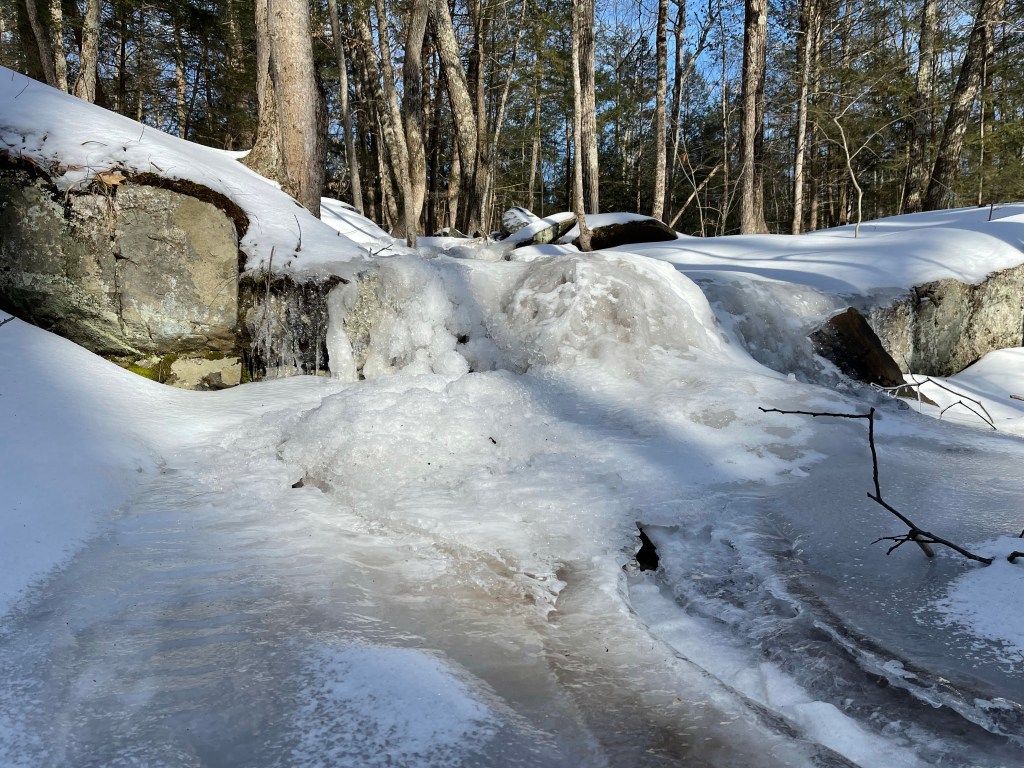
The same conditions that make roads miserable transform trails into magic carpet rides. Most of the sins of the trail are locked below the frozen hard pack, and with the right gear the trail is a joyful peregrinate through the wonders of the forest. Streams and waterfalls become sculpture. Granite recedes from primary feature to delightful accent locked in the ice blanket. The trail itself offers an entirely different experience than it did just days before when snowshoes were the kit of choice. In winter every day brings something new, should you go out to find it.
Much like the landscape around you, walking alone through the woods on a frozen but brilliant sunny day you become intensely embedded in the moment. You don’t walk with purpose to a destination, the walk is your destination. Every step becomes the point of your being here. With micro spikes announcing their grip on the ice, every step becomes a cry of Now! Here! Now!
I visit a frozen waterfall. I only seem to visit it in winter, when it’s locked away in ice, and each visit I tell myself I ought to stop by in spring when the water is running angry. We all feel locked away ourselves in winter, I suppose the waterfall and I are kindred spirits in this way. My visit becomes a vote of solidarity with the falls behind the ice. I promise once again that I’ll be back, and believe I mean it this time. The frozen waterfall is indifferent to my promises. All that matters is the present for a waterfall. The future lies upstream, waiting for its moment. Whether I’m here for it doesn’t matter to the waterfall.
I come across a few people along the way, couples and dog walkers and snowshoers gamely giving it a go on the ice. Read the room, folks. The trail betrays all who have come before me: fat tire tracks, boots, paw prints and snowshoe tracks. We believe we’re the only people on earth when we’re alone in the frozen woods, yet here was proof of all who came before, with all that you chance upon. You aren’t really alone in the woods, you’re alone in the moment. And there’s a measure of delight that washes over you as you make your way towards your own future.
“Listen! Let the high branches go on with their opera, it’s the song of the fields I wait for, when the sky turns orange and the wind arrives, waving his thousand arms.” — Mary Oliver, Wind
The woods were quiet save for the steady clump, swish, click of this clydesdale making his way through the fields and woods on snowshoes. The snow had transformed from powdery bliss Sunday to snowball clingy in the warm sun. In New England you work with whatever Mother Nature gives you, and a lunch walk on a warmish day brought isolation from humanity and companionship from thousands of naked old friends biding their time to bud in Spring.
Steadily I make my way through the forest to revisit favorite spots. I have memories of who I once was in certain places, for the trail whispers. Why do we settle on the familiar so often, when the world offers so much to discover? The trick when walking in familiar woods is to look for the different. The most obvious tell was the snow itself, tracks and consistency completely transformed in a few days, and it will be again on every visit.
Autumn leaves lay scattered near a dug-up clump of snow. Deer tracks? No… Canine. The tracks and leaves tell the rest of the story. I realize I’m telling my own story with every step. I wonder who might read it? The trees stand stoic and unmoved.
I climb up a small rise on virgin snow. Something catches my eye and I walk closer for a look. Someone built a lean-to between two oak trees, with netting and fallen tree branches making up the roof. This wasn’t new, just unnoticed on prior walks. They’d wanted it that way, of course, building it up away from the trail. I wondered at the builder for a moment, and left the mystery unsolved. The world is full of questions, I don’t feel compelled to answer every one of them.
Turning back, I recalled this line of poetry from Mary Oliver about tree branches waving in the breeze. We know this song, the woods and I. Looking around one last time I look for an excuse to linger. They stand in cold indifference and show me the way home.
“In an age of network tools… knowledge workers increasingly replace deep workwith the shallow alternative—constantly sending and receiving e-mail messages like human network routers, with frequent breaks for quick hits of distraction. Larger efforts that would be well served by deep thinking, such as forming a new business strategy or writing an important grant application, get fragmented into distracted dashes that produce muted quality…. Spend enough time in a state of frenetic shallowness and you permanently reduce your capacity to perform deep work.” – Cal Newport, Deep Work: Rules for Focused Success in a Distracted World
I think the reason I get up early is to think, uninterrupted. And when I am interrupted, by other early risers or by something as simple as the cat meowing for food my own deep thinking is disrupted, often to a point where I have to put away the work and find a way to reset myself. The beautiful thing about posting a blog every day is I’m forced to find a way through the shallow pool I find myself swimming in back to deeper waters, distractions be damned. But the work never feels the same.
Noise-cancelling headphones help a lot. When I go deep I’ll play the same song on repeat until I’m done with whatever project I’m committed to finishing. For me, two songs work particularly well for this, Mark Knopfler’s Wild Theme (no surprise if you know what my favorite movie is) and Claude Debussy’s Clair de lune because they both quietly soar and have no lyrics to draw me out of my focused state. After years of this trick, playing one of these songs becomes Pavlovian in snapping my mind to attention.
Long walks in nature help reset the mind when you find yourself in frenetic shallowness, and I have my go-to spots for this too. Walking helps you sort out the puzzle pieces in your subconscious mind, putting all the pieces on the table and shuffling them one step at a time. If the walk goes well you sort things out just enough. But sometimes I find myself dwelling on another puzzle altogether, and realize the distraction wasn’t swimming shallow at all but this elephant in the room that you’ve got to remove before you can properly focus on the original project. Long walks help sift the pieces enough for you to see what you’ve been staring at all along.
Another trick of the trade that countless brilliant minds subscribe to is strict daily application of Julia Cameron’s Morning Pages. Write whatever comes out of your mind onto the page for three pages in a gushing stream of consciousness until you’ve gotten all the noise out of yourself, and then shift to creative output. I’ve tried this a few times but find myself frustrated by the time spent on Morning Pages that I could be spending on the work itself. The fault isn’t in the process but in my commitment to it. Enough people swear by it that it must work, and to go deeper I might have to recommit to this process myself.
“The way to live is to create. Die Empty. Get every idea out of your head and into reality.” – Derek Sivers,How to Live
Whatever gets you there, deeper work is where we mine the very best of ourselves. Eliminate as many distractions as possible, retreat to your proverbial cabin in the woods and do the work. While there’s still time.