Category: Writing

  • Where Our Heart Takes Us

    “I am proud of my heart alone, it is the sole source of everything, all our strength, happiness and misery. All the knowledge I possess everyone else can acquire, but my heart is all my own.” — Johann Wolfgang von Goethe, The Sorrows of Young Werther

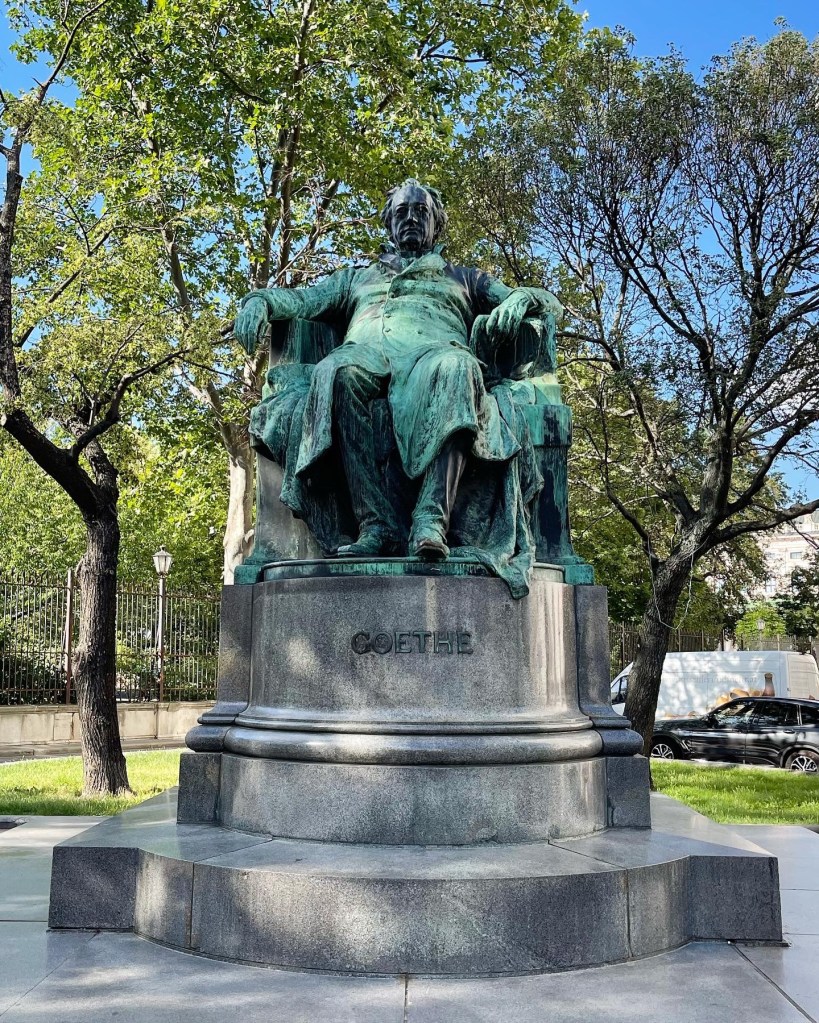
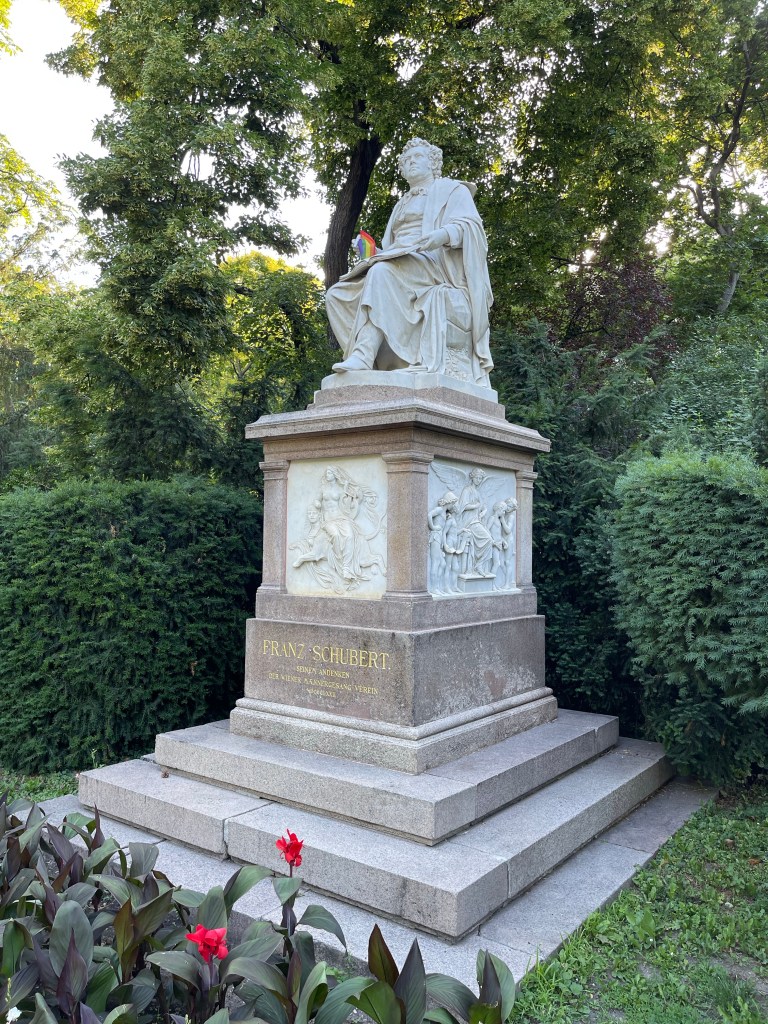
    I was thinking about Goethe after my traveling companion asked me why I was so happy to come across a statue erected in his honor in Vienna. I suppose this quote offers some insight. Goethe distinguished himself as a deep thinker in a city jammed full of them. We all seek knowledge in our quest to become something more, but our heart points the way and determines how far we actually go. Our knowledge quest isn’t unique to us, many of us seek amelioration. The heart ultimately tips the scales for how rich and fulfilling our lives will be.

    Absorbing knowledge is helpful when we do something with it. The homeless man asking me for money in the park easily pivoted from German to English when I responded with my basic skills in his native language. Which of us has more knowledge? Which of us can read Goethe without translation? We are what we either seek or ignore. Knowledge is but a starting point for becoming what we might be.

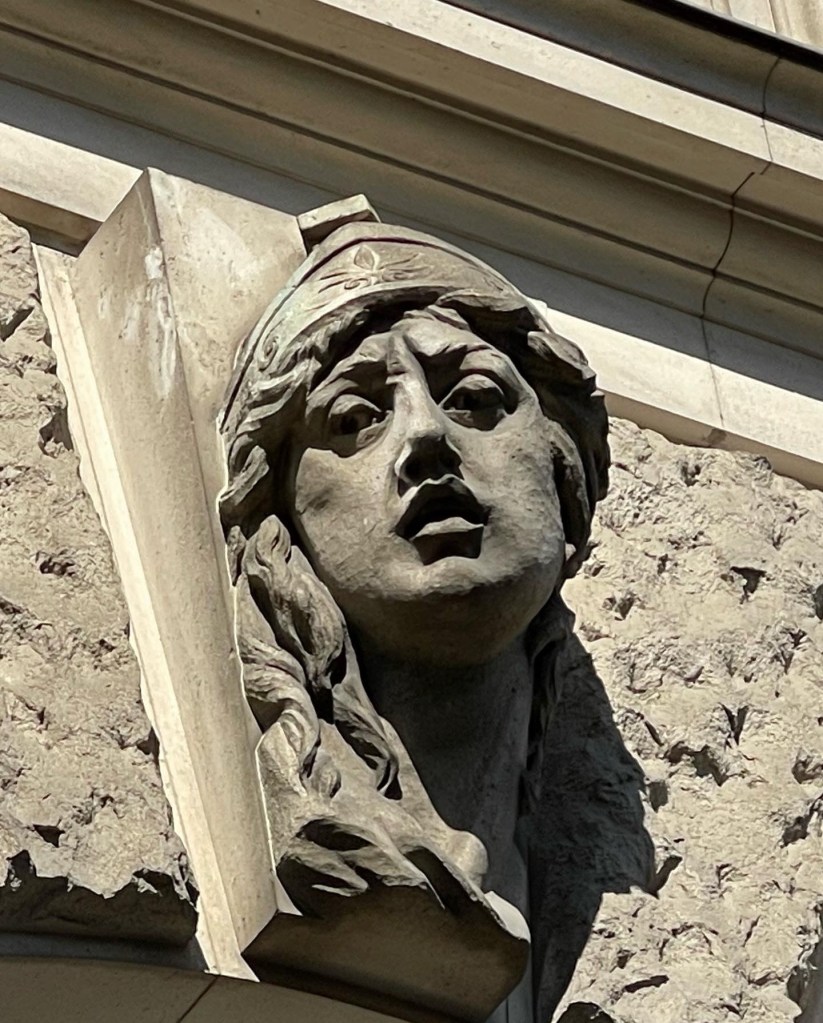
    Traveling, reading, learning a language, and trying to capture experiences in words are each forms of seeking knowledge. Goethe’s hard stare and his translated words remind me that I have work to do. Do I have the heart to get it done?

  • Vienna, At Last

    Slow down, you crazy child
    And take the phone off the hook and disappear for awhile
    It’s all right, you can afford to lose a day or two
    When will you realize, Vienna waits for you?

    — Billy Joel, Vienna

    A traveler seeks magic in places big and small, and in mountains and cities alike. Two weeks of trains, planes and automobiles carried us to some of the most beautiful places in the region, but we had to come to Vienna before we felt our trip was complete. Maybe it was Billy Joel’s reminder that the city—the world— is out there waiting for us to stop the madness and seek out the magic that inspired a visit, or maybe it was a voice inside. Vienna, like Paris or Budapest or Prague remains a myth until you reach out and meet it.

    The first impression a visitor may have of Vienna is that the city is far bigger than one might expect. The larger city looks and feels like the working city it is. Cranes all over the horizon indicate it’s still growing, and quickly. But for all its bigness the Old City itself is very walkable.

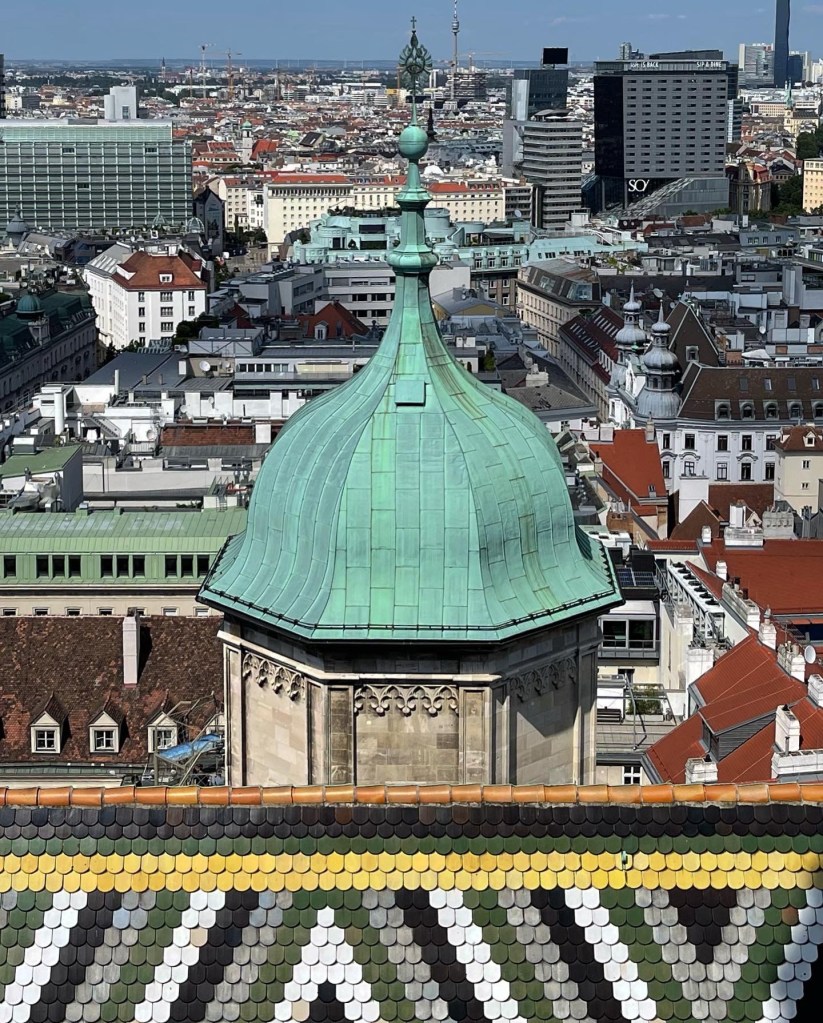
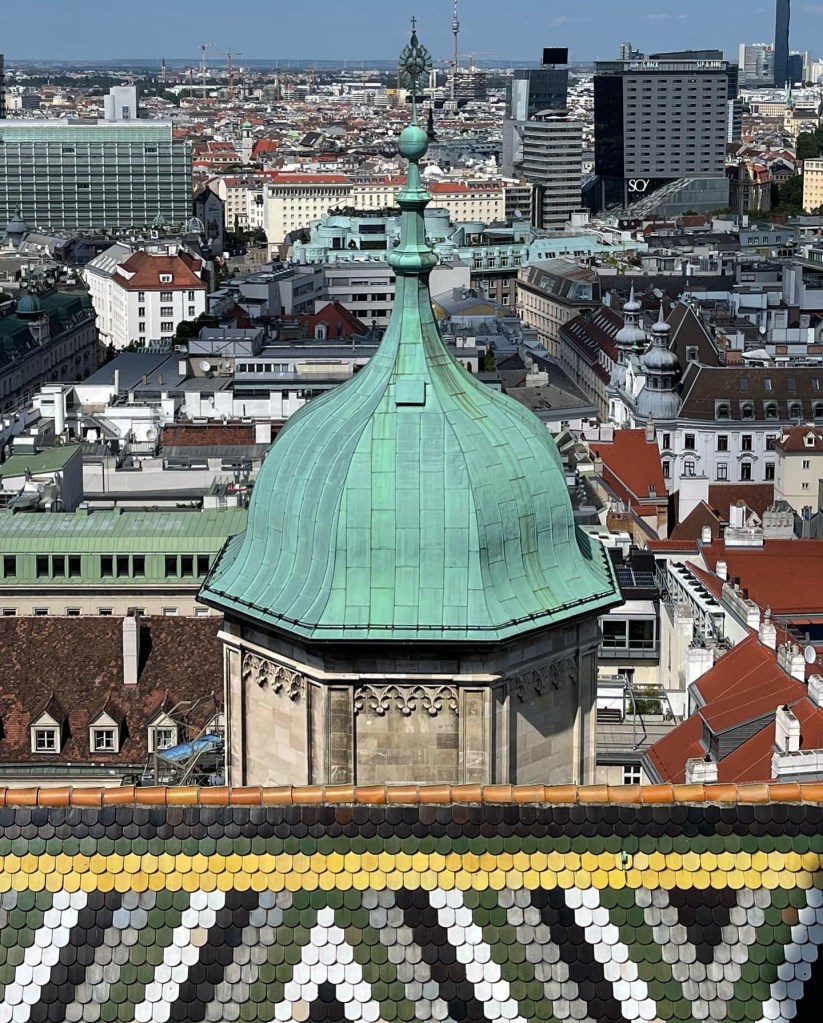
    Where do you go first when you visit Vienna? For me the choice was obvious: St Stephen’s Cathedral. Seeing the massive and ornate structure of the church itself was a goal, but climbing the 343 steps up the South Tower for the incredible views of the city was my underlying goal.

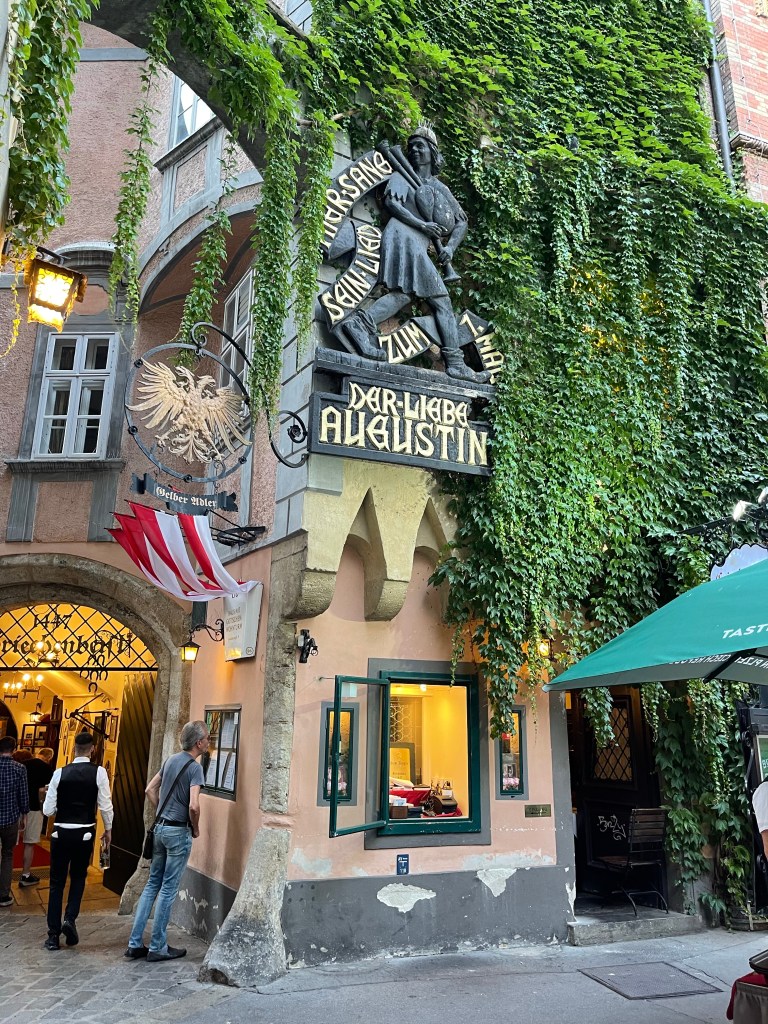
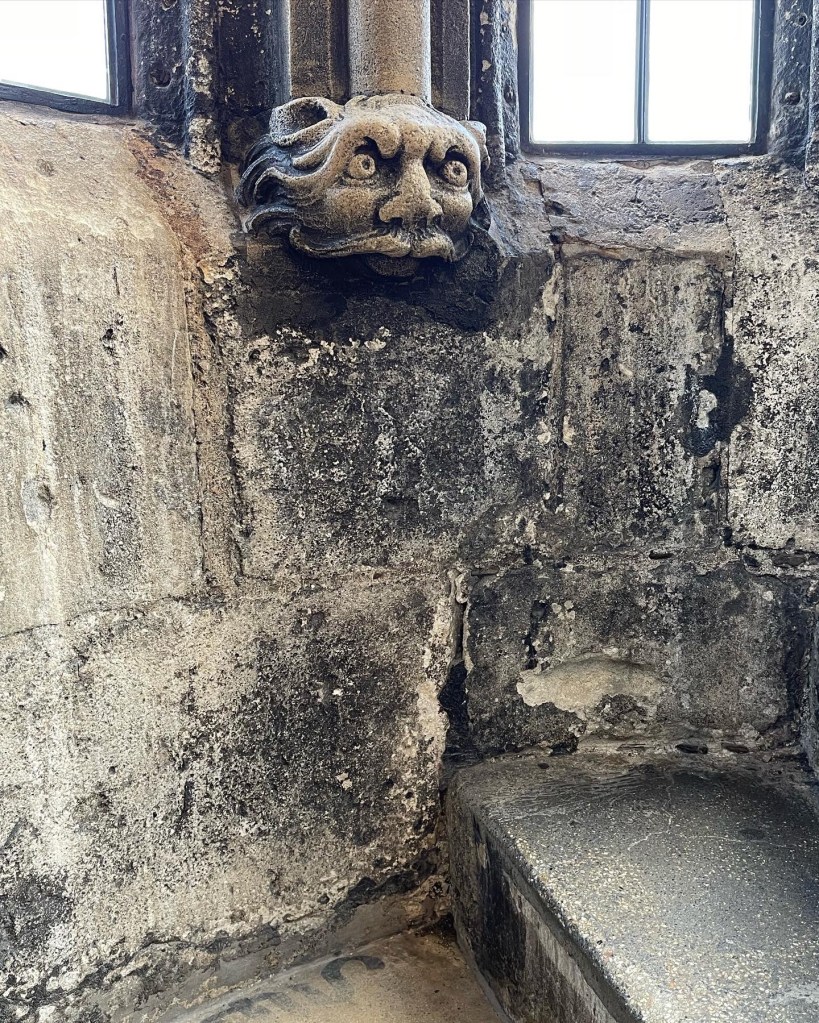
    Having seen the city from a high vantage point, it was time to find the details that make Vienna unique. One must walk an old city and find that which hides from casual visitors. This city offers something around every corner.

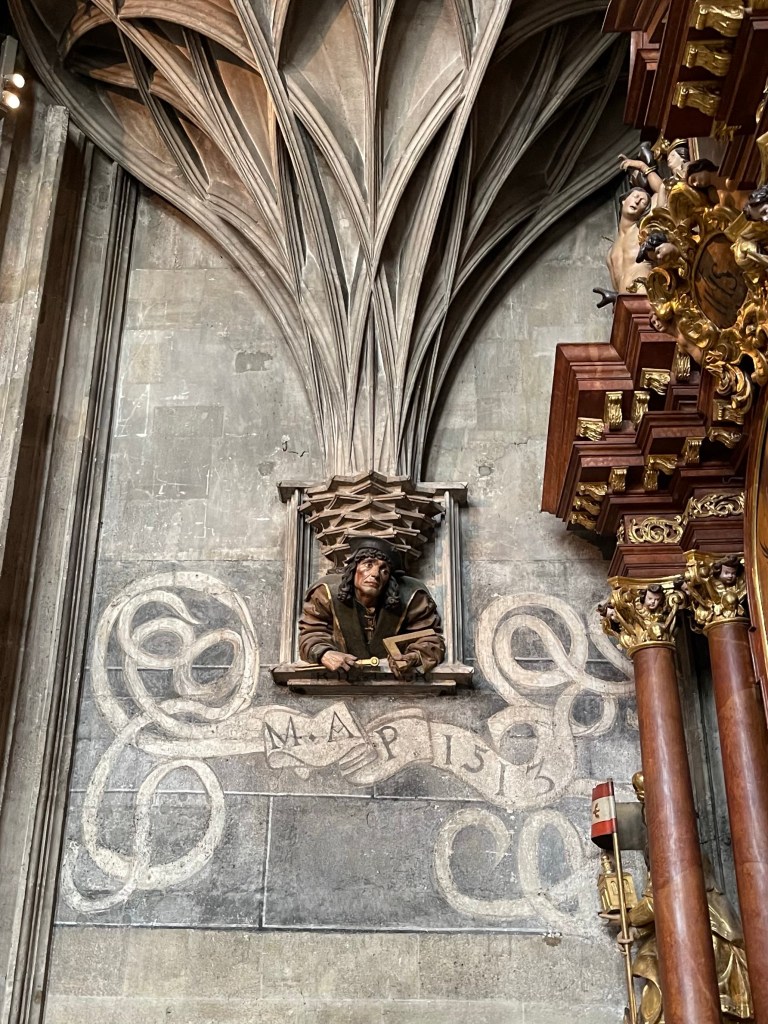
    When you’ve heard about Vienna your whole life don’t just skip across its surface like a stone, sink in! One should visit the palaces and museums and cafés to know Vienna, but you should also seek out the nooks and crannies where the place reveals its magic. Those who built this place leave a bit of themselves for us to discover, should we only look for it.

  • Beyond the Same Place

    “For I assure you, without travel, at least for people from the arts and sciences, one is a miserable creature!…A man of mediocre talents always remains mediocre, may he travel or not–but a man of superior talents, which I cannot deny myself to have without being blasphemous, becomes–bad, if he always stays in the same place.” — Wolfgang Amadeus Mozart

    There are forces that work on you when you’re in the middle of travel. Time flexes, and the clock you’re familiar with slips off-kilter. Truthfully, it’s us that slips off-kilter, the clock remains indifferent. Travel forces adaptation and change. Those who stubbornly hold on to their routine aren’t rewarded with the benefit of transformation. Let the world wash over you and the old ways of thinking are swept away. You’re carried to new ideas and lifted to new places.

    In one evening of wine-fueled conversation I practiced German with Austrians, French with a well-travelled Frenchman and discussed the origins of Christian names with an Irish woman. Moments like that remain locked in your mind, even as it releases you from your previous way of looking at the world. We can never stay in the same place, we must reach beyond to grow.

    We’re all on a path of becoming something more than we might otherwise be. Travel done well is a shock to the system, allowing us to get past ourselves. It can’t help but make us better at our work, for it surely transforms us as people.

  • Silencing Voices

    “If you hear a voice within you say ‘you cannot paint,’ then by all means paint, and that voice will be silenced.” — Vincent van Gogh

    When we figure out the truth in van Gogh’s words dictates exactly how creative we’ll be at any given stage of life. He didn’t achieve “success” until he’d left this world, for us the world spends little time worrying about our feelings on the matter. The truth is we have but precious little time to silence our own voices and chase dreams. Why wait?

    The problem we have is we see what the masters do in any field, and compare our work to that. We have difficulty reconciling our incremental step towards mastery with the brilliant work of others before us, without ever considering the stumbles they took on their path. The work evolves when the mind puts aside resistance and gets to it.

    We’ve already made our mark on the world, subtle as it might seem. Our splash ripples even as we contemplate our next dive into the unknown. Knowing this, why not stretch our limits a bit on this next one? Silence our doubters one small step at a time.

  • Pack Light

    “Travel like Ghandi, with simple clothes, open eyes and an uncluttered mind.” – Rick Steves

    Packing for a trip, or for a hike, informs. It teaches us what we can do without. And it turns out we can do without a lot of things. Add a few layers, a few event-specific bits of fashion if you must, and always (always!) good shoes. Don’t forget your toothbrush. If you have to weigh your suitcase to keep it under the limit you’re doing something wrong. The goal with suitcases and backpacks is the same: maximize the empty space available to you. Simplify.

    The lesson here naturally applies to all things. We ought to live a more simple, uncluttered life. We ought to speak less and listen more. We ought to write with more brevity and fewer clever words we throw around too often (like brevity).

    We carry too much baggage with us. We use too many words. We speak too much. Simplify and open enough space to experience the world. Navigate the world as a poet might do. With lightness and an eye for detail.

  • Our Lifetime Knowledge Quest

    “Knowledge does not come to us by details, but in flashes of light from heaven.” — Henry David Thoreau, Life Without Principle

    Thoreau’s Life Without Principle is a quick read, but well worth the hour or so it takes to digest it. As with anything in life, the question is, what do we want to prioritize in our brief time? The essay is itself a flash of light that opens the mind to a lot of questions we often push aside. Isn’t that what reading should do for us? Isn’t that what we aspire to in our very best writing?

    “I do not know but it is too much to read one newspaper a week. I have tried it recently, and for so long it seems to me that I have not dwelt in my native region. The sun, the clouds, the snow, the trees say not so much to me. You cannot serve two masters. It requires more than a day’s devotion to know and to possess the wealth of a day.
    Shall the mind be a public arena, where the affairs of the street and the gossip of the tea-table chiefly are discussed? Or shall it be a quarter of heaven itself- an hypaethral temple, consecrated to the service of the gods?
    We should treat our minds, that is, ourselves, as innocent and ingenuous children, whose guardians we are, and be careful what objects and what subjects we thrust on their attention.” — Henry David Thoreau, Life Without Principle

    Thoreau wrote this for a lecture he gave in 1855, but doesn’t it remain timeless? Why do we dwell on the gossip of our own day and defer the very best ideas for another? Most media is junk food for the mind. We snack way too much on empty calories in our information diet, leaving our souls starving for nutrition.

    We must make knowledge our quest in our short time. If the best way to learn something is to teach it, it follows that we must tackle the deepest ideas in our own writing and conversations too. To participate in the Great Conversation and aspire to enlighten others as we become enlightened ourselves.

    We become what we focus on the most. So it follows, we ought to continue to raise the bar on our own development. To realize a full and rich life, we ought to make our lives a knowledge quest. Each day offers its own wealth to mine. And an opportunity to be a philanthropist with that knowledge.

  • For a Little Bit More

    “You’re not lazy, you’re in the wrong job. Do what moves your soul.” — @master_nobody

    This tweet is admittedly a bit fluffy, but it poked at me all day after stumbling upon it in my feed. I suppose it’s because there are times when I scold myself for being lazy. For not doing the work necessary to make more progress in my profession or with my overall fitness. We all get like that sometimes, don’t we? Self-critical about our productivity. Maybe our labor is misdirected?

    There are plenty of times when I’ll forget I’m working at all. I’ll find myself moving six yards of loam after work and pushing past a point of exhaustion to get it done before nightfall so the coming rain doesn’t turn it into a mud pile. Or being teased about not ever relaxing on weekends or vacation, instead constantly working on the garden or doing an errand instead of sitting still with a book or a beer. Or methodically writing and re-writing a sentence in a blog post that may or may not resonate with anyone but me. These actions are not lazy, they’re stored up energy attracted to heat. There’s nothing hotter than clear purpose.

    Why do we waste the vitality we’re blessed with on anything but the pursuit of our individual greatness? It takes a few turns through the grinder of absolutely-wrong jobs to see the tragedy of misapplied energy. We do what we must to keep food on the table, but we ought to always be moving towards blissful work. Work that makes us laugh at the thought of ever retiring.

    Sure, we may just be able to relax someday, but I don’t know if that nagging feeling that we could have done more would ever disappear. Doesn’t it make sense to make a go of it with this, our one precious life? To do things that inspire and excite us, and make us want for a little bit more at the end of a long day. When we move to purpose laziness disappears.

  • The Edge

    “Development is all about growth. Your body starts to grow when, when your body says, ‘No more.’ That’s when things start to happen. Teams become great. Players become great when you get to The Edge.”
    “The Edge is where average stops and elite begins.” — Urban Meyer

    Sure, there’s a bit of football locker room bravado in this quote, but Meyer is right on point. Our growth happens when we push beyond our limits—beyond the edge of our comfort zone. This certain applies in fitness, but equally well in our creative life. We either push beyond the limit or we languish in mediocrity. That may seem harsh, or maybe obvious, depending on how we accept our current position near the edge.

    Think about it: the accepted method for quickly mastering a language is immersion. You plunge well beyond your comfort zone into a place where you have to figure things out or you’ll fail. Isn’t that pushing beyond an edge?

    We place ourselves into positions where comfort rules growth. How can we expect growth in these moments? We create participation trophies and expect everyone to celebrate just the same, and wonder why we aren’t seeing more people break through the average. Don’t get me wrong, everyone matters, but without differentiation and rewarding the individual pursuit of excellence what becomes of us?

    This writing every day thing has been informative, often challenging, perhaps mundane and repetitive for the reader (sorry) and often eclectic (not sorry), but it’s been a steady push to find the edge. Blogging is an investment in thyself, shared with the world. But there’s an edge that hasn’t been pushed through yet, waiting for the skill and gumption of the writer to catch up.

    We can’t be elite in our craft until we break through our boundaries. We can either accept average or find more in ourself. Life rewards those who break through that damned edge.

  • Horizons

    An old trick, this habit of scanning the horizon in search of a challenging quadrant and wondering: Is this my destiny? A childish trick, for we know if we go far enough we’re bound to return full circle—to the point of departure.. What is it about that horizon? What lies on the other side? Not just ships and land and more of the same old ocean—but what is the magic that calls…and who am I fooling really? — Sterling Hayden, Wanderer

    We each look to the horizon, wondering at our destiny. Some look and feel it too far a journey, and maybe it is. Maybe we aren’t meant to endlessly follow the horizon. Then again, maybe we gaze out at such a distance as a way to stop us from ever going in the first place.

    “A journey of a thousand miles begins with a single step” — Lao Tzu

    Focus too much on the horizon and you’ll surely stumble. Focus too much on the step in front of you and you’ll find yourself going in circles. The answer, of course, is to keep one eye towards the horizon with the other on this next step.

    As Hayden points out, the funny thing about chasing horizons is that you’ll eventually end up going full circle back to where you began. What he doesn’t say is that you’ll be a different person upon your return. Surely you’ll look at where you started in a whole new light.

    We chase all sorts of horizons through travel and writing and learning new things. A quest doesn’t always mean setting sail, but the analogy holds true nonetheless. For when we chase horizons we’re embarking on a journey of transformation. We all ought to chase horizons, for deep down, we know we can’t stay where we’ve been. Not when there’s so much out there for us.

  • Something Mighty and Sublime

    Rest not!
    Life is sweeping by
    go and dare before you die.
    Something mighty and sublime,
    leave behind to conquer time.
    — Johann Wolfgang von Goethe

    Goethe once wrestled with the desire to accomplish great things while enjoying the comforts of a bourgeois lifestyle. By all accounts he succeeded in transcending the ordinary with his writing. And what of us? Are we so comfortable in our domestic lifestyle that we fail to seize the moment? Are we doomed to be the forgotten masses or will we create something mighty and sublime in our time?

    These are grandiose expectations for a lifetime. Who are we to rock the boat when there’s such good sailing? We ask of life what we will, it hands back harsh unfairness and tempting distractions and entertaining beguilements that quickly rob us of the one thing that matters most: time. What of it? Plenty of people have transcended all of these things and more. The only thing we can control is our focus and consistent effort towards the achievement of our hopes and dreams.

    “Do or do not. There is no try.” — Yoda

    There’s no judgement in these words, just the facts. We have our time and then it will be gone, intentions be damned. We must ask ourselves, in the quiet moments of truth, what is it we wish to do before it all ends? Rest not! Get to it already.