Category: Writing

  • What Shape Waits in the Seed of You?

    Now, looking through the slanting light of the morning window
    toward the mountain presence of everything that can be
    what urgency calls you to your one love?
    What shape waits in the seed of you
    to grow and spread its branches
    against a future sky?
    Is it waiting in the fertile sea?
    In the trees beyond the house?
    In the life you can imagine for yourself?
    In the open and lovely white page on the writing desk?
    – David Whyte
    ,What to Remember When Waking

    We get lost in the person we told ourselves we’d be today when we were someone else yesterday. To-do lists and created obligations conspire to hold you to what your scheduled to be. There’s a future you being created in that schedule that should make you burst out of bed with excitement. But waiting a beat or two to listen to the calling informs.

    I’ve mentioned before that I do a one line per day entry at the end of the day. I sometimes wake up thinking about it, contemplating how I might make the line worthy of the ink. Worthy of the day crossed off the short list of days we have on this earth.

    Morning writing forces the hand, you might say. It forces you to reconcile the whispers before getting to those other things. I highly recommend it for anyone looking to figure out what that voice is actually saying in your ear. And when you hear it, what then? Does it chafe against that which you’ve planned for yourself?

    The beginning of the day sets our course based on the conditions and circumstances we find ourselves in. We know where we’d like to go, but must reconcile it with our current reality. With our previous expectations for ourselves, set on the calendar. The question is whether we’ve left ourselves the room to grow into that future sky. The answer, like the question, lingers in that quiet, solitary moment.

  • A Hole in the Ground

    Walking through the woods of Hampstead, New Hampshire we found an old mine quietly marking time. A modest hole in the ground, really, with scattered bits of Mica all around. To call it a mine seems a bit of a stretch when compared to the big mining operations elsewhere in the world. But it called to me, knowing I’d been looking for it, and seemed to sparkle in the sun for the attention.

    Mica is also known as Isinglass. From a resource perspective, Mica is sheet silicates used in everything from glass making to fashion to a key ingredient in gypsum. It has some heat-resistant qualities and is non-conductive, which makes it useful. But it’s very expensive to mine and labor intensive, so most of the mining now is done in India. For anyone complaining about their work, I’d point to Mica mining as one of many professions that might be a bit tougher.

    In New Hampshire you see flakes of Mica everywhere but the meaningful sheets (or “books”) were harder to find. When they did find it, they’d root it out by blasting and drilling carefully around the sheets. Keeping the sheets intact was the labor-intensive trick.

    There’s a semi-famous mine in Grafton called the Ruggle’s Mine, now closed, that used to be a tourist attraction. Visitors could carry out whatever rock that met their fancy. The mountain where it was mined was called Isinglass Mountain. You can find it on a topographical map but good luck finding that on the list of New Hampshire’s 1,786 mountains. Does a mountain lose prominence when people dig holes in it?

    Back in the woods, I wondered about this old hole in the ground, once a Mica mine, now a landing place for leaves and pine cones. There’s little history around it, probably because it really isn’t any bigger than a cellar hole. But it’s in my nature to wonder about such things. Not so much for the hole but the people who labored in it. I imagine they’re buried somewhere in town, filling their own holes in the ground. What was their story?

    Holes in the ground aren’t nearly as flashy as waterfalls and mountaintops. I can’t blame anyone who skimmed the first paragraph of this post and thought, “not for me”. But there’s a story there in the ground, marking time like the rest of us. And I wonder, what would it take to dig it out? For without a story it’s just another hole in the ground.

    Mica Mine hole in Hampstead, NH
  • Something More

    “The world always seems brighter when you’ve just made something that wasn’t there before.” Neil Gaiman

    This rather cheery quote by Gaiman prompts a challenge of sorts from me. For making something isn’t what makes the world brighter, making something you care about making is what brightens the world. For in the making of something in such a way you honor the world with your contribution.

    As Gaiman rightly points out, we’re lovingly placing something that wasn’t there before out in the world for it to embrace. Will it fly or get lost in the noise? It’s not up to us to decide. It’s up to us to create it and set it free. And then to get back to the business of building another beacon.

    The best of our work becomes accretive rather than reductive. Look around, there’s plenty of people creating hateful, mean-spirited work that divides and diminishes the world. But not us, no: we offer something more. Something that resonates across the table and across time. For the very best work becomes timeless.

    So what makes something timeless? I believe it’s the deep connection between two people that your work represents. Paint placed just so on canvas. Architecture that stirs the heart generations after the last stones were laid. Words that transcend the author or poet and connect one soul to another. This is what brightens the world. This is the shining soul beacon of the artist that keeps hope alive, like a Fresnel lens lights the distance in a turbulent dark sea:

    “If you have built castles in the air, your work need not be lost; that is where they should be. Now put the foundations under them.” – Henry David Thoreau, Walden

    “Dwell on the beauty of life. Watch the stars, and see yourself running with them.”
    – Marcus Aurelius, Meditations

    “Tell me, what is it you plan to do
    with your one wild and precious life?”
    – Mary Oliver, The Summer Day

    “If you dare nothing, then when the day is over, nothing is all you will have gained.”
    – Neil Gaiman, The Graveyard Book

    “This above all: to thine own self be true,
    And it must follow, as the night the day,
    Thou canst not then be false to any man.”
    – William Shakespeare, Hamlet

    All words across time, offering a path through the darkness in the world. Offering hope and direction and illumination. This is something more. And this is our opportunity too. Great artists are ambassadors to the world, bridge builders to the future, and infinite soul connectors. That’s something to aspire to.

  • Trust Our Heaviness

    How surely gravity’s law,
    strong as an ocean current,
    takes hold of the smallest thing
    and pulls it toward the heart of the world.


    Each thing—
    each stone, blossom, child —
    is held in place.
    Only we, in our arrogance,
    push out beyond what we each belong to
    for some empty freedom.


    If we surrendered
    to earth’s intelligence
    we could rise up rooted, like trees.


    Instead we entangle ourselves
    in knots of our own making
    and struggle, lonely and confused.


    So like children, we begin again
    to learn from the things,
    because they are in God’s heart;
    they have never left him.


    This is what the things can teach us:
    to fall,
    patiently to trust our heaviness.
    Even a bird has to do that
    before he can fly.

    by Rainer Maria Rilke, How Surely Gravity’s Law

    It’s been a long time since I posted an entire poem, but Rilke’s demands a full reading. And if I were bolder I might just leave it there by itself, instead of injecting my own commentary on the world. But a blog (to me) necessarily demands contribution not simply reposting. And so my own words dare to follow Rilke’s, reaching for a place at the table.

    The key word in the poem is surrendered: to earth’s intelligence, to God’s heart if you will, to our own heaviness. You realize your imperfection and embrace it. In doing so you recognize the entanglements and struggles in others. You accept them for what they are as well. And learn to trust others and most of all your own voice.

    You reach a point in life where you let go of it all and to stop worrying about place and whether you’ve earned it. You stop worrying about everything, really. The work remains, but the will is stronger. You’ve rooted yourself to things tangible and true and begin to rise up.

    To push out beyond. Grounded. And anchored so, we begin to fly.

  • Incrementally Better

    “A mistake repeated more than once is a decision” – Paulo Coelho

    “The best criticism of the bad is the practice of the better.” – Richard Rohr

    When you live long enough you start to lose some of the hard edge that once defined you. That sarcasm you voice to others was nothing like the self-talk you once gave yourself. Quite simply, you stop worrying about the chase for perfection and start living with who you are.

    The Coelho quote above once tortured me for the patterns of decisions I’d made over time that didn’t help me. Eating the wrong food, opting out of exercise, not making the call you know you needed to make, not following through when you should have, and then not following through the next time either. Decisions made, not mistakes. This quote can eat you alive if you let it.

    And then I stumbled upon the Rohr quote, and recognized the incremental improvement in myself over time. When things aren’t going well in some area that self-talk amplifies the worst traits, making it more of who you are. Once you’ve recognized and completely own past decisions, what do you do with them now?

    You work to reduce their impact in your life. You get better each day at the things you once avoided. Slowly, surely, you incrementally grow better and the bad shrinks to memories of the way you once were. Still a part of you, always, but not who you are.

    Freud would rightly point to the Id, Ego and Superego at this point in the game. As you get a couple of years older you recognize each for what they are inside you. When you’re young and wild you run with one voice (Id) and just eat the chips with abandon. A bit later another voice (Ego) will start pointing towards the weight loss goals on your list and tell you to stop eating those chips. The Superego makes you feel guilty for eating the chips or proud for not eating them and working out. (This moment of pop-psychology brought to you by Pringles).

    Today, I’m just trying to be a bit better than I was yesterday so that tomorrow I’m proud of the progress made. It’s not that the Superego cuts me more slack, more that I choose not to wallow in self-criticism. The best way to diminish that critical voice is to show it progress towards the person you’re trying to become. Because that identity you’re aiming for is impressive. And even if you don’t reach it, “close enough” is still pretty good.

  • The Eternal Makes You Urgent

    “Once the soul awakens, the search begins and you can never go back. From then on, you are inflamed with a special longing that will never again let you linger in the lowlands of complacency and partial fulfillment. The eternal makes you urgent.” – John O’Donohue, Anam Cara: A Book of Celtic Wisdom

    O’Donohue picked the name of his book with purpose. “Anam cara”, or “soul mate”, suggests that the timeless wisdom buried within might offer the kind of guidance you would get from a cherished friend or spouse. Google it and you’ll find coffee mugs and spiritual retreats and other such things. It would also be a great boat name. And it stirs something in you whether you have one or long for one.

    This idea of the soul awakening isn’t new to us. If this awakening happens at all, it might not be thought of as soul, but as passion or purpose or calling. Some of us steer clear of words like soul. It almost feels intrusive for me to be writing about such things. Not skating my lane, you might say. But I understand eternity, and urgency, and this idea that the things that matter most to us require immediate attention. For our time in eternity isn’t the moments on this side of the turf.

    My own urgency started burning inside of me when I started writing again. It served as a catalyst for exploration and deeper thinking. And when you have it yourself you quickly see the urgency in others. Hikers hiking every available moment, landlocked sailors scrambling to be ready for the warmer days ahead, small business owners pouring every bit of available energy into standing up something special, artists creating brilliant mirrors that reflect back on the rest of us. Urgency senses its kind out in the wild.

    The trick is finding and awakening that soul. And you only find it by trying and doing, tossing aside and finding something else to do. If you’re lucky you find it quickly and embrace it. Or you see it and follow a different path, only to have it pull at you until you finally listen or die embittered at the path you took instead. That’s no way to begin eternity. Is it?

  • We Must Be Still and Still Moving

    Old men ought to be explorers
    Here and there does not matter
    We must be still and still moving
    Into another intensity
    For a further union, a deeper communion
    Through the dark cold and empty desolation,
    The wave cry, the wind cry, the vast waters
    Of the petrel and the porpoise. In my end is my beginning.
    – T.S. Eliot, East Coker

    Beginning at the end as I do in quoting this masterpiece is admittedly the easy path, but seems appropriate given the context. I’m roughly where TS Eliot was when he wrote East Coker – middle of life (hopefully). Or maybe just past the middle. But who’s counting? Days are days, and here and there does not matter. Time will tell, as it always does.

    This blogger has settled into this rhythm of still and still moving. Moments of quiet contemplation, deep reading and exploration interspersed too infrequently with mountaintop adventures and faraway places. Thoughts of past exploration and schemes of future possibility fill the mind, and are betrayed by more than a few posts. We aren’t sharks, always moving, but humans immersed in life in all its complexity. The thoughtful wrestle with the same ideas, the masses distract themselves with media and games.

    Old folks ought to be explorers. And us not-so-old folks too. We ought to be out seeing the world, exploring vast waters and rounding bends. Bridging gaps in language and understanding and toasting the folly of it all with old and newfound friends. Catching a sideways glance and throwing it back. Dancing in celebration and settling into deep conversations. We will again, we see that now. Where will you go? What will you do with the time you’re given?

    This human journey leads to another, more intense place, or perhaps merely to stillness. Who are we to know, really? Do you choose logic or faith? Which is the real leap? Our path is one of tapping our potential, to struggle and explore the darkest and brightest days alike. To make the best we can of ourselves. To turn it all over and understand where we came from. This seems to me the way, for the end is the beginning. In some ways, we’ve known that all along, haven’t we?

    Beginning
  • 7 Observations on Reaching 1000 Blog Posts

    We all write for different reasons, and my observations might not be yours, nor should they be. But reaching a milestone like 1000 blog posts deserves some measure of reflection. As I look forward with anticipation to post number 1001, I pause to give you seven observations about the journey to this point:

    1. The well never runs dry. You just run out of time. Writer’s block is a myth. If you’re earnest and curious you never run out of things to write about. But you will wrestle with perfection and trying to make a post reach its potential. When you post daily you learn to love it as it is and know when it’s time to let it fly. No, it’s never perfect, but you post it anyway.
    2. Everything becomes a potential blog post. I started writing Alexanders Map intending to have a local travel blog with historical sites with visits to amazing places. The name itself infers this. But it quickly expanded to include a diverse (some would say eclectic) mix of topics. You learn to listen to the muse, and embrace the new. And in the unexpected you find your own voice. You are the link between each post, and part of you reflects back on what you’ve visited.
    3. This business of blogging is your own business. You can quickly grow your blog follower list by playing the game of actively following and liking other bloggers. Or you can do the opposite and grow organically. I choose the latter: I’m very selective about who I follow, I “like” what I actually read and appreciated, and I don’t follow to gain followers. You choose what you want to be in the blogging world. I didn’t even mention I had a blog to family and friends until I’d written a hundred or so posts. I do link to Twitter, but rarely on other media. Choose what works for you, because your blog is how you present yourself to the world.
    4. One sentence at a time, you become a better writer. Let’s face it, none of us start a blog thinking we’re bad writers. Bloggers tend to believe they’ve got some skill for writing or they’d start a YouTube channel or build an Instagram or TicTok site. But the craft of writing develops through the daily struggle. I’m nowhere near the writer I thought I was, and I’m nowhere near where I want to be. But I keep chipping away at it, day-by-day. Blogging is an apprenticeship in writing, but you never meet the master.
    5. Some of your favorite posts will be completely ignored. You will work on a blog post that stirs something deep inside you, feel a wave of emotion crash over you as you click publish, and see the world react with complete indifference. Write these posts anyway, and write them often. Because when you tap into this well you aren’t blogging for instant fame, you’re writing to find something inside yourself that you thought, maybe, was there all along.
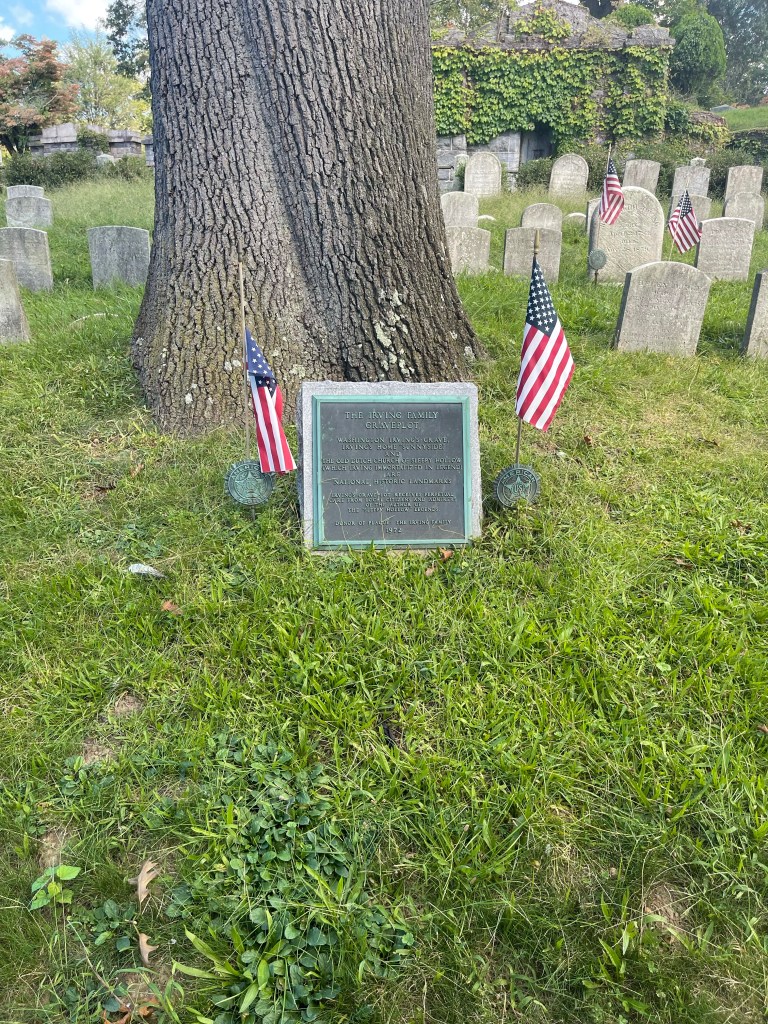
    6. You develop an eye for the interesting and an ear for the hidden stories. You stop more frequently in fascinating places, detour to find and celebrate the obscure and forgotten, and do things you might not have done otherwise. You become a ghost whisperer, visiting old graveyards and monuments to the past engraved by some soul long forgotten, who was honoring something of note that brought us to where we are today. You learn poetry and philosophy and Latin phrases and stir up the magic in an old pile of words. You hike to places of wonder and seek adventures. In short, you become more alive, and you appreciate this journey more than ever before.
    7. You learn to follow through on the promises you quietly make to yourself. You want to be a writer? Then write, no matter how you feel, and post that work every day, no matter what. Keep that commitment to yourself today. And tomorrow too. As James Clear puts it, every action you take becomes a vote for the type of person you wish to become. Your blog is a stack of votes for your identity. So craft them as best you can and set them free for the world.

    So there we are: 1000 blog posts. As I mulled over this one the last few days, I found myself in a corner of New England I don’t visit enough and chanced upon a couple of roadside wonders I might never have seen had I not set out for an old grave I wanted to visit. And just like that I’ve got three more blog posts in my mind. The world is funny that way – it opens up for the curious observers. I can’t wait to see where the next 1000 take me.

  • A Focused Place

    “Finding a very focused place to do your work rewards you many times over.”-Seth Godin

    “The opposite of ‘distraction’ is ‘traction.’ Traction is any action that moves us towards what we really want. Tractions are actions done with intent. Any action, such as working on a big project, getting enough sleep or physical exercise, eating healthy food, taking time to meditate or pray, or spending time with loved ones, are all forms of traction if they are done intentionally. Traction is doing what you say you will do.” – Nir Eyal

    Perhaps it was a week of chaos and distraction that made Eyal’s statement grab me by the shoulders and focus my mind on the truth of the matter. Distraction is diluting my moments of clarity, and this simply won’t do. It isn’t just the noise from mobile devices and televisions or the crush of emails and requests from people near and far. It’s also that noise within that shakes you from sleep or makes you not hear what was just said on that Zoom call you participated in.

    If our best moments are when we’re fully alive, what does fully alive mean anyway? I believe it to mean being fully engaged in the moment, aware of the world around you, and embracing your part in it. Keeping promises to yourself to do what you intended to do. This isn’t just habit formation, it’s traction formation. Honoring intention with intentional focus.

    Eyal takes aim at one of my go-to habits for getting things done: the to-do list. His issue with to-do lists is that things just continue to get added to the list. There’s no intention to is until you block off time in your calendar and honor the time commitment to work on it. Even if you don’t finish you’ve done what you said you’d do, which establishes trust in yourself. As Eyal puts it, you can’t be distracted from something if you didn’t have an intended action (traction) that it was pulling you from.

    Today happens to be the last day of a very busy work week. I thought about that to-do list and the things that aren’t completed yet and felt the tension raise up inside me. But then I thought about the work that was completed this week, the actions done with intent, and felt the tension melt away a bit. However you measure it, the pile of done should be especially satisfying. And the pile of undone shouldn’t be a cruel demon whispering in your ear. The path to removing that demon is in knowing what your intentions are, and honoring them as best you can in the time you’ve allotted.

    That focused place to do the work isn’t a place; not really. It’s a block of time and a commitment to yourself to do what you said you were going to do. Promises kept, one block at a time.

  • The Intersection of Passion and Talent

    “Our visions are the world we imagine, the tangible results of what the world would look like if we spent every day in pursuit of our why.” – Simon Sinek, Start With Why

    Sinek’s talk is one of the most watched YouTube videos of all time, largely focused on business’s asking this critical question, “Why are we in business?” My own company is focused on this very question at the moment, prompting me to finally read Sinek’s book a few weeks ago. But you can’t ask why of your work without asking the same question of yourself. What is our purpose in our work, and in our lives? Why are you doing this? Think carefully, for it means more than a paycheck and a Netflix subscription when you get home.

    Every now and then we find ourselves stumbling upon a place where ideas converge, and where the path ahead divides into any number of directions. Which way do we go? If we all agree that life is shorter than most of us want it to be, doesn’t it make sense take the path that offers the greatest opportunity to fulfill that personal mission? Defining that mission is the tricky part. A mission that requires deep thinking.

    “What are you chasing? Why? Is the chase aligned with your deepest values and Ultimate Mission?” – Dr. Jim Loehr, The Personal Credo Journal

    We all have talents. But we can be pretty good at something and not be all that passionate about it. And you never really master something that you’re subconsciously going through the motions with. Whether career, art, relationships or athletic pursuits, if it doesn’t whisper to our soul we simply aren’t going to thrive in it.

    “Ikigai (pronounced “eye-ka-guy”) is, above all else, a lifestyle that strives to balance the spiritual with the practical. This balance is found at the intersection where your passions and talents converge with the things that the world needs and is willing to pay for.” – Chris Myers, Forbes, ‘How To Find Your Ikigai And Transform Your Outlook On Life And Business’

    Call it your “Ultimate Mission”, your “Why”, “Ikigai” or simply purpose. What you call it doesn’t matter so much as what it is, and what you do with it. These are powerful questions that demand deep thought. Determine where your passions and talents converge. Envision the world as you’d like it and set about making it. Align your chase with your deepest values. And perhaps the deepest question of all, determine what exactly you’re living for and do something about it.

    “It’s not enough to have lived. We should be determined to live for something.” – Dr. Leo Buscaglia

    I’ve re-written this particular blog post seven or eight times. Work is piling up in the in-box while I re-read it once again. Do I publish or just keep editing this indefinitely? Who really cares? Well, I do, and that’s as good a sign of where my passions meet my talents as anything. Who else would obsess over a bunch of words on a random Monday post? Maybe this is my something after all. At least a good chunk of it anyway.

    The things we do for love…