Tag: Appalachian Trail

  • The Climb to Optimal

    “Lack of activity destroys the good condition of every human being, while movement and methodical physical exercise save it and preserve it.” — Plato

    That old expression “use it or lose it” has never seemed more truthful than it is now. Watching people in my life decline as either their bodies or their minds fall off a cliff is eye-opening, but watching my own health incrementally decline is a louder wake up call. The thing about wake up calls is that not everybody listens to them. Some people just hit snooze and go back to what they were doing before. For some people the wake up call is a fatal heart attack or a stroke when everything was seemingly normal. Normal is nothing but a state that we’re used to. Forget normal: aspire to optimal.

    This summer I jump-started my life with a regimented mental toughness plan. The usual workouts weren’t enough anymore. The usual reading wasn’t enough anymore. And that “all things in moderation” diet I subscribed to wasn’t enough anymore either. I’d had enough of just enough, and it was slowly killing me. And so I gave my comfortable routine the boot in favor of days filled with disciplined, consistent action. The climb to optimal is underway.

    Not wishing to talk about what I’m going to do, I favor forensics. What have I done to arrive at where I am now? What does that teach me about where I’m hoping to get to? Losing 25 pounds was necessary, but is it optimal? Optimal for what? The answers always lead to more questions on this journey through our days. Fine-tuning our goals as we fine-tune our bodies and minds is all part of the process of optimization.

    I may not ever hike the Appalachian Trail. I might not ever stroll the cobblestone sidewalks of Rue de l’Abreuvoir in Montmartre as dusk turns to night. And I may never summon up the mental discipline to complete that epic novel I’ve been toying with for years. But then again, I might do all of these things and more. Just what do we want out of life anyway? Our odds of achieving these goals are better living a life of optimal health, fitness and discipline.
  • A Quick Hike Up the Nose

    Let’s get the elephant in the room addressed right off the bat: Anthony’s Nose has an odd name. Here’s one story I came across in Kiddle that describes how it got it:

    “Pierre Van Cortlandt, who owned this mountain, said it was named for a pre-Revolutionary War sea captain, Anthony Hogan. This captain was reputed to have a Cyrano de Bergerac type nose. One of his mates, looking at this mount, as they sailed by it, compared it to that of the captain’s nose. He said that they looked similar in size. This good-natured joke soon spread, and the name Anthony’s Nose stuck to this peak. Washington Irving’s History of New York, a satire, attributes the name to one Antony Van Corlear, who was the trumpeter on Henry Hudson’s ship.”

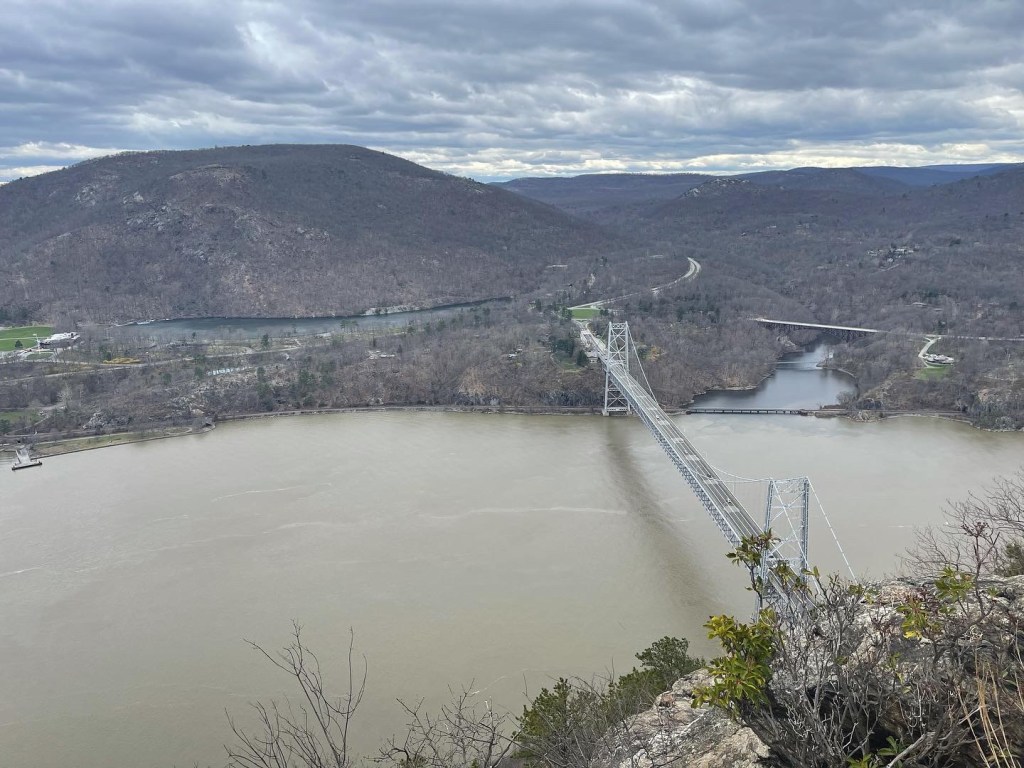
    Whatever the source, it requires that each hiker now forever able to say they went up Anthony’s Nose. How you feel about that is entirely up to you. For me, the motivation was to see a bridge I hadn’t seen in almost 30 years, get a quick hike in to break up a long drive and get a feel for a stretch of the Hudson River from a hill top.

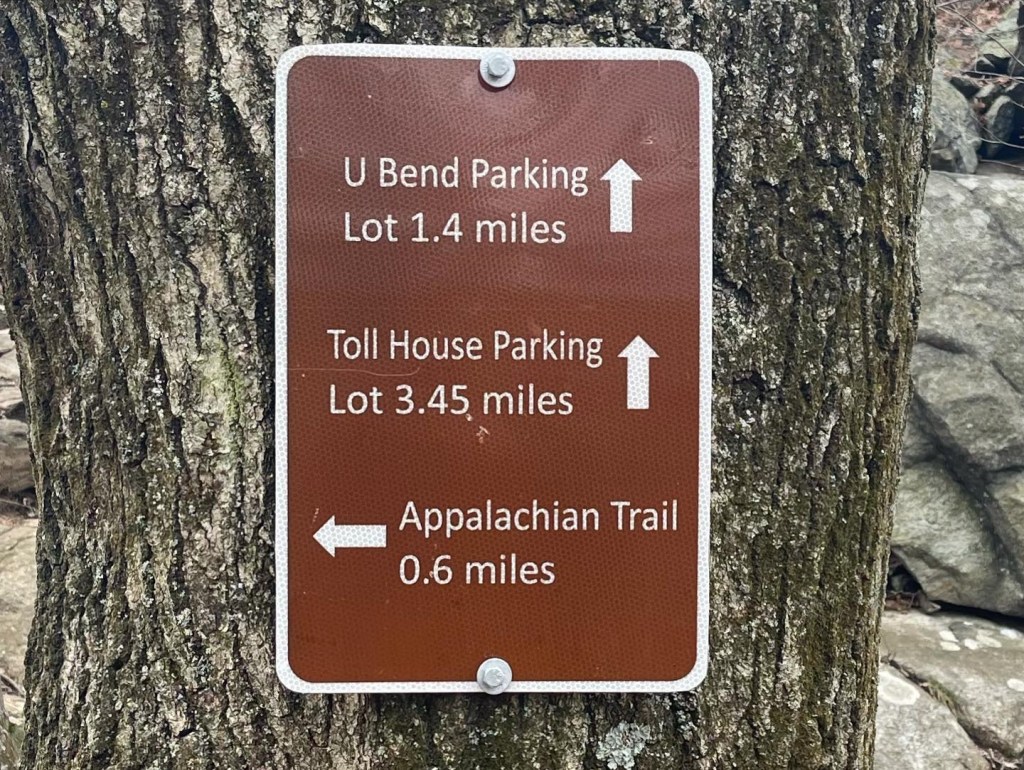
    There are a few routes up Anthony’s Nose (sorry). The most direct route is a steep granite “staircase” that brings you to your destination relatively quickly. This requires street parking on a busy stretch of road. Alternatively, there are a couple of longer routes to the lookout spot, the one I favored followed the white blazes of the Appalachian Trail. The AT crosses the Bear Mountain Bridge over the Hudson River and meanders up through a final stretch of New York before reaching Connecticut. You might expect a stretch of the AT to be lovely hiking. You’d be correct for this stretch.

    There seems to be a lot of confusion about where the trailhead is for Anthony’s Nose. If you’re going to hike straight up the staircase, you begin at a small deck on the side of the road not far from the bridge. If you’re more interested in a 90 minute round trip hike, take the AT route. The trailhead begins on South Mountain Pass Road, which is a rutted stone dust road for a long stretch. If you’ve got a small sedan you might consider driving in from the Blue Mountain Beacon Highway side, which offers a bit more pavement to work with. Driving a truck, I enjoyed the off-road feel of reaching the trailhead after a few hours of highway driving to get there.

    The key for the trail is to follow the white blazes, which leave an old roadbed a few hundred yards up and begin descending towards a small stream before climbing back along the ridge line. The trail head would benefit from a bit of signage and a map, as one hiker after another asked each other if they were in the right spot. Perhaps a Boy Scout Troop could take it on as a project.

    The hike took 90 minutes round trip. Parts of the trail felt like you were in the middle of the White Mountains, but with glimpses of the Hudson River along the way. There was a bit of traffic buzz in the background, but overall it was a perfect hike to break up a drive from New Hampshire to New Jersey for me, or a short destination hike away from New York City. I’d recommend bringing lunch and soaking up the view.

    Bear Mountain Bridge with it’s namesake rising up behind it
  • Past Peak

    Normally this weekend in New Hampshire is peak foliage season. But a sustained drought has stressed the trees just enough to pull peak ahead by two weeks. So the thousands of people plugging up the roadways of the Mount Washington National Forest were seeing the forest muted in dynamic impact. And yet they came. And they saw enough. For the mountains offer their own ruggedly stunning backdrop. I considered the tourists on my afternoon commute home from a day of hiking. Clusters taking a photo next to the roadside sign announcing you were in the MWNF, picture-taking all around you. Cars parked in odd assortments along the sides of the road, as if clung together by magnets the way the metal dust would clump together in the old Wooly Willy toy would clump into beards and eyebrows with a magnetic stick. Funny what you think about when you observe tourists in the wild.

    To be amongst the mountains is relatively easy when you live in New Hampshire. Less so, I suppose, if one were to live in Florida. But they have that tropical water hugging them on three sides, and I suppose the amusement parks and fresh oranges to consider too. But you can’t swim in a pond in Florida without risk of being dragged down by an alligator. There are no alligators in the mountains of New Hampshire. Maybe the occasional bear or mountain lion, but they mostly want the food in your pack, not you as food. The bigger threat to your well-being are the damned rocks. New Hampshire is the granite state, and as if to hammer that point home every trail is worn down to ankle-bending, knee-twisting rock. And in October those land mines are covered over in a bed of beautiful leaves. So a descent becomes a shuffle of sorts, as you work to avoid catastrophic injury on remote yet well-traveled trails.

    I have a friend who points out my tendency to pick overindulgent goals for myself. Really though; all my friends point this out. Like rowing a million meters on an erg in three months, or taking my family on a hike up the toughest mile of the Appalachian Trail, or peak-bagging three out-and-back peaks in one day, as I did yesterday with Mounts Willey, Field and Tom. I might have taken a hint from my hiking pro friend who refers to these three as the WTF hike. I chose to experience it on my own, with an extra helping of previous injuries I was nursing. WTF indeed.

    The morning after a hike like the WTF hike, the first step is to get out of bed without incident. Plant your feet and gradually put weight on the ankles and knees that you abused so ruthlessly the day before. Assess how much they resent you, and then shuffle to the bathroom for relief and some Motrin. This isn’t a walk of shame as much as a recognition of all you’d done, in the form of some tender moving parts and sore muscles. And I wonder in those moments of truth, am I past peak myself? Or simply overindulgent? I’d like to think the latter. All I can do is keep moving. Perhaps with a bit of moderation next time. I suppose that’s a perfectly reasonable request.

    Past Peak
  • Hiking Mount Moriah

    The goal of life is to make your heartbeat match the beat of the universe, to match your nature with Nature.” – Joseph Campbell

    The last 4000 foot peak on the Appalachian Trail in New Hampshire before entering Maine is 4049 foot Mount Moriah. Hiking it as a single day out and back, it became a 9 mile round trip that felt just a little bit longer because the ankle objected to the angle of descent, which in warmer months means walking down exposed granite slabs with feet flat, toes down and weight distributed as evenly as possible, but slightly back on the heels. With good footwear this serves to spread the load across the sole of the boot or trail running shoe (for those who choose to endure a higher level of pain). This creates enough friction to keep you upright and in a controlled descent. But it also beats the crap out of your knees and ankles.

    But all that complaining doesn’t change the fact that I sat above treeline eating lunch with the White Mountains clearly visible all around me, and feeding Gray Jays who are well-known opportunists on this particular summit. I didn’t mind offering up a bit of my trail mix for the jays – there’s a certain thrill in interacting with wild animals, and a few almonds, peanuts and raisons were a small price to pay. And my heartbeat matched the universe a bit more today than it might have had I stayed home doing yard work. Aches and pains fade over time, but summiting Moriah remains a forever check mark and a step closer to matching my nature to Nature.

    The first half of the hike from the trailhead is very easy, with a gradual incline and minimal erosion compared to what you see in other parts of the White Mountains. Unfortunately the loggers have been busy on the lower hills, clearing much of the forest away. This is what happens when the land isn’t preserved, it becomes a “land of many uses”, including logging everything except a strip of land on either side of the trail. The logging served to preview the views that we’d see later, though it was marred by the clearing.

    The first wow moments come on the granite ledges of Mount Surprise, a 2194 foot gem that lives up to its name. Views of the Presidential Range were glorious, and served as a nice appetizer for the views we’d see later from the summit of Mount Moriah. They say on a clear day you can see forever from the summit, and it seemed we could. If there’s a drawback to the summit its the very small footprint that many people want to enjoy, and in a time of social distancing I was disappointed in the unmasked proximity of several people from a group of twenty-somethings. But lingering on the summit meant you were going to have that kind of company, so we made a point of wrapping up lunch and clearing the way for others.

    Mount Moriah is not a hike to do on a wet day, which is why I hiked it today instead of last week. But its a worthwhile hike to complete on a beautiful day. I look forward to doing it sometime when it has a heavy snow blanket to cushion the unforgiving granite. I’ll be sore tomorrow in the usual places, but it’s the price you pay for dancing in the clouds. Another 4000 footer checked off the list and a few memories worth celebrating.

  • Boulder Hopping

    When I was a kid I’d spend hours climbing on boulders, hopping from one to the next like a goat.  As I got older this tendency didn’t fade.  Instead, the boulders got bigger.  Hiking a boulder cove on a White Mountain trail is still a delight and I hope it always will be.  Perhaps the ultimate boulder hopping adventure is Muhoosuc Notch in Maine.  Once you’ve done this “toughest mile of the Appalachian Trail”, you’ll know what boulder hopping is all about.

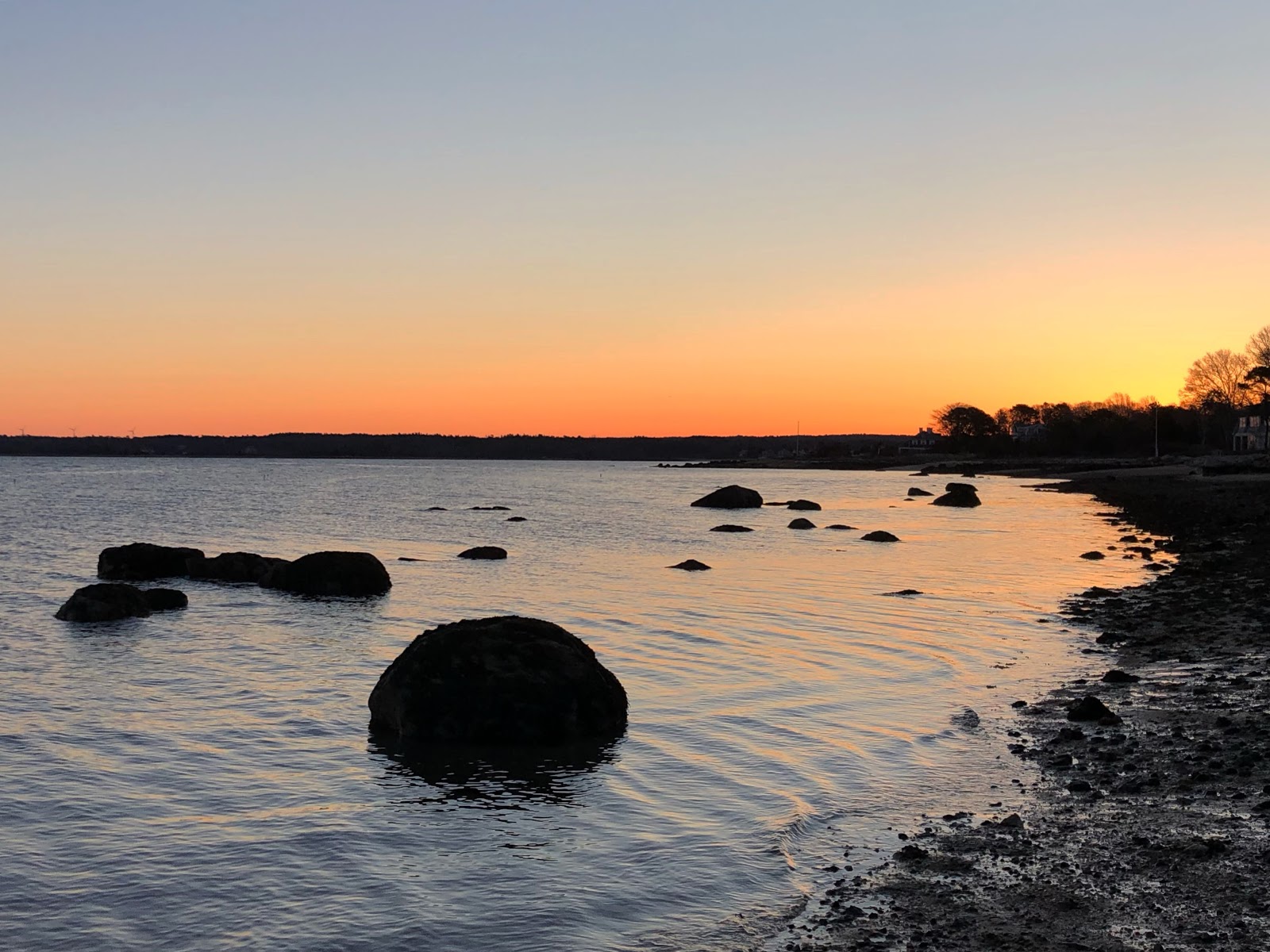
    A similar, less strenuous experience is walking along a long jetty that hasn’t been civilized for the general population.  A jetty that’s basically a pile of rocks extended out into the water is much more interesting than, say, the Rockland Breakwater.  Both serve the same utilitarian purpose, but the secondary benefit of each is very different.  The relatively flat Rockland Breakwater allows you to look around a bit instead of constantly checking where you’re going to land your foot next.  Hopping from rock to rock can be compared to working on a jigsaw puzzle in that it requires a high level of concentration, which becomes meditative.  Another analogy might be playing chess, where you’re thinking a few moves ahead to ensure success.

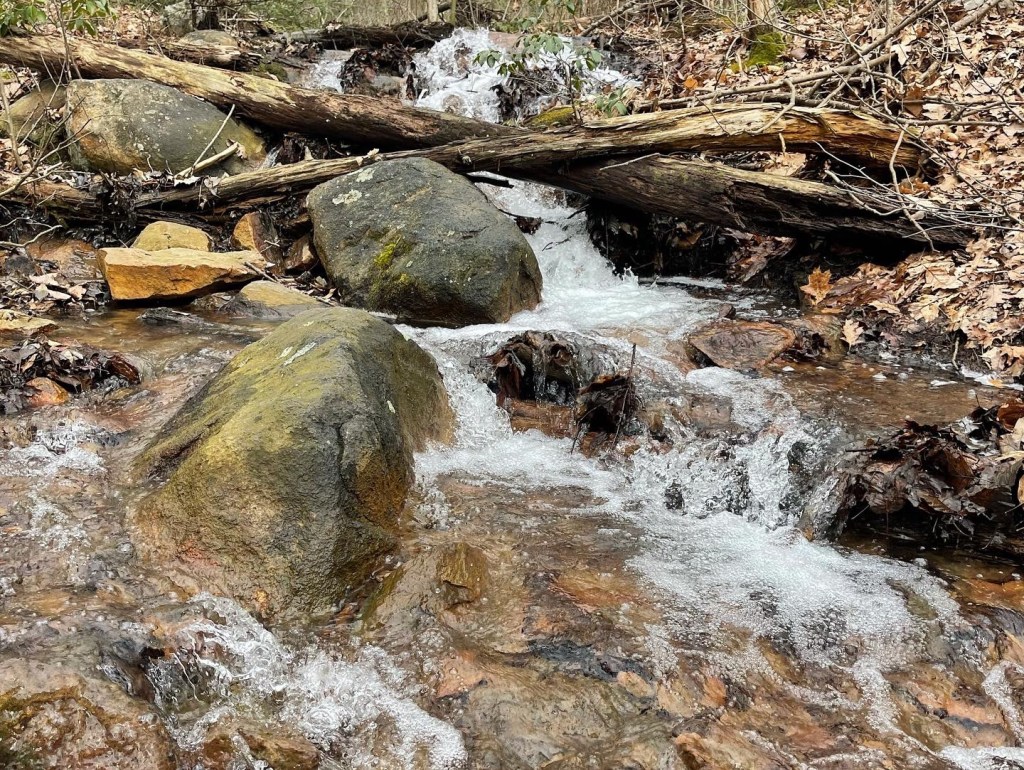
    Stepping stones in a stream are another form of boulder hopping, and offers it’s own reward as well as risk.  Gauging distance between stones, the level of traction you’ll experience when you land on it and the relative stability of the stone are critical components to your overall success in staying dry and getting where you need to go.

    Ultimately the analogy of stepping stones and one’s career is overused, so I’m not going to dwell on that here.  To me the exhilaration of jumping from one boulder to the next is enough.  I’ve never come across a pile of rocks that I haven’t wanted to crawl over or hop from one to the next.  Or a scattering of boulders on a body of water that I haven’t mentally played connect the dots with to determine the best way to land on each without stepping on the same stone twice.  That’s not unlike points on a map, is it?