Tag: Atlantic Ocean

  • A Walk on Cahoon Hollow Beach

    “The sea-shore is a sort of neutral ground, a most advantageous point from which to contemplate this world. It is even a trivial place. The waves forever rolling to the land are too far-travelled and untamable to be familiar. Creeping along the endless beach amid the sun-squall and the foam, it occurs to us that we, too, are the product of sea-slime.” – Henry David Thoreau, Cape Cod

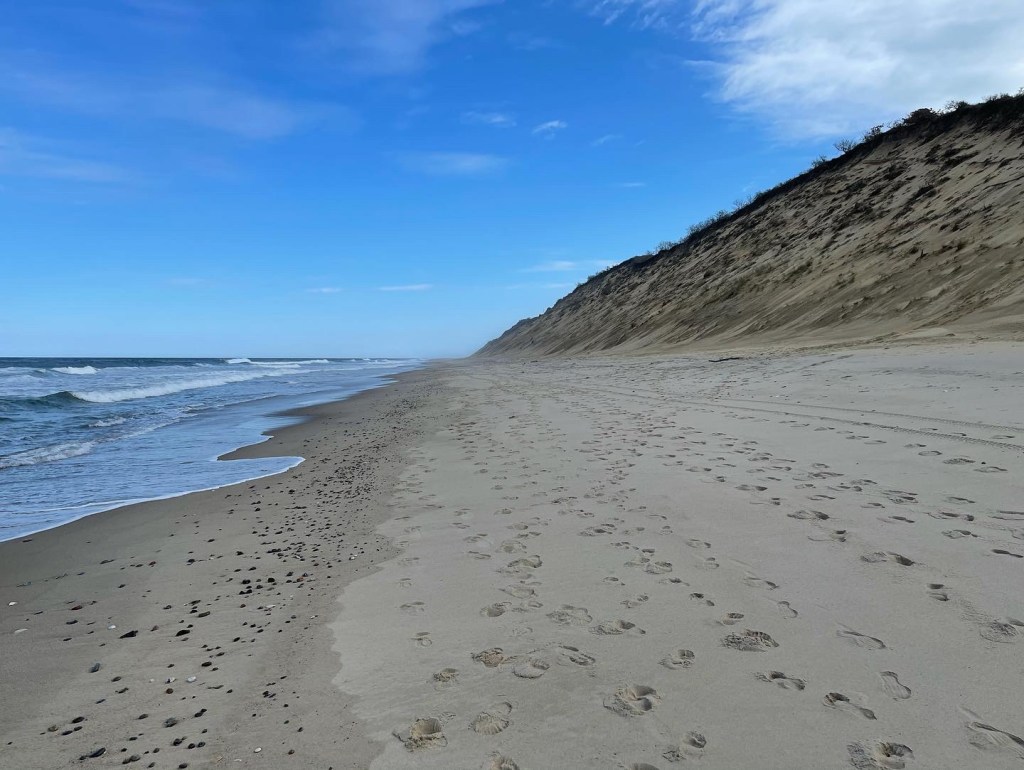
    Between the massive dunes and the crashing Atlantic Ocean in Wellfleet is a strip of sandy beach bearing the brunt of the relentless assault from wind and sea. The surf in warmer months is a feeding ground for Great White Sharks, who have modified their hunting style to chase grey seals right into the churning shallows that swimming humans like to frolic in during the warmer months. Great Whites don’t hunt humans, but sometimes they mistake humans for seals.

    In April you don’t see many seals bobbing in the surf on Cape Cod. So the sharks move on to other hunting grounds and leave this stretch of wild ocean to the occasional surfer and the beach walkers. A walk on the Cape Cod National Seashore can happen just about anywhere with an access path down the 100-foot dunes. Sand is dangerous stuff that can bury a reckless trespasser in no time at all. Sticking to the access paths preserves the dunes and just might preserve you too. The access paths themselves inform in their soft give. This is not a place for the meek. If you can’t handle the access path don’t walk this beach.

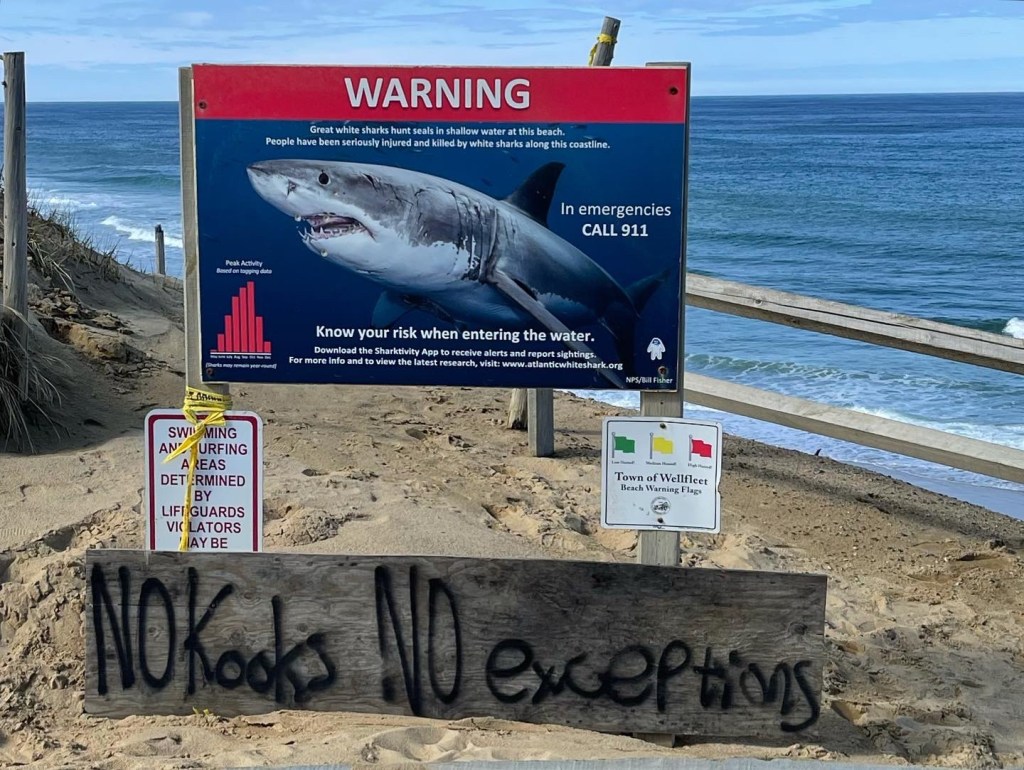
    For an off-season walk, we chose to park at the Beachcomber in Wellfleet and walk a stretch of soft sand known as Cahoon Hollow Beach. The Beachcomber is a trendy cool place at the height of summer. In mid-April it’s a convenient parking spot for easy access to the beach. A sign of the times is a shark warning with a handmade sign added to the bottom sharply suggesting “No kooks, no exceptions”. Wellfleet has had just about enough of the worst representatives of shark tourism.

    The National Seashore has a 40 mile stretch of beach that would test the strongest of walkers. When you say you’ll walk just to the bend you soon realize that bend keeps disappearing ahead of you. We walked about a mile, following the curve of the dunes around the forearm of Cape Cod. Walkers tend to gravitate towards the surf line where shells and smooth rocks offer themselves up for consideration. Soon your pockets are full and you recognize the folly of treasure hunting when every receding wave reveals another treasure.

    Thoreau walked the entire length from Chatham to Provincetown in the mid-1850’s and wrote about it for lectures that would end too soon in his abbreviated life. It would be published after his death in 1865 – the same year the Civil War ended. I think often about Thoreau, dying at 45 with so much left to do and see and write about. And here I was following him again, walking the beach between dune and sea, thinking it might just go on forever. Knowing it won’t.
  • Two Henry’s

    “Arrived at the Atlantic, he pauses on the shore of this unknown ocean, the bounds of which he knows not, and turns upon his footprints for an instant….  Then recommences his adventurous career westward as in the earliest ages.” – Henry David Thoreau quoting Arnold Henry Guyot, Walking

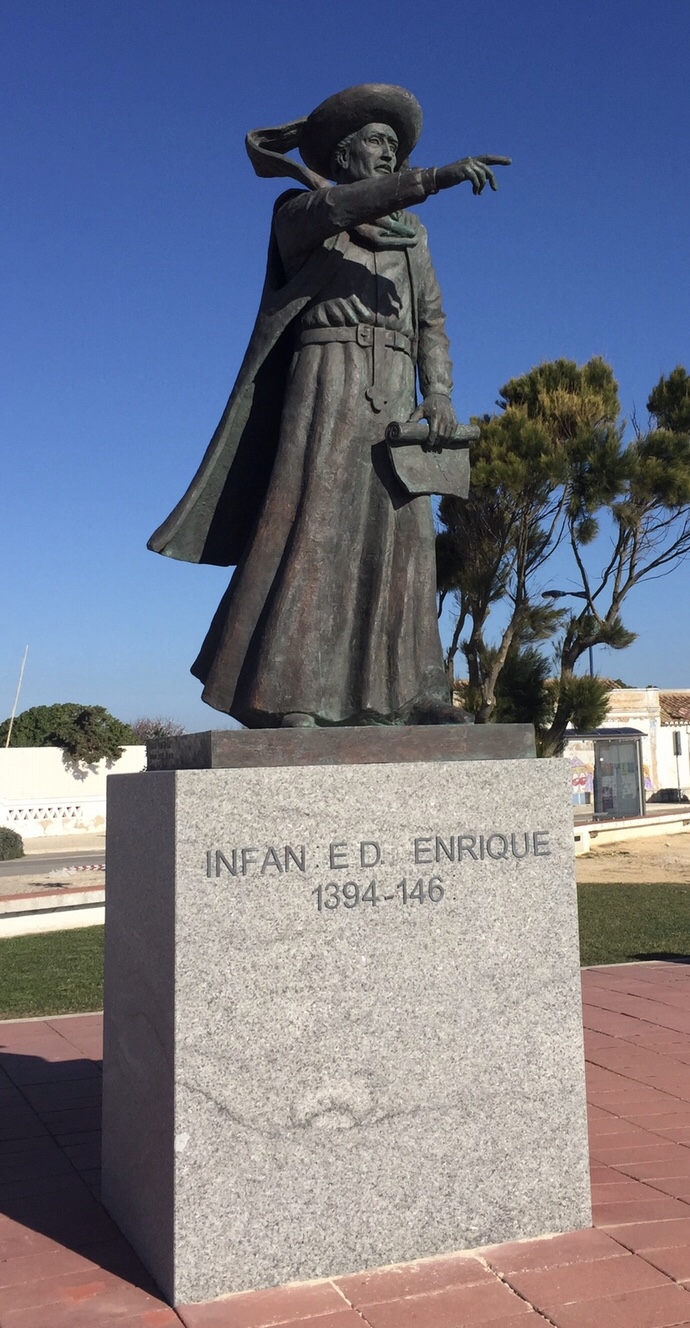
    Infante D. Henrique, better known as Henry the Navigator, was born in 1394 and died in 1460. Henry, with political clout from his relationship with his brother the King of Portugal and monetary clout from The Order of Christ, inspired the Age of Discovery 500 years ago.  The Portuguese would go on to discover Madeira 600 years ago this year, then the Azores, and further down the coast of Africa during his lifetime, and inspire like voyages by Christopher Columbus and others well after his death.  I came across a statue of Henry the Navigator in Sagres, Portugal last year when I was exploring the area.  The statue faces towards Madeira and the coast of Africa; Henry’s focus half a millennium ago.

    No place in continental Europe makes you feel like you’re on the shore of an unknown ocean more than the western coast of Portugal.  Of course, I’d flown over that ocean to get to Portugal, but this was a time when pirates were a common threat for coastal communities and the thought of sailing beyond the horizon was likely terrifying for most.  It wasn’t until larger sailing vessels were built that the Portuguese and later other European explorers would take the leap into the unknown.

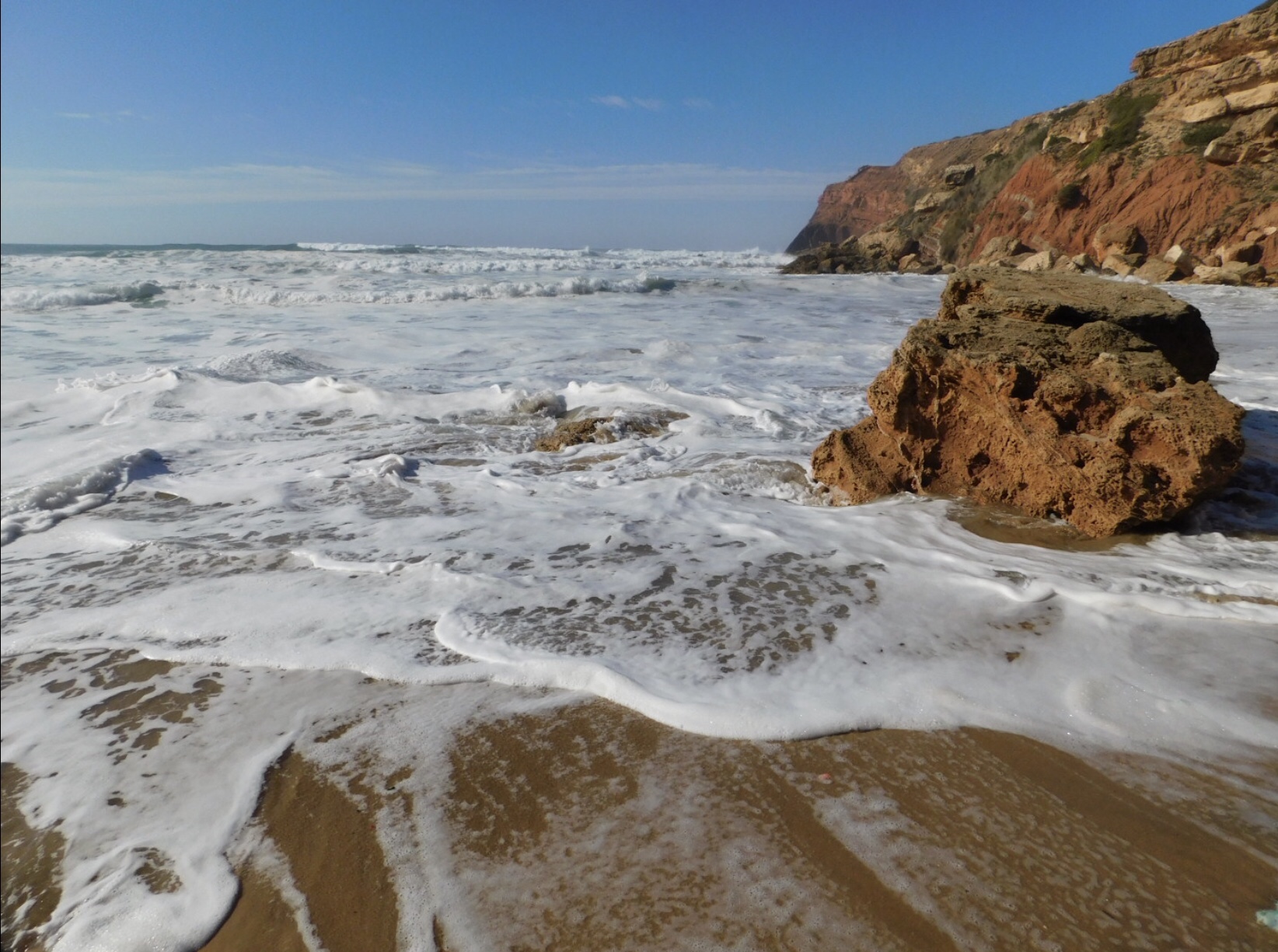
    There was a dark side to exploration, as local populations were exploited, enslaved, murdered or exposed to lethal diseases for the first time.  Progress for some is regression or annihilation for others.  The spirit of exploration and discovery is on the face admirable, and I like to think I carry some of that spirit within me, just as Thoreau did.  Standing on the edge of a hundred foot cliff with breaking waves reaching up halfway to welcome me, one catches the spirit of those words; Arrived at the Atlantic, he pauses on the shore of this unknown ocean.  This would give any sane person pause.  But the courage to move on anyway opened up an entire world for these Portuguese explorers.

    I have Scottish and English blood in my veins, but I also have Portuguese blood.  I like to think that exploration and adventure are a part of my DNA.  And while my relative low risk exploration of the coast of Portugal pales in comparison to the sailors of centuries past, the serve to expand my perspective on the original European explorers who first set sight on America.  As visiting Portugal opened up my perspective on where these souls came from, visiting the Santa Maria replica gave me a greater appreciation for just how small those Nau’s were.  On a vast, unknown ocean, with no previous knowledge of currents and at the whim of the weather, courage was only part of what these explorers needed.  They also needed luck.

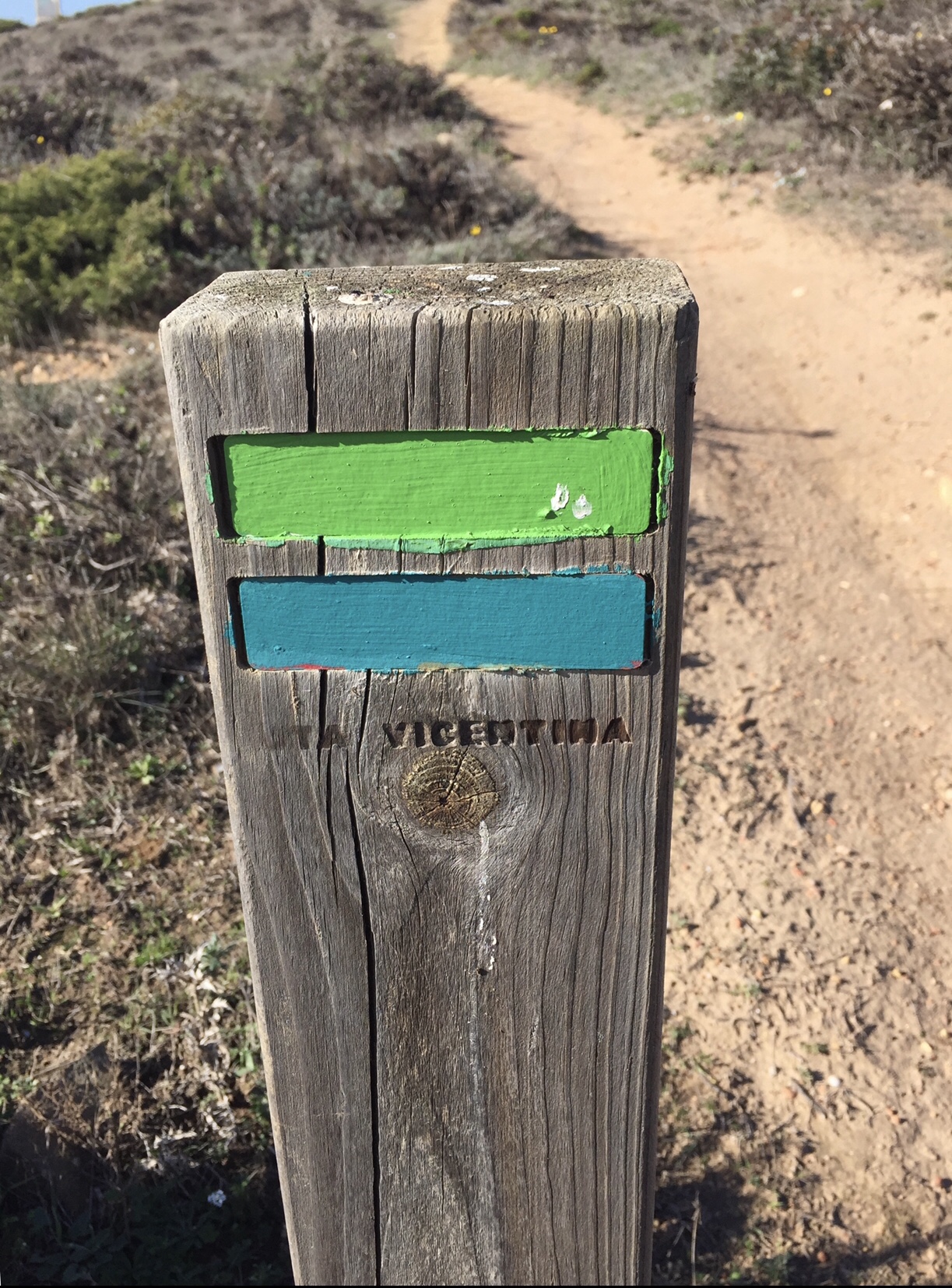
    Henry David Thoreau quoted Guyot even as he disagreed with many of his theories.  Thoreau was an explorer whose vehicle of choice were his feet.  I think he would have been fascinated with the fisherman’s trails, the stunning Rota Vicentina, that wind along the coast from Sagres north. Hiking this trail was a highlight for me, and I wish I’d had more time to fully explore the region.

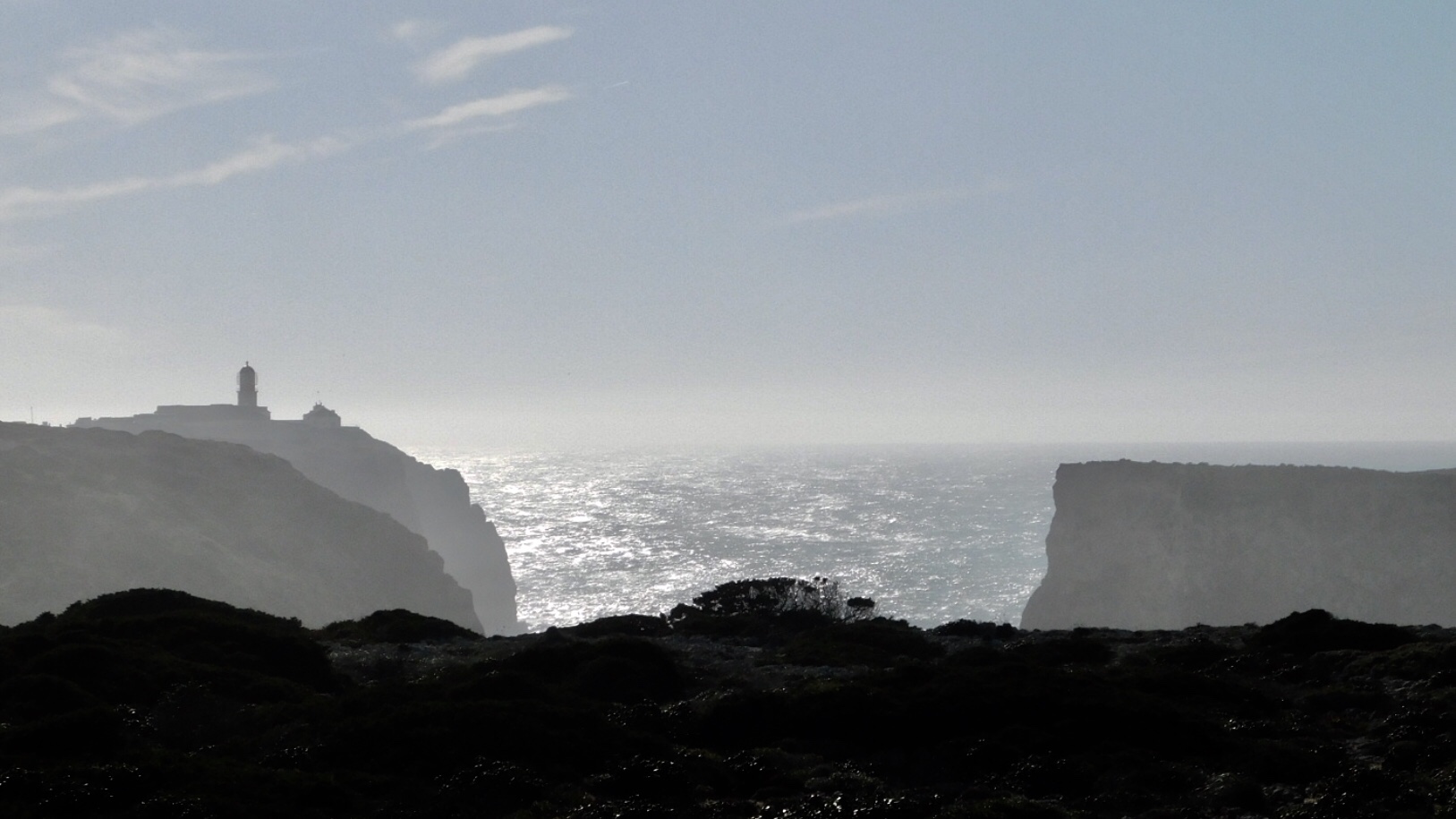
    Thoreau writes of the magic of exploration, and his tendency to head southwest in his journeys away from home.  There is no point further Southwest in Portugal than Cape of St. Vincent and it’s distinctive lighthouse. Had Thoreau stood on the cliffs, as I imagine Henry the Navigator once did and I had the opportunity to do in my own humble way, I think he might have looked westward and recalled his own words, appropriate for this extraordinary place:  “We go eastward to realize history and study the works of art and literature, retracing the steps of the race; we go westward as into the future, with a spirit of enterprise and adventure.  The Atlantic is a Lethean stream, in our passage over which we have had an opportunity to forget the Old World and its institutions.”  That spirit seems as true today as it was in 1860 or in 1460.