Tag: California

  • A Hike in the Upper Las Virgenes Canyon Open Space Preserve

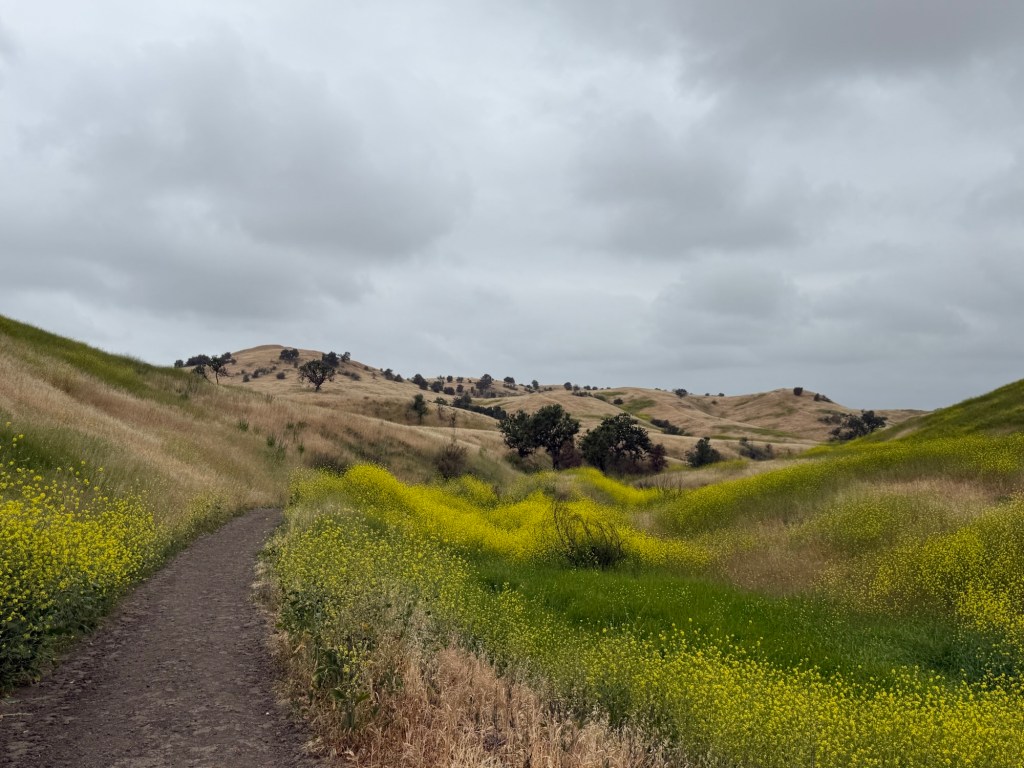
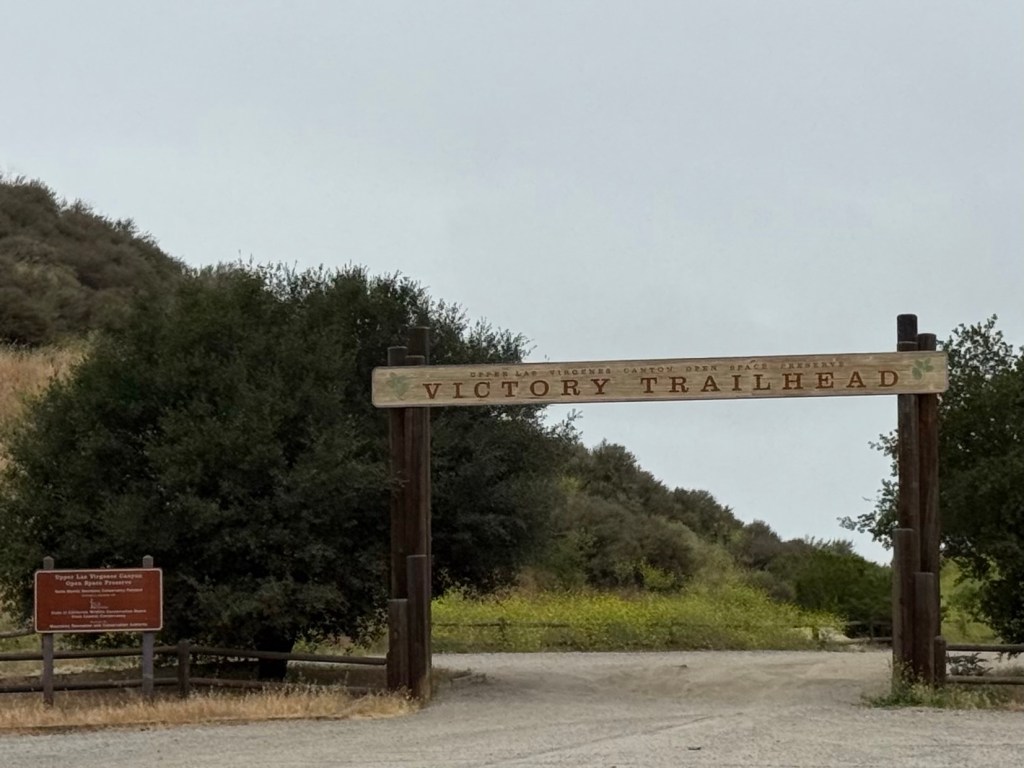
    I don’t hike enough. And I don’t see my daughter nearly enough, so a weekend in Los Angeles filled the gap between East Coast and West Coast. She found a gem of a hike in the Upper Las Virgenes Canyon Open Space Preserve for our final day together before I flew home. And as usual, we found adventure.

    “The more than 5,600-acre Upper Las Virgenes Open Space Preserve in the Simi hills at the western edge of the San Fernando Valley, is part of a critical ecological linkage and wildlife corridor between the Santa Monica Mountains and the ranges to the north. Hikers, runners, mountain bikers and equestrians enjoy miles of trails through rolling hills studded with valley oaks, sycamore-lined canyon bottoms, and vistas of unspoiled California landscapes.” — Upper Las Virgenes Open Space Preserve web site

    Our hike in May coincided with peak blooming of the wild mustard, painting the rolling hills in yellows and greens. That wild mustard is an invasive species and takes over the landscape. It also grows pretty tall, well over my head. On the main trails that’s a pleasant observation. On the single-track side trails, it becomes a gauntlet of greenery that almost fully obscures the trail. Those flower petals quickly cover you head to toe. Naturally, we chose these trails to close out 2/3rds of our 4 mile hike. Who doesn’t love an adventure?

    Neither of us would have hiked it solo, but with me parting the sea of mustard and my daughter keeping a close eye on All Trails, we found a strong pace for the trail. The only lingering concern was the distinct possibility of disturbing a rattlesnake partially obscured on the trail. So every step was a close survey of where I was about to step. And one step at a time we eventually completed the hike and savored a celebratory tap of our Garmin watches as we got back to the car.

    Our hike was admittedly unique. Anyone sticking to the main trail will have an easier time of it, and be able to fully savor the views. We also hit the trails while the wild mustard was at peak. Beautiful for sure, but also a contributor to the state of the single track trails. Know what you’re walking into and choose wisely. For us, it was another strong memory built on a bit of boldness.

  • The Hollywood Bowl

    It’s the rise and the fall of the clocks on the wall
    And it’s the first and the last of your days flying past
    Oh what a beautiful world
    Oh what a beautiful world
    — Willie Nelson and Rodney Crowell, Oh What a Beautiful World

    The Hollywood Bowl is one of those venues that appears regularly on lists of the most beautiful concert venues in the United States, along with Red Rocks in Colorado and The Gorge in George (Washington, naturally). And it lives up to the hype. Set in the iconic Hollywood Hills with a view of the sign when you sit up high, you spend as much time looking around you as you do watching the concert. A venue this beautiful is a blessing for the community and a milestone for every artist touring the country.

    When my daughter asked me if I was interested in seeing Willie Nelson and Bob Dylan perform in Los Angeles , the answer was immediately yes. That was before I realized it would be at the Hollywood Bowl. For those keeping score, that’s three legends in one night. That’s a can’t-miss moment in a life that demands our active participation.

    The tricky part with a venue like the Hollywood Bowl is getting tens of thousands of people safely in and back out again. Parking isn’t great, and the traffic makes it prohibitive to simply have people drive right to the venue. The answer is an extensive shuttle bus system from different parts of the city. We took route 672 from the LA Zoo. Yes it rhymes, and they made a point of emphasizing that. How many tipsy concert attendees get on the wrong bus late in the evening? Enough for them to play the memory game. The whole thing could have gone very wrong, but it worked out perfectly. Not their first rodeo.

    Willie Nelson was wonderful. Everyone in the Hollywood Bowl knows he’s in his 90’s, especially him, but he plays to it so well, with two talented performers who alternate songs so Willie doesn’t have to carry the full load. Bob Dylan was subdued, but performed with a tight band who covered some rough ground. Unlike Willie he doesn’t play all his hits, choosing deeper cuts and newer music over the obvious opportunity to choose cuts from his “A Complete Unknown” career phase. That’s just so Bob Dylan of him.

    The revelation of the day was Billy Strings. He’s a brilliantly talented bluegrass musician with a band that meets the challenge themselves. They met their moment at the Hollywood Bowl and picked up a new fanbase along the way. An artist on the rise, playing a magical venue with two that have seen time flying past, on a night to remember for all of us.

    I run up and down the road making music as I go
    They say my pace would kill a normal man
    But I’ve never been accused of being normal anyway
    And I woke up still not dead again today
    — Willie Nelson & Buddy Cannon, Still Not Dead

    I write frequently about death (memento mori), not as an aspiration but as a reminder to get out and live. Nights like this at the Hollywood Bowl are just that—an opportunity to put our money where our mouth is and live. Because we ain’t dead yet, friend, and there’s just so much to see and do in this world.

    The Hollywood sign as seen from the back
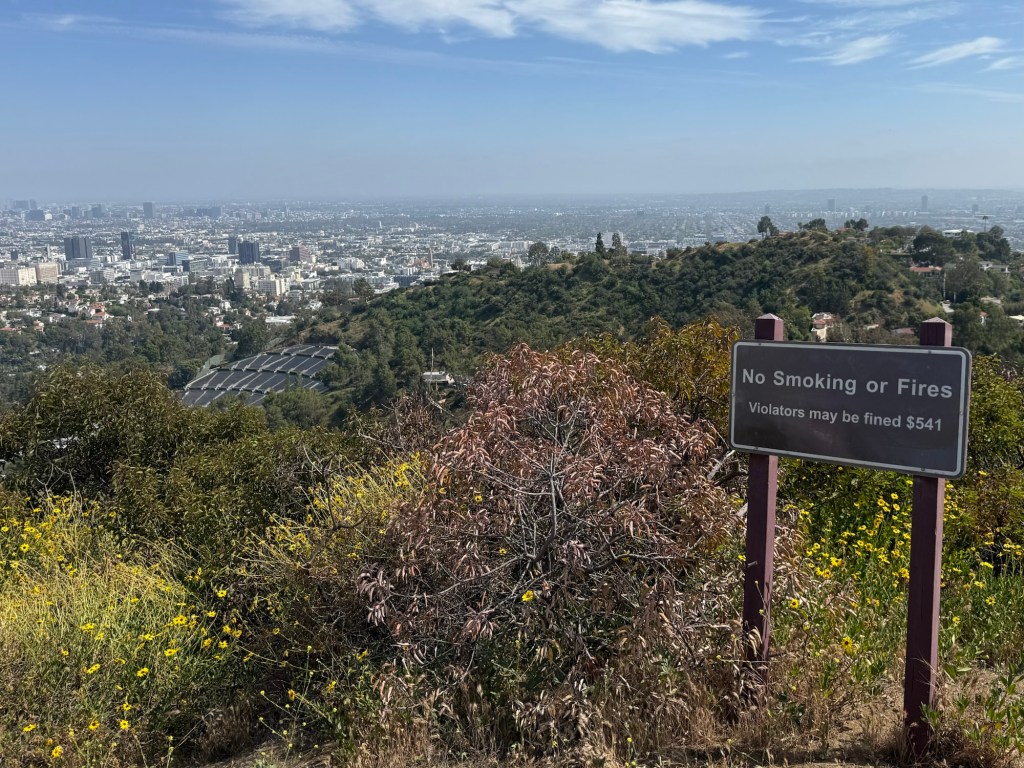
    Earlier in the day we chanced on this lookout point with a view of the city beyond the Hollywood Bowl
  • The Question of Questions

    Over the weekend I had the opportunity to visit both the Getty Center with its impressive collection and the Getty Villa, with its focus on the ancient arts. I could write a year’s worth of blog posts about the combined collected works we viewed there. Alas, we know how these things go. I’ve got hundreds of pictures and notes from similar encounters that have yet to be realized in creative output by this humble blogger. Every day something new may grab hold of us and demand our focus, leaving old ideas and stories to drift away, to be grabbed by someone else someday.

    We dance with the muse when we are blessed with its attention, whatever the topic may be. At the Getty Villa I came face-to-face with the muse, in the form of a Roman fresco from between 1 and 79 A.D. It’s been whispering to me ever since we met. I’m sharing a picture of the fresco here, that you may decide for yourself whether its power transcends plaster and pigment through bits and bytes.

    The thing is, I know only that I still have work to do beyond the blog. If we don’t listen to the muse it finds someone else. We must be deserving of its attention. My encounter with the muse was a reminder that there’s still work to be done. To answer the question of questions: Tempus fugit (time flies). So what have you done with it?

    Fresco with a Muse, displayed at the Getty Villa Museum
  • A Visit to the Getty Center’s Gardens

    “Always changing, never twice the same,” — Robert Irwin

    A day at the Getty must include a visit to the extensive collections exhibited in the museum buildings. Included in the collection are famous works like Vincent van Gogh’s “Irises” and Rembrandt’s self-portrait “Rembrandt Laughing“, along with significant works by Cézanne, Monet, Claudel and many more. One needs a full day at the Getty to see everything, and even then you feel compelled to return again as soon as possible.

    The gardens at the Getty Center are equally impressive and a must-see destination of their own. Robert Irwin’s Central Garden is a marvel in any season, and as with any magnificent garden, he practically demands that you see it in every season. In all honesty, I’d been wanting to see the museum for some time, but it was the gardens that really called to me. They don’t disappoint.

    Robert Irwin’s Central Garden is the star, with a stunning water feature, iron rod tree sculptures with bougainvillea rising through them, and an ever-changing flower-lined meandering path that leads you down to a central pond. It’s simply a must-see. Not to be undone, the Cactus Garden reaches out towards Los Angeles and the Pacific Ocean in a dramatic balcony seen from different levels. Other gardens fill the Getty as well: sculpture gardens, fountains and large rock gardens make wandering outside the museum as desirable as your time spent indoors.

    For me personally, it was time with my daughter in a magical place. She shares my love of art and the artistic process, and is pursuing her own dream to have a creative, expressive career. To share the Getty experience with her made the moment. For we too are always changing and never the same twice. And isn’t that also quite beautiful?

  • A Bucket List Road Trip in California

    With a respectful nod to the beautiful interior of California, particularly Yosemite, Lake Tahoe and Death Valley, there are few drives that offer the best of California like the stretch of Highway 1 from the Sonoma Coast to San Diego. My own road trip began in San Francisco, north to Bodega Bay and Jenner, over to the vineyards of the Russian River Valley before turning south to the Pacific Coast Highway through Marin, Monterey, Big Sur, Moonstone Beach, Santa Barbara, Los Angeles, Oceanside and finally San Diego before heading back up to Los Angeles for a finale at the Hollywood sign. That trip was roughly 1000 miles and some loose change worth of driving. That’s a lot of windshield time, but it was broken up by 30 miles of walking and some incredible experiences along the way.

    The trip can be thought of as three distinct segments: San Francisco Bay and Sonoma, The Pacific Coast Highway, and the southern tier. Each segment could be a full vacation on their own, in my case, it was ten very full days of travel and adventure. But life is short, you’ve got to pack as much in to your days as possible while still feeling like you relaxed a bit during your time off. Here was the itinerary by segment:

    Day 1: San Francisco coastal walk from Lands End to the Golden Gate Bridge, Irish coffee at the Buena Vista and dinner in Tiburon. There are some nice ferry options from Tiburon that afford great views in good weather but the schedule is limited.

    Day 2: Alcatraz, Fisherman’s Wharf, cable car rides out and back to top of Lombard Street, walk down the zig-zagging Lombard and then walked to the Palace of Fine Arts.

    Day 3: Muir Woods, Bodega Bay to Fort Ross drive along the spectacular Sonoma Coast.

    Day 4: Vineyard tours and tastings in Healdsburg and the Russian River Valley.

    Day 5: Travel day to Marin, beach walk between the crashing surf and the dunes and a visit to the Monterey Aquarium.

    Day 6: The gorgeous 17-Mile Drive with crashing surf from the offshore storms, then down the Pacific Coast Highway through Big Sur to Moonstone Beach. Multiple stops along the way to take in the coastal views and visit a couple of waterfalls.

    Day 7: Drive-by through central coast vineyards, beachside dining in Santa Barbara, Ventura to Los Angeles through miles of orange trees.

    Day 8: Los Angeles!

    Day 9: Oceanside and San Diego Zoo and friends and family time.

    Day 10: Academy Museum of Motion Pictures and a visit to the Chinese Theater and the gritty and touristy Hollywood Boulevard.

    Day 11: Warner Brothers Studio tour and a visit to see the Hollywood sign up close at Lake Hollywood Park.

    Whew! Drove more than 1000 miles and walked almost 30 miles in 11 action-packed days through ancient redwood trees, coastal dunes, spectacular cliffs, iconic city streets, legendary bridges and highways, past famous cultural attractions with a splash of California’s best wines. If you’re looking for an adventurous drive this is one you should plug into your own GPS. Here are a few favorite places found along the way:

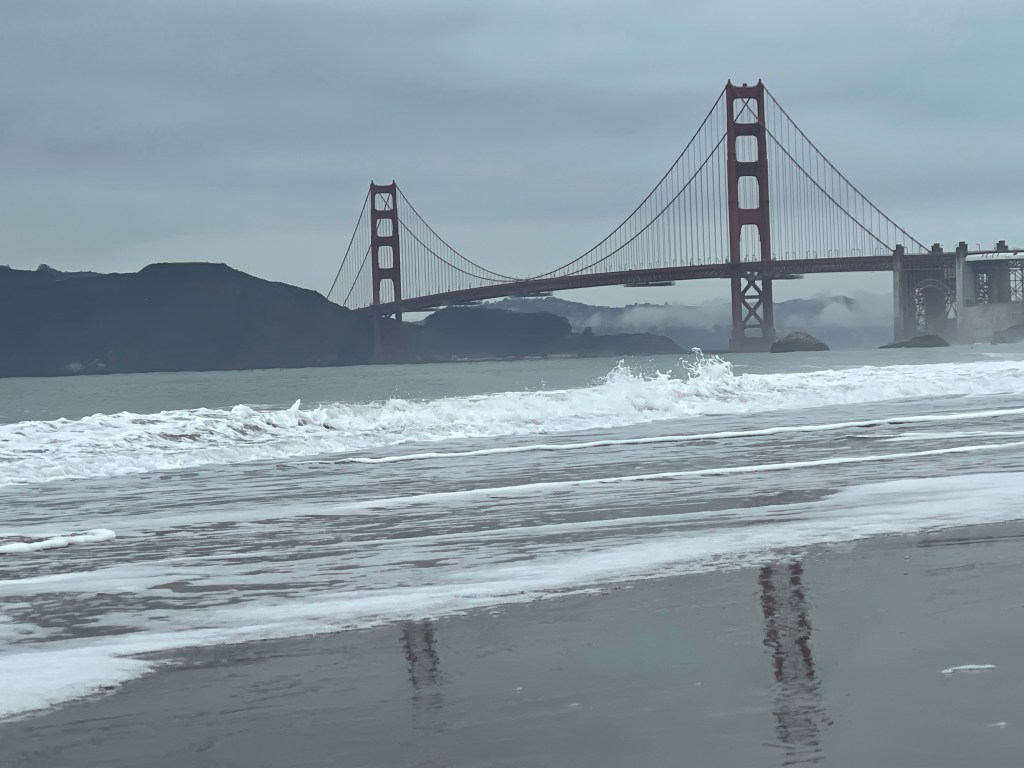
    Golden Gate Bridge
    Bixby Creek Bridge
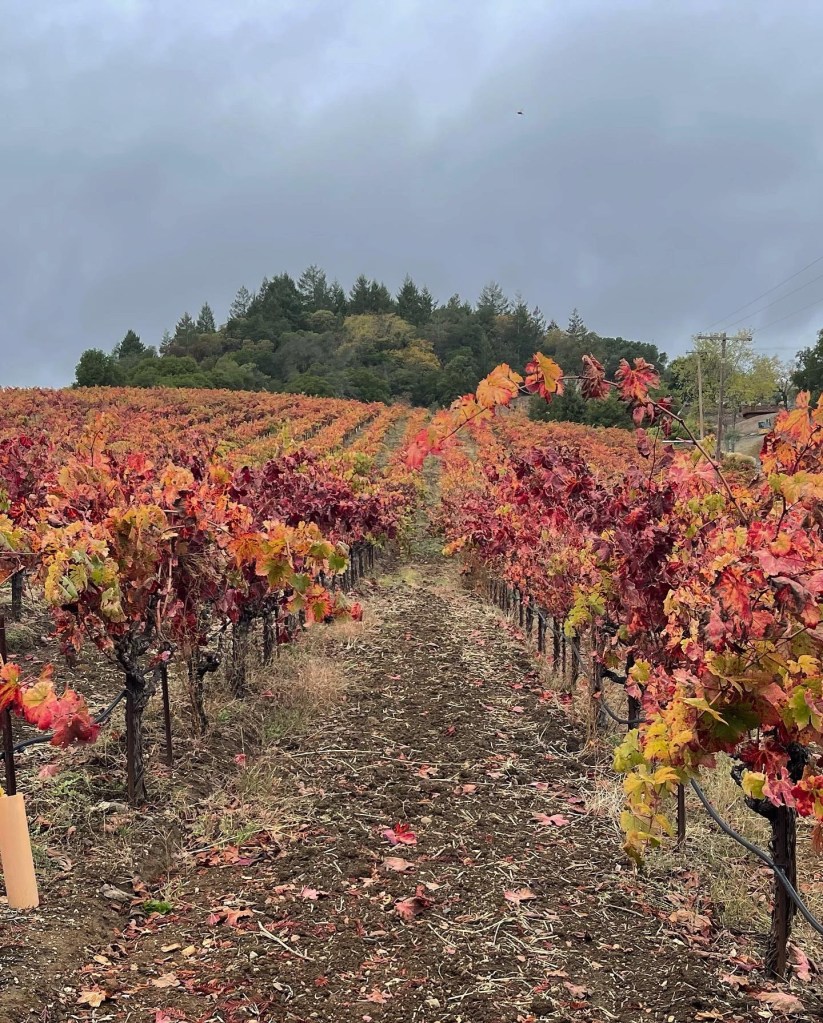
    Russian River Vineyard
    Alcatraz
    Koala at San Diego Zoo
    R2D2 at The Academy Museum of Motion Pictures
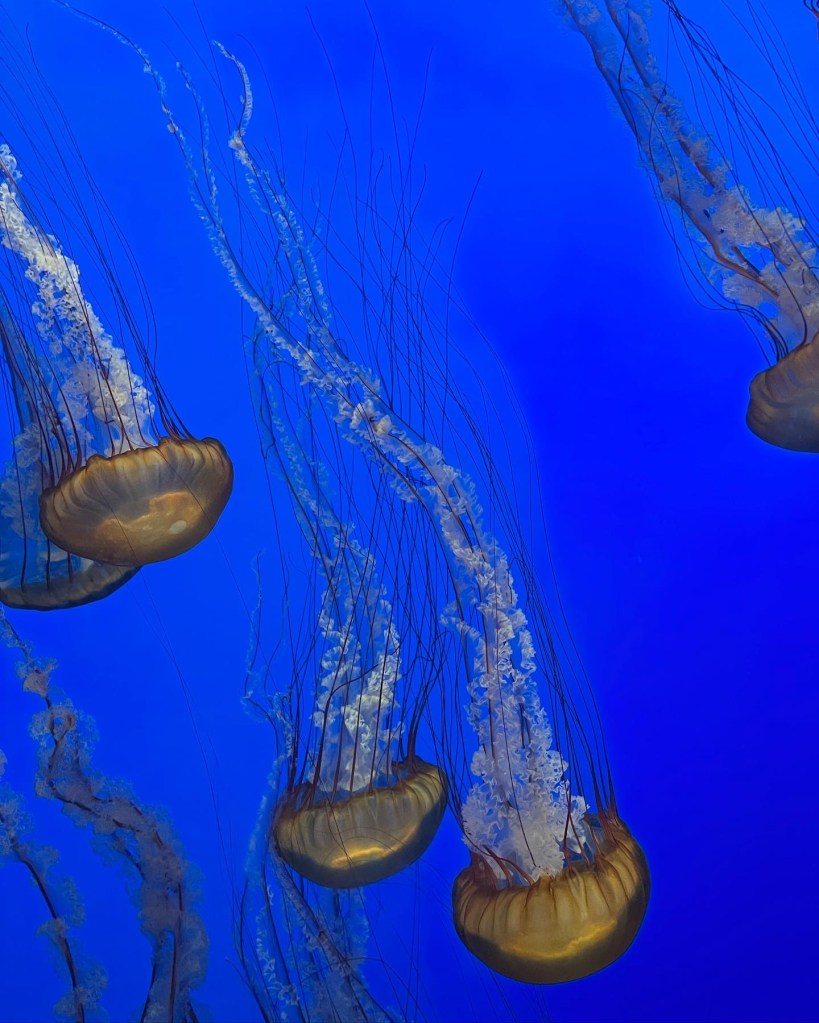
    Sea nettles at Monterey Aquarium
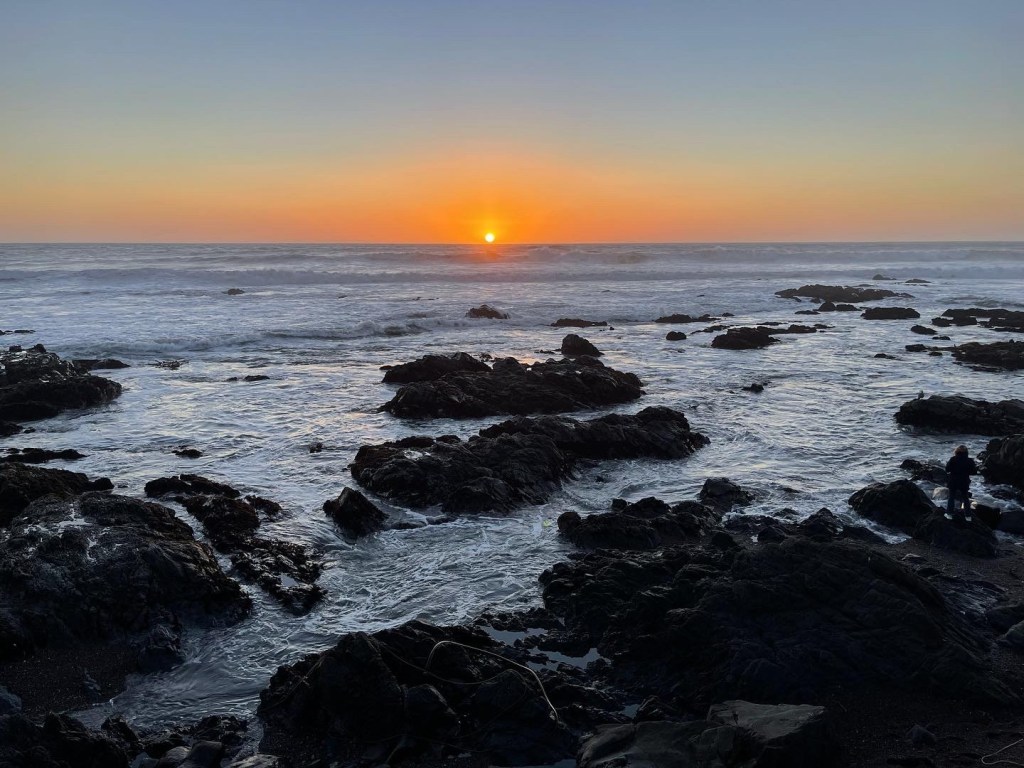
    Sunset at Moonstone Beach
  • The Hollywood Sign

    The Hollywood sign that clings to the southern side of Mount Lee in Los Angeles was first built in 1923, reconstructed in 1949 and again in 1978. It was repainted in 2005. The letters are 45 feet tall and the total length of the sign is 350 feet. Over the years it’s become the iconic symbol of Hollywood, and you can’t really visit the place without seeing the sign from some vantage point. On clear days there are plenty of those, but Griffin Park and the nearby Hollywood Sign Scenic Vista Point seem to be where most people go for close-up photos.

    I confess, I’m not a fan of the celebrity fanaticism undercurrent of this place, but I appreciate the more creative output coming out of Hollywood and the people behind the scenes who do the work. I’d much rather take a studio tour to see how they create a movie than stand near a red carpet trying to catch a glimpse of some famous person. And sure, maybe it’s odd for me to be celebrating a plywood sign at all, but ultimately I seek out the landmarks that make a place unique, and there’s no other place with a hilltop sign as iconic as Hollywood.

    The sign used to say “Hollywoodland”, built to advertise a development going in the early 1920’s. It became iconic with the growth of Hollywood and they dropped the “land” with the 1949 restoration. The first time I saw it, appropriately I suppose, was from the top floor of the Academy Museum of Motion Pictures (itself a place that makes you fall in love with the craft of moviemaking when you visit it). But you need to get closer for that true touristy picture, and the park and vista point are great spots for that purpose. As a side benefit you get to meet some great dogs.

    Had time allowed I’d have hiked to the summit of 1,708 foot Mount Lee to see the sign from behind. That will have to wait for another trip and a clearer city below, for as clear as the sky was above us, smog enveloped the city below. That, sadly, is another thing Los Angeles is known for. And as a visitor from a place with crisp air and clear skies, the other thing you notice. But looking up, at least we had that blue sky.

  • L.A. Gridlock

    Los Angeles is beautiful and ugly all at once. Spectacular weather, beautiful beaches and incredible mountains hovering over you. I can see why people are drawn to these things. But then there’s the other Los Angeles. The homeless population, the grossness of Hollywood Boulevard, and worst of all, the lack of anything resembling an effective transportation system.

    For me, Hell on earth is a place where you’re forever standing in line, waiting for the person in front of you to inch forward. And for an extra measure of pain add a million traffic lights. That, friends, is Los Angeles.

    If there’s a complete opposite to the rolling freedom of the Pacific Coast Highway it’s driving in the heart of Los Angeles, where it takes you an hour to go three miles and people think it acceptable. All those combustible engines spewing fumes into the air make a thick cloud of smog that hovers over the entire mess. Teslas are everywhere here, and they probably have a compelling return on investment when you look at the price of gasoline. All that gridlock hits the wallet hard.

    When you aren’t in your car and you can remove yourself from those who still are, the city shines. If only they had a London Underground- level transportation system to eliminate all the madness of the roads. I suppose earthquakes are a factor but that hasn’t stopped them from building strip malls and high-rises.

    If I’ve learned anything in my visit to this city, it’s that I belong in New England. I’m just not into gridlock and concrete, thank you. But don’t take it personally LA, it also means one less car on your roads.

  • Morro Rock

    When you’ve driven down the coast of California you’ve seen plenty of rocks in the water, and Morro Rock might be considered one more in a string of them. And yet it’s different from the rest. There’s a presence emanating from this big boulder that attracts you to it. Two Native American tribes, the Chumash and the Salinan, thought of the tock as sacred. Explorers mentioned it as a landmark, and it does jump out at you from miles away.

    Like most of nature, white settlers thought of it differently. When you call something a “natural resource” it somehow gives you license to put it through indignities or use it up entirely. It was quarried for a time, until the community saw it’s value more clearly and protected it. But rather than make it a centerpiece of a larger park someone else had the idea to stick a huge three stack power plant in front of it. I’m sure my timelines are off, but each of these things clearly happened.

    Despite all that, there’s a nice beach and access to the base of Morro Rock. It still has something to say. I think maybe it’s “leave me alone, I’ve had enough of you’.

  • Pacific Coast Highway

    “We do not associate the idea of antiquity with the ocean, nor wonder how it looked a thousand years ago, as we do of the land, for it was equally wild and unfathomable always.” – Henry David Thoreau

    I’m an East Coast guy. California is another world when you live with ice and snow and sunrises as your standards. You imagine what a place might be like when you’ve never been to it but hear of it often. It becomes the stuff of legend. Driving the Pacific Coast Highway and visiting Monterey and Big Sur became such a legend for me. And the experience lived up to its billing.

    When you look out at the Pacific Ocean for a few hours, and the rugged, mountainous terrain this highway snakes through, you feel the truth in Thoreau’s words. But for the highway itself and a few scattered houses and ranches this view hasn’t changed much in millennia. And unless it all tumbles into the sea it ought to look the same for another millennium. We’re just rolling footnotes passing through the eternal. The Pacific Coast Highway sets you straight about such things.

    Starting our drive from the dunes of Marin, we drove Ocean View Boulevard to Sunset Drive, making our way to pay the $10.75 entry fee for access to 17 Mile Drive. It was worth the price of admission, particularly with the big waves rolling in as remnants of a stormy ocean. Officially, 17 Mile Drive has 17 landmarks to view (all mapped for you when you pay to enter). Unofficially, the glimpses of the homes of the ultra-wealthy and a drive by Pebble Beach Golf Links are a big part of the draw.

    A quick visit (checking of the box) in Carmel and we were off to Big Sur. This is where cellular coverage all but disappeared and you put your trust in fate. There are hundreds of turn-offs you can pull over into and several larger scenic vista parking areas. The toughest places to find elbow room were Bixby Bridge and McWay Falls. Each offer that postcard or Instagram worthy image. The trick is to find an image that’s unique without putting yourself in peril. Sometimes the perfect picture is the one everyone else took too.

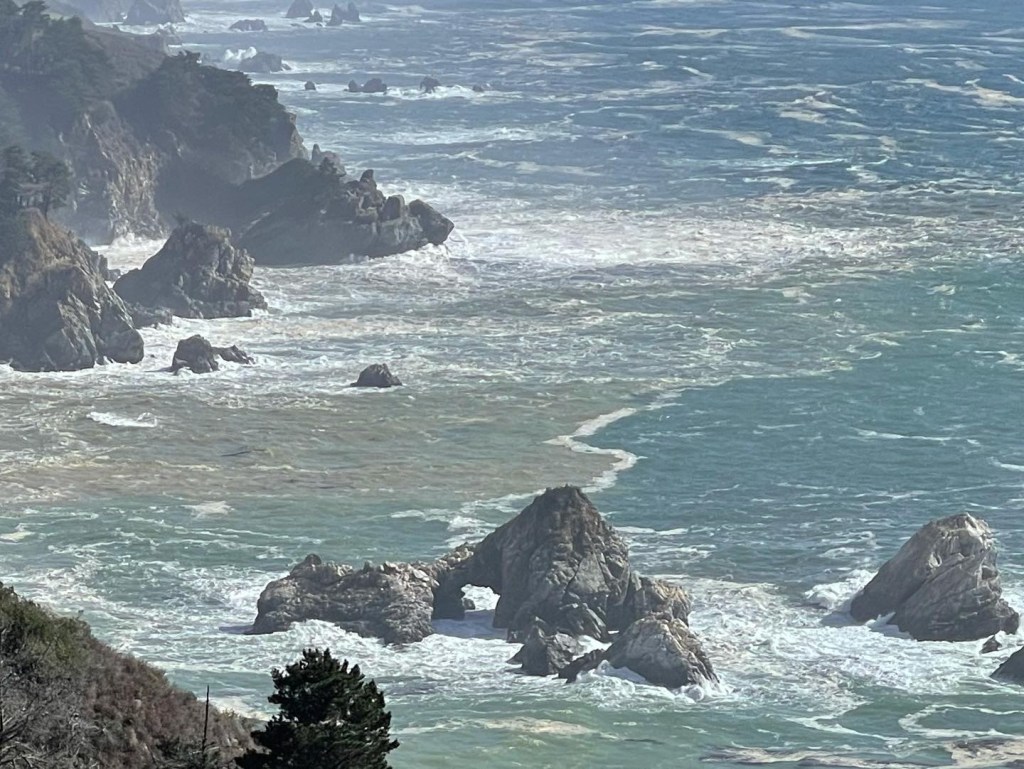
    The rest was simply breathtaking views and an appropriate focus on keeping the car on the road. Every turn brought another stunning view, and at some point you stop taking pictures of waves crashing onto massive boulders and cliffs and simply enjoy the drive. The Pacific Coast Highway is an embarrassment of riches in its beauty and a national treasure. Make sure you have a full tank and the time to enjoy this experience.

  • From Sonoma Wine Cellars to Bouncing 185 Feet Above a Raging Bay

    Autumn in Sonoma is a lovely mix of fall color and a mellower vibe as the hard work and hustle of making the wine gives way to letting time work its magic on it. After a long drought California braced for heavy rains as we wrapped up our time in the region, and talk with locals ranged from gratitude for the coming rains to trepidation at the prospect of mudslides and debris flows where the fire scars were. Northern Californians are stoic about this place they live in, a place that is so generous most of the time yet brutally cruel at other times. Vacationing in a place you’ve wanted to explore as a massive wall of water converges on it mandated stoicism for us too. We must work with whatever fate brings us.

    Fall foliage in the vineyards

    If the Scots utilize previously-used American oak for their liquid gold Scotch, Californians use French oak for their liquid gold, wine. The smell of these barrels of wine biding their time is uniquely wonderful. Scheduling a tour in a vineyard that brings you access to the cellars is a must to better understand the process, and to bring all the senses into your Sonoma experience. Add generous pours of wine to sample and stories of the history of the family who started the vineyard and you’ve securely locked your senses in the amber of the moment. You’ll remember these moments most of all.

    24 hours later, it was time to move on to our next destination, and, it turns out, make another memory. In stormy weather you make calculations about the timing of the worst of it. Do you cut your trip short or hunker down and ride it out where you are a bit longer? Timing makes all the difference, doesn’t it? Leaving Sonoma on our normal schedule but before the worst of the wind and rain we left the region behind.

    As we reached the Richmond Bridge to cross the bay we anticipated extreme wind gusts on the exposed drive across, but didn’t expect a camper trailer to blow over on its side ahead of us, closing a lane and stopping all traffic for 15 minutes as the tow trucks and emergency vehicles positioned themselves for a wrestling match in a wind tunnel 185 feet above the angry waves below. Stopped there for awhile to contemplate the violent wind, we were lifted up and shifted side-to-side with the bridge. It was thrilling or terrifying, depending on your perspective on bridge construction.

    Just a couple of memories on opposite ends of the heart rate spectrum during an all-too-brief visit to Sonoma. Sure, perfectly glorious weather would have left its mark on us too, but there’s something to the unexpected drama of a massive storm that forever imprints itself on your memory. Travel offers up these amber moments. Remember that time we…. moments. And changes us in the process. Isn’t that why we go in the first place?

    Seghesio wine cellars