Tag: California

  • An Epic Drive from Bodega Bay to Fort Ross

    Looking for an adrenaline-filled, twisting and turning cliffside drive with amazing coastal views? Get yourself to Bodega Bay, California on a dry, sunny day and head north on the Pacific Coast Highway. This route is not for those who imagine the worst-case scenario on every turn, but it’s a thrill for the rest of us!

    Hairpin turns and switchbacks are a big part of the menu here. Foggy or rainy days would be pretty scary. Don’t bring your RV for this stretch of road, ideally bring or rent a sports car. Utilize the turnoffs to enjoy the views or to let faster drivers pass.

    One perfect out-and-back drive is Bodega Bay to Fort Ross. Plenty of places to stop and see the rocky coastline and crashing surf, and just long enough that you don’t tighten up from the technical driving that you’ll do on this road. The show continues further north, but Fort Ross offers a quiet place to stretch your legs before a fun drive back to celebrate the day at your hotel or B&B with your favorite Russian River Pinot Noir or Zinfandel.

    Buckle up!

  • Finding Relative Quiet at Muir Woods

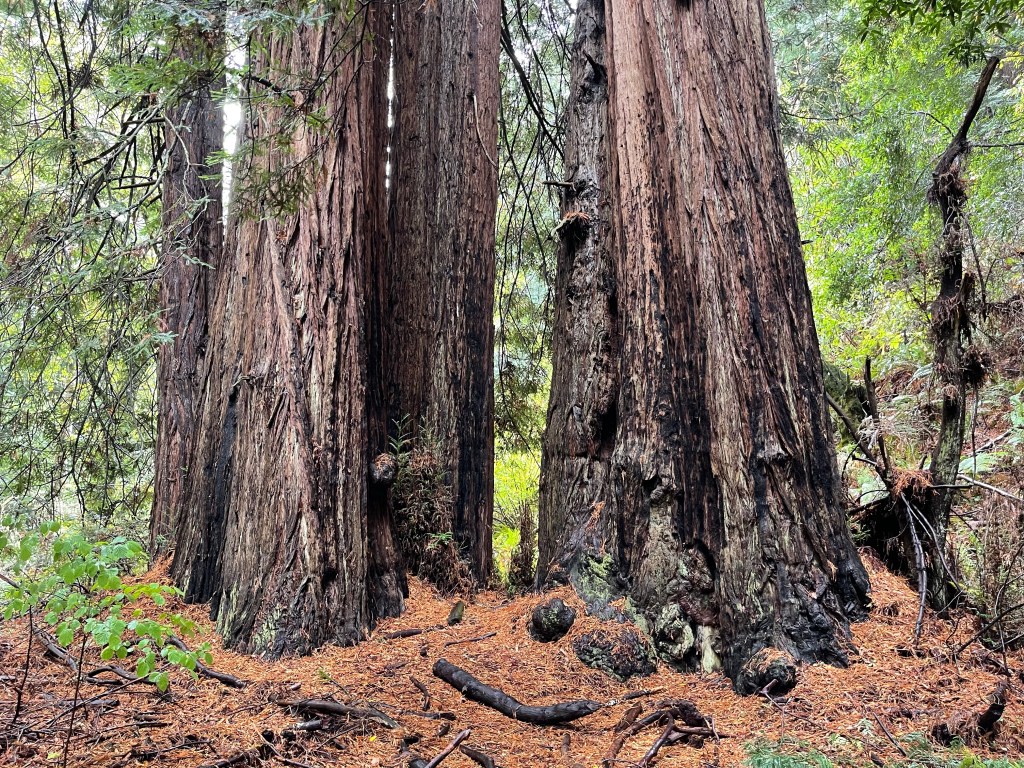
    Taking a long, slow walk amongst the Redwoods in Muir Woods, I deliberately slowed down, lingered, and sometimes stood still to feel the forest. Looking straight up I watched water drops formed in the tree tops from the light mist fall a few hundred feet. There are trees here that have stood here for more than a thousand years, my visit was just one blip in their lifespan. And here I found what I’d been looking for, what I’d hoped I’d find on this twisting drive through the hills. Here were the ancient forests of my imagination.

    Seeking quiet, reverent space amongst the giants is tricky business if you only stay on the main path. No matter how much signage they put up, tourists chat like they’re at the mall, oblivious to the glorious silence. You must go there expecting this careless chatter, but you don’t have to participate in it. The best option for silence is to take the paths less taken, and Muir Woods offers these opportunities. Take any trail that scares the masses – be it mud or the promise of exertion or even a dead end sign and you quickly find yourself in relative quiet.

    There are other old growth redwood forests, not enough of them we might agree, but they’re out there as state and national parks throughout the region. These offer more opportunities for isolation. Muir Woods is both the most famous and the most crowded. The trees won’t ever disappoint you, but your fellow man might.

    If we lost all the money we have and saved these trees, it would be worthwhile, wouldn’t it?” – William Kent

    William Kent purchased this land and fended off those who planned to log the redwoods to rebuild San Francisco after the 1906 earthquake and then flood the valley as a reservoir. He might have named it after himself but chose to honor John Muir. Modest? No doubt, but there’s an element of brand recognition at work here too. Since 1908, the Muir Woods National Monument has stood as protected land, surely thrilling Kent and those who worked so hard to save the trees, and capturing the imagination of reverent pilgrims ever since.

    If you visit, make a parking reservation well in advance. Go as early as possible to avoid the worst of the crowds. Wear appropriate footwear for hiking the side trails. And save the casual conversation for later. For you’ll have plenty to talk about.

  • A Visit to Alcatraz

    The first thing you notice about Alcatraz is how small it is compared to that image in your mind. If you’re ever met a celebrity you find most of them are smaller in real life. It’s the same with this place. The Rock became famous, and like any other celebrity you come to terms with the stories in your head when you meet one.

    I don’t celebrate the lives of murderers and con men. They were put here for a reason, and it’s not for things that should be celebrated. For me, Alcatraz was a curiosity, an island front and center in the middle of San Francisco Bay that offers stunning views back towards the city, the bridges and the beautiful natural world that surrounds you when you’re standing on it.

    Jail cells and all that aside, the island was once a fort that utilized that commanding position in the harbor as a key defensive position. Eventually military prisoners were incarcerated on the island and it grew from there into a federal prison. It reminded me of Edinburgh Castle, both with reputations for strength, both at turns a fort and prison, both requiring steep ascents to get to the top. They put these places where they were for a reason.

    The Alcatraz tour itself is a downloadable app that you listen to on your phone. You can still borrow the headphones but most people seem to prefer the app. It detects when you remove the phone from your ear so you aren’t missing the story while taking pictures with your phone. The drawback to this is dozens if people walking in every direction with their phones pressed to their ears like Christmas Eve shoppers in a crowded mall. So I was happy to complete the official tour and wander around the island. And that’s where the real magic was.

    The gardens of Alcatraz are beautiful, diverse landscapes in a unique microclimate. Old foundations form neat garden walls, and the wall tops themselves became long rows of planters. Plants ranged from agave to fuchsia to a showstopper, Pride of Madeira, each set against a beautiful water view. The gardens made the trip for me, making Alcatraz more than a rock in the bay with a few stories.

    I confess I wasn’t excited about going to Alcatraz, but I’m glad I did. It rounds out the history of this place when you’re standing on it. That story is a little dark, but also more beautiful than I gave it credit for. But isn’t that what travel does for you? It changes perceptions, one visit at a time.

    Defensive map of San Francisco Bay
    Pride of Madeira
    Fuchsia
  • A Coastal Walk in San Francisco

    San Francisco is known for many things, but the Golden Gate Bridge has to be near the top of that list we make in our heads. Without being a tourist checking boxes, shouldn’t you try to see the sites that make a place unique? But seeing doesn’t have to mean doing what everybody else does.

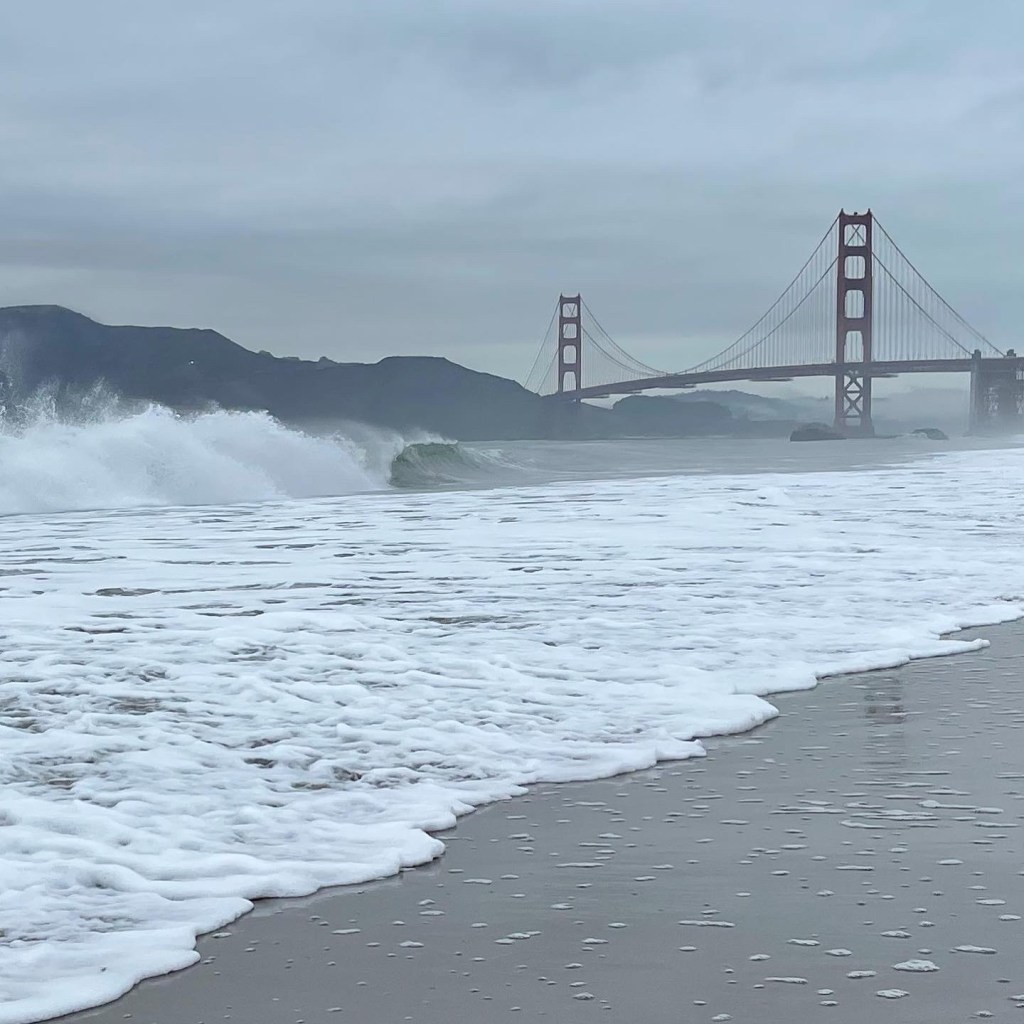
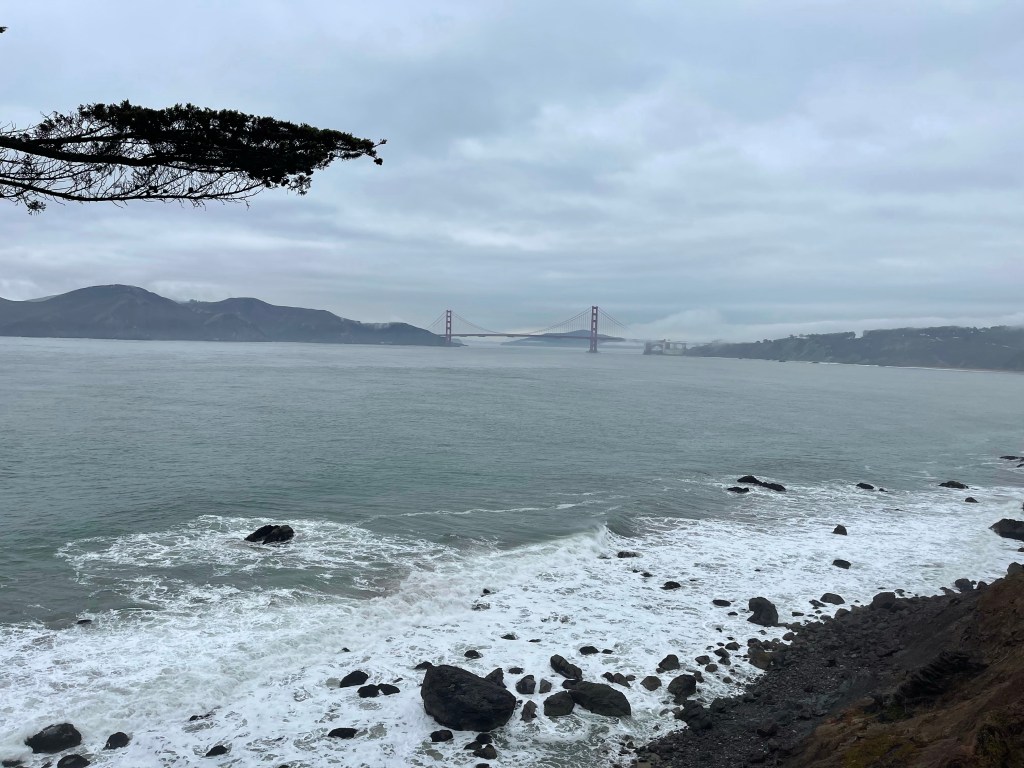
    So how do you see something as famous as the Golden Gate Bridge in a different way? You let it come to you gradually. The perfect way to do that is with a walk from Lands End to the bridge. This walk takes you along a diverse landscape of rocky cliffs, spectacular beaches with crashing surf, high end neighborhoods, past defensive fortifications dating from the world wars and finally to the bridge itself.

    You can Google the route and map it out neatly, but maps only offer a one-dimensional view. Even Street View, for all its delights, can’t convey everything. You don’t experience the clumpy clay in the sand after a light rain, or the shear cliffs that claim the lives of the careless adventurers looking for that perfect vantage point, or the spa-like aromas emanating from the wet flora, or the cheap plastic Halloween decorations adorning multi-million dollar homes. No, you’ve got to walk it to experience these things.

    The walk itself is a good workout, with a lot of climbing and long stretches on soft sand, but it’s not the Appalachian Trail, you can get by with a moderate fitness level and good walking shoes. The bridge and the roar of crashing waves will be your constant companion. Were it not for the bridge you might think you were in another place.

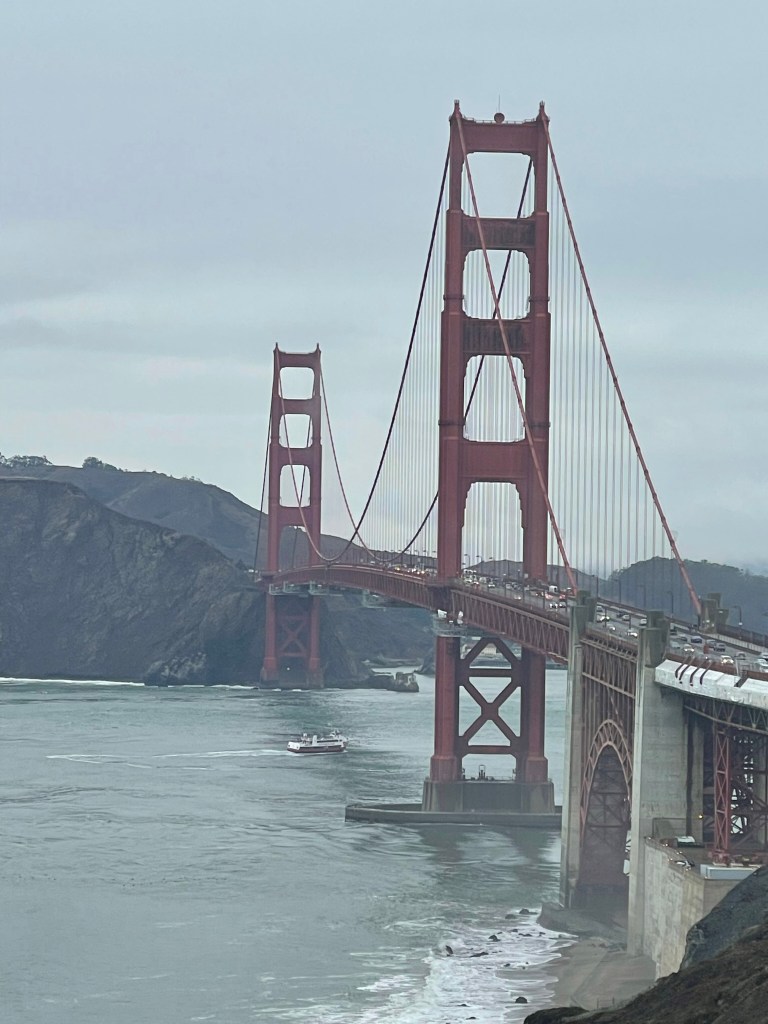
    The bridge comes at you from different vantage points. One of those vantage points is mental. We can all visualize the Golden Gate Bridge in our minds. So it can be invigorating when you see the real thing. It was thought impossible to build by many, but 84 years after opening she looks as good as you imagine she would.

  • Stumbling Upon Buried Treasure

    While waiting for a taxi to the airport I scanned the wonderful old books lining the shelves at the London hotel I’d been staying in. I do this often when I have moments like this, it’s where the buried treasure is after all. I saw two books on a shelf at eye level that drew my attention; Two Years Before the Mast, by Richard Henry Dana Jr. and an old collection of English poems. I’d read Two Years Before The Mast several years ago at the recommendation of a friend who’s doing exactly that at the moment. I flipped through it quickly, saw the old stamps indicating it was a library book and smiled. Libraries were where I found most of my buried treasure before the Google and Amazon changed everything.

    To this day my favorite discovery was an old copy of Typee by Hermin Melville pulled at random from a university library shelf in the fall of 1984. I was a freshman then, figuring out this college thing, and fascinated with the vast rows of books I could walk through. I picked up Typee and brought it to a reading nook and read the first couple of chapters, quickly falling in love with this other world. I’d return the book and come back again and again to it in the same fashion until I finished it, never checking it out (sadly not including my name on the stamp), but finishing it nonetheless. That friend who loaned me Two Years Before The Mast in turn took my recommendation to read Typee and now has a boat named Fayaway, a compelling character in the story.

    That other book, the one on poetry? I opened to a completely random page in a completely random book in an old library book stuck on a hotel shelf in London….. so you know; random. And I read this:

    Care-Charming Sleep, thou easer of all woes,

    Brother to Death, sweetly thyself dispose

    On this afflicted prince; fall, like a cloud,

    In gentle showers; give nothing that is loud

    Or painful to his slumbers; easy, light,

    And as a purling stream, thou son of Night,

    Pass by his troubled senses; sing his pain,

    Like hollow murmuring wind or silver rain;

    Into this prince gently, oh, gently slide,

    And kiss him into slumbers like a bride!John Fletcher

    Fletcher died in 1625. Analogies between sleep and dying are common, and Fletcher dabbling with the concept in this poem/song from 400 years ago illustrates that. We all want to gently fall asleep, and given the choice we’d likely all wish the same for our final sleep. Poetry either grabs you or it doesn’t. I haven’t made up my mind on this one, which means it’s the latter. Not everything you pick up in a book is going to be buried treasure. If it were what would be the value anyway? But there’s something to chew on here anyway.

    Two Years Before The Mast was written by a man named Richard Henry Dana Jr. after he left Harvard to regain his health after contracting measles. It’s a fascinating book that illustrates life onboard a merchant ship on a two year journey as they rounded Cape Horn to pick up cattle hides in California to haul back to Massachusetts. Seeing the book again prompted me to read a bit more about Dana, and I was struck by one part of his legacy. Dana Point, California is named after him. I’ve spent a fair amount of time in Dana Point, but never made the connection to the book until today. It seems I found some buried treasure after all.