Tag: Cape Cod

  • The JFK Memorial, Hyannis

    “I believe it is important that this country sail and not lie still in the harbor.” — John F Kennedy

    When I was a kid, Hyannis, Massachusetts was the place we’d go to walk Main Street and buy some candy. When I got a little older it was the place to hang out with college friends or to catch a ferry to Nantucket. Hyannis isn’t quaint or quintessential Cape Cod, it’s a bustling village in the town of Barnstable. I practice active-avoidance here the way locals avoid tourist traps anywhere in the world. But I’m not a local, just way too familiar with the place.

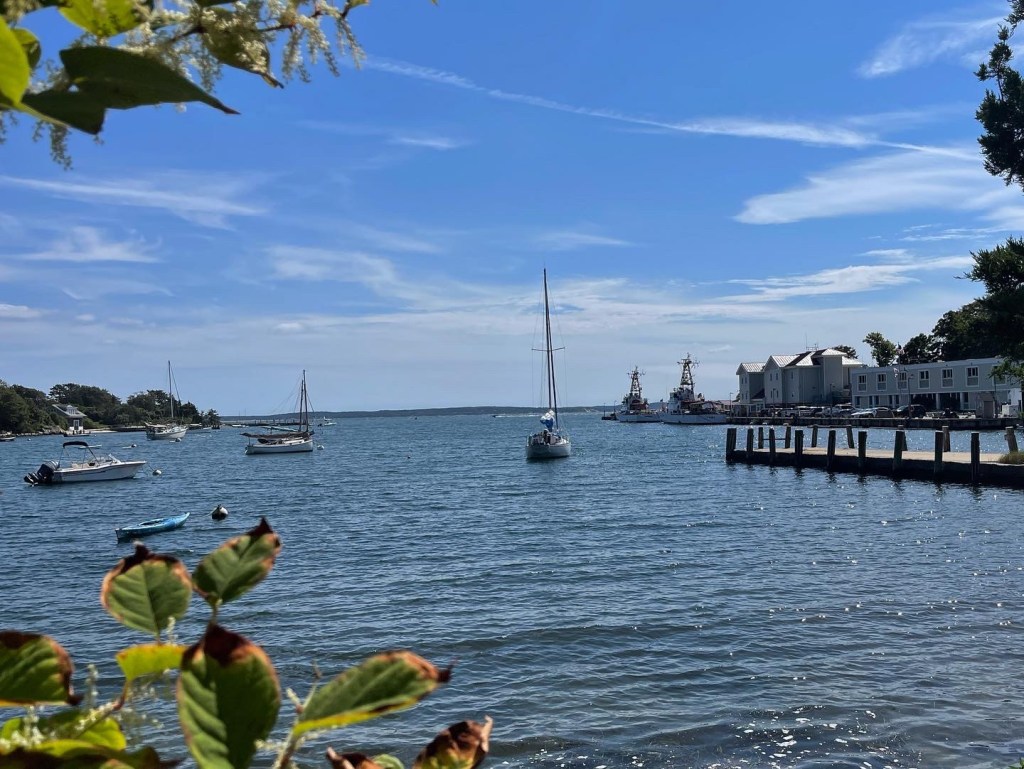
    And yet I’d never visited the John F Kennedy Memorial. It’s a quietly-dignified and understated nod to the President who once sailed in the harbor this memorial overlooks. Finding myself with a little time to spare, I fell back on my old habit of seeking out the most interesting and often overlooked places wherever I was at the moment. And this moment brought me to Hyannis.

    I remember having a glimpse of the entrance to the Kennedy Compound from the back of a station wagon as a kid, but to me that’s like watching the Lifestyles of the Rich and Famous. That’s not for me. Far more interesting is an offseason visit to a quiet memorial to honor the brief, brilliant flame that was JFK.

    The memorial features a fieldstone wall with a placard of JFK. Appropriately, it faces the harbor. There’s a fountain with the quote noted above engraved around it. In the offseason it’s simply a drained pool. I’m sure in summer it’s lively and impressive. But for my purposes, its stillness was appropriate for the somber occasion for the memorial. While it celebrates the life of the man, it also reminds us of all that we missed when he was assassinated that day in Dallas in 1963.

  • A Walk on Plum Island Beach

    There are different ways to walk a beach. Some walks are meditative, some are merely workouts, and some are clearly meant for people-watching. The reasons why we walk lead us eventually to where and when. Each beach offers a new lens through which we may see the world and ourselves.

    My bride is a beach bunny at heart, and it turns out our pup is too. We’ve been taking her to a local New Hampshire beach for long walks and she’s grown more courageous with each bold step. She’s no water dog and won’t plunge in like our Labrador retriever would, but she’ll delightfully chase waves and bite at the sea foam. Her joy is ours, and walks on the beach have become a more frequent way of getting her away from the permanent mud season of never-winter-as-it-once-was that is our new reality.

    If Hampton Beach is a long, flat walk on firm sand, Plum Island Beach offers an experience more like Cape Cod National Seashore: soft dune sand plunging steeply in places to the ocean breakers. The dunes aren’t nearly as tall as Cape Cod, but the walk can be just as wonderful. On one end is the turbulent mouth of the Merrimack River, on the other are the dunes and swirling sandbars of Plum Island State Park reaching out into Ipswich Bay. In between are rows of homes ranging from beach shacks to McMansion: beach edition luxury homes. As with everywhere exclusive, money determines the future state of the real estate here. But Mother Nature has a say too.

    Plum Island is not an easy place to walk nor an easy place to live compared to other beaches in the area. Just as wealthy homeowners in the Hamptons on Long Island struggle with beach erosion and the fickle protectiveness of sand dunes, the people who dare to build homes on Plum Island face the same challenges. One day you’re living in paradise, the next you’re living through a nightmare of storm surge and wave action. It’s an audacious act to live in such places, emphasized with insurance rates that discourage the casual investor. It takes disposable income to have such homes in such places as this.

    Plum Island State Park prohibits dogs, so a walk to the end with the pup was out of the question, but there was plenty of beach available for our power trio. Walking towards the Merrimack River, we met a couple walking three dogs of their own. As soon as they said their dog’s name I knew it was a locally-famous author but kept it to myself. We all seek out the beach for our own reasons, and often it’s to get away from who we are further inland. We had a small reunion on the return and went our separate ways.

    Every beach has its own story to tell, just as each beach walker does. I wonder sometimes why we aren’t walking more beaches, and promised myself to add beaches to the collection of mountain summits, waterfalls and historic sites I’m collecting on my life experience list. The time bucket for such activity is now, isn’t it? We must venture out while we’re blessed with good health and a desire to do something with it. Perhaps we’ll see you out there too?

  • A Visit with Myles Standish

    Duxbury, Massachusetts doesn’t have the same notoriety as its neighbor Plymouth, but the roots of history run nearly as deep here. To be fair, if people think of Duxbury at all, it’s usually as an upper class suburb of Boston. There’s plenty of wealth on display in this town. But step away from the massive homes with their perfectly manicured gardens and you’ll find a legacy that reaches back to the Mayflower. The most famous character on the Mayflower, Myles Standish, lived and died in Duxbury, and is buried in what is now known as the Myles Standish Burying Ground.

    The burying ground was once adjacent to a meeting house, long gone, but marked with granite stones to indicate where it once stood. It is the oldest continuously maintained graveyard in the United States. The lay of the land is largely the same within the enclosure. The thing about graveyards is you’re walking on ground largely unchanged since the days when the people buried there were laid to rest. The entire area around a graveyard becomes housing developments and strip malls and paved roads, but these small graveyards are a time machine back to another time.

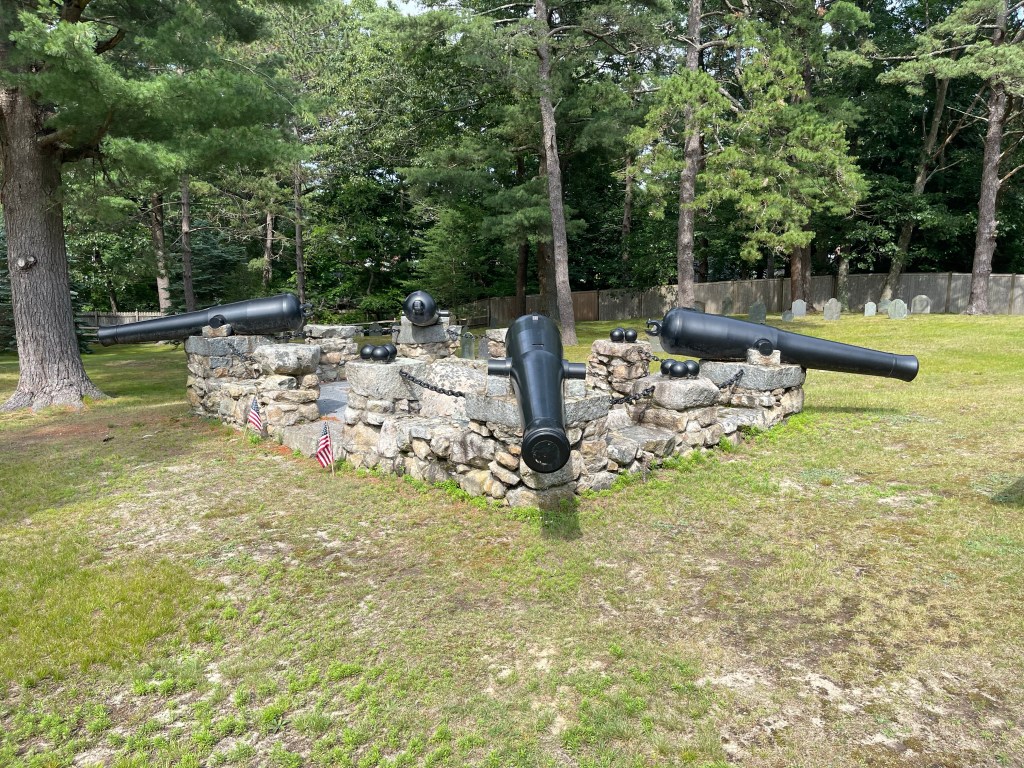
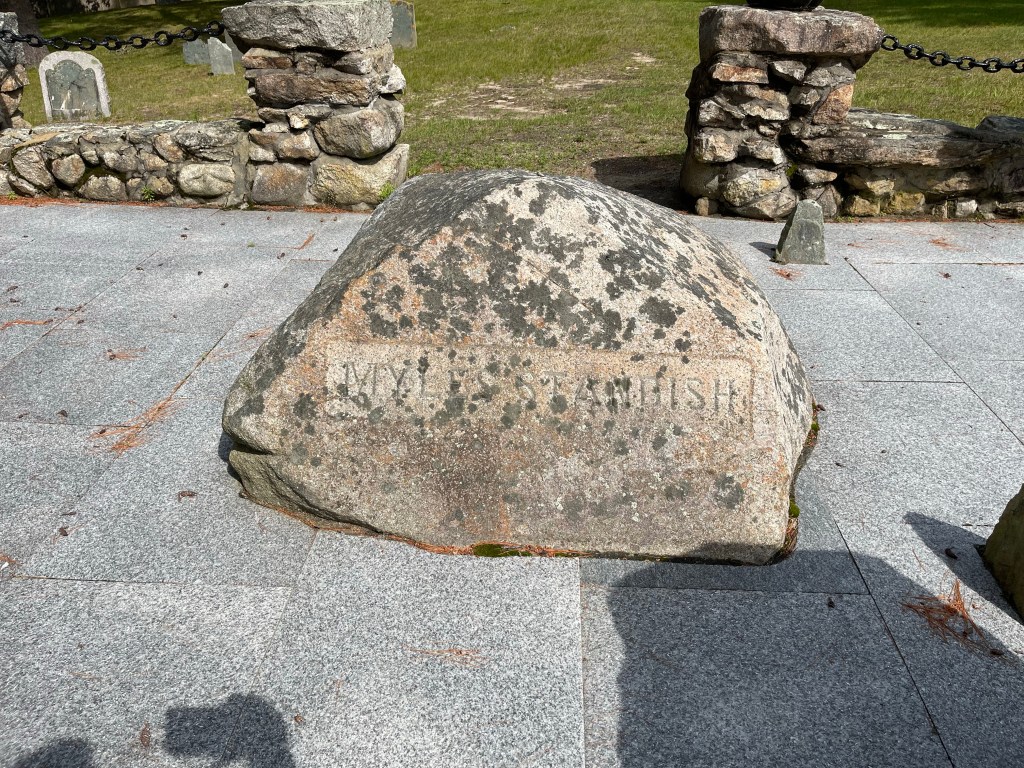
    Captain Jonathan Alden, son of Mayflower passengers John and Priscilla Alden, is also buried in this graveyard, and his is the oldest gravestone in the burying ground. Standish, who died well before Alden, likely had small pyramid-shaped stones marking his interment initially, and the monument built around the spot in 1893 (you can see one of these stones behind the boulder engraved with Myles Standish’s name in the picture below). That engraved boulder, like Plymouth Rock, is something for the tourists. The monument itself, with a fieldstone wall surrounding it and four cannon mounted on each corner, projects the violent boldness of the man interred beneath.

    Myles Standish was a military advisor to the Pilgrims. By all accounts he was brutal and decisive in his actions. He would preemptively attack when he heard trouble was brewing, and famously stuck the head of one rival, Wituwamat, on a pike as a deterrent to others. There seems to be no doubt that Wituwamat was lured into a room and murdered. Was this act of brutality something to be celebrated or scorned? Was there a legitimate threat to the Pilgrims, and could it have been resolved in a more diplomatic way? What’s clear is Standish believed he was fighting for the lives of the colonists, and used any method he could to intimidate those who he believed were threats to their safety. As with all history, we judge it from the comfort of distance.

    At another spot in town, on a point of land jutting out into Kingston Harbor, there are four more granite stones laid out in a park amongst multi-million dollar homes overlooking the harbor. It was here that Myles Standish actually lived. I found this interesting, as a military man like Standish would normally seek the high ground. A review of a Google map later revealed a small pond nearby that would have been his source of fresh water. Perhaps Myles dined regularly on Duxbury oysters, which have become almost as famous as the town’s most notable resident.

  • December Bay

    Sunsets must be earned in winter. There are no casual seaside deck conversations with a few pictures between sips of rum. No, you must seek out December sunsets by going to where it falls into the bay while bracing against biting cold winds galloping towards you in a stampede of frothy fury. Still, it makes a pretty picture and another memory.

    Micro-adventures and stolen moments of dancing with life count just the same as big trips and scheduled events. Life is our collection of all such experiences. We ought to sprinkle a bit more salt on our days to make them savory. For our best days are savored, aren’t they?

    Not as warm as it looks
  • The Enchanted Witness

    I’d contemplated kayaking out into the middle of the bay to capture the sunrise this morning. That plan blew away in the breeze as the chop and chill nixed the very thought of bobbing along waiting out the first glimpse of the new day. Visions of me paddling back to shore with my tail between my legs and my phone resting on the bottom of the bay made me a land creature instead.

    Then a glimpse of the giant October full moon sinking towards the horizon spurred me up and out the door. I cursed myself for not bringing a better camera than an iPhone, and then checked myself and swung over to gratitude for at least having an iPhone to attempt to capture the moment. We forget, sometimes, just how lucky we are to have so much technology at our fingertips. It wasn’t so long ago that sharing an image of the moon setting with the world a few minutes after taking the picture would have been completely out of reach. Modern life is miraculous when we stop to think about it.

    I never forget how lucky I am to be in a place where I can take such pictures at all. To capture the sunrise 38 minutes after witnessing the moon setting over restless water is itself a blessing. I can’t believe people choose to sleep in instead. In the span of 38 minutes the universe revealed so much of itself, and I found myself the enchanted witness.

    Thanks for your company this beautiful morning.

    Moonlight surfing on waves as the moon set over Buzzards Bay
    Moon setting, 9 October 2022 (forgive the blurry iPhone picture)
    Sunrise, 9 October 2022
  • Riding the Shining Sea Bikeway

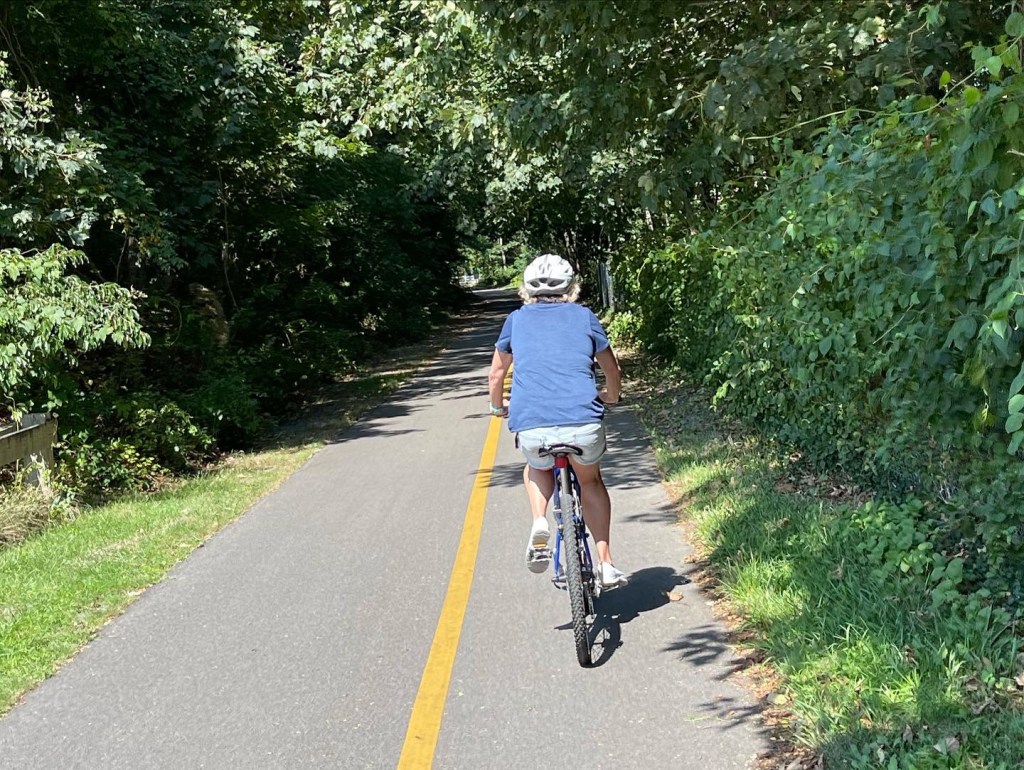
    Rail trails offer a great opportunity to walk, skate or ride without dealing with the resentful glare of automobile drivers who believe they own the road while controlling your life in their distracted hands. The Shining Sea Bikeway ups the ante with beautiful views and a diverse landscape. The trick on this trail is to avoid being too distracted yourself as the views stack up one upon the other.

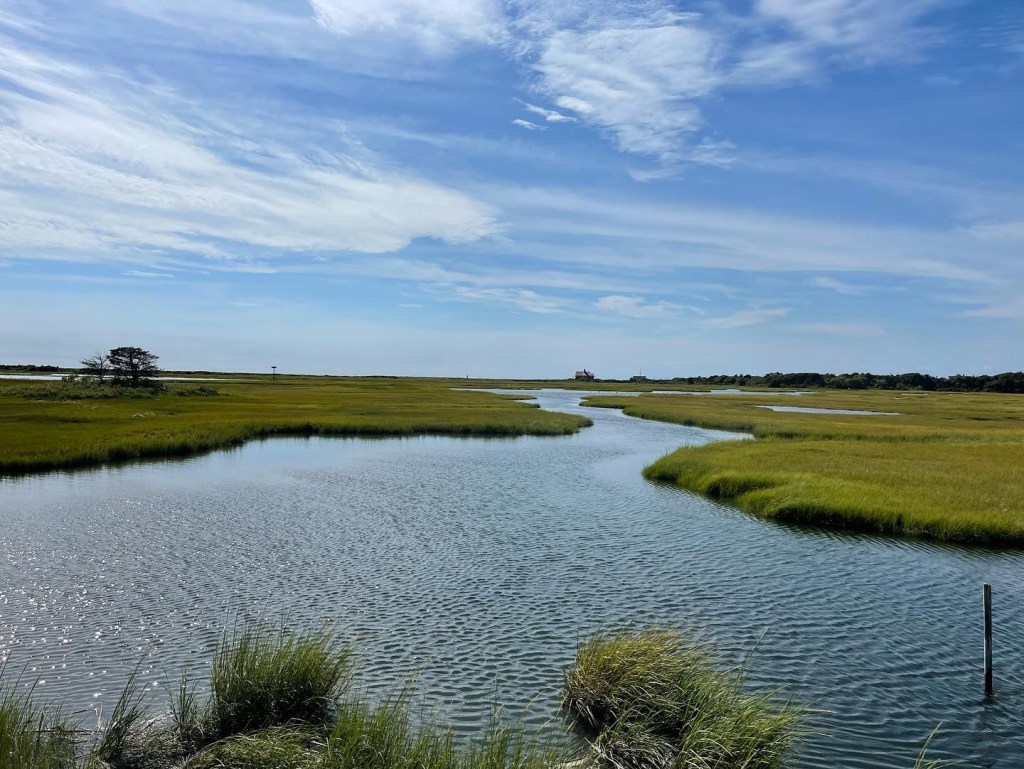
    The trail lives up to its name, with views of Buzzard Bay across both of the Sippewissett Marshes (Little and Great—but aren’t they both great?) and of Vineyard Sound and Martha’s Vineyard as it hugs the beach. Shining Sea runs from North Falmouth to Woods Hole, offering plenty of options to linger for time on the beach, stroll through woodland trails, or a visit to the many shops and restaurants of Main Street in Falmouth and Woods Hole.

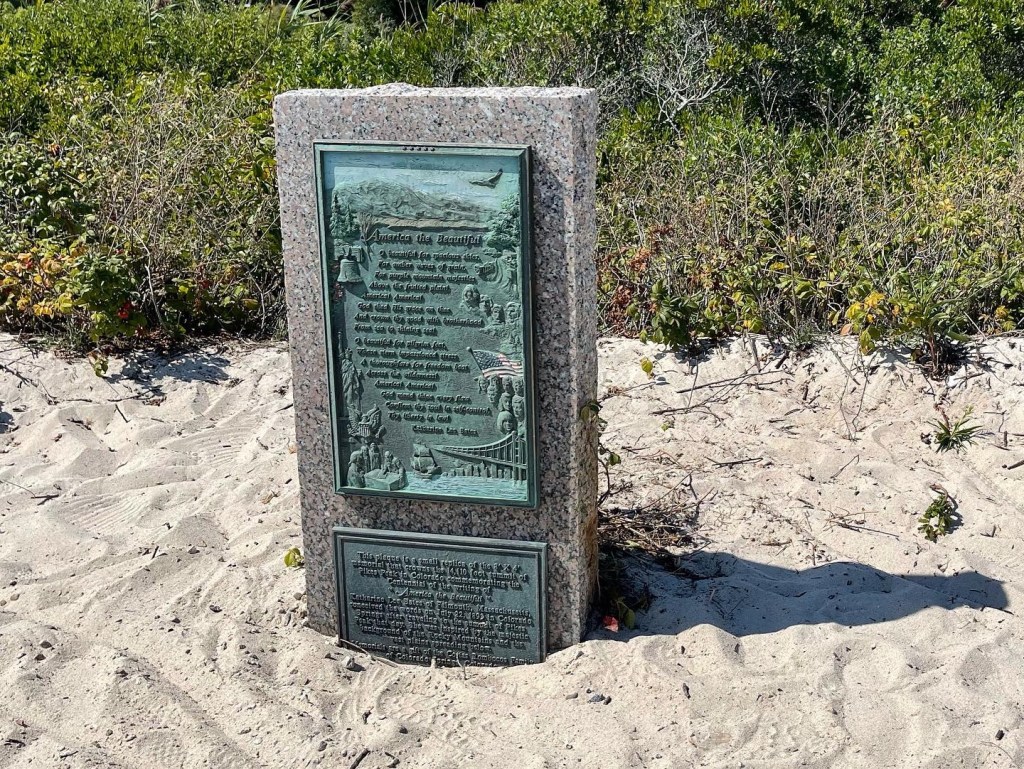
    As a sucker for salt water, it was easy to fall in love with the beachside section of the trail. Here you’re treated to those expansive views, the latest trends in beach fashion, and a monument to the trail’s namesake, Katharine Lee Bates, author of “America the Beautiful”, which ends with the famous line, “from sea to shining sea”. Very few Americans can recite every verse of America, the Beautiful, but everyone knows that last line.

    The magic on this trail is in riding through a tunnel of woodland canopy, salt march grass, past that beach sand and finally to the trail’s terminus at the Woods Hole Ferry. For a cyclist with dreams of never getting in a car for a vacation on the Cape and islands, the Shining Sea Rail Trail makes a strong statement of what’s possible. For this cyclist, it was an opportunity to give the feet a break while getting some exercise with a view.

    From the North Falmouth terminus, it’s a 21 mile (33 km) round trip. That’s very manageable on a good bicycle. The human body connects with a bicycle in five places, each essential to a great experience. Perhaps none more than the seat. My bicycle seat was apparently designed to maximize suffering, but no matter, a sore saddle wasn’t going to ruin one of the prettiest rail trails in the northeast United States. The seat is replaceable, the memories will last far longer.

    There may be no better time to experience the Shining Sea Bikeway than autumn. September is a great time to get the warmth with the crowds, and October should be spectacular for fall colors in that canopy. It’s a trail worth considering if you’re interested in experiencing Cape Cod without the hassle of driving in traffic.

  • A Swim in the Broth

    “Consider the ordinary barnacle, the rock barnacle. Inside every one of those millions of hard white cones on the rocks—the kind that bruises your heel as you bruise its head—is of course a creature as alive as you or I. Its business in life is this: when a wave washes over it, it sticks out twelve feathery feeding appendages and filters the plankton for food. As it grows, it sheds its skin like a lobster, enlarges its shell, and reproduces itself without end. The larvae “hatch into the sea in milky clouds.” The barnacles encrusting a single half mile of shore can leak into the water a million million larvae. How many is that to a human mouthful? In sea water they grow, molt, change shape wildly, and eventually, after several months, settle on the rocks, turn into adults, and build shells. Inside the shells they have to shed their skins… My point about rock barnacles is those million million larvae “in milky clouds” and those shed flecks of skin. Sea water seems suddenly to be but a broth of barnacle bits.”Annie Dillard, Pilgrim at Tinker Creek

    I confess to briefly recalling this tidbit from Dillard while reacquainting myself with Buzzards Bay, but mostly I considered the front paws of my canine swimming partner enthusiastically paddling in my direction, and equally pressing, the rumble of morning thunder close enough to keep the swim brief. We don’t think about barnacle bits when we swim in salt water any more than we think about the vapor particles we breathe in in a crowded room (at least until the pandemic). These are simply part of the deal. We embrace the universe as it snuggles in close or we curl up in terror under the covers.

    The point is, we’re meant to be out there living in the world. So dip a toe in the broth, or better yet, plunge right in. For we are very much a part of the stew of life and ought to celebrate our brief moment together. But appreciate that outdoor shower afterwards just a little more.

  • Keeping Watch in the Cape Cod Fog

    Cape Cod is a summer playground, we all know that. But what of winter and early spring? These “off” seasons are often described by well-meaning seasonal snobs as desolate and depressing. I’d argue for the stark beauty of isolation, and seek it out whenever possible. The Cape isn’t desolate off-season; it’s dormant. If you listen you’ll hear the pulse of preparation for the busy months. You’ll see the changes as houses transform from small cottages to McMansions all around you. People want to be here, more than ever, and will pay insane sums of money to have their place in the sand.

    I spoke with a neighbor, who lives alone on a plot of land he bought against the strong wishes of his future in-laws for $10,000 back when the Beatles were still cranking out albums. That view is worth well over 100 times what he paid for it back in the day. But money doesn’t matter for him now, what matters is this spot and his place in it. He keeps watch on the bay, talks of old storms and the last time he saw a seal on the beach. Time flies by, and he’s one of the last holdouts from the original young hopefuls buying property in this small piece of paradise. Five and a half decades watching the tides ebb and flow teaches you a few things, and he’s happy to share lessons if you invest your time. I’m in investor in such time.

    I check in on him whenever I visit the Cape, especially off-season. I might be the last person who stepped into his house over a month ago. I’m surely not his first choice for visitors but he hasn’t locked the door on me yet. I did a couple of chores for him while he settled in for story time. He spoke of old cocktail parties as I brought up a few bottles of scotch and bourbon coated in a decade of dust from his basement. His sister was coming over in a week or two (what’s time?) and they were going to light it up once again, having a cocktail with a view of the bay.

    Walking alone in the thick Buzzards Bay fog the next morning, I thought of him alone in his house with the million dollar view. He’s like a lighthouse keeper forever on watch as the world changes around him. He’s both an anchor to what once was and a witness to what is becoming of the upper Cape. Walking around, I was drawn to the bits of hardscape that rose up out of the fog, to reflections in water and the sense of timeless change. We’re all lighthouse keepers in the fog, both anchors and witnesses. We hold relationships and communities together, remember the lessons of the past and share them when we have an audience willing to listen.

    Fog is disorienting because our eyes have nothing to lock on to. The swirling white mist hides both the objects we seek out and the ones we hope to avoid. A lighthouse keeper cuts through the confusion and helps us realize our place. Moving around the bay, seeing objects rise up to greet me, I understood why I’d come down here alone. I was simply keeping watch, it was and always has been about the lighthouse.

    Monument Beach, in the Upper Cape town of Bourne
    Cape Cod Railroad Bridge swallowed in Buzzards Bay fog
  • Hurricane Preparations

    The mooring field empties. Only a couple of boats left now, most likely they’ll be gone soon too. Beginning to look like the off-season now. But no, still a few weeks of summer left.

    Summer draws out the furniture, and looking around I know it must be stored safely away today. There’s a calculation that happens in your mind when a storm is coming your way: how much time do we have to do what must be done? Questions around how much traffic will be snaking along to the two choke points off Cape Cod and should I stay or should I go? How high is high enough above the bay should the worst surge occur?

    None of these thoughts are spun up in panic. This isn’t a Category 5 rolling in here, it’s a slow moving Category 1 named Henri with just enough punch to be taken seriously. When you don’t respect nature she’ll eventually teach you a hard lesson. So the boats come out, the neighbors are checked on, the furniture brought in, and the risks assessed. There’s no panic, only calculus and tasks.

    A reverse 911 text alert chirped a warning yesterday. What will today bring? And tomorrow? Tracking west? Less impactful. Maybe. But only Henri knows for sure. The rest of us prepare for the worst and hope for the best. Resilience comes from preparation. And this too shall pass.

  • The Great Falmouth Drop-Off

    Every year, except for last year, I find myself crawling along in a traffic jam just after dawn, patiently waiting for an opportunity to drop off a car full of runners for the Falmouth Road Race. As a committed non runner, it’s admittedly an odd position to put myself in. But we do what we must for those we love.

    The Falmouth Road Race was established in 1973, beginning at one bar and winding seven picturesque miles along the coast to another bar. It quickly became a destination race for a mix of international runners, including Olympians and elite runners, but largely recreational runners of varying abilities. That bit about beginning at one bar and ending at another is an important piece of information. For it means moving thousands of runners from one place to another at the beginning of the day. Which brings us to the great drop-off.

    Runners gather at the Lawrence School in Falmouth for the bus ride to Woods Hole for the start of the race. Runners are supposed to be at the school by 7 AM, which creates a crush of traffic most years as those seeking a parking spot mix with those dropping off runners. Add in thousands of runners walking from local homes and inns and you’ve got a recipe for gridlock as all navigate the local neighborhoods in this small town.

    2021, with a reduced number of participants, lightened the traffic considerably, but it didn’t eliminate it. This is the price you pay for participation in a great race, with both a local and international vibe. For all the madness, everyone is there to have a good time on a summer day.

    After dropping off runners spectators strategically position themselves at key viewing spots. My preferred location gives me a chance to see my favorite runners twice: just after the 6 mile mark and again at the finish. Don’t tell anyone though, it’s already getting pretty crowded here. With COVID considerations addressed, isn’t it nice being around people again?