Tag: David Foster Wallace

  • Surfacing

    “You drown not by falling into a river, but by staying submerged in it.” — Paulo Coelho, Manual of the Warrior of Light

    It’s easy to get submerged in our routines. Buried in our work. Wrapped up in our frantic days. The obvious question is, when do we come up for air? The less obvious questions might be, what have we immersed ourselves in and should we get out immediately?

    “There are these two young fish swimming along, and they happen to meet an older fish swimming the other way, who nods at them and says, ‘Morning, boys, how’s the water?’ And the two young fish swim on for a bit, and then eventually one of them looks over at the other and goes, ‘What the hell is water?”
    — David Foster Wallace, This is Water (Kenyon College commencement speech, 2005

    If each day is structured by belief and ritual, when is it appropriate to question what those beliefs and rituals are? I should think, always. But then life gets a little messy, doesn’t it? When we’re always questioning what we’re doing with our days, we’re not moving through life smoothly. We’re bumping into truth at every turn, switching direction, bumping into something else, and it feels like we’re being constantly jostled. If you loved riding on the bumper cars as a kid, then question everything. If you prefer to charge through life picking up as many experiences as possible until the ride ends, it’s best not to slow down and linger with questions at all. Maybe a roller coaster was your ride. Simply buckle up, put away those loose items and don’t eat the chili dog beforehand.

    The thing is, we need to settle into some form of ritual and routine in our lives, that we may gain a sense of place and time—that we may actually do something while we’re in this place and time. For it will all float away soon enough like all the rest. What the hell is water? It’s all this stuff floating around us friend. Whether we dove into it headfirst or quietly sank in doesn’t matter so much as what we choose to do now. Remember if you lose your bearings that bubbles float up (so exhale a bit now and then). Immersion has its benefits, but surfacing offers perspective and maybe even survival.
  • Understanding How to Think

    “Learning how to think really means learning how to exercise some control over how and what you think. It means being conscious and aware enough to choose what you pay attention to and to choose how you construct meaning from experience. Because if you cannot exercise this kind of choice in adult life, you will be totally hosed.” – David Foster Wallace, This is Water

    Watching the Pixar movie Soul yesterday, there was a reference to fish in water not knowing what water is. An hour later I was reading Admiral James Stidiris’s book Sailing True North and he also dropped in a reference to the speech, mentioning he reads it at least once a year. So, not one to ignore two disparate neon arrows pointing towards one specific source, I put the book down and re-read Wallace’s commencement speech. And just to be sure of his inflection I then listened to it again this morning (link above). Stidiris is right to read it every year. It should be required reading/listening for every person as part of their education, for if you look around at the highly-polarized America of 2020 it’s striking how on the mark Wallace was.

    I tend to absorb things through repetition and diversity, and maybe you do too. So watching the speech was one method of understanding, but reading the transcript at my own pace is where I fully absorbed what Wallace was trying to say. And in re-reading it at the end of 2020, when so much of what he said in 2005 reverberates differently, was striking. Wallace covers the peril of blind certainty, the contrasting importance of critical awareness and the “basic self-centredness” embedded in all of our operating systems. Critical awareness leads to freedom:

    “This, I submit, is the freedom of a real education, of learning how to be well-adjusted. You get to consciously decide what has meaning and what doesn’t. You get to decide what to worship.”

    The really important kind of freedom involves attention and awareness and discipline, and being able truly to care about other people and to sacrifice for them over and over in myriad petty, unsexy ways every day… That is real freedom. That is being educated, and understanding how to think. The alternative is unconsciousness, the default setting, the rat race, the constant gnawing sense of having had, and lost, some infinite thing.”

    And there it is: the real, and really important, freedom of learning how to think for yourself. Of listening to the vile poison coming out of a politician’s mouth or written in upper case Twitter ramblings and taking a step back from it and saying “no, that’s bullshit”. And, importantly, listening to a counter argument by another talking head and seeing the bias in their words too.

    Perhaps this is the elitism that the zealots describe independent thinkers as having. I once had a conversation over lunch with a customer in Rochester, New York who was incredulous that I might have a different point of view about Donald Trump. I quickly steered to common ground, pointing out that it would be better if he didn’t tweet quite so much (never debate politics, or anything really, with your customers). I saw right away that there was no helping him understand the underlying issues with Trump. Debating him would have positioned me as a smug liberal (I’m a centrist, thank you).

    The thing is, I’m not sure I’m right about Trump, but the body of evidence and his consistent tendency to do just the opposite of what I would have done in just about everything he’s done surely suggests my assessment is correct for me. And that freedom to consider what is known, assess and reach my own conclusion about a matter, independent of what others say and with full awareness of my own biases, well, that I think is what Wallace was trying to get at with this speech about the value of a Liberal Arts education.

    Wallace committed suicide three years after delivering this Commencement speech at Kenyan College. He was born in Ithaca, New York and got his undergraduate degree from Amherst College. These are two places I’ve immersed myself in during my tenure on this planet, so I feel a small connection to him. Infinite Jest is the book that got the world to take notice of him. But his Commencement speech might just be his most enduring work.

  • The Rules of the Game

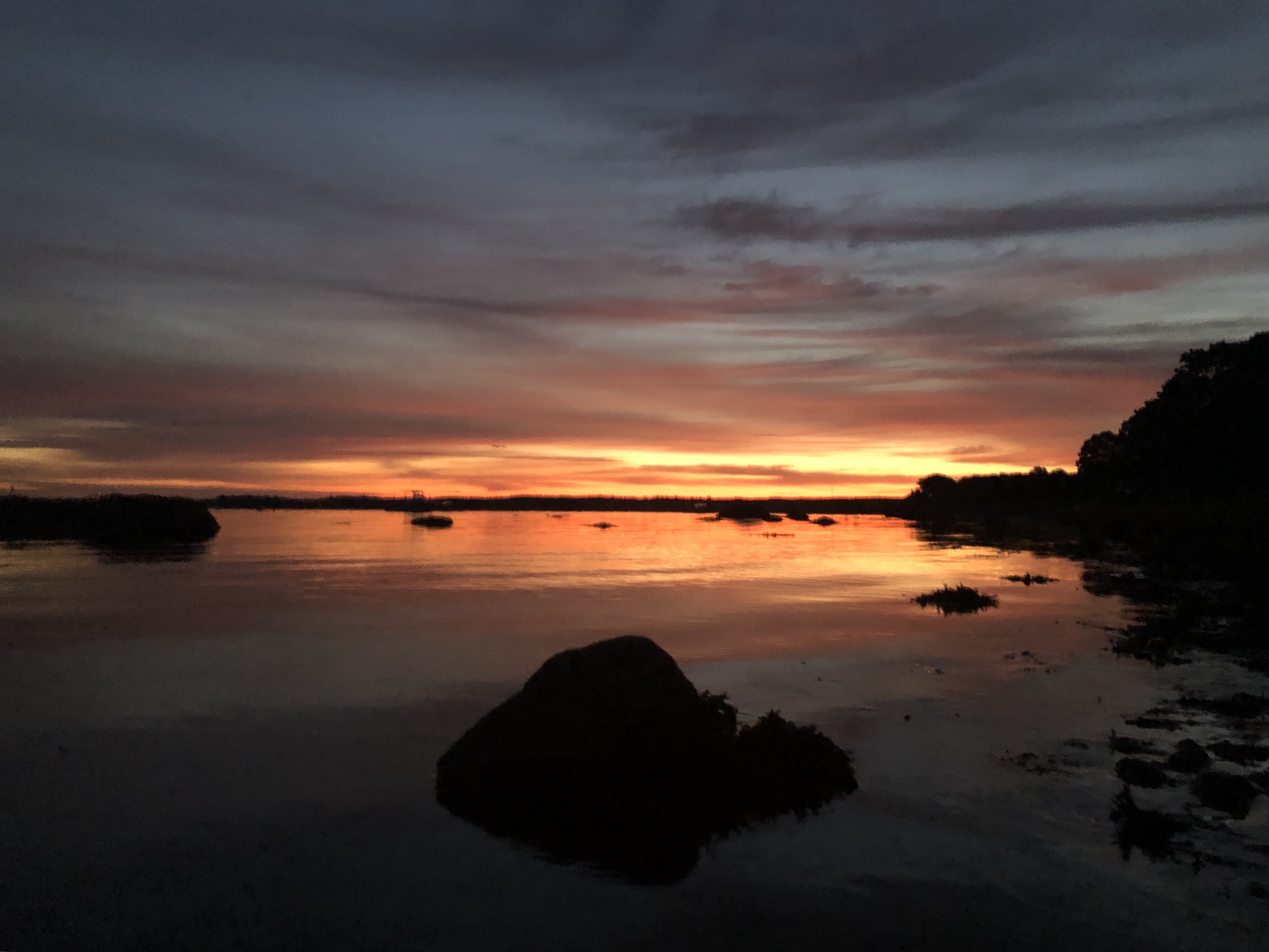
    Pre-dawn magic time once again on Buzzards Bay. Up early today, but not earliest this time. My brother-in-law, who owns a hardware store, was busy on his laptop in the kitchen as I headed out for the light show. A barge drifted past delivering oil to Boston. Yes, even on this Labor Day many people are hard at work keeping the world moving forward. And as I watch the rest of the world wake up, I’m pondering a few quotes on this Labor Day in the United States. This may be thought a day of rest for the common man, and I surely am that, but instead I contemplate the game of work, and the challenges that lie ahead.

    “If you don’t build your dream someone will hire you to help build theirs.” – Tony Gaskins

    “You will become way less concerned with what other people think of you when you realize how seldom they do.” – David Foster Wallace, Infinit Jest

    “If you must play, decide on three things at the start: the rules of the game, the stakes, and the quitting time.” – Chinese Proverb

    “Too many people believe that everything must be pleasurable in life, which makes them constantly search for distractions and short-circuits the learning process.  The pain is a kind of challenge your mind presents – will you learn how to focus and move past the boredom, or like a child will you succumb to to the need for immediate pleasure and distraction?” – Robert Greene, Mastery

    As I write, a crow lands atop a nearby tree, mocking me with its caw. The world owes us nothing, it lectured me, and it’s up to us to make something of ourselves. Pause, reflect, shift if you must, and move ahead. There’s only today after all.