Tag: Declaration of Independence

  • The Voice of Justice and Consanguinity

    We, therefore, the Representatives of the united States of America, in General Congress, Assembled, appealing to the Supreme Judge of the world for the rectitude of our intentions, do, in the Name, and by Authority of the good People of these Colonies, solemnly publish and declare, That these United Colonies are, and of Right ought to be Free and Independent States; that they are Absolved from all Allegiance to the British Crown, and that all political connection between them and the State of Great Britain, is and ought to be totally dissolved; and that as Free and Independent States, they have full Power to levy War, conclude Peace, contract Alliances, establish Commerce, and to do all other Acts and Things which Independent States may of right do. And for the support of this Declaration, with a firm reliance on the protection of divine Providence, we mutually pledge to each other our Lives, our Fortunes and our sacred Honor. – Declaration of Independence, July 4, 1776

    There’s a sentence in the Declaration of Independence that grabs me, written before the lines above brings this document to its bold conclusion. It’s the accusation that the British have been deaf to the voice of justice and consanguinity, which is both accurate and ironic. For we are an imperfect country, and if the last five years taught us anything it’s this: justice and consanguinity (the belief that we’re all kin derived from the same blood) are stories that we tell ourselves when it works in our favor.

    I’m not here to beat up this country I love on her birthday. That would be unfair. We are an imperfect country, but we latched on to a bold idea that generally has steered us towards progress for the citizens of the United States, and maybe, in some ways, for the world. This idea, that all men are created equal, is still a work in progress. But it is progressing.

    That bold ask, freedom and independence, continues to this day. For the Declaration of Independence and the Constitution to follow were each intended to be a call for a higher standard. We are a country of laws and young traditions, based on a belief in justice and consanguinity. We’re a bit rough around the edges, we don’t always get it right, but we’re slowly progressing towards a more inclusive interpretation of that original vision.
  • Matthew Thornton

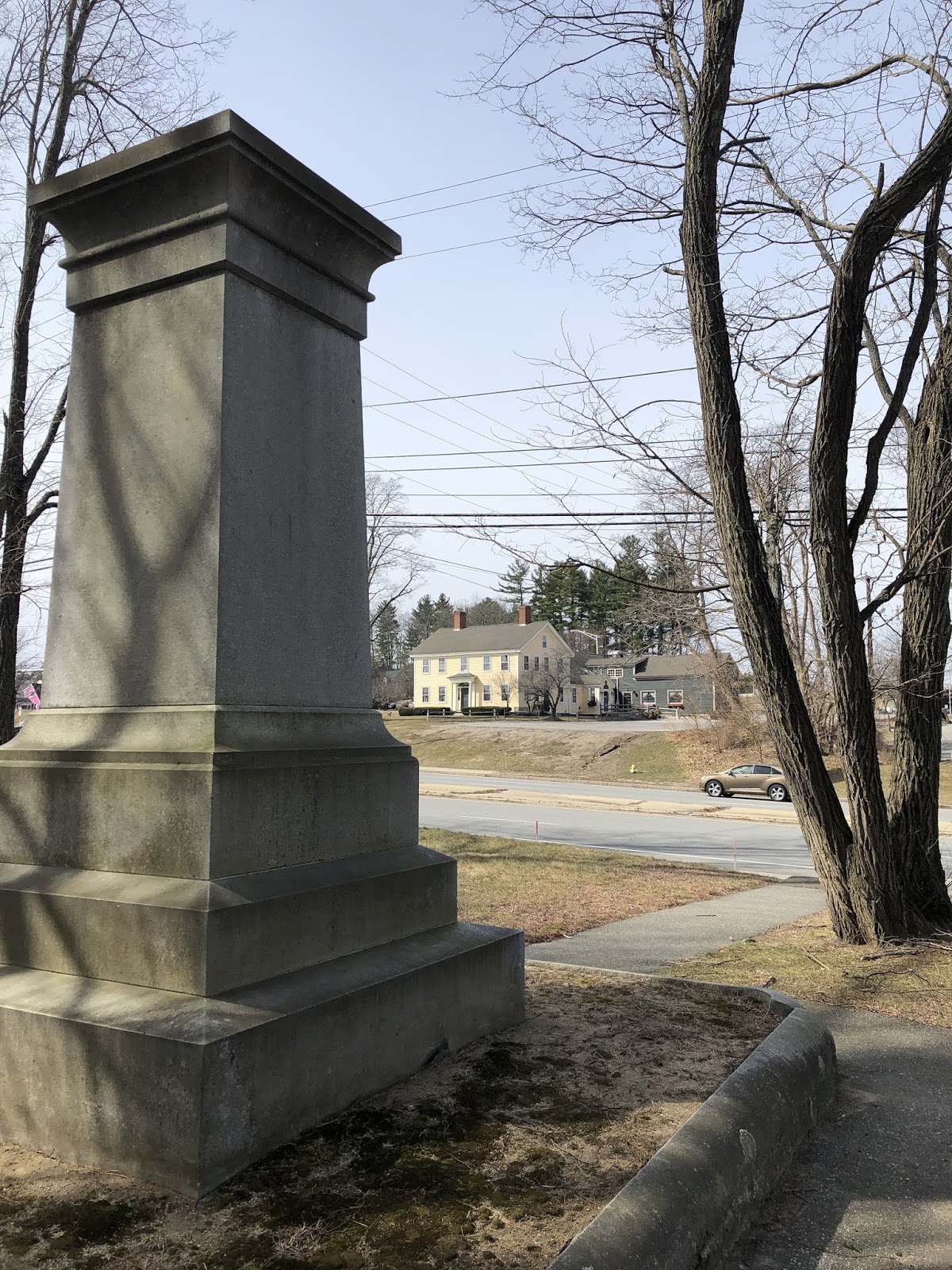
    Yesterday afternoon I was in Merrimack, New Hampshire between meetings and stopped at a coffee shop for a few minutes.  I passed the Common Man Restaurant, which having dined there I’d remembered as one of the oldest houses in the area.  I thought I’d like to go back to the Common Man to re-acquaint myself with the house.  Glancing across the street, I saw an old graveyard dated from 1742 with a tall monument with a red, white and blue wreath on it.  I almost crossed the busy street to look at it but the timing wasn’t good.  These are places I generally gravitate to and I made a mental note to come back to this spot sometime to get to know those who came before us a bit better.

    This morning I was reading my Kindle app on my iPad and decided to clean out some old screenshots I’d accumulated when reading online articles.  I came across an article on the Ulster-Scots that I’d found interesting and re-read it.  One of the people in the article jumped out to me immediately; Matthew Thornton.  Thornton was an Irish-born signer of the Declaration of Independence, representing New Hampshire.  More interesting.

    Thornton’s family arrived in Boston in 1719 with many other Ulster Scots.  They moved to Wiscasset, Maine (another place I’ve come to know) but fled the area when the Abenaki attacked their settlement and burned their home.  The family moved to Worcester, Massachusetts for some time before Matthew ultimately ended up in Nutfield, New Hampshire in what is now Merrimack.  He served as surgeon during the French and Indian War and participated in the attack on Fort Louisbourg in Cape Breton that changed the course of that war.  Thornton became the first President of the New Hampshire House of Representatives and the Associate Justice of the Superior Court of New Hampshire.  In 1776 he was elected to the Continental Congress and made his way to Philadelphia, where he became one of the signers of the Declaration of Independence.

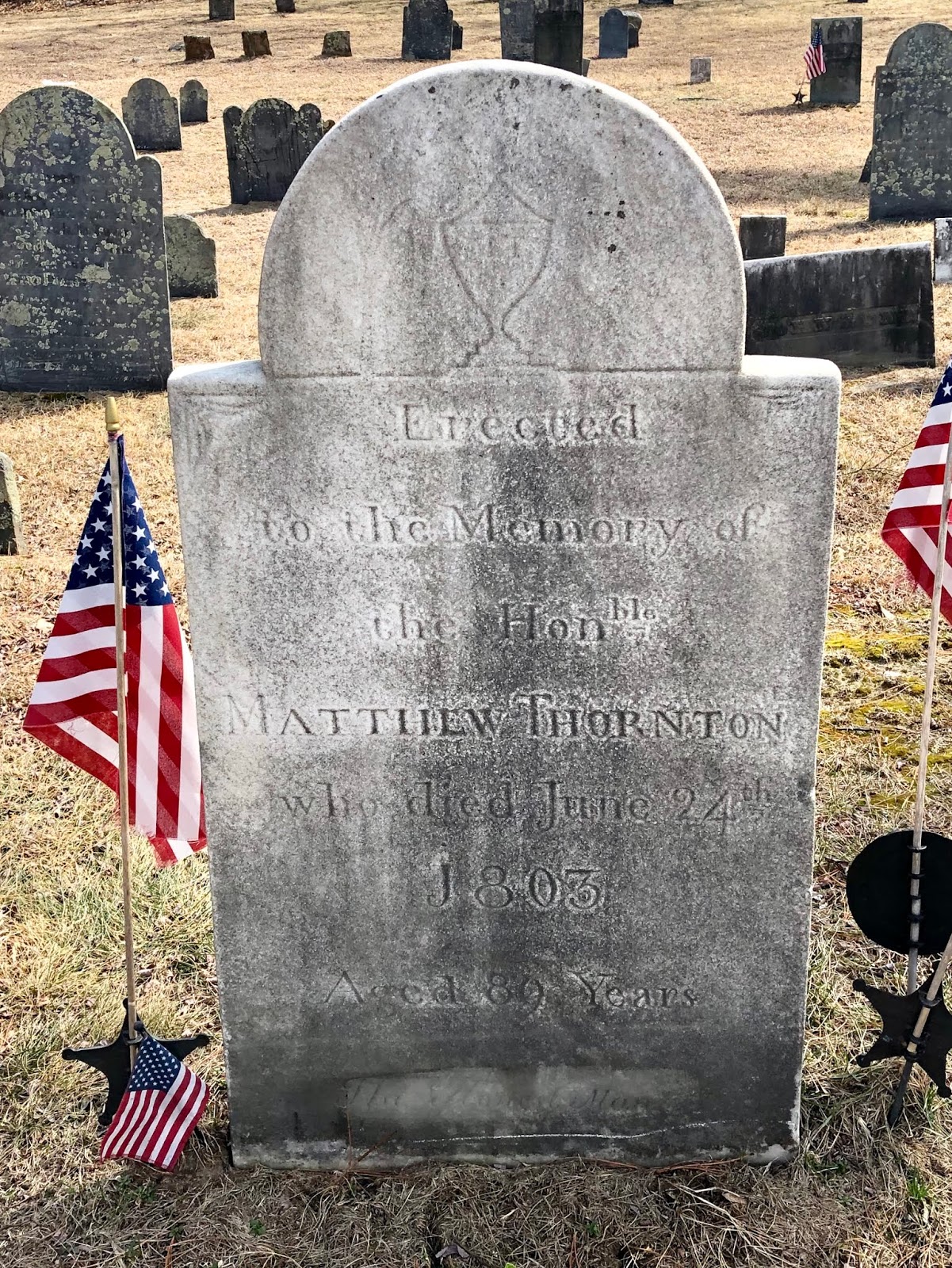
    Thornton lived in the house that is now the Common Man.  It’s called the Signer’s House to honor him.  He died in 1803 in Newburyport, Massachusetts, but was buried across the street from his home in Merrimack, New Hampshire.  That’s the graveyard that was calling out to me yesterday.  So within 15 hours two random events pointed to the same man; Matthew Thornton.

    Yesterday afternoon I met with a friend of mine who is living along the Souhegan River in Merrimack.  I was struck by the rapids right in the backyard and commented on the Abenaki who probably had the same view, and the early settlers who came across this spot.  I didn’t know at the time that Matthew Thornton probably stood roughly in the same spot several times.  Once again, I’ve been dancing with ghosts…

    Postscript:
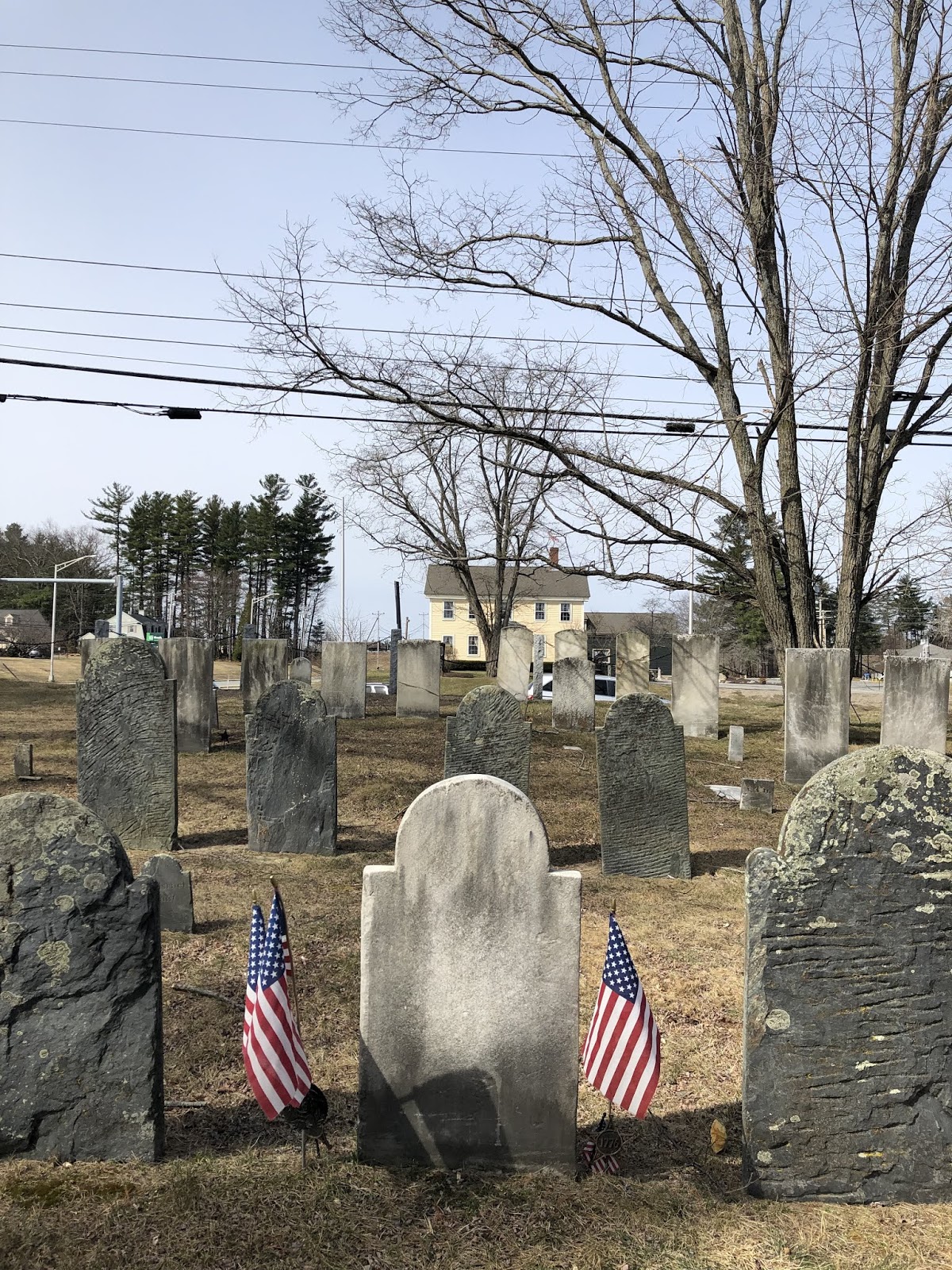
    Coincidently, I was driving through Merrimack again hours after I wrote this blog and decided to pull over to visit Matthew.  The monument was built to honor him by the State of New Hampshire, on a lot and foundation given by the town of Merrimack, to honor Thornton.  His gravestone is located roughly 50 yards away from the monument.  It was carved from white marble and flanked by American flags planted in the soil on either side.  His wife is buried to his left, and his sons to his right.  They all face the house that they once lived in.  I wonder which of them was calling to me when I drove by?


  • The Corner of Broadway and Hudson

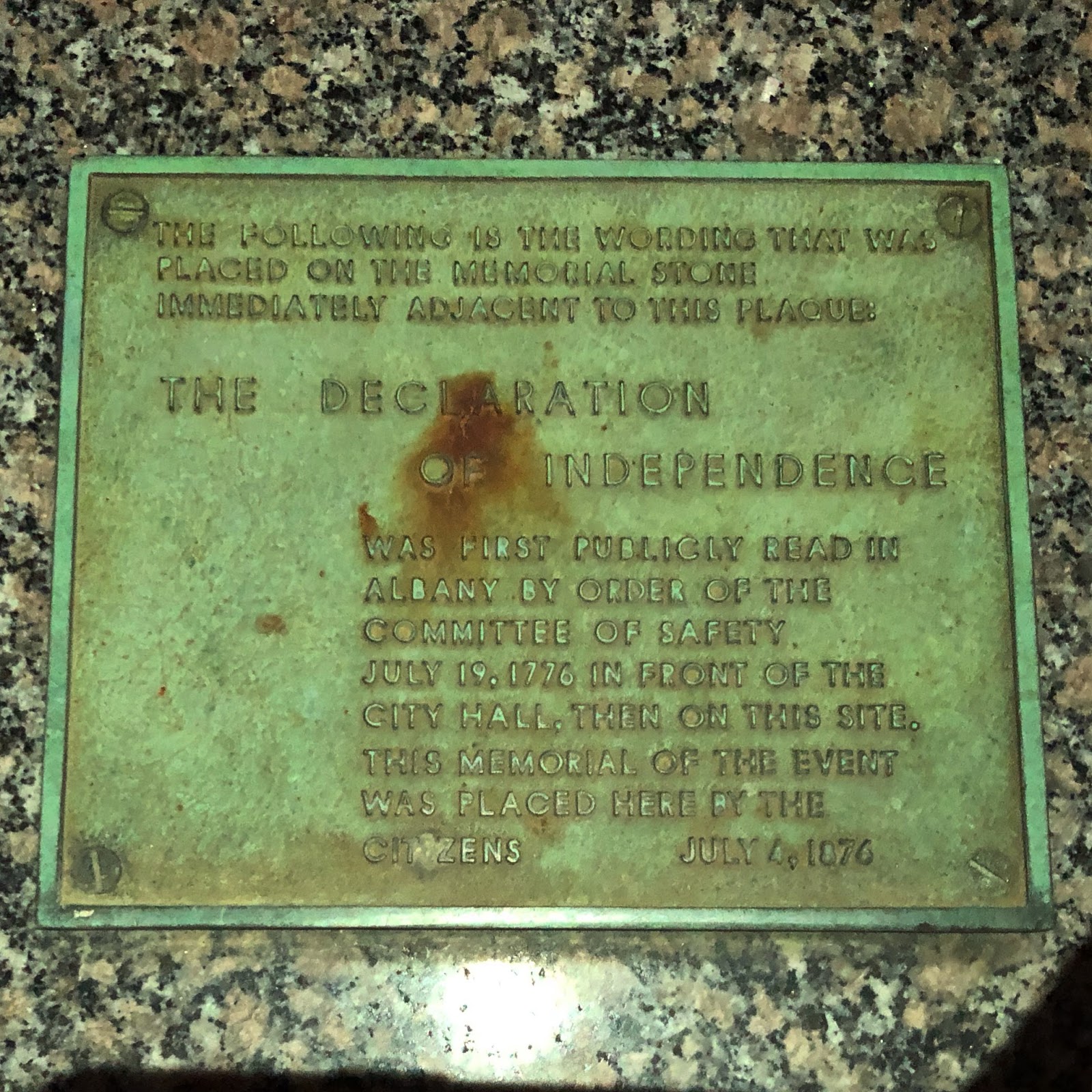
    One of the more significant street corners in American History is the intersection in Albany where Broadway meets Hudson Avenue.  This is the site of the old Stadt Huys where in 1754 representatives from several colonies met to discuss the Albany Plan of Union.  This group, known as the Albany Congress, consisted of a few famous men from the time, but the most famous of all was Benjamin Franklin.

    Coincidently this site, 23 years later, was also the location where the Declaration of Independence was first read in public.  Albany was a critical hub during both events.  In 1754 Albany was the edge of the wilderness.  In 1776 Albany was the center of the Northern Army’s efforts to repel the British Army, which was attempting to cut New England off from the rest of the colonies by seizing control of the Hudson River.

    Reading the Declaration of Independence in Albany had a galvanizing effect on the people who heard it.  Remember, Albany was under siege from all sides in the summer of 1776.  The British had swept over Long Island and Manhattan, and occupied New Jersey downstream.  They had just taken control of Lake Champlain to the north – a critical highway for troop movement from Canada.  And the Iroquois were allied with the British just to the west.  Albany was in a precarious position on July 19th when the Declaration was read.

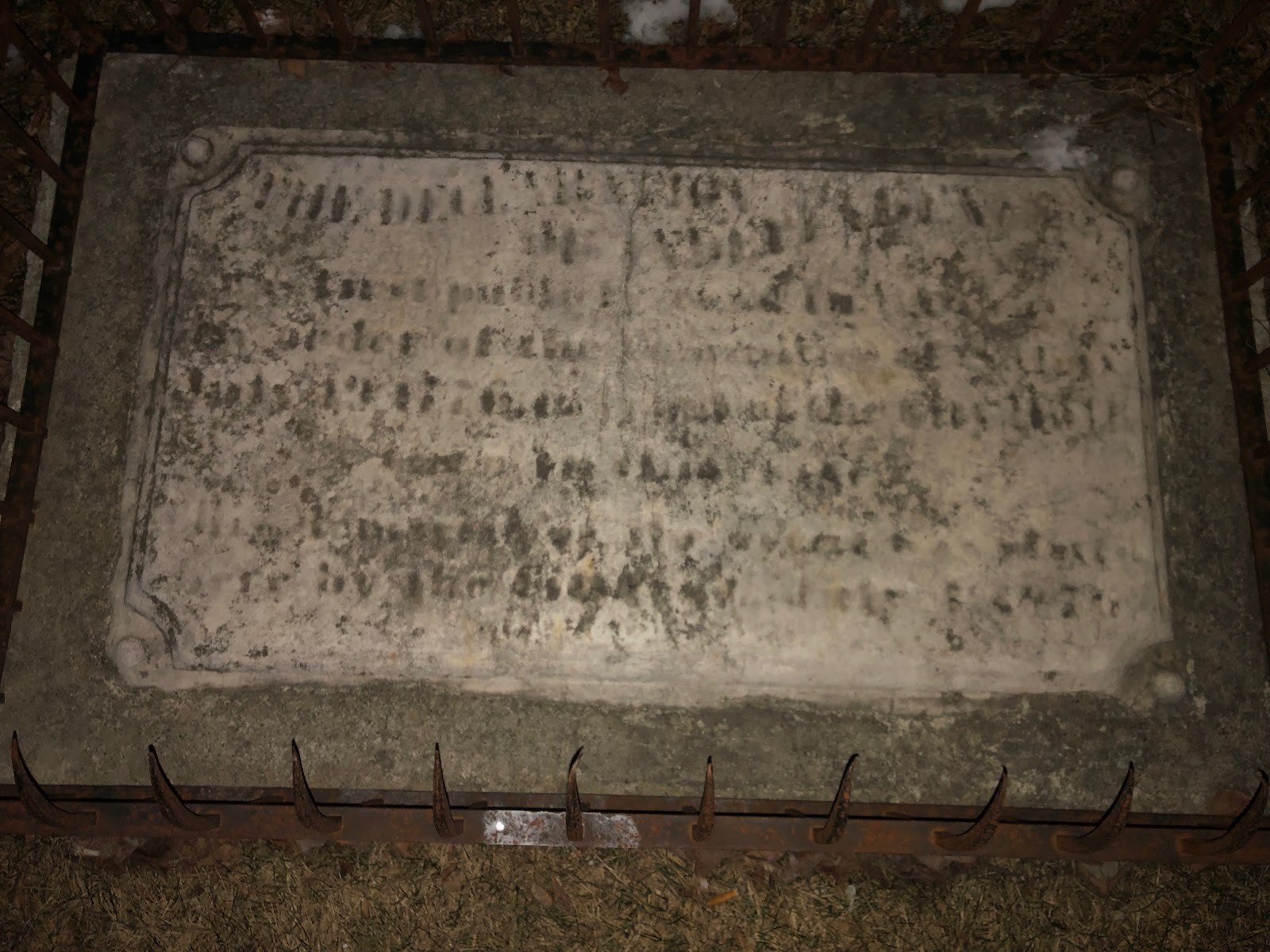
    In 1876, according to The Friends of Albany History, a ceremony commemorating the centennial of the reading happened in this spot:
     “Before a gathering of “two or three thousand” Albany residents, the tablet, which was covered by an American flag, was unveiled by Visscher Ten Eyck (Matthew Visscher’s grandson.) The tablet’s reveal was greeted by hearty cheers from the crowd, patriotic songs, chimes from the steeples of nearby churches, and a 100-gun salute.”
     
    Tonight, almost 141 years since that ceremony, 241 years since the Declaration was read in this spot, and 263 years since Ben Franklin led the Albany Congress to draft the Plan of Union, I had a couple of pints across the street from the commemorative plaque and stone that marks the site.  There are many people in history whom I’d like to have met, but Ben Franklin is high on that list.  Since I can’t have a drink with him having two pints with a nod to history will have to be close enough.