The Mayflower is famous as the ship that brought the English Pilgrims to settle in Massachusetts Bay in 1620. Less famous (in the northeast anyway) is the ship that brought Swedish settlers to the lower Delaware River (roughly where present-day Wilmington is) in 1638. This began the wave of Dutch settlement in the region, largely focused from Philadelphia to Manhattan (New Amsterdam). This morning I watched a replica of the Kalmar Nyckel motor down Buzzards Bay on her way to visit the Hudson River Maritime Museum in Kingston, New York. That prompted me to look into the history of this ship I should have known a lot more about. Sometimes you need the world to remind you of what you don’t know.
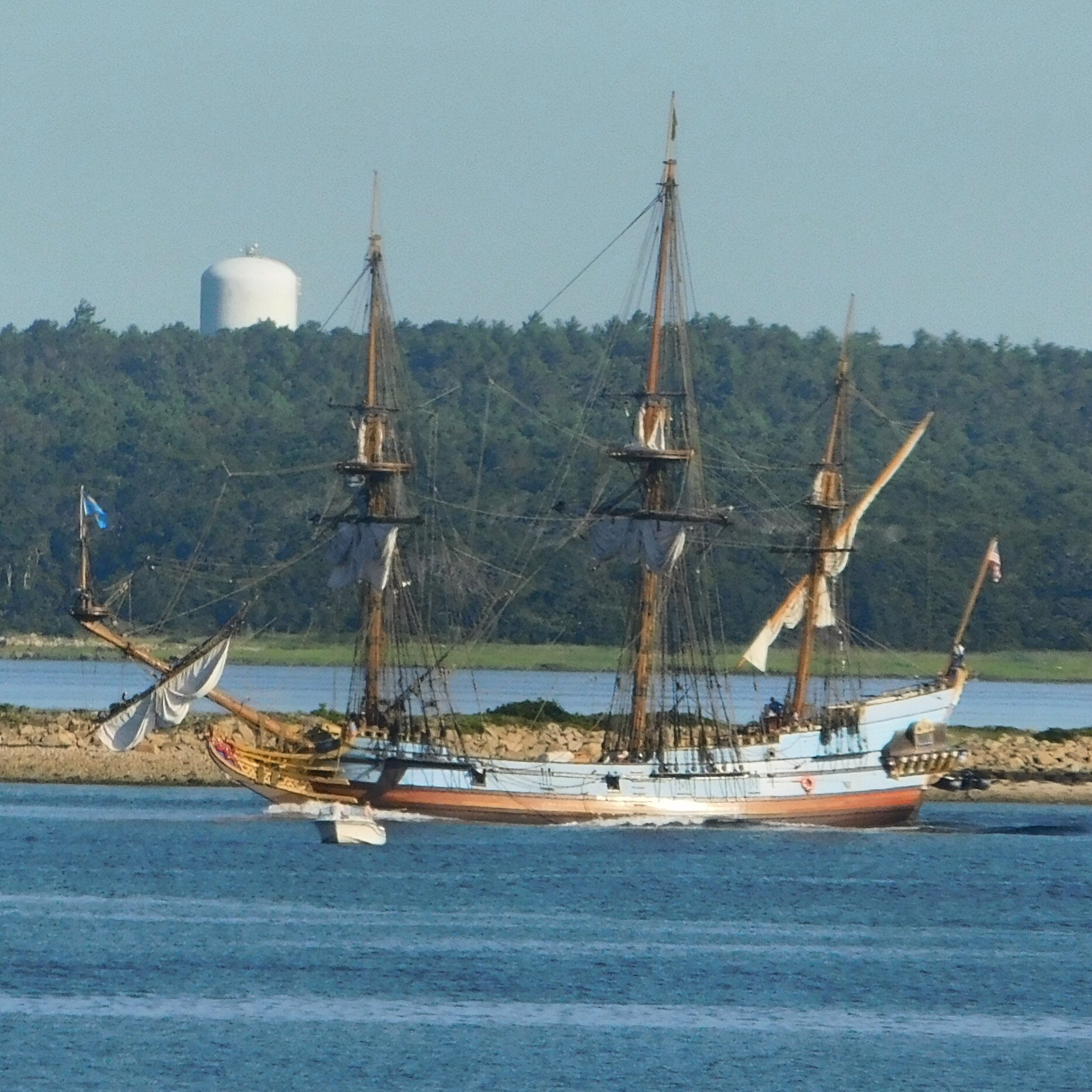
The Kalmar Nyckel was built in Sweden in 1625 and named after the Swedish city Kalmar. She had two moments in her history that should make the name more familiar than it is. The Kalmar Nyckel’s most famous moment occurred in 1637, when Governor Peter Minuit negotiated the purchase of land from the sachems of the Delawares and Susquehannocks in the cabin of the Kalmar Nyckel on the shore of what is now Manhattan. This transaction transferred ownership of the most expensive piece of land in North America from the Native American population to the Dutch, and lives in infamy as the most one-sided transaction ever. The next year the Kalmar Nyckel sailed to Fort Christina (Wilmington, DE) with that first group of settlers, marking her as the first ship to bring Swedish settlers to America.
The Kalmar Nyckel was sunk by the British Navy off the coast of Scotland in 1652, in the early stages of the First Anglo-Dutch War. Her most famous passenger, Governor Peter Minuit, died off the coast of St. Christopher the same year that Kalmar Nickel was delivering settlers to Fort Christina in 1638, either the unlucky victim of a hurricane or a murder plot, depending on who’s account you believe. Either way, the Kalmar Nyckel would outlive the governor by 14 years.
