Tag: Erie Canal

  • Edgy in Satire: Edith Lunt Small

    There’s a painting in the long hallway at Richardson’s Canal House that you can get lost in for hours. The artist was Edith Lunt Small, who passed away in 2017, 38 years after creating this fanciful world on canvas. Edith lives on in the painting, portraying herself as a skinny-dipping artist swimming in the Erie Canal in 1825. As the self-portrait indicates, there’s a lot of whimsy in her work, and I enjoyed spending a few minutes with this one.

    Art is meant to be enjoyed, and I found myself smiling at the little details she dropped into this painting, commissioned for Richardson’s Canal House. 1825 Bushnell’s Basin in Small’s world was raucous fun, and I imagine the artist was too. Her son called her work edgy in satire in his eulogy, and based on this one, I see what he means. I was happy to get a glimpse into the spirit that was Edith Lunt Small. These close-ups offer a small glimpse for you as well. This was an artist who clearly loved life!

  • Joshua Slocum

    Joshua Slocum

    On April 24, 1895, Joshua Slocum sailed out of Fairhaven, Massachusetts on his gaff-rigged sloop Spray.  He returned to Newport, Rhode Island on June 27, 1898, and documented that incredible solo sail around the globe in his book Sailing Alone Around the World.  His trip and the book were worldwide phenomenons, and Slocum was a celebrity on par in the minds of commen men with Presidents and royalty.

    Slocum was born in Nova Scotia on the island and grew up on Brier Island, where his grandmother was the official lighthouse keeper.  Brier Island, on the eastern edge of the Bay of Fundy, was the site of many shipwrecks over the centuries.  I’m sure that childhood molded the man who would become world famous with his trip around the world.

    Slocum made a second voyage with Spray up the Erie Canal to Buffalo for the Pan-American Expo in 1901, which is famous for the execution of President McKinley by an anarchist.  There’s a fascinating picture on the Wikipedia page for Slocum that shows the Spray moving through one of the locks of the Erie Canal on his voyage west to Buffalo.  That would have been an interesting voyage as well.

    Slocum, a restless spirit for sure, would try another voyage with the Spray in 1909 exploring the Amazon River.  Slocum and the Spray disappeared on that voyage, never to be seen again.  Did the Spray sink?  Did natives raid the sloop, kill Slocum and dismantle the Spray for use in other ways?  Was there a fire onboard?  We’ll never know, unless someone unearths the remains of the Spray someday in the mud of the Amazon or while diving off the coast of Brazil.

    What remains is one of the great books on adventure travel, some old grainy pictures of the Spray with Slocum sailing her, and a few monuments to the two.  I visited one of those monuments in Fairhaven.  It’s a quiet little spot with a view of the harbor.  A monument behind Slocum’s pays tribute to the last surviving pilgrim, which is notable company, but Slocum’s monument stands closer to the water.  I think he’d have liked it.

  • Richardson’s Tavern

    Richardson’s Tavern

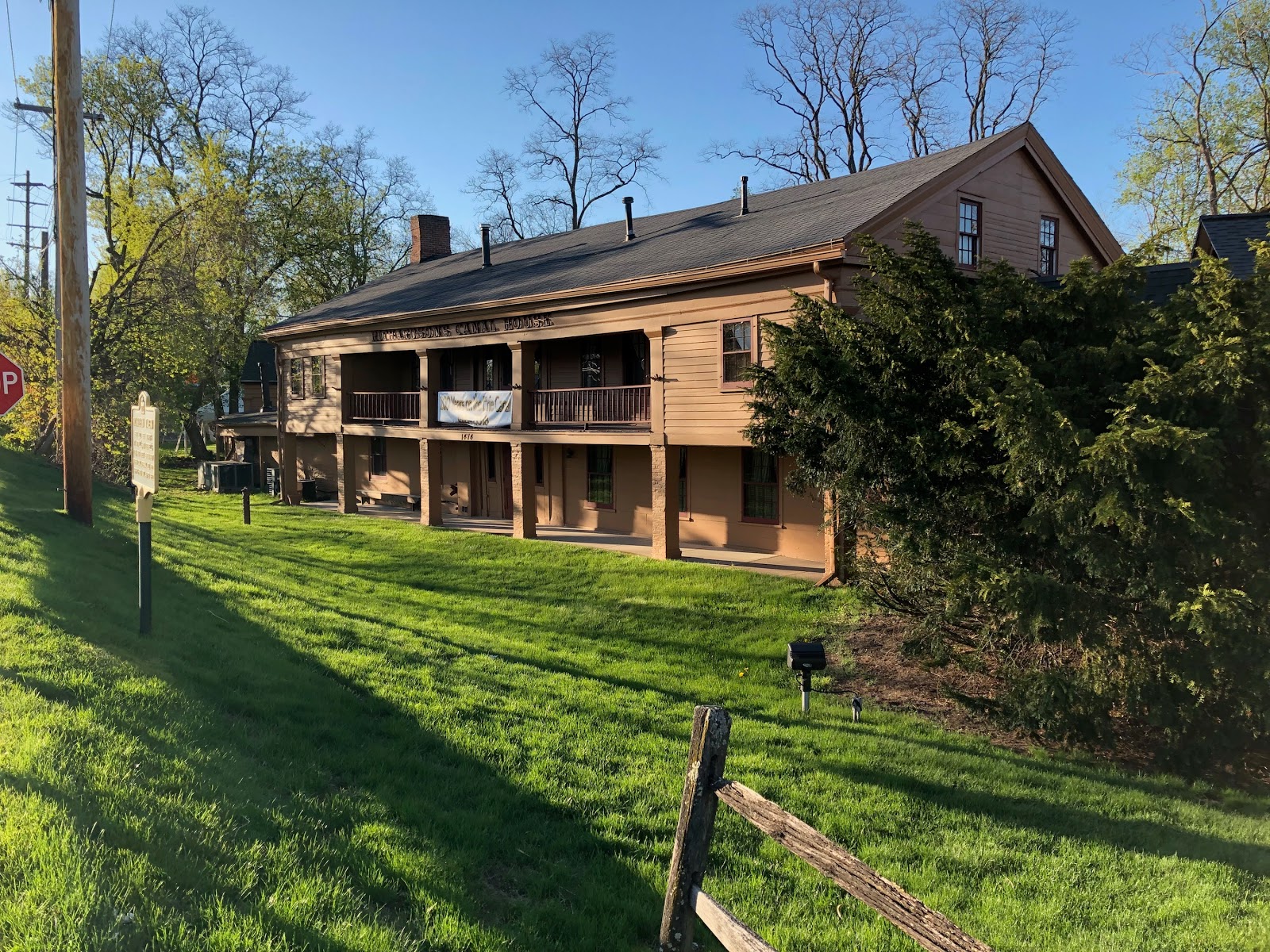
    When the Erie Canal was being constructed, it ignited the local economy along its length first as laborers moved in and eventually as the travelers on the canal moved through the area.  One such boomtown was Perinton, a canal town with a tavern located alongside the Erie Canal where travelers could get a meal and drink some ale.  The tavern, which opened 200 years ago in 1818, was operated by Elias and Gould Richardson and became renowned as the best tavern on the Erie Canal.

    Today the Richardson Canal House is listed on the National Register of Historic Places and is the oldest original canal house on the Erie Canal.  While the building has served many purposes over the years, today it’s back to being a tavern of renown.  The long building has much of its original character, with painted brick columns supporting the overall structure and much of the original building intact.  That yellow paint is the original color of the tavern.  The building was almost torn down in the dark days of 1970’s when historic preservation was less interesting than strip malls and office parks.  Thankfully logic won out with the help of local support and the old tavern was restored to its former glory.

    Those locals love the summer dining outside next to the canal, where Richardson’s has a trendy vibe and al fresco dining is embraced in the snow belt of Upstate New York.   I’m sure that’s lovely, but for me sitting at the bar drinking a couple of pints of Richardson’s Bicentenni Ale and having a meal in the same tavern that the engineers and laborers who built the canal ate and drank in 200 years ago was more my style.  I’m sure Elias and Gould would have been thrilled to know that the tavern they built along that new canal would survive and keep the Richardson name alive long after they were gone.

  • Taming the Mohawk River

    Taming the Mohawk River

    The Erie Canal was first proposed when Thomas Jefferson was President.  The sheer expense and amount of labor that it would take were much more than Jefferson could imagine, and he described it as a “little short of madness”.   However, the upside for a canal that would open up the west to commerce was immense.  Investors saw a clear return on investment, and DeWitt Clinton, the Governor of New York, supported the project.  Opponents called it Clinton’s folly, but in the end he was proven right.

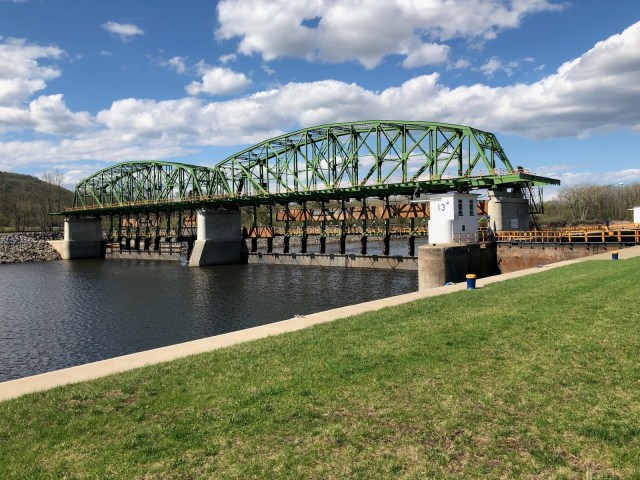
    The Mohawk River, a powerful East-West tributary to the Hudson River, was chosen as a key part of the Erie Canal, and 110 miles of the river were re-purposed as part of the it.  But rivers run wild, and the Mohawk River was no exception.  The engineers designed a series of trusses that stepped the river down while also regulating the flow.  These were effectively dams that looked like bridges.  Each had a lock for boat traffic, seen on the right in the photo below.  Today these trusses are massive steel and concrete structures that run the length of the Mohawk River.  While the barge traffic has given way to pleasure craft, the canal remains an engineering marvel.
    There’s no doubt that the Erie Canal was a massive success, and helped bring the resources and natural wealth of the western interior to the east, making cities like Buffalo, Rochester, Albany and New York much richer in the process.  Its hard not to be impressed with the scale of the Erie Canal, but there’s a part of me that would love to have seen what it looked like before 1817, when the first shovels cut into the ground in Utica.  It’s not lost on me that it was the year after Captain Clement died in my “neighborhood” in New Hampshire.  These were big years for the country, finding its place in the world after two wars with Great Britain.  The Erie Canal would fuel the industrial revolution and help the North win the Civil War.  It would be another hundred years before the world realized just how powerful the United States had become when we entered World War I.  It’s easy to see how much the canal meant for the sustained economic growth of this nation.

    The Mohawk River, like the tribe that shares its name who lived alongside it, was forever changed by the rapid expansion west.  Just like the Niagara River, the Colorado River and the Columbia River, the Mohawk River that flows into the Hudson has shrunken from a mighty river to a fraction of what it once was.  The taming of rivers is at once an impressive feat of engineering and a sad tale of man bending natural resources to our will.  I like my rivers on the wild side, but write that knowing that the taming of the Merrimack River in Lowell created that city, and as a side bar made it possible for me to row in college.  So just as I am who I am partly because of the taming of the Merrimack River, so too America is what it is because of the taming of the Mohawk River.